
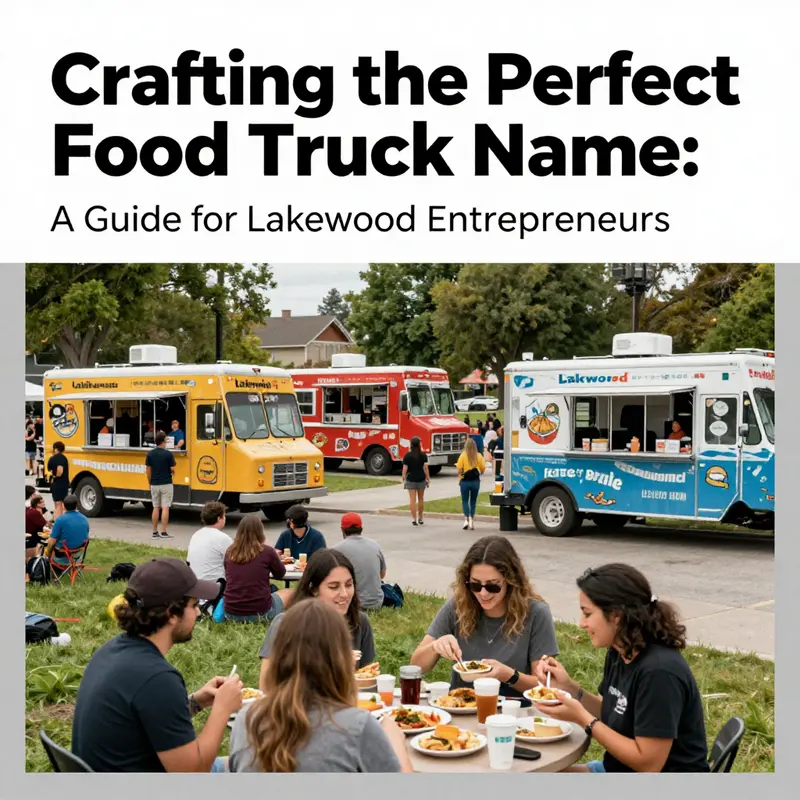
Choosing the right name for your food truck is more than just a branding challenge; it’s a pivotal step that can define your business’s success. For aspiring food truck operators in Lakewood, where vibrant food culture meets the scenic backdrop, having a catchy and memorable name is crucial. This article dives deep into what makes a good food truck name, touching on creative aspects, memorability for marketing, and how cultural themes enhance culinary offerings. Each chapter is designed to help you navigate your journey towards branding your food truck effectively and uniquely, paving the way for memorable experiences for customers visiting Lakewood.
null
null
null
null
Mobility, Meaning, and Flavor: Crafting Cultural and Culinary Narratives in a Good Food Truck Name
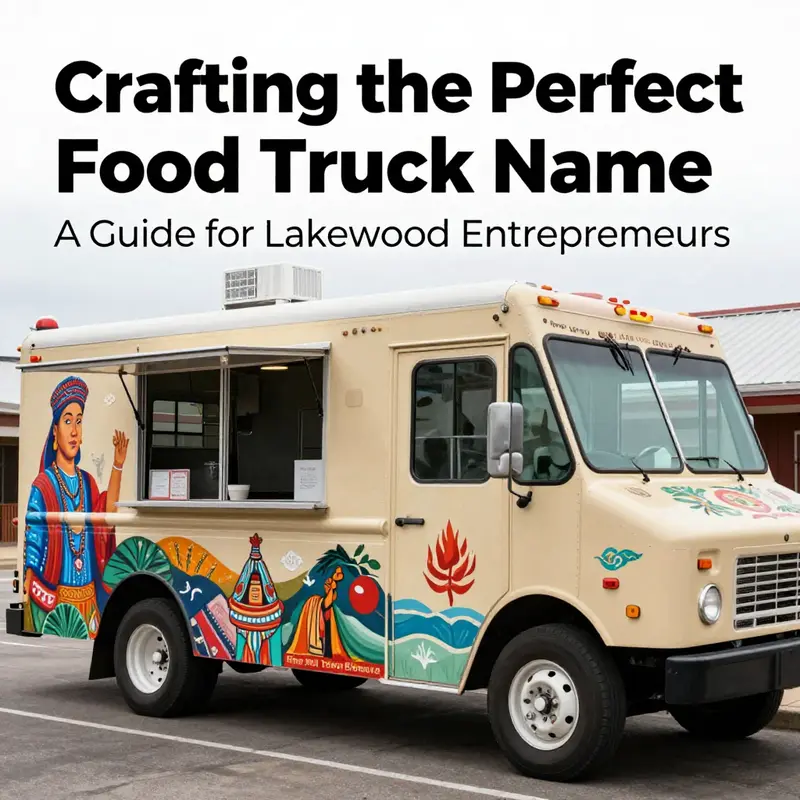
A food truck name is more than a label. It is the first invitation to a meal and a story, the foreground of a brand that travels with customers from curb to curb. When the name lands with cultural and culinary intent, it does more than announce a cuisine. It signals values, invites curiosity, and promises a particular experience. The best names balance two forces: cultural resonance and culinary signaling. They whisper authenticity while remaining approachable to a broad audience. In practice, this means a name that can hint at heritage without requiring a glossary, and that can suggest flavors without promising an exact recipe. It is a delicate dance, a linguistic map that guides expectations and, over time, shapes memory. The chapter that follows examines how cultural and culinary themes can be woven into a food truck name so that the brand remains coherent across menu, signage, and social media, even as the truck roams from neighborhood to festival to corporate event.
To begin, the impulse to draw on global or local culinary vocabularies is powerful. Names anchored in diverse food traditions can create a strong sense of authenticity, even for customers who have never tasted specific regional dishes. The idea is not to mimic a particular dish or cuisine, but to evoke a mood and a set of sensory associations. You might imagine a nomadic dining spirit that travels with a spice-scented breeze, a funnel cloud of cumin and coriander, or a salt-kissed breeze off a harbor market. The goal is to evoke a culinary journey rather than to deliver a menu map in the name alone. A name that conjures journey and flavor invites customers to imagine what they will taste, smell, and feel when they encounter the truck. It creates a durable hook that can be refreshed as the menu evolves without losing identity.
A related thread is the way a name can reflect the offerings you actually plan to serve. A well-chosen label gives a customer a window into the flavor world ahead. It might signal a focus on aromatic curries from South Asia, bright citrus-and-herb preparations from the Mediterranean, smoky grill-and-char concepts from the Americas, or a careful fold of regional street foods into a modern concept. The alignment between name and menu matters because it reduces friction. When a passerby sees a name that clearly hints at the type of food and the flavor profile, they feel an instant sense of recognition. They know whether the truck will satisfy a craving for spice, brightness, comfort, or something unexpected. This is especially important in a crowded market where standing out requires both an immediate, memorable impression and a credible promise about taste and quality.
Stories are another critical component. Names that can lean into cultural storytelling offer a sense of heritage and meaning that goes beyond the plate. They don’t have to recount a grand epic; even a small, personal narrative about a family recipe, a migration story, or a piece of home cooks’ craft can resonate. In many communities, food trucks serve as ambassadors of culture, providing a portable shrine to memory and hospitality. A name that cues such stories helps a truck become more than a vendor; it becomes a storyteller on wheels. This storytelling can be subtle—an allusion to a city’s spice lanes, a nod to a culinary tradition carried across generations, or a playful reference to a diasporic kitchen that blends influences under one roof. Subtlety matters because it invites conversation rather than delivering a fixed blueprint. A name that sparks curiosity opens doors for customers to ask questions, share memories, and connect with the truck on a personal plane.
Understanding your audience is essential to striking the right balance. Some neighborhoods respond to bold, adventurous names that signal daring flavors and a confident voice. Others prefer names that feel familiar, friendly, and easy to pronounce. The most successful names often straddle these camps by leveraging a sound and rhythm that feel both exciting and approachable. A certain musicality helps a name travel well across languages and dialects; alliteration, assonance, or a crisp consonant can improve recall. The risk of overreach is genuine: a name that feels too exotic or too niche may alienate curious eaters who want comfort and clarity. The careful reader of the brand will see a name that invites exploration while also promising a reliable, tasty experience.
A compelling brand identity emerges when a name is consistently echoed across all touchpoints. Signage, packaging, menu design, and even the truck’s color palette should harmonize with the cultural and culinary cues embedded in the name. The truck becomes a moving facet of a larger narrative—its aesthetics reflecting the name’s mood, its typography echoing the cadence of the language in which it is spoken, and its interior and staff rituals aligning with the story customers expect to encounter. A name that travels well with a distinct, legible logo and a compatible color system can help a truck matter in a sea of competitors.
In the ideation phase, collaboration nourishes the best outcomes. Conversations with cooks, marketers, designers, and members of the communities you aim to serve can surface angles that a single founder might overlook. Mapping the menu to cultural stories can be a useful exercise. Instead of listing dishes in a vacuum, brainstorm motifs that capture the essence of flavors, textures, and textures’ interplay. Consider metaphors drawn from culinary craft—pairings, textures, heat ranges, and aroma profiles—and translate those motifs into naming cues. A kitchen’s craft philosophy, whether it emphasizes slow fermentation, quick-fire grilling, or bright, zingy marinades, can inform the name’s tone. The aim is to arrive at a name that feels earned, not invented for the sake of trendiness.
The architecture of a good name benefits from linguistic clarity. A candidate name should be easy to pronounce, even when heard in passing. It should be legible when painted on the truck from a distance and readable in a quick glance at a mobile screen. The name should not require a glossary to be understood by the typical customer who encounters it in transit, at a festival, or on a street corner. In practice, this often means favoring short to mid-length phrases with simple phonetics and a rhythm that sticks. A crisp, memorable cadence makes it more likely that a customer will recall the name later, perhaps when recommending the truck to a friend or when typing a search in a map app.
Throughout this process, it is important to be mindful of the social and cultural contexts in which a name will circulate. Cultural references can carry powerful significance, but they can also risk misinterpretation or offense if not treated with care. Names that nod to a place, a tradition, or a story should be respectful and accurate. When a truck adopts a name that claims cultural authenticity, it is prudent to ground that claim in genuine care: sourcing approaches, respect for culinary lineage, and a willingness to listen to community voices that can illuminate what is appropriate and affirmative. The aim is not to appropriate culture for convenience but to honor it in the spirit of hospitality. This approach can foster trust and lasting relationships with the very communities that are most likely to become loyal patrons.
An emergent reality for many mobile food ventures is the power of a name to travel beyond the truck itself. Digital presence becomes part of the brand’s extended flavor profile. A well-chosen name can stimulate curiosity on social feeds, invite user-generated content, and segue into a broader narrative about where the truck has been, what it has tasted, and what it intends to explore next. The name thus acts as a portal to a continuing culinary journey. This is why some operators test candidate names with small audiences, gather feedback, and observe how people respond in real-world settings—not just in focus groups or on screen. The response to a name can reveal deeper preferences and evolving tastes within a community, allowing the brand to adapt while staying true to its core identity.
One practical reminder from the research on food-truck branding is the value of a succinct, memorable core. A name that is easy to recall is likely to be shared, mentioned in casual conversations, and passed along by well-meaning friends who want to support a local venture. The most durable names often carry a double meaning or a sense of movement that aligns with the mobile nature of the business. They are not merely labels but invitations to embark on a flavor journey. In this sense, naming a food truck becomes a small but meaningful act of curation, choosing a sign that tells customers where they are likely to go and what they are likely to experience when they arrive. It is a promise in a word, a compact narrative that customers can carry with them as they walk away or drive off.
To connect this discussion to practical next steps, consider how a name will scale with your brand’s ambitions. If you hope to operate at markets, fairs, or in partnerships with local businesses, your name should feel appropriate, not out of place, across different venues and audiences. If the plan is eventual expansion into sauces, merch, or pop-up collaborations, the name should be flexible enough to accommodate new lines without becoming a reach that erodes credibility. A strong, culture-informed name does not need to pigeonhole the business into a single culinary niche; instead, it can serve as a platform from which a broader culinary imagination can emerge.
Within this landscape, an internal reference point can help align naming with operational realities. For those exploring how branding intersects with vehicle design and logistics, a resource focusing on practical models and startup considerations offers a useful lens. For practical alignment of naming with the vehicle and branding, see Best Food Truck Models for Lakewood Startups. This link provides a grounded look at how trucks move through space, how signage reads from a distance, and how the physical constraints of a mobile kitchen influence the voice of the brand. It is not about copying features but about understanding the ecosystem in which the name will operate. The truck is the moving canvas on which the name will be painted, and a design-conscious approach ensures that the word and the image reinforce one another rather than compete for attention.
Beyond the immediate sphere of naming and branding, this approach invites a broader cultural literacy. A good food truck name can carry within it a map of cuisines, a sense of place, and a memory of shared meals. It can invite both the hungry customer looking for a quick bite and the curious explorer seeking new textures and traditions. It can signal that the truck values hospitality, that food is a form of storytelling, and that the journey to the next bite is part of the experience. In this sense, naming becomes a form of cultural mediation—an act of translation from kitchen craft into public welcome. The best names, over time, prove themselves not only by what they serve but by how they welcome people into a space that feels warm, adventurous, and trustworthy.
To close this exploration, consider the long arc of a donor, a worker, a student, a parent, and a traveler who encounters your truck names in a neighborhood they pass every day. A name anchored in culture will whisper of shared memories and familiar flavors while extending an invitation to taste something new. It should resist trivialization, endure through shifts in menu, and adapt to evolving community conversations. It should be legible, pronounceable, and resonant enough that a passerby can recall it later and tell a friend without stumbling. In practice, that means careful word choice, careful testing, and a willingness to refine. The result is a name that travels well, meaningfully, and with a sense of cultural respect. The truck becomes not merely a place to eat but a moving ambassador of culture and cuisine—a small, portable cultural exchange that happens on crowded sidewalks, at street festivals, and along long, hungry commutes between work and home.
External resource: https://www.foodtrucksa.co.za/food-truck-south-africa-guide-key-features-applications-and-performance-insights/
Final thoughts
In summary, naming your food truck is not just about branding but creating a connection with your community and your customers. A creative, memorable name can elevate your marketing efforts, while cultural themes can reinforce your culinary identity. Whether you’re serving gourmet tacos, artisanal sandwiches, or local delicacies, the right name has the power to resonate deeply with both tourists and locals, enhancing your food truck’s visibility and appeal in Lakewood. Embrace the journey of naming your food truck as part of your culinary adventure, making it authentic and appealing.