
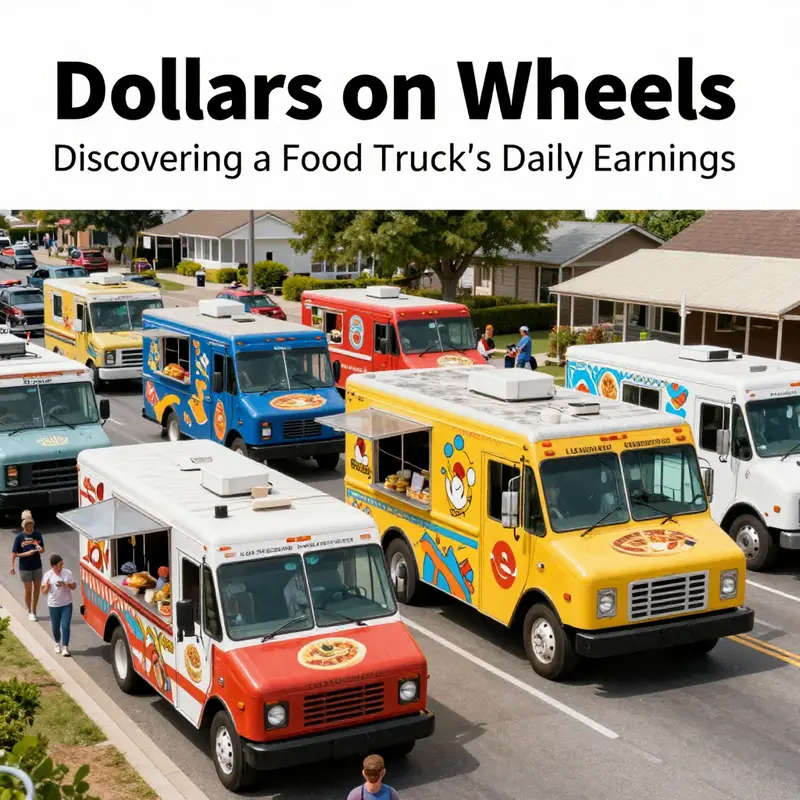
The aroma of freshly prepared meals wafts through the streets, drawing in hungry crowds and curious tourists alike. But have you ever wondered just how much money a food truck makes in a day? For those contemplating operating their own unique culinary venture or for visitors eager to support local businesses, understanding a food truck’s daily revenue is both insightful and inspiring. Join us as we dissect the various aspects influencing these daily earnings, exploring the interplay of location, menu choices, and peak operating hours. Each chapter will provide invaluable knowledge while fostering connection within the vibrant Lakewood community.
The Daily Revenue Puzzle: Unraveling How Much a Food Truck Really Makes in a Day
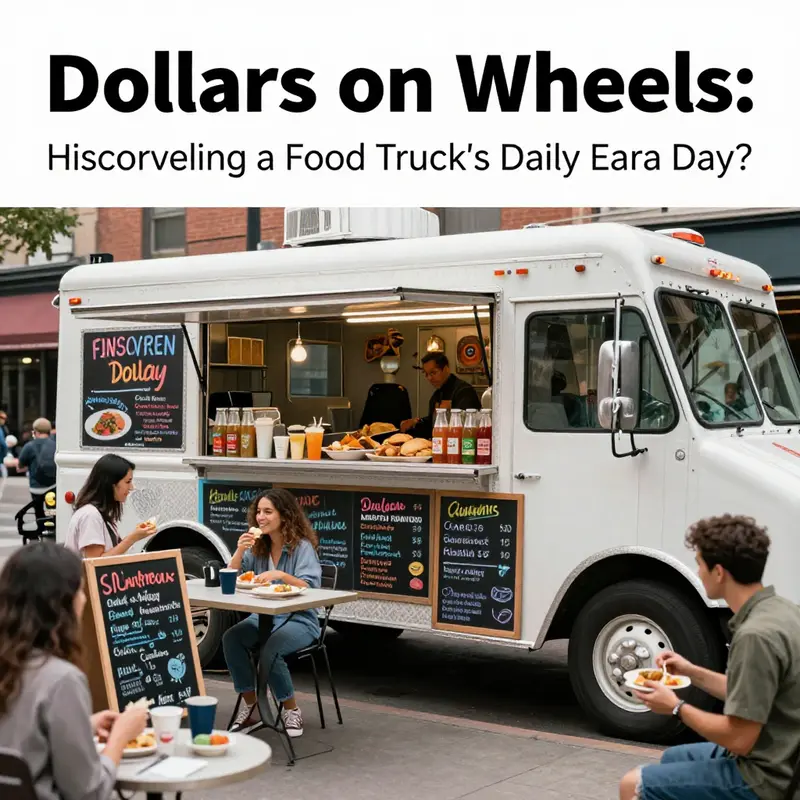
When people ask how much money a food truck makes in a day, they often expect a simple number. The reality is a moving target that shifts with the city’s rhythm, the truck’s menu, and the weather’s mood. A single figure never tells the full story, because daily revenue is the product of many choices and constraints playing out in real time. In practical terms, a well-run food truck earns more on some days than on others, and the average day hides the volatility that comes with operating in a dynamic street economy. To understand daily revenue, it helps to start with the clock itself: where the truck is, when it’s open, and whom it serves. A lunch crowd in a dense business district is different from a weekend festival or a seaside boardwalk during peak season. Each scenario can tilt the day’s total in a distinct direction, either toward a brisk, steady flow of orders or toward brief surges punctuated by lulls.
The most basic framework to think about is top-line revenue. The numbers you’ll see in industry reports—monthly totals that range from twenty thousand dollars to fifty thousand—translate into daily sums only when you break them down by calendar days. If a truck earns about $20,000 in a typical 30-day month, that’s roughly $667 in gross revenue per day. If the month creeps toward $50,000, the daily gross jumps to about $1,667. Those figures are useful as baselines, but they don’t capture the full picture of how a truck earns and spends money on any given day. The actual day-to-day experience can veer well above or below those numbers depending on location, customer demand, and the particular events on the calendar.
In the field, some days feel almost scripted in their reliability. A truck parked in a high-traffic downtown corridor, serving a simple, repeatable menu during the lunch rush, can produce a predictable cadence: a steady line of customers, a constant stream of transactions, and a clockwork pace that keeps cooks, cashiers, and drivers moving. Other days require a more improvisational approach. A rainstorm can shorten outdoor service hours, a public festival can flood the truck with enthusiastic crowds, and a large catering order can rewrite the day’s agenda entirely. The difference between a grind and a win often comes down to a few well-timed decisions: which block to stake out, how long to stay, how many staff to deploy, and which items on the menu deliver the best balance of value and velocity.
Several levers tend to dominate daily revenue, and understanding how they interact helps explain the variability. First, location. The same menu in a busy business district can outperform the same menu in a residential neighborhood if demand concentrates around peak work hours. A truck that sits near a transit hub or a hospital campus may see short, repeated bursts of orders as people step out for meals, yet the lack of long dwell times can cap the day’s total unless the truck rotates to a second site or a second shift. Second, the menu and pricing. A lean menu with high turnover makes it easier to serve more customers quickly, while a broader menu may create enticing options but slower service and higher ingredient costs. The typical price range for many street-food meals sits around ten to fifteen dollars per ticket; with that range, a truck serving two hundred customers in a day will land in the neighborhood of two thousand dollars in gross revenue. It’s worth noting that the precise mix of items influences both speed and spend. If a truck can push a popular two-item combo that pairs a protein with a vegetable side and a beverage, the average ticket can creep upward without sacrificing speed.
Third, operating hours matter. A focused lunch shift—roughly a four- to five-hour window—can be incredibly productive if a truck hits the right crowd at the right time. Add a dinner window or a late-night service, and the day’s revenue potential expands markedly, provided the crew can maintain quality and speed. Weekends and special events—think farmers markets, street festivals, or corporate happenings—often produce outsized gains. Those days can push daily revenue well into the higher end of the spectrum, sometimes surpassing the ordinary tempo of weekday operations by substantial margins. Yet events are double-edged: they also come with higher costs for staffing, power, waste disposal, and sometimes higher competition for space and attention. The net effect depends on the event’s demand and the truck’s ability to convert foot traffic into sales.
Seasonality is another steady driver. Warmer months tend to bring more foot traffic, longer operating hours, and more opportunities to participate in outdoor events. Winter weather can compress business into narrower windows, especially in regions with cold, windy, or rainy patterns. A smart operator builds a calendar that aligns with seasonal peaks while protecting margin during slower periods. In practical terms, that means planning inventory with an eye toward predictable demand. Food costs rise when products require bulk ingredients or perishables purchased to meet variable demand. Labor costs can be managed by aligning shifts with anticipated rushes and limiting downtime in the slower hours.
A frequent way to quantify daily revenue is to translate the customer flow into a simple equation: multiply the average ticket by the number of customers served in a typical day. If a truck’s average ticket sits around ten to fifteen dollars and the crew serves 150 to 200 customers daily, daily gross revenue lands roughly between $1,500 and $3,000. The same rule of thumb, scaled differently, yields insight into other operating styles. A truck that targets a higher ticket price—often achieved with more premium ingredients, specialty drinks, or curated combos—will likely serve fewer customers but reach or exceed the same revenue through higher per-ticket spending. Conversely, a lower-priced, high-volume approach seeks to maximize customer throughput. In that scenario, the day’s revenue can swing dramatically with minor shifts in line length or service speed.
The numbers also depend on the profit math behind the scenes. Food trucks typically report gross margins in the neighborhood of sixty to seventy percent after accounting for the major cost blocks: food costs, labor, and fuel. In a high-demand day with strong ticket prices, the truck can convert much of its revenue into profit, albeit after taxes, insurance, maintenance, and other overhead are considered. Even so, the headline net profit per day on a top-performing truck can be substantial—often ranging from roughly six hundred dollars to above two thousand dollars—depending on how lean the operating costs stay and how optimized the schedule and menu are. That ranges captures the everyday truth: a few disciplined practices can turn revenue into meaningful profit, but slippage is easy to incur if there is waste, overstaffing, or inefficient routes.
To translate this into a concrete day-by-day picture, consider a few blended scenarios that reflect typical urban realities. In a prime downtown corridor during a lunch rush, a truck priced at ten to twelve dollars per item might serve two hundred customers with an average ticket of around twelve dollars. Net revenue for that day could hover near the upper end of the mid-range, possibly around twelve to fourteen hundred dollars in gross revenue, assuming efficient turnover and minimal downtime. In a mid-density neighborhood with a stable but smaller lunch crowd, the same truck might serve around a hundred to one hundred fifty customers, keeping the average ticket in the same range and producing roughly six hundred to eighteen hundred dollars in gross revenue. On a weekend festival or a city-wide event with high attendance, daily revenue can spike to well over three thousand dollars if the truck can scale service without sacrificing quality or patience in the line. The key is to anticipate these surges and protect margins by controlling waste, streamlining prep, and deploying staff where they increase throughput the most.
The calculation becomes more nuanced when seasons, weather, and competition are factored in. A light drizzle or sudden storm can reduce customer counts for outdoor operations and shorten service windows. The same weather event might push attendees into covered spaces where food trucks cluster, creating a temporary upside in some locales while creating a downside in others. Competitors entering a hot zone can siphon away potential customers unless a truck differentiates itself through speed, taste, or unique offerings. In those moments, the ability to pivot—changing menu items to faster, more affordable options; moving to a nearby stall with higher foot traffic; or partnering with a nearby business for a joint promotion—becomes a practical determinant of whether the day’s revenue stays in a healthy range.
The practical takeaway for operators is to anchor expectations to a forward-looking estimate that blends data with flexibility. Start with a realistic daily plan that assumes a reasonable average ticket and customer count for your chosen route. Then build in generous contingencies for the inevitable deviations: the occasional slow day, the surprise event, the weather hiccup, and the inevitable line that forms when word of mouth amplifies your appeal. For many operators, success means pushing the average daily revenue toward the higher end by optimizing the right mix of location, schedule, and menu, and then extracting more value from each customer through smart upselling and efficient service. A simple mental model is to ask: can we increase the average ticket without adding significant service time? If the answer is yes, the day’s revenue tends to trend upward without overtaxing staff or reducing the customer experience.
The discussion naturally leads to the craft of choosing the right truck and setup. The physical platform you operate from can influence capacity, speed, and the ability to meet demand in crowded spaces. A well-designed truck with efficient workflow can dramatically improve the rate at which customers are served, which in turn raises daily revenue without sacrificing quality. The layout of the kitchen, the placement of the grill and sauté stations, and the speed of the cash register all contribute to a virtuous circle: faster service converts more foot traffic into orders, orders turn into revenue, and revenue supports better staffing and inventory discipline. This is why many operators spend time evaluating the best configurations for their local markets. The right model can improve throughput, reduce waste, and shorten the time customers wait, all of which contribute to a more predictable daily revenue profile. For a practical look at how truck design and layout can impact capacity and efficiency, explore one widely discussed resource on the topic: best-food-truck-models-for-lakewood-startups, which offers insights into choosing capable configurations that align with local demand. best-food-truck-models-for-lakewood-startups.
Even with a strong framework, daily revenue remains a snapshot in a shifting landscape. A robust operator collects data, tracks trends, and adjusts. Weekly reviews of sales by hour, by menu item, and by location illuminate where value is created and where it erodes. A few positive patterns to watch for include consistent lunch-hour surges, predictable weekend boosts, and repeat customers who become regulars because of the value and experience offered. Negative patterns, conversely, may reveal locations with chronic underperformance, a menu with slow-moving items, or times when labor costs eat into profitable margins. The art of the business is to keep the positive momentum—by refining the menu, adjusting pricing strategy, chasing high-traffic locations, and scheduling shifts to align with demand—while safeguarding against the threats that erode daily revenue.
Finally, the conversation about daily revenue must acknowledge the broader landscape of industry benchmarks and best practices. While every truck’s story is unique, there is a shared understanding among operators that daily earnings are the sum of disciplined operations and opportunistic decision-making. Industry observers emphasize the importance of data-driven planning, the value of participating in events that draw large crowds, and the necessity of controlling costs to protect margins when revenue fluctuates. For readers who want a broader frame of reference beyond local observations, sources that compile and share industry data can be invaluable. They provide benchmarks, case studies, and practical tips that help calibrate expectations and shape strategy across different markets. As a practical anchor, consider exploring the broader industry resource that tracks profitability and operational strategies for food trucks: https://www.foodtruck.org.
In sum, the daily revenue of a food truck is not a single fixed figure but a moving average built from the ground up. It depends on where you stand, when you stand there, what you serve, how fast you serve, and how well you translate demand into value. A well-positioned truck with a lean menu and a disciplined approach to staffing can expect daily gross revenue in the range of roughly one to three thousand dollars in bustling urban periods, with the possibility of higher sums during standout events. On quieter days or in less populated areas, the number can dip toward the lower end, sometimes much lower if adverse weather, low foot traffic, or stiff competition reduces demand. Across this spectrum, the most reliable path to a sustainable business is not a single magical day but a consistent pattern of smart choices: precise targeting of high-potential locations, tight control of costs, a menu that delivers both quality and speed, and a plan that converts foot traffic into loyal customers. In that sense, daily revenue becomes less about chasing a mythical perfect day and more about weaving together the day-to-day advantages that create a resilient, profitable operation. The math then becomes a living guide, not a blunt verdict, helping operators decide where to stake their claim, how to price, and when to roll to the next location in search of the next wave of demand.
External references and ongoing resources can expand this practical framework. For those who want deeper data on profitability, labor costs, and operational benchmarks, continuing education through industry associations and their published reports can sharpen forecasting and day-to-day decisions. Keeping a pulse on the market while maintaining lean operations allows a food truck to turn the daily revenue puzzle into a solvable, repeatable routine rather than a roll of the dice. After all, the measure of success isn’t a single day’s number but the consistency and resilience of the revenue engine over weeks, months, and seasons.
Rolling Revenue: A Real-World Look at How Much a Food Truck Makes Each Day
The daily earnings of a food truck depend on location, hours, and demand. Many operators describe monthly gross ranges, but translating them into a single day is a practical exercise in budgeting. A typical day might yield a few hundred to over a thousand dollars in gross revenue, depending on traffic, menu pricing, and the events the truck attends. Gross income is eventually reduced by costs such as ingredients, fuel, equipment maintenance, permits, and labor, yielding net profit that can vary widely from day to day.
Location matters most: busy downtown cores and festival corridors can sustain longer hours and higher check sizes, while suburban routes rely more on volume and repeat visits. Price points must balance perceived value with local willingness to pay; higher prices can boost per-ticket margins but may reduce volume if demand is price-sensitive.
Operational efficiency, like fast service, accurate forecasting, and smart routing, often matters more than any single menu item. Scheduling high-demand shifts, planning for events, and controlling waste help stabilize daily earnings. Seasonality and weather introduce variability, but a well-planned calendar can smooth results across a month.
Bottom line: daily revenue is a directional guide, not a guarantee. For planning purposes, operators often think in ranges and buffers, then adjust for local conditions as they go.
Daily Earnings Under Streetlights and Skyline: How Much Money a Food Truck Really Makes in a Day Across Locations
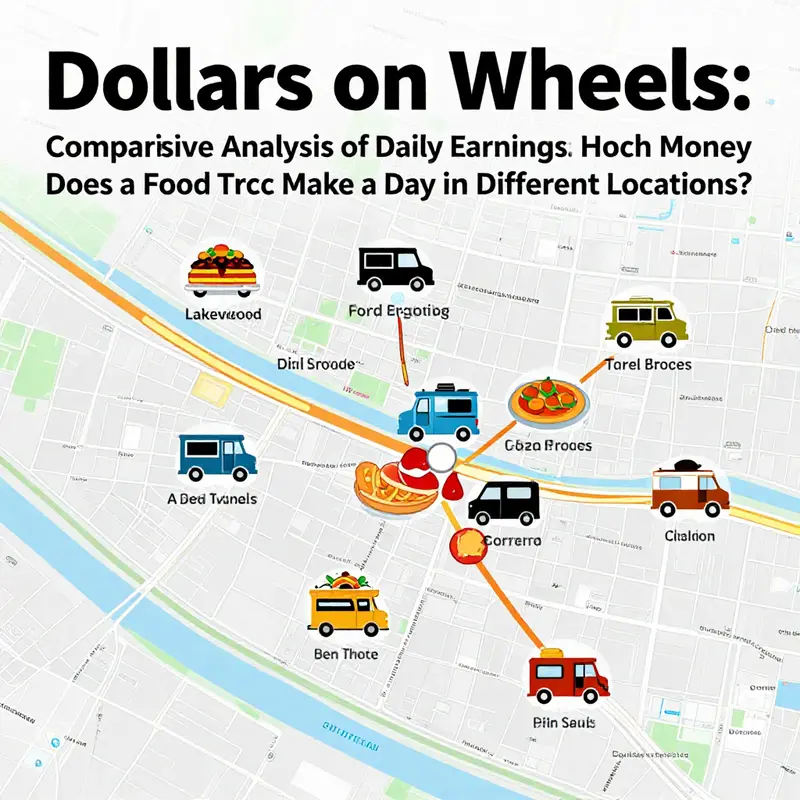
In the world of mobile cuisine, daily earnings are a moving target shaped by dozens of factors that blend into a single daily number. The numbers you see in glossy charts are rarely a single, pristine figure. Instead, the income a food truck pulls in on any given day reflects a tapestry of location, price strategy, hours, and the rhythms of the calendar. The research that guides operators often starts with a pragmatic baseline: when a truck earns somewhere between twenty thousand and fifty thousand dollars in gross revenue each month, the math yields a broad daily range. Dividing the monthly figure by thirty suggests a typical day might bring in roughly six hundred seventy dollars on the low end and around one thousand six hundred seventy dollars on the high end. This is a useful frame of reference for planning, but it remains abstract without grounding it in the realities of place, season, and strategy. The real story emerges when you sit with a truck in the sun or under a damp streetlight and watch the numbers shift with the crowd, the weather, and the week’s events. High-demand days at the right locations can swell daily gross well above these baselines, while slow periods can press the average downward. The lesson is simple and powerful: daily earnings are not a fixed number but a function of where you operate, how you price, how long you stay, and how creatively you diversify revenue streams. When you connect those dots, the question “how much money does a food truck make in a day?” resolves into a spectrum rather than a single answer. The breadth of that spectrum matters because it helps operators set expectations, plan contingencies, and pick locations that align with their business model and lifestyle goals. Understanding this spectrum begins with a clear map of geographic variation, then folds in the seasonal pulse, the menu’s pull, and the efficiency of day-to-day operations. It is a journey through urban density, suburban rhythms, and the slower cadence of rural streets, all of which shape the rhythm of a food truck’s day and, ultimately, the amount of money it makes when the sun is high or the lights come on after a long shift. As we explore this terrain, it’s worth anchoring our thinking in the concrete benchmarks that emerge from large-scale observations, while always reserving the right to nuance with the anecdotal evidence gathered by operators and their teams on the ground. The numbers are not merely numbers; they are signals about where a truck can thrive, where it may struggle, and how to calibrate operations to turn potential into practical daily earnings. If you want to ground these thoughts in a framework you can apply, start with the idea that location, seasonality, and operational discipline are the three pillars that tilt a day’s revenue toward or away from the upper end of the spectrum. Location determines the volume and willingness to spend; seasonality modulates the flow of crowds and purchasing power; operational discipline converts potential traffic into actual sales through speed, accuracy, and consistency. From there, the rest of the chapter unfolds as a narrative about how those pillars interact, with a closer look at the numbers that illuminate the path from broad averages to day-by-day reality. Consider the most dramatic difference in earnings between a truck parked in a dense urban center and one working a quieter fringe. In major metropolitan areas, where foot traffic is both constant and high and where office workers, residents, and tourists converge, daily revenue often ranges widely but can climb into the thousand-dollar range and, during peak hours or special events, push well beyond it. In places like New York City or Los Angeles, the dynamism of the street scene—the concentration of office districts, the drawing power of museums and stadiums, and the pull of nearby residential clusters—creates a fertile ground for rapid turnover. A truck stationed near an office corridor at lunch or outside a popular mixed-use development in the evening can see the flow of customers turn into a steady stream. The effect of location here is not just about sheer numbers; it is about crowd behavior, spending patterns, and the willingness of a given street to sustain a line, a rhythm, and a sense of reliability. When those conditions converge, daily gross can swing from the mid-to-high thousands on peak days to more modest figures on off days, all within the same calendar month. The contrast with smaller towns and rural settings is stark, but it is not simply a tale of less money. In smaller communities, a skilled operator can still achieve impressive daily figures by leveraging events, steady loyalty, and a focused menu that matches local tastes and price tolerance. In these environments, daily earnings commonly land in a more modest corridor—roughly a couple of hundred dollars to six hundred dollars—yet there are opportunities to scale through recurring events, population pockets near fairgrounds or campuses, and partnerships with local businesses that host regular gatherings. The difference is not only about the size of the audience; it is about how effectively the truck plugs into the rhythms of a place and the willingness of the local audience to sample new flavors or celebrate traditions with a quick, satisfying bite. The seasonal rhythm adds another layer of complexity. In tourist-heavy locations, episodic surges can dwarf everyday sales during peak seasons. Miami Beach at the height of summer or San Diego during a busy coastal stretch often sees daily incomes that shimmer with the promise of added traffic from visitors who crave convenience and novelty. Conversely, in colder climates, winter can depress footfall and shorten operating hours, compressing daily earnings even when price points remain stable. The weather’s impact is not simply a matter of cold or heat; it also affects the pace of service. Shorter lines and slower turnover can erode throughput, even if demand remains relatively high. This is where the craft of operations becomes crucial. A food truck that can optimize its workflow—streamlining order taking, enhancing the speed of cooking and assembly, and reducing the break times between batches—can extract more sales from the same window of time. Efficient service is not a luxury; it is a core driver of daily revenue, especially in high-density settings where a few minutes saved per customer compounds into meaningful gains over the day. The menu itself is a powerful lever. A chef-driven truck offering high-demand items with strong perceived value—such as items with premium ingredients, signature flavors, or artisanal components—can command premium price points and sustain brisk turnover. Yet the key is balance: a compact menu enables faster service and reduces waste, while still delivering distinctive options that keep customers coming back. The pricing strategy should reflect both local willingness to pay and the cost structure behind each item. In areas with higher rents, wages, and ingredient costs, a carefully calibrated price point can preserve margins without sacrificing volume. In more price-sensitive markets, operators often rely on a combination of core staples and occasional seasonal specials to maintain appeal while protecting margin. Beyond the core street sales, many successful operators diversify revenue in practical, repeatable ways. Catering for private events and corporate gatherings expands the top line without depending solely on street traffic. Participating in local festivals and markets can intensify exposure and create opportunities to upsell. Some operators use pop-up collaborations with nearby businesses or food halls, which can stabilize cash flow by adding predictable outlets for the same menu. These income streams do not replace street sales; they supplement them, pooling the profits of several routes into a single daily balance sheet. The numbers from the broader industry support this multipronged approach. A 2023 report from a national association tracking food trucks notes a striking disparity in daily gross revenue by setting: trucks in high-traffic urban zones average about two thousand one hundred fifty dollars per day, while those in suburban or rural contexts hover closer to seven hundred fifty dollars per day. Those figures illuminate a core truth: geography shapes revenue capability, but it is not destiny. It simply sets the ceiling and the floor. An operator who can pair optimal location with a well-tuned operation, a compact yet appealing menu, and a steady cadence of diversified income streams can push daily earnings toward the upper end of the urban range on a regular basis, while perhaps maintaining a solid, sustainable rhythm in other settings. To translate these ideas into practical planning, consider what a day looks like in real terms. A truck in a dense urban district might start the morning with a steady trickle of orders that gradually builds as office workers begin their lunch routines and shoppers stroll en route to afternoon activities. If the day includes a nearby stadium event or a conference center, you may see a spike that kicks in around mid-afternoon and continues into the evening. The same truck, in a quieter neighborhood, might secure a consistent lunch crowd of local workers and residents, with a few high-traffic pockets on market days or near schools. The flexibility to adapt—adjusting hours, moving to a different corner, or introducing a limited-time item for a festival—can meaningfully tilt daily earnings. The inner calculus of a daily number then becomes a blend of capacity and opportunity: how much sales velocity does the truck sustain, how many customers can be served in a given hour, and how reliably can the crew maintain quality and speed as orders pile up. The operational heartbeat—how quickly you can plate, package, and pass food to customers—matters as much as the appetite of the crowd. This is why many operators view equipment and layout not as mere convenience but as a direct lever on daily revenue. The right configuration can shorten line times, reduce confusion at pickup, and create a more efficient, more scalable service model. When a truck is well designed for speed and consistency, it becomes better suited to capture a larger share of the day’s customers, especially during peak-hours. Operators who optimize back-of-house flow, train staff for quick, friendly interactions, and maintain a clean, legible menu at the point of sale will often see a tangible uplift in daily revenue through improved turnover and higher satisfaction. It is this attention to the practical details—how the kitchen interfaces with the sidewalk, how orders are dispatched, how queuing is managed—that turns a great day into a great week and a great week into a solid month. Even with all these considerations, the raw question of “how much money does a food truck make in a day?” hinges on the synergy between place, timing, and process. It invites a realistic projection that blends a plausible range with aspirational goals. A practical way to frame expectations is to anchor on the broad bands observed in the data: a truck in a major urban hub with high foot traffic might routinely clear the higher end of the daily spectrum during peak hours, particularly when a business district or events attract dense crowds. A truck in a suburban corridor or rural town often achieves a dependable daily cadence around the $750 mark when it maintains a steady schedule and leverages recurring opportunities like local markets or shop-to-restaurant partnerships. And in tourist-driven locales, the seasonal surges can push daily revenue toward the upper end of even the suburban band during the summer or festival seasons, with a possible spike on weekends or holidays when crowds flock to the area. The practical takeaway is that a truck’s daily earnings reflect not a simple arithmetic mean but a living calculation that operators refine over time. Start with the baseline figures offered by broad revenue studies, but then tag your own plan to your locale. Track daily sales, account for weather shifts, and map out how often you participate in events or catering gigs. Use that data to adjust hours, optimize menu choices, and calibrate pricing. In many cases, the most productive path is iterative: test a new location or a revised menu for a few weeks, measure the impact on daily revenue, and repeat. For a cross-referenced look at how these numbers play out in the field, consider the broader narrative that seasoned operators share about balancing street sales with flexible income opportunities. The most resilient businesses aren’t built on a single channel of revenue; they are anchored by the street but uplifted by controlled, predictable streams like catering and festival participation. If you want to explore how equipment choices and setup influence daily throughput, you can consult resources such as Best Food Truck Models for Lakewood Startups. This kind of practical planning supports the broader aim of aligning daily earnings with realistic expectations while keeping room for growth through smart diversification. As you wrap this chapter and turn toward the next, carry with you the sense that the day’s money is not merely a number you chase; it is a signal about where you stand in a buzzing ecosystem of streets, events, and communities that crave the quick comfort of a well-made bite. To get a clearer sense of where your project might land in the larger landscape, rely on the kinds of benchmarking data summarized in national industry reports. They offer a compass for calibrating price, quantity, and hours to match the realities of your chosen setting, while still leaving room for your own strategy to differentiate your truck from countless others that share the road. For a broader view of regional variations and performance benchmarks, see the external resource below. External resources aside, the daily reality remains intimate and local: your city street, its weathered corners, the office towers, the festival grounds, and the quiet lanes where a single menu item can turn a passerby into a repeat customer. The democratization of food on wheels means that, as numbers rise and fall, the daily earnings story stays deeply personal—shaped by the hands-on craft of cooking, serving, and delivering delight, all within the rhythms of place. For further regional benchmarks and in-depth data, consult the National Food Truck Association data: https://www.foodtruckassociation.org/research-and-data
Seasons, Schedules, and the Daily Paycheck: Reading the Rhythm of a Food Truck’s Earnings
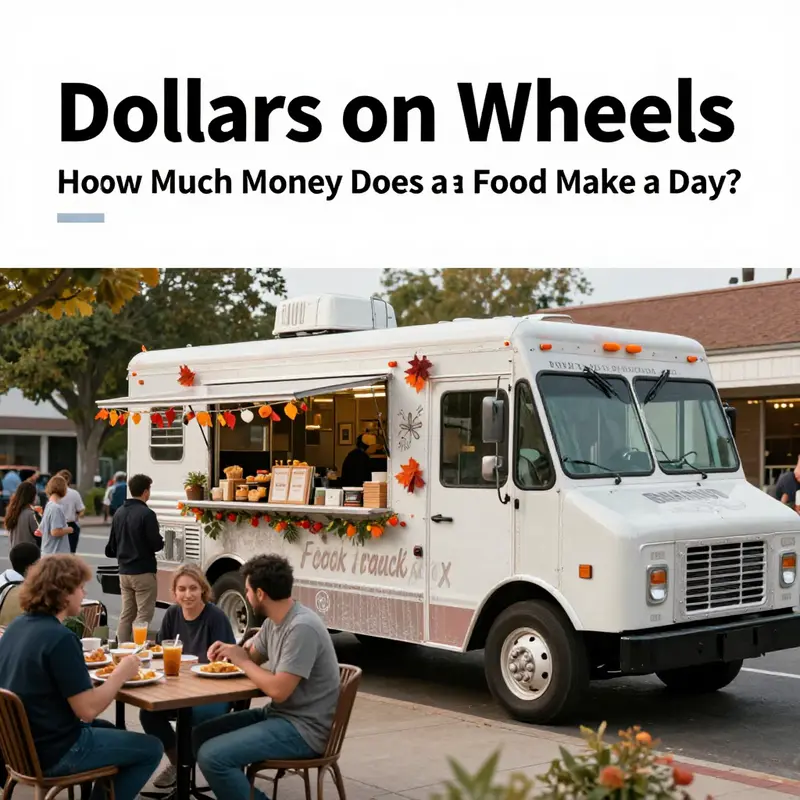
The daily earnings of a food truck are shaped by place, time, and the weather. To translate monthly gross revenue into a practical daily figure, start with a simple baseline. For example, a truck that makes around twenty thousand dollars per month in gross revenue yields roughly $667 per day if it operates every day, while a fifty thousand dollar month yields about $1,667 on a typical day. These figures are rough guides, not guarantees, because a single event can swing a day’s take and weather, traffic, and local competition all influence outcomes.
Seasonality amplifies this already variable picture. Summer crowds, outdoor festivals, and school vacations tend to lift foot traffic, while shoulder seasons and winter weather can dampen demand. A truck parked in a busy downtown corridor may enjoy solid daily averages in summer but see lower totals during a cold stretch. The overall effect is a pattern of peaks and valleys rather than a single constant daily script.
Operating hours also matter. Running from late morning to early afternoon targets lunch traffic and spillover, while staying open into the evening taps into after‑work and event-driven crowds. The math is about matching hours to customer rhythms and choosing routes and sites where lines form during peak windows. A crowded location with high turnover will outperform a quiet corner, even if the same menu is on offer.
Price and volume interact in practical ways. A few high-volume days can be driven by best-sellers, while slower days may require a broader mix and value-driven promotions to maintain traffic. In peak times, throughput—serving more customers quickly—becomes as important as price per item. In slower periods, promotions and bundles can sustain volume without eroding margins.
Seasonal demand also shapes pricing strategy. Higher-demand periods might justify small price increases or premium add-ons; off-peak times may reward promotions, bundles, or loyalty deals that maintain traffic. The right balance between price and volume is learned through planning, inventory control, and staffing, not guesswork.
The daily earnings pattern is not a flaw but a feature of mobility. Location, weather, service speed, event calendars, and the size of the crowd all feed into the day’s total. The same truck can post predictable results on a sunny weekday near offices and a high-volume surge at a weekend market or festival. Conversely, a quiet Tuesday in February might require promotions or collaborations to keep sales steady.
A practical mindset is to plan for consistency and flexibility. Maintain reliable hours, a dependable menu, and a recognizable presence to build steady revenue. Yet stay adaptable—be ready to shift routes, extend hours, or lean into events when the opportunity arises. The daily pay is the sum of many small decisions about location, timing, and the menu mix.
Finally, consider the operational layout and throughput. A well‑designed truck with a smooth workflow can handle larger queues without sacrificing speed or quality, which in turn supports higher daily totals. For readers exploring how setup and efficiency translate into real numbers, there are industry resources and case studies that examine throughput and daily revenue in different markets.
Final thoughts
Understanding the daily income potential of a food truck requires an exploration into various influential factors such as location, menu offerings, and even seasonal trends. For aspiring operators, knowing how much money a food truck can generate daily is critical for informed planning and operation. Meanwhile, tourists visiting Lakewood can enhance their food experiences by recognizing how these trucks thrive in their vibrant community. As you dive deeper into this culinary world, remember that every purchase from a food truck not only satisfies your taste buds but also supports local entrepreneurship.