
Operating a food truck is an exciting venture, especially in vibrant areas like Lakewood where culinary creativity thrives. However, the business landscape comes with its own set of rules, especially regarding taxes. One crucial aspect is understanding whether your food truck is subject to franchise tax. This article will guide aspiring food truck operators through the nuances of franchise tax obligations, breaking down state-specific requirements and the impact of various business structures. Armed with this knowledge, you can confidently navigate the tax landscape and focus on what really matters: serving delicious food and delighting customers.
On Wheels and Under the Tax Man: Decoding Franchise Tax for Food Trucks Across States
The allure of a food truck is the freedom to move, to chase busy corners and bustling events, to adapt menus to neighborhood tastes. That mobility, however, does not grant immunity from state tax rules. Franchise tax, unlike a simple sales tax or a one-time permit fee, is a state-level obligation that hinges on how the business is organized and where it operates. For a food truck, understanding franchise tax requires a careful map of integration between corporate structure and state lines, because the rules shift dramatically from one state to the next. The name itself can be misleading: franchise tax is not exclusively about paying for the right to use a brand, though brand licensing can create separate fee arrangements. Rather, it is a tax on the entity that does business within a state, and the precise calculation depends on the state’s statutes and administrative rules. To navigate this landscape, food truck operators must distinguish between franchise tax as a filing obligation, and franchise fees or royalties that may arise from a brand partnership or franchise agreement. These distinctions matter because they determine when and how much a mobile vendor owes, and they influence the decision to register, structure, or relocate parts of the business for tax efficiency. The clarity comes not from a single answer but from a framework: where you are registered, how you are structured, and what the state expects of entities that do business within its borders.
Franchise tax is, at its core, a jurisdictional question. States levy or assess taxes on entities that operate within their boundaries, and the form this takes—whether it is a tax, a fee, or a minimum payment—depends on the state and the entity type. For a food truck, the most common situation is that the business is organized as a sole proprietorship, a partnership, a limited liability company (LLC), or a corporation. If the truck operates in a state that imposes a franchise tax and the business is structured as one of those entities, a tax or a filing may be due. Yet not every state treats mobile vendors the same way. Some states apply franchise tax to corporations and some other entities, while allowing sole proprietorships or partnerships to escape the franchise tax unless they elect corporate taxation. The practical upshot is straightforward: know your state, know your structure, and know the thresholds, rates, and minimums that could trigger a tax bill or a required filing.
Take Texas as a starting point. Texas is often cited in discussions about franchise tax because it actively taxes many entities doing business in the state, including LLCs and corporations. For a food truck, the decision to form an LLC or operate as a corporation within Texas can trigger franchise tax obligations. The tax is typically calculated on the business’s margin or taxable revenue, and it is due annually. The margins framework means that even a successful truck with a modest income might still owe if its taxable margin crosses the state’s threshold, though some entities may benefit from reductions, exemptions, or exclusions that the Texas Comptroller’s Office provides. Importantly, even smaller operators can face a minimum tax or a required filing if they are members of an eligible entity and operate in Texas. In practice, this means that a Texas-registered food truck that is an LLC or corporation should plan for a franchise tax report each year, and should budget for a potential tax payment, even in years when gross revenue is lower than expected. The specifics—such as exact margins, deductions, and the minimum tax—are laid out in state guidance, and operators are encouraged to consult the official resources and, if needed, a tax professional who understands both corporate taxation and the peculiarities of mobile vending.
California presents a different, though not entirely dissimilar, picture. The state’s approach to franchise-related obligations can be described as nuanced rather than uniform. California does not always use a traditional “franchise tax” label for every business, but it does impose a form of franchise tax as part of what is called the Corporation Tax on incorporated entities. In California, a food truck that is incorporated may be subject to this tax, even as other small businesses face different filing requirements. Beyond the tax itself, California requires ongoing compliance activities such as annual or periodic statements with the Secretary of State. These filings serve a purpose similar to franchise tax in other states: they establish that the corporate entity remains in good standing to operate within the state and to safeguard the state’s regulatory and revenue interests. For operators whose food trucks are sole proprietorships or partnerships, California’s approach can be more favorable in terms of direct franchise tax exposure, though this does not shield them from other state and local business taxes, licenses, or fees that may apply. The California regime highlights a broader truth: even when one state’s regime seems less onerous on paper, a combination of corporate status, local licenses, and annual statements can create a layered compliance journey that must be navigated with care.
Florida offers another angle, one that reflects the state’s more variable treatment of franchises and corporate taxation. Florida does impose a franchise tax on corporations and certain other entities, but its default posture is more permissive toward sole proprietorships and standard partnerships that do not elect to be taxed as corporations. For a food truck, this often means that a single-entity operation conducted as a sole proprietorship or general partnership may escape the franchise tax in Florida, so long as the owners do not elect corporate taxation. Yet this does not mean freedom from all regulatory costs. Operators still face other business taxes, such as income tax in some cases, local business licenses, and permit fees tied to street vending or curbside commerce. The Florida framework underscores a practical theme for mobile vendors: the absence of a franchise tax in a given state does not equate to a tax-free business, and even where franchise tax does exist, exemptions can create meaningful differences for a small, mobile enterprise.
Beyond the “is there a tax?” question lie subtler issues that shape how a food truck navigates its fiscal responsibilities. The distinction between franchise tax and franchise fees deserves emphasis. Some operators become part of a brand network that functions like a franchise, with brand licensing or proprietary systems in place. In those contexts, the operator may pay ongoing franchise fees or royalties that are calculated on gross sales. These payments are contractual costs rather than statutory taxes. They are not the same as the state-imposed franchise tax, but they contribute to the overall cost of doing business under a licensed model. A truck operator can be both under a state franchise tax regime and a separate brand-licensing arrangement, which means it is essential to keep these two streams distinct to avoid conflating branding costs with tax obligations. The legal and financial implications of such arrangements can be complex, especially when a state tax authority scrutinizes the entity’s status, revenue streams, and nexus in relation to the brand’s network.
For operators seeking to determine their precise obligations, a practical approach is advisable. Start with the basic triad: identify the state where the business is registered, know the business structure, and consult the official channels that govern taxation and corporate filings. In many states, the Department of Revenue or the Secretary of State maintains the authoritative guidance. The steps are straightforward on paper, but the execution requires precision. First, confirm the state of registration for the business. If the truck operates in multiple states, consider nexus rules—whether sales, physical presence, or other criteria create tax obligations in other states. Second, determine the business structure—sole proprietorship, partnership, LLC, or corporation. This decision often drives not only tax liability but also reporting requirements, annual reports, and the forms that must be filed. Third, consult the official state resources. These resources include the state’s franchise tax guidance, annual report forms, and any thresholds or exemptions that apply to small businesses or to franchise-like arrangements.
A growing body of practice in mobile food ventures shows that even when a state’s tax regime appears favorable, you can still encounter the influence of brand relationships, supplier agreements, and licensing deals that resemble franchising. The line between being a standalone business and operating under a brand’s umbrella can blur, and with it the potential for nuanced tax treatment. To illustrate the kinds of considerations a thoughtful operator navigates, consider how a long-standing, networked operation might adapt its structure in response to tax rules, licensing demands, and local regulations. Look at how some large, networked vehicle operations evolved to balance branding, compliance, and mobility. While the specifics of individual cases vary, the underlying logic remains—the right structure, the right state, and the right understanding of obligations equate to a smoother path through the regulatory maze. For readers who want a concrete sense of how governance of a business network can intersect with operational strategy, a historical view of a large, franchisor-like network offers a useful lens. See the discussion at kenworth-truck-centres-45-years-family-business for a case study in how long-standing, centralized operations adapt to regulatory and market changes over time, which can shed light on the broader field of franchise-style arrangements in mobile commerce. kenworth-truck-centres-45-years-family-business
In sum, whether a food truck must pay franchise tax depends on where the business operates and how it is organized. It depends on the entity’s presence in the state, the entity’s legal form, and the state’s specific tax statutes and administrative rules. It also depends on the practical realities of operating a mobile business—nexus, filings, and reporting obligations that arise from operating within a state’s borders, even if the day-to-day operations feel like pure independence on wheels. To determine whether your food truck must pay franchise tax, you can follow a simple, disciplined process: identify the state where your business is registered and primarily conducts business; determine whether your entity is a sole proprietorship, partnership, LLC, or corporation; and consult the official sources—your state’s Department of Revenue or Secretary of State—for precise guidance on tax liability, filing requirements, and any minimums or exemptions that apply to your situation. If you find the landscape confusing, reach out to a qualified accountant or tax attorney who specializes in both franchise agreements and state tax law. The guidance will be grounded in the official codes and the practical realities of mobile commerce, helping you avoid surprises and ensuring you stay compliant as your truck moves from one event to the next.
For those who want to explore the broader landscape of franchise-like networks and their implications for tax obligations, consider the example of a long-standing, large-scale vehicle network and how it has balanced branding, licensing, and regulatory compliance. This perspective can illuminate why some operators experience a different tax posture when they elect corporate taxation or engage in branded licensing that falls outside traditional franchise tax frameworks. It is this interplay between corporate structure, branding agreements, and state law that makes franchise tax an essential, if sometimes opaque, component of a food truck’s financial planning. The key takeaway is clear: mobility does not excuse you from tax requirements, but a well-structured entity, informed by state-specific guidance and professional advice, can keep your business on the right side of the line.
External resource: https://comptroller.texas.gov/taxes/franchise-tax/
Mapping the Franchise Tax Terrain: State-By-State Realities for Food Trucks
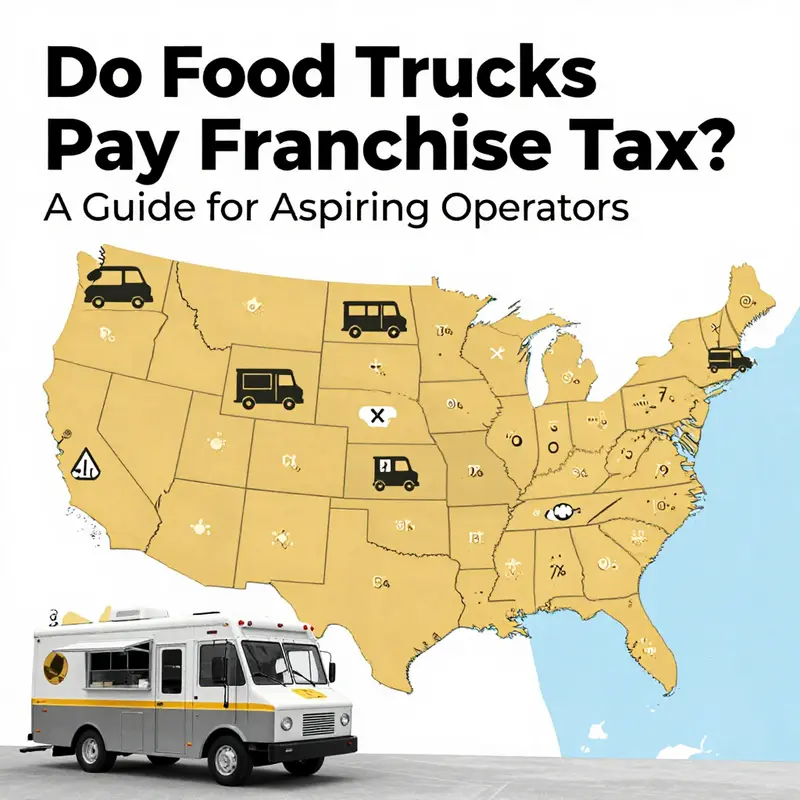
The question of whether a food truck must pay franchise tax is less a single yes-or-no answer and more a map drawn in the ink of state law. Franchise taxes are levied at the state level and differ widely from one jurisdiction to the next. For many food truck operators, the issue comes into focus when choosing where to register the business, how to structure it, and where the truck will operate most days of the year. In practice, the tax question expands into several threads: the state of registration, the legal form of the business, and the state’s own definition of what counts as doing business within its borders. Those threads braid together into a practical reality: some food trucks will owe franchise tax, others will not, depending on how their enterprise is organized and where they conduct business. What follows is a cohesive portrait of this landscape, anchored in the realities of the most commonly chosen business structures for mobile vendors and the most frequently cited state examples.
To begin, it helps to anchor the discussion in two central ideas that recur across jurisdictions. First, franchise tax is not a blanket tax on every food truck activity. It is a tax on the privilege of doing business in a particular state, and the trigger for liability is often tied to the entity’s classification and the state’s chosen tax base. Second, the tax base itself varies: some states look at net worth or capital, others at net income, and still others at annual receipts or a calculated margin. A food truck’s liability rests at the intersection of these rules with the truck’s official registration state and the state where the truck earns revenue, not merely where it parks or roams. In many cases, a food truck that operates as a sole proprietorship or as a partnership may escape franchise tax in some states, while a truck structured as a corporation or an LLC may fall under a tax regime that applies to that entity type.
The practical upshot is that a thoughtful, proactive owner will map out three questions before operating in a new state. First, in which state is the business registered? Second, what is the entity type — sole proprietorship, partnership, LLC, or corporation? Third, where does the business actually do business, and how does the state treat that activity for franchise tax purposes? The answers determine whether the franchise tax is a concern, and if so, how to comply. It is helpful to ground this with concrete examples from states that commonly intersect with food truck operations: California, Texas, and New York, with a nod to Florida’s general approach for certain entities. Each of these states illustrates a different facet of the broader map.
In California, the tax landscape for franchise-like obligations is famously precise and sometimes stern. California imposes a minimum franchise tax, historically cited as a binding floor for those subject to its regime. The practical effect is that a business structured as a corporation or an entity subject to the franchise tax regime may owe a base amount each year, regardless of profitability. For many food truck operators, that baseline can be substantial, because it attaches to the entity’s status rather than its year-to-year earnings. In addition, California requires annual filings with the Franchise Tax Board. These filings are not optional scenery in the tax landscape; they are procedural checkpoints that ensure the business remains in good standing and the state’s books reflect the presence of the enterprise within its borders. The minimum tax and the reporting obligation together create a predictable bottom line for corporate entities, which can influence decisions about whether to operate as a corporation, an LLC, or another eligible form within the state.
Turning to Texas reveals a different cadence. Texas is often described as having no general franchise tax, a popular shorthand that nonetheless masks the nuance of the state’s tax regime. While there is no universal franchise tax in Texas, the state does maintain a margin tax system that can apply to certain entities under specific conditions. The margin tax is anchored in the entity’s structure and income levels, and it functions in a way that resembles a franchise tax to the extent that it taxes some measure of business activity or financial performance. For a food truck, the ultimate exposure in Texas depends on how the business is organized and what thresholds it meets. The practical takeaway is simple: even in a state without a broad franchise tax, a food truck should verify whether any margin-based obligations could apply, especially if the truck operates through a corporate or LLC structure or engages in activities that the state treats as taxable under its margin rules. This reality underscores the broader principle that a “no franchise tax” label is not a universal shield; the local tax crowding can still reach mobile vendors through related taxes and reporting requirements.
New York presents a contrasting model in which the franchise tax concept is applied with its own logic. New York imposes a franchise tax on corporations doing business within the state, with rates and bases that can vary based on capitalization and income. The structure here is telling: the corporate form, when doing business in New York, carries a specific set of obligations, with a tax base that looks at capital, income, and sometimes a blended calculation. For a food truck that registers as a corporation or as another taxable entity and that does business in New York, the franchise tax becomes a real cost to plan for in budgeting, licensing, and setting local prices. It is a reminder that the geographic footprint of a food truck — the number of days in-state, the locations served, and the scale of revenue in the state — can translate into a tax footprint that differs materially from one jurisdiction to the next.
Florida sits somewhere between these models. Florida’s approach tends to distinguish between corporations and other entity types, and it generally does not treat sole proprietorships or partnerships as franchise tax subjects unless they elect corporate status. For food truck operators, this distinction matters. If a truck is run as a sole proprietorship or a partnership and does not elect to be taxed as a corporation, Florida offers the possibility of avoiding franchise tax, while still leaving room for other business taxes, licenses, and fees. The practical implication is that the decision to elect corporate status can carry tax consequences that outstrip the initial costs of incorporation. In short, Florida demonstrates how the choice of business form can be a lever that affects both tax exposure and the complexity of ongoing compliance.
Taken together, these snapshots illuminate a broader pattern. Franchise tax regimes do not exist in a vacuum; they form a grid that aligns with how states classify your business, how they measure your activity, and how they require you to report. A food truck that moves across state lines is confronted with a patchwork of rules. The truck may be subject to a franchise tax in one state while facing no such tax in another, even if the operations appear similar. The distinction is not merely academic; it has real implications for cash flow, pricing, and the decision about where to locate and how to structure the business for long-term viability. This is why a grounded understanding of each jurisdiction’s approach is essential for anyone operating a mobile kitchen as a formal business entity.
For owners who want to stay compliant without getting lost in legal minutiae, the practical steps are straightforward, though not always simple. First, establish the official state of registration. This is the state whose tax authority or Secretary of State oversees your company’s foundational paperwork. Second, nail down your business structure clearly: are you a sole proprietor, a partnership, an LLC, or a corporation? The answer will drive which tax regimes apply and how your taxes are calculated. Third, identify the states in which you do business. For mobile businesses, “doing business” can be a function not only of where you file taxes, but of where you physically operate, how many days you spend there, and how much revenue you generate there. Some states use a nexus test or a presence threshold to determine tax liability. Fourth, consult the official resources of the relevant revenue or Secretary of State offices. These agencies publish the rules, forms, and filing calendars you’ll rely on each year. Finally, partner with a qualified tax professional who understands multi-state taxation and the nuances of franchise-tax-like regimes for entities in the food-service sector. The combination of careful planning, accurate entity classification, and disciplined recordkeeping can make the difference between smooth compliance and costly penalties.
Within this framework, a few practical patterns emerge that are worth internalizing. One, if you operate a food truck in a state that imposes a minimum franchise tax for corporations or other taxable entities, forming an LLC or corporation could trigger an annual tax bill even if profits are modest. The precise amount depends on the state and the entity’s base, but the certainty of a fixed minimum exists in several jurisdictions. Two, in states with no broad franchise tax but with targeted margins or specific bases for tax, a food truck’s liability hinges on how the business is structured and how revenue is generated within that state. In such cases, careful attention to the entity’s classification and the basis for the tax is essential. Three, even when a state does not levy a franchise tax on certain forms of business, other taxes or fees may apply. These can include gross receipts taxes, business license fees, or local taxes that are triggered by the right combination of operation and location. Thus, a comprehensive tax planning approach for a food truck must include not only franchise tax but an overall health check of the state and local tax landscape.
The tax map also intersects with broader business decisions. A mobile vendor may choose a register-and-operate pattern that minimizes tax exposure while still meeting business goals. Alternatively, some owners may decide that the benefits of corporate or LLC status — including liability protection, potential tax planning opportunities, or easier access to certain financing structures — outweigh the ongoing franchise-tax obligations. The calculus will differ by the state, by revenue scale, and by the owner’s risk tolerance and strategic preferences. For example, a truck that operates primarily in a single county with a stable customer base might face fewer administrative challenges than a truck that pushes into several states with varying tax regimes. The more geographies a truck covers, the more critical it becomes to have a clear, documented tax position, updated regularly to account for changes in law or in the business model itself.
In the spirit of practical guidance, there are several resources that can help food truck owners stay aligned with state requirements. The most authoritative guidance comes from each state’s official revenue or Secretary of State site. These sources publish filing requirements, tax bases, rates, thresholds, and penalties for noncompliance. Beyond the state level, the U.S. Small Business Administration offers general frameworks for understanding how state-level taxes affect small business planning and ongoing compliance. A tax professional with experience in multi-state taxation and in the food-service sector can translate these rules into a tailored plan, ensuring that a truck’s structure and location strategy align with the most favorable tax posture while preserving compliance.
As owners weigh their options, it is useful to keep a forward-looking perspective. Tax liability is not merely an annual bill to be paid; it is a factor that can influence decisions about where to park, how many days to operate in a given state, whether to hire employees in a particular jurisdiction, and how to price products to maintain profitability after tax costs are accounted for. The interplay of state franchise tax rules with local licensing regimes can also shape the economics of a given route or neighborhood. In practice, a well-run food truck business thinks ahead about tax exposure in tandem with location strategy, supplier relationships, and labor planning. It isn’t enough to react to tax notices; proactive planning is the best defense against unexpected liabilities and the best enabler of sustainable growth.
For those seeking a quick reference to one state’s approach, it’s helpful to consult official resources. The California Franchise Tax Board outlines what constitutes franchise tax obligations and the steps required for compliance, including filing a return and the minimum tax framework. This official perspective underscores the principle that even in a large, diverse economy, state tax regimes make definite statements about when a business owes a levy and how it is calculated. While the specifics will vary, the underlying logic holds: your structure, your activity, and your registration all matter for whether franchise tax applies and how it is calculated in that state. To the extent you operate in or intend to operate in California, Texas, New York, Florida, or any other state with franchise-like provisions, you would be well advised to map your entity type against the local tax base and to establish a filing calendar that aligns with each jurisdiction’s requirements. The complexity is real, but so is the path to staying compliant while maintaining a viable business.
For those seeking authoritative guidance that can help frame decisions in the early stages, exploring state-level resources is a sound starting point. The official websites provide the clearest statements of law and the most up-to-date filing requirements. Additionally, engaging with a tax professional who understands multi-state operations can help bridge gaps between theory and practice, ensuring that the chosen business form continues to fit the evolving footprint of the food truck. In this sense, the journey toward franchise tax clarity mirrors the broader journey of building a resilient food-truck business: it requires careful planning, ongoing attention, and a willingness to adapt as regulations shift and the market evolves.
In sum, franchise tax is not a universal weight on all food trucks; it is a state-specific responsibility that depends on where you register, how you structure your business, and where you actively do business. California’s minimum tax and annual filing obligations, Texas’s margin-tax nuance, New York’s corporate-franchise approach, and Florida’s more limited impact on sole proprietors illustrate the spectrum that operators navigate. The thread that ties these scenarios together is a practical reality: the food truck must be treated as a business with a multi-state footprint and a formal legal structure, with taxes managed proactively and in coordination with compliant recordkeeping. When owners approach the topic with this mindset, they reduce the risk of penalties and build greater confidence in their ability to sustain operations across jurisdictions. For those seeking more specific, jurisdiction-by-jurisdiction detail, the official tax authorities remain the most reliable guide, and they should be the baseline from which any tax planning begins. External reference: https://www.ftb.ca.gov/businesses/what-is-a-franchise-tax.shtml
null
null
Final thoughts
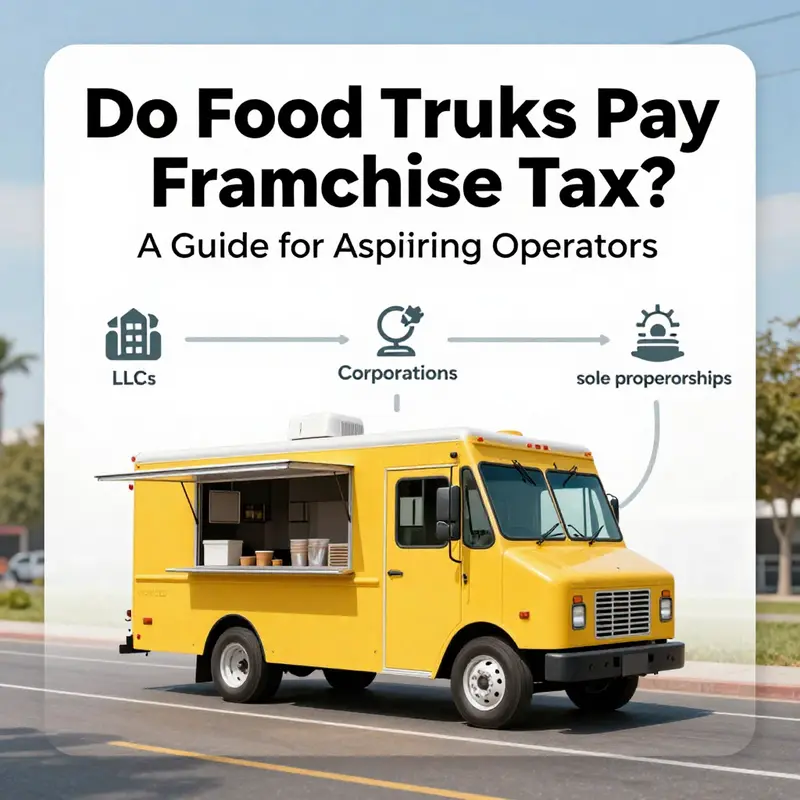
Understanding franchise tax obligations is essential for aspiring food truck operators. By knowing the specific requirements in your state and how your business structure affects your tax status, you can make informed decisions that will pave the way for your success. Whether you choose to operate as an LLC, corporation, or sole proprietorship, being proactive about your tax obligations ensures you can focus on your culinary creations and serving the Lakewood community.