
Picture this: you’re in Lakewood, ready to roll out your food truck and serve delicious bites to hungry customers under the sun. But wait! To keep those fryers sizzling and your drinks cold, you need a reliable power source. Whether you’re an aspiring food truck operator or a tourist exploring culinary delights, understanding how to power your mobile kitchen is essential. In this guide, we’ll explore various methods to power your food truck, from utilizing external grid connections to implementing sustainable solar solutions. Each chapter will arm you with knowledge and inspire confidence as you embark on this culinary adventure.
null
null
Silent Power on the Move: Designing Battery-Based Systems to Power a Modern Mobile Kitchen
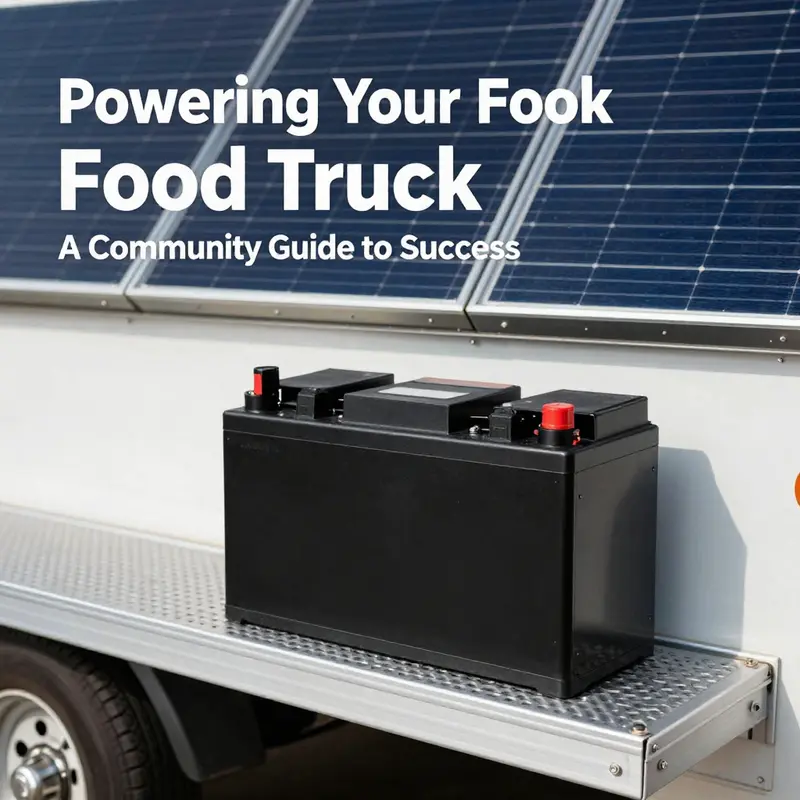
In the compact world of a mobile kitchen, power is more than a utility; it is the heartbeat that keeps food at safe temperatures, heat at the right moments, and ambiance at the right level for customers. When a street side operation moves from a stall to a rig on wheels, the energy system must be as adaptable as the menu itself. The battery based approach now common is a storage bank plus a smart inverter and a management ecosystem that treats energy as a limited resource to be scheduled and monitored rather than as an unlimited line item. The result is a kitchen that can perform consistently in a crowded urban setting, at night markets, or along festival routes, without the noise exhaust or fuel logistics that traditionally accompany mobile food service.
At the core of a battery based system is the energy storage pack. Lithium chemistries, particularly lithium iron phosphate in many configurations, have become the default choice for durability, cycle life, and thermal stability. These packs are sized not merely to meet peak load but to cover the expected service window often a busy six to ten hours while leaving a margin for safety. The exact capacity depends on the total electrical load of the truck neglecting nothing. A typical mobile kitchen might run two or more refrigeration units, a grill or induction cooktop, a fryer, a small oven or warmer, and essential lighting and electronics. The sum of these loads converted to continuous wattage and then adjusted for duty cycles guides the battery bank size. A common configuration centers around a 48 volt system with hundreds of amp hours translating into tens of kilowatt hours of usable energy when managed well. Operators friendly describe a 48V, 400Ah pack as a practical balance between footprint, weight, and runtime, with room to grow if the menu or service pattern expands.
The inverter that converts stored DC power into usable AC power is the interface between chemistry and cuisine. A high wattage inverter typically in the 4 to 6 kilowatts range must deliver clean stable power with a pure sine wave. That level of quality protects sensitive kitchen electronics from refrigeration controls to POS devices and guards against surges that could shorten appliance life. Efficiency matters here; every percentage point of inverter efficiency translates into more usable energy and longer running time between charges. When coupled with a capable Battery Management System BMS the inverter becomes part of a safety and performance loop rather than a standalone hardware piece. The BMS monitors cell voltages, temperatures, charging states, and pack balance, guarding against overcharging overheating and deep discharge conditions that can degrade life and trigger safety concerns. In practical terms a well designed BMS enables predictive maintenance alerts operators to unusual draw patterns and provides data that can be translated into smarter more economical service routines.
To make battery powered operation practical day to day energy efficiency is not optional but foundational. This means selecting appliances with high efficiency metrics such as LED lighting and induction cooktops and designing the layout to minimize heat and power waste. Smart load scheduling becomes a choreography rather than a simple on off routine. For example pre cooling refrigeration ahead of peak service, staggering high wattage tasks, and using low power standby modes for nonessential devices all contribute to extending runtime without sacrificing performance. The operators who succeed with battery powered systems embrace real time monitoring often via dashboards that display battery state of charge instantaneous power draw and anticipated remaining runtime. When these metrics are integrated with a mobile app the kitchen staff can adjust workflows on the fly shift energy to critical moments and avoid the abrupt switch to outside power or a generator just because a single device hits a high draw.
A practical battery based design also requires attention to safety weight distribution and regulatory compliance. Batteries are heavy and the mounting system must locate weight within the vehicle axle line to maintain handling characteristics and center of gravity. Protective enclosures shield cells from vibration, moisture, and accidental impact while enabling proper cooling or insulation as needed. Fire safety is non negotiable many operators allocate dedicated compartment space with thermal barriers and strict separation from heat sources ensuring that a single fault does not become a chain reaction. Cables and connectors are sized for worst case loads routed away from heat and moisture and secured against road shocks. All electrical work should align with local regulations and any installation should be carried out under appropriate certifications or by professionals who understand the unique constraints of mobile food operations. The aim is not to remove risk but to reduce it to a clearly manageable level while preserving the truck mobility and service reliability.
Solar power enters this landscape as a sustainable supplement rather than a sole driver. Roof mounted photovoltaic arrays can recharge battery banks between shifts during idle moments at events or on sunny days when the truck is parked. The resulting energy stream is modest compared to a grid connection or a generator but its annual running cost is near zero and its contribution can be meaningful over time. The real value of solar in a mobile kitchen is its compatibility with a hybrid approach solar to extend runtime an external power inlet to minimize generator use and a robust battery bank to smooth the inevitable fluctuations of weather and customer demand. The system design should specify a feasible solar target given typical service patterns and the truck surface area with a charge controller sized to protect the battery while maximizing recovery even on lower intensity days.
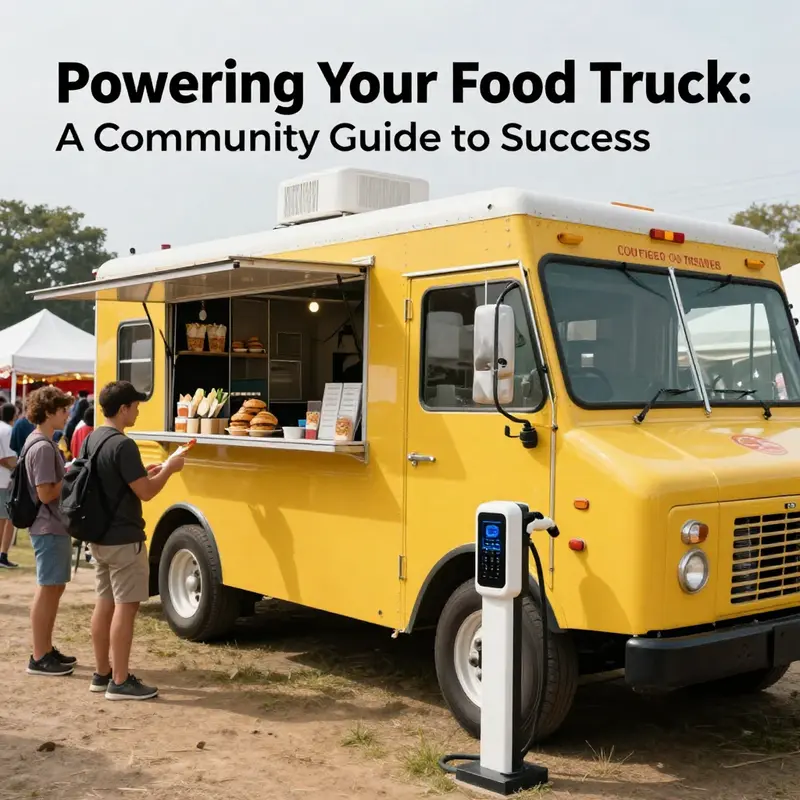
The hybrid model emerges as the most resilient blueprint for professional mobile food operators. It combines battery storage with solar charging a backup generator for peak loads or emergencies and an external grid input when available. This configuration minimizes downtime and maximizes flexibility in diverse settings. The external grid remains an option when the truck parks at a festival square with ample 220V outlets or during setup at a brick and mortar location that supports shore power. In this mode the system simply draws energy as needed much like a stationary kitchen and charges through the same BMS and inverter that govern the on board operation. The generator while often the most conspicuous piece in a hybrid system plays a crucial emergency role. It provides a reliable top up during exceptionally hot days long service windows or when a sudden equipment upgrade increases load beyond the expected baseline. The key to success with a generator is thoughtful integration sound attenuated enclosures fuel logistics automatic startup/shutdown logic and a category of duty cycle that keeps the engine within its sweet spot for longevity.
When these elements come together the business benefits become clear beyond the immediate operational practicality. A battery based system gives operators near silent operation inside markets and buildings where noise ordinances and emissions restrictions are strict. It also reduces diesel logistics the fuel maintenance and storage demands that complicate mobile service. The environmental footprint is lower and the brand narrative becomes more appealing to eco conscious customers who value responsible street dining. Yet the shift is not merely about technology. It is about rethinking workflow service design and customer experience around a more predictable and controllable energy profile. For instance staff can stage service begins with a calculated energy budget using pre cooling and pre heating during off peak times when possible and then relying on stored energy to carry the peak rush. In hot markets the refrigeration strategy supported by a well sized battery bank can be the difference between steady service and a mid shift pause while the system rebalances.
Real world practice reinforces these principles. A well executed battery system is not an isolated package but part of a broader equipment strategy. It requires careful load calculation thoughtful defensive margins and a plan for ongoing maintenance. It invites operators to collect data on daily energy use track how changes to the menu or service hours affect power demand and adjust the system accordingly. The result is a kitchen that can respond to the days weather the size of the crowd and the realities of urban infrastructure with a steady reliable cadence rather than a reactive scramble. It also opens opportunities for innovations in cooking and display equipment that are designed around energy efficiency creating a more integrated and responsive street food experience.
For engineers and operators seeking a deeper technical dive into battery powered mobile operations a comprehensive guide to composition structure and performance provides a rigorous foundation and practical insights that can be translated into the truck chassis and galley. This resource offers detailed calculations safety models and engineering approaches that support robust scalable implementations. See the external resource below for a thorough treatment of the subject.
External resource: https://www.engineering.com/battery-powered-food-truck-guide
Power on Wheels: Harnessing Onboard Generators to Keep a Mobile Kitchen Running
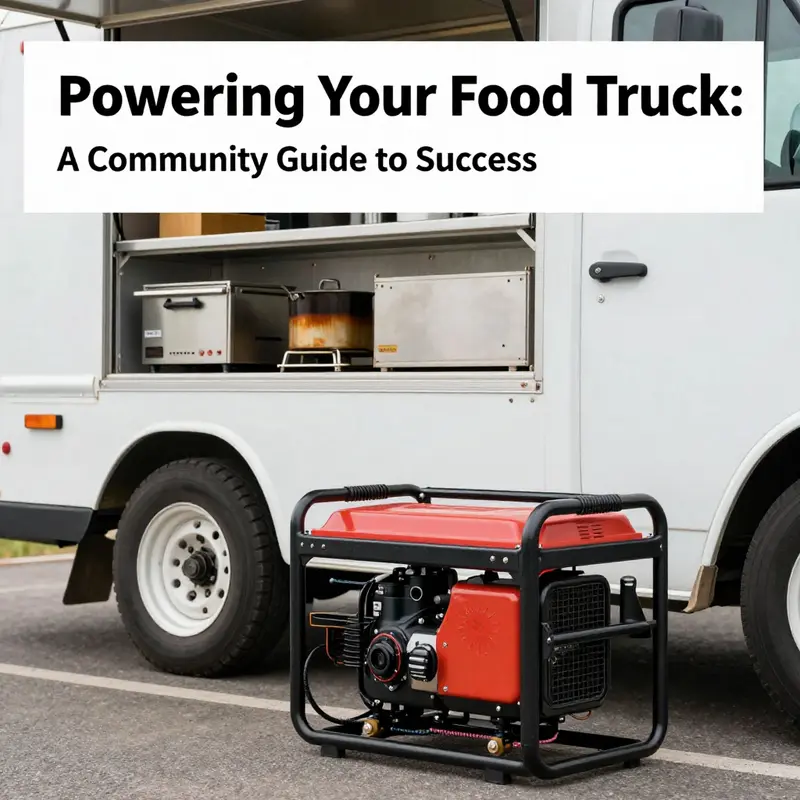
Power is the quiet heartbeat of a mobile food operation. When a truck rolls into a festival, a neighborhood street fair, or a remote catering site, the ability to generate reliable electricity on demand becomes less a convenience and more a core capability. Onboard generators offer that independence. They provide a steady heartbeat of AC power that can run chillers, cooktops, fryers, lighting, ventilation, and a host of support systems without waiting for a nearby outlet or a public circuit to come online. In practice, this approach is about balance: a generator tallies the immediate, high-demand needs of a busy kitchen while existing vehicle systems and future upgrades remain ready to blend in when conditions favor it. The result is a power architecture that can respond to location, weather, and event schedule with quiet confidence, so cooks can focus on recipe, service speed, and guest experience rather than the whims of the grid or the sun’s mood.
At the technical core, an onboard generator is a self-contained power plant integrated into the vehicle. It relies on a compact internal combustion engine—diesel or gasoline—to spin an alternator that produces alternating current. An automatic voltage regulator helps keep that current steady, protecting sensitive appliances from voltage spikes and drops that could shorten their life or degrade performance. The generator’s output feeds into the truck’s electrical distribution system, which includes the main service panel, breakers, and busbars that route power to refrigerators, freezers, cooking equipment, and lighting. In well-designed setups, a transfer mechanism automatically switches between generator power and other sources as conditions change. This switch-over must be seamless enough that a restaurant-grade refrigerator never experiences an interruption, and a multi-burner range never stumbles during a peak service period.
The practical advantages of this arrangement are clear. First, it liberates operators from the constraints of grid access. A food truck can park in a location without a dedicated outlet and still keep a kitchen running with a reliable power backbone. Second, it scales. A well-sized generator can feed a high-demand kitchen with sufficient headroom to handle simultaneous tasks—refrigeration, hot hold, water heating, and exhaust ventilation—without overloading the system. Third, it can be paired with engine-driven charging in some fleet configurations. When the vehicle is moving, the main drive system can contribute to battery charging, helping to maintain a buffer for stationary operation. This approach reduces idle fuel usage and improves overall reliability, especially for operators who constantly move from site to site.
To understand why a generator-based approach remains appealing, it helps to consider typical load patterns in a mobile kitchen. Cold storage units demand steady, low- to mid-range power over long periods to maintain safe temperatures. Refrigeration cycles kick in and out, drawing surges that the distribution system must absorb without tripping breakers. Cooking appliances impose higher, short-duration loads during prep, service, and peak demand windows. Lighting and ventilation add their own requirements, often with higher draws during long events or in poorly lit or drafty outdoor environments. An onboard generator designed with these patterns in mind will feature a large enough continuous wattage rating to cover sustained use and a generous surge capacity to handle startup spikes. In such a configuration, a single 5-kilowatt class unit is common, though the exact footprint varies with the planned menu and anticipated service length.
A key capability in this ecosystem is the integration of the generator with the truck’s power management strategy. The best installations employ a logical separation of loads, so critical equipment like refrigeration and cold-holding devices stay protected even during temporary surges. A well-conceived system uses a combination of a robust main panel, a smart distribution strategy, and, where appropriate, a battery-based buffer that can carry essential functions during a brief transition. This buffering is not merely about silent operation; it also safeguards equipment designed to run with very specific voltage and frequency characteristics. In practice, the combination of generator-driven power and protective circuits translates into fewer service interruptions and greater predictability for a kitchen team that needs to serve consistently under varied conditions.
Placement and safety are more than matters of comfort; they are essential design considerations. Generators belong outside the occupied area of the vehicle to minimize exposure to exhaust and heat. A well-ventilated, weather-protected enclosure with a dedicated exhaust channel protects both staff and customers. Sound attenuation is another critical factor. Commercial systems are often mounted behind the vehicle or in a purpose-built sound-dampening enclosure to keep noise within acceptable levels for neighbors and venue organizers. The fuel system, too, requires careful handling. Storage containers should be designed for mobile use, and fuel lines must be safeguarded against vibration, temperature swings, and accidental puncture or leaks. Local regulations frequently specify clear separation between fuel storage and cooking fuels, spill containment measures, and fire suppression readiness. A thoughtful operator treats fuel management as part of the daily ritual rather than a late-afternoon afterthought, scheduling regular checks for leaks, line integrity, and fuel quality.
Operation requires discipline as well as mechanical reliability. Start-up sequencing matters. When powering a busy kitchen, it is generally prudent to stage the generator to bring up essential systems first, allowing refrigeration to stabilize before high-energy cooking loads are introduced. This sequencing preserves the life of compressors and reduces the risk of temperature excursions. Periodic testing becomes a ritual, not an emergency drill. Operators should perform pre-operation checks that include listening for unusual engine noises, verifying oil and coolant levels, inspecting air intake and exhaust paths, and confirming that the transfer switch functions correctly. A failed transfer sequence can leave critical equipment without power at a moment when the kitchen demands peak performance. A robust routine also includes a basic safety audit: CO detectors in the vicinity of the vehicle, a clearly marked emergency shutoff, and an exterior notice that warns bystanders of exhaust and noise. These considerations are not luxuries; they are practical requirements that support reliability and safety at every event.
The discussion would be incomplete without acknowledging maintenance as the quiet engine of reliability. Regular servicing is the difference between a generator that runs cleanly for years and one that coughs out smoke, noise, or stumbles when the clock runs long. Key maintenance tasks are straightforward but non-negotiable: check and replace air and fuel filters on a schedule that matches usage intensity; monitor oil level and quality, and perform oil changes at manufacturer-recommended intervals; inspect hoses, belts, and the exhaust system for wear or cracking; and verify coolant levels and the operation of the radiator or heat exchanger. Fuel quality also matters. Diesel and gasoline degrade; moisture in the fuel can cause corrosion and algae growth in older systems, leading to clogged lines and unpredictable starts. Storing fuel properly, using stabilizers, and keeping containers clean are prudent habits that minimize downtime. Across the fleet, operators often pair routine checks with a simple log that tracks hours of operation, service dates, and any anomalies observed during nightly shutdowns. With a disciplined approach, the generator remains a dependable backbone that can meet unplanned spikes in demand or long, multi-site events without reconfiguration or renegotiation of service schedules.
An onboard generator does not exist in isolation. It is part of a broader strategy to balance reliability, cost, and environmental responsibility. In many fleets, the generator is not the sole source of power; it sits alongside energy storage and, where feasible, renewable charging. A battery-based buffer can absorb transient loads and provide a silent, emissions-free baseline for routine operations. Solar charging, even in small amounts, can contribute to daytime recharging when the sun is high and the truck is stationary for service or set-up. A hybrid approach often yields the most resilient operation: the generator handles peak demand and emergency scenarios, while energy storage and solar reduce runtime and fuel consumption during less intensive periods. This hybrid paradigm aligns with the broader trend toward greater efficiency, lower operating costs, and improved environmental performance—without compromising the operator’s ability to serve customers on time.
The practical takeaway is clear: onboard generators deliver independence and reliability, but they demand thoughtful design, careful placement, disciplined operation, and regular maintenance. A well-conceived generator solution begins with an accurate load assessment. Operators should list every appliance that could be powered during a typical service window, map their starting surges, and add a comfortable margin for peak demand. A conservative approach—slightly over-sizing the generator rather than pushing a smaller unit to its limits—often pays dividends in longevity and service consistency. The goal is not to chase the most powerful equipment but to sustain a predictable, safe, and efficient workflow from setup through service and teardown.
When a fleet or owner-operator seeks to anchor this system to existing operations, the choice of support networks becomes important. Some operators rely on established truck-service networks that can service, repair, and calibrate electrical and mechanical subsystems while keeping downtime to a minimum. For those exploring the practical, real-world integration of a power plant with the vehicle’s architecture, a reliable reference point can be found in the broader maintenance ecosystem that supports heavy-duty mobile rigs kenworth-truck-centres-45-years-family-business. This link provides context on the kind of service infrastructure that sustains complex, mission-critical mobile platforms as they scale their power and electrical capabilities.
Ultimately, the onboard generator story is about harmony. The generator delivers power when and where it’s needed most. The vehicle’s electrical system distributes that power to where it matters, the staff’s workflow remains uninterrupted, and the business grows more predictable in the face of unpredictable environments. The best operators understand that a generator is not a one-off gadget but a carefully integrated component of a larger energy strategy. They recognize that the most resilient kitchens on the road are the ones that pair strong engineering with disciplined operations, preparing for both the routine and the exceptional with equal grace. As the chapter on hybrid power systems suggests, the optimal configuration often blends a robust generator with a capable energy storage solution, supplemented by clean charging from solar wherever practical, and reinforced by the option to grid-feed or shore-feed whenever a location offers it. In this way, the mobile kitchen can stay vibrant, compliant, and consistent no matter how the day unfolds.
External resource: https://www.tbb-electric.com
Harvesting the Sun: Designing a Solar-Powered Backbone for a Mobile Kitchen on the Move
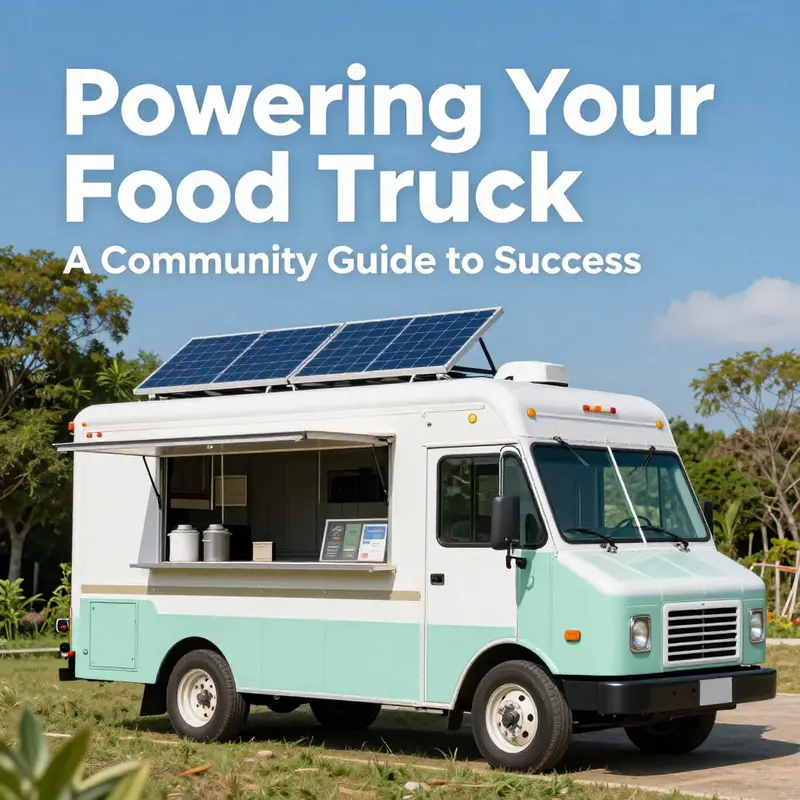
Every mobile kitchen carries a story about resilience—how it keeps flame, cold, and light alive as it travels from one market to the next. In that story, solar power is not a luxury but the quiet spine that supports consistency. Integrating solar into a mobile food truck isn’t about adding a gadget; it’s about building a system that aligns with the real rhythms of a working day. The aim is to create an energy supply that is reliable, scalable, and smart enough to adapt to shifting weather, fluctuating traffic, and the unpredictable tempo of events. When done well, solar power reduces fuel burn, lowers emissions, and loosens the grip of location on the business. It becomes a form of operational independence that can translate into healthier profits and a calmer crew during peak service times. The path to that independence starts with a clear view of energy needs and a practical plan for capturing and storing the sun’s bounty, day after day, week after week.
The first step is always a sober assessment of energy needs. A food truck runs on a mosaic of devices: refrigeration to keep perishable ingredients safe, cooking equipment that can push heat and power demands skyward, lighting for both interior visibility and street-side appeal, and electronics for point-of-sale systems, fans, and ventilation. A reliable calculation moves beyond purchasing assumptions and into daily habits. For example, consider a refrigerator rated around 200 watts that operates eight hours a day. Multiply the power by the hours, and you arrive at about 1.6 kilowatt-hours per day. That single appliance paints a picture of the scale solar must meet, but it’s only one tile in a larger mosaic. When you add a compact commercial cooler, a high-intensity induction cooktop, an oven, a reach-in freezer, or a fry station, the day’s total demand climbs quickly. The moment you quantify each device’s runtime and duty cycle, the plan begins to form.
What follows is a deliberate choice about how to design the solar system to match these demands. For mobile applications, flexible solar panels have significant appeal. Their light weight and ability to conform to curved roof surfaces are especially valuable on vehicles where roof space is precious. A typical setup favors monocrystalline flexible panels for their efficiency, often paired with an MPPT (Maximum Power Point Tracking) charge controller. The MPPT controller is the bridge between sun and storage, extracting maximum usable energy from variable light conditions and directing it to the battery bank with protection against overcharging and excessive current. A non-penetrating installation method is worth serious consideration for a mobile kitchen. Adhesive-backed panels or clamping solutions reduce the risk of leaks and preserve the vehicle’s warranty, yet still deliver robust weatherproofing when paired with proper sealing and protected wiring.
Beneath the panels sits the battery bank, the heart of any solar-equipped food truck. Lithium iron phosphate (LiFePO4) chemistry is a common choice for its longevity, safety, and relatively light weight. A practical target for many operators is a storage capacity in the range of a few kilowatt-hours—think 2 to 4 kWh—to provide a buffer for nighttime use and cloudier days. The numbers matter because the battery’s depth of discharge, cycle life, and charging rate all influence how much solar capacity you truly need. A modest 2 kWh bank can power a 1 kW load for roughly two hours, which is a decent cushion for peak service periods, but you would want more headroom if your daily operation includes longer cooking sessions, a high-demand refrigeration cycle, or extended outdoor events.
Safety and longevity hinge on a robust battery management system (BMS). The BMS protects cells from overcharge, over-discharge, and excessive temperature. It also communicates with the inverter to prevent sudden power drops that could spoil food safety or stall a critical process. In practical terms, a well-tuned BMS continually guards the system while the truck roams from dawn to dusk and into the evening rush. The inverter, ideally a pure sine wave unit, converts the DC energy from the battery into clean AC power suitable for kitchen appliances. The size of the inverter should reflect peak load plus a reasonable surge margin. For a modest operation, a 1.5 kW inverter with surge capacity around 3 kW is a common and sensible starting point. This pairing preserves appliance performance—especially for equipment that demands stable, clean power such as induction cooktops—without oversizing the system and paying for unused capacity.
These components form a solar backbone that can operate in a hybrid mode. The best practices emphasize not a single source of power, but a system that gracefully blends solar with other options. The most common hybrid configuration pairs solar with a battery bank and a backup generator. Solar handles day-to-day charging and silent operation, the battery stores energy for nighttime or cloudy days, and the generator is reserved for peak demand or emergencies when uninterrupted power is non-negotiable. The beauty of this arrangement lies in redundancy: a fallback option that keeps the kitchen humming during an equipment-heavy service or an unusually long event. In a modern food truck, this triad is more cost-effective and resilient than depending on a single source.
This is where the installation details matter as much as the components themselves. Roof layout, panel orientation, and shading are practical realities that can break or make the system’s performance. Roof-mounted panels should ideally face a southern exposure in the Northern Hemisphere, with an angle close to the latitude to maximize daily exposure. On a moving platform, you must protect wiring with weatherproof connectors and robust conduits, and you should run cables away from heat sources or moving parts to minimize wear. Simple precautions—such as choosing non-penetrative mounting when possible, using weatherproof sealants, and making sure that the sum of added height complies with local regulations—save headaches in the long run and reduce the risk of leaks or structural concerns.
Maintenance and monitoring are not afterthoughts but continuous practices. Clean solar panels with a soft, damp cloth to remove dust or grease. Check connections for corrosion and tightness on a regular cadence. A good monitoring system should display the state of charge, the current energy production, and the load in real time. This visibility is empowering. It tells you when the system is approaching capacity limits, when to shift to a backup generator, or when to adjust a menu to reduce peak energy usage. Routine energy audits—reassessing loads as the menu evolves or as new cooking devices are added—keep the solar backbone aligned with the business’s evolving needs. The more you treat energy like a daily inventory, the smoother the operation becomes.
To make this practical, it helps to imagine a concrete, working scenario. Consider a truck that operates with a 1.2 kilowatt solar array mounted on the roof, connected to a 2 kilowatt-hour LiFePO4 battery bank managed by a capable BMS. The system powers two modest LED interior lights, a compact fridge, and a 1,000-watt induction cooktop used during peak service. A tablet-based point-of-sale system runs on a separate feed, drawing only when a transaction is processed, yet the overall energy footprint during a busy lunch shift remains largely contained thanks to the efficiency gains and the silent operation of the batteries. On a sunny day, the solar array replenishes the battery while the truck is on-site, and the remaining energy is reserved for the afternoon rush or for cooking at outdoor events. If the service area is in shade or if a sudden cloud front arrives, the battery keeps the essential equipment running while the generator can be engaged to handle any unexpected peak. This is the kind of resilience that differentiates a well-run mobile kitchen from one that struggles to maintain consistent service.
A real-world example of how this works in practice can be found in the broader scene of off-grid adventure vehicles. For a tangible look at how solar-powered systems support mobile cooking and living, see the case study of off-grid adventures that features a solar-equipped camper-truck hybrid. The project demonstrates how a compact solar array can support essential appliances and lighting, extend operating hours, and maintain comfort without tethering the vehicle to a shore power outlet. You can explore that example here: unleash-off-grid-adventures-meet-the-godzilla-truck-camper.
The chapter’s practical advice also comes with a mindset: start small and grow responsibly. Begin with a modest solar plus battery setup and incrementally add capacity as you confirm performance and understand demand patterns. Early on, you can treat solar as a means to reduce fuel purchases and to lower the crew’s exposure to noisy generators during service windows. As confidence builds, you’ll be able to scale to larger battery banks, more efficient panels, or higher-capacity inverters. The financial math matters here, too. While the upfront costs can be higher than a traditional grid-reliant setup, the long-term fuel savings and the reliability premium offered by a hybrid solar system can yield favorable payback—especially for businesses that operate in remote markets, or during multi-day festivals where access to shore power is uncertain.
Incentives around solar installation are not merely abstract policy considerations; they translate into tangible dollars and can accelerate the economics of adoption. Depending on your location, you may be eligible for tax credits, rebates, or other incentives that reduce the net cost of installation and equipment. When planning a solar upgrade, it is prudent to consult with a licensed installer who can evaluate structural suitability, electrical integration, and local permitting requirements. They can help ensure that the system design meets electrical codes and safety standards, and that the integration with existing equipment does not compromise performance or safety.
The broader design philosophy for a solar-powered mobile kitchen is clear: balance, redundancy, and smart energy management. The ideal system does not merely generate power; it yields dependable uptime, enables quiet operation, and supports a menu that can adapt to sunlight-driven constraints. It respects the realities of urban markets, where grid access can be inconsistent and events may demand longer service hours than anticipated. It also recognizes the growing appetite for sustainable practices among customers, who increasingly expect businesses to minimize environmental impact without sacrificing quality or speed. Solar power, when thoughtfully wired into the back end of a mobile kitchen, delivers both operational continuity and a narrative of responsibility that can resonate with diners and event organizers alike.
For readers who want a quick-start blueprint, here are the essence-and-essentials distilled: commence with a thorough energy inventory, prioritize flexible solar panels and a capable MPPT controller, select a LiFePO4 battery bank with adequate headroom, size a pure sine wave inverter to meet peak loads, and plan for a hybrid architecture that includes a reliable backup option. Mount, seal, and route with an eye toward durability and compliance. Maintain a steady cadence of monitoring and maintenance, and scale up deliberately as your business grows. In many ways, solar power for mobile kitchens mirrors the craft of running the truck itself: it demands careful preparation, disciplined execution, and a willingness to iterate for better outcomes over time. The sun is abundant; the challenge is to harness it efficiently so that the kitchen can serve, weather after weather, market after market.
External resource: For a broader, authoritative overview of solar applications in commercial and mobile contexts, see the Solar Energy Technologies Office page from the U.S. Department of Energy at https://www.energy.gov/eere/solar/solar-energy-technologies-office.
Final thoughts
Empowering your food truck operation doesn’t have to be complicated. By understanding various power sources—from external grids and battery systems to onboard generators and solar panels—you will ensure your mobile kitchen runs smoothly no matter where you park. Embrace these methods to keep your equipment energized and serve up mouthwatering dishes to the vibrant Lakewood community. Remember, the right combination of power sources can lead to sustainability, cost-effectiveness, and an unforgettable culinary experience for every customer who visits your truck.