
In Lakewood, food trucks are not just about delicious meals; they’re a vibrant part of the community. Whether you’re an aspiring food truck operator eager to reach your customers or a tourist ready to sample the local flavors, knowing how to connect with food trucks is essential. This guide will show you three effective methods: engaging through social media, leveraging food truck apps and websites, and direct contact through phone calls or local events. With these tools at your disposal, your culinary journey in Lakewood will be both delightful and stress-free.
Chasing Flavor Through the Feed: Mastering Contact with Food Trucks Through Social Media Platforms
When a craving hits and you want that first bite soon, the quickest route to the truck is often through the screens that track them. Social media has transformed the way people discover where a truck is, what it’s serving, and how to reach the operator for a quick question or a special request. It is no longer enough to know the name of a truck or where you last saw it parked; the modern interaction begins with a thread, a post, or a message that travels a path through a network of real-time updates, saved stories, and event pages. The result is a connected dance between kitchen on wheels and the appetite of the city, a dialogue that unfolds in public posts and private messages, in comments that spark quick clarifications, and in direct inbox conversations that can arrange a meal with the same ease as reserving a table at a restaurant. To navigate this world well, you need a mindset as flexible as the routes a truck travels and a method as straightforward as the simplest of questions you might want to ask. The key is not merely to locate a truck but to contact it with clarity, respect, and timing that recognizes the way these small businesses operate in a crowded, fast-moving ecosystem.
First, identify the truck you want to reach. This step may seem obvious, but it benefits from two practices that keep you efficient and courteous. Start by imagining your target not as a single entity but as a living, moving operation that shows its life across multiple platforms. A truck may post daily location updates on Instagram stories, publish a menu snapshot on Facebook, and provide a concise locator pin on TikTok or X. You can also discover trucks by checking local event calendars, farmers markets, or popular lunchtime routes where multiple vendors rotate through. Apps designed for the street-food scene—whether they are dedicated mapping services or general review platforms—often link directly to the operator’s social channels or provide quick buttons to send a message or call. In many cases, you will have a choice about how you reach out: a message, a comment, or a call if a number is posted. The goal at this stage is to confirm the person behind the truck’s public persona is the same person who runs the window, so your request lands in the right inbox and is easy to verify when the time comes to order.
Once you have the truck’s profile in sight, the next move is to follow or subscribe. This is not simply a strategy for stalking the latest special; it is a way to stay informed about logistics that affect your ability to connect. Food trucks tend to treat social media as a two-way street: one route for updates and another for conversations. Following a truck allows you to receive real-time updates about location shifts, menu changes, and any scheduled events that could change where you might pick up your dinner. It also signals your interest and respect for the operator’s time. When you tap that follow button, you are adding yourself to a small but meaningful community that includes regular customers, local vendors, and event organizers who thrive on reliable communication. In practice, a new follower can become a regular, and a regular often becomes a friend of the business, because the road to a good interaction begins with listening.
Direct messaging is where the conversation often becomes concrete. A private message feels more efficient for questions that require discretion or specifics—dietary restrictions, ingredient queries, or whether a particular item can be prepared on a certain day in a certain location. The best DMs are short, specific, and polite. Begin with a brief introduction and identify the purpose of your message: a pickup location, a reservation for a group, or a request to know if a particular item is available at a given time. Include useful details the operator can use to respond quickly: the date and time you plan to visit, the number of people in your party, any dietary restrictions, and the preferred pickup method. If you are asking about a customization, be precise about what you want and acknowledge that the truck may not be able to accommodate every request. Acknowledge the realities of a mobile kitchen: every day is a flux of locations, a new lineup of items, and a schedule that is as much about logistics as it is about flavor. A concise, thoughtful DM can yield a direct answer, a suggested substitute, or a note about next-day availability without clogging the operator’s inbox.
Beyond DMs, engagement in the public space of social feeds is also part of a respectful communication practice. Comment thoughtfully on posts rather than just dropping a question. For example, when a truck announces a new menu item, a simple compliment or a constructive query about allergens in that item can prompt an operator to respond publicly with more details. This kind of engagement helps you build familiarity without pressuring the truck to respond privately. It also gives other customers the sense that you are part of a community that cares about the truck’s craft, which can be a small but meaningful signal to the operator that you are a repeat customer rather than a one-off visitor. If a direct answer is necessary, you can then follow up with a DM that politely references the publicly observed details, such as your earlier comment or the specific post that prompted your question. The result is a thread that remains navigable for others who might have the same concerns, while still preserving your privacy and the truck’s boundaries around sensitive information.
Another pillar of effective social contact is the habit of checking for and respecting updates and announcements. In the fluid rhythm of street food, schedules shift with weather, events, and permit windows. Trucks often post their location for the day or week, sometimes with a reminder about whether they accept cash, digital payment methods, or pre-order options. Followers who routinely check these updates are less likely to miss a window where contact is meaningful—where a bag of hot food can be claimed in a single stop instead of chasing a moving target across the city. This practice also keeps you aligned with how the truck communicates; some operators post a simple text update with a pin drop, while others use a short-form video that shows the day’s route. When you have built a pattern of following and listening, you begin to interpret the signals more quickly. You learn to distinguish between a routine post announcing a new menu item and a call for pre-orders for a large group, which may require a direct message rather than a public comment.
Local online communities play a crucial, often overlooked role in social contact. Facebook groups and city-specific forums dedicated to food trucks can be a treasure trove of practical tips. Members share where a truck is likely to appear, retrospective notes about reliable vendors, and insights about the best times to catch a particular route. Being part of these communities does not mean you abandon direct contact with the truck; it means you augment your information with a layer of communal knowledge, which can make your outreach more precise and timely. If you follow a truck on multiple platforms, you gain resilience. A post about a location on Instagram can be cross-checked against a comment in a Facebook group or a tweet from the operator’s X account. This cross-channel approach reduces the chance of miscommunication and increases the likelihood that your message lands in the right inbox at the right moment.
A practical thread runs through all of these steps: treat social contact as a handshake, not a missive. People run food trucks because they love cooking, not because they want to manage a flood of messages. Respect their time, keep your requests concise, and be explicit about what you need. If you are asking for a reservation, mention the date, time, number of guests, and any accessibility considerations. If you are requesting a substitution or modification to a dish, describe the change clearly and be mindful of possible allergen cross-contact. When in doubt, offer a flexible alternative. These courtesy checks can transform a potential one-line inquiry into a constructive exchange that leads to a quicker and more accurate response.
As you refine this approach, you might also discover ways to use the social landscape to your advantage without overstepping boundaries. For example, if you see a truck posting about a behind-the-scenes story or a day-in-the-life moment, you can react with a thoughtful comment that acknowledges the craft, the sourcing, or the seasonal changes in the menu. Operators often read these conversations as feedback channels; a well-timed compliment or a patient question can establish you as a trusted supporter whose engagement matters. Over time, this can translate into better timing for your visits, priority placement at a crowded event, or even the occasional advance note about new specials before they publicly go live. The social layer becomes less about fishing for a momentary bite and more about joining a community around good food that happens to move through spaces and places with the rhythm of a city. In this sense, contacting a food truck through social media is not a one-off interaction; it is part of a dynamic relationship that evolves as both sides learn each other’s patterns and preferences.
The practical glue holding all of this together is clear communication and a respect for the channel you use. Instagram stories, Facebook Messenger, X posts, or TikTok comments each have their own norms. Some operators respond quickly to DMs, appreciating the efficiency and privacy of a private thread; others may prefer a public reply to keep the information accessible to all followers. The best approach is flexible: when your question is straightforward, a DM is appropriate; when the information is broadly useful or when you want to test a response publicly, a comment can serve as a lightweight probe. If you are organizing a group visit or a corporate event, a direct, straightforward note that explains time, place, and expectations is often the most effective path. You can also fold in a gentle reminder about the day’s location or a quick confirmation of payment method if that is crucial to your plan. The point is to make it easy for the operator to respond, with minimal back-and-forth friction and maximal clarity about what you need and when you need it.
In the real world, the lessons crystallize into a simple practice: follow, listen, ask, and respond with patience. The channels are many, but the etiquette is simple. Be precise about your needs, be respectful of the operator’s time, and be prepared to adapt to the road conditions of a mobile kitchen. If you treat contact as part of an ongoing dialogue rather than a one-time transaction, you will likely discover that social media not only helps you locate your next meal but also helps nurture a relationship with operators who take pride in their craft. For those who frequent city neighborhoods that host regular food-truck gatherings, this approach can turn casual visits into reliable routines. It is the difference between chasing a moving target and joining a community that moves together toward a common appetite. And while every city has its own cadence—its own set of preferred platforms and local quirks—the underlying practice remains consistent: identify, follow, reach out with clarity, engage thoughtfully, and stay attuned to the updates that guide when and where to find the next plate.
For readers curious about a concrete example within a local ecosystem, consider how city organizers curate a directory of trucks, sometimes aggregating transport routes, event calendars, and contact details into a single hub. These directories are often dynamic, with member trucks updating schedules and contact options in real time. If you want to explore a representative model of a local roster and its reach, you can follow a curated set of rallies that showcase the movement—the kinds of gatherings that bring operators and customers into one place and make contact points even more meaningful. A practical reference that illustrates this concept is a local rally compilation, which you can explore at 2026s-best-food-truck-rallies-what-lakewood-has-in-store. This resource demonstrates how an organized backbone for mobile vendors helps customers locate trucks and reach out in a structured way, while still preserving the spontaneity that makes street food appealing. It is a reminder that social media isn’t the only tool; it works best when integrated with local knowledge, official directories, and a shared sense of timing around events and peak hours.
Taken together, the social route to contacting food trucks is not a single action but a sequence of mindful steps that respect the real-world constraints and opportunities of small mobile kitchens. The practice rewards patience, responsiveness, and a willingness to adjust your plans to fit a truck’s itinerary. In cities where trucks form a vibrant, rotating cast, you will find that the yields are high when your approach is steady and considerate. You will learn to read the signs—the day’s schedule posted in a story, the pin on a map indicating a new location, the quick confirmation reply to a DM—and to reply with equal clarity. The result is more than just a successful pickup; it is an interaction that acknowledges the craftsmanship behind the food, the effort that goes into moving a kitchen from one curb to another, and the shared joy of connecting people with flavor in motion. This is how social media becomes not just a conduit for information but a channel for relationship, trust, and the simple human pleasure of knowing where to find a good meal when the clock is ticking and the appetite is loud.
For further context and broad perspectives on the role of social media in food-truck outreach, see the external resource linked below. The insights there complement the practical steps outlined here by expanding the lens beyond the city boundaries and into how the broader audience experiences street-food communities and their online presence.
Riding the Digital Wave: Contacting Food Trucks Through Apps and Websites for Real-Time Access
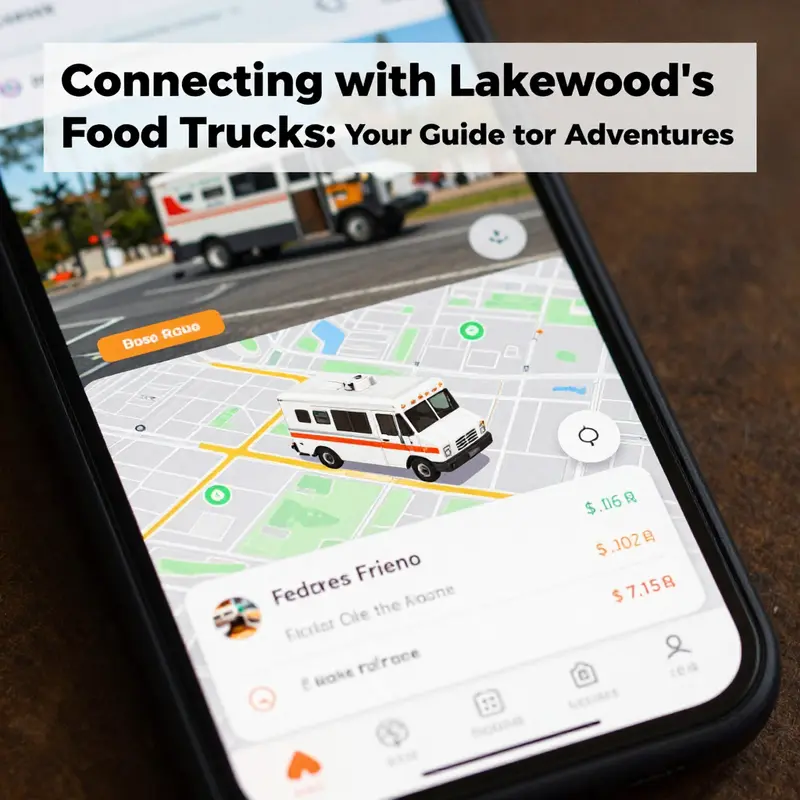
In cities where food trucks weave through neighborhoods like itinerant chefs, the fastest and most reliable way to catch their next stop is through a pocket of digital tools built for real-time connection. Food trucks move with the rhythm of the day—lunch crowds, after-work cravings, weekend festivals—and apps and websites offer a map to that rhythm. This chapter explores how to contact food trucks through these digital channels in a way that feels natural, efficient, and respectful of the trucks’ own rhythms. It’s about transforming scattered sightings into reliable opportunities to eat well, without chasing a moving target. The core idea is simple: you want accurate location data, clear operating hours, a view of the menu, and a direct line of communication that respects the operator’s time. Modern platforms, when used thoughtfully, can deliver all of that in a single, streamlined experience.
Real-time location tracking sits at the heart of this system. When a truck uploads its position to a map-enabled app or website, you no longer have to guess where to find it or when it will be there. You can see the truck’s current location, its likely route for the next hour, and any adjustments caused by traffic, weather, or an event schedule. This level of visibility helps you plan more efficiently. If you’re in a business district and want a quick lunch, you can watch for trucks that announce a move toward the office campuses. If you’re at a neighborhood festival, you can track several trucks as they rotate in and out of a venue, comparing wait times and lineup between them. The experience becomes less a treasure hunt and more a choreography of timing. This is especially valuable for people who are early in their exploration of food-truck options or who are coordinating a group outing where timing matters as much as taste.
Alongside live location data, these platforms often provide operating hours that extend beyond what you might see on a storefront sign or on a single street corner. Trucks run on schedules that shift with the day—weekday lunch rushes, Saturday farmers markets, or special event appearances. A well-designed app or website will present a truck’s hours in an easy-to-scan format and, when possible, offer updates if a truck extends or shortens its shift. That information is critical because it helps you decide whether you should travel now or wait for a later appearance. It also reduces the risk of arriving only to find a line that’s wrapped around the block or a truck that’s already closed for the day. In combination, real-time location and operating hours give you a practical compass for planning meals on the go.
Menus are another cornerstone of the contact workflow. Apps and websites that host truck profiles typically feature menus that are updated in real time or near real time. A quick glance at the menu before you approach lets you gauge whether the offerings align with your cravings, dietary needs, or budget. Some platforms go further and show itemized prices, daily specials, and sometimes even photos of dishes. The value here is twofold: you gain a sense of what you’ll order before you reach the window, and the truck can reduce the friction at the point of sale by streamlining choices and reducing questions about availability. For newcomers, a posted menu serves as a gentle introduction to the vendor’s style and specialties, while returning customers can quickly confirm favorites and try new items without slowing down the line.
Direct communication within the app or website is where the interaction quality truly matters. A growing number of platforms offer messaging or order-placing capabilities that let you reach a truck without needing to call or shout across a crowded lane. The simplest form is a direct message or inquiry about a dish, a request for customization, or a note about allergies. More advanced setups support pre-orders, group orders, or even special arrangements for events. The key to making this work well is to be concise and respectful. State your request clearly, include essential details (such as pickup time, item names, quantities, and any dietary notes), and acknowledge any constraints the truck may have. It’s also important to remember that operators run a busy service with limited bandwidth. A message that asks for last-minute changes or a dozen customization requests may not be practical. The smart approach is to use the app’s ordering or messaging features when they are available and to consider calling or visiting in person only when it’s genuinely needed.
For users who enjoy the communal aspect of food trucks, event listings provide a broader canvas for contact. Trucks frequently appear at farmers’ markets, festivals, concerts, and corporate gatherings, and many official event pages include vendor contact information. When you know an event is happening, you can plan ahead by reviewing the vendor roster, noting which trucks align with your tastes, and identifying the best channels to reach them for pre-orders or catering requests. Event listings can also indicate the expected crowd size, parking logistics, and the time window when trucks will be on-site, all of which influence how you contact them. This context matters because a well-timed outreach from an organizer or a customer can help a truck manage its queue more effectively and ensure smoother service during peak periods.
For those who prefer a more self-directed approach, direct phone contact remains a reliable option. Even in an app-first world, certain trucks retain a public-facing phone number on their Google Maps or business profiles. If you’ve seen a truck at a location and want to confirm its schedule or reserve a batch of meals for a meeting, a quick call can be the fastest way to secure your order. The phone line is particularly useful for large orders, dietary accommodations, or special requests that don’t fit neatly into an in-app form. The caveat is that phone lines can be busy, especially during lunch peaks or at large events, so it’s wise to have a backup plan—either a pre-filled order in the app or a secondary contact method in case the line is tied up.
Another pathway that supplements apps and websites is the vitality of local social groups and online communities. Join neighborhood or city-based groups where trucks are discussed, recommendations are shared, and updates are exchanged. These communities often include seasoned patrons who know which trucks are punctual, which menus rotate frequently, and which trucks offer dependable responses to messages. The social fabric around food trucks isn’t just about discovering where to eat; it’s about learning a rhythm for communication. Community members can be a fast-track resource for finding trucks that need advance notice for large orders, or for sharing information about unusual hours caused by weather or events. In this ecosystem, the act of contacting a truck is not a single action but part of an ongoing conversation driven by proximity, appetite, and time constraints.
For anyone considering how to navigate these channels, a practical approach emerges. Start with a city-level search on an app or website that aggregates truck locations and menus. Filter by cuisine or dietary needs if you have them, and scan the results for proximity and operating hours. Open a profile that seems to fit your plan, and check the truck’s live location, current hours, and the day’s menu. If the platform supports it, prepare a pre-order or a message that outlines your pickup time and any customization. If timing is flexible, you can watch the live updates and adjust your plan to minimize waiting. As you become familiar with the interface, you’ll learn which trucks respond quickly to messages and which ones prefer pre-orders, and you’ll start integrating the practice of contacting trucks into your routine rather than treating it as a one-off errand.
From the trucks’ side, participation in these digital ecosystems is a way to reach more customers with less friction. Operators populate their profiles with current locations, hours, and menus so that customers can decide whether to visit. They also use messaging channels to clarify orders, coordinate pre-orders for events, and answer questions about ingredients or preparation methods. A well-maintained truck profile can dramatically improve the ordering experience by reducing miscommunications and speeding up service. However, each truck faces the trade-off of time spent managing messages versus time spent cooking. A thoughtful strategy for operators is to set clear expectations about response times, offer a simple set of customization options, and provide a reliable channel for urgent communications during peak periods. When both sides of the equation function smoothly, the exchange becomes a frictionless loop: the customer finds the truck, places an order or sends a message, the truck confirms or prepares the order, and the customer arrives at the window with confidence.
In formal terms, privacy and security are indispensable considerations in this ecosystem. Direct communication channels and in-app orders can involve personal contact details, payment information, and location data. It is essential to review the privacy policies of the platforms you use and to understand how your information is stored, shared, and used to tailor services. Reputable apps and websites publish transparent explanations of data collection, usage, and retention. When you engage with a truck through these channels, you should be mindful of what you share, avoid over-sharing sensitive details in public forums or on profiles, and take advantage of in-app privacy controls and settings. The same caution applies to events or groups where contact details may circulate more widely. In short, responsible use of contact channels protects both customers and operators while preserving the trust that makes these networks work.
An important note for developers and business owners exploring these tools is the possibility of building a unified, cross-platform experience that integrates live activity updates, weather services, and order management, enabling seamless interaction between customers and food trucks. The idea of a single codebase supporting iPhone, iPad, and Mac—while delivering real-time location data, dynamic menus, and direct communication—illustrates how the landscape of mobile commerce can evolve. A practical takeaway is to study how existing app architectures handle live data streams, user permissions, and offline fallbacks so that new tools can remain robust in variable network conditions. While the example here is a high-level view, the underlying pattern is clear: tightly coordinated data flows, clear user interfaces, and respectful, efficient communication models create a positive feedback loop between trucks and customers.
For readers who want to dive deeper into the technical possibilities, there is an established body of work that demonstrates how such features can be implemented in cross-platform environments. For developers or businesses interested in building such tools, Apple’s official Food Truck project tutorial demonstrates how to create cross-platform SwiftUI applications that integrate features like live activity updates, weather services, and order management—enabling seamless interaction between customers and food trucks. This example app illustrates how to craft a unified experience across iPhone, iPad, and Mac using a single codebase, balancing real-time data with user-friendly controls and reliable state management. While the conceptual blueprint here remains focused on practical contact workflows, the deeper technical reference can be a valuable compass for teams designing future versions of these platforms.
Beyond the technical and logistical considerations, there is a human element that binds the experience together. The best contact workflows honor the truck operators’ time and expertise. They present information succinctly, avoid clutter, and empower customers to act quickly when it matters. They also respect the unpredictability that comes with street food—the weather can shift plans; a new event can alter routes; supply chains can affect menus. A thoughtful approach recognizes that contact is not merely a digital handshake but a real-time negotiation of appetite, timing, and space. When you treat trucks as partners in your culinary journey, the digital tools you use become enablers rather than friction points. You gain greater access to a diverse range of cuisines, a sense of discovery, and a reliability that makes street food feel like a familiar, welcoming part of daily life.
If you happen to be in a region where a city maintains a consolidated directory or association page for trucks, you will often find a curated list of vendors and their preferred contact methods. In practice, that directory becomes a living index you consult before heading out, so you can decide which trucks to visit based on proximity, menu variety, and the likelihood of a quick response. For travelers and locals alike, this approach reduces the guesswork that used to accompany street-corner dining, turning a spontaneous craving into a well-timed, well-managed bite. The beauty of the system lies in its openness: you have many channels to reach trucks, and trucks in turn have avenues to connect with you, from real-time maps to direct messages, from event pages to phone numbers when needed. The best experiences emerge when you blend these channels as part of a simple, repeatable routine—one that keeps you in touch with the city’s moving kitchens while respecting the operators who deliver them.
As you adopt these methods, remember that the goal is not to overwhelm trucks with messages or to chase every update with manic fervor. It is to cultivate a reliable, efficient contact habit that aligns with the drivers’ workflow and your own appetite. Start with a clear plan: identify three to five trucks you’d like to follow, learn how each one communicates its availability, and experiment with the simplest, most efficient contact method for your typical needs. Practice makes mastery. Over time, you’ll find your preferred channels, you’ll understand the timing patterns of your favorite vendors, and you’ll recognize when to pivot to alternative trucks or venues should the weather, schedule, or crowd dynamics change. In the end, contacting food trucks through apps and websites becomes less about hunting and more about harmonizing your schedule with a mobile, vibrant ecosystem of culinary craft.
For those curious about how this contact ecosystem translates into real-world practice, consider this path: start by locating a few nearby trucks through a map-enabled platform, check their current location and hours, and preview the day’s menu. If the platform supports it, draft a concise message that captures your order and pickup time. If you’re planning a group meal, consider a pre-order to streamline service and reduce wait times. If the truck is near an event or market, review the event page for vendor contact details and possible pre-arranged catering options. When you feel ready, you can widen your reach by joining local food-truck discussion groups to learn from others’ experiences, including tips on the best times to visit and the most effective ways to place an order. It’s a continuous loop of discovery, engagement, and refinement, all facilitated by the digital tools that connect you to the city’s mobile kitchens.
For readers who want to explore related content about events and a broader local food-truck scene, the following resource offers context and updates on rallies and schedules in a metropolitan area that frequently hosts truck showcases. 2026s-best-food-truck-rallies-what-lakewood-has-in-store
External resource for further exploration of building these tools across platforms: https://developer.apple.com/tutorials/swiftui
In sum, the route to contacting food trucks through apps and websites is less about mastering a single app and more about understanding a workflow that respects both customer and operator. It’s a practice of looking for live location, checking menus, knowing operating hours, and choosing a communication path that fits the moment. The more you learn about how these platforms present information and manage interactions, the more natural it becomes to plan meals around the city’s rolling kitchens while supporting operators who pour craft and care into each dish. This approach—combining real-time data, clear menus, direct communication, and mindful privacy—creates a resilient and enjoyable framework for experiencing street food in an urban landscape that thrives on movement and connection.
Dialing Into Flavor: Direct Phone Contact and Local Event Listings as Pathways to Reach Food Trucks
In the vibrant world of mobile cuisine, direct phone contact and local event listings are reliable routes to reach food trucks. A brief, respectful call can yield real-time confirmations, while event calendars point you to trucks that frequent a city and may offer pre orders or private bookings. This chapter explains practical steps to combine these channels.
Direct phone contact: locate the truck’s number on their official site or social media. When you call, introduce yourself and your purpose quickly. Share the date, time, location, headcount, service style, and any dietary considerations. Have a rough budget in mind and be ready to discuss menu options, substitutions, and timing. Ask about availability, arrival windows, and any requirements such as parking or electrical hookups. If the truck cannot accommodate, ask for alternatives or nearby dates.
Local event listings: festivals, farmers markets, and corporate gatherings reveal which trucks are nearby and open to pre orders or private events. Check calendars from municipal sites or tourism boards. Reach out with a concise message referencing the event and location, and propose a brief window for a pre booking or on site catering. At a busy event, approach operators politely when the crowd thins and have a one paragraph summary of your event ready.
Practical plan: keep a two track sheet. A phone track with truck name, number, best call times, and notes; and an event track with event, date, location, and contact. Schedule regular updates and maintain professional cadence. Build rapport by acknowledging the truck’s constraints and expressing appreciation for their time.
By blending direct calls with event insights, you gain reliable access to vendors who can serve your group consistently. The approach is adaptable across cities and seasons, and with respectful preparation you can secure timely bookings and positive partnerships.
External resources: a public directory can help locate trucks by location and contact details, and event coordinators or vendor liaisons can simplify arrangements.
Final thoughts
Connecting with food trucks in Lakewood is an exciting journey filled with flavors and community spirit. By utilizing social media, apps, and direct contact methods, you’re well-equipped to reach the vendors and find amazing meals. Embrace the variety that Lakewood’s food trucks offer, and don’t hesitate to engage with them through these avenues. Consider becoming part of this thriving culinary scene, whether as a visitor or an aspiring operator!