
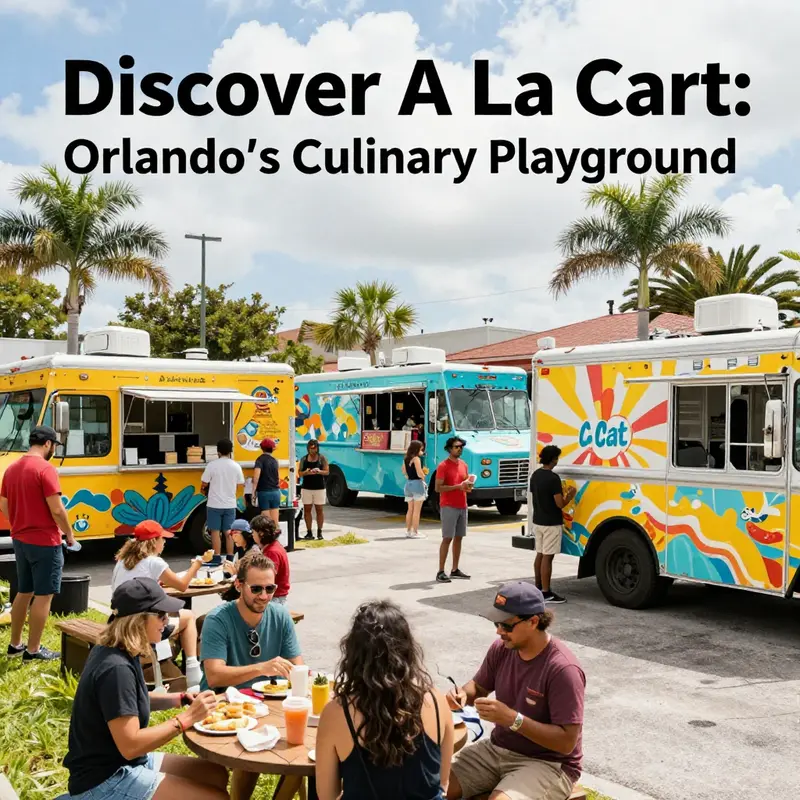
Imagine a place where the aroma of grilled tacos meets the sound of laughter and clinking glasses. Welcome to A La Cart in Orlando, a delightful outdoor venue formed around the idea of creating a culinary hub for food truck lovers and vendors alike. A La Cart is not just a place to grab a bite; it’s an experience where aspiring food truck operators can thrive alongside various food vendors, and a comforting pit stop for tourists visiting Lakewood. Throughout the following chapters, we’ll delve into what makes this location a unique dining experience, explore its diverse culinary offerings, soak in its social atmosphere, recognize its economic impact on local vendors, and discover community engagement efforts that deepen ties among residents and visitors. Join us on this flavorful journey!
Culinary Commons in Orlando: How A La Cart Transforms Food Trucks into a Community Hub
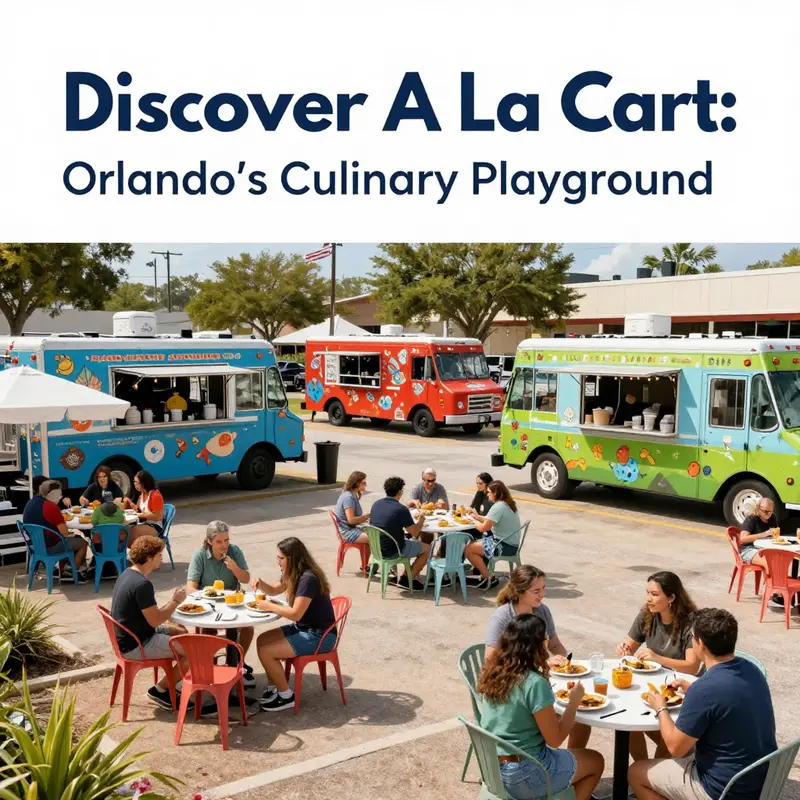
At 609 Irvington Ave, a casual breeze carries the scent of fried dough, smoky meat, and citrus. A La Cart in Orlando has grown beyond the familiar image of a single truck serving hungry passersby. It presents an outdoor dining venue that hosts a rotating cast of independent vendors, all under one open sky. The concept is simple and ambitious: curate a space where several food trucks and small stalls gather to offer a single, shared table of flavors. Instead of chasing one line to one menu, visitors can roam a loop of booths, sampling a dozen ideas in a single evening. The site functions as a culinary crossroads, inviting locals and visitors to mingle, compare notes, and decide what to eat by the moment rather than by a fixed preconception. This arrangement creates a living map of taste that evolves with vendors, seasons, and the city’s rhythm, turning a casual stroll into a curated tasting journey rather than a routine bite.
The architectural and logistical choreography of A La Cart makes this possible. The space is intentionally expansive, with wide walkways that allow people to move comfortably between trucks. Tables and seating are arranged to encourage conversation, not isolation, so diners can swap recommendations or savor bites accompanied by laughter and shared moments. The vendors themselves are independent, bringing a spectrum of techniques, ingredients, and cultural references. For patrons, the menu unfurls as a living catalog—a series of micro-stories told with sauces, spices, and textures. A single bite may recall a street corner in a distant city, while the next is familiar in a way that feels like a homecoming. This model reduces the friction of a city-wide culinary search, allowing guests to chase curiosity rather than commute between venues. That multi-venue approach echoes the spirit of Lakewood’s evolving food truck rallies, a format captured in 2026’s best food truck rallies in Lakewood. The presence of such a curated stage nearby is a reminder that Orlando sits within a wider conversation about how cities organize street-level food into social spaces rather than simply markets.
Reviewers frequently mention the relaxed tempo, the cool vibe, and the sense of discovery that comes from following a path through the lineup. The atmosphere matters as much as the food; shade from sun, a breeze from the palm-lined street, and soft lighting as evening approaches all contribute to a setting where conversations linger and friends linger longer. In Orlando’s climate, outdoor dining thrives when comfort is built into the design, and A La Cart nails this balance by offering ample seating, clear sightlines to the action, and a friendly staff that helps first-timers navigate the grid of stalls. The result is not simply a place to eat but a venue where food becomes a social ritual—an informal club where the menu changes with the day, the week, and the season, and where every visit feels like a new invitation. The open-air configuration also invites spontaneous attendance, as guests are drawn by the energy of the space as much as by any single dish. This is a setting where conversations about heat, texture, and aroma become part of the eating experience itself, weaving diners into the story behind each truck’s approach.
The culinary variety is the heart of the experience. Burgers that fuse local produce with modern technique sit alongside international street food transplanted into portable kitchens. A La Cart functions as a platform that elevates small operators by providing the infrastructure of a shared space—the permits, the foot traffic, the waste management, and the safety net of a larger, supportive community. Patrons gain exposure to flavors they might never sequence on a single restaurant visit, from crunchy textures to unexpected spice profiles, from comfort nostalgia to adventurous innovation. The open-air format also invites a social dynamic where recommendations flow as freely as the beer list. The venue’s extensive beer selection is not merely a beverage lineup; it is a thoughtfully curated pairing resource that helps guests connect taste profiles with the stories behind each truck’s approach, whether the meal aims to ignite a memory or spark a new interest. This complementary pairing underscores a broader point: the multi-vendor concept thrives on dialogue, both among chefs and among diners.
On a practical level, the A La Cart model provides a flexible calendar for the city. Hours may vary with the season or with special events, but the core appeal remains consistent: an accessible, casual environment where chefs can respond quickly to trends and diners can pivot when a dish turns out to be a revelation. The open format invites spontaneous attendance, and the surrounding neighborhood benefits from steady foot traffic that spills into nearby businesses. The venue also emphasizes a sense of community, celebrating the independence of each vendor while knitting them into a shared identity. It is this fusion of autonomy and collaboration that makes a La Cart more than a marketplace; it becomes a living laboratory for culinary exploration. For the curious traveler, the journey matters as much as the itinerary, because every stop holds the potential to redefine preferences and spark new cravings. The local energy around the venue feeds itself, with visitors often extending their evenings into nearby eateries, parks, or lively streets that keep the momentum going after the last truck shuts down.
The chapter would not be complete without acknowledging the practical realities of visiting any multi-vendor outdoor venue. Checking the official site or reliable listings before you go helps align expectations with what is open on a given night. This familiarity makes it easier to pace a visit, sample a few items, and settle into a long table for conversation. People arrive with friends, families, or colleagues, and the space accommodates varied group sizes with flexible seating. In this environment, even unfamiliar faces become fellow travelers in a shared culinary quest, trading notes about heat levels, acidity, and the comfort of a bun or a brioche roll. The ambiance, the pacing, and the sense of discovery all contribute to Orlando’s evolving street-food culture, where a simple walk with a friend can become a memory of a night out in a city that embraces casual, flavorful, and diverse eating experiences.
Ultimately, A La Cart’s status as a culinary hub rests on its ability to balance variety with coherence. It stitches together different culinary voices into a single, accessible stage where every visit offers a new story. It invites chefs to push boundaries while honoring the communal rituals that make street food an everyday delight. In the broader arc of Orlando’s food scene, venues like this signal a shift from single-venue dining toward flexible ecosystems that celebrate collaboration, local produce, and cultural exchange. The result is a friendly, literate dining space that welcomes locals and visitors alike into a shared, evolving menu of possibility. For visitors planning a night out, the takeaway is clear: a La Cart is less a destination and more a living map of the city’s tastes, a place where wandering becomes a deliberate act of flavor discovery, and where the act of eating becomes a shared experience that outlives the last bite.
External reference: For a current sense of how such multi-venue formats function in practice, see the Google Maps listing for the venue at its official location. The listing can be found here: Google Maps listing
Open-Air Diversity: The Dynamic Culinary Tapestry of A La Cart Food Truck Orlando
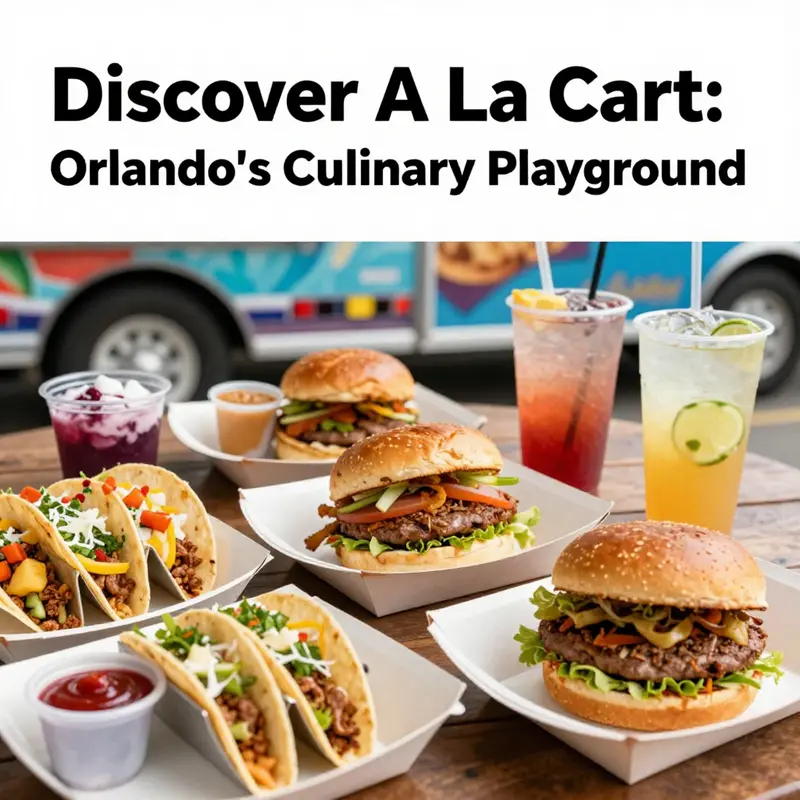
A La Cart in Orlando occupies a special niche in the city’s dining landscape, not as a single fixed kitchen but as a living, evolving courtyard where flavors rotate like the wind through an open plaza. The address at 609 Irvington Ave is more than a pin on a map; it is a meeting place where curious eaters can chart a course through a spectrum of cuisines without leaving the footprint of a single plate. The concept feels deliberate in its flexibility. Rather than committing to one chef or one cuisine, A La Cart curates a rotating roster of food trucks and vendors, inviting guests to sample, compare, and decide what they like best from night to night, week to week, season to season. This is not merely a food court with different options; it is a dynamic, communal dining experience that treats the act of eating as a shared exploration rather than a transactional stop on a menu. In this setting, the courtyard itself becomes the primary stage, and the trucks are its performers, each bringing a distinct flavor profile and a signature approach to craft and presentation.
The result is a kind of culinary weather system, always shifting but reliably enjoyable. Some visits might drift toward the comforting familiarity of classic American staples—yet even those staples arrive with a twist, a carefully crafted bun, a house-made sauce, a smoky finish that lingers on the palate. Other visits unfold like a passport stamp, with international flavors that invite diners to sample a taco with bright citrus notes one night and a seafood-forward specialty the next. The diversity is not a gimmick; it’s the core promise. A La Cart provides a platform for multiple cooks and chefs to pilot their ideas in a shared space, where feedback from a live audience can become part of a truck’s evolution. It’s a microcosm of urban dining where experimentation is normalized and curiosity is embraced.
The courtyard setting amplifies this sense of possibility. A shaded, covered pavilion protects guests from sun or light rain, allowing conversations to stretch from casual lunches to lingering dinners. The physical space is as much an audience as a dining room. Tables are laid out to encourage casual cross-table conversations, friends catching up, families discovering new flavors together, colleagues bonding during a post-work bite. The environment feels social without being loud, intimate without being prescriptive. People move with a relaxed confidence, mapping out routes from one truck to another as easily as they would in a park. The atmosphere invites slower, more intentional eating—an antidote to the quick-service sprint that often characterizes the modern food scene.
What makes the experience feel especially rich is the sense that each visit offers a new—yet cohesive—palette of options. The rotating lineup ensures there is always something new to try, while the variety remains satisfying enough that a single evening can become a complete tasting journey. This balance between novelty and reliability is not accidental. It reflects a thoughtful curation that prioritizes quality and consistency across vendors, while still honoring the advertising impulse that a different truck each week brings. When a guest returns, they might discover a new preparation method, a refined recipe, or a completely unfamiliar cuisine that expands their own culinary map. The spontaneity is tempered by the knowledge that the space itself has been designed to showcase that variety in a way that is accessible and welcoming.
Libations play a complementary role in this tapestry. The venue hosts an extensive beer and wine program that is as much about local craft as it is about pairing with the diverse menu. The drinks list is not an afterthought but an extension of the cultural conversation happening in front of the grills. A well-paired beer can lift a smoky bite, while a crisp white can brighten a seafood-forward dish. The beverage program recognizes that food and drink are two sentences in a longer story about place, season, and craft. It’s not about finding a “perfect match” in the abstract, but about creating moments—snaps of brightness between bites, a pause that invites conversation and reflection.
Beyond the sensory richness, there is a practical elegance to the A La Cart model. The rotating trucks democratize the dining experience in a city known for diverse flavors and entrepreneurial energy. Local cooks bring their own backstories and techniques to the courtyard, and guests respond not with judgment but with curiosity and encouragement. This setup lowers the risk for new cooks to test ideas, gather feedback, and iterate. It also creates a vivid sense of community, as guests become familiar with certain personalities, vendors, or signature dishes while always leaving room for surprises. In a city that treasures culinary exploration, A La Cart becomes a quiet architect of connections—between languages of cuisine, between strangers sharing a table, and between a growing local scene and the visitors who want to understand it more deeply.
The open-air design and the casual, family-friendly vibe contribute to a durable sense of belonging. Children can orbit the courtyard with safe, accessible options, while adults linger over meaningful conversations and occasional bites that beg for another round of tastes. The pavilion protects guests from the elements, but it also creates a cozy shelter where the ritual of dining becomes less about grabbing a meal and more about gathering around a shared experience. In this sense, A La Cart is less a place to eat than a place to belong for a few hours—an urban refuge where a city’s appetite can be explored together, without the pretenses that sometimes accompany more formal dining spaces.
In the larger arc of the Orlando dining scene, the A La Cart model aligns with a broader appreciation for experiential food culture. It acknowledges that modern diners crave variety, but they also value community, accessibility, and a sense of discovery. By offering a rotating cast of trucks, the venue becomes a living catalog of flavors that mirrors the city’s own eclectic makeup. And while each truck retains its own identity, the courtyard binds them into a collective story—one episode of this ongoing culinary chronicle where a single afternoon or evening can feel like a passport stamp across continents and cuisines. For anyone who has stood in line with a friend, debating between a taco bursting with spices and a burger crowned with an unexpected, delicate twist, the open-air format presents both the tension and the relief of choice—the joy of deciding together what to share next.
For those who want a sense of how a single truck’s journey can translate into the broader culture of a shared food space, consider the way a story unfolds on wheels. The same careful attention to mortar, flame, and spice that defines a successful concept also informs the way the courtyard operates as a stage for multiple narratives. A La Cart is not just a place to eat; it is a forum where culinary voices can be heard, tested, and celebrated in a setting that invites conversation as much as it invites bites. The result is a dining experience that feels both intimate and expansive—intimate enough to feel personal, expansive enough to feel like a city’s ongoing culinary conversation. And as guests return night after night to sample something familiar and something new, they become part of the story that makes A La Cart a cornerstone of Orlando’s vibrant, diverse food landscape.
The journey through these flavors is not linear. It zigzags across cultures, feeding a curious palate and rewarding patrons who dare to explore. The intrinsic appeal lies in the shared joy of discovery, the ease of conversation at a picnic-table table, and the gentle wisdom that good food, served beneath a sheltering pavilion, can become a memory stitched into the warmth of an Orlando evening. A La Cart invites visitors to travel without leaving the courtyard, to taste without overwhelming commitment, and to meet neighbors as fellow explorers rather than mere diners. It’s a format that sustains itself by nurturing relationships—between cook and guest, between vendor and venue, and between the city and the people who choose to spend their evenings under the same open sky.
For readers who want a deeper sense of the truck-to-track storytelling that animates this scene, the evolving journey of individual trucks offers a parallel to how the space functions. The path a single truck takes—from concept to favorite dish to cultural touchstone—mirrors the way the courtyard accumulates stories through rotating vendors. To glimpse that narrative of food-on-wheels in action, you can read about RockDog Adventures food truck journey, which captures the spirit of a mobile kitchen crafting a unique identity while navigating the broader landscape of community dining. RockDog Adventures food truck journey
As the day fades and the string lights begin to glow, A La Cart remains a stage where cuisine and conversation mingle. It is a reminder that food can be both a personal pleasure and a communal act, a small act of hospitality that multiplies when shared with others. The rotating lineup ensures there is always something to discover, and the covered pavilion makes that discovery comfortable for everyone. In this space, texture, aroma, and social connection fuse into a coherent whole—a microcosm of what the city can be when diverse voices are invited to cook, serve, and welcome. It’s a model that honors the city’s appetite while cultivating a sense of neighborhood pride and curiosity that extends beyond a single meal. In short, A La Cart Orlando offers more than food; it offers a practice of gathering, tasting, and learning together under one open sky.
External context for those seeking a broader sense of the venue and its approach can be found at its official site: https://www.alacartorlando.com
The Social Pulse of A La Cart: Dining, Dialogue, and Community at Orlando’s Food Truck Hub
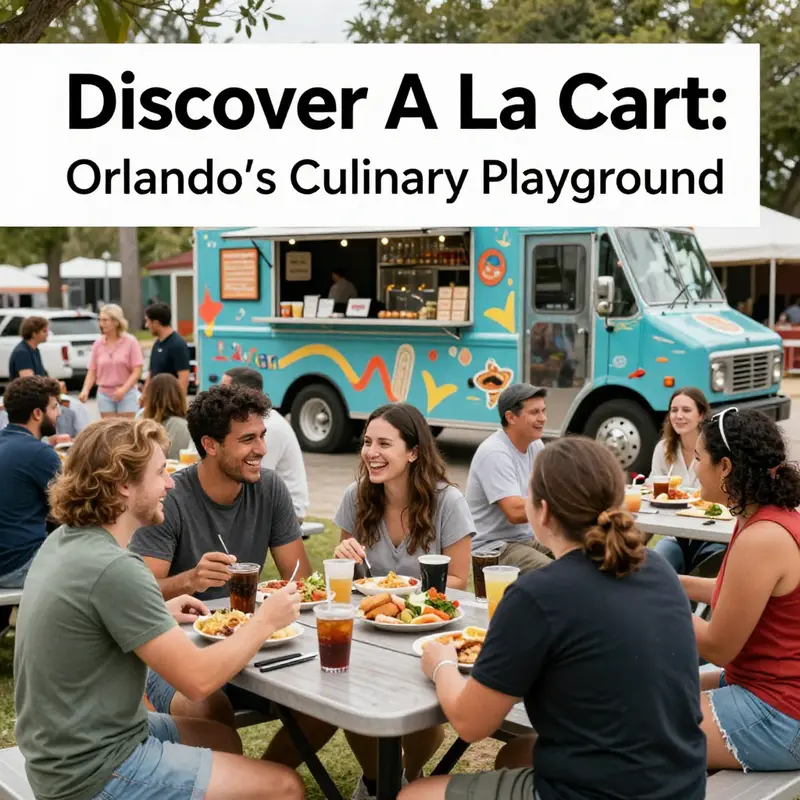
In Orlando, the open air spine of the A La Cart venue at 609 Irvington Ave comes alive as dusk settles. A mosaic of trucks fills the lane with aromas, sizzling sounds, and conversations that weave from booth to curb to shared table. This is more than a collection of kitchens; it is a social circuit where each bite becomes a doorway to a new connection. People move with curiosity, trading plate recommendations, swapping stories about recipes, and lingering long enough to watch a cook flip a skillet or plate a signature dish. The atmosphere balances casual charm with a sense of communal purpose, turning a casual bite into a small festival of voices and flavors.
The layout invites interaction. When guests gather around a communal table or lean into a neighbor’s conversation, the boundary between guest and host blurs. A quick explanation from a vendor about a dish’s origin can spark a longer chat, and a shared bite can spark a new friendship. The energy is inclusive rather than theatrical, making it easy for first-timers to feel welcome and for regulars to feel seen. The result is a social fabric that extends beyond the moment of order to become a repeating ritual of discovery and connection.
The diversity of cuisines amplifies the sense of exploration. Each truck offers a doorway to a different culinary world, and the open-air setup makes it natural to hop from one culture to another without losing the thread of community. You might start with a smoky protein, pivot to a bright citrus dessert, and end with a conversation about spice blends. As conversations drift from tips on where to start to recommendations for pairing a drink with a bite, the scene becomes a living ecosystem of dialogue and taste. The social energy here is a feature, not an accident; it is the point of the place.
There is also a quiet craft to the hospitality. The staff move with practiced ease, guiding guests through lines, plating with care, and sharing background on the kitchens without rushing the moment. The pace invites pauses between bites, encouraging people to linger and listen as much as to eat. In this setting, dining becomes a social activity that reflects the broader Orlando vibe: welcoming, mobile, and open to new voices and ideas.
For readers curious about how mobile kitchens cultivate community and brand within a shared space, the article on best food truck models offers context on how configurations encourage interaction, collaboration, and a sense of togetherness in a mobile dining ecosystem. The Orlando venue demonstrates that a well designed multi-truck space can feel like a neighborhood gathering rather than a passing stop.
External resource: For recent guest perspectives and ratings, see TripAdvisor.
External resource link: https://www.tripadvisor.com/RestaurantReview-g34585-d2715399-Reviews-ALaCart-OrlandoFlorida.html
Ripples Through the Market: The Economic Impact of A La Cart Orlando on Local Vendors
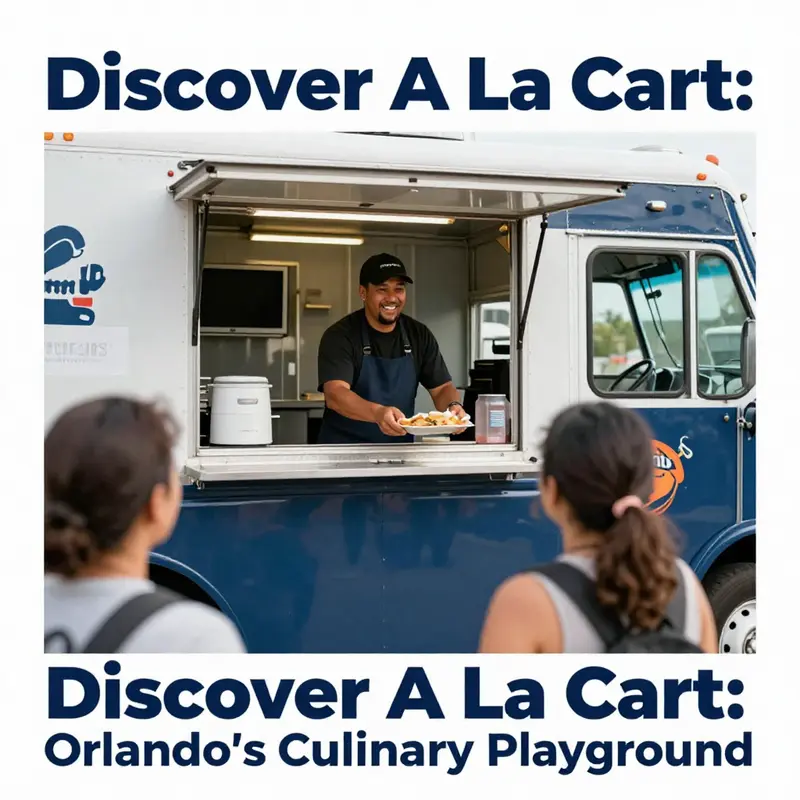
In Orlando, the open-air hub at 609 Irvington Ave has become more than a gathering place for food lovers; it is a living market that reshapes the local commercial landscape. A La Cart functions as a rotating stage for a diverse cast of food trucks and vendors, each bringing distinct flavors and textures to the curb. The result is a social dining experience that invites wander and discovery, encouraging visitors to linger, sample, and then step beyond the park to explore nearby shops, cafes, and services. This mobility is not a mere novelty; it is a catalyst for broader economic activity. The surrounding neighborhood benefits from the steady flow of pedestrians who convert casual attention into first-time purchases at nearby storefronts, creating a compact, walkable ecosystem within a few blocks. The strength of this model lies not in the profitability of a single vendor, but in the cumulative effect generated by a vibrant, rotating mix of offerings that keeps the street dynamic and welcoming for a wide cross-section of residents and visitors.
The most immediate economic impact centers on foot traffic. People come for the experience—the social atmosphere, the chance to try several cuisines, the sense of discovery that accompanies a meal picked from various trucks. That intent translates into longer dwell times and increased exposure for neighboring businesses. A shopper who stops for a bite may also pick up a late-afternoon pastry, buy a gift, or visit a gallery, thereby extending the park’s influence into the broader retail corridor. This kind of cross-pollination matters in a city where small, independently run operations compete for attention in a dense market. The park’s core appeal—variety, accessibility, and a casual setting—lowers barriers to entry for newcomers who want to test ideas without the burden of a fixed brick-and-mortar lease. It creates a visible, low-risk pathway from concept to crowd, a dynamic that quietly expands the local pool of vendors who might otherwise remain unaffordable or impractical to launch.
From a macroeconomic perspective, the influx of visitors generates a multiplier effect that extends far beyond the park’s fences. The immediate revenue earned by trucks circulates back into the local economy as workers spend wages on housing, groceries, and services. These ripple effects touch grocery stores, hardware shops, busier daytime cafés, and even cleaning, maintenance, and security services needed to keep the park running smoothly. In practical terms, more customers in the park translate into higher foot traffic for adjacent retailers and service providers, increasing sales not only for food and drink but for the whole neighborhood’s commerce. This is not just about more meals sold; it is about a more active street life that signals opportunity to other entrepreneurs and encourages reinvestment in the area.
Direct job creation is a tangible outcome of the park’s operation. The food trucks themselves hire cooks, servers, and prep staff, creating jobs that range from entry-level roles to more specialized culinary positions. But the impact does not stop with the trucks. There is a parallel demand for suppliers, sanitation crews, and event management personnel who coordinate shifts, handle logistics, and manage waste and safety protocols. Each new vendor adds a node of employment, and the network of supporting services expands accordingly. The result is not a single job saved or created; it is a tapestry of opportunities that grows as the park attracts more talent and more culinary concepts. This broader employment effect strengthens the local economy by providing varied pathways into the workforce for residents with different skills and levels of training.
A La Cart also functions as an incubator for entrepreneurship. The park offers an accessible platform for aspiring chefs and small vendors to enter the food economy without the heavy overhead of a traditional storefront. Vendors can experiment with menus, test pricing, and refine service models in a live setting where feedback comes quickly from a diverse audience. The ongoing rotation of offerings means lessons learned in one season can inform ideas in the next, reducing the risk investors associate with new concepts. For some operators, the park becomes a launchpad—an early-stage venue that builds reputation, cultivates a local following, and gradually expands into broader markets. The opportunity to connect directly with customers, solicit feedback, and iterate on a concept contributes to a more resilient local culinary scene. It also broadens the city’s cultural palate by enabling a wider range of cuisines and food traditions to gain visibility and scale over time.
Beyond the economics, the park assumes a role as a community hub. Food trucks become ambassadors of neighborhood identity, pairing flavors with stories and backgrounds that resonate with local residents. The social dimension matters because strong community bonds often translate into greater civic engagement and support for local projects. When people feel invested in the vitality of a street or a park, they are more likely to shop nearby, participate in events, and welcome new ventures that enrich the local fabric. The open-air setting fosters casual, recurring interactions among neighbors, migrants, students, professionals, and tourists—an organic cross-section that can spur collaboration across sectors, from education and arts to health and small-business development.
The wider implications for Orlando’s economy become clearer when we consider research on similar configurations. Food truck parks create a tone and tempo for neighborhood activity that can help stabilize retail cycles, especially in areas with fluctuating foot traffic. They encourage a cadence of visits that aligns with evenings and weekends, when many residents seek leisurely, social dining experiences without formal reservations. In this sense, A La Cart does not merely add seats to a crowded market; it reshapes the pattern of local dining and retail activity, nudging customers toward a more varied, walkable, and interconnected urban experience. The result is a more resilient local economy capable of absorbing shocks and sustaining momentum as new vendors arrive and the neighborhood continues to evolve.
For a broader sense of how such gatherings stimulate regional economies, see 2026s-best-food-truck-rallies-what-lakewood-has-in-store. This reference, drawn from a nearby market that shares the same impulse toward flexible, community-centered commerce, provides context for how similar ecosystems generate opportunities for vendors, workers, and adjacent businesses alike. It is a reminder that the benefits seen at A La Cart are not isolated to Orlando; they echo a broader pattern in which adaptable, open-air markets help small enterprises grow, keep talent in the local area, and contribute to a more vibrant, inclusive urban economy. As policy makers and community leaders consider ways to nurture such environments, the Orlando example underscores the value of low-barrier platforms that connect culinary creativity with local commerce and everyday life.
In addition to these practical implications, it is useful to acknowledge the research that situates these observations within a wider framework of local food systems. For deeper context on how small vendors interact with supply chains, labor markets, and consumer demand, the University of Florida IFAS study offers relevant insights into Florida’s food systems and their economic impact. This broader perspective helps situate a single venue like A La Cart within a statewide narrative about sustainable growth, equitable opportunity, and community-led economic development: https://edis.ifas.ufl.edu/publication/FY2014
Wheels, Willing Hands, and Community: How A La Cart in Orlando Builds Connection Through Events and Hospitality
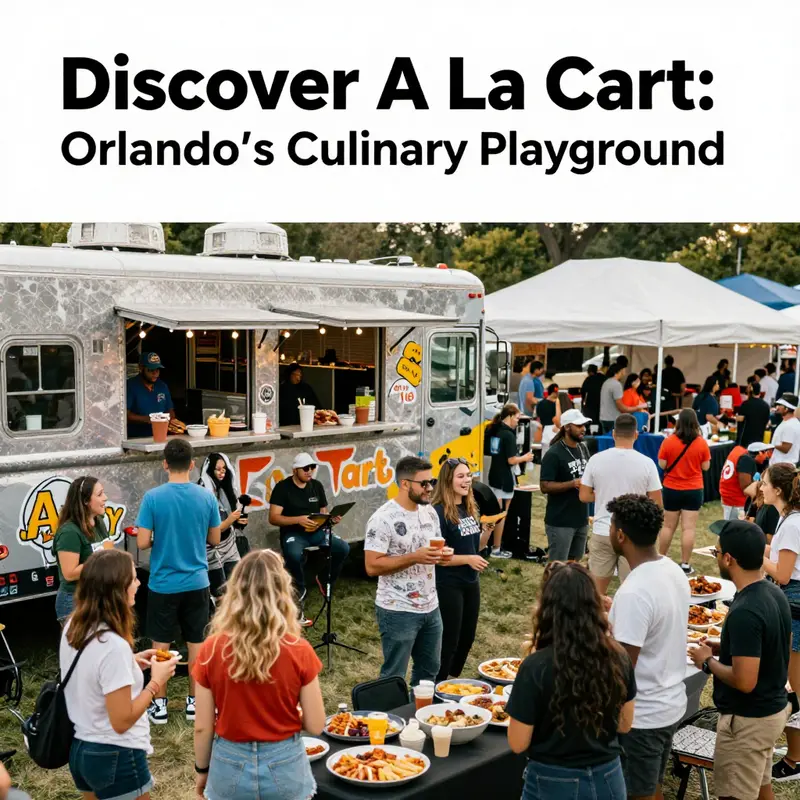
At 609 Irvington Ave in Orlando’s Milk District, A La Cart is not a single truck rolling down the street but a lively outdoor dining venue that gathers a constellation of wheels and ideas. The space feels more like a commons than a stall park, a sunlit courtyard where menus swing as banners and conversations are the main course. Here, food is the passport, and a rotating cast of trucks and vendors offers everything from smoky burgers and bright, lime-kissed tacos to plates that lean toward global street flavors and desserts that glow under string lights. Patrons lean into the casual, open-air vibe—plastic chairs, long communal tables, and shade from tall trees—while staff glide between tents with the easy confidence of hosts at a neighborhood block party. And yet the place is also a map of place, a touchpoint where visitors translate their tastes into a neighborhood’s growing culinary language. In Orlando terms, it is precisely the kind of venue that turns a meal into an experience and a street corner into a shared living room. The setting invites lingering: the air smells of citrus and sizzling meat, the soundtrack of chatter rises and falls with the breeze, and the brick-and-metal backdrop of the Milk District reminds regulars of why this part of town has become a magnet for food-minded explorers.
Among the steady rhythm of wheels and chatter, Tuesday Trivia stakes its claim as a signature evening. The clock hits 6:30, and the open-air plaza takes on a gentle buzz of anticipation, with guests easing into the space rather than rushing through it. Teams gather with a mix of competitive fire and friendly camaraderie, jotting down answers on small boards or phones as the questions arrive. The format becomes a social thread, binding strangers into a shared narrative of knowledge, curiosity, and appetite. Between questions, lines form for bites that arrive hot and aromatic, the scent of peppers mingling with the cool evening air, while staff weave between tables to check on drink orders and refills. The beer selection, thoughtfully curated to complement the night’s flavors, becomes a communal backdrop as people debate answers, cheer when the right team clinches a victory, and swap stories about the best bite of the evening. Service here is not a mere transaction but a lived experience: smiles traded, high fives exchanged, and a sense that this outdoor room belongs to everyone who stops in that evening. The energy blends casual confidence with a touch of theater, a reminder that dining can be a social ritual as much as a meal, and that a simple question can spark hours of conversation about culture, travel, and neighborhood life.
Events at A La Cart extend beyond trivia, weaving a calendar that invites neighbors, visitors, and local vendors into a single evening tapestry. The aim is not merely to fill seats but to cultivate a welcoming atmosphere that invites repeat visits and word-of-mouth stories that travel faster than any drone delivery. Regulars who return week after week bring their rituals—favorite trucks to seek out, a preferred bench under the shade of a maple, a shared dessert to cap off the night—and in doing so they dissolve the lines between customer and community. The staff, repeatedly described by guests as warm, attentive, and observant, serve as hosts and cultural curators, reading the room and subtly steering the energy toward conversations that extend beyond the last bite. This approach—genuine hospitality paired with a rotating lineup—creates a living map of the city’s diverse culinary voices, allowing new flavors to speak alongside long-standing favorites in the same moment. The open-air setting matters: it makes it easier for people to linger, to introduce themselves to a neighbor, or to pop in for a quick bite on a Wednesday and stay for a longer evening when the mood strikes. In practice, it is urban hospitality that elevates eating into a community act, where the act of choosing a truck becomes a choice to belong.
From a broader vantage, A La Cart embodies how urban food scenes sustain themselves through connection as much as cuisine. The venue becomes a nexus where vendors, students, families, and visitors intersect, each contributing a thread to the neighborhood’s evolving identity. The spirit of engagement shows up in the quiet rituals that accompany brimming moments: the nod of recognition to a familiar server, the shared laugh over a mispronounced dish, the spontaneous pact to try a lesser-known truck because a friend swore by it. In discussions of regional food-truck culture, communities highlight the power of rallies and gatherings to bind disparate groups into a common, celebratory narrative. For readers curious about how such dynamics play out elsewhere, consider the sense of communal gathering described in 2026’s best food-truck rallies in Lakewood. The Lakewood piece is not Orlando-specific, yet it mirrors a shared belief: food culture thrives where people are invited to show up, sample, and stay awhile, letting the evening’s conversations feed the next week’s plans and the next month’s stories. The alignment across cities underscores a bigger point: urban dining thrives on spaces that invite spontaneous companionship as much as planned programming.
Finally, the business logic of hospitality here aligns with the social logic. A La Cart’s open-air format lowers barriers to dining out, while the thoughtfully curated beverage assortment signals a welcome to those who seek a particular mood as part of the meal. The result is more than the sum of its parts: a place where a family can round up a late dinner, a group of coworkers can decompress after a long day, and a couple can explore new flavors while listening to the murmur of voices that belong to a neighborhood. Regulars know that the night’s energy depends not only on the trucks’ sizzle but on the vibe the staff cultivate—an atmosphere of inclusion, curiosity, and generosity. The Milk District becomes more than a map point on a tourist brochure; it becomes a neighborhood with a shared calendar and a sense of ownership over its cultural life. People leave with more than a full stomach; they leave with a story to tell, a memory to revisit, and a reason to return next week or next month when the lineup shifts yet again. Those who wish to explore further can consult the venue’s official channels and trusted listings to catch the latest schedule, pace their visit, and savor the evolving possibilities. For a concise snapshot of A La Cart’s Milk District presence, see Orlando Weekly’s coverage.
Final thoughts
A La Cart in Orlando isn’t just a spot for food; it’s a thriving community hub where aspiring food truck operators can find their footing and where tourists can immerse themselves in local flavors. Each chapter of this culinary journey illustrates how this venue brings people together through delicious food, vibrant social interactions, and meaningful community events. Whether you’re a visitor in Lakewood or a local looking to support small businesses, A La Cart offers an experience that’s both tasteful and enriching, embodying the spirit of what it means to dine together.