
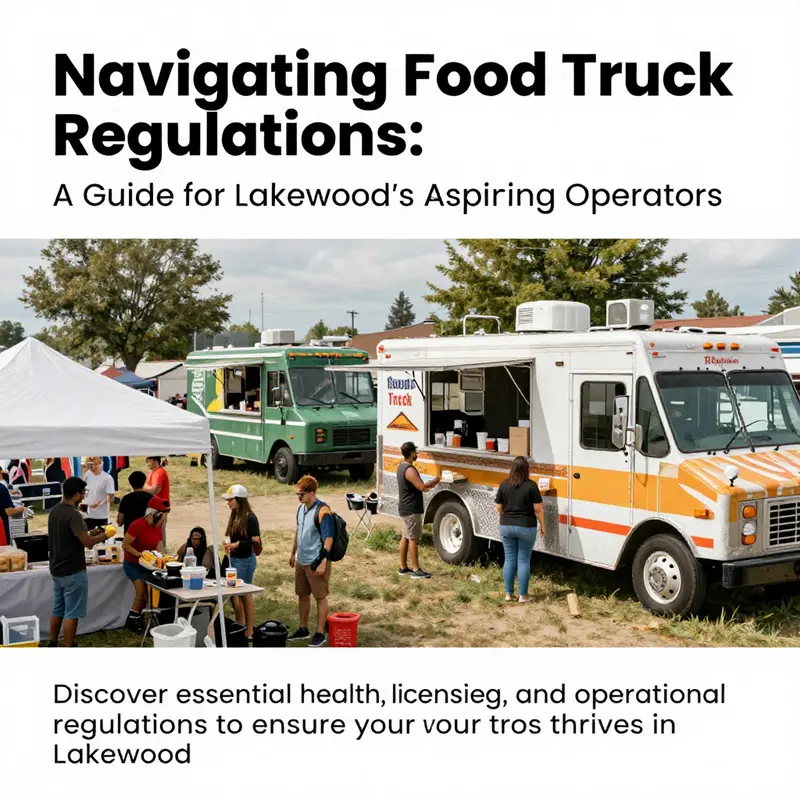
Starting a food truck can be an exciting venture for those looking to share their culinary passion with the community. However, understanding the various regulations that govern food trucks is crucial to ensuring a successful operation and a safe dining experience for your customers. In Lakewood, as in many other places, food truck regulations cover health and safety standards, licensing requirements, operational guidelines, and the importance of inspections and compliance. Each chapter of this guide will unpack these facets of food truck regulations to help aspiring operators navigate the essentials and foster a thriving food scene in our lovely town.
On the Move, Under Scrutiny: Demystifying Health and Safety Rules for Food Trucks
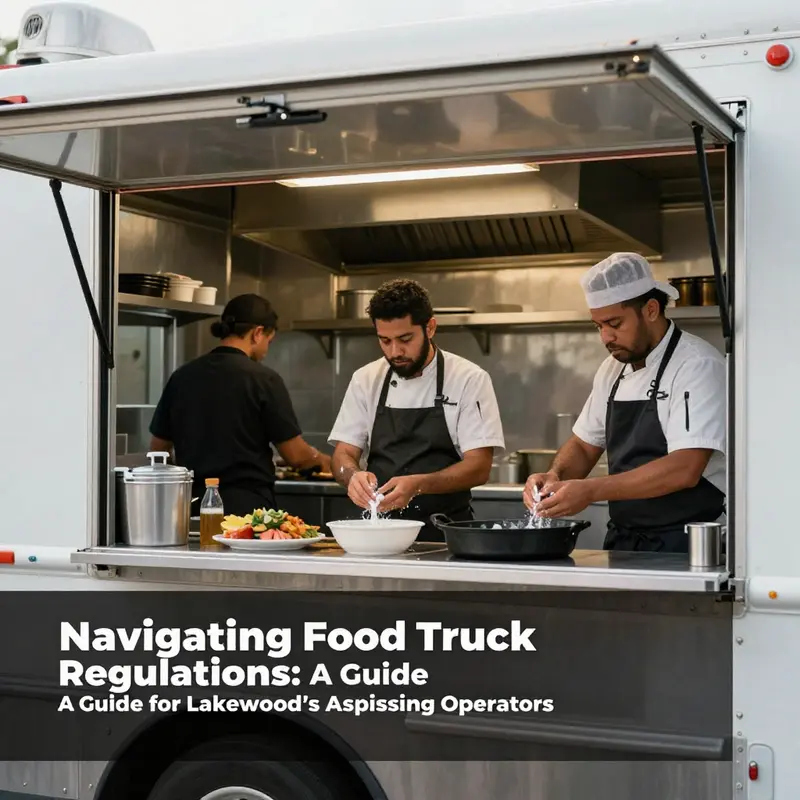
The mobile kitchen promises quick bites and open air, but behind the sizzle lies a framework of health and safety standards designed to protect the public. For operators, this framework can feel complex, moving between layers of jurisdiction and a shifting mix of standards. But the core idea is simple: keep food safe, keep people healthy, and keep the operation transparent to regulators and customers alike.
At the heart of regulatory life for food trucks is the steady hand of local health departments. Inspectors visit regularly and unannounced in many places, checking basic sanitary operations, surface cleanliness, and readiness to prevent contamination. While federal standards set broad safety principles, day to day enforcement is often guided by state and local authorities who tailor these principles to community needs. This decentralized approach ensures that rules speak to where a truck operates, from city streets to festival grounds, from curbside corners to college campuses.
Permits and licenses form the entry gate to legitimate operation. A food truck typically cannot begin serving without a business license, and many jurisdictions require a mobile food vendor permit specific to the vehicle and locations. Insurance, too, is standard, with liability coverage protecting customers and operators in case of accidents or incidents. For newcomers, the licensing labyrinth can be daunting, but the process creates a framework for long term planning, including partnerships with event organizers and collaboration with local markets.
Inside the unit, the physical backbone of compliance is sanitary equipment and layout. Surfaces must be smooth, non absorbent, and easy to clean. Food contact tools should be kept separate from cleaning supplies and stored to minimize cross contact with ready to eat foods. The layout should support efficient work flows and reduce contamination risk. Proper plumbing and ventilation matter too: a reliable exhaust system, and handwashing stations with hot and cold water, soap, and disposable towels are essential. Regular cleaning and sanitizing schedules are not optional; they are often spelled out in inspection checklists that inspectors reference during visits.
Temperature control sits at the core of food safety for any kitchen, mobile or stationary. The standard is clear: hot foods should stay above 140 F and cold foods below 40 F. These thresholds reflect how quickly bacteria can multiply if foods slide into the danger zone. In a food truck, maintaining these temperatures requires reliable equipment, continuous monitoring, and disciplined processes. Operators rely on refrigerated units, heated holds, and properly calibrated thermometers to monitor every batch from storage to serving. Temperature control is not only about the moment of service; it spans the entire supply chain, including transport from suppliers and the rapid turnover of ingredients during peak service. If a chill unit fails, the plan to rapidly cool or discard affected items must be understood by staff and rehearsed in daily routines, with temperature logs used to document compliance and guide corrective action.
The human element threads through every regulation. Food handler training is a central requirement that translates policy into practice. Staff must complete mandated training before handling food, and many jurisdictions require periodic refreshers. Training covers personal hygiene, proper handwashing, glove use, correct handling procedures, and recognizing symptoms that would prevent working with food. A well trained team operates with a shared understanding of safe practices, reducing errors that lead to cross contamination or illness. Beyond initial certification, operators should foster ongoing learning through short refreshers on cleaning schedules, allergen awareness, and pest prevention. A team that communicates about temperature checks, storage timelines, and sanitation routines is more resilient in the daily street environment.
Prevention of foodborne illness depends on steady discipline at every step. Risks can come from raw ingredients, improper handling, dirty equipment, or poor personal hygiene. A comprehensive approach includes separating raw and cooked foods, using separate utensils for different food groups, frequent handwashing, and cleaning and sanitizing equipment between uses. Space constraints in a mobile kitchen can tempt shortcuts, but a clear color coding for cutting boards and knives, along with a written cleaning schedule, creates a dependable routine. Regular audits, whether by the operator or an external inspector, help maintain accountability. The quality of preparation affects customer safety, so procedures for receiving deliveries, inspecting suppliers, and handling leftovers must be part of daily routines.
Water and waste management are tangible reminders that a mobile kitchen operates as a small, highly regulated facility. Potable water must be available for cooking and handwashing, and wastewater disposal must comply with local codes. This typically means dedicated water tanks filled from approved sources, with measures to prevent cross contamination between wash water and clean water. Wastewater must be stored securely and disposed of at approved sites. Grease management is also essential, as improper disposal can create environmental hazards, attract pests, and violate local ordinances. A well run truck has a waste removal plan, signposted disposal points, and routines that prevent waste from accumulating in prep areas. Regular plumbing maintenance helps prevent leaks, and pest control measures, such as sealing entry points, complete the sanitary picture.
All these elements operate within a broader regulatory framework, with the FDA Food Code among the most influential references in the United States. The Code provides detailed standards on food preparation, personal hygiene, pest control, facility design, equipment standards, and sanitation. No single national bulletin governs every jurisdiction, but the Code offers a coherent blueprint that helps operators anticipate what inspectors may review. It also recognizes the unique challenges of mobile units, including space constraints and the need for rugged, easy to clean equipment. A mobile operator who reads the Code with practical eyes can translate its requirements into a viable kitchen design and a daily routine that reduces the risk of noncompliance and enhances the customer experience.
Regulation is not a one size fits all path. Each jurisdiction may layer additional requirements, such as hours of operation, proximity to brick and mortar restaurants, or seasonal permits for fairs and markets. Operators must stay attuned to changes in local ordinances and adjust practices accordingly. Compliance becomes part of reliable service and credibility with customers who may worry about street food safety. A truck that shows clean surfaces, accurate temperature readings, and strict hygiene practices communicates a commitment to quality that builds trust and repeat business.
In practical terms, a well regulated operation blends planning with responsiveness. Scheduling inspections, calibrating thermometers, organizing staff rosters for training, and updating cleaning protocols create a cycle that sustains safety over time. Operators can demonstrate care by sharing this discipline with customers through visible temperature logs, clearly marked work zones, and accessible information about allergen handling. Even in a busy queue, customers benefit when they can observe a system that prioritizes safe handling and hygiene.
For readers seeking practical avenues to learn more, look for case studies and practical roundups that discuss how trucks are configured to meet health and safety demands. These resources illuminate how a well chosen truck model supports compliance without sacrificing efficiency or speed. If you want to explore federal guidance, note that the FDA Food Code provides a living framework that states and localities adapt to their own needs, and many jurisdictions reference it when updating their rules.
Embedded in this regulatory mosaic is an invitation: design your operation not merely to pass inspections but to embody a standard of care. Choose rugged equipment that withstands street service, create workspaces that minimize cross contact, and train staff to recognize and respond to safety concerns quickly. Plan for contingencies such as power outages or water shortages, and keep meticulous records of temperatures, cleaning events, deliveries, and inspections so regulators can see an organized, proactive program. And be open with customers about the steps you take to stay safe, which strengthens trust and encourages loyalty in a crowded market.
For a deeper understanding of the federal perspective on food safety, the FDA provides a framework known as the FDA Food Code. This resource outlines the core principles that many states and localities adopt, shaping the expectations for mobile units. You can explore the official guidance to see how basic requirements translate into real world practice, while recognizing that local conditions will influence how you implement them on the street.
Taken together, health and safety regulations for food trucks are not abstract rules but a daily workflow. When treated as an integral part of the business, they drive consistency, reduce waste, and support a reliable service during peak moments. The most successful operators anticipate regulatory needs, invest in robust processes, and communicate clearly about safety. The result is a mobile dining experience that is flavorful and entertaining yet consistently safe and compliant, which sustains growth in a competitive market where customers expect high standards every time they bite.
Licensing the Moveable Kitchen: Navigating Global Rules and China’s Carriage-Type Permit Revolution
Licensing the moveable kitchen is more than a bureaucratic hurdle. It is the frame that keeps street dining safe, fair, and visible to the public. For operators aiming to bring a mobile food service to busy streets and crowded events, licenses and permits are not obstacles to be struggled through but instruments of legitimacy. Across countries, the basic logic remains similar: prove you are a lawful business, prove you can serve food safely, prove your vehicle is roadworthy, and prove you will operate in a way that respects neighborhoods and other eateries. Yet the details vary widely. In some places, the road to a permit can wind through multiple agencies, each auditing finance, health, safety, and traffic compliance. In others, a unified digital platform promises a streamlined process. Understanding this landscape is essential for anyone planning a moveable kitchen.
UK and US frameworks offer a familiar rhythm: high standards, clear checklists, and ongoing compliance that extends well beyond the initial permit. In the United Kingdom, the core requirement is health and safety oversight by local authorities, anchored in food hygiene rules. A food business must secure a hygiene rating from the local council and ensure every food handler carries valid training—often Level 2 or equivalent—so that an individual preparing street food understands temperature control, cross-contamination, and contamination prevention. The vehicle itself deserves attention: it should be clean and well maintained, with waste disposal systems that meet environmental expectations. Beyond hygiene, registration with HM Revenue & Customs formalizes tax status and record-keeping, while local authorities may require a license to operate in public spaces, such as markets or plazas. Even the vehicle has a lifecycle to respect: it must be roadworthy and, for older vehicles, may require an MOT and appropriate insurance. These layered requirements emerge from a philosophy that regulatory oversight should be unobtrusive yet robust, allowing vendors to focus on cooking and service while ensuring public health and urban order.
In the United States, the regulatory architecture is more purposefully federalized, yet driven by state and local practice. The federal layer—through agencies like the USDA and FDA—establishes baseline food safety standards that affect everything from ingredient sourcing to labeling and sanitation. But the day-to-day operation, the permits, and the site-specific rules are mostly at the state and city level. Operators typically need a business license and a mobile food vendor permit, as well as proof of liability insurance. Vehicles require DMV registration and periodic inspections, and operators must observe traffic regulations that apply to any vehicle on public roads. But the real sizzle of the market comes from city-specific regimes: the right to park in particular zones, the hours of operation, and proximity rules relative to brick-and-mortar restaurants. The result is a patchwork that rewards adaptability and local compliance while offering room for entrepreneurship. The upfront work often entails a rigorous background in health compliance, fire safety, and waste management, so that a truck can function as a mobile kitchen without compromising public welfare.
It is in this global context that the recent developments in China stand out as a pivotal case study. The emergence of carriage-type food trucks—conceptualized as mobile kitchens housed in a compact, enclosed carriage-like vehicle—reflects a deliberate regulatory imagination, one that seeks to blend innovation with strong public health safeguards. In January 2026, Chengdu High-Tech Zone issued its first Carriage-Type Food Truck Food Business License. The license is issued to Mister Brown (Chengdu Shenghe Road Branch), marking a historic milestone in the formal legalization and regulation of this new mobile dining format within the region. This milestone does more than certify a single vendor; it signals a broader regulatory acceptance that mobile food units can be integrated into urban economies under transparent rules. It also demonstrates how local authorities design licensing schemes that acknowledge novelty while maintaining rigorous hygiene and safety standards.
Behind this milestone lies a carefully organized regulatory framework designed to manage risk without stifling innovation. The Sichuan Province Carriage-Type Food Truck Food Safety (885406) Supervision and Management Measures, together with the Sichuan Province Food Business Licensing Management Implementation Measures, provide the backbone for how these operations are evaluated and monitored. The license process begins with basic eligibility: a legal entity status. In other words, the applicant must have a sound business registration or legal registration to be considered as a vendor. This basic prerequisite is not merely bureaucratic window-dressing; it ensures accountability and tax compliance from the outset. But the requirements extend well beyond formal status.
A carriage-type operation must demonstrate that its interior layout supports safe and hygienic food handling. The application demands floor plans and operational flow diagrams that clearly designate areas for food preparation, cooking, storage, cleaning, and waste disposal. These diagrams function as a map of safe processes, illustrating how ingredients move from receiving to service while minimizing contamination risks. A complete food safety management system must be established, covering supplier verification, employee health monitoring, equipment cleaning schedules, and documented waste handling. In effect, a food business license becomes a living framework that ties daily practice to documented standards. The staff who work in these operations must possess valid health certificates, ensuring that workers are free from communicable conditions that could jeopardize customer safety.
The government’s data-minded approach is perhaps the most distinctive feature of the Chengdu model. The new regime is built around a “one vehicle, one license, one card” principle. Each licensed carriage-type operation is identified by a single core permit—the Food Business License—while the accompanying Card, the Carriage-Type Food Truck Operation Publicity Card, serves to publicly disclose essential information about the vendor. The card lists operating hours and current locations, providing a transparency mechanism that benefits the public and helps neighboring businesses understand where and when a truck will operate. When combined, the license and card create an auditable footprint that reduces ambiguity and helps regulators and citizens understand the mobile food network in real time.
Even more transformative is the smart monitoring layer. Licensed vendors are integrated into an Internet + AI-based food safety supervision platform that enables real-time oversight of hygiene practices, auditing, and compliance reporting. This digital ecosystem is not merely a tracking tool; it is a governance mechanism that nudges operators toward consistent, high-quality performance. If a routine air quality check or a sanitation schedule flags a deviation, authorities can respond with targeted interventions rather than broad, disruptive enforcement. The model offers a glimpse into how digital tools can strengthen public health oversight without resorting to heavy-handed regulation. The emphasis on data and transparency is designed to increase trust among consumers, operators, and the wider community.
The idea of a streamlined, digital-first licensing environment is not unique to Chengdu. Nationally, the carriage-type model operates within the broader tradition of standard licenses for food sales, catering services, and institutional kitchens, while also offering an online operation qualification for online sales arrangements. In several regions, online applications are facilitated by “One-Net-Service” platforms, an approach that consolidates submissions and reduces processing time. The potential for this system to accelerate lawful entry into the mobile dining market is significant, especially for new entrants who previously faced a labyrinth of forms and approvals. Yet alongside this promise, there are strict enforcement measures. Operating outside the licensed scope—such as selling dishes that do not match the licensed category or failing to meet the hygiene requirements—can trigger penalties that are severe, including substantial fines, confiscation of goods, and possible suspension of the license. The Chengdu example thus embodies a broader trend toward harmonizing innovation with accountability, using licensing law to steer mobile food units toward safety and social responsibility rather than toward unregulated growth.
For operators or aspiring entrants, these developments carry practical implications. Licensing is not merely a ritual to gain entry; it shapes every aspect of business planning. The interior layout of the vehicle must align with defined hygienic zones, ingredient shelving, and waste containers. Procurement routines must include credible suppliers who can provide traceable ingredients and documentation of safety compliance. Employee training must be ongoing, with periodic health checks and refreshed safety protocols to align with evolving standards. When plans for a new carriage-type truck are drawn, the diagrams and the safety management measures become part of the negotiation with authorities, guiding the design choices around ventilation, fire suppression, and waste disposal systems. The process thus links the physical reality of the vehicle to the abstract framework of licensing requirements, creating a coherent regulatory narrative that operators can follow step by step.
In this light, licensing is not a barrier but a strategic tool. A well-structured quality management system, demonstrated layout plans, and clear health certifications are signals to potential partners, lenders, and insurers that the business is prepared for thoughtful growth. The capacity to present a comprehensive package—from floor plans to supplier qualifications—reduces the risk perception of investors and helps accelerate market entry. It also provides a stable operating environment in which a mobile kitchen can thrive, since the public has confidence in consistent safety practices. The Chengdu model shows how licensing can anchor a broader ecosystem of mobile food services, linking urban space, health governance, and digital oversight into a functioning regulatory machine. The approach offers a blueprint that other cities could adapt as they weigh how to welcome mobility without compromising safety and accountability.
If readers want a practical sense of how to navigate this terrain, starting with the basics is wise. Confirm your legal entity status and secure a business registration that matches local expectations. Develop a clear facility layout with zones for cold and hot storage, preparation, and cleaning. Establish a documented food safety management system, including supplier verification and worker health monitoring. Prepare staff health certificates and ensure a plan for ongoing training. Investigate whether your city requires a site-specific permit for every location and whether there are time or proximity constraints that affect route planning. Connect with authorities early to understand the applicability of online-service platforms and any potential pilot programs that streamline submission. The more you can demonstrate a robust compliance posture, the smoother the path to licensing and the greater the credibility with customers and partners alike.
In this sense, the licensing story of carriage-type food trucks in Chengdu is not a one-city anomaly but a pointer to how regulators around the world might balance novelty with safety. The public-facing aspects—the Card and the real-time data feed—are perhaps the most visible changes, but the underlying discipline comes from harmonized standards, meticulous documentation, and a willingness to adopt digital governance. For readers following the arc of food-truck regulation globally, the shift from traditional, multi-actor licensing regimes to integrated, data-enabled systems represents a meaningful turn. It offers a glimpse of a future where mobile kitchens operate not as gray-market experiments but as visible, accountable components of urban food ecosystems. The story continues as cities around the world test, adapt, and scale licenses to fit their unique streets and tastes, all while upholding the core commitments to health, safety, and fair competition.
External resources provide further context. For a detailed official account of the Chengdu milestone, readers may consult the Chengdu government release detailing the carriage-type license and its implications: https://www.chengdu.gov.cn/zhengce/content/2026-01/27/123456789.html. This source underscores the real-world application of the principles discussed above and illustrates how a regional government translates policy into practice. Advanced readers may also consider comparing Chengdu’s approach with other regions exploring “One-Net-Service” platforms and digital supervision tools as they adapt to the mobile dining wave. The broader regulatory canvas continues to expand, and the journey from licensing to ongoing compliance remains central to the life cycle of a food truck business.
Within this evolving landscape, a practical aside can help bridge theory and everyday decision-making. For those who seek guidance on fleet design and equipment choices under licensing realities, resources that discuss startup models and kitchen configurations can be valuable, especially when thinking about how compliance influences layout. For example, a resource focusing on “Best Food Truck Models for Lakewood Startups” offers perspectives that, while situated in a different market, resonate with the principle that a vehicle’s interior and workflow must align with regulatory expectations and health standards. Operators can examine how a layout supports food safety, efficient cleaning, and waste management while remaining adaptable to local permit conditions. Best Food Truck Models for Lakewood Startups
In sum, licensing and permits for food trucks reveal more than a checklist. They reveal a philosophy of governance that seeks to harmonize rapid mobility with steady safeguards. The carriage-type trajectory in Chengdu demonstrates how modern regulation can embrace innovation while building public trust through transparency, digital oversight, and rigorous standards. For readers following the arc of food-truck regulation globally, the shift from traditional, multi-actor licensing regimes to integrated, data-enabled systems represents a meaningful turn. It offers a glimpse of a future where mobile kitchens operate not as gray-market experiments but as visible, accountable components of urban food ecosystems. The story continues as cities around the world test, adapt, and scale licenses to fit their unique streets and tastes, all while upholding the core commitments to health, safety, and fair competition.
For a detailed official account of the Chengdu milestone, refer to the government release here: https://www.chengdu.gov.cn/zhengce/content/2026-01/27/123456789.html.
Under the Hood of the Mobile Kitchen: Navigating the Operational Rules That Regulate Food Trucks
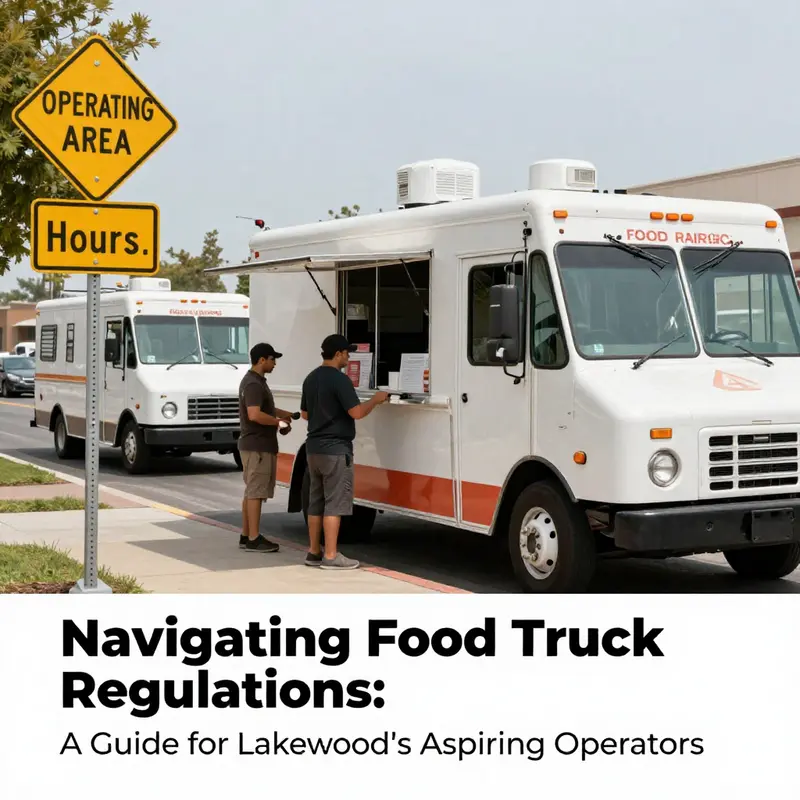
Across cities and countries, food trucks operate at the intersection of commerce, culture, and community life. Their mobility is a strength, but it also makes them subject to a web of rules designed to protect public health, safety, and urban harmony. This chapter looks at the operational regulations that shape what a food truck can do, how it must operate, and the practical consequences for owners, staff, and customers. It is not a catalog of every rule, but a cohesive map of the expectations that turn a moving kitchen into a dependable service that towns want to see in their streets. While the specifics differ from place to place, several threads run through most regulatory frameworks: a focus on sanitary handling, safe equipment, clear licensing, and respectful use of public space. Understanding these elements helps operators plan, run, and grow businesses that are not only compliant but trusted by customers and neighbors alike.
Regulatory landscapes vary widely, especially when comparing national frameworks with local ordinances. In the United States, operators must navigate federal, state, and local layers. At the federal level, agencies such as the USDA and the FDA establish baseline standards for food safety and labeling that underpin how food is produced, processed, and sold. The hallmark of federal guidance in this space is the Food Safety Modernization Act, which emphasizes prevention and robust traceability. However, most day-to-day decisions—whether a truck can park at a certain curb, how a cart is wired for electricity, or what kind of insurance is required—are governed by state and local authorities. Cities and counties frequently require a business license, a mobile food vendor permit, and proof of liability insurance. They may also impose a site-specific permit for each location where a truck plans to operate, along with limits on operating hours and proximity to fixed restaurants. The result is a patchwork that rewards careful planning and proactive compliance, because a well-run operation minimizes the risk of fines, shutdowns, or loss of location rights.
In the United Kingdom, the emphasis is similar but flows through a different administrative channel. Local authorities oversee health and safety standards, and food businesses must secure a food hygiene rating from the council. Food handlers typically need formal training—such as Level 2 Food Hygiene—and the vehicle must be clean, well-maintained, and equipped with proper waste disposal systems. Businesses must register with HM Revenue & Customs, and in many places, operators also need a local license to operate in specific public spaces. The vehicle itself has roadworthiness requirements, including DVLA registration and appropriate insurance, with an MOT certificate for older vehicles. The shared aim with the U.S. framework is clear: protect the consumer, assure food safety, and preserve the public’s confidence in mobile food-service venues. Yet the path to compliance in the UK often blends health compliance with local licensing decisions about where and when a truck can operate, which means operators must map both health and civic rules as they plan routes and schedules.
To navigate these landscapes successfully, operators must internalize a few core concepts that recur in most jurisdictions. First, operational standards govern the daily life of a truck. Hours of operation are frequently limited, especially in residential zones, to curb noise and traffic disruption. Restroom access is another standard that may seem minor but carries real implications for sanitary conditions; many cities require access to clean facilities for staff, whether on-site or within a reasonable walking distance. Sanitation requirements extend beyond the kitchen to waste management: proper waste disposal, routine cleaning of equipment, and strict adherence to safe food handling practices are non-negotiable. Noise ordinances, too, matter because loudspeakers and music can trigger complaints in late hours, even if the food is beloved by customers. For a truck that intends to operate across a dense cityscape, these standards become a daily operating discipline rather than a one-time permit.
Equipment standards form another pillar of operational regulation. The list may seem granular, yet it is central to health and safety. Commercial-grade appliances—espresso machines, drip coffee brewers, blenders, smoothie makers, refrigerated dispensers for milk and juice, ice makers, storage bins, hot water dispensers, and even the point-of-sale system—must meet safety and hygiene criteria. These devices are not just about performance; they are about preventing cross-contamination, maintaining correct temperatures, and ensuring that sanitation cycles are compatible with health codes. A truck that neglects proper refrigeration, fails to clean a blender regularly, or skims on proper waste disposal risks violations and, more importantly, customer harm. Operators who invest in compliant equipment often find that the initial cost is offset by smoother inspections, fewer interruptions, and greater customer trust.
Another visible layer concerns licensure and vehicle compliance. Vehicle registration, insurance, and inspection status are not simply bureaucratic chores; they are essential signals that a mobile kitchen is street-ready and accountable to the same road rules as any other vehicle. In many jurisdictions, a mobile food vendor permit is tied to a specific route or a set of locations. Hours and proximity restrictions can force planners to design a schedule that aligns with peak demand while respecting neighborly norms. A thoughtful operator may plan early-week markets in business districts and reserve weekends for festival zones, always with the site’s permit constraints in mind. This is where the interplay between regulatory compliance and business strategy becomes most evident: a well-regulated truck is also a well-positioned business asset because it can stay open longer, serve more customers, and avoid the costly stigma of noncompliance.
The practical rhythm of compliance emerges most clearly in everyday operations. Sanitation is not a one-off clean; it is an ongoing habit. Staff training on safe food handling is a recurring requirement, with refresher courses often mandated by regulators. The daily routine must include routine cleaning of equipment, safe storage of ingredients, and the systematic separation of raw and cooked foods to prevent cross-contamination. Waste management goes beyond throwing away leftovers; it includes how waste is stored, when it is disposed of, and how it is prevented from attracting pests. Even the way a truck is parked matters: a well-placed unit minimizes pedestrian conflicts, directs traffic flow, and reduces the risk of distracted driving or accidental collisions in busy markets. In many communities, noise management is a practical concern too. A truck that relies on loudspeakers for marketing can face curfews or strict limits on volume, especially after late hours. Compliance, in this sense, becomes a blend of technical competence and considerate business conduct that respects neighborhoods while still delivering the food experience customers seek.
The regulatory narrative also invites operators to look ahead, aligning business plans with evolving standards. When regulators tighten sanitation requirements, for instance, a truck may need upgraded ventilation, enhanced handwashing stations, or better access to clean restrooms for staff. When new energy codes or electrical safety standards enter the picture, the vehicle’s electrical system may require upgrades or third-party inspections. The effect of these changes is not merely administrative. They alter what equipment is feasible, how often staff can work, and where trucks can legally deploy. A proactive operator tracks these developments, building compliance into budgeting, procurement cycles, and route design. This is where the link between operational regulations and day-to-day management becomes most apparent: rules are not hullabaloos of red tape; they are expectations shaping reliability, safety, and the community’s willingness to welcome the mobile kitchen.
For operators who want a clear practical anchor, it helps to consult a federal framework that translates broad safety principles into actionable guidance. The FDA Food Code for mobile vending is a critical reference point for many U.S. operators, offering guidance on how food preparation should occur in mobile contexts, how to handle utensils and surfaces, and how to maintain sanitary conditions during service. While local inspectors will interpret and enforce regulations, the Food Code provides a common reference that helps operators anticipate standards and prepare documentation for inspections. See the FDA Food Code – Mobile Vending for a comprehensive overview of the federal perspective and the kinds of practices that regulators typically look for when judging compliance. FDA Food Code – Mobile Vending
In practice, the most successful operators treat regulations not as obstacles but as foundations for a durable business model. They design their operations around predictable routines: a consistent daily cleaning schedule, a clear process for restocking and waste disposal, a planned route that respects local hours, and a maintenance calendar that keeps vehicles and equipment in top condition. They also recognize that the public health mission behind these rules is shared. Customers trust a truck that visibly adheres to sanitation norms, keeps its environment clean, and communicates clearly about where and when it operates. This trust translates into repeat business, stronger community relations, and fewer disruptions from fines or permits rescinded due to noncompliance. When operators openly align their practices with health and safety principles, they contribute to a healthier city ecosystem where food trucks can thrive alongside brick-and-mortar eateries rather than be viewed as perpetual risk.
To illustrate how these principles translate into everyday decisions, consider the tangible choice of equipment and vehicle design. The alignment of sanitation needs with kitchen workflows can influence everything from the layout of prep stations to the placement of hand sinks and the ways ingredients are stored. For example, a compact cart that allows for easy cleaning and minimizes hard-to-reach corners can significantly reduce the time and effort required to maintain hygiene standards throughout a shift. Similarly, a vehicle with an energy-efficient electrical system and robust insulation helps maintain safe temperatures for perishables while reducing the risk of electrical faults during peak service. These operational decisions are not aesthetic; they anticipate regulatory expectations and insurance requirements, while also supporting a consistent customer experience. Operators who take a holistic view of the truck as a regulated, service-focused instrument—rather than a flashy novelty—are the ones who sustain growth in a crowded market.
For those who are weighing the practicalities of getting started or expanding a fleet, it can be valuable to connect equipment and regulatory considerations. The choice of truck model, kitchen configuration, and service setup should reflect both logistical practicality and regulatory clarity. Operators who plan with regulation in mind often find that their permits are easier to secure, their daily operations run more smoothly, and their teams work with less friction during inspections. A well-designed truck can also support staff training, making it easier to demonstrate proper handwashing, surface sanitation, and safe food handling to new hires. In this sense, regulatory compliance and organizational efficiency reinforce one another, creating a virtuous circle that helps a mobile kitchen earn legitimacy in the eyes of customers and regulators alike.
For readers who are curious about how other operators are navigating these choices, reflective case studies and practical guides are helpful, especially when they tie equipment decisions to local regulatory realities. A relevant resource on equipment choices for startups in a specific locale offers practical insights into what models and configurations tend to work best in that market. In the spirit of shared learning, operators may explore articles such as the one on best equipment configurations for Lakewood startups to glean how others balance cost, reliability, and compliance in a real-world setting. Best food truck models for Lakewood startups This kind of material can complement formal regulatory guidance by translating rules into actionable design and procurement decisions, while also providing inspiration for how to deploy a truck effectively in the community.
The regulatory journey ends up being about relationships as much as rules. Successful operators cultivate good relations with regulators, neighborhood associations, event organizers, and the communities they serve. They attend permit hearings, engage with local business associations, and participate in public forums where the impact of mobile vending on traffic, noise, and public space is discussed. In doing so, they help regulators understand the on-the-ground realities of daily operations and, in turn, regulators provide clearer expectations and more predictable processes. This relationship-building is not a luxury; it is a practical strategy for reducing uncertainty, lowering the risk of shutdowns, and ensuring that the business remains adaptable as city priorities evolve.
Ultimately, the chapter’s throughline is straightforward: regulatory compliance is not a constraint that stifles enterprise. It is a framework that, when understood and embraced, fosters safety, reliability, and customer confidence. The rules are not abstract, they are actionable; not distant, they are exercised in every shift; not punitive, they reward preparedness and consistency. For food trucks to be both vibrant and responsible actors in the urban food landscape, operators must translate regulatory expectations into daily habits, thoughtful equipment choices, and respectful engagement with the communities in which they operate. By doing so, mobile kitchens earn a rightful place on the street—where their flavor, ingenuity, and service can flourish within a well-ordered, healthful, and welcoming regulatory environment.
Guardrails for the Street Kitchen: How Inspections and Compliance Shape Every Food Truck Move
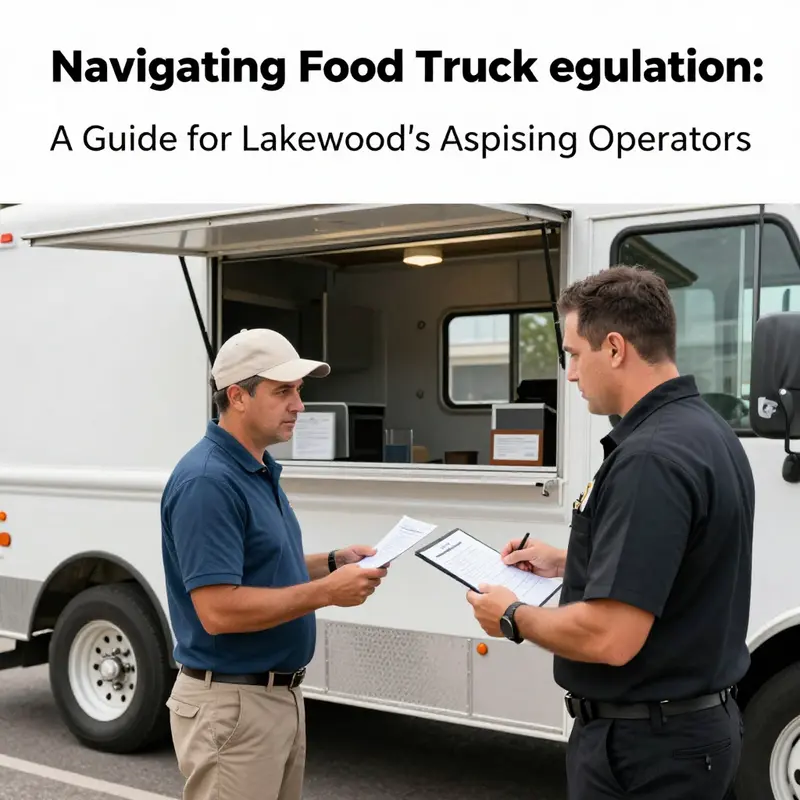
Regulations for food trucks are most visible in the moment a health inspector taps the hood and asks for credentials. Yet the real texture of compliance stretches far beyond those brief canvases of audits and stickers. It threads through every decision a truck operator makes—from the design of the kitchen, to the sources of ingredients, to the routes chosen for daily operation. The result is a living system that calibrates risk, safety, and accountability in an industry famed for mobility and improvisation. When you read the city maps and national statutes as a single, evolving script rather than a checklist, a clearer pattern emerges: regulation is not merely about penalties; it is the architecture that keeps the street kitchen reliable for customers and predictable for operators. In the current landscape, the most durable chapters are written around five core inspection areas that recur in many jurisdictions, and they form the spine of any responsible operating model for a food truck.
First, licensing and personnel materialize at the very origin of legitimacy. A valid business license or food operation permit authorizes the venture to exist in the public sphere, but compliance demands more than a single document. It requires ongoing verification that staff members hold up-to-date health certificates and receive training appropriate to their roles. In many systems, this means evidence of food safety training such as basic hygiene courses, so that every person who handles food understands cross-contamination risks, temperature control, and the importance of hand hygiene. A meal prepared in a mobile unit might travel through neighborhoods with varying risk profiles, so authorities insist on standardized competencies that do not depend on the skill of a single cook. This emphasis on personnel often cascades into regular renewal of certifications and periodic refreshers, reinforcing a culture where safety is not a one-time achievement but a continuous practice.
Second comes procurement and ingredients—a regulatory focus that can quietly determine the character of a menu. Inspections demand that all ingredients originate from reputable, traceable sources. Vendors must maintain purchase records, invoices, and certificates that can verify provenance, safety, and expiry status. The use of unknown-origin or expired components is not merely a health hazard; it is a breach of trust that regulators treat with equal severity as a physical hazard. For operators, this means building a sourcing discipline that aligns with the expectations of inspectors, buyers, and customers alike. A robust logbook of receipts isn’t glamorous, but it becomes a safeguard against adverse reviews and legal exposure should any supplier issue arise.
Third, hygiene and sanitation stand as the most tangible daily test of a truck’s readiness. Vehicles are required to be dust-proof, fly-proof, and rodent-proof to limit contamination vectors beyond the cooking line. Cleaning protocols apply to every surface—cooking surfaces, utensils, storage containers, and waste handling areas. Inspections verify that cleaning happens consistently, not merely when inspectors arrive. This is why operational cleanliness must be ingrained in the routine of the crew, rather than relegated to a nightly ritual before closing. The emphasis on sanitation also extends to waste management—proper segregation, sufficient disposal capacity, and a plan for maintaining a clean operating zone throughout service. Customers implicitly judge safety by the shine of a kitchen and the absence of smells that betray poor sanitation, so the bar is set high, and rightly so.
Fourth, facility and equipment standards anchor the vehicle in habitability and safety. The space allocated for food preparation and storage must be clean, clearly delineated, and functionally designed to prevent cross-contact. Adequate water supply, proper drainage, and approved packaging materials are not luxuries but minimum requirements that keep operations hygienic even during peak service. In many cases, inspectors assess whether the vehicle’s layout reduces the chance of splash-back, allows safe movement for staff, and minimizes the risk of electrical or mechanical faults during operation. The equipment itself—coolers, cooktops, ventilation, and handwashing stations—must perform at a level that assures consistent safety, with maintenance records that prove it has been serviced on schedule. This is not merely about passing an annual test; it is about building reliability into the day-to-day rhythm of the business.
Fifth, the overall environment rounds out the picture. The vehicle and its operating space must present a clean, organized, pest-free, and safe environment. Regulators look at how trash is stored and removed, how nearby areas such as sidewalks and stalls are kept tidy, and how odor or smoke is managed to avoid disturbing surrounding businesses or residents. In effect, inspections are also about social responsibility—how a mobile unit coexists with neighborhoods, how it minimizes nuisance, and how it contributes to the local economy without compromising health and safety.
Across regions, these five core areas thread through distinct regulatory wardrobes. In some places, inspectors will emphasize the clarity of permits and the chain of responsibility for food handlers; in others, the emphasis shifts to traceability and supply-chain documentation. The common thread is that success in compliance is as much about system design as it is about individual acts of care. Operators who embed robust records, routine training, and disciplined operational habits into their daily workflow are prepared not only to pass audits but to sustain trust with customers who rely on the safety and consistency of what they eat on wheels.
To illuminate how these principles are deployed in practice, it is useful to look at specific regulatory models that are shaping where and when trucks operate. In Sichuan Province, a framework called the Vehicle-type Food Truck Safety Supervision and Management Measures requires operators to obtain a Food Operation Permit and to register with the local market supervision bureau at their operating location. A distinctive feature is the creation of a “Vehicle-type Food Truck Business Publicity Card,” which operators must obtain to authorize operation. The regulations also place restrictions on high-risk activities such as selling raw foods or pre-made dishes and specify approved locations for operating, such as communities, hospitals, stations, and parks, with a critical caveat: trucks must remain at least 25 meters away from pollution sources like sewage pits and open garbage dumps. The practical effect is to tether a mobile unit to a clean, safe, and community-aware footprint, preventing the uglier consequences of rapid, unregulated deployment. This approach signals a broader principle: licensing and location are not mere formalities; they are the levers that determine where a truck can exist and how it can affect public spaces.
In Shanghai, the Mobile Food Truck Management Measures lay out a more coordinated governance model that strengthens the regulatory network through cross-department collaboration. The Commerce Commission takes the lead on planning and policy, the Market Supervision Bureau oversees food safety, the Urban Management Law Enforcement Bureau maintains street hygiene, and the Traffic Police handle vehicle registration and parking enforcement. This multi-agency setup reflects an understanding that street-food ecosystems are dynamic systems that require synchronized oversight. The emphasis on situating trucks near business districts, industrial parks, and residential areas—especially where breakfast options are limited—demonstrates how regulation can shape strategic placement to meet public demand while maintaining safety standards. In practice, operators must navigate a complex mosaic of approvals, appointments, and location-specific rules. Yet this complexity, when managed well, reduces risk and clarifies expectations for both vendors and regulators.
At the national level, the regulatory climate in China has begun to reflect a broader push toward tighter oversight across the entire food supply chain, including transportation. In late 2025, a draft regulation proposed licensing for the transport of liquid foods, such as edible plant oil, signaling a response to incidents that exposed vulnerabilities in the longer chain from supplier to plate. This move embodies a trend toward the stringent, standardized, and transparent oversight that seeks to close gaps that might otherwise permit unsafe practices to slip through the cracks. The implication for food truck operators is clear: regulatory regimes are increasingly trained to expect verifiable controls across the full spectrum of operations, including procurement, preparation, transport, and service. The consequence is a tighter lattice of compliance that makes meticulous record-keeping and proactive risk management essential, not optional.
Another layer of specificity that bears mentioning is the transport and logistics compliance that touches food safety even when products are already cooked and packaged. New national standards, effective December 2025, require transport entities handling liquids to adopt a formal Loading and Securing Plan. They mandate mandatory checks every 50 kilometers and every four hours of continuous driving. Inspectors will verify the presence of the loading plan and conduct hands-on checks of tie-down straps and chains to ensure they are secure and free from damage or knots. This is a practical acknowledgment that the integrity of a cargo can be as decisive as the quality of the food itself. A failing tie-down—no matter how pristine the kitchen—is an accident waiting to happen. Such provisions reflect a broader principle: the safety of a meal extends from the kitchen flame to the last mile of delivery and into the transport chain that keeps the product safe during transit. For operators, this means cultivating a culture of continuous compliance that covers the vehicle’s roadworthiness, the security of loads, and the routine inspection rituals that ensure nothing is left to chance during long shifts or crowded urban routes.
These layers converge into a single operational truth: compliance is a moving target that rewards preparedness, discipline, and foresight. The best operators are those who convert regulatory requirements into durable internal practices. They build document management as a core capability, not a peripheral task. They invest in training that travels with new staff as reliably as their fuel cards do. They design workspaces that minimize contamination risks and maximize safety margins. They construct supplier networks that can be audited, and they maintain equipment with schedules that align with inspection cycles. They also design their menus and service strategies with an eye toward regional constraints, ensuring that the business remains viable and compliant wherever it parks for the day.
This chapter does not pretend that the regulatory landscape is static or uniform. It is instead a portrait of an industry in which governance evolves alongside urban development, consumer expectations, and food safety science. The example from Sichuan illustrates how a clearly defined permit system paired with location controls can regulate where a vehicle operates while maintaining a focus on health and safety. Shanghai’s model demonstrates the benefits of interagency coordination and strategic placement to meet public needs without compromising standards. The national debates toward stricter transport rules reveal a recognition that the integrity of the entire chain—from source to plate—depends on the reliability of the transportation system itself. In all, the trend is toward greater transparency and accountability, with fewer opportunities for ambiguity or lax enforcement that could endanger consumers.
For operators who want to connect regulation with practical, day-to-day decisions, a useful approach is to view compliance as a framework for value creation rather than a series of hurdles. Good records enable fast, confident responses when a regulator asks for proof of safety. Well-trained staff deliver consistent quality, which attracts repeat customers and favorable inspections alike. A clean, organized vehicle reduces risk and protects staff, which translates into fewer delays and smoother operations in busy markets. And thoughtful planning—especially around vehicle design, supplier audits, and maintenance schedules—creates a resilient business model capable of thriving even as rules tighten or shift with new leadership and new public health insights. If there is a single takeaway from the inspection-driven logic of food-truck governance, it is this: success comes not from chasing compliance but from making compliance intrinsic to every decision.
For readers seeking a concrete example of how operators thread these principles into practice, consider how equipment and workflow choices influence both safety and efficiency. One practical resource that many aspiring operators consult is the collection of vehicle models and layouts that illustrate how design decisions intersect with regulatory expectations. In this context, the chapter’s guiding idea is to align a truck’s physical footprint with the five inspection areas, so that licensing, sourcing, hygiene, facilities, and environment reinforce one another rather than compete for limited space or attention. To explore a range of design strategies that some startups use to balance capacity with compliance, see the article on best food-truck models for Lakewood startups. It offers accessible perspectives on how layout choices support safer workflows and easier cleaning, without sacrificing speed or service quality. best food-truck models for Lakewood startups.
Ultimately, the regulations that shape food trucks are not a static veto on creativity. They are a guide to building a safer, more reliable, and more trusted mobility-based food culture. They encourage operators to turn every audit into an opportunity to demonstrate accountability, to turn traceability into a competitive advantage, and to treat the kitchen cleanliness, staff training, and transportation logistics as a single, coherent system. The street becomes a venue not just of commerce but of responsibility. When the chain from supplier to stove to street corner is designed with care, the public gains confidence, health, and choice—and the operator gains a sustainable platform for growth in a world of evolving rules and rising expectations.
External resource: For a broader view of regulatory trends and public-health policy shaping food safety at scale, see the national coverage of the 2025 push toward stricter regulation across the food supply chain, including transport rules. https://www.chinadaily.com.cn/china/2025-12/31/content_40312930.htm
Final thoughts
Understanding food truck regulations is essential for aspiring operators who want to create a positive impact on Lakewood’s culinary landscape. By adhering to health and safety standards, securing the necessary licenses, following operational guidelines, and being prepared for inspections, food truck operators can foster trust and delight within the community. Knowledge is power, and by navigating these regulations skillfully, you can transform your passion into a thriving mobile food business that brings joy to countless customers in our vibrant town. Ready to roll? Get informed and hit the road to your food truck success!