
If you’re gearing up for a big event in Lakewood or just curious about how food trucks can serve a crowd of 100, you’ve landed in the right place! Food trucks are a vibrant addition to any gathering, offering a diverse menu that can cater to various palates. But how much should you expect to spend for a food truck that can accommodate 100 people? In the following chapters, we’ll explore estimated costs, the factors that influence pricing, how different cuisines measure up, the impact of service styles, and those sneaky additional costs that can crop up. Whether you’re an aspiring food truck entrepreneur or just someone looking to savor the local food truck scene, you’re going to find some valuable insights here!
null
null
Beyond the Price Tag: How Equipment, Labor, and Logistics Shape the Cost of Feeding 100 from a Food Truck
Costs to feed 100 from a food truck are a bundle of interdependent factors, not a single number. The headline price depends on equipment, labor, ingredients, and logistics, plus the service model and the venue. This chapter breaks down the major drivers and how they interact to shape the final cost.
Baseline per person costs set a starting point. A typical range is roughly 25 to 70 dollars per head for food and labor when serving a hundred guests, depending on menu complexity and service style. At a midpoint of 45 dollars per person, the core food and kitchen labor would be about 4,500 dollars. If the menu calls for premium ingredients or complex techniques, the per-person cost can rise toward 70 dollars or more, pushing the total toward 7,000 dollars or higher. Premium experiences with bespoke components can push the total into the ten-thousand-dollar neighborhood for full-service packages. These figures are indicative and show how margins compress or widen with planning choices.
Equipment and vehicle costs are the next layer. A high-volume mobile kitchen needs a capable cooking footprint, reliable refrigeration, and safe, compliant workspace. Larger grills, multiple ovens, griddles, or specialized units increase upfront costs and ongoing maintenance. The vehicle itself may require a larger chassis, extra trailers, or upgraded power management to support high throughput. Depreciation, insurance, fuel, and maintenance scale with usage, so long-term costs grow with the level of service and turn a once simple price into a running budget item.
Ingredient and supply costs are sensitive to menu design and spoilage risk. A hundred servings require careful inventory planning, reliable sourcing, and waste controls. Use of premium proteins or seasonal produce can raise unit costs, but disciplined procurement and portion control can stabilize pricing and protect margins.
Labor costs reflect staffing levels, service style, and workflow design. A 100-guest event usually requires more cooks, prep staff, and servers than a small breakfast run. Planning for pre-event tasks, on-site food safety, and post-event cleanup ensures smooth service but adds to the bottom line. Efficient operations with clear roles and repeatable recipes help keep labor variability in check.
Logistics and location carry a hidden but meaningful price tag. Travel time, permits, insurance, parking, and multi-site logistics can add fees that are not obvious in a menu price. If an event involves multiple stops or venues, you need a careful plan for setup and teardown as well as mobile power and water needs.
Budgeting for such an event is about managing a small set of levers rather than chasing one perfect total. A well designed package minimizes waste, optimizes throughput, and aligns the menu, service style, and venue constraints. Including a contingency for weather, equipment wear, and last minute substitutions is prudent. A thoughtful approach yields a price that reflects capability, reliability, and guest experience rather than a single headline figure.
For readers seeking a broader market context, consider industry analyses focused on mobile food operations. These can offer benchmarks across regions and event sizes, helping planners compare options and forecast profitability more confidently.
On the Road to Budgeting: The Real Costs of Feeding 100 with a Food Truck Across Cuisines
When planning an event for a hundred guests, even the most enticing menu can stall at the price tag if you don’t account for the way a food truck translates appetite into dollars. The core question—how much is a food truck for 100 people?—is less about a single figure and more about a spectrum shaped by cuisine, service style, and location. Across the United States, market data as of early 2026 show a broad band. A standard, full-service catering-style truck serving a diverse meal often lands in the mid-range of roughly five thousand dollars, with that figure climbing toward nine thousand for more premium offerings. Some planners encounter costs that push beyond ten thousand when the menu is elaborate, the venue demands particular licenses, or the truck carries specialty equipment and a larger crew. These realities matter because the per-person way people tend to think about cost—“$50 per person, 100 guests, that’s $5,000”—is a useful rough heuristic, but it masks the layers that determine the final tally. The number you settle on after consideration informs the type of menu you can build, the staffing you’ll need, and how you’ll stage the service, whether it be buffet, family-style, or plated service. As with any moving vehicle carrying heat and high expectations, the more precisely you map those layers, the better your budgeting will align with actual outcomes.
The per-person framing—$40–$80 per person as a baseline for food and labor—is helpful for early scoping. At the lower end, roughly $40 per person translates to about $4,000 for a hundred guests, assuming a straightforward lineup and lean staffing. The midpoint around $50 per person climbs to about $5,000, while the upper bound of roughly $80 per person approaches $8,000. The real story emerges when you add the ancillary costs that don’t appear in the per-person price but are essential to a smooth event. Equipment rental, if not included in the truck’s service, can add a chunk. Staffing—drivers, cooks, servers, and any event supervisors—often brings four to six people into the payroll. Permits, insurance, transportation, and on-site setup can each contribute. When you blend all of these factors, the total cost is not just a function of mouths to feed but a function of the truck’s configuration, the menu’s complexity, and the logistics around getting meals from truck to guests.
For many hosts, the most meaningful contrast lies in the cuisine. The database of 2026 pricing trends highlights sharp differences that align with ingredients, equipment, and the labor footprint required to execute a menu safely and consistently across 100 meals. Mexican offerings, built from tortillas, rice, beans, and grilled proteins, tend to be among the most cost-efficient. The per-person range there is typically about $8 to $12, reflecting moderate equipment needs—simple grills, warming trays, basic prep stations—and lighter labor demands. Italian concepts, with fresh dough, cheese, and sauces, push the price per head higher, often in the $12 to $18 bracket. The kitchen setup may demand a wood-fired or electric oven and more skilled hands, which compounds both the capital and operating costs. American comfort food—burgers, fried chicken, fries—usually lands in a middle zone, around $10 to $15 per person, driven by high-volume frying, robust refrigeration, and midrange staffing. Asian fusion or sushi-oriented trucks sit at the upper end of the spectrum, frequently charging $18 to $25 per guest; they require meticulous cold storage, precise prep tools, and specialized chefs, all of which elevate both the upfront investment and ongoing operating costs. Then there are the more modest, seasonally driven options like shaved ice and dessert trucks, which may run as low as $4 to $7 per person. These can be appealing for warm-weather events or family-centric settings, though seasonality and appeal constraints must be weighed against the appetite for guests who crave more substantial fare.
With a hundred mouths to feed, total costs can swing dramatically. A shaved ice setup, for instance, could be as low as around $400 for the day, while a sushi or upscale fusion offering could easily exceed $2,500 and continue to climb with menu sophistication and service demands. Those figures illustrate a broader principle: the bottom line hinges on how much of the menu is “cook-from-scratch” on the truck, how many staff are needed to maintain speed and safety, and how much equipment is running in parallel to deliver reliable temperatures and portion control. In practical terms, the budget can be shaped in parallel by three interlocking choices: the cuisine profile you select, the service format you prefer, and the geographic and regulatory environment in which you operate.
The service style you pick acts as a force multiplier. A buffet or family-style service often reduces the number of servers required and can streamline guest flow, yet it may demand more food preparation and replenishment work at the truck, influencing both labor and waste. Plated service, while elevating the guest experience, commonly increases labor costs because it requires more hands and a higher level of coordination to plate and deliver at pace. Each choice also interacts with location. A high-demand city with stricter permitting, higher insurance requirements, and elevated fuel and transport costs can push the total above the base expectations. Understanding these dynamics means mapping the event from the start: what is the guest experience and how precise must the timing be? The answer to that question will steer you toward the service style that aligns with your budget while preserving the quality guests expect.
Beyond the menu and the mode of service lies the practical matter of equipment and infrastructure. A standard truck that already houses grills, warming stations, refrigeration, and basic prep surfaces is a different financial animal from one that relies on additional specialty equipment—think ovens, blast chillers, or high-end sushi prep tools. Each extra piece of gear adds not just to the upfront rental or purchase price but to ongoing costs like energy consumption, maintenance, and required staff training. Then there are permits and insurance, which are not merely bureaucratic hurdles but essential cost and risk management channels. A misstep here can derail a perfect menu, so budgeting should include a conservative cushion for regulatory compliance. In some markets, the permit fees and insurance premiums for a mobile food operation can be substantial enough to influence the decision between a more modest, high-volume Mexican concept and a premium, chef-driven Asian fusion lineup.
Planners who want a practical, numbers-driven sense of scope often adopt a simple mental model: estimate the per-person price for the desired cuisine, adjust for service style, and then add a discretionary contingency for permits, insurance, and logistics. This approach yields a credible starting point, which can then be refined through conversations with operators about what is included in their base price. For example, some operators include staffing in the per-person figure, while others itemize it as a separate line. Equipment rental could be bundled or billed separately. The more transparent the dialogue with the operator, the more confident the final estimate becomes. There is also value in looking at truck configurations and scalability. For practical guidance on truck models and configurations suitable for a 100-guest event, consider exploring a resource titled Best food truck models for Lakewood startups. It offers a grounded view of how different setups can affect throughput, menu flexibility, and overall costs. Best food truck models for Lakewood startups
In the end, the journey from concept to checkout is about aligning expectations with capability. A Mexican-inspired lineup with a buffet service might land in a comfortable five- to six-thousand-dollar range for a hundred guests in many markets, while an Italian or American comfort-focused menu with moderate staffing could sit closer to six to eight thousand. A high-end, chef-driven Asian fusion or sushi-driven concept, if fully staffed and equipped with the right tools, can challenge the upper ends of the spectrum, potentially exceeding nine thousand dollars, with the total climbing further if the event includes premium beverages, complex plating, or extended service times. These are not arbitrary numbers: they reflect the layered costs of ingredients, skilled labor, and reliable equipment, all coordinated to deliver a dining experience that travels to the guest without a hitch.
For further context and a deeper, industry-wide benchmark, the National Food Truck Association’s 2026 Cost Analysis report provides a broader lens on how costs trend across markets and menus. This external resource can help planners calibrate their expectations against regional patterns and evolving pricing. https://www.nationalfoodtruck.org/reports/2026-cost-analysis
Feeding 100 on Wheels: How Service Styles Shape Price for Mobile Kitchens
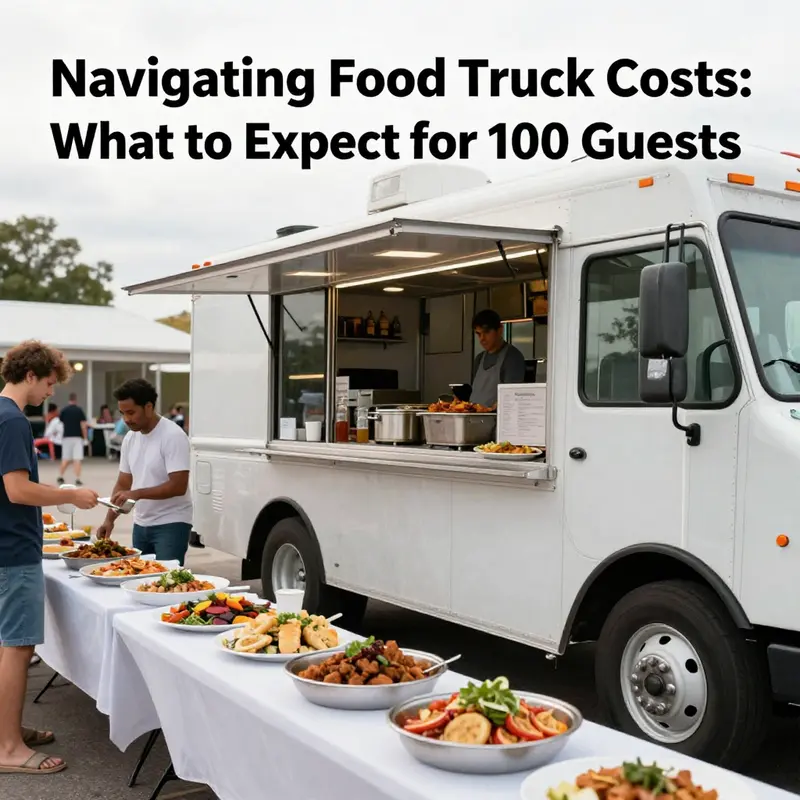
When a food truck is asked to feed a crowd of 100, the service style can tilt the math as much as the menu choices. In markets across the United States, operators and planners think not only about what goes on the plate but how it is delivered. For a standard catering-style truck serving a diverse meal to one hundred guests, the price band commonly sits around five thousand to nine thousand dollars, with premium offerings potentially climbing higher. Those figures come from current market data as of early 2026 and reflect how cuisine, menu complexity, and the presence of a professional staff alter the final bill. The per-person base can still echo the classic math: roughly forty to eighty dollars per person, translating into five thousand to eight thousand dollars for a hundred guests at a balanced price point. But service style channels this baseline into real differences in labor, logistics, and perceived value.
Buffet-style serving is often chosen when speed and volume matter most. Guests self-serve from a well-organized display, and the labor footprint on the truck is lighter because cooks and servers are pooled at the display rather than moving from plate to plate across the room. This arrangement can push the price downward on labor, yet it demands reliable equipment for temperature control and food safety, plus an efficient plan for waste management. Insulated serving units, regular rotation of hot dishes, and clear labeling all become essential investments to protect quality as service tempo accelerates. The trade-off is not only equipment costs but the responsibility of maintaining heat and texture in dishes that travel well yet prefer to be enjoyed fresh. The result is constraints on menu design too: menus tend to favor items that hold well in a display, travel reliably, and stay inviting after hours on a steam table or heat lamp. When calculating value, planners weigh the savings in labor against the added needs for refrigeration, pan racks, and the logistics to rotate and replenish stations, especially for popular items like starchy sides that require careful heat management.
Station-based service represents a middle ground in both experience and expense. Here, staff are stationed at dedicated points—like grilling bays, topping counters, or build-your-own stations—where guests see chefs at work and can customize dishes. This approach raises the perceived value and often justifies higher pricing because it adds a personal touch and a sense of theater to the meal. It also demands more robust staffing, usually four to six people on site beyond the truck crew, plus well-planned workflows to keep lines moving without sacrificing quality. A truck offering grilled potatoes with global flavor infusions, for example, can command a higher price through technique and variety. The on-site preparation at each station invites interaction, showcases skill, and allows guests to tailor ingredients to their tastes, but it also lengthens service time per plate and adds complexity to the kitchen’s layout, the equipment needed, and the training required for fresh execution at scale. While this model can elevate the guest experience, it increases labor costs and shifts some risk onto the operator in exchange for a premium on the menu and a stronger brand impression.
Pre-packaged meal distribution is the most streamlined model for large outdoor events or conferences with tight timing windows. Meals are assembled in advance and distributed in individual containers, which minimizes on-site prep and reduces the need for continuous cooking stations. The upside is clear: faster service, lower labor demands, and a more predictable schedule that appeals to event planners who prize reliability and exact timing. The downside is a potential reduction in perceived premium value and a narrowing of customization options at the point of service. To counter this, operators often pair pre-packaged meals with strong branding, high-end ingredients, or distinctive packaging that communicates quality even when guests don’t experience a kitchen-tactile show. In this model, price can still climb if the menu features premium ingredients, elaborate packaging, or a branding story that elevates the guest experience. The ability to deliver a consistent, timely meal under heat-controlled conditions can be a powerful value proposition for corporate events, conferences, and large gatherings where timing and reliability are as important as flavor.
The choice among buffet, station-based, and pre-packaged distributions does not occur in a vacuum. It interacts with the cuisine, the menu’s complexity, and the event’s context to determine the overall cost structure. A base cost anchored by food and labor typically runs from about forty to eighty dollars per person for a balanced menu delivered with adequate staff. At one hundred guests, that translates to roughly five thousand to eight thousand dollars, a range that aligns with observed market behavior in early 2026. The spread narrows or widens with the texture of the offering: a straightforward, family-style buffet with a rotating hot line might sit closer to the lower end, while a multi-station, chef-driven experience with build-your-own options and a premium protein or fusion concept can push pricing higher, into the premium tier of around one hundred dollars per person or more when the service includes interactive elements and high-touch presentation.
Beyond the per-person price, additional costs emerge as integral pieces of the overall equation. Equipment rental, if not included in the truck’s service, is a common line item. Staffing across the event—drivers, cooks, servers, and possible setup crews—typically runs four to six people, depending on the service style and the expected pace of service. Permits and insurance are essential, particularly in urban or restricted locations, and transportation and setup fees add another layer to the final invoice. While a standalone buffet might reduce some of these on-site labor costs, it still requires precise planning to ensure food safety, temperature control, and waste management across the entire service window. Station-based service, with its higher staffing needs, increases the labor bill but can be paired with creative menu design that adds value through guest engagement and memorable moments at the station. Pre-packaged models may minimize on-site labor, but they demand attention to packaging quality, branding, and the guest’s perception of value through presentation and ingredient integrity.
This interplay between service style and pricing also intersects with menu complexity and cuisine type. A menu built around hearty, crowd-pleasing favorites tends to travel well in a buffet or pre-packaged format and can keep costs predictable. In contrast, premium, themed, or high-end fusion menus may drive per-person costs upward, particularly if the dish lineup involves delicate preparation, specialty techniques, or rare ingredients. The choice of service style becomes a strategic lever: a buffet can offer affordability and speed, a station-based system can deliver engagement and a premium feel, and pre-packaged meals can optimize reliability and logistics. Skilled operators design a mobile kitchen that can switch among these modes as needed, enabling dynamic offerings for different events without a wholesale hardware overhaul. A mobile kitchen equipped to support multiple cooking stations, in other words, can sustain high-quality offerings at scale, provided pricing reflects the investment in equipment, training, and logistics.
For planners who want to ground their decisions in current industry trends, it helps to review how operators balance service style with price. The recent pricing landscape shows a tightening around value, with most full-service trucks for 100 guests offering a balanced mix of price and service quality. When the menu is uncomplicated and the event favors speed, buffet or pre-packaged service can be particularly cost-efficient. When guests expect a more immersive experience or customization, station-based service delivers the experiential payoff that can justify higher pricing. The broader takeaway is clear: the service style you choose is not merely a delivery method; it is a decisive factor in cost structure, guest perception, and ultimately the profitability of feeding a crowd on wheels. If you’re evaluating options, consider reviewing the range of configurations and how each aligns with the event’s goals, the venue constraints, and the desired guest experience. And as you weigh those choices, keep in mind that many operators assess various truck configurations and workflows, such as the best food-truck models for Lakewood startups, to imagine how different setups could perform at scale within your budget. best food-truck models for Lakewood startups.
For broader context on regional trends and pricing guidance, see external resources like California Food Truck Catering Trends: https://www.californiagov.com/food-truck-catering-trends.
Beyond the Base Fee: Navigating Hidden Costs When Booking a Food Truck for 100 Guests
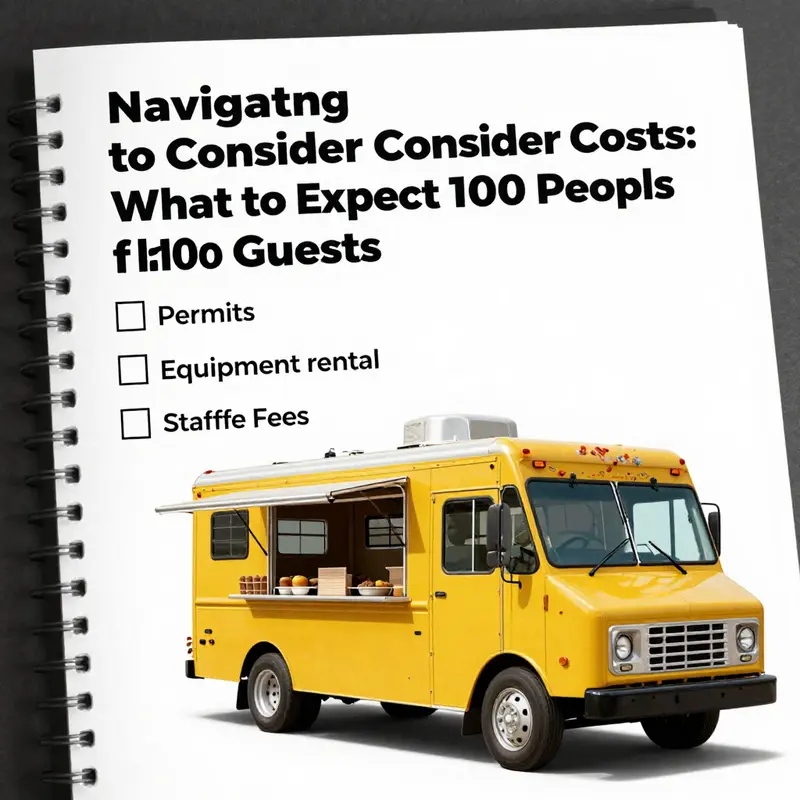
Booking a food truck to serve 100 guests can feel straightforward at first glance: a single price tag, a single menu, a single vendor. Yet the reality of event catering with mobile kitchens is more layered. The base rental often represents only a portion of the total bill. Even with a mid-range menu, planning for 100 people involves juggling a spectrum of costs that accumulate quickly and can surprise unprepared hosts. Based on current market data through early 2026, a standard full-service food truck for 100 guests might start around five thousand dollars and climb toward nine thousand for more elaborate offerings. The numbers reflect a basic truck fee that covers the cooking crew, some equipment, and the truck’s travel time, but they don’t account for the complete experience or the service extras most events rely on. Beyond that base line, the largest and often first overlooked line item is food and beverage costs themselves. For a full-service setup, the ingredients, beverages, and service ware needed to feed 100 people can range widely. The final food bill is shaped by the cuisine, portion sizes, and whether you opt for a straightforward, crowd-pleasing menu or a curated, chef-driven experience. A conservative package might hover around five thousand dollars for the food alone in everyday fare, while more ambitious menus—say, specialty barbecue with premium sides, or high-end fusion with delicate preparations—can push the food cost well into the upper end of the range, sometimes surpassing fifteen thousand dollars. That spread matters because it isn’t tied to the truck’s sticker price. It sits on the same invoice, separate from the truck’s labor, setup, and delivery. Labor and staffing follow as the next critical consideration. A typical event crew for a mobile kitchen may include a lead cook or chef, one or two assistants, and two servers or attendants who help with plating, replenishment, and table service for guests. In total, this crew often runs three to five people, and the labor component for a single day can easily land between fifteen hundred and four thousand dollars, depending on local wage scales and the level of culinary skill involved. This is meant to compensate the cooks who handle hot stations, the servers who manage food replenishment and guest interaction, and the drivers who move between locations, set up, and help with teardown. It’s a reminder that “the price of the truck” can become only a fraction of what you actually pay to keep a functioning kitchen moving in the right direction on event day. Permits and licenses, while perhaps less dramatic than the food tab, are nonnegotiable for clean operation. The vendor is expected to hold the necessary permits, but you may find yourself dealing with a temporary food service permit, health department inspections, a business license, and possibly a special event permit if the venue requires one. The combined fees can amount to a few hundred dollars, but in busy metropolitan areas, they can creep higher, especially if the event stretches across multiple jurisdictions or requires additional safety compliance. It is these regulatory footnotes that remind hosts to expect paperwork alongside the sizzling pans. Then there are the equipment and supplies rentals that fill in the gaps between what the truck provides and what the event needs. Even if the truck comes equipped with basic kitchen gear, you might want extra serving stations to maintain flow, larger coolers for cold snacks, tents to shelter guests in inclement weather, and tables, linens, and dishware for a presentable dining area. Renting extras can add anywhere from five hundred to two thousand dollars, depending on the duration of the event and the scale of the setup. If the site has limited electricity or refrigeration, portable power and cooling solutions may be required, adding a further layer of cost and planning to the logistics. Transportation and delivery fees are not merely about distance. They encompass fuel for the truck’s journey, wages for the driver on pickup and drop-off, potential tolls, and parking surcharges along the route. Some vendors include a standard delivery within their quote, while others itemize the transport as a separate charge. The farther the site is from the truck’s base, the more substantial these fees can become. The logistical dance of getting a mobile kitchen from its home base to your venue often eclipses expectations, especially in regions with challenging traffic or limited access for large fleets. Insurance and liability coverage are another anchor in the contracting process. A reputable food truck operation carries liability insurance that covers mishaps, foodborne concerns, or property damage during service. You should confirm the coverage amount and ask whether there are any riders for special circumstances at the event. While these policies are a standard safeguard for both parties, they can occasionally require a premium if sponsors demand higher levels of protection or if the site has unique risk considerations. It is better to clarify this upfront than to discover gaps after signing. Tips and gratuities, while not always expected, have become a customary part of honoring the crew’s work. A generous tip—often calculated as a percentage of the total labor cost, typically between fifteen and twenty percent—can add a few hundred dollars to the final bill. These gratuities reflect appreciation for a busy service window, careful plating, and safe food handling under pressure. You may decide to include a discretionary amount in your budget as a separate line item, or you may bundle tips into the overall labor estimate given by the vendor. Several subtler costs can catch hosts off guard, and they deserve careful attention in the contract stage. Service fees, event-day overtime, or additional labor for a late finish are common sources of runaway costs if the event timeline is not precisely outlined. The setup and teardown window—sometimes two to four hours depending on the complexity of the kitchen and the site’s constraints—can be billed as a fixed block or on a per-hour basis. If the site requires generators or extra electrical outlets, you’ll see another installment on the invoice, often tied to the duration of service and the truck’s power requirements. Weather contingencies, such as on-site shelter, heating, or cooling, may also require rental gear or contingency funds to ensure comfort and safety for guests in extreme temperatures. These are the kinds of details that turn a simple quote into a transparent, comprehensive budget when you are negotiating with the vendor. The broader takeaway is that a clear, itemized quote protects both you and the operator. You should insist on a line-by-line breakdown that covers the base truck fee, food and beverages, labor, permits, equipment rentals, transportation, insurance, tips, and any ancillary charges such as service fees or overtime. With such a ledger, you can compare different proposals side by side, identify where costs could be trimmed without sacrificing quality, and set realistic expectations for your guests. It also helps prevent last-minute surprises that could derail the event plan or force a painful shift in budget. If you need a broader reference when framing your price conversations, this external pricing landscape can offer a useful context: Catering industry pricing trends for 2026. External pricing guide. For hosts exploring the mechanical side of the choice, it helps to consider a few practical perspectives. Look at the event’s duration and guest flow to decide whether family-style service, buffet stations, or plated service would be most cost-efficient with a mobile kitchen. Buffet stations can favor a steady, high-volume output that minimizes the need for continual meat reheating and slicing, while plated service might require more staff time but can deliver a more controlled dining experience. If you anticipate a high guest turnover or a multi-hour event, the extra hands on deck could justify the higher labor costs; if the aim is to keep things lean and flexible, a simpler lunch-hour window might reduce staffing needs. A helpful way to approach this is to examine what you value most about the event: speed, presentation, or a relaxed dining pace. The decision should align with the event’s tempo, the guests’ expectations, and the host’s risk tolerance for last-minute changes in menu or timing. Within the broader context of a 100-person gathering, you can see how the initial price tag becomes a starting point rather than a verdict. It is possible to place a modest meal on a modest budget, or to craft an elevated experience that makes the food truck feel like a branded, restaurant-like stage for the event. The real craft lies in balancing quality with practicality, knowing where the money goes, and maintaining open dialogue with the vendor about what is essential and what can be adjusted. The more you understand the cost architecture behind the truck, the more confident you become in shaping an experience that satisfies guests without overspending. The chapter closes with the reminder that the numbers in the invoice are not arbitrary; they reflect choices about cuisine, service style, staffing, and the site itself. The better you plan, the more room you leave for the flavors that matter most to your guests. Informed decision-making benefits greatly from examples of models and setups that balance capability with cost. For hosts exploring the mechanical side of the choice, it helps to consider a few practical perspectives, including the best food truck models for startups, which can help set expectations about equipment readiness and service scalability. Learn more about options that fit a growing venture with the right mix of mobility and capacity: best food truck models for startups. External resource: Catering industry pricing trends for 2026. External pricing guide.
Final thoughts
Understanding the costs associated with hiring a food truck for 100 people can help you plan better and ensure your event is a success. From estimated costs based on the type of food truck and cuisine to the impact of service styles and additional expenses, being aware of these factors will allow you to make informed decisions. So whether you’re looking to start your food truck journey in Lakewood or simply enjoy the local offerings, knowing what to expect can enhance your experience!