
Launching a food truck can be an exciting adventure, filled with culinary innovation and community engagement. Yet, as new food truck operators in the Lakewood area prepare to hit the streets, one essential aspect often raises eyebrows: insurance costs. The world of food truck insurance can feel overwhelming, with various elements at play that influence how much you’ll need to budget. In this article, we’ll guide you through the ins and outs of food truck insurance, exploring the key factors that affect your premiums, identifying the types of necessary coverage required, and examining the average pricing trends in our ever-vibrant Lakewood community. So, whether you’re planning a fantastic new venture or just curious about the ins and outs of running a food truck, sit back and let us unravel the mystery behind insuring your mobile culinary dream.
The Real Price of Protection: Understanding What Drives Food Truck Insurance Costs
Insurance is not a line item you can guess the moment you acquire a food truck; it is a dynamic shield that expands or contracts with every mile you drive, every kitchen inch you install, and every permit you hold. For a mobile food business, the cost to insure is a moving target shaped by several intertwined factors: the size and type of the vehicle, the value and complexity of the equipment, the urban or rural stage on which you operate, and the risk profile of your daily routines. While the headline numbers often cited by industry summaries place annual premiums in a broad band—roughly between $1,500 and $4,000—the real story runs deeper. Understanding the layers beneath that range helps you price your venture with realism and resilience from the start, rather than discovering you’ve underestimated coverage only after you face an incident.
The first layer is the vehicle itself, and here size and complexity carry weight. A larger, fully equipped mobile kitchen with multiple fryers, high-output ranges, and specialty ventilation carries a higher potential for equipment failure or fire. This translates into higher repair costs and greater exposure to liability when devices operate near customers and combustible fuels. In contrast, a smaller van or a compact trailer that serves coffee or simple sandwiches carries fewer moving parts and lower fire and damage risk. The math is not just about weight on the road; it is about what happens when a piece of equipment fails, who bears the cost, and how quickly you can get back to serving customers. Insurers look at the replacement value of the kitchen, not just the sticker price of the vehicle. They also consider how likely it is that you’ll need to repair or replace crucial components during a given policy period. In practical terms, if your truck is built on a standard delivery chassis with minimal high-risk equipment, you will generally pay less than a truck that functions as a full maritime-grade kitchen in a compact footprint.
Location matters in the same breath as size. High-traffic urban corridors, dense nightlife districts, and festival-heavy regions heighten exposure to accidents, theft, vandalism, and busy periods when operations can slip on safety rituals. The same truck that performs brilliantly in a city park during a quiet weekday may face a different risk profile at a weekend farmers market with hundreds of vendors and long queues. Insurers calibrate your premium to reflect these realities. Rural or low-density areas typically offer lower premiums because the accident and theft rates are lower, but that relief can be offset if your business travels long distances or parks in unfamiliar locations at night. If your schedule is loaded with daily shifts, diverse event venues, and pop-up sites, that frequency itself becomes a risk factor, nudging the rate upward to account for greater exposure.
Driver history and experience form another pillar of cost. A driver who has spent years behind the wheel of commercial vehicles, especially those carrying valuable or perishable cargo, tends to qualify for lower rates. A clean driving record signals to insurers that the operator is less likely to be involved in at-fault incidents, which translates into fewer claims and more predictable costs. Conversely, a history of accidents, violations, or insurance claims can push premiums up because it increases the likelihood of future losses. Insurers also look at who is behind the wheel on a daily basis. A team with mixed experience levels may be priced differently than a single seasoned operator with a consistent schedule. The question they ask is not just “Have you driven a vehicle like this before?” but “What is the level of risk your team brings to every shift, every stop, and every interaction with customers?”
Beyond the vehicle and the driver, the business itself influences the bottom line of your insurance. The nature of the cuisine matters because some cooking processes carry higher fire and health hazards than others. Hot cooking operations with deep fryers and open flames naturally exert more demands on safety equipment and emergency readiness than cold-serving concepts. If you offer alcohol or high-risk specialty items, many policies respond with higher premiums to reflect the added liability. Your inventory, too, matters: perishables and expensive ingredients raise the potential financial exposure if spoiled or lost. In short, insurers read your menu as a risk map—the more complex the culinary process and the more expensive the perishables, the greater the financial stakes in an incident, and thus the premium.
The level and specifics of coverage are the engine that drives the final price. A policy can be built from modular pieces, each with its own price tag. General liability protects against accidents or injuries at your service point or at events. Commercial auto coverage is essential for any vehicle used in business, covering damage to your truck and liability arising from its operation. Property coverage protects the equipment, inventory, and trade dress. The choice of liability limits makes a substantial difference. A policy with higher limits provides more protection but costs more, while lower limits reduce the upfront payment but expose the business to greater risk in the event of a claim. In addition, you may decide to add protection for things like equipment breakdown, spoilage due to power outages, or business interruption if a fire or flood shuts down your operation for days. Each rider, deductible, and sub-limit nudges the total premium up or down, and the balance you strike reflects how you want risk to be shared between you and the insurer.
For many operators, the cost picture also includes the premium discounts that can be earned when policies are bundled or when certain risk-reduction measures are in place. A single insurer who can cover your auto, liability, and property needs is often able to offer a multi-policy discount that reduces the overall percentage you pay. Similarly, demonstrating robust risk management—such as professional-grade fire suppression systems, regular equipment maintenance logs, non-slip floor mats, adequate ventilation, and theft-deterrent devices—can persuade an underwriter that you are a lower risk. These enhancements do more than keep people safe; they shape the mathematical assurances that premiums are built upon. When you present a credible risk-reduction story to an insurer, you often unlock more favorable terms and a margin of safety in premium pricing that reflects your proactive stance.
For a practical sense of scales, most standard policies for a mid-sized, moderately equipped truck with a steady local schedule start around the lower end of the range, around $1,500 per year. If your operation includes larger kitchens, high-volume service, or elements like alcohol sales, premiums can exceed $4,000 annually. These figures are not universal caps but general anchors. The precise figure for your business will be a function of the exact truck you own, the insurance company you choose, the coverage you require, and how you run your operations. To obtain an accurate quote, it’s best to speak with insurers who specialize in mobile food businesses. They can tailor a policy that aligns with your equipment list, your routes, your event calendar, and your risk tolerance. The process begins with a detailed intake: the vehicle identification number, the equipment inventory, the anticipated annual revenue, the typical operating locations, and the driver’s license history for each operator involved. With these data points in hand, an underwriter can calibrate the risk and present you with a policy that reflects your actual exposure rather than an approximation from a generic market table.
If you are optimizing for cost while maintaining robust protection, consider using resources that discuss practical considerations for vehicle choice and insurance implications as you refine your plan. For example, when evaluating different truck configurations and their market fit, many operators consult guides and case studies highlighting practical outcomes for specific setups. A notable resource that can guide early-stage decisions on vehicle selection is the article about effective models for Lakewood startups. This resource helps you gauge how various configurations align with local demand and operating rhythms, which in turn feeds into your risk assessment and insurance strategy. You can explore it here: Best food truck models for Lakewood startups.
Beyond the vehicle alone, the policy you craft should reflect the realities of your event schedule. A plan that accommodates daily operations in a fixed location will have different risk dynamics from one that roams multiple towns, parks at festivals, and travels during winter weather. A frequent traveler who parks in unfamiliar spaces and uses temporary electrical hookups introduces additional exposure to property damage and equipment failure. In such cases, a policy that accounts for portable equipment, power outages, and the need for rapid relocation can be a prudent investment. That does not mean over-insuring; it means aligning coverage with actual risk, including a clear understanding of what could go wrong and how quickly you would recover. The right balance helps you avoid a situation where a minor incident becomes a financial setback that cripples your operation because you discovered too late that a particular coverage was inadequate or missing.
To make sense of the broader landscape, many operators rely on specialized insurers who focus on mobile food businesses. These providers are more likely to understand how a food truck operates, what kinds of equipment are typical, and the risks you face when you are parked at a bustling event or a curbside stop. They can also offer guidance on policy bundling and risk management practices that reduce premiums without compromising protection. When you shop, be prepared with a current equipment inventory, a clear map of your routes and events, and a realistic projection of annual revenue. This level of detail not only speeds the underwriting process but also demonstrates a responsible approach to handling risk, which is a critical signal to underwriters when they consider pricing.
As you design your coverage, you may also want to keep in mind how insurance interacts with other parts of your business plan. The cost of insurance should be viewed as part of your ongoing operating expenses, not an upfront hurdle. If you are preparing a business plan for investors, include a line item for insurance that reflects your actual quotes and a justification for the coverage structure you choose. A well-structured insurance program can also improve lender confidence, should you seek financing for a truck upgrade, a larger commissary, or a larger fleet. The presence of a thoughtful risk management approach signals that you are mindful of safety, continuity, and customer trust—the elements that convert a good idea into a durable business.
In the end, the price you pay for insurance is a function of how you run your business as much as what you drive. The numberscape shifts with your choices: the vehicle’s size and complexity, your operating footprint, your drivers’ history, the risk profile of your cuisine, and the protection you select. The most effective path to a fair, accurate premium is a candid, data-driven dialogue with a specialist who understands mobile food operations. Gather your inventory, your event calendar, and your driving records; bring questions about coverage gaps you worry about; and ask for scenario-based quotes that illustrate how different policy structures translate into premium changes. In doing so, you turn insurance from a mysterious annual bill into a precise, manageable cost that fits your business strategy and your risk tolerance.
External reading can add another layer of clarity on what influences insurance rates. For a detailed look at the factors behind food truck insurance costs, you can consult industry-focused resources such as the following external reference: https://www.foodtruckinsurance.com/insure-your-food-truck/what-affects-food-truck-insurance-rates. By reviewing this material, you can better understand how factors like equipment value, claim history, and the scope of covered perils translate into premium numbers. This broader context helps you advocate for the protections you need while remaining mindful of the cash flow that keeps your operation moving forward. The main challenge remains balancing protection with affordability, and the best path is to partner with a provider who asks the right questions, listens to your operational realities, and translates them into a policy tailored to your food truck’s true risk profile.
Under the Risk Radar: How Insurance Shapes the Real Cost of Running a Food Truck
Insurance costs for a food truck are not a single, static line item. They emerge from a complex blend of risk, coverage levels, and the operational profile of the business. When a owner asks, “What will I pay for insurance this year?” the answer isn’t a fixed number but a projection built from multiple moving parts. The vehicle’s value and age, the cuisine you serve, where you operate, the number of employees, and how often the truck hits markets or festivals all shape the premium. In practical terms, most food truck operators will encounter a package of protections that, taken together, forms the backbone of financial risk management: commercial auto insurance, general liability, product liability, property insurance for equipment and inventory, and, where appropriate, workers’ compensation. Each component covers a different slice of potential loss. The smallest part of the exposure is often the cost of the vehicle itself, and the largest part can be the combination of liability and wage coverage that keeps a team running through busy seasons.
Commercial auto insurance is the cornerstone for a mobile business because the truck is a moving platform for both revenue and risk. It covers the vehicle, but it also extends liability protection for injuries or property damage caused while driving or operating the truck. Since the truck travels between locations, the policy must weigh the risks of road exposure, parking in unfamiliar spaces, and the potential for accidents in crowded urban settings or in high-traffic events. This is typically a required, or non-negotiable, layer of protection for any food truck operation, and it alone can account for a meaningful share of the total premium. Then layer on general liability, which steps in when a customer slips on a wet surface near the serving window or when a bystander’s property is damaged by a stray extension cord. General liability is the catch-all protection that helps manage the unpredictable incidents that happen in real-time at your truck’s footprint.
Product liability is another essential piece, especially for a business offering creative or high-risk menu items. If a customer becomes ill after consuming a dish, the policy helps with the legal costs, defense, and potential damages associated with defending a claim and settling disputes. The exact scope of product liability depends on menu items, sourcing, and preparation practices, but in broad terms it guards against claims arising from the service or sale of food. Then there is property coverage, which protects the physical assets that keep the food moving: the refrigerators, freezers, grills, cooking appliances, utensils, and the inventory stored in the truck. When a storm, a power outage, or a malfunctioning unit threatens the safety of the equipment and the perishables inside, property insurance becomes a financial buffer that helps a business recover quickly without draining cash reserves.
Where a business sits on the risk spectrum—how many people work for it, where you operate, and what you serve—has a direct influence on premium levels. A one-truck operation with a modest menu and a careful driving history may find that a bundled policy in the lower premium range is sufficient. A multi-vehicle operation, a truck with high-end or heavy-duty equipment, or a venue that serves alcohol or raw seafood can push premiums higher. The underwriting process is designed to weigh not only the current value of the truck but also the exposure that comes with daily operations and seasonal peaks. When a truck routinely participates in festivals with large crowds, the policy may require higher limits or additional endorsements to reflect the elevated risk, even as the core protections stay the same.
To understand the overall cost, it helps to keep in mind the typical benchmark that industry sources repeatedly cite. In many cases, annual premiums for a mid-range, comprehensive package — covering commercial auto, general liability, product liability, and property insurance — land in a broad band roughly between $1,500 and $3,000. That range is a useful starting point, but it may not capture the full story for every operator. Some businesses find themselves closer to $1,500 on the low end when they have modest equipment, a clean driving record, and stable, predictable operations. At the other extreme, more complex setups — for example, converting a larger truck for high-volume festival service, adding alcohol sales, or carrying specialized, high-value kitchen equipment — can push the annual cost well beyond $4,000. In markets with higher living costs, denser competition, or stricter regulatory environments, premiums may climb further, even for businesses with similar revenue potential.
A practical way to view these numbers is to consider the premium as a reflection of exposure, not just the sticker price of the truck. The insured value of the vehicle, the scope of coverage, and the limits chosen for each policy layer work together to determine the annual figure. If you own a newer or more expensive truck, the repair or replacement costs in the event of a loss will be higher, and the insurer will price accordingly. If your operation frequently takes you into high-risk environments or you operate at larger events with more moving parts and potential hazards, the policy must cover those contingencies, which can raise the premium. Conversely, if you own a modest vehicle, operate in a lower-risk area, and maintain strong risk controls, you may see a more favorable rate.
Beyond the baseline coverage, there are several underwriting variables that insurers actively weigh. Your driving history matters, especially when it includes accidents or violations that raise the perceived likelihood of future claims. The number of drivers listed on the policy also affects cost, since each additional operator expands exposure. The frequency of operation in high-traffic or high-risk locations, such as busy urban cores, busy waterfronts, or events with large crowds, can further influence the rating. The business’s past claims experience is another focal point: a history of successful risk management and few or no claims can translate into better terms, while a record of incidents can lead to higher premiums or heightened scrutiny of coverage choices.
In practice, many food truck operators negotiate a package that includes a mix of coverages with bundled discounts. Bundling policies from a single insurer can lower the total per-year cost, because carriers value streamlined risk management and easier claims handling when all protections are under one roof. A higher deductible on one or more coverages can also reduce the annual premium, though it means more cash out-of-pocket at the time of a claim. Skilled brokers who understand the mobile-food landscape can help tailor a package that aligns with a business’s risk tolerance and cash flow. They can also help identify endorsements or riders that may be prudent, such as coverage for tools and equipment stored at different locations, or protective endorsements that extend coverage while the truck is parked at events where standard coverage might be limited.
The nature of the cuisine and the operation’s scale play a non-trivial role as well. A kitchen with high-heat equipment, a large refrigeration footprint, or specialized appliances will generally require sturdier property coverage. If a business frequently travels to remote or outdoor locations, insurers may require additional considerations for power supply, food safety, and security against weather or theft. The culinary profile can even influence product liability risk, particularly if a menu includes ingredients with known allergen exposure or if menu items carry higher risk categories due to preparation methods. The takeaway is straightforward: your insurance cost is not a passive artifact; it grows or shrinks with the risk footprint you present to the market.
An important nuance is how the operating environment affects premium visibility. Urban settings with dense traffic can increase liability exposure, but they may also offer more predictable revenue streams and customer engagement, enabling a business to justify stronger, well-defined coverage with favorable terms. Rural or suburban routes might entail lower traffic exposure but introduce other risks, such as longer distances traveled to events, which can influence vehicle wear and tear and maintenance costs. The event calendar matters too. A food truck that participates in high-volume festivals or regular farmers’ markets will generate more miles and more touchpoints with customers, which feeds into premium calculations. Conversely, a business that operates primarily around a fixed, year-round location may present a more stable risk profile and potentially simpler coverage requirements.
From a planning perspective, the numbers tell a story about the value of risk management. It is not merely about securing a policy; it is about designing a risk architecture that protects the business at a price that allows sustainable operation. This often means investing in safety practices and equipment that minimize the likelihood or severity of claims. For instance, implementing rigorous food safety protocols, maintaining an up-to-date maintenance schedule for all critical equipment, and training staff to manage crowd flow and customer interactions can reduce exposure. These efforts can translate into more favorable quotes and more favorable terms when the renewal time comes around. In other words, the smart operator uses insurance not only as a shield against loss but as a lever to optimize the business’s operating model over time.
To connect this discussion to tangible decisions, imagine a mid-range truck with standard equipment, a moderate weekly operating schedule, and a single driver with a clean driving record. If this operator keeps the vehicle well maintained, adheres to food-safety best practices, and avoids risky venues or high-volume festival commitments, the cost picture begins to fall toward the lower end of the spectrum. If that same operator adds a second driver, introduces a high-heat or high-capacity kitchen layout, and schedules weekend events across several large markets, the premium can climb as far as the upper end of the typical band or beyond, depending on the insurer and the coverage structure chosen. These dynamics are why many food truck owners rely on a broker’s guidance to map out a multi-year risk plan that aligns with projected growth and seasonal demand.
Given this landscape, the practical steps to securing a fair price are straightforward, though they require diligence. Start with a detailed inventory of all assets that require coverage: the truck, refrigeration units, cooking equipment, generators, POS systems, and any other specialty items. Gather information on your location strategy, including typical routes and the nature of events you attend. Document the number of employees and whether you operate with contractors or seasonal help. Compile your driving histories for all listed operators, and prepare a list of past claims, if any, along with any mitigating measures you have implemented since then. With this information in hand, reach out to specialized commercial insurance providers who serve mobile food businesses. Request quotes for a package that includes the core protections and ask about endorsements that may be relevant to your operation, such as coverage for equipment stored at different venues or for inventory at partner commissaries. When evaluating quotes, compare not just the price but the scope of coverage, the deductibles, the limits, and the insurer’s willingness to tailor terms to a mobile business. Don’t overlook the quality of the broker relationship; a knowledgeable advisor who understands the food truck ecosystem can help negotiate terms, identify savings opportunities, and provide proactive risk-management recommendations that improve coverage over time.
As you fold these considerations into a budget, think of insurance as a foundation rather than a garnish. A sound policy preserves cash flow during downturns, funds rapid recovery after a loss, and supports confidence when expanding the fleet or scaling up to higher-capacity service. It also creates a clearer path to profitability by reducing the likelihood that a single incident disrupts the entire operation. The cost, while always a practical concern, should be weighed against the value of continuity, customer trust, and the ability to serve during peak periods when demand is highest. For operators who want to ground this discussion in local context, it helps to consult authoritative, jurisdiction-specific resources that outline licensing and insurance expectations for mobile food businesses. In addition to general guidance, such insights can illuminate regional nuances that influence pricing and coverage requirements. For example, one can review regulatory guidance that outlines specific expectations for food trucks operating in certain states, including insurance minimums and required coverages, to align risk management with compliance.
An important facet of budgeting for insurance is understanding how policy design can influence the total cost over time. The choice of coverage limits is a major driver: higher limits provide greater protection but cost more. The choice of deductible also matters. A higher deductible reduces annual premium but increases the upfront cash needed to file a claim. The preferred approach for most small operations is to strike a balance that preserves cash flow while maintaining a robust safety net. Another lever is the inclusion of multi-policy discounts. If a business parks at a commissary or shared kitchen and owns other commercial properties or vehicles, a multi-policy bundle can yield meaningful savings because the insurer benefits from centralized risk management and cleaner claims handling. Risk management investments, such as a formal driver safety program, routine maintenance schedules, and documented food safety training, can amplify premiums favorably by signaling low risk to underwriters.
With all these dimensions in view, it is clear that the headline price of insurance is the result of a careful negotiation between risk and protection. The most prudent operators approach insurance not as a one-off expense but as a living component of their operating plan. They tag along a cyclical renewal process, monitor claims activity, and adjust coverage as volumes evolve. When the seasonal calendar shifts and the business adds or removes venues, the policy can be recalibrated to reflect new realities. In some cases, that means adding coverage for a second truck; in others, it could mean refining the liability limits that fit the most common exposures in a given market. The end result is a tailored insurance arrangement that supports growth, safeguards assets, and keeps the operation resilient against the unpredictable rhythms of street-level food service.
For readers who want a concrete example of how risk interacts with cost, consider the way risk management choices translate into quotes. If a truck owner maintains a pristine driving record, invests in reliable equipment, and minimizes hours in high-risk environments, the insurer may recognize the lower expected loss. That recognition can lower the premium by offering more favorable terms on the same package. On the other hand, if a business operates in a market with frequent weather-related disruptions or if the vehicle shows signs of wear that increase failure risk, the premium will reflect that elevated exposure. Given these dynamics, the best practice is to pursue multiple quotes from providers who specialize in mobile food businesses, compare the coverage architecture side by side, and remember that price is only one dimension of value. The reliability of coverage, the speed and fairness of claims handling, and the insurer’s responsiveness to a business’s evolving needs often determine the long-term financial health of the enterprise.
When this chapter touches on practical decisions, a simple invitation remains: use the insurance conversation as an opportunity to design a safer, more efficient operation that is better prepared for growth. The right coverage can support ambitious scaling without crippling cash flow, while the wrong mix may impose undue cost or leave gaps at critical moments. That is why many operators seek guidance from brokers who understand the ebb and flow of mobile food markets. A seasoned advisor can help articulate risk appetites, illustrate how changes in the menu or route structure affect exposure, and translate those insights into a policy that aligns with both current needs and future plans. The result is a plan that reflects a business’s unique footprint and allows the operator to focus on what matters most: delivering a consistent, high-quality experience to customers across diverse environments.
For readers who want to connect this discussion to a tangible point of reference, consider how a local operator integrates policy insights with practical operations. The interplay between policy design and on-the-ground risk management demonstrates why insurance costs, while essential, are only one part of a broader approach to sustaining a food-truck business. In the end, a well-structured insurance program accommodates the realities of street-level commerce and supports a business’s ambition to move from a single truck to a scalable, resilient operation that can weather the market’s inevitable twists and turns. And as you chart the path toward growth, remember that coverage is a tool for stability, not a barrier to opportunity.
To explore further how design choices and market positioning intersect with risk and insurance costs, you might look into industry perspectives on practical truck design strategies and their implications for exposure. For a deeper dive into resources that discuss model choices and strategic planning for mobile food ventures, see the article on Best food truck models for Lakewood startups. This resource offers a grounded look at how vehicle design, equipment selection, and operational planning influence not only performance but also risk exposure, which in turn shapes insurance needs and pricing. You can read that piece here: Best food truck models for Lakewood startups.
In summary, while the stated price range for a comprehensive food-truck insurance package frequently falls between $1,500 and $3,000 per year, the actual cost is a function of your unique risk profile, the scope of coverage you select, and the operational realities of your business. Higher-risk elements, such as a larger menu with high-temperature equipment, frequent high-traffic events, or alcohol service, tend to push premiums higher. Lower-risk configurations, with a prudent maintenance regime, a clean driving record, and careful event scheduling, can sit at the lower end of the spectrum. The best path to cost control is proactive risk management, thoughtful policy design, and ongoing collaboration with an insurer who understands the cadence of mobile food service. As you move forward, keep the core message in view: insurance costs reflect exposure, and exposure reflects how you run your business. If you maintain a disciplined approach to safety, maintenance, and reliability, you will not only protect your financial footing but also strengthen your capacity to grow with confidence.
External reference for regulatory context and detailed coverage requirements can be found at the New Jersey Department of Banking and Insurance’s Food Trucks page, which offers jurisdiction-specific guidance that can influence pricing and coverage structure: https://www.nj.gov/insurance/business/foodtrucks.shtml.
Riding the Rates: A Deep Dive into the Average Pricing of Food Truck Insurance
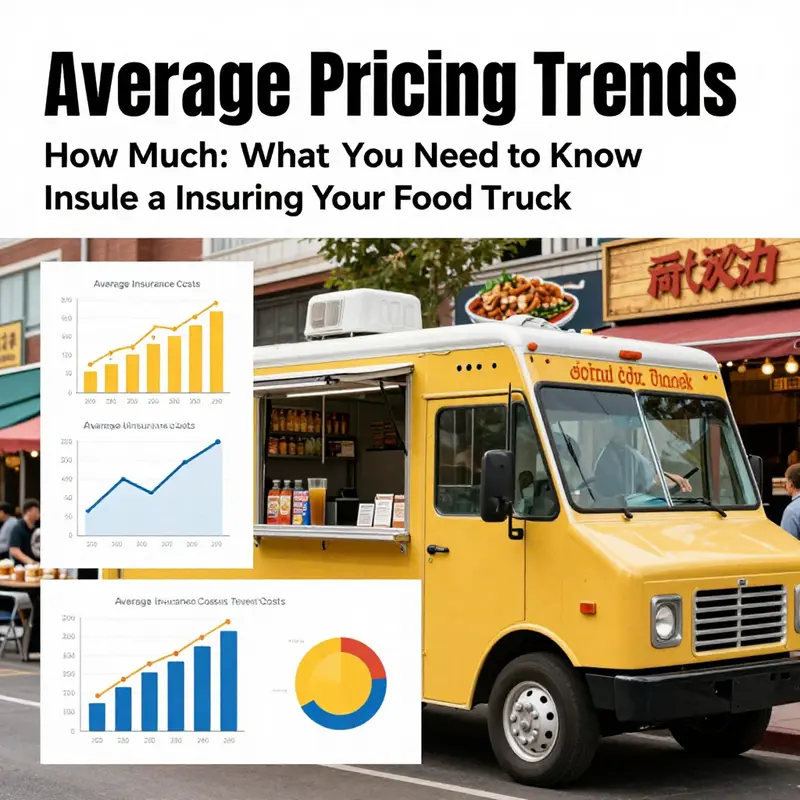
Insurance pricing for a food truck is less a fixed price and more a spectrum shaped by risk. The sticker price on a policy sits atop a shifting landscape of exposure, and understanding that landscape helps operators translate numbers into a sustainable business plan. In practice, the cost to insure a food truck reflects a blend of what the truck is worth, where it operates, what it serves, and how safely it is driven. It is not enough to estimate a premium from a single number; the pricing ecosystem invites you to read the fine print, compare multiple carriers, and align coverage with reality on the road. The first principle to grasp is that a food truck policy is typically a package: commercial auto coverage to protect the vehicle itself, general liability to shield the business from accidents or injuries on site, and property protection for equipment and inventory. Depending on the policy, some carriers will also offer riders or endorsements for specialized needs, such as equipment breakdown, spoilage due to power outages, or business interruption if a stall or a temporary closure interrupts operations. The way these elements balance each other can push the overall premium in a wide arc, even for trucks that look similar on the curb. The range most often cited by industry sources is roughly $1,500 to $4,000 per year, with the precise figure anchored in the details of the operation. A basic policy for a relatively modest operation, where the truck is in decent condition and the business keeps a conservative schedule, might land near the lower end of that spectrum. Add a few bells and whistles, such as extended liability limits, more robust theft protection, or a larger, more complex kitchen, and the premium drifts toward the middle or upper part of the range. This is where the nuance of insurance pricing becomes most evident: not every food truck is priced the same, even if they share the same city block or menu category. In short, the numbers respond to the reality of risk, not just the appetite of the insurer. The average nationwide picture, when you aggregate across markets and business models, typically centers around a figure near two thousand dollars per year. This national average is supported by recent data from comparison platforms that measure typical premiums for mobile catering and food service vehicles. Yet the average is just that—an average—and the real story is the dispersion around it. The most pronounced deltas show up when you compare bustling urban centers to quieter rural counties. In high-density urban environments, premiums can climb sharply, sometimes surpassing four thousand dollars annually. In major metros, the heightened exposure is driven by greater traffic, more frequent accidents, which raise liability risk, and a larger theft profile that affects both the truck and its equipment. The density of events, festivals, and farmers markets also matters because insurers weigh the cumulative risk of multiple locations and schedules. In contrast, rural or less congested regions often offer substantial savings. A well-maintained truck, operated by experienced drivers, under a conservative schedule in such areas can approach the lower end of the range, sometimes even closer to fifteen hundred dollars per year. The contrast between rural and urban pricing is not merely about distance from the city center; it is about the confluence of exposure points—traffic patterns, crime rates, theft risk, and the volume of on-site injuries that might occur at a given venue. A truck that frequently serves at crowded festivals, known for long hours and high throughput, faces different liability dynamics than a truck that parks routinely in a settled neighborhood or a single, predictable site. The cost of the insurance will reflect those realities, and the premiums will adjust in response to the change in exposure, even if the underlying vehicle and equipment remain largely the same. One of the strongest levers in shaping price is the perceived value of the truck and its equipment. A newer, high-capacity unit with premium-grade kitchen appliances, robust ventilation, and specialized gear will fetch higher replacement costs in the event of a loss. Those higher replacement costs translate into higher property protection premiums and, in some cases, higher liability limits as well. Conversely, a more modest setup with simpler equipment and fewer high-value assets tends to tilt the scales toward lower premiums. Operational time significantly influences price as well. A full-time food truck business that operates across multiple markets year-round represents a more predictable revenue stream and a more consistent risk profile, but it also presents greater exposure across longer cycles of driving, serving, and transit. This can push premiums higher because the policy is asked to cover more miles, more routes, and a broader set of potential incident scenarios. Seasonal or part-time operations, with a limited itineraries and shorter hours, can enjoy lower costs due to reduced driving exposure and a tighter risk footprint. The menu itself matters to some extent. High-risk items, such as raw seafood or meat, can influence premium calculations because of heightened food safety concerns and the potential for contamination claims. Conversely, more conventional cooking profiles with established safety practices may not move the needle as dramatically. Yet even if the menu remains steady, the way it is served matters. If a truck uses a complex, industrial-grade kitchen with high-risk equipment, or if it relies on heavy electrical loads and generators, the risk calculus shifts and can nudge premiums upward. The driver’s profile is a quiet but powerful determinant. A clean driving record, defensive driving training, and formal safety certifications are signals of lower risk to underwriters. When these factors align with a history of few or no claims, insurance providers may offer more favorable terms, including lower deductibles or modest discounts. For operators who bring a long track record of safe operation, the path to lower costs is not simply about reducing exposure; it is about showcasing a proactive safety culture that reduces the likelihood of incidents and their severity. This is why many insurers look for evidence of safety training, routine vehicle maintenance, and predictable operating patterns when contemplating quotes. The more transparent and verifiable your safety practices are, the more leverage you have to negotiate favorable terms, even in competitive markets. A practical takeaway for aspiring operators is that the journey to an affordable premium starts with the data you collect before you shop. Gather details about the truck’s year, make, model, and value; the inventory of equipment and its replacement cost; your typical operating schedule and route patterns; your average monthly revenue and peak event cadence; and a record of any safety training or certifications. Present this information clearly to potential carriers, and you’ll reduce the time spent in back-and-forth and increase the likelihood of a precise quote aligned with your actual risk. The price you pay is not only a function of the truck’s age or the city where you operate; it is also a function of the price you are willing to pay to reduce risk. This is where policy design matters. Some operators opt for higher deductibles to bring premiums down, accepting more out-of-pocket cost at the time of a claim. Others choose to bundle multiple coverages with the same insurer to gain a discount across auto, general liability, and property coverage. The decisions around limits and deductibles should be guided by a realistic assessment of cash flow and risk tolerance. If a disaster struck—an expensive equipment failure, a large theft, or a serious on-site incident—the premium you would have paid in exchange for peace of mind could pale in comparison to the cost of a gap in coverage. For many owners, there is value in a well-structured policy that balances premium cost with adequate protection, rather than chasing the lowest possible price. The pricing conversation also intersects with market dynamics. The food service insurance market is influenced by broader trends in auto and liability insurance, including inflation, medical cost trends, and the frequency of large settlements. When claims rise or repair costs surge, premiums can drift upward across categories, including food trucks. This systemic drift means even a well-managed operation may see a modest uptick in renewal premiums year over year, particularly if it maintains a stable schedule of high-mileage routes or expands to new markets. Conversely, improvements in risk management and a demonstrated ability to avoid or quickly mitigate losses can yield more favorable renewal pricing. In practice, many operators learn to calibrate expectations by collecting quotes from several carriers and by asking for a detailed breakdown of how premiums are calculated. Reading a policy quote with care is essential. Look beyond the headline premium and examine the breakdown of costs by coverage type, limits, exclusions, deductibles, and endorsements. Ask whether a given rider—such as equipment breakdown or spoilage protection—is necessary for your operation and, if so, whether it adds meaningful protection relative to cost. And remember that the price is not the sole signal of value. The best policy for a food truck may be the one that keeps you compliant with regulatory requirements while providing a safety net that aligns with your risk appetite. The decision process becomes more actionable when you pair quotes with a clear budget plan. Start with a baseline premium in the range expected for your market, then build contingencies for potential rate changes and mechanical or supply-chain disruptions that could affect your business. For operators in growing markets or in high-cost regions, it can be prudent to conservatively budget toward the upper middle of the typical range, with incremental increases as the business scales, the fleet expands, or the route map broadens. The opposite is true for operators refining a lean model in a lower-cost environment: with careful maintenance and disciplined risk management, a premium near the lower end of the spectrum can be sustainable for several years. In telling your story to insurers, emphasize the reliability of your maintenance routines, the consistency of your service times, and the safety mindset that guides your day-to-day decisions. Such narratives help underwriters see a coherent risk profile rather than a patchwork of scattered operations. If you want a practical compass, consider the broader context in which pricing trends unfold. The national average sits near two thousand dollars, but the real path to affordability depends on how you manage five core levers: vehicle value, location, operations tempo, menu risk, and driver safety. Within that framework, the numbers begin to align with your business plan. For a broader look at how equipment choices intersect with pricing, see Best Food Truck Models for Lakewood Startups. The article there walks through how different truck configurations and kitchen layouts influence maintenance costs, replacement value, and the potential frequency of equipment failures, all of which ripple into insurance pricing in meaningful ways. As a final note, the pricing conversation remains highly data-driven and personal. It rewards diligence in gathering the right facts about your truck, your routes, and your risk controls. It also rewards a disciplined approach to shopping: compare multiple carriers, ask targeted questions about endorsements and deductibles, and request written explanations of what triggers any premium changes at renewal. The more you bring to the table, the less you leave to guesswork. In the end, the question of “how much does it cost to insure a food truck?” yields answers that are practical and nuanced. The price tag reflects your readiness to mitigate risk as a daily practice, not just as a monthly payment. For those seeking to consult broader market data, a current external reference can provide a snapshot of costs based on recent trends and insurer analyses. For more up-to-date details, see the external resource: https://www.insurify.com/insurance-guides/food-truck-insurance/.
Final thoughts
In conclusion, understanding the costs associated with insuring a food truck is a vital step for aspiring operators in Lakewood. As you consider launching your culinary adventure, remember that factors like your truck’s value, culinary style, and operational history all play critical roles in determining your insurance premiums. Additionally, by knowing the different types of coverage you’ll need and staying informed about pricing trends, you can budget effectively and secure the protection necessary for your business. We hope this guide helps you prepare for the exciting journey ahead — happy cooking!