
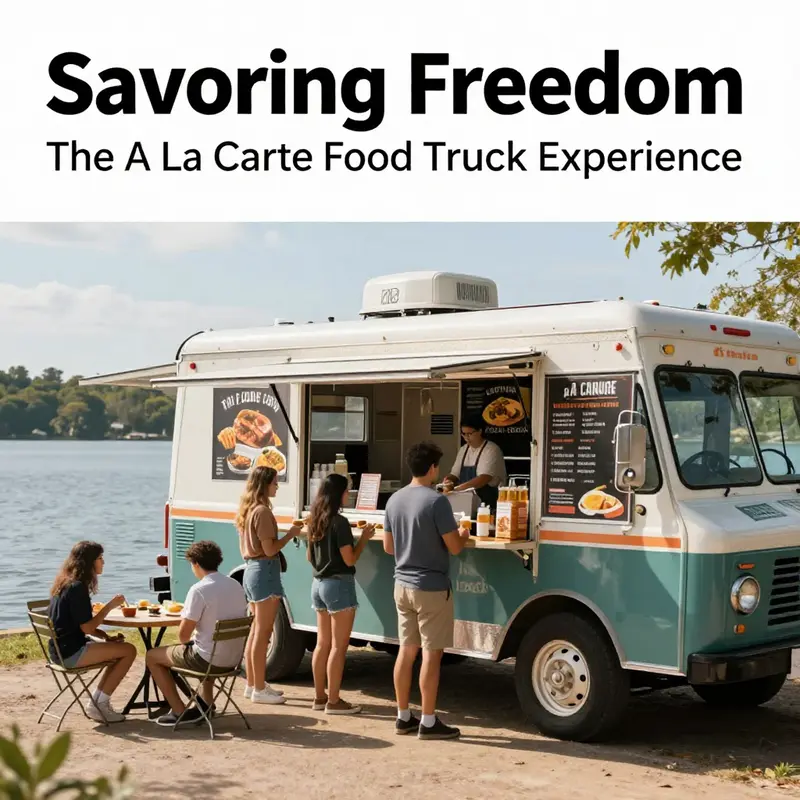
Food trucks are all about flexibility and taste, and the a la carte model takes this to the next level. Picture this: you’re strolling through Lakewood, drawn in by the vibrant colors and enticing aromas wafting from a food truck. Unlike traditional eateries, these mobile kitchens let you mix and match your meal, putting you in the driver’s seat of your culinary adventure. In this exploration, we’ll journey through the evolution of the a la carte food truck concept, dive into the critical health and safety standards that uphold food quality, and dissect the latest market trends shaping this innovative dining scene. Whether you’re looking to start your own food truck or simply soaking up the Lakewood culinary community, there’s something here for you.
From Street Carts to Curated Cuisines: The Evolution of A La Carte Food Truck Concepts
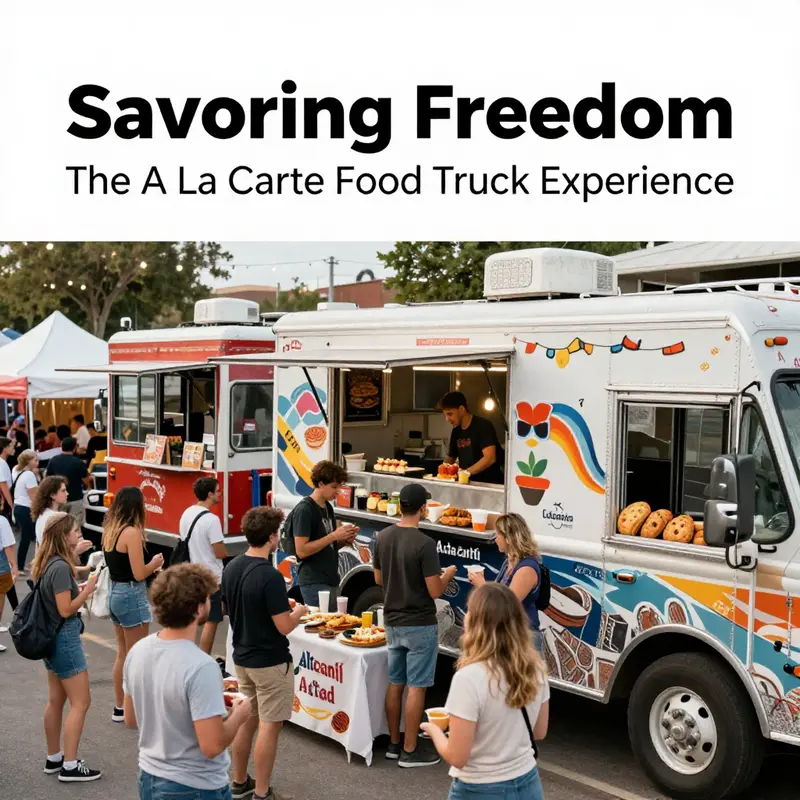
The story of à la carte food truck concepts begins not with a single clever menu idea, but with a long arc that stretches back to the late 17th century, when mobile food vendors first threaded their way through crowded streets and market squares in the young United States. Those early cooks offered whatever could be carried, cooked, and sold on the go: simple staples that could be prepared quickly, kept cheap, and served with a smile to the wave of workers and travelers who needed nourishment on a schedule that rarely aligned with fixed eateries. This impulse—to provide flexible, on-demand sustenance—remains the core DNA of today’s food trucks, yet the way that impulse is realized has shifted dramatically. What started as a mobile version of a street stall gradually morphed into a distinct culinary platform, one that prizes personal choice, logistical efficiency, and the ability to pivot rapidly in response to changing tastes and urban rhythms. The arc is not merely about mobility; it is about how a mobile format can become an anchor for experiential eating, cultural exchange, and entrepreneurial experimentation, all while remaining accessible to a broad spectrum of urban customers.
If we fast-forward to mid-20th century America, the trajectory becomes clearer and more tangible. In the 1950s and 1960s, these mobile units shed their rough-hewn beginnings and adopted a more self-contained, purpose-built form. Grills, fryers, refrigeration units, and weather-protected canopies transformed street food into a reliable service model. The modern food truck was born not just of necessity but of a strategic design philosophy: a vehicle must protect the process and the product, enable consistent cooking and hygiene, and deliver a recognizable experience despite unpredictable locations and weather. This structural refinement was crucial because it allowed vendors to move beyond the handful of staples they could sling from a pan or a portable grill. With stable power sources, temperature control, and sheltered workspaces, cooks could specialize. They could experiment with flavor profiles, source higher-quality ingredients, and present offerings that hinted at a more ambitious culinary ambition than the term “truck food” typically conjured.
The evolution toward a la carte menus—where customers select individual items rather than fixed combos—was not an abrupt pivot but a gradual unfolding. It aligned with broader shifts in consumer expectations: a desire for personalization, a preference for transparency about ingredients, and an appetite for quicker, more predictable service in crowded urban zones. The from-scratch ethos that emerged from this era was not purely about speed; it was about giving customers agency. In a world where dietary needs and cultural identities are increasingly diverse, the ability to assemble a meal from a slate of distinct options feels both democratic and practical. The modern truck no longer offers a single, monolithic dish; it offers a curated menu where each item can be held to a standard of quality that reflects the truck’s unique philosophy—whether that philosophy leans toward regional specialties, global flavors, or plant-forward creativity.
Today’s à la carte food trucks operate within a tightly woven ecosystem that blends culinary craft with design, operations, and branding. The trucks themselves are engineered for consistency: modular interiors that accommodate different cooking methods, robust cold chain systems to preserve freshness, and layouts that support rapid service without sacrificing hygiene. The emphasis on quality ingredients has grown in lockstep with a renewed consumer focus on health, sustainability, and cultural resonance. While a street vendor of the past might have relied on a few reliable suppliers and the day’s catch, the contemporary operator sources ingredients with greater discrimination, often prioritizing seasonal produce, responsibly raised proteins, and ethically sourced spices. This emphasis on ingredients is not merely a marketing line; it translates into flavor depth, texture contrasts, and a sense of culinary storytelling that can turn a quick lunch into a small, portable dining experience.
The menu architecture itself has become an instrument of branding. A la carte menus are frequently structured to showcase signature flavor profiles and to present a clear through-line across items. A Mediterranean-inspired truck might offer a sequence of plates built around citrus, olive oil, and grilled vegetables, with proteins that can be added or omitted to suit dietary preferences. An Asian-fusion concept may present a core set of bowls, wraps, and shareable sides that emphasize fermentation, heat, and umami, while a plant-based truck curates a lineup of vibrant vegetables, legumes, and grains that demonstrate how fresh produce can carry the main narrative of a meal. The result is a dining experience that feels coherent, even when the offerings change over time with the seasons and the chef’s exploration.
This coherence matters because urban consumers increasingly seek expedience without sacrificing taste or integrity. The street has become a laboratory for culinary experimentation, yet that lab must also be predictable enough that customers can trust what they’ll get when they step into the queue. The food truck’s advantage lies in its ability to pair a consistent operating system with a nimble creative process. A well-designed truck can host a rotating guest dish without losing its core identity; a smartly curated menu can rotate weekly specials while preserving the brand’s flavor vocabulary. In this sense, the modern à la carte truck is not a dilapidated cart with a few staple offerings; it is a moving kitchen that carries a brand story, a culinary philosophy, and a promise of quality to a rotating audience that follows the line of wheels from neighborhood to festival grounds to corporate campuses.
A crucial element of this evolution has been the integration of food safety and hygienic practices into every stage of operation. The cold chain, in particular, has become a standard-bearing feature for many operators who choose to emphasize quality and consistency. The careful handling of Halal and other specialized proteins demonstrates how the industry has become more attentive to dietary constraints and religious observances. It isn’t just about meeting regulatory requirements; it is about building trust with customers who expect reliable, compliant, and traceable processes. For operators, this means investing in refrigeration, validated supplier programs, and sanitation protocols that reinforce the idea that a mobile kitchen can uphold the same safety standards as a stationary restaurant—if not more resilient, given the agility and the capacity to control waste through precise portioning and informed inventory management.
The narrative of this evolution would be incomplete without acknowledging the role of space and design. A la carte trucks are increasingly engineered for flexibility: modular workstations, adaptable equipment footprints, and smart layouts that minimize travel time for the staff and maximize service speed. A scene often seen in today’s vernacular is a truck that looks unassuming from the outside but reveals a compact, efficient, almost choreographed interior once doors are opened. The exterior becomes the first impression, a storefront on wheels, while the interior speaks to the kitchen’s discipline and its dedication to a consistent product. This duality—visible branding and invisible efficiency—makes the modern truck a portable venue rather than simply a vehicle. In busy districts, at music festivals, or near corporate campuses, that combination of curb appeal and operational reliability becomes the competitive edge.
The cultural texture of these concepts has grown richer as global flavors migrate onto wheels. If the old street vendors of decades past drew only from local markets, today’s trucks pull from every corner of the culinary world. The à la carte format fits perfectly with cross-cultural exchange, enabling cooks to present a mosaic of tastes in small, shareable portions or to offer a personal mosaic of choices that accommodate various dietary patterns in a single sitting. This is where the market’s appetite for health, sustainability, and diversity intersects with the business demand for scale and repeatable quality. For diners, ordering becomes a mini culinary journey—one that invites curiosity, minimizes waste through precise portioning, and rewards repeat visits with new dishes that still feel unmistakably rooted in the truck’s core flavor language.
In practice, this evolution has also conditioned how operators think about location and schedule. The trucks thrive on the city’s grid—office districts, transit hubs, event venues, and farmers’ markets—where foot traffic and time windows converge. The ability to pivot to new locales, to adjust menus for seasonal events, and to calibrate supply chains quickly gives a competitive advantage that fixed restaurants, with their longer procurement cycles, may struggle to match. A la carte trucks can test new concepts with minimal risk. A single season can reveal which flavors resonate with a neighborhood, which preparation methods travel best, and which combinations of ingredients balance cost with perceived value for the customer. In this sense, the evolution is both procedural and experimental: it’s about refining the craft of cooking under pressure while preserving the freedom to innovate within a flexible business model.
Ultimately, the modern à la carte food truck stands at the intersection of craft, commerce, and culture. It operates as a moving stage where cooks can stage a dinner party of flavors in any setting, while business operators can observe, adjust, and scale with a speed that stationary kiosks and brick-and-mortar shops rarely permit. The narrative of this evolution is ongoing, as new materials, new technologies, and new consumer expectations continue to reshape what a mobile dining experience feels like. The significance of the story extends beyond the thrill of discovery or the convenience of a quick bite. It is a case study in how a flexible format can foster entrepreneurial resilience, culinary innovation, and urban vitality all at once. As cities continue to reimagine public space and as diners become more sophisticated about the sourcing and preparation of their meals, à la carte food trucks will likely persist as adaptive platforms that translate global appetites into something portable, personal, and profoundly satisfying. They are, in short, the evolution of street-level dining into a curated, mobile culinary culture.
For readers who want a closer look at how the strategic selection of truck models can influence efficiency, branding, and long-term viability in a local ecosystem, consider the resource on best food truck models for Lakewood startups. It presents practical perspectives on vehicle design, layout optimization, and real-world trade-offs that support both the art and the business of a la carte offerings. Best Food Truck Models for Lakewood Startups. This kind of guidance helps explain why modern operators invest in thoughtful interior configurations, robust cooking equipment, and adaptable service enclosures rather than relying on ad hoc, improvised setups. The result is a more predictable, scalable experience that remains deeply personal to the customers who keep returning for the next inventive dish.
The broader industry context confirms that this evolution is not an isolated trend but part of a larger growth arc. As a growing body of industry analysis suggests, food trucks have become a significant and expanding segment of the foodservice landscape, valued for their agility, entrepreneurial accessibility, and capacity to bring diverse flavors to dense urban environments. The shift toward à la carte menus, refined operational systems, and culturally resonant offerings aligns with consumer demand for personalized, high-quality, and responsibly sourced meals in a time of rapid urban change. External research highlights how the mobile format continues to evolve in tandem with digital ordering, flexible payment options, and data-driven approaches to inventory and menu optimization. In short, the evolution of à la carte food truck concepts mirrors a broader reassessment of what dining can be in a city that values speed, taste, identity, and sustainability.
External context: https://www.foodbusinessnews.net/articles/12345-why-food-trucks-are-a-growth-industry
Riding Clean: Health, Hygiene, and High Standards in A La Carte Food Truck Operations
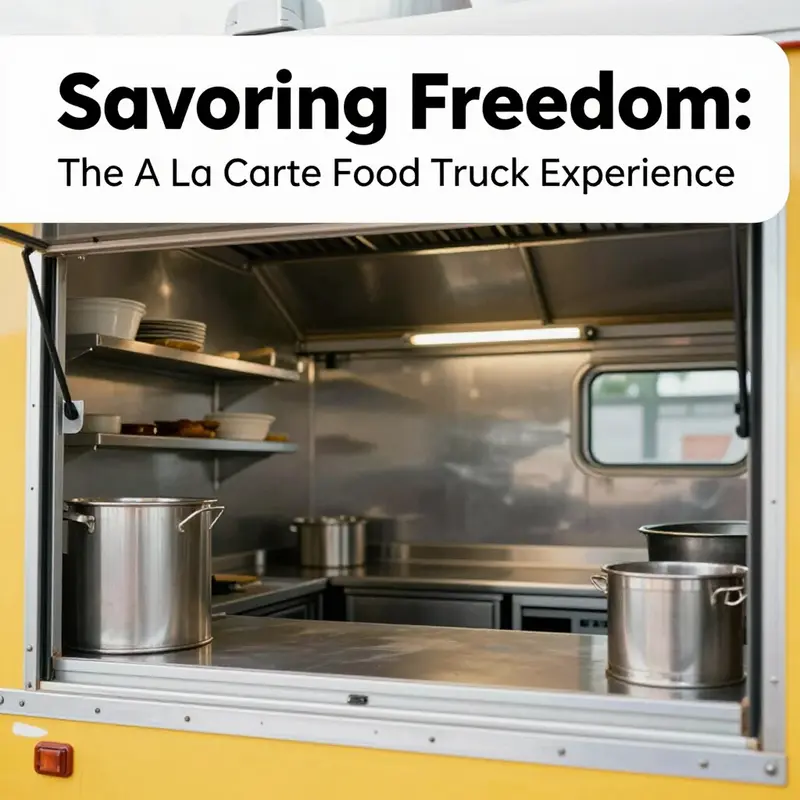
The FDA Food Code 2022 remains a critical external reference that operators should consult to stay current with evolving guidance. It provides the framework within which local health departments interpret requirements for mobile kitchens, from routine sanitation to equipment maintenance and employee training. While the code itself is detailed, its practical takeaway is straightforward: treat food safety as a system rather than a set of separate duties. The system begins with reliable equipment, continues with disciplined procedures, and culminates in a culture where every employee understands their role in safeguarding public health. As the food truck landscape continues to evolve—with new flavors, dietary patterns, and events—the core message endures: safety and service can coexist, even in a fast-paced, point-of-sale environment. By embedding this principle into every shift, operators not only protect their customers but also build a resilient platform for growth in a world where mobile dining is increasingly mainstream and trusted.
Flavor-First, Foot Traffic: Market Trends Redefining A La Carte Food Trucks
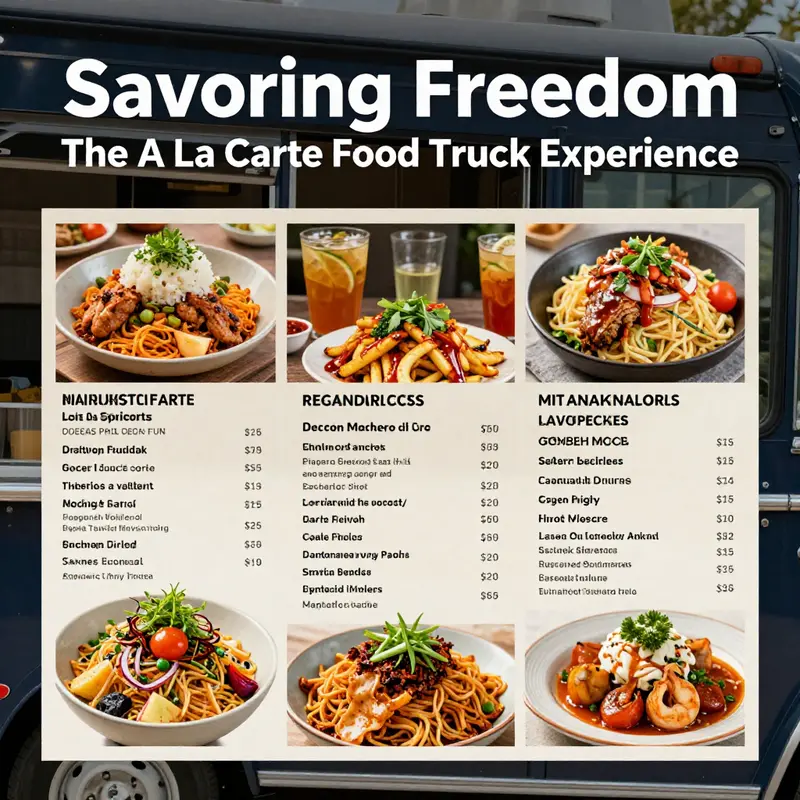
The rise of the a la carte food truck is a study in how market trends reshape appetite, space, and the people who chase both. In cities that never sleep and neighborhoods that pulse with constant movement, customers no longer want to be guided by what a menu suggests in a fixed restaurant format. They want what they want, when they want it, and they want it to feel personal and fresh. The data behind this shift points to a broader transformation in the street-food sector: consumers increasingly prioritize ingredient quality, authentic flavor, and a dining experience that aligns with their fast-paced, highly connected lives. A global market that crossed the two-and-a-half billion dollar mark in recent years and is projected to climb toward three and a half billion within a few years is not a fluke; it is a sign that the street-front kitchen has found a durable place in contemporary dining. The growth is not a single line but a constellation of factors: better sourcing, smarter equipment, more agile operations, and a population that expects both convenience and a story behind what lands on their plate. When these elements converge, the a la carte mobile concept does more than satisfy hunger. It creates a portable platform for culinary experimentation, cultural exchange, and local entrepreneurship.
Product quality remains a central driver of success. The modern food truck cannot afford to be merely convenient; it must deliver on taste, texture, and freshness in every order. Fresh, high-quality ingredients are not a luxury but a differentiator that justifies a price point and builds loyalty. In practice, this means sourcing producers who can provide reliable deliveries of seasonal produce, spices with distinct profiles, and proteins raised to standards that meet the expectations of discriminating buyers. Chefs and cooks who operate on wheels understand that the clock is their enemy and their ally at once: the quicker a dish leaves the window after being plated, the more recently it was prepared, and the more vibrant its flavors remain. To sustain that level of freshness, many operators implement stringent cold-chain management and strict handling protocols. This is especially critical when the menu features proteins that require careful temperature control and meticulous sanitation, which in turn reinforces consumer trust and reduces waste by preventing spoilage.
Yet quality is not merely about the provenance of ingredients; it is about the entire culinary vision that a truck presents. Consumers now seek menus that reflect authenticity and originality—whether that means drawing on regional traditions, translating global techniques into compact formats, or offering bold, unexpected flavor pairings. A la carte menus, by their nature, lend themselves to customization and experimentation. A kitchen-on-wheels can rotate or refresh dishes with the seasons, integrating produce that is locally sourced and sustainably managed. In practice, this translates to menus that are lean enough to master in a compact space but flexible enough to align with shifting consumer preferences. The best operators think of their offerings as a living menu—one that evolves with the market while maintaining a core set of signature items that customers can rely on. This approach not only deters stagnation but also invites repeat visits as diners anticipate what new flavors or techniques will appear in subsequent trips.
From the customer’s perspective, the a la carte model is a gateway to a richer dining experience than a fixed-price, prearranged meal. The ability to customize at the point of purchase—whether by choosing toppings, adjusting spice levels, or combining elements from different regional influences—transforms a simple meal into a personal ritual. The science behind this is simple: personalization increases perceived value, boosts satisfaction, and strengthens brand attachment. In the bustling street-food ecosystem, a well-curated menu that emphasizes distinctive flavors and careful portioning becomes a signature experience rather than a mere transaction. The psychological payoff is substantial. Diners feel empowered by the agency to tailor their meals to their moods, dietary constraints, or cultural preferences, and operators can charge a premium for that degree of customization without sacrificing speed or reliability.
Location, as in real estate, remains a decisive factor, but in the context of a la carte food trucks it is less about renting space and more about aligning with high-visibility routes, foot-traffic corridors, and times when people are most receptive to a quick, satisfying bite. Proximity to residential clusters, business districts, transit hubs, and event venues creates a natural magnet for curious appetites and the speed-seeking needs of commuters. The best trucks have a keen sense of micro-locations—knowing, for example, which blocks teem with office workers at lunch, which neighborhoods awaken with evening crowds, and which campuses or entertainment districts generate weekend foot traffic. The geographic fit is not just about proximity; it is about rhythm. A truck that understands the cadence of nearby neighborhoods can time its schedule, optimize inventory, and tailor its menu to reflect the local palate and seasonal opportunities. This operational instinct is what turns a mobile kitchen into a reliable daily staple rather than a sporadic attraction.
Digital platforms have become inseparable from the success equation. The modern consumer is accustomed to discovering and ordering food with a tap, a geolocation ping, or a social post. A la carte trucks that leverage ordering apps, live updates on daily offerings, and seamless payment options can significantly shorten the path from decision to dining. Digital marketing extends beyond convenience; it is a powerful storytelling tool. A truck can broadcast the sources of its ingredients, highlight chef-driven techniques, share behind-the-scenes glimpses of its kitchen operations, and invite feedback that informs future menus. The online-first approach also supports loyalty through rewards and personalized suggestions, reinforcing the customer’s perception that the truck is attuned to their preferences and needs. In practice, the most successful operators blend a compact, disciplined physical footprint with a robust digital presence, creating a mobile brand that feels constant even as the menu and location shift.
Sustainability has moved from a niche concern to a baseline expectation in the street-food sector. Audiences today scrutinize packaging, waste, and energy use with the same seriousness they apply to flavor. The a la carte model naturally minimizes waste when executed with precision: by preparing only what is ordered, operators avoid overproduction and help curtail food waste. Yet the packaging choices, the sourcing of sustainable condiments, and the environmental footprint of daily operations also matter. Many trucks are turning to compostable or reusable packaging, bulk buying of supplies to cut down on packaging waste, and equipment that reduces energy consumption. These considerations resonate with a broad cross-section of customers who want not only tasty meals but responsible practices behind the scenes. In this regard, a la carte trucks can attract a larger share of mindful diners, including younger generations who view food choices through the lens of social values and planetary health.
Differentiation in a crowded field often comes down to a carefully crafted narrative as well as a menu. The flexibility of the a la carte format invites operators to explore cultural crossovers, plant-forward innovations, and regional specialties that travel well without compromising authenticity. Mediterranean-inspired bowls, urban Asian-inspired bites, or plant-based twists on classic comfort foods are not just menu ideas; they are stories the truck can tell through color, aroma, and texture. The ability to tell a story at the point of sale—through the way food is prepared, plated, and presented—becomes a crucial source of competitive advantage. In booming markets, many operators lean into cultural diversity as a strategic asset, offering inclusive options that speak to a broad spectrum of dietary needs and personal preferences. The result is not merely more choices, but a more meaningful dining experience that creates loyalty and encourages repeat visits.
The market forces described are supported by credible industry analyses that frame the trajectory of the sector. The global food truck market, valued at around USD 2.4 billion in 2024, is projected to reach roughly USD 3.6 billion by 2030, reflecting a steady CAGR of about 6.8 percent. This expansion is driven by a consistent demand for flexible dining formats, improved procurement efficiency, and consumers’ willingness to spend on curated experiences rather than generic fast food. Operators who position themselves to capitalize on these forces—through quality, customization, timely location choices, and a strong digital presence—stand to gain a durable edge. While the competitive landscape intensifies, the same market dynamics also create opportunities for entry, especially for aspiring entrepreneurs who approach the venture with a disciplined plan for menu development, supply chain governance, and customer engagement.
In this context, the journey of an a la carte food truck becomes less about competing on a single dish and more about building a modular, responsive system. It is about a kitchen that can pivot with the calendar, a vehicle that can travel toward the heart of neighborhoods at the moment when appetite peaks, and a brand that speaks in a language of flavor, convenience, and trust. The sector rewards operators who infuse their offerings with authenticity while simultaneously embracing modern consumer expectations—fast service without sacrificing quality, personalizable meals without chaotic queues, and a story that travels as readily as the truck itself. It is a marketplace that rewards not only what is cooked but how it is cooked, how it is sourced, and how it is delivered to a table on wheels.
For readers who want to explore practical considerations around hardware, layout, and operating capabilities that support this dynamic, there is useful guidance on the topic. For a deeper look at practical equipment choices and how to balance function with mobility, you can explore the Best Food Truck Models for Lakewood Startups. This external resource offers a perspective on how design decisions impact efficiency, customer flow, and the ability to scale as demand grows. https://lakewoodfoodtrucks.com/best-food-truck-models-for-lakewood-startups/
As markets evolve, the a la carte food truck remains a compelling case study in micro-entrepreneurship: lean startups delivering big flavors, small footprints delivering wide cultural reach, and mobile units delivering a sense of neighborhood culinary community wherever they park. The fusion of high-quality ingredients, a menu that honors both tradition and innovation, strategic location choices, and a technologically integrated customer experience is what sustains growth in a market that is as much about storytelling as it is about sustenance. In this sense, the mobile kitchen is a microcosm of contemporary dining—portable, adaptable, and deeply responsive to the rhythms of city life. It invites cooks and operators to see their craft not as a fixed job but as an evolving craft, one that travels with the city and returns with new flavors, new customers, and new possibilities. The result is a vibrant ecosystem where customers feel seen, meals feel tailor-made, and the market feels like it has room for everyone willing to bring clarity, care, and curiosity to the cart.
External resource: Grand View Research — Global Food Truck Market Size, Share & Trends Analysis Report By Service, By Type, By Region, And Segment Forecasts, 2024 – 2030: https://www.grandviewresearch.com/industry-analysis/food-truck-market
Final thoughts
As we wrap up our journey through the vibrant world of a la carte food trucks, it’s clear that this model is more than just a trend—it’s reshaping how we experience food on the go. From the evolution of offerings that cater to diverse tastes to stringent health standards that ensure our safety, and the market trends that keep us excited about new flavors, a la carte food trucks embody the spirit of culinary adventure. For aspiring operators, the path is paved with opportunities, especially in dynamic communities like Lakewood where innovation meets tradition. So next time you’re near a food truck, remember: each item on that menu is a chance for customization, exploration, and delight.