
Are you dreaming of serving up tasty bites from a food truck in the vibrant streets of New York City? Starting your mobile food venture can be an exciting journey filled with delicious possibilities. But before the aroma of your culinary creations fill the air, it’s crucial to understand the necessary steps to legally get your food truck license. In the chapters ahead, we’ll walk you through the entire process—from obtaining your Mobile Food Vendor License to ensuring compliance with local regulations. Each step brings you closer to launching your flavor-packed adventure on the streets of New York. Let’s dive in and whip up a plan for your culinary dreams!
From City Curb to Kitchen on Wheels: Mastering New York’s Mobile Food Vendor Licensing
New York City is a city of small ambitions turned big by appetite. The dream of a street-side kitchen, a bright cart or a gleaming truck, can become a real business, but the path is a tightly regulated corridor led by the Department of Health and Mental Hygiene. The Mobile Food Vendor License is the compass you need to navigate the maze, because without it you operate in a legal gray area, and the city’s rules are explicit about where, when, and how you can serve a hungry crowd. The license is not just a green light to sell food; it marks your entry into a carefully watched ecosystem where safety, sanitation, and civic rules shape every decision you make, from the layout of your stall to the hours you keep and the neighborhoods you target. Understanding what you’re signing up for means seeing the license as a performance standard as much as a permit, a framework that protects customers and your business alike while you test and refine your concept on real streets and curb corners.
The licensing landscape in New York City is not a single, monolithic form but a family of permit types, each tailored to different modes of operation, zones, and seasons. The broadest option, the citywide (full-term) license, grants year-round vending across public streets in all five boroughs. It embodies the ambition of a mobile kitchen that plans for continuity, not seasonality. By contrast, borough-specific licenses narrow where you can operate to the Bronx, Brooklyn, Queens, or Staten Island, still on a year-round basis but with a geographic focus that often reflects neighborhood density, traffic patterns, and park or pedestrian-area rules. There is also a Green Cart variant, designed for fresh produce and select single-ingredient nuts and water, which sits within designated precincts and serves a different customer base while retaining the same core safety standards. Some operators pursue a restricted area citywide permit, which is aimed at private property or NYC Parks property and requires a lease agreement for the private space. A few specialized licenses exist for very particular scenarios, including accommodations around NYC Parks for disabled veterans and their survivors or spouses, which underscores the city’s recognition of service and the value of veteran entrepreneurship. Finally, there is the seasonal option, citywide, available for a finite window each year, typically from spring through autumn, to align with outdoor foot traffic and weather patterns. The effect of these options is to force early, practical planning about location strategy, menu design, and your operational rhythm. A successful applicant carefully aligns the license type with the business model they intend to grow.
To begin the journey, you must apply through the New York City Department of Health and Mental Hygiene, the agency charged with ensuring food safety standards are understood and implemented by mobile vendors. The application is not a bureaucratic hurdle alone; it is a structured plan that invites you to demonstrate how your operation will meet the city’s high expectations for cleanliness, safe food handling, proper waste management, and compliance with parking and noise restrictions. The first leg of the process is determining eligibility and selecting the permit type that best matches your intended route and schedule. This is not just about where you want to park; it’s about how many hours you plan to vend, which neighborhoods you want to reach, and whether you intend to operate near parks, schools, or other sensitive zones. The decision affects fees, renewal cycles, and the level of scrutiny you can expect as you move forward.
The application itself hinges on a few essential prerequisites that set the foundation for a compliant operation. A valid DOHMH Mobile Food Vendor license is non-negotiable, and you must show that you have or will secure the Food Protection Course certification required for mobile vendors. This course is not a mere credential; it encodes the practical knowledge you will use every service day to prevent cross-contamination, maintain proper temperatures, and ensure that the entire team follows sanitation best practices. The city has updated requirements over time to reflect evolving public health standards, and recent changes have simplified some parts of the process. Notably, applicants no longer need to submit a certificate of authority to collect sales tax or a tax clearance certificate from New York State for new applications and renewals. This change can lighten the administrative load and let you focus more on compliance and execution rather than paperwork, although you still must register your business with the New York State Department of State, obtain any necessary corporate authorities if you operate as a corporation or LLC, and register for state taxes. In practice, this means you should prepare to align your business registration with the type of entity you choose, whether it’s a sole proprietorship, partnership, LLC, or corporation, and ensure that you have a clear record of all licenses and registrations across city and state agencies before you submit your DOHMH application.
The application workflow also invites you to consider where you will park and how you will access the required location permits. Although the mobile vendor license itself confers the right to operate, many sites—especially parks, certain plazas, and privately owned spaces—require an additional permit or lease agreement. The separation is not merely formal; it reflects the city’s careful balance between public access to street vending and the rights of property owners or managers who host vendors. The permit framework can influence your operating hours, the areas you can serve, and even the kinds of equipment you can use on the street, such as slow-dispensing equipment or generators that adhere to noise and air quality standards. Complying with zoning and local regulations is a fundamental obligations. You need to be mindful of street-use rules, waste disposal protocols, and noise restrictions that could affect where and when you vend. The city expects you to build a plan that demonstrates respect for neighbors, pedestrians, and other small businesses that share the same sidewalk tables of foot traffic.
The licensing process is not conducted in a vacuum. The Department may, from time to time, hold public hearings on proposed amendments to licensing rules, as part of its ongoing effort to refine how mobile vending integrates with urban planning and public health guidance. For instance, a public hearing conducted in September 2024 illustrated the dynamic, participatory nature of regulatory updates. While the exact date may pass, the core message remains: readiness to adapt to rule changes is part of long-term licensing success. The official channels are the most reliable source for current requirements, forms, and training resources. If you want the most up-to-date, legally precise, and comprehensive guidance, the NYC Health site serves as your primary reference point for mobile food vendor licensing.
As you prepare, you will begin to translate policy into practice. The practical rhythm of becoming a licensed mobile vendor includes assembling a robust sanitation plan, detailing how you will maintain cold and hot chain integrity, how you will store and transport food safely, and how you will manage waste and grease. You will define your menu with attention to portion control and allergen awareness, ensuring that every item can be prepared and served in a way that minimizes contamination risk. You will select a vehicle or cart that complies with dimensions, power, and sanitation requirements, and you will plan your electrical needs, fuel use, and ventilation in a manner that aligns with both city standards and the realities of street operation. The regulatory framework does not merely demand compliance; it rewards a vendor who demonstrates foresight: how you plan to train staff, how you will maintain a clean and organized service area, how you will monitor temperatures, and how you will respond swiftly to any health advisories, equipment failures, or customer concerns.
The licensing journey also invites you to consider the long arc of growth. A well-chosen license type can be the anchor for scaling your operation, enabling you to expand to additional boroughs, to test new neighborhoods, or to experiment with seasonal service patterns. The city’s permit structure encourages this growth while ensuring that each expansion remains grounded in safety and accountability. A practical path is to begin with clear jurisdictional goals—where you want to operate during the next year or two—and then map those goals to the corresponding license type, the necessary training, and the required registrations. Throughout, remember that the license is not a single moment of approval but an ongoing engagement with compliance, renewal cycles, and periodic updates to training and equipment that reflect the city’s evolving health standards.
For vendors eager to connect practical setup with formal guidance, an accessible tip is to look at startup resources that discuss vehicle choices and operational models. A resource such as Best food truck models for Lakewood startups offers a useful frame for thinking about how your physical footprint, kitchen layout, and service workflow will translate into a compliant, efficient mobile operation. It can help you translate your concept into a working arrangement that fits the licensing and health-safety requirements you will meet in New York City. And as you finalize your plans, keep a finger on the pulse of regulatory updates—your license status and your business health depend on staying informed and prepared. When you’re ready to consult the official rules and forms, the most authoritative directory remains the NYC Health site, where you can access the current licensing page, required courses, and the procedural steps for your chosen permit type. For a broader sense of practical resources, you may also skim related startup guidance that touches on vehicle configurations and service design, but always verify the specifics in the official licensing materials before submitting.
As a closing note, the licensing choreography is a balance between entrepreneurial courage and municipal responsibility. The city invites vendors who are ready to operate openly, safely, and respectfully within shared spaces. By engaging with the right license type, completing the Food Protection Course, securing proper business registration, and aligning location permits with your planned routes, you set the stage for a credible, lawful, and potentially scalable food-on-wheels venture. The question is not only whether you can meet the letter of the code, but whether you can embody the spirit of service that makes food trucks a beloved fixture of New York’s culinary landscape. The answer begins with a careful read of the official guidance, a clear operational plan, and a readiness to adapt as rules evolve, all of which keep your wheels turning toward opportunity and your customers safe and satisfied.
External resource: https://www.nyc.gov/health
Internal reference for practical equipment planning: Best food truck models for Lakewood startups
Completing the Food Protection Course for Mobile Vendors in New York
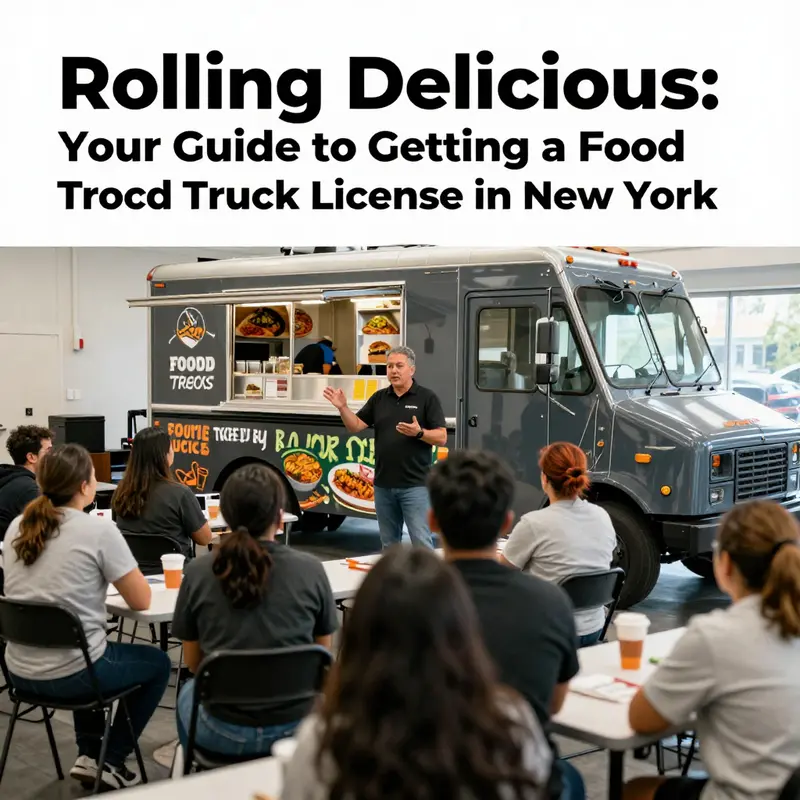
Embarking on a life in the street‑food economy begins with a principle that keeps every bite safe: the Food Protection Course for Mobile Vendors. In New York, this course is not just a formality; it is the gate through which every aspiring mobile vendor must pass to obtain a Mobile Food Vendor License. The purpose is straightforward, yet powerful: to ensure that every cart, truck, or pop‑up operates with rigorous standards of cleanliness, proper food temperatures, and respectful waste practices, no matter how bustling the street scene becomes. The city treats safety as a shared responsibility, and the course is where vendors hear that mandate voiced clearly and practically. After you complete it, you carry more than a certificate; you carry a framework for decision‑making under pressure, from delivery temps to cold storage to handwashing between orders. The moment you grasp the practical reasons behind safety rules, the noisy curbside world starts to feel navigable rather than chaotic.
Registration for this pivotal step happens in person at the Citywide Licensing Center, a central hub where licensing lines meet health standards. This requirement is not optional; it is embedded in the license application and renewal process, a steady reminder that trust in a mobile vendor is earned through verified training as much as through a dazzling menu. Arriving prepared saves time and stress. You should bring government‑issued identification, proof of address, and any related business documentation you already hold. The staff at the center verify your identity, confirm your eligibility to enroll, and then guide you to the next available session. It is wise to check the calendar in advance because spaces fill quickly, and delays can push your start date weeks out, creating a ripple effect on your entire launch timeline. The atmosphere is purposeful but supportive, with seasoned staff who understand how a first‑time vendor moves from inquiry to action without losing momentum.
When the door closes on registration, the practical logistics begin to unfold. On the day you enroll and attend the course, payment is expected through clear, established channels. The city accepts several methods, including certified checks and money orders, alongside major credit cards such as American Express, Discover, and Visa, with other approved options possibly available as processes evolve. After you participate in the course and demonstrate your commitment to the safety standards, you will receive a certificate of completion. This certificate is more than a formality; it is a crucial document you must present with your license application or renewal. Without it, your file stalls and any promises of approval stall too. Treat the certificate with care, keeping both the original and a digital copy secure so it travels with you through every stage of the licensing process.
Yet the course is not a one‑and‑done milestone. The city recognizes that food safety is dynamic, not static. To ensure vendors stay current with evolving standards, every mobile food vendor is required to complete an online refresher course in food protection and safe operating practices once every four years. The refresher is designed to fit a vendor’s schedule, blending into the busy realities of market days, prep shifts, and pop‑ups that need to turn a profit while staying compliant. This ongoing education acts as a bridge to fresh guidelines and new best practices, reinforcing habits that keep customers safe and operations trustworthy. For a startup, planning for this renewal is as essential as planning for permits or a menu. Budget and calendar accordingly, so the refresher becomes a routine, not a race against a deadline.
Beyond the procedural weight of registration and renewal, the course builds a practical mental map for daily operations. It anchors decision making in concrete, observable standards: preventing contamination, maintaining safe temperatures for ready‑to‑eat foods, and separating raw from cooked items to avoid cross‑contamination. Personal hygiene, proper glove use, and rigorous handwashing protocols rise to the top as non‑negotiables, guiding every motion of the daily shift. Sanitation practices expand to waste management and pest prevention, important on a mobile platform that travels through neighborhoods with different sanitation landscapes and waste disposal options. The course also speaks to the realities of mobile vending—crowd dynamics near venues, how to pace service during peak moments, and how to respond calmly and effectively if a safety concern arises. Even in the rhythm of a fast, crowded service, the insights from the training keep your team aligned with safety rather than slipping into shortcut thinking.
When you advance toward the license or renewal, the certificate you hold becomes the bridge between training and operation. It signals to inspectors and customers alike that you take food safety seriously. In practice, this means maintaining clean hands and work surfaces, following time‑and‑temperature controls, and keeping cold foods at safe temperatures during every service while hot foods stay hot. It means reporting equipment malfunctions promptly and arranging your truck’s layout to minimize cross‑contact. The certificate is a tangible reminder of those duties, a document you can retrieve quickly if questions arise in the field or during routine inspections. In a city where street food traffic is a constant presence, this formal credential stands as a quiet measure of professionalism that separates dependable operations from risky improvisation. The confidence earned through training translates into better customer trust, smoother inspections, and a more resilient business model.
For anyone balancing startup costs and timelines, the course can feel like a hurdle, but it is also an opportunity. The sooner you secure your seat and complete the training, the faster your license file moves toward approval. With the certificate in hand, you can proceed to complete other regulatory steps, such as registering your business with the state, securing a location permit if needed, and aligning with zoning and parking rules that apply to mobile operations. The course, the certificate, and the subsequent online refresher together form a structured ladder that keeps your business within legal bounds while you focus on crafting a compelling menu and a reliable service pattern. If you are evaluating truck configurations or gear decisions, you might explore practical ideas in related resources like the article on best food truck models for Lakewood startups. This link offers inspiration about how operators translate training into efficient layouts and dependable performance on the street.
Meanwhile, the broader guidance from the city remains the ultimate reference point. The licensing process is designed to be transparent and accessible, with clear checkpoints and a predictable sequence of steps. The Citywide Licensing Center coordinates the licenses and the required training, ensuring every vendor who hits the curb understands not only the rules but the rationale behind them. While the training you take elevates your knowledge and readiness, licensing officials expect you to stay current with the city’s standards as you operate. For prospective vendors, the surrounding ecosystem—permits, zoning, and health inspections—fits into a larger picture of responsible entrepreneurship. To keep your planning grounded, consult the official NYC Health portal for current timelines, forms, and schedules, and to verify any changes to the training requirements that could affect your start date. For a direct reference to the governing body and current practices, see the official NYC Health portal for mobile vendors.
Charting the License Lane: Registering Your Food Truck Venture in New York City
Every successful New York City food truck story begins with a solid registration that aligns with state and city requirements while leaving room for the realities of operating on busy streets. This chapter guides you through the central registrar’s desk where your business becomes eligible to seek the licenses that empower your truck to roll. The journey is not just about collecting stamps; it is about building a compliant foundation that supports every service window you plan to open, every curbside lunch rush, and the steady rhythm of a mobile kitchen that must pass inspections, maintain food safety, and fit within zoning and park rules. Start with registration as a hinge, then let licensing follow as the practical consequence of a well organized business framework. The first hinge is the city and state registration that creates a legal persona for your mobile venture. In New York, that persona lives in the public records that cities and states keep and in the dashboards that let you manage licenses, registrations, and fees in one place. The easiest path to this is the NYC Business Portal, a centralized access point that hosts the Business Dashboard. Here you will create and maintain the core profile of your venture, from the legal name to tax obligations, from business structure to required registrations. This portal is designed for speed and clarity, so you can see pending actions, upcoming renewal dates, and the documents you need to gather before you can move into licensing. The underlying principle is straightforward: your regulatory progress mirrors the clarity of your business plan. If you have a strong menu concept, clear operations, and a predictable schedule, the path ahead feels less like a maze and more like a sequence of concrete steps. After you register, you will be positioned to pursue the food business license that governs the sale of prepared food for off site consumption, a crucial credential for every mobile vendor in the city. The process is not merely bureaucratic ritual; it is a framework that helps ensure the safety of city customers and the accountability of operators who take up space on crowded streets. The actual licensing sequence is a staged effort. Registration creates the legal scaffolding that supports licensing applications. When you apply for a Food Business License through the state authorities, you are not only declaring your intent to sell food from a truck; you are also asserting that your operational plan, including your menu, your suppliers, and your food safety measures, meets the expectations of health and safety codes that protect the public. In practical terms, your menu becomes a living document in your application. Descriptions of how the food is prepared, stored, and served reveal the level of control you exercise over temperatures, cross contamination, and personal hygiene. You will be asked to outline your food safety practices, and you should be prepared to present a plan that demonstrates how you will keep foods at safe temperatures, how you will avoid cross contamination between raw and ready to eat items, and how you will maintain clean equipment sanitation. This is not a mere formality; it is a validation of your capability to operate a safe mobile kitchen in real world conditions where weather, crowds, and time pressure all influence how food is handled. The regulatory body that issues the license for food businesses underlines the practical realities you must address. In this regard, the state Department of Agriculture and Markets is the gatekeeper for the food business license that is essential for any retail food operation, including mobile vendors where food is sold for off premises consumption. The application asks for detailed information about your business operations. Expect a thorough menu description, including preparation steps and potential allergens, alongside documented food safety practices you intend to follow. You may also encounter material standards and technical specifications that reflect not only what you plan to serve but how you will serve it, particularly if your concept aims to capture iconic New York street foods or embraces specific preparation methods that require rigorous controls. The process benefits from forethought about compliance. While the state license is crucial, it does not exist in a vacuum. The health department and city agencies are watching for overall alignment between your operations and local rules. This is where health department compliance enters the picture. The city’s health department inspections are not adversarial checkpoints; they are practical steps to ensure that your truck meets sanitation standards, equipment cleanliness, and safe handling practices. In the run up to inspections, you can tap into the city’s Health Department resources and the broader NYC Business Preparedness guidance. These resources clarify what inspectors will look for, how to prepare a walk-through, what documentation to have ready, and how to address common issues that delay licenses. Preparation includes an organized system for daily maintenance, proper cooling and hot holding of foods, and clear procedures for cleaning and sanitizing utensils and surfaces. Even with the best recipes and the most enticing menu, a lack of preparedness shows up as delays or objections during the inspection; proactive preparation is the best investment you can make. As you proceed, consider the practicalities of location and parking. The licensing framework assumes you have a vehicle and a plan for where you will operate. Depending on the neighborhood, you may need location permits for specific spaces, such as parks or certain public plazas. These permits are not universal; they are managed by city agencies that oversee public space usage. Your business plan should anticipate these needs and map out potential sites in advance. The more you understand the local environment, the better you can tailor your registration and licensing steps to the realities of the spaces you want to work, which increases your readiness when the moment comes to apply for the location permits. In addition to formal permissions, you must keep an eye on zoning and local regulations that shape where you can park, how you can operate, and what kind of signage or waste management practices are allowed. It is easy to underestimate how zoning intersects with the daily rhythm of a city block, particularly during peak hours, in residential neighborhoods, or near schools and hospitals where restrictions can be tighter. A strong registration and licensing plan keeps you aligned with these rules so that you can adapt quickly if your chosen sites change due to events, construction, or seasonal variability. When you look at the broader landscape of requirements, a cohesive approach emerges. Your business registration establishes identity in the municipal and state record. The food business license confirms you have a plan for safe food handling. Health department readiness makes you capable of earning approvals without protracted back-and-forth. Location permits and zoning awareness ensure you can operate where you intend to operate. Throughout this process, remember to document every step. Maintain copies of registration confirmation numbers, license applications, and inspection schedules. A well-documented dossier helps you track renewal dates, respond to inquiries, and keep your operations compliant as your business grows. A practical way to plan equipment and layout choices is to check resources on best food truck models for Lakewood startups. This internal resource offers a pragmatic perspective on how equipment choices influence your ability to meet health and safety expectations while delivering a consistent product on the street. While it speaks to a different locale, the core principles—efficient layouts, safe holding temperatures, and robust cleaning regimes—remain universal for New York City as well. In the end, the path to a food truck license in New York is less about ticking boxes and more about building trust with regulators, customers, and the neighborhoods you serve. Your registration is the box you check to show that you are a legitimate and prepared operator. Your licenses and permits confirm that you will conduct business with regard for public health and municipal guidelines. Your readiness, demonstrated through clear menus, solid safety practices, and organized records, signals to inspectors that you are prepared to operate under the citys intense energy. As you advance, keep your eyes on the practical timeline: registration often precedes licensing, inspections follow, and site permissions may require you to schedule around public works or park scheduling cycles. The more you treat this as an integrated system rather than a sequence of separate tasks, the smoother your launch will feel. For official, up to date guidance, you should consult the external licensing page maintained by the city, which provides the official steps, forms, and contact points for mobile food vendors. More details at: https://www.nyc.gov/site/doh/health/food-safety/mobile-food-vendor-licensing.page
Securing the Right Spot: Mastering Location Permits on the Path to a New York City Food Truck License
In New York City, a successful food truck operation hinges on more than a solid menu and a clean cart. The city’s licensing and permitting ecosystem treats location access as a core piece of your license to operate in public space. Even after you secure the essential Mobile Food Vendor license, the right to park and serve depends on location permits that authorize specific spots, dates, and conditions. This layered system reflects the city’s balance between vibrant street food culture and the practical constraints of crowded streets, pedestrian zones, and parklands. To navigate it well, you begin with a clear map of where you can operate, then weave that map into the broader license application, so the two threads strengthen each other rather than collide. The journey toward a license is, in effect, a journey toward a flexible but compliant footprint that fits both your business plan and the city’s public space rules.
At the heart of the process is the city’s e-Apply portal, a centralized gateway that connects multiple agencies involved in street activity and public space management. As you prepare to apply for a location permit, you will create or log into an account, then select the appropriate event type—typically labeled as “Food Truck” or “Mobile Food Vendor.” The choice signals the system to route your request through the right channels and to assemble the right set of questions, questionnaires, and documentation. The portal’s design reflects a practical philosophy: you should disclose what you plan to place on the street, how you will move it, and how customers will flow around it. This is not entertainment; it is a safety-and-sustainability check. The city wants to know the layout of your equipment, the signage you will display, and the spatial footprint of your operation, including buffer zones for pedestrians and vehicles. You will also specify the dates you seek and, crucially, the sponsor or producer of the event or location, since many permits are tied to organized events or established public spaces.
Getting to the request itself is a step-by-step discipline, but it begins with a mindset: you must be ready to harmonize your business needs with the realities of the urban environment. From the moment you enter the event type and begin listing potential locations, you should simultaneously map out what the site offers and what it restricts. Some spaces—certain plazas, blocks, or park-adjacent corners—are managed by different city agencies, and not all locations are available at all times due to seasonal rules, maintenance, or competing demand. The city’s zoning rules also play a quiet but decisive role. They shape where aFood Truck can operate without creating conflicts with residential areas, emergency access, or other commercial activities. The upshot: the permit you seek is not a generic “permission to vend” but a carefully scoped authorization that binds your trailer, cart, or vehicle to a defined space and schedule.
As you proceed, the application asks for a general description of your operation and a detailed layout. You will fill out a comprehensive questionnaire about what will be placed on the street, sidewalk, or pedestrian plaza. This is where your planning and your sanitary practices converge. The city wants to know not only what you sell but how you present it. You will need to outline your equipment footprint, the signage strategy, waste containment plans, and the movement pattern of customers around your stall. This is more than formality; it is a safety and accessibility measure. A well-considered layout reduces trip hazards, ensures accessibility for all patrons, and streamlines operations for staff. In practice, you should draft a layout that keeps your service window clearly visible to customers, preserves a reasonable clearance for pedestrians, and maintains safe access for service vehicles and emergency responders if needed.
Documentation is another pillar of the permit process. You will be asked to upload supporting documents that verify your readiness and compliance. Typical items include proof of insurance, your business registration, and evidence of health department compliance. The insurance component is not cosmetic; it is a shield for the city, your customers, and your neighbors. Your registration demonstrates that you’re operating as a legitimate business entity, and the health department compliance confirms that your food safety practices meet the standard required for mobile vendors. The city’s review relies on these documents to verify that your operation can integrate into the neighborhood without imposing undue risk or disruption.
Before any location permit can proceed, you must clear a critical prerequisite: you must hold the Food Vendor license issued by the Department of Health and Mental Hygiene (DOHMH). This license is the city’s baseline approval for mobile food operations. The process includes completing the mandatory two-day, eight-hour Food Protection Course, which, in the current framework, costs a specific amount and culminates in an examination. Passing the exam earns your individual Food Protection Certificate and validates your readiness to handle food safety in a mobile environment. The certificate is not merely ceremonial—it’s a tangible signal to the city that you understand core principles of temperature control, cross-contamination prevention, sanitation, and handwashing practices that protect public health.
The connection between the license and the location permit is tight. Without the vendor license, the location permit application will not be processed. This linkage ensures that only operators who have demonstrated essential food safety competence can seek space in public settings. It also means that the cost structure you face is layered: you will pay a non-refundable processing fee to the location permit as part of the e-Apply submission, and you will have already borne the costs associated with obtaining the vendor license and completing the required course and examination. The processing fee for the location permit, as outlined in the city’s guidelines, is modest on its face but meaningful in the overall budgeting of starting a mobile food venture. It is paid through the portal by credit or debit card at the time of submission, serving as a symbolic and practical acknowledgment that the city’s review process is underway.
Once you have satisfied the immediate prerequisites and filed the application, a review cycle begins that involves several agencies. The Street Activity Permit Office (SAPO) collaborates with the Department of Citywide Administrative Services (DCAS), the New York Police Department (NYPD), NYC Parks, and possibly NYC Media & Entertainment, depending on where you intend to operate. Each agency weighs your request against policy considerations, including public safety, street cleanliness, and the impact on pedestrian flow and nearby businesses. In practice, this means that your permit is not just a rubber stamp; it is a negotiated standing agreement about where and when you will vend, how you will keep the space orderly, and how you will manage waste and crowd control on a busy city block. The process requires patience, precise documentation, and proactive communication with the event sponsor or property manager if you are applying for a park or plaza location.
A practical tip emerges from these formalities. Start early and maintain a living dossier of your documents. The request may be time-sensitive, and location availability can shift due to seasonal programming, special events, or maintenance schedules. Keeping your DOHMH license, your Food Protection Certificate, your business registration, and your insurance information up to date ensures that your location permit application, when it arrives for review, moves forward without needless delays. In addition, you should preserve a draft layout and a proposed operation plan that you can adapt to different spaces. If a chosen location is not available, you will have a ready alternative that still satisfies your business goals while respecting the city’s constraints. The city’s intent is not only to regulate but also to enable. A well-planned permit strategy turns a potentially rigid obstacle course into a navigable route toward a stable, lawful, and scalable street business.
As you stare down the calendar and the map of NYC’s public spaces, a nuanced truth becomes clear: the permits you apply for are more than bureaucratic hurdles. They are a framework that helps you ship a consistent product, protect your customers, and contribute to the city’s vibrant food culture without compromising safety or accessibility. The process is intricate, but it is also repeatable. Once you have earned your vendor license and secured your location permit for a specific site and time window, you can build a predictable cadence around your business—daily, weekly, or seasonal—while staying compliant with evolving rules and capacity constraints.
For readers planning their own path, the practical takeaway is to treat the location permit as a tailored extension of the license rather than a separate hurdle. Approach it with the same seriousness you bring to your health and sanitation standards, your insurance coverage, and your business formation. Prepare every document, every diagram, and every piece of contact information with clarity. Expect some back-and-forth during the review, and respond promptly with any requested edits or clarifications. By weaving together the license, the course, and the location permit into a single, coherent plan, you create a resilient foundation for launching and growing a mobile food business in a crowded, dynamic city.
If you want to begin the process, the official path runs through the NYC e-Apply portal, where you can initiate the location-permit workflow and monitor the status of your submission. The portal provides eligibility guidelines, real-time updates on permit availability, and the steps you must complete to move forward. For more details and to begin the application process, visit the NYC e-Apply portal: https://eapply.nyc.gov
null
null
Final thoughts
Navigating the licensing process for a food truck in New York City may seem daunting at first, but with enthusiasm and thorough preparation, you can turn your food dreams into reality. Each step, from acquiring your Mobile Food Vendor License to understanding local regulations, is crucial in your journey as a mobile food entrepreneur. The streets of NYC await your culinary delights—so gear up and get ready to roll with your food truck adventure!