
Are you thinking of starting a food truck in Lakewood? With its bustling community and vibrant tourism, this is a fantastic opportunity for aspiring food truck operators to share their culinary passions. But where do you begin? This guide takes you through the essential steps, focusing on obtaining the necessary licenses and permits, choosing your unique concept and menu, and selecting and equipping your food truck for a successful launch. Each chapter will arm you with the knowledge needed to navigate the exciting road ahead while connecting with locals and visitors alike.
Gaining the Green Light: Navigating Licenses, Permits, and the Legal Trail to a Food Truck Startup
Launching a food truck is as much a legal journey as it is a culinary quest. Before a single dish hits a curbside menu, you must secure a constellation of licenses and permits that prove your business can operate safely, legally, and predictably. This chapter follows that path as a single, cohesive narrative, weaving the practical, almost procedural steps into a story of preparation, patience, and disciplined execution. It is not a parade of forms but a map of how to move from initial concept to a mobile kitchen that can legally park, serve, and grow. The core idea is simple: create a solid foundation first, then build the rest of your plan around it. When you align your concept with the regulatory requirements, you minimize delays, avoid costly reworks, and cultivate the credibility that can turn a startup into a sustainable operation.
The first lesson in this journey is humility and curiosity. Regulations vary not only by city or state but by neighborhood within a city. A street with a festival might permit a temporary vendor area, while a nearby park requires a separate permit or a reserved slot. A health department might demand a particular layout for the kitchen that looks different from what a landlord or fire inspector expects. The only way to avoid missteps is to treat compliance as a design constraint—something that shapes your truck’s layout, your staffing plan, and your operating hours rather than something you check off after you purchase a vehicle. When you approach permits as a design problem, you begin to see how each requirement can influence your menu, equipment choices, and service model.
Begin with the basics: the legal identity of your business. Most jurisdictions ask you to register your venture as a legal entity with the state, which can be a sole proprietorship, a partnership, or a corporation. This step creates the legal aura around your operation and unlocks access to additional licenses and protections. Yet the register you file with the state is only the opening act. Immediately after, you will seek a business license or a certificate of occupancy. This is more than a form; it is a formal recognition by the municipality that your business exists, where it operates, and what it aims to do. A certificate of occupancy is often the pinnacle of the base-layer permits, signaling that your space—whether the inside of a truck, a commissary, or a temporary stand—meets the local zoning and safety norms for commerce. Your business name, address, and the nature of your operation will be scrutinized here. The process itself tends to run through the city or county’s licensing portal, which increasingly favors online submissions. Expect to upload a few consistent documents: proof of identity, proof of address for your business, and sometimes a lease or agreement demonstrating where your truck will be parked when not in a fixed location.
Next comes what many operators consider the heart of the permit stack: the health and safety approvals. The food service permit, sometimes called a health permit or food handler’s permit, is where the regulatory heartbeat becomes tangible. This permit requires demonstrating that your truck is designed to be hygienic and that you can maintain sanitary conditions in every step of food handling. A detailed floor plan of your truck is usually mandatory, showing food preparation zones, cooking equipment, sinks, storage, waste disposal, and handwashing facilities. A competent layout is not a luxury; it is often the critical piece that makes a health inspector understand how you prevent cross-contamination, control temperature, and keep waste away from ready-to-eat foods. Alongside the floor plan, you will assemble a bill of materials that lists refrigeration capacity, cooking devices, and cleaning supplies. You will also detail your standard sanitation procedures, including how you manage temperature control, cleaning schedules, pest prevention, and personal hygiene. The health department will want to see a credible plan that demonstrates consistent adherence to safe practices, not a theoretical hope that things will run cleanly. For many applicants, these documents provide the clearest window into how your day-to-day operations will unfold.
A related requirement is staff health and food handler certification. In most jurisdictions, anyone who handles food must possess a valid health certificate. This means a medical screening or exam that confirms your team is free of communicable diseases and capable of maintaining hygiene standards. It also means that new hires will need to obtain or renew these certificates, reinforcing the fact that compliance is not a one-time hurdle but an ongoing obligation. On the workforce front, you will likely need to demonstrate you have trained staff who understand safe food handling practices, which not only protects customers but also reduces the risk of disruptions caused by health-related shutdowns.
Vehicle-related permits and registrations form a separate pillar—yet they are intimately connected with the kitchen permits. If you are purchasing a pre-built mobile unit, you will document its current registration status and ensure it meets the vehicle code. If you are converting a standard vehicle into a food truck, you may have to show evidence of modifications that make the vehicle suitable for commercial use. In many places, these modifications require inspection by transportation authorities and sometimes by environmental or fire safety agencies. The documentation frequently requests proof that the truck’s electrical system, fuel system, refrigeration, grease management, and wastewater disposal all comply with local standards. You may need to register the vehicle as a commercial vehicle and obtain appropriate insurance coverage. The need for a commercial permit or transportation license is common because the vehicle is not only a conveyance but a functioning part of a public service operation. The goal here is not simply to prove the vehicle exists; it is to demonstrate that the vehicle, as a mobile workspace, is safe for customers and workers and does not introduce unnecessary hazards into the streets or neighborhoods where it operates.
Then there is the matter of where you can lawfully operate. A local operating permit or street vending permit is often required to park and sell in certain places, at particular times, or within designated zones. This layer is where zoning meets commerce in a practical, everyday sense. Some areas require you to apply for a permit for each location you intend to serve. Others operate with a permit that covers a broad geographic area but imposes time windows and distancing rules—particularly near schools, hospitals, or other sensitive institutions. It is essential to understand the difference between a general business permit and a location-based permit. The former enables you to operate legally in a general sense, while the latter gives you permission to serve at specific spots. The friction between supply and demand in dense urban environments often makes these location-based permits a pivotal determinant of your business model. You will need to provide a map or list of the locations you plan to visit, the expected frequency of visits, and a contingency plan for adjustments if a site is unavailable. In some markets, you will also encounter a temporary permit for special events; these can be a powerful way to launch and gain traction, provided you align with the event’s health and safety expectations and the venue’s own rules.
In parallel with the operational permits, you should obtain a sales tax permit or a TVP (tax collection) framework where applicable. Sales tax compliance is non-negotiable in most jurisdictions. You will collect the tax on each sale and remit it to the state or local revenue department on a schedule that could be monthly or quarterly. A sales tax permit is often issued automatically when you register your business or apply for the first business license, but some regions require a separate application. The point is to formalize your obligation to collect and report taxes, so your team can focus on service quality without losing track of the financial obligations that come with selling food.
For many operators, the process becomes clearer once they secure an Employer Identification Number (EIN) from the federal level. An EIN is useful even if you are a sole proprietor because it helps you establish a business bank account, manage payroll in the future, and keep personal and business finances separate. Even if you are not hiring staff yet, getting the EIN early saves you a step when you are ready to grow. It is a pragmatic move that reduces friction later, especially when you start to scale or consider partnerships and expansion.
Local zoning and permitting rules add another layer that can feel impenetrable at first glance. Some cities designate food truck parks or mobile vendor zones where trucks can gather and operate with predictable schedules. Others require a simple, temporary permit to operate near a park, a market, or a business district for a day or two. The nuance matters because it shapes your sales plan. If your permits enforce strict time windows, you learn to optimize peak hours and adapt your menu to the time of day. If they allow longer hours in certain districts, you can broaden your service window and capitalize on after-work traffic. The core message is that compliance is not a static hurdle; it is a living framework that interacts with your concept, your crew, and your customers.
One practical strategy is to begin with an in-depth mapping exercise. Create a simple repository of every document you anticipate needing: your state business registration, the certificate of occupancy, the health permit and related plans, staff health certificates, vehicle registration, proof of modifications, liability insurance, a map of operating locations, and your anticipated schedule. When you approach the authorities, present a coherent package with clear pagination and cross-references. It is not just about having the documents; it is about showing you understand the flow of compliance and can sustain it. Regulators appreciate when applicants present a credible, organized, and repeatable process rather than a one-off submission that demands a response time you cannot meet.
The timeline for permits varies widely. In some jurisdictions, a straightforward health inspection and floor plan review can take a few weeks. In others, particularly where multiple city agencies must sign off, it can stretch to several months. The best approach is proactive planning. Build a realistic calendar that accounts for application submission, anticipated inspection windows, and time for resubmissions if something is flagged. Many operators discover that permits arrive in batches rather than as a single, clean package. If you plan for this reality, you can avoid costly delays that ripple into opening timelines or event participation. In addition, you should align your staff’s onboarding with anticipated compliance milestones. Health certificates often have expiration dates, and a rotating schedule ensures staff are always compliant without last-minute scrambles.
A practical, often overlooked aspect is the relationship with the licensing staff and inspectors. Early conversations can prevent surprises and illustrate your commitment to operating responsibly. If you are confused by a particular requirement, do not hesitate to ask clarifying questions and request written guidance or checklists. A well-phrased inquiry can turn a potential obstacle into a collaborative process. In many municipalities, inspectors welcome thoughtful questions because they help everyone uphold the same safety and hygiene standards. Moreover, you should expect to maintain ongoing documentation even after you have opened. Regular inspections, renewal notices, and updates to your plan should be integrated into your business rhythm. When you treat compliance as an ongoing discipline rather than a one-time project, you reduce the risk of sudden shutdowns and you improve your ability to respond to shifts in local rules or health advisories.
The financial implications deserve careful attention. Licensing and permits carry upfront costs and recurring fees. You should budget for nontrivial expenses such as application fees, plan review charges, inspection fees, insurance premiums, and license renewals. While the exact numbers vary, it is reasonable to anticipate several hundred to a few thousand dollars in the first year for all regulatory requirements. The exact mix will depend on your city’s stringency, the scope of your operation, and the number of locations you intend to serve. Early budgeting helps you price the menu and staffing to cover these costs without eroding your margin. A clear picture of regulatory costs can also inform your stakeholders and potential investors about the true scale of your first-year needs.
As you navigate this landscape, consider how your concept can harmonize with the permits you will obtain. If you foresee serving in a park with regular weekend events, you might design your menu around quick dishes that maintain quality with rapid service, aligning with lines and crowd flow that inspectors observe during their visits. If you expect to operate in office corridors or industrial zones, you may favor items that travel well and stay fresh with the truck’s refrigeration capacities. The act of aligning menus, equipment, and layouts with regulatory demands is not a constraint but a strategic design choice that can set your business apart through reliability, safety, and predictable operations. In this way, compliance becomes a competitive differentiator rather than a bureaucratic burden.
The chapter closes with a practical synthesis: start early, document relentlessly, and communicate clearly. Treat the health department and licensing offices as partners in your business journey rather than as gatekeepers. Gather the core documents, prepare the floor plan with the inspector’s eye in mind, and create a living compliance log that tracks permits, certificates, insurance, and renewals. In doing so, you build a foundation that supports everything else you will build—your concept, your team, and your customer promise. It is a quiet, disciplined craft, but it is the craft that makes a mobile kitchen durable in the long run. As you refine your plan, keep in view the bigger horizon: a well-regulated truck that can roam with confidence, attract repeat customers, and scale as your ambition grows.
Internal link cue: for a practical view of how layout and vehicle selection feed into the regulatory process, you may find useful insights in the analysis of model options here: Best Food Truck Models for Lakewood Startups.
External resources can provide additional clarity and jurisdiction-specific guidance. When you seek real-time guidance and application portals, a trusted national resource can help you begin the journey with current expectations and links to local offices. For a broad, authoritative overview of mobile food vending and related safety considerations, visit the official guidance portal of the U.S. Department of Agriculture or the accompanying federal framework that informs city health departments and licensing bodies. This external reference offers a starting point for understanding the broader regulatory ecosystem and helps you frame your local conversations with authorities in a consistent, informed way. You can access this external resource here: https://www.usda.gov/web/foodtruck.
With all these pieces in place, you move beyond the fear of paperwork and toward the confidence of a plan that can withstand real-world operation. The licenses and permits are not merely hurdles; they are the guardians of your customers’ safety and your team’s well-being. They ensure that your cooking is done in clean, controlled environments; that your vehicle is roadworthy and compliant; and that your business can function across the city’s different zones and rhythms. When you approach them as a well-designed system rather than as a sequence of isolated tasks, you position your food truck for a smoother launch and a steadier ascent. The journey from concept to curb is long, but it is precisely the length that allows you to craft a durable enterprise, one permit at a time.
A Moveable Identity: Crafting Your Food Truck Concept and the Menu That Sells
A food truck starts with a spark, but that spark has to catch a wider flame if you want to turn it into a sustainable business. The concept—your truck’s identity, its promise, the reason a customer would walk up and order rather than pass by—forms the backbone of every decision you make, from the equipment you install to the hours you keep and the way you price each item. When you begin with a clear concept, you don’t just pick a cuisine; you choreograph a story that people can taste, recognize, and crave. You’re less likely to chase trends that fizzle and more likely to build a tribe of regulars who remember you for the flavor, the speed, and the way your truck feels like a familiar place you can depend on, even in a new city or at a crowded festival. This is where passion meets practicality: a concept that reflects your expertise, appeals to a real demand, and can sustain you during the inevitable slow days that every mobile venture encounters.
The most successful concepts are honest about what they can deliver repeatedly, day after day, in a space that imposes constraints. A memorable concept is not about chasing every taste under the sun; it’s about identifying a niche or a twist that can be consistently executed with the resources you have. You might be drawn to a specific cuisine—say, a focused lineup of handheld bites—or you might pursue a broader theme—like a signature style of fusion that stays legible from twenty feet away. The key is to translate that idea into a concrete menu and a concrete physical footprint on wheels. Your concept should feel like it’s built for speed, quality, and consistency, with a palpable personality that customers can recognize from their first glance at the truck, and again when they come back with friends.
To sculpt a concept with legs, start by examining not just what you love to cook, but what your town actually wants to eat. Market reality often reveals a sweet spot where your passion intersects with demand. Look for gaps in the lunch scene near office clusters, hospitals, colleges, or event venues. Observe the flow of foot traffic, the peak hours, and the kind of crowds that linger rather than rush. Ask yourself: what problem does my concept solve for these people? A taco concept, for instance, can be more than a single recipe; it can be a framework for a quick, customizable experience that still feels distinct if the toppings and sauces rotate with the seasons. A plant-forward concept can be a stage for bold sauces and textures that surprise meat-focused palates, while a dessert-focused truck can blend nostalgia with modern presentation. The question is not only what tastes good, but what tastes memorable when consumed on the move, without a table and chair in sight.
A strong concept also guides your menu, staffing, and the design of your truck. You don’t want to collect ideas like stickers on a corkboard; you want a cohesive system where each choice reinforces the same story. The menu should be your most tangible ambassador. The aim should be a curated collection of 8 to 12 core items, each chosen for high appeal and operational simplicity. This range is deliberate: it gives you enough variety to attract different moments of the day—lunch, after-work cravings, weekend events—while keeping the kitchen lean enough to maintain speed and consistency. It also reduces waste. When a truck tries to keep too many items in rotation, cooks can’t master each dish, and customers can’t form a firm impression of what the truck does best. The principle is simple: your star items are the anchors, and the rest of the menu supports them without diluting the brand.
In designing the menu, consider how the concept translates into processing steps. A concept built around hand-held, bite-sized items will demand a different kitchen layout and equipment set than a smoothie-focused concept or a beverage-forward truck. If your concept relies on delicate sauces, precise temp control, or long marination, you need a plan to deliver those elements quickly and safely in a rolling kitchen. One way to ensure this alignment is to map each core dish to a minimum viable production path. Ask questions like: What is the one ingredient that has to travel across the counter in every order? Which sauces or toppings are shared across several items, enabling speed through batch prep? Which items can be pre-assembled, then finished with a quick pass on the grill or in the blender? Answering these questions helps you visualize the flow from order to plate and clarifies the equipment list you’ll need.
The focus on core items isn’t about minimizing flavor or texture; it’s about maximizing consistency and profitability. Each core item should have a clear value proposition—a signature texture, a distinctive flavor combination, a color that catches the eye—that makes it easy for customers to name it, crave it, and order it on impulse. Visualizing these items on the truck and in marketing materials matters just as much as the recipe itself. When a customer glances at the service window, they should be able to recognize the concept from a distance—the color palette of your branding, the shape of your wraps or bowls, the way your packaging communicates quality. In practice, this means choosing dishes that photograph well, travel well, and deliver repeatable results, even after a long morning of prep, a full afternoon shift, and a busy evening lineup.
Seasonality is a silent partner in concept design. A strong concept invites change without losing its core identity. Seasonal ingredients offer freshness and cost control if you plan around them in advance. They also create a narrative that you can share in your marketing: a limited-time item becomes a reason for customers to return, to tell a friend, to share a photo of something new. The most resilient menus blend reliability with novelty—reliable staples that deliver consistently, paired with rotating specials that align with the calendar, festivals, and local supplier cycles. As you contemplate seasonal changes, think about how you can preserve your symbol items while rotating accents. Perhaps your base taco lineup remains constant, while the toppings, sauces, or sides shift with harvests or market offerings. This approach preserves brand recognition while introducing excitement that can spark repeat visits.
Beyond flavor and speed, your branding should be woven into the concept from the start. People remember the story you tell about where your food comes from and how it’s prepared. Brand identity is more than a logo; it’s the promise you convey through color, typography, packaging, and even your truck’s exterior graphics. The concept should inform every sensory cue a customer experiences—smell, sight, sound, and even the tempo of service. Color choices can evoke appetite and mood; typography can communicate warmth or boldness; packaging can reflect the level of care you give to sustainable practices or convenience. If your concept centers on bold, joyful flavors, your branding should radiate energy; if it centers on clean, plant-forward dining, your visuals should exude freshness and simplicity. Having a coherent brand voice across menu cards, social channels, and the truck’s outward appearance makes your concept memorable long after a customer’s first visit.
Internal alignment among concept, menu, and operations is not a luxury; it is a necessity. When the concept is well aligned with anticipated locations—an office park during lunch hours, or a bustling market with weekend crowds—the menu feels natural to customers and easier for staff to execute with a consistent pace. In this framing, an internal link to practical, real-world configurations can be incredibly helpful. For instance, reviewing the practical considerations in Best Food Truck Models for Lakewood Startups can illuminate how your chosen concept translates into a physical chassis, kitchen footprint, and a workflow that keeps your service smooth even on busy days. The goal is to think through the day-in-the-life of your truck—how a customer places an order, how your cooks assemble the dish, and how you reset for the next customer—before you invest in equipment or signage.
Pricing, too, should flow from your concept. A focused, high-margin menu is easier to manage in a mobile space. You want items with ingredients that overlap across several dishes to simplify procurement and reduce waste. You want capabilities that allow you to deliver a consistent level of quality without a kitchen team of twenty. The objective is not to maximize complexity but to maximize reliability and perceived value. The concept should guide you toward a pricing strategy that reflects your costs, the local market, and the experience you promise. A smart approach is to price by portion, not by mystery weight, so customers feel they are paying for measured value rather than guesswork. Keep your margins healthy by tracking ingredients as you would in a brick-and-mortar kitchen, even though your footprint is a two-axle vehicle with a limited number of fixtures.
As you move from concept to menu, you’ll find that the two are inseparable. Your concept explains why a dish exists and why it belongs on the list. Your menu confirms how well your concept travels, both across streets and across weeks. The most enduring food trucks grow from a concept that invites experimentation but remains anchored in a coherent flavor voice and a repeatable service pattern. They build a relationship with the community by inviting curiosity and delivering reliability at the same time. When customers recognize your concept on the street, they know what to expect and they know they’ll get it quickly. That sense of predictability is a powerful driver of repeat business, referrals, and, ultimately, growth. If you keep your eyes on that longer horizon—where concept, menu, and operations are in constant, practical conversation—you’ll avoid expensive missteps and cultivate a brand that can travel far beyond a single market or season.
The journey from concept to menu is not linear; it is iterative. Your first draft will be shaped by what you can realistically execute, what your suppliers can reliably deliver, and what your local customers respond to. Start with a solid core and a clear promise, then test it in one location, watch the tempo, and listen to feedback. Let seasonal shifts, crowd dynamics, and the stories you hear from regulars influence the flavor, the texture, and even the packaging of your offerings. In time, you’ll build a concept that feels inevitable when a customer reads the menu or spots your truck—a concept that makes a complex, moving business feel almost simple because everything is aligned around that central idea. And as you refine, you’ll find that the strongest concepts don’t try to be everything for everyone; they become something meaningful for a specific group of people who crave what you do uniquely well.
For readers seeking a tangible touchstone on the practical side of turning concept into a market-ready chassis, consider exploring additional resources that illustrate how other operators translate concept into form. A deeper dive into models and configurations offers concrete guidance on how your chosen concept maps to the vehicle and the workflow. In addition, it can help you anticipate the way your branding and menu live on the street, from the truck’s exterior design to the way you photograph each dish for marketing materials. These considerations matter because in a crowded mobile market, a well-defined concept can be the difference between being noticed and being overlooked. With a strong concept as your compass, you’ll navigate permits, equipment decisions, and staffing with a sense of direction that makes growth not only possible but purposeful.
External guidance is important, but your unique perspective matters most. Your background, your culinary curiosity, and your ability to listen to customers will shape a concept that remains fresh without losing its core essence. The plan you adopt should feel like a map you designed for yourself and your community, not a template you borrowed from someone else. If you’re aiming for a fast, efficient, and repeatable operation, the numbers should support that ambition—your core dishes should be easy to execute, your inventory should be lean, and your sales should reveal a predictable rhythm. When these elements line up, you’ll find that your concept has a life of its own: a moving brand that can adapt to new locations, new crowds, and new events while retaining the heartbeat that drew you to this business in the first place.
For reliable guidance on launching a food truck, including legal requirements and operational best practices, refer to official resources such as the U.S. Small Business Administration (SBA) website: https://www.sba.gov
Selecting and Equipping Your Food Truck: Crafting a Mobile Kitchen That Delivers, Complies, and Scales
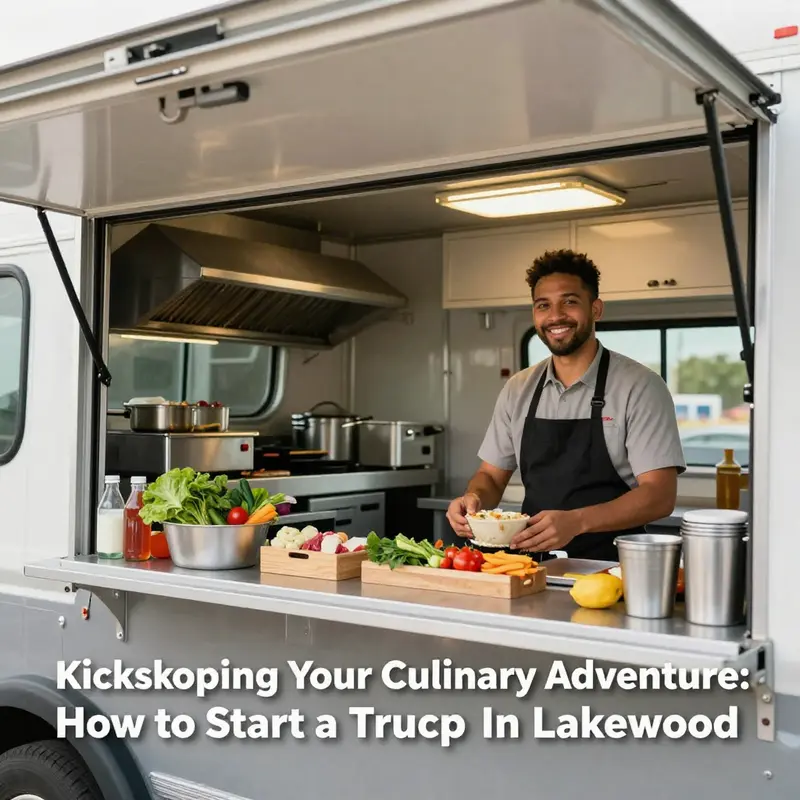
Choosing the right vehicle and outfitting it with the proper equipment is more than a purchase decision. It is the foundation of your brand, the heartbeat of your daily workflow, and the compass that keeps you compliant in a crowded urban landscape. When you start a food truck, you are not simply buying a kitchen on wheels; you are building a moving operation that must meet local licenses, health rules, and vehicle standards while delivering dependable service in high-traffic moments. The theory is simple enough: pick a vehicle that fits your concept, design a kitchen that flows, stock what works, and align every choice with the regulatory framework that governs mobile food service. In practice, this becomes a careful balance of cost, performance, and future adaptability. The decisions you make at this stage will echo through every service window, every queue line, and every inspection report, so the aim is to craft a compact, compliant, and capable platform that can evolve with your business.
First, ensure you are building on a rock-solid regulatory foundation. Before you even look at a single appliance, register your venture with the local government to obtain a business license. Then pursue the Food Service Permit from the health authority, knowing that most jurisdictions will require a site inspection and a documented plan for hygiene, sanitation, and waste management. If you modify a vehicle into a mobile kitchen, you will likely need to classify it as a commercial vehicle and secure a Road Transport Permit or its local equivalent. Health certificates for staff are a recurring requirement, confirming that those handling food are free of communicable diseases. What often surprises new entrants is how digital the process has become: some cities now demand online submissions, real-time status updates, and digital inspections via municipal apps. This reality matters because your chosen vehicle and equipment must accommodate documentation that can be uploaded, stored, and retrieved with ease, without creating bottlenecks during renewals or surprise audits. A thoughtful procurement plan anticipates these digital workflows rather than fights them during a busy week, and it starts with the vehicle you select and the layout you embed inside it.
When it comes to choosing the right vehicle, the guiding principle is balance. A light-duty, 4–6 cubic meter enclosed van—think compact, nimble, and city-friendly—often hits the sweet spot between maneuverability and usable space. A smaller footprint reduces driver fatigue, lowers fuel or energy costs, and makes parking and curbside service simpler. At the same time, you want enough interior room to keep your cold and dry storage separate from prep and cooking zones, preserving hygiene and workflow. In many markets, electric or hybrid configurations are increasingly attractive because they offer lower long-term operating costs and align with evolving environmental expectations. The electric option, in particular, can translate into dramatically reduced per-kilometer energy costs and a quieter, more delivery-friendly curbside presence. Yet energy parity matters only if the truck’s layout and equipment are designed to maximize efficiency, because you will run the truck for long shifts with multiple stops, and every watt saved is a minute shaved off busy service.
The interior design of the mobile kitchen is where the real optimization happens. Your layout should create a logical flow from cold storage to prep, to cooking, to service, with a dedicated handwashing zone and an orderly waste disposal area that does not intrude on customer-facing space. Build in a linear workflow that minimizes backtracking; place the refrigerator and safe cold storage near the prep counter to reduce time spent reaching for ingredients. A compact, built-in grease trap and a fire suppression system are not luxuries but essential safety features that align with health and fire codes. For many operators, the most cost-effective and compliant approach is to work with certified vendors who offer pre-fitted food trucks that come with compliance certification included. These vendors can tailor the interior to your menu and then handle the certification during installation, smoothing an otherwise complex path to opening. In essence, you are buying not only a kitchen but a documented compliance package that travels with you.
Within the vehicle, the choice of equipment shapes both price and performance. The core set should cover cold storage, cooking, and sanitation, plus a practical point-of-sale and a dependable power supply. A reliable refrigeration unit or two is indispensable, as is a griddle or flat-top that can handle the day-to-day items on your menu. A compact portable fryer may be necessary for certain items, but you should consider efficient, safer alternatives such as induction cooktops, especially in urban climates where fire safety and air quality scrutiny are high. An induction cooktop paired with a small oven or a broiler can deliver versatility while maintaining energy efficiency and superior heat control. You want a sink with proper drainage and a handwashing station that complies with local health code expectations—one or two sinks, depending on the menu, with enough space to clean, rinse, and sanitize efficiently. Finally, a waste disposal solution, locking storage, robust shelving, and a dependable POS system round out the essential toolkit. The objective is not to overload the truck with gadgets but to fuse equipment into the menu and the service tempo you plan, ensuring each item earns its keep in a tight operating window.
A practical lens on equipment emphasizes durability, durability, and durability. Mobility-friendly appliances must withstand vibration, constant use, and frequent cleaning. Stainless steel is a given for surfaces, frames, and shelving because it resists corrosion and cleans easily, but beyond that, you want equipment with compact footprints that still deliver punch. A refrigeration system should be designed for continuous operation with proper airflow and a backup plan for power fluctuations—think about generator compatibility or dependable electrical hookups at your most common sites. For any operator intent on sustainable practice, the choice of energy source matters, but so does the efficiency of your layout. A well-planned workflow reduces idle time between tasks, limits cross-contamination risks, and keeps heat and steam away from the service window where customers observe open containers and freshly prepared foods. The aim is not simply to meet minimum standards but to create a service rhythm that feels smooth, fast, and confident to first-time customers who might be trying your new concept for the first time.
As you assemble your vehicle and equipment, the regulatory horizon should stay in clear view. The latest practical reality across many cities involves digital documentation and real-time compliance tracking. You should be ready to present your floor plan, equipment list, sanitation procedures, and staff health documentation in a digital format, through an online portal or a municipal app if required. This approach reduces the friction of the licensing journey and keeps your operations in a state of audit readiness. It also means that when you choose a vehicle and layout, you should confirm that the installation can be documented in a way that satisfies inspectors who will eventually verify your compliance. A vendor with experience navigating these rules can be a valuable partner, helping you select compliant components, install them correctly, and generate the documentation that accompanies each permit renewal. In practice, this means you are investing not only in a kitchen on wheels but in a mobile, compliant platform that can travel to markets, events, and fixed locations with confidence.
As you translate these principles into a concrete plan, a useful touchstone is to review community examples and start imagining your own signature workflow. A well-designed truck supports a small crew but feels expansive to customers because service feels quick and precise. If you want to gain a practical sense of model options and layouts that have served startups well in similar urban contexts, you can explore a curated set of configurations and comments in the industry resource piece that discusses best-truck models for early-stage operations. That overview can help you compare how different footprints handle peak hours, what trade-offs exist between size, price, and capacity, and how vendors have integrated compliance features into their builds. The story of a successful street food concept often comes down to the small decisions—the location of the handwashing station for hygiene compliance, the proximity of storage to prep surfaces to reduce waste and time, and the presence of a fire-suppressing system that can be clearly demonstrated when an inspector asks for evidence of safety measures. These details, while technical, cumulatively define your day-to-day experience on the curb and your long-term ability to scale.
Alongside design and equipment, you should also think about how your vehicle will contribute to your brand and customer experience. The exterior aesthetics—colors, graphics, and a readable logo—work in tandem with the interior efficiency to deliver a consistent story. A visually strong truck invites curiosity, but a clean, organized interior reinforces reliability. Modern mobile kitchens increasingly rely on a simple, repeatable setup that can be replicated across multiple units or adapted as you expand to new locations. The design should be flexible enough to accommodate menu changes, seasonal offerings, and evolving service models, including online ordering and contactless payments that modern customers expect. The combined effect should feel seamless: a customer sees a vibrant truck and experiences a calm, efficient service, which in turn fuels word-of-mouth and repeat visits.
The financial side of this step cannot be ignored. Initial investments for a prepared truck and the necessary equipment typically fall in a broad range, but a realistic mid-range target is essential to avoid overextending the budget while still delivering a professional, compliant platform. Beyond the sticker price, you must account for licensing and permit fees, inspections, potential vehicle modifications, and contingency funds for early operational glitches. In practice, owners who invest thoughtfully in a compliant, well-equipped truck often recover their investment more quickly because they can operate legally from day one, reduce downtime between shifts, and avoid costly retrofits after a rushed launch. A pragmatic stance is to map the expected service schedule, identify the most profitable locations, and forecast cash flow to determine how many weeks of operations it will take to reach break-even. This clarity helps you select the right vehicle size and equipment package that aligns with your local market dynamics and anticipated demand.
The decision to pursue electric or hybrid propulsion should be weighed against the realities of your location and schedule. While electricity offers compelling long-term cost advantages and aligns with sustainability goals, it also requires a reliable charging plan and potential infrastructure at the places you frequent. If you anticipate frequent urban driving with predictable routes and power access, an electric setup can deliver lower per-kilometer costs and a quieter operation that endears you to neighbors and event organizers. If your routes are more erratic or you face limited charging options near your most lucrative sites, a hybrid or traditional fuel setup with smart energy management can provide the reliability you need while you grow. Either way, you should design the electrical system to support peak loads during service windows without depleting battery reserves, and you should articulate a plan for maintenance, diagnostics, and potential upgrades as technology evolves.
The journey from concept to curb-side success also involves a practical consideration of support networks. Building a food truck is not merely assembling a kitchen on wheels; it is joining a network of suppliers, service centers, and compliance professionals who understand the cadence of mobile food service. Seek out vendors who have a track record of delivering complete packages—from chassis and refrigeration to grease management and exhaust systems—accompanied by documentation that expedites inspections. You will want a clear process for inventory management, maintenance schedules, and a straightforward method for refreshing equipment as your menu evolves. In the end, the most resilient trucks are those that integrate design, equipment, and compliance into a single, coherent system. They’re easier to operate during peak hours, simpler to maintain in a tight budget, and scalable as you add more trucks or expand to new events or neighborhoods.
For those who want a practical reference point as they plan, there is a concise resource discussing model options and layouts that have proven effective for startups in comparable markets. It can complement your own calculations and help you visualize what a properly equipped truck looks like in real-world settings. See the discussion here: best-food-truck-models-for-lakewood-startups. This link provides a concrete sense of how choices in size, power, and interior arrangement influence service times, maintenance cycles, and regulatory alignment, letting you compare configurations before you commit to a build. The aim is not to lock you into one path but to illuminate the spectrum of viable options so you can select the approach that best matches your concept, your location, and your long-term ambitions.
With your vehicle and equipment planned, the next layer is to map how this hardware supports your business model. You should be honest about your target menu and service format; a compact truck works best when you offer a focused lineup that minimizes ingredient complexity and waste. A typical best-practice package centers on a few high-margin items that you can deliver quickly, with a smart pricing strategy that reflects ingredient costs and labor inputs. A well-designed truck accommodates this approach by keeping the most profitable items near the front of service, where customers place orders, while ensuring you have adequate space to stage deliveries and restock ingredients during slower periods. The piping and wiring should be organized to avoid heat transfer to customer-facing surfaces, respecting both safety and comfort. A thoughtful layout also fosters a positive work rhythm for your crew, reducing fatigue and the likelihood of mistakes in a high-pressure environment. In short, the vehicle and the kitchen are not just tools; they are a working platform that embodies your brand’s promise of speed, consistency, and quality.
As you finalize the selection, the business implications begin to crystallize. The investment you make in the truck, the equipment you choose, and the way you document compliance can determine how quickly you reach profitability and how easily you can scale. You may choose to start with a conservative build that covers the essentials and then iteratively upgrade as sales grow and demand becomes more predictable. Conversely, if you anticipate a strong entry strategy with high-volume events, it can be worthwhile to invest more upfront in a larger vehicle or additional refrigeration capacity to prevent spoilage and ensure you can service multiple locations from one unit. The balance is between risk tolerance, speed to market, and the flexibility to adapt your concept to local preferences and seasonal shifts. A solid plan that weaves together regulatory readiness, efficient workflows, and durable equipment will yield a truck that not only serves customers well but also travels well through the inevitable changes of the early years of a food truck business.
To close this chapter, consider the entire arc of the truck as a living system. The exterior brand and interior efficiency reinforce one another, while the regulatory framework is the invisible yet constant supervisor of your daily routines. Your investment is not only in machines but in a structured process that makes inspections, renewals, and audits predictable rather than intimidating. When you align your vehicle choice with a clear equipment plan, you create the foundation for reliable service that can be replicated, scaled, and adapted as you expand into new events or markets. The goal is to build a mobile kitchen that feels like a natural extension of your concept, that travels with confidence, and that remains compliant under evolving rules. That is the core of a successful launch and a durable growth path for a food truck venture.
External resource for official guidance on food safety and mobile vendors: https://www.usda.gov/web/foodtruck
Final thoughts
Starting a food truck in Lakewood is not just about serving food; it’s about building connections and sharing cultures through culinary experiences. With the right licenses, a well-thought-out menu, and a properly equipped truck, you can embark on this exciting journey. Remember, every successful food truck began with a single step. So take that leap, embrace your community, and share your flavors with the world—Lakewood awaits your delicious offerings.