
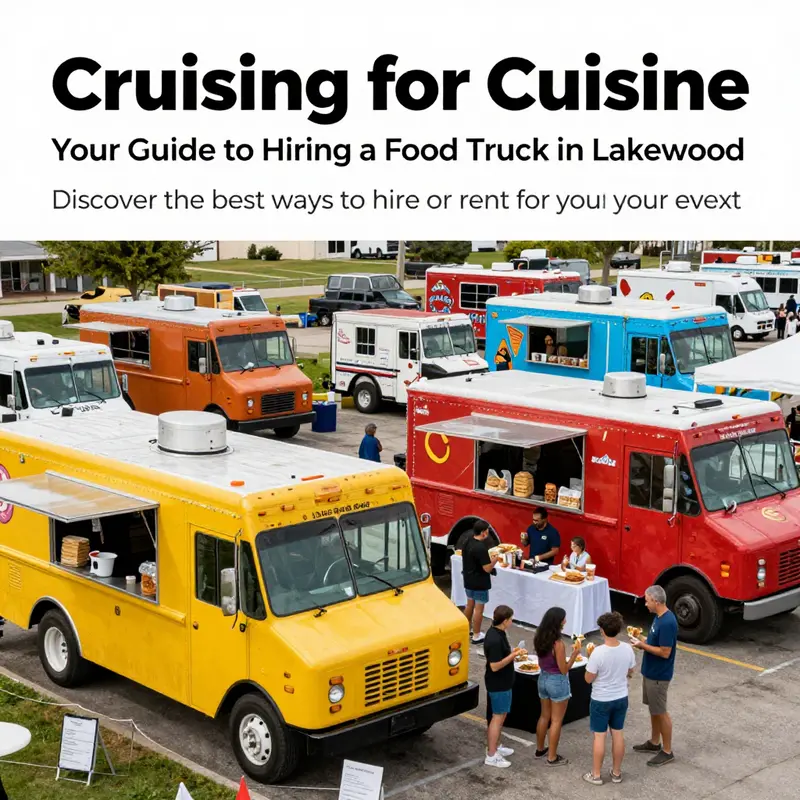
If you’re looking to add some flavor to your next event or simply indulge in Lakewood’s vibrant food culture, then hiring a food truck may be just what you need! Whether you’re an aspiring food truck operator wanting to explore options or a tourist keen on sampling local delights, understanding where to find the right food truck for hire is essential. This guide will take you through promising avenues like online marketplaces, local food truck gatherings, and specialized business services, ensuring you have all the information to make the best choice. Let’s dive into the world of food trucks and their hiring possibilities right here in Lakewood!
Finding the Right Food Truck Online: Platforms, Practical Tips, and What to Expect
Finding the Right Food Truck Online: Platforms, Practical Tips, and What to Expect
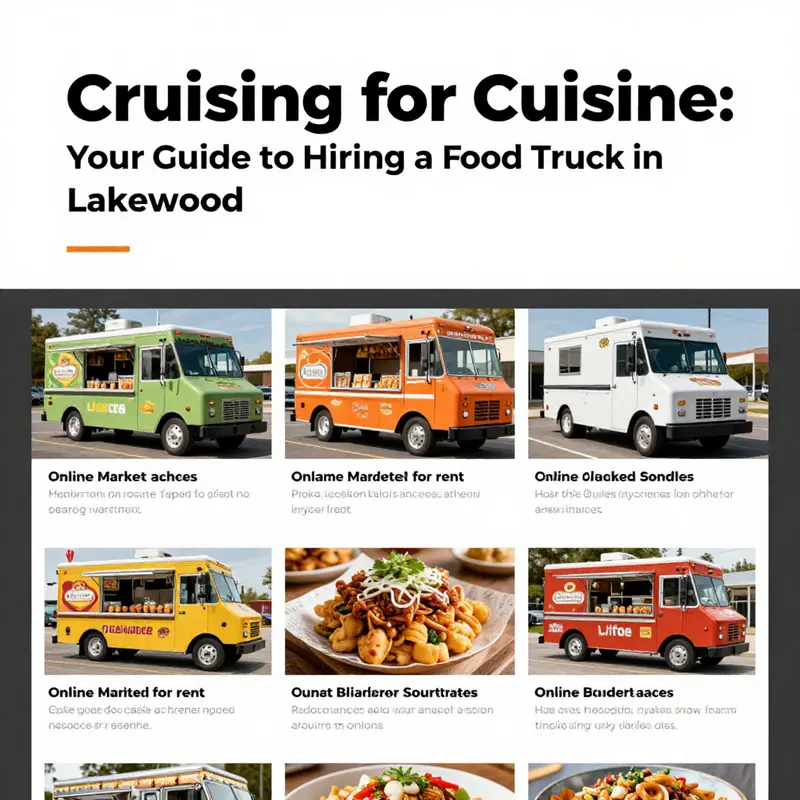
Hiring a food truck through online marketplaces can transform an event, accelerate a new food concept, or provide a flexible catering solution without the cost and commitment of owning a vehicle. The digital options range from specialized listing sites that focus exclusively on mobile food operators to broader gig and classifieds platforms where independent vendors post availability. Navigating these channels effectively requires more than a quick search; it demands a clear brief, careful vetting, and an understanding of the operational realities behind each listing. This chapter walks through the practical landscape of online hiring, explains what to look for in a listing, and offers realistic expectations so you can book the right truck with confidence.
Start by defining what you need. A clear brief saves time and prevents surprises. Note the event date and hours, expected guest count, desired cuisine or menu items, service style (walk-up, plated, or buffet), power and water needs, parking and access constraints, and any permit or health-code requirements at the venue. Include budget parameters and whether you expect the operator to provide staff, disposables, and insurance. When you approach marketplaces with a concise brief, responses are quicker and more relevant. Listings are easier to compare when measured against the same checklist.
Once your brief is set, use search filters and keywords to narrow options. Most marketplaces let you filter by location, dates, cuisine type, price range, and rating. Focus on operators within a practical driving radius unless you plan to cover travel fees. Pay attention to availability windows and minimum booking times—many trucks require a minimum service period or a minimum spend rather than an hourly rate. Listings that show sample menus, pricing tiers, and past event types will help you rule out mismatches faster.
Profiles and photos are central to online hiring. Good listings contain clear photos of the truck exterior, the serving window, the interior layout, and plated food samples. Interior shots reveal how much equipment is available, where prep happens, and whether the vehicle can match your menu needs. Plated or served food images give a sense of portioning and presentation. If photos are scant, request a current set before committing. A modern, well-kept truck and consistent, appetizing food photos are indicators of professionalism.
Menus and pricing deserve careful scrutiny. Some operators offer fixed per-person packages that include a set number of courses or servings; others provide à la carte pricing or charge by item sold. Understand what is included: do prices cover staffing, servingware, tenting, generators, and cleanup? Ask for a written quote that lists inclusions, taxes, and any additional fees such as travel, parking, or permit processing. For events with unpredictable attendance, negotiate a minimum guarantee with a per-person rate for additional guests. Confirm payment terms upfront: deposit amount, payment schedule, and refund policy.
Ratings and reviews are powerful but not infallible. Look for patterns rather than single comments. Repeated praise for responsiveness, punctuality, and food quality is a reliable sign. Conversely, multiple notes about lateness, lack of sanitation, or unexpected fees are red flags. When a listing includes references, ask to speak with a past client about their experience. If reviews are missing or sparse, request proof of recent events and contact information for a venue that hosted the truck.
Licensing, insurance, and food safety compliance must be non-negotiable. Confirm the operator holds a current food service license, health department certifications, and adequate liability insurance. Many marketplaces indicate whether a vendor has uploaded digital copies of these documents. If not, request them directly and verify expiration dates. For events on private property or public streets, check whether additional permits or site-specific approvals are necessary and who will secure them—the organizer or the operator.
Logistics and site fit are where many bookings succeed or fail. Trucks need clear access for maneuvering, a level surface for safe setup, and adequate space for staff and guests. Identify loading zones and the nearest vehicle entrance before the event. Note overhead clearances, turning radii, and any weight restrictions if the event is on a pier or an old surface. Communicate with the operator about power needs; some trucks run off built-in generators, while others prefer shore power. If the truck requires a generator, discuss noise levels and placement. For water, confirm whether the truck has sufficient onboard fresh and gray water capacity for your guest count or if additional water service is required.
Catering and service style impact timing and staffing. Mobile kitchens are designed for continuous service; they excel at quick, casual formats where guests order at the window. If you need plated multi-course dining, clarify whether the truck offers a plated catering option or if they will dispatch a staffed buffet. Staffing numbers affect speed and cost. A single server for a large event will slow service and increase guest wait times. Ask for an estimated service timeline—how long it will take to serve your guest count, peak service strategies, and whether they can accommodate special dietary needs.
Branding and customization can be major advantages of renting a truck. Many entrepreneurs use short-term rentals to launch a pop-up or test a menu in a new market. If you plan to rebrand the truck temporarily with banners, wraps, or signage, obtain operator approval and confirm installation/removal responsibilities. Discuss storage space for branded materials and whether the operator will allow shared promotions or co-branding. Some operators are open to collaborative marketing in exchange for a reduced fee or revenue share.
Contracts should be comprehensive and protect both parties. A solid contract covers event details, menu and pricing, deposit and payment terms, cancellation and refund policies, insurance and compliance proof, staffing expectations, arrival and breakdown times, and contingencies for extreme weather or mechanical failure. Include indemnification clauses and dispute resolution terms. If the marketplace offers a booking platform with built-in contracts and payment escrow, that can simplify matters, but always review the fine print and ensure the contract aligns with your brief.
Communication and contingency planning increase the likelihood of a smooth service. Establish a single point of contact for the event and exchange direct phone numbers. Confirm arrival windows and setup time, and schedule a site walk with the operator before the event if possible. Discuss backup plans: if the truck becomes unavailable due to mechanical issues, what are the operator’s contingency options? If the marketplace offers mediation or vendor replacement services, understand the process and timelines for invoking it.
For entrepreneurs testing concepts, marketplaces present unique opportunities. Short-term rentals let you trial a new menu, test price points, and gauge demand in different neighborhoods. Prioritize listings that emphasize flexibility and have trucks with modular kitchens that support fast menu changes. Look for operators who have experience with pop-ups and brand collaborations. Cross-promotional opportunities can amplify your test—arrange social media posts and email blasts with the operator to drive traffic during the trial.
Budgeting with marketplaces requires realistic expectations. Renting a truck eliminates capital expenses but introduces variable service costs. Budget for the booking fee, menu costs, staff gratuities, travel, permits, and unforeseen charges. If the event requires exclusive use of the truck, expect a higher base fee. If you share sales with the operator, clarify revenue splits and audit procedures. Request an itemized invoice after the event to reconcile any differences between quoted and actual costs.
Evaluating value goes beyond price. A lower quote can mask hidden costs such as lack of staff, missing equipment, or poor logistics planning. Conversely, a higher quote from an experienced operator might deliver superior timing, presentation, and guest satisfaction. Balance cost with quality indicators: professional communication, thorough documentation, health compliance, and positive reviews.
When negotiating, be transparent about constraints and open to creative solutions. If your budget is limited, consider offering the operator cross-promotional marketing, a reduced minimum guarantee in exchange for a percentage of sales, or a compromise on menu complexity. Many operators are willing to tailor packages for repeat bookings or long-term partnerships. Establishing a relationship can lead to preferred rates and better service on future events.
Follow-up and feedback close the loop. After the event, document what worked and what didn’t. Share constructive feedback with the operator and leave an honest review on the marketplace to help future organizers. If you plan repeat events, schedule them sooner rather than later to lock in availability. Reliable operators book fast for peak seasons, so building a rapport can secure prime weekend dates.
For organizers seeking deeper insight into suitable vehicle models and startup considerations when moving from renting to owning, a practical resource covers recommended truck types and startup planning. That guide on choosing models tailored for new operators can help you assess whether long-term investment makes sense for your project: https://lakewoodfoodtrucks.com/best-food-truck-models-for-lakewood-startups/
Finally, leverage a curated external resource that lists vetted mobile food operators for events. It can be a helpful starting point when you need to browse pre-screened options and compare menus and logistics in one place: https://www.tastemade.com/events
Approached carefully, online marketplaces simplify the search and booking process. They give access to diverse operators and flexible formats while cutting the lead time required to deliver a memorable food experience. With a solid brief, careful vetting, clear contracts, and good communication, hiring the right food truck online becomes an efficient way to elevate an event, experiment with a concept, or address a temporary catering need without the long-term commitments of ownership.
From Festival Lines to Catering Lines: How Local Food Truck Events Open Doors to Hiring
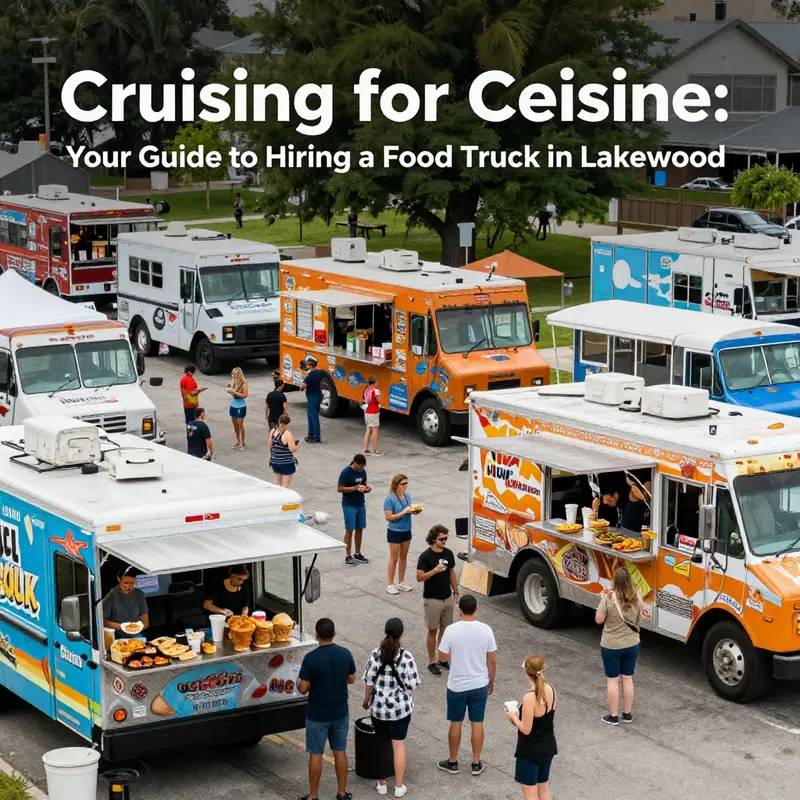
Local food truck events have a practical, even practical-magic quality for anyone tasked with feeding a crowd without the heavy, hands-on overhead of full-service catering. When a host is choosing where to hire a food truck, the event setting can be the most revealing laboratory. The same street-leaning impulse that drives people to seek out a diverse lineup of flavors at a festival or market can translate into a smart, scalable solution for a company gathering, a neighborhood fair, a school fundraiser, or a corporate retreat. The crowd drives the menu by appetite and curiosity, and the vendor lineup becomes a living menu of options rather than a fixed kitchen with a static plate. In this environment, the decision to hire a truck is not merely about the food. It is about the logistics of moving a kitchen to a venue, about the dynamic energy of a street-food experience, and about a connection to the local entrepreneurial ecosystem that makes the whole arrangement feel both efficient and community-centered. For organizers and businesses alike, the payoff is a flexible, high-quality food offering that can scale, adapt, and spark conversation between guests, vendors, and the event itself. The event setting, rather than a traditional catering hall, becomes a flexible stage where vendors can showcase a range of specialties and patterns of service that suit the mood of the gathering. In other words, local events do more than provide sustenance; they create a platform for testing concepts, managing costs, and cultivating relationships that can extend far beyond a single date on the calendar.
The practical appeal is straightforward. A well-curated lineup of mobile kitchens can deliver multiple cuisines in one place, enabling attendees to choose what feels fresh and exciting in the moment. Guests can sample, compare, and decide, all while enjoying a sense of discovery that fixed catering often lacks. This variety is not just about taste; it’s about timing, portion size, and the rhythm of service. A festival setting naturally accommodates a range of service styles—from short, snackable bites that keep people moving to heartier plates that anchor a longer event. For event hosts, this translates into a more efficient use of space, less complexity in planning, and a built-in mechanism for crowd management. When a flock of attendees converges on a lineup of trucks, the physical layout itself becomes a part of the entertainment. Traffic flow, queuing, and the sight of a vibrant, steaming kitchen on wheels contribute to the atmosphere and reduce the cognitive load on organizers who would otherwise micro-manage food service.
The opportunities at local food truck events extend beyond the immediate moment of service. For hosts looking to hire a truck, the event becomes a live audition space where operators demonstrate reliability, speed, and hospitality. Rather than relying on a static menu and a single point of contact, you can observe how a vendor handles peak times, how they present their offerings, and how they interact with customers from different ages and backgrounds. You can also evaluate the robustness of their equipment in real-world conditions—how fast they can switch between items, how clean the workspace remains during busy periods, and how well they manage waste and safety protocols. This kind of on-site assessment often reveals operational strengths and gaps that would be harder to detect through a simple catalog or a casual conversation. The result is a hiring decision grounded in observable performance, not only in planned promises.
Beyond the immediate logistics, the social dimension is not to be underestimated. Local events are community touchstones, drawing people who care about local flavors, entrepreneurship, and neighborhood vitality. For event hosts, engaging with trucks at these gatherings sends a signal that the project values local business, progressive sustainability practices, and a hands-on, direct-to-consumer experience. For the operators, it offers an opportunity to expand their reach, test new concepts, and build a following that can translate into longer-term partnerships. This reciprocal dynamic is one of the core strengths of hiring through events. It aligns the host’s objectives with the ambitions of a vibrant local ecosystem, producing outcomes that are both economically sound and community-affirming.
To navigate this landscape successfully, organizers and planners should approach local food truck events as a carefully scoped sourcing exercise rather than a one-off catering decision. Begin with the event calendar as a resource—identify gatherings that align with your audience, location, and timing. In many regions, community calendars, municipal leisure pages, and cultural center sites will list upcoming markets, street-food nights, or festival weekends. While the exact names of individual events will vary, the pattern holds: a rotating cast of trucks, a mix of cuisines, and a chance to observe service in a real-world setting. Platforms that curate local happenings, such as online event listings and community groups, often aggregate these opportunities, providing a streamlined way to plan and compare options without entering a maze of vendor outreach negotiations for every single date. When you approach these opportunities with intention, you can craft a plan that aligns food quality, guest experience, and logistical feasibility with a reasonable budget.
As a practical matter, the first move is to research the kinds of vendors that typically operate at these events and to map how their offerings would fit with your guest mix. A well-rounded lineup often includes a spectrum of styles: handheld, handheld-plus-sauce experiences that work well in a standing-and-walking crowd, and more traditional meals that satisfy guests who arrive late or require greater fullness. Think in terms of versatility: a burger-and-fry option that travels well, a taco-driven setup with adaptable toppings, a plant-based choice for non-meat eaters, and a dessert or snack cart to round out the palate. Without naming brands, you can describe the general categories and the kinds of foods they tend to offer. When you walk the event grounds or peruse the vendor list before or after the gathering, you’ll notice patterns in how trucks structure their menus, how they price items for speed and peak demand, and how they handle peak lines. These observations inform not only what to hire but how to configure the ordering experience for your audience—whether you’re hosting a daytime family festival, an evening cultural fair, or a business conference with a more formal profile.
One of the most valuable aspects of hiring through local events is the chance to sample a range of approaches in a low-risk way. You can compare the energy of different trucks, how they engage with guests, and how well they coordinate with event staff. You may discover that some operators have a knack for speed and efficiency during rush periods, while others excel at delivering high-quality, slower-paced service that emphasizes presentation and storytelling around each dish. Both modes have their place depending on the event format, audience expectations, and the level of audience participation you want to cultivate. If your goal is to maintain a high throughput with solid presentation, you might lean toward trucks that emphasize streamlined assembly lines and consistent portion control. If you want more of an experiential vibe, you might prioritize vendors who can offer interactive preparation, live cooking demonstrations, or chef-led menus that change with the event timetable.
To approach the process with clarity, it’s helpful to start with a simple, pragmatic framework. Gauge the target event’s footprint: how much space is available for trucks, queue lines, and safe movement for guests. Consider the power and water requirements; most mobile kitchens are self-contained but may need connections for refrigeration, cooking, or steam-cleaning between shifts. Think about waste management: where will containers be placed, who handles trash during service, and how will you manage post-event cleanup? These logistical questions are not afterthoughts. They define whether a given truck can operate smoothly within your venue constraints and whether a vendor can deliver the guest experience you envision. In this mindset, the hiring decision becomes a matter of fit: does the truck’s typical service model align with your event’s speed, scale, and safety expectations?
The human element is equally important. Building a working relationship with a truck operator means understanding their communication style, reliability, and willingness to adapt to your event’s constraints. Some operators will be accustomed to working with event staff and venues that provide support in specific ways, while others might prefer more independence and fewer interruptions. The best-fit partner is the one who communicates proactively, provides a clear point of contact, and demonstrates flexibility without compromising quality. You can develop a productive dialogue by outlining the event’s key milestones, providing a realistic timeline for load-in and load-out, and sharing any venue-specific requirements (permits, security clearances, accessibility considerations). A thoughtful conversation at the outset reduces the risk of missteps on the day of the event and helps set expectations for service standards, tribute to guest experience, and contingency plans for weather or delays.
A practical way to uncover these dynamics is to attend a few events with a specific hiring lens. Observe the interaction between vendors, tempo of service, and the way staff handle line management. Notice how the trucks present their menus, how they describe dishes, and how they engage guests in a way that is authentic and inclusive. Observing the on-site operation gives you a sense of whether a vendor can offer the same level of hospitality at your event—whether a school fundraiser, a corporate retreat, or a neighborhood block party. You’ll also learn about the kinds of packages and terms vendors typically offer for event engagement. Some trucks will provide set menus with a fixed price per item, while others may propose flexible bundles that combine drinks, sides, and main dishes at tiered pricing. The more you see in practice, the more equipped you are to negotiate terms that suit your guest profile and budget while keeping the culinary experience compelling.
In this process, you will begin to recognize a few recurring patterns that help distinguish reliable operators from those who require closer oversight. Reliability shows up in on-time load-in and efficient setup, clean and organized workspaces, and consistent food quality across the service window. Clear communication is evident when a vendor confirms timing, the expected staffing level for peak periods, and the plan for any changes in the weather or schedule. A well-run operation prioritizes guest experience—clear signage, readable menus, visible ingredients, and transparent price points. You will often see vendors who actively coordinate with event staff, align with the venue’s safety and accessibility requirements, and respond promptly to last-minute adjustments. These indicators are not mere niceties; they are the hallmarks of a vendor who can scale with your event without sacrificing the quality of the guest experience.
The final piece of the puzzle is the relationship between the event host and the vendor, which often translates into long-term collaboration. Local event networks, vendor directories, and community associations help formalize these ties by providing vetted, licensed, and insured options, with a track record of reliable service. They offer a peace of mind that is particularly valuable when engaging with multiple trucks or when hosting recurring events. For hosts who are laying groundwork for ongoing partnerships, these networks offer a curated pool of operators who understand standard event practices, insurance requirements, and emergency protocols. They also provide a feedback loop in which hosts can share experiences, celebrate successes, and ensure that future collaborations continue to meet or exceed expectations. In short, hiring through local events can create a sustainable pipeline of mobile culinary options that align with evolving guest preferences and event formats.
To connect with the vibrant ecosystem of event-driven food service, consider using platforms that aggregate local happenings and vendor lists. These platforms are a practical starting point for discovering upcoming gatherings, reading reviews, and identifying trucks with a track record of successful events. They also often feature tools that help organizers compare options, request quotes, and manage communications in one place. When you adopt this approach, you shift from a scattershot outreach to a purposeful, data-informed strategy that prioritizes fit, reliability, and guest satisfaction. If you want to see a concrete example of how a region’s rally of food trucks shapes hiring decisions, you can explore a curated list that highlights the latest trends and opportunities in one locale. This kind of resource can illuminate which vendor forms and menu concepts are resonating with audiences right now, and it can help you anticipate what a successful collaboration might look like at your next gathering. As you plan, you’ll likely find that the event itself is one of your best hiring guides—a living showcase of what works, what excites guests, and what it takes to bring a mobile kitchen to life in your particular venue.
For a broader sense of what to look for in the local food truck scene, consider following a few trusted signals. Observe the consistency of the trucks’ operations across different events, the way they adapt menus to different audience demographics, and how they handle peak demand without compromising service quality. Note the level of attention to safety and cleanliness, the use of sustainable practices such as minimal packaging or waste reduction, and the degree to which they are open to collaboration with your event team. These signals will help you assemble a short list of operators who can reliably deliver both culinary quality and the operational discipline necessary for a smooth event experience. When you travel this route, you also open the door to a broader conversation about how to integrate food trucks into your standard event toolkit—creating a repeatable model for future gatherings, from neighborhood fairs to annual celebrations. The end result is not only a successful single event but a scalable approach to food service that can adapt to changing times, guest expectations, and organizing capabilities.
As you weave these threads together, one practical step remains essential: anchoring your inquiry with a specific, time-bound plan. Begin by identifying a target window for your event and a rough headcount. Then contact potential operators with a concise brief that includes venue details, access times, power and water capabilities, and any special needs or accessibility considerations. Ask for a portfolio of sample menus and a sense of their typical service style at events of similar size. Request a quote that itemizes costs for food, staffing, and any service fees, and insist on a clear cancellation policy and a contingency plan for weather-related disruptions. The more explicit your request, the easier it will be to compare apples to apples across vendors and to align expectations with your event timeline. If you’re new to this, you may want to schedule a short consultation with a few operators to hear their approach and to gauge whether their communication aligns with yours. This initial conversation is not just about price; it’s a chance to confirm that the truck’s ethos, service pace, and culinary voice resonate with your guests and your event’s overall vibe.
To illustrate how one might leverage these dynamics in practice, let me offer a concrete pointer that ties back to the broader landscape of local events and hiring strategy. See how the latest round of regional rallies is shaping what operators offer and how hosts engage them: 2026’s best food truck rallies in Lakewood. This example illustrates how a host can study the ecosystem, observe multiple vendors in action, and identify operators who consistently deliver strong guest experiences across different contexts. It isn’t about selecting a single “best” truck; it’s about recognizing a set of operators who collectively can meet your event’s needs, from menu diversity and service speed to safety standards and collaboration with other vendors and staff. When you approach hiring through local events with this mindset, you’re not merely filling a food station—you are curating an experience, building relationships with the people who make it possible, and laying the groundwork for a recurring, trustworthy solution that grows alongside your events.
In sum, local food truck events are more than venues to sample tasty offerings; they are proving grounds for selecting the right mobile partners. They provide an authentic, observable context in which to assess reliability, menu flexibility, service dynamics, and guest engagement. They allow hosts to diversify culinary options while maintaining manageability and cost control. They support a sense of community by spotlighting local entrepreneurs and enabling direct connections between hosts and operators. And they offer a practical framework for evaluating and negotiating terms that emphasize both quality and efficiency. If you are planning an event, you should view the opportunity not as a single hire but as the beginning of a collaborative relationship with a mobile kitchen ecosystem that can grow with your needs, season after season.
External resource: https://www.eventbrite.com/
null
null
Final thoughts
Hiring a food truck in Lakewood has never been easier with the numerous avenues available to aspiring operators and adventurous eaters. From exploring online marketplaces to engaging with local food truck events and specialized business services, each option opens unique doors to delicious experiences. So whether you’re gearing up for a big event or simply curious about the local food scene, the perfect food truck awaits you in Lakewood. Embrace the convenience and creativity of hiring a food truck while enjoying the delightful dishes they bring to our community!