
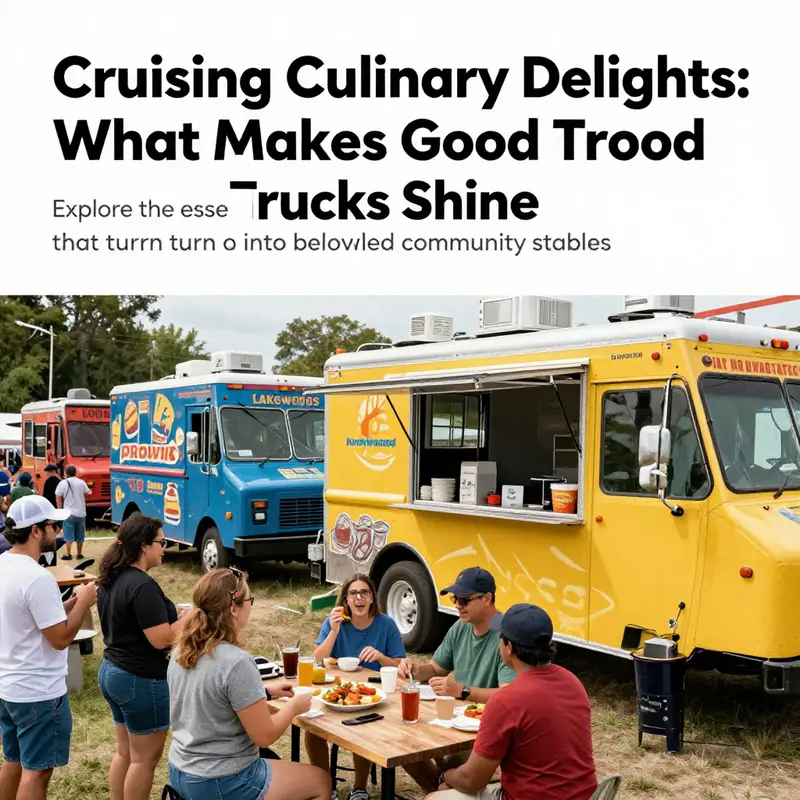
As you stroll through the vibrant streets of Lakewood, the tempting aromas wafting from food trucks beckon you to explore their diverse offerings. But what truly makes a food truck stand out in a crowded market? It’s more than just delicious food; it’s about a well-thought-out design, exceptional operational efficiency, and a clear vision of who they serve. This article will journey through three critical elements of successful food truck operations: maximizing interior space and creating a functional kitchen layout, ensuring mobility and flexibility, and finding a target market or niche to captivate audiences. Together, these components are the backbone of thriving food trucks that not only serve mouthwatering meals but also build community connections.
null
null
Rolling Agility: How Mobility and Flexibility Shape Great Food Trucks
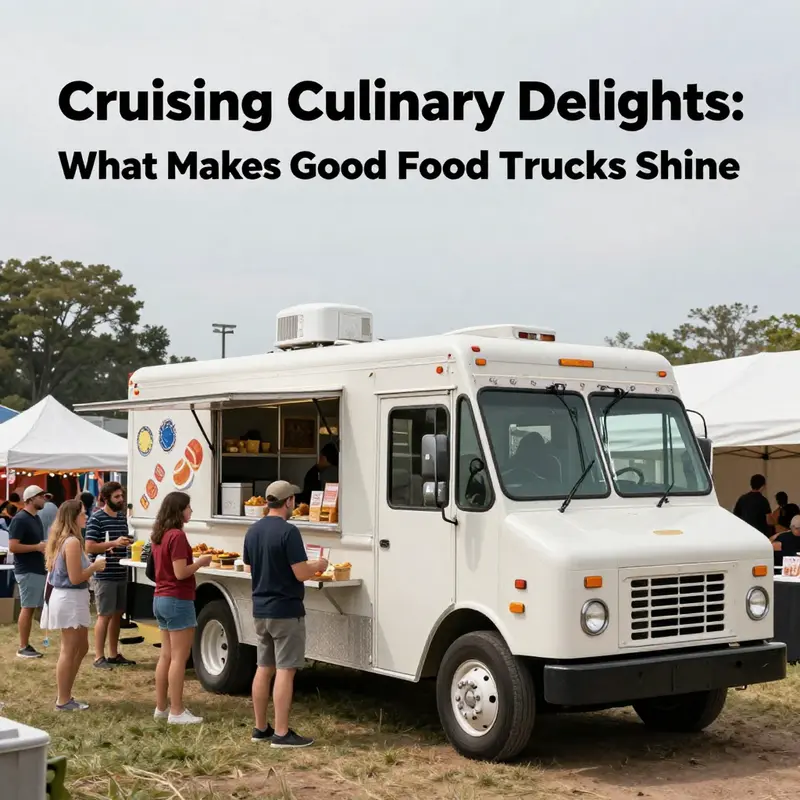
Mobility is not just a feature of a good food truck; it is the engine that powers a responsive, resilient, and scalable food business on wheels. When operators look at a truck as a mobile kitchen, they see more than tires and a grill; they see a platform that can be repositioned, repurposed, and relaunched in countless ways. The core idea is not simply to move from one corner to the next, but to move with intention—to shift between venues, menus, and customer communities with a clarity that preserves speed, quality, and profitability. Mobility becomes a kind of strategic advantage, a means to test ideas quickly, learn from crowds, and meet demand where it actually exists. In this sense, a good food truck is a portable showroom for a concept, a scalable kitchen on wheels that can adapt to different scales of operation without losing its core identity or operational rhythm.
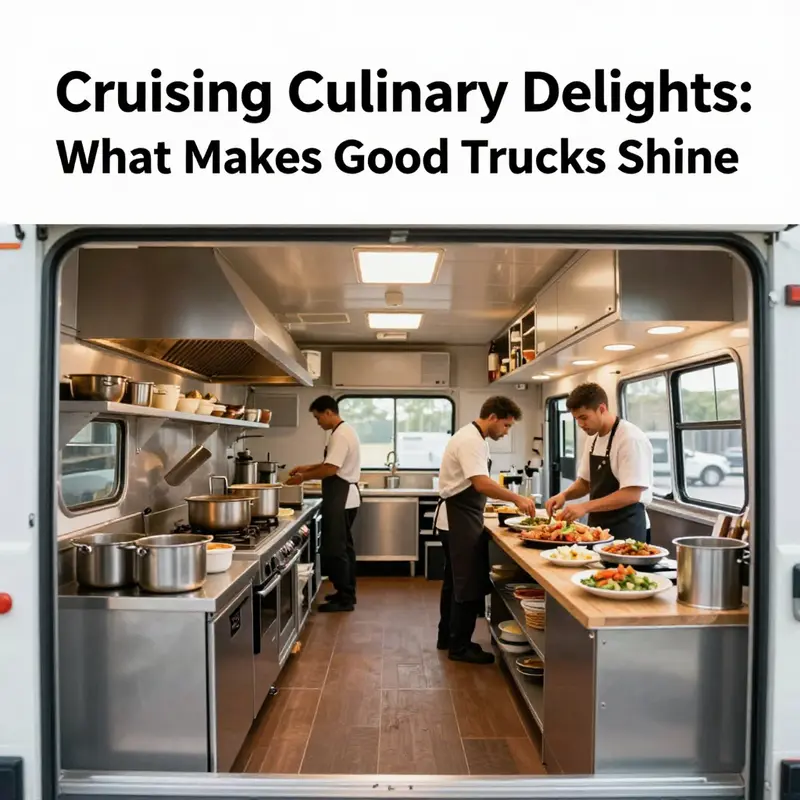
The interior space and kitchen layout are the first anchors of this flexibility. Large, rectangular trucks often offer the most room to install a full-scale commercial kitchen on wheels, a configuration that supports high-volume service and more complex menus. When the cooking line runs the length of the truck, there is a natural workflow for food prep, cooking, assembly, and service that minimizes backtracking and congestion. The payoff is not only in speed but in consistency: fewer steps, fewer transfer points, less chance of cross-contamination, and smoother sanitation cycles between customers. Yet the value of space is not simply about capacity; it is about how space enables the operator to pivot. A well-planned layout accommodates opportunities to swap out equipment to suit a particular event, such as a larger fryer for a seafood-focused pop-up or additional steam capacity for a dim-sum-inspired day. Mobility and interior design are therefore intertwined—the vehicle must be as flexible inside as it is outside.
Alongside interior room, the option of trailer-mounted units highlights a different dimension of flexibility. Trailers are a cost-conscious, highly portable choice that can be towed by a separate vehicle, allowing operators to shuttle between markets, festivals, and busy urban corridors with relative ease. This setup lowers the barriers to entry in markets that require frequent relocation or seasonal presence. For many startups and weekend operators, a trailer means reduced overhead compared with a permanently mounted kitchen and enables experimentation with multiple venues in a single season. The mobility of a trailer fosters a compelling dynamic: the business can map a route that aligns with audience rhythms—the Saturday farmers market, a Sunday street fair, a weekday office park lunch crowd—without committing to a single, fixed location. The result is not just geographic reach but the ability to adjust market focus in real time as demand shifts, trends emerge, or competition changes.
Operational flexibility is the other half of the mobility equation. A well-designed truck should not only move well; it should serve fast and turnover quickly. High-volume environments—festivals, street fairs, leafy city corners with heavy foot traffic—demand a kitchen that can produce consistently, even under pressure. In practice, this means a layout and equipment set that reduce bottlenecks from order to pickup. It also means a systematized workflow: a clear division of labor, standardized prep, efficient cleaning routines, and a service model that minimizes idle time. When a truck can deliver a dozen or more meals per minute without compromising quality, it becomes not merely a mobile stall but a portable restaurant capable of sustained service across venues. The interplay between physical flexibility and operational discipline is what enables a truck to scale a concept from an intimate pop-up to a recurring presence across several events or neighborhoods.
A key dimension of this flexibility lies in market alignment and niche focus. Mobility is most valuable when it serves a clear target audience. An operator who chooses a niche—whether a nimble coffee-and-snack concept, a regional comfort-food menu, or a specialized, shareable small-plates offering—benefits from the way movement magnifies relevance. A trailer can be parked near high-foot-traffic routes on weekends, while a larger, more capable unit can anchor a catering program during weekdays for corporate or campus events. By mapping the routes between audience and product, operators can calibrate their mobile kitchen’s capacity, menu diversity, and staffing to the expected flow of customers in each venue. This is not about chasing every opportunity at once; it is about designing a vehicle and a service model that can quickly align with the dominant demand at each stop.
Testing, learning, and refining are intrinsic to mobility-driven growth. A truck does not have to be a single, permanent expression of a concept. It can be a studio for experimentation, a pivot point for menu revamps, and a platform for guest-chef collaborations that expose new flavors to a built-in audience. The ability to relocate to a venue where the reception is warmer or the competition is lighter allows an operator to gather feedback, measure turnover, and iterate. In practice, this means tracking performance across venues, seasons, and events. What sold at a mid-day office park might not fly at a late-evening street fair, and what delights a morning crowd may become repetitive at lunch. Mobility makes those distinctions observable and actionable. It enables disciplined experimentation without the costly risk of tying a business to one location, one class of customers, or one fixed identity.
To maximize the benefits of mobility, operators should consider how a truck’s configuration can support rapid repositioning while still delivering a consistent brand experience. A strong visual identity on the exterior remains crucial, because the first impression is often the deciding factor in whether a passerby pauses long enough to read the menu or place an order. Yet the exterior design must harmonize with the interior flow. A truck that looks good from the curb but struggles to support a smooth kitchen workflow loses the very advantage mobility promises. Visibility and efficiency are not rivals; they are complements. A well-branded truck that can relocate with minimal downtime, while sustaining rapid service, embodies the essence of a good mobile business platform. This synthesis—space that fuels speed, mobility that tests ideas, and branding that draws crowds—defines what it means to be truly mobile in the food-truck landscape.
For operators evaluating different configurations, the practical takeaway is anchored in the notion that the best setups balance strategic mobility with operational clarity. A robust, full-kitchen truck can act as a platform for complex menus and high-volume catering, while a nimble trailer can unlock new venues and markets without a prohibitive upfront investment. The decision often comes down to how quickly a team can deploy, operate, and redefine its offering as conditions change. The most successful food trucks do not simply move; they move with purpose, expanding their footprint while preserving the core capabilities that keep service fast, food safe, and guests satisfied. In this sense, mobility is not a risk, but a deliberate strategy—an investment in range, adaptability, and the long arc of a mobile business.
Operators who aim to grow understand that the interplay between interior layout, exterior mobility, and audience targeting creates a virtuous circle. The interior supports a range of menus and service styles; the exterior and the location strategy amplify reach; and the audience feedback gathered across venues informs the next iteration of the menu and the next relocation decision. In other words, a good food truck is not merely a vehicle; it is a carefully engineered business instrument designed to amplify opportunity. The chapters that follow will build on this idea by examining how branding, compliance, and market positioning coalesce with mobility to produce a cohesive, profitable enterprise. For those exploring configurations and seeking practical benchmarks, a closer look at the best models for Lakewood startups can offer concrete guidance on how to translate mobility into a measurable advantage. Best food truck models for Lakewood startups.
The broader takeaway is simple: mobility and flexibility are fundamental characteristics of a successful food truck. They enable operators to respond to market demands and to grow with resilience. A truck that can relocate efficiently, adapt its kitchen to different menus, and present a clear, inviting brand in every setting stands a better chance of achieving fast service, high turnover, and sustained profitability. As the landscape of street food continues to evolve, the most durable operators will be those who treat the truck as a portable, scalable business platform—an agile kitchen that can meet people where they are, wherever they are, and with whatever culinary idea captures their attention next. This is the essence of a good food truck: a flexible, capable, market-aware machine designed not only to travel, but to transform itself and its craft in the moment, season after season.
External reference for further exploration on the science and optimization behind mobile food operations remains a useful companion for operators seeking to deepen efficiency and throughput: https://www.californiastreetfood.com/science-behind-food-trucks-sale-california
Finding the Right Crowd: Target Markets and Niches for Food Trucks
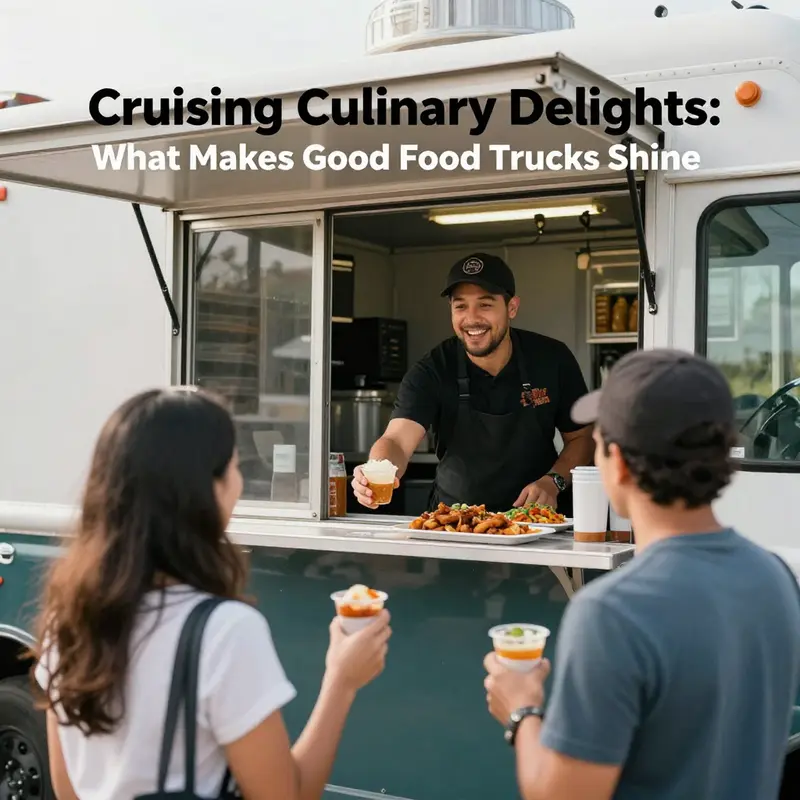
People don’t buy food trucks; they buy the experience of eating well in a moving moment. The strongest mobile kitchens succeed because they’re anchored to a clear audience and a distinct edge, not because they carry every possible dish. In this chapter we explore how target markets and a well-chosen niche become the engine of a durable business.
First, define the audience. What problem does the truck solve for them—speed, quality, craft, or story? Then translate that into a menu, a service model, and a brand that can travel from market to market with consistent performance. In urban environments the opportunity is dense but competitive: markets, office clusters, campuses, and events offer repeated opportunities for a well-tuned concept. A niche might be premium street tacos, plant-forward bites, or espresso and snacks that feel artisanal rather than merely convenient.
Operational alignment matters: kitchen footprint, prep rhythm, and the flow from order to plate must support turnover targets without sacrificing quality. A smaller footprint with a lean layout suits high-turn markets; a larger truck supports more complex menus or longer service windows. Mobility strategy matters too: trailer setups enable multi-venue plays at lower fixed costs, while a self-contained truck can serve a single destination with high-volume output. The choice should reflect the target audience’s expectations about where, when, and how they eat.
Branding and visibility amplify the niche. A distinctive name, color palette, and signage create instant recognition and reduce decision time for a customer who has only seconds to choose. The menu should be legible from a distance and designed around a few signature items that can travel across venues. This reduces risk and builds a dependable throughput.
Finally, treat market intelligence as a living design brief. Start with research on a few nearby events or districts that align with the concept; pilot tests in those settings reveal whether the chosen niche resonates. Iterate on recipes, packaging, pricing, and the workflow until the concept delivers on its promises across venues and seasons.
Practical takeaway: identify a primary audience and a tight edge, then design the truck, the menu, and the branding to serve that combination consistently. When the market signals demand specific busy windows or locations, shape the operation toward rapid service and reliability; if the concept is built for discovery in weekend markets, design for scalability and modularity. For operators seeking a compact blueprint, consider a Lakewood-style study of best food truck models to see how chassis, layouts, and equipment choices map to niche aims and event calendars. See Best Food Truck Models for Lakewood Startups for a tangible sense of how market specifics translate into kitchen design and service flow.
The core idea: market alignment is not a constraint but a strategic asset. A truck that knows who it serves, what they value, and when they crave it can optimize every decision—from kitchen layout to route planning to branding—so turnover stays high, margins stay healthy, and growth follows demand rather than desire.
Final thoughts
In wrapping up our journey through the essential elements that define a good food truck, it’s clear that the magic lies in the details. A well-designed interior and efficient kitchen layout maximize productivity while mobility ensures that vendors are where the action is, connecting with diverse crowds. Most importantly, understanding and catering to a defined target market truly elevates the experience for everyone involved. As Aspiring Food Truck Operators in Lakewood, focusing on these critical aspects will not only help you stand out in a competitive space but also create delightful and lasting relationships within the community. So, whether you’re planning to launch your food truck or simply indulging in the next delicious meal on the go, remember these essential keys to success.