
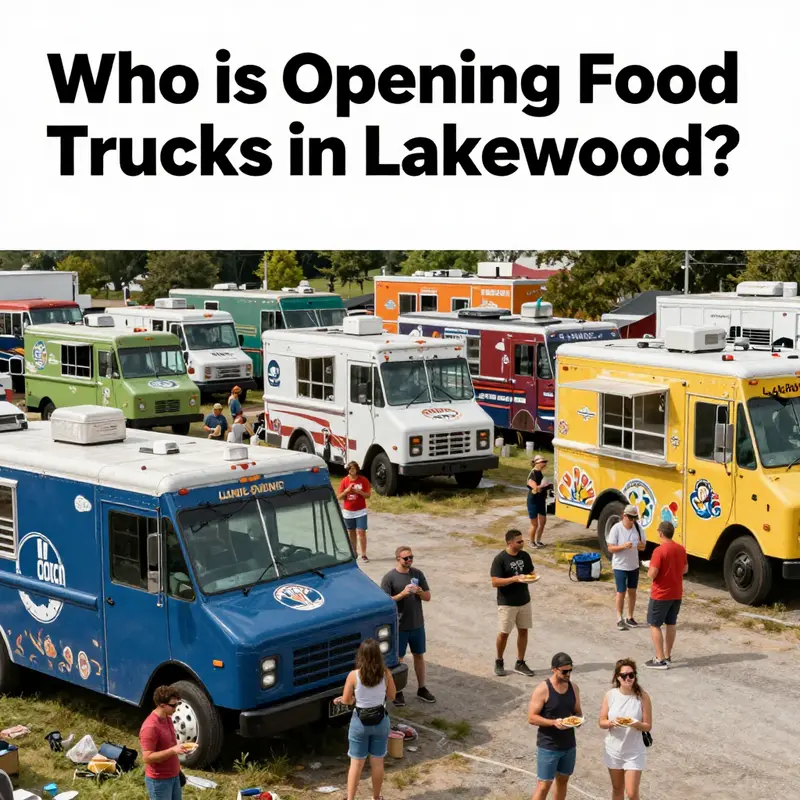
In Lakewood, the food truck scene is thriving, showcasing a mix of culinary creativity and entrepreneurial spirit. Individuals from various walks of life are hitting the streets with their unique culinary offerings, while established companies are exploring mobile food options. Logistics are crucial for seamless operations, and local governments are stepping in to provide substantial support. On top of that, changing cultural dynamics are shaping consumer preferences, leading to a rich environment for food truck ventures. Each chapter of this exploration highlights different facets of who is opening food trucks, creating a comprehensive picture of this exciting culinary landscape.
Passion on Wheels: Who Starts a Food Truck and Why They Choose This Path
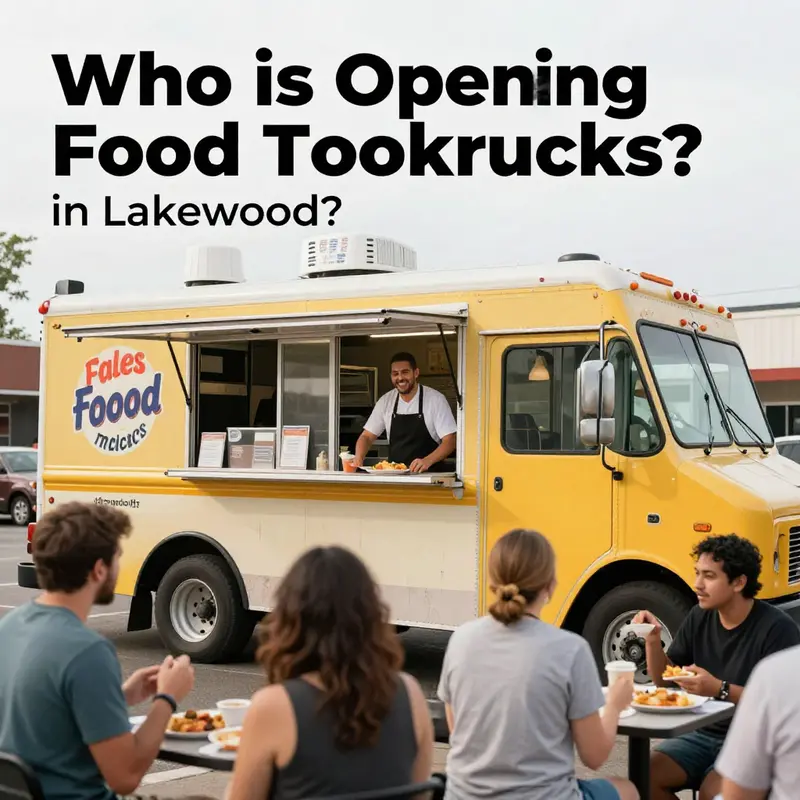
The street becomes a stage the moment a food truck rolls into a crowded square or drifts along a festival mile. But behind that gleaming counter on wheels lies a much richer story: a mosaic of people who decide to open a food truck for reasons that blend craft, risk, practicality, and a taste for independence. This chapter follows those threads, tracing not just who is behind these mobile kitchens, but why the idea appeals so strongly to a broad spectrum of would-be operators. In doing so, it ties individual choices to the larger currents shaping the modern food service landscape—an industry where a city block can become a micro-ecosystem of taste, culture, and opportunity.
Many food trucks are born from the same impulse that drives chefs to leave a restaurant line during a late shift: a fierce, often personal, desire to own the menu and the moment. A surprising number of operators come from professional kitchens themselves. They are former chefs who spent years perfecting sauces, techniques, and timing, only to discover that the walls of a brick-and-mortar restaurant can feel confining after a while. For them, the truck is not merely a vehicle for service; it is a portable workstation that retains the discipline of a kitchen while offering the freedom to reimagine the craft at will. They bring with them the rigor of training, a palate shaped by long service, and a willingness to translate years of kitchen culture into something nimble and market-responsive. The decision to go mobile may be framed as a career pivot, but the engine behind it is a deep-seated need for control over creative direction and business rhythms.
Line cooks, sous-chefs, and pastry specialists often add a different texture to the same chorus. They may not have towering tenure in a single kitchen, but they accumulate a toolkit of technique and a repertoire that can translate into a distinctive menu on wheels. The mobility of a truck makes it easier to test ideas with minimal overhead: a single vehicle, a test kitchen on the road, and a feedback loop fed by foot traffic and social media. Culinary school graduates also appear prominently in the mix. They arrive with formal training, but with fewer barriers to entry than a conventional restaurant startup, in terms of upfront real estate and long-term leases. Their investment is largely in the vehicle, the permits, and a curated concept that can scale as the brand grows. The truck becomes a first-stage launchpad, a space where culinary schooling can translate into a working business without the heavy fixed costs that accompany brick-and-mortar openings.
Yet the pool of founders extends far beyond people with traditional culinary training. A significant share of operators is drawn from the realms of innovation—individuals who spot a niche concept and see the truck as the perfect launch platform. Gourmet burger specialists, vegan and plant-forward micro-kitchens, or international street-food concepts create a compelling offer because the truck’s mobility allows them to move between neighborhoods, events, and seasonal markets. The ability to switch menus quickly in response to customer feedback or evolving dietary trends is not just a luxury; it is a strategic asset in a sector where novelty can translate into steady, repeat business. Startups built around a concept rather than a fixed cuisine often cultivate dedicated communities of fans who appreciate the experimentation and the conversation the menu engenders, sometimes even before a traditional storefront is considered.
The appeal of the mobile model rests on several pillars that appeal to different sensibilities. Foremost is flexibility. A food truck minimizes the capital drain associated with establishing a storefront, which lowers the barrier to entry for those testing whether culinary dreams can sustain a business. The initial costs are still significant—vehicle retrofitting, equipment, commissary access, licenses—but the path to profitability is often clearer and faster than a conventional restaurant, particularly for individuals who value speed-to-market and the ability to iterate. Mobility also plays a pragmatic role. Operators can follow crowds, crowd-pleasers, and events from month to month, optimizing location strategy in real time. They can chase high-traffic areas like business districts during lunch hours and switch to festivals, fairs, and concerts on weekends. This dynamic approach makes it possible to balance creative impulses with practical demand without being locked into a single geographic footprint.
Branding emerges as a central, almost irresistible, aspect of the decision to go mobile. The truck is more than a kitchen—it is a rolling billboard and a live demonstration of the concept. Many operators relish the chance to design the exterior aesthetics, the interior workflow, and even the sounds and rituals that customers experience at the window. This design freedom enables a person to translate their culinary identity into visual and sensory cues that help build a loyal following. The vehicle becomes a walking extension of the menu, a portable brand, and a social hub in the street economy. In this sense, the choice to open a food truck is as much about storytelling as it is about cooking. The operator crafts a narrative that customers can engage with in real time, on the curb, in the line, and online.
Digital platforms and social media amplify these personal narratives in ways that were unimaginable a generation ago. A single post about a new dish, a location, or a pop-up event can reach thousands of potential customers within hours. The feedback loop is immediate: if a test dish hits the mark, the operator can push it to a broader audience the next day; if it falls flat, they can pivot the concept almost instantly. This immediacy aligns perfectly with the appetite of younger consumers, including Millennials and Gen Z, who increasingly favor experiential dining and flexible, transparent brands. In other words, the food truck operator who thrives in this ecosystem is often someone who intuitively understands social channels as part of the cooking process, not as an afterthought.
The decision to pursue a mobile path also carries a lifestyle motivation that resonates with many would-be operators. The rhythm of city blocks, festivals, and street corners can feel liberating after years within the discipline of a large kitchen brigade. Some people relish outdoor work, direct contact with customers, and a routine that shifts with the weather and the season. The truck becomes a platform for personal expression—an ever-changing showcase that invites experimentation in menu, service style, and even schedule. In this sense, the truck offers a work-life pattern that can be more resilient and varied than a fixed, nine-to-five restaurant tenure. The freedom to be present in different neighborhoods, to meet a diverse array of customers, and to adapt the calendar around events and tastes creates a sense of agency that many value above stability in a traditional setting.
For the aspiring operator, the path to launching a food truck often starts with mentorship, planning, and careful concept development. The early days may involve working out a minimum viable product, identifying a target demographic, and mapping out the relocation patterns that will define daily life on the road. The social and logistical side—permits, health inspections, insurance, and compliance—requires diligence, but it no longer feels insurmountable the moment the concept has a clear narrative and an audience. This is where the conversation often shifts from “I would like to cook more creatively” to “I can build a business around a portable kitchen that serves people in real time.” It is this synthesis of craft, commerce, and mobility that makes the food truck phenomenon so compelling to individuals who crave both culinary independence and the chance to reach a broad, diverse set of customers.
The stories behind these starters are varied, yet they share a common thread: the belief that autonomy in food, space, and pace is worth the trade-offs. They accept the need to work the streets, to park near venues, and to adapt to weather as a core part of the job. They design menus with an eye toward crisp, repeatable execution on a small workspace, balancing the tension between specialization and adaptability. They also lean into the community around them—neighbors who might become regulars, event organizers who help them break into local calendars, and fellow operators who share best practices in commissaries, maintenance, and compliance. In many cases, the operator’s strongest asset lies not in revolutions of gastronomy alone but in the unique blend of courage, competence, and curiosity that enables constant iteration.
As the industry continues to evolve, one can anticipate a broader pattern: a growing ecosystem where individuals with a clear concept, technical skill, and willingness to engage with audiences will increasingly find a home in the mobile kitchen landscape. The allure of testing ideas, meeting customers where they are, and shaping a personal brand in real time remains a powerful lure. The road from kitchen to curb is not a straight line; it is a journey of trial, feedback, and reinvention. Yet for many, this is precisely the point. The food truck is not just a business model; it is a living, moving classroom where culinary dreams can mature into tangible, scalable ventures. And as more operators join the field, the texture of street food—its diversity, its storytelling power, its directness—will continue to expand in ways that reflect the evolving tastes and values of the communities they serve.
For readers seeking a practical route into this world, resources that outline the logistics, financing, and vehicle options are invaluable. A practical starting point is to explore curated guidance on how to translate a concept into a mobile kitchen, including model considerations that fit varying budgets and space constraints. This focused exploration helps aspiring operators align their culinary identity with a vehicle that can showcase it effectively, while also preparing them to navigate the permitting and compliance landscape with confidence. You can learn more about a range of vehicle models that may suit lakewood startups by visiting this resource: Best food truck models for lakewood startups.
External resource: Why people start food trucks — https://www.foodtrucks.com/insights/why-people-start-food-trucks/
On Wheels as Strategy: How Established Brands Use Food Trucks to Expand Reach
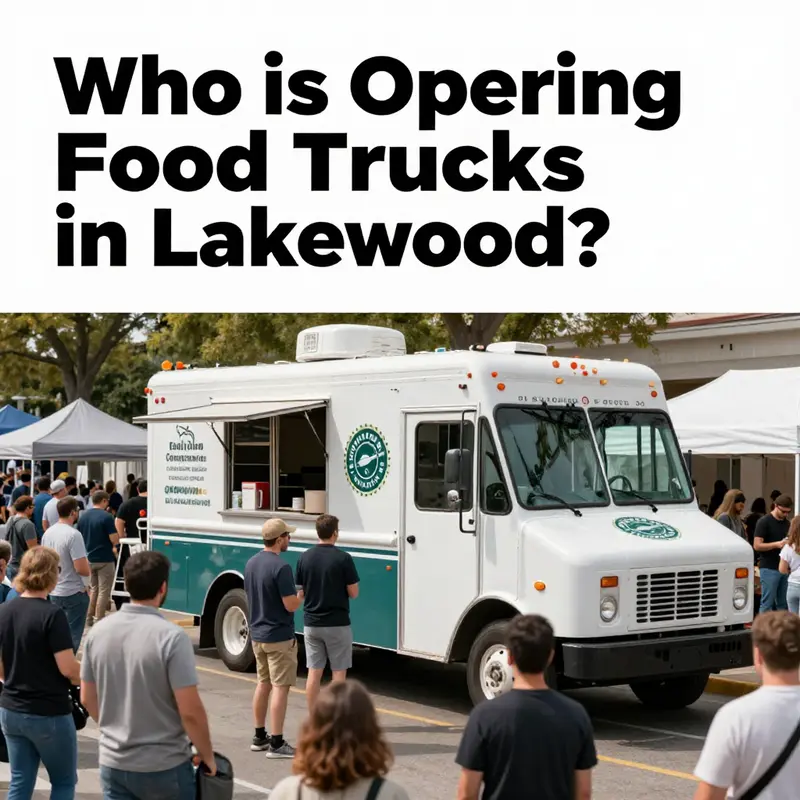
The shift from stationary storefronts to mobile kitchens marks more than a trend in dining; it represents a deliberate strategic posture for established brands seeking to extend their reach without the heavy commitments of new brick-and-mortar locations. Mobility reframes a familiar brand—its menu, its reputation, its service standards—into a dynamic, on-the-ground experience that travels with the crowd. In markets crowded with options, a food truck becomes a moving billboard, a laboratory for concept testing, and a direct-to-consumer channel all at once. For legacy brands, the appeal lies in transforming a well-known identity into a portable, experiences-driven encounter that can be placed in high-traffic urban cores, at events where footfall spikes, or in neighborhoods where shoppers and diners crave novelty as part of their daily routines. The opportunity is not simply to sell a familiar dish on the go; it is to translate the brand’s culinary language into a format that rewards improvisation, real-time feedback, and an intimate, street-level connection with customers. This is the essence of the established-company model: leverage a trusted name while embracing the mobility, flexibility, and immediacy that only a mobile kitchen can offer.
At the heart of this model lies a pragmatic calculus about reach and risk. A food truck lowers overhead and capital outlay relative to opening another traditional restaurant. The cost structure—labor, rent, utilities, and long-term commitments—compresses in the mobile format, enabling brands to test concepts with a level of fiscal discipline that would be impractical in a fixed-location setting. This is particularly valuable in price-sensitive markets or during periods of seasonal demand, when the ability to scale up or down quickly can preserve margins while still delivering a high-quality experience. The truck becomes a compact showroom, a tasting bar, and a pickup point for feedback all in one. It is a vehicle for piloting limited-edition menus or regional twists that might be risky in a full-service location but can generate buzz and data points in weeks rather than years. The lessons gathered from these micro-launches often ripple back into the company’s broader portfolio, informing menu development, supplier relationships, and service standards across channels.
Design and operations play a pivotal role in cementing a brand’s credibility on wheels. Modern mobile kitchens are engineered to support sophisticated, made-to-order cooking even within a compact footprint. They often feature modular layouts, full cooking capabilities, and well-planned ergonomics that keep cooks efficient and customers satisfied. The goal is to preserve the brand’s culinary hierarchy—signature flavors, core techniques, and presentation quality—while exploiting the flexibility of a temporary, adaptable space. In practice, this means menus that can pivot with the seasons, events, or local preferences, yet still honor the brand’s core identity. Such a setup invites chefs and culinary teams to experiment with fusion ideas or fresh interpretations of classics, knowing the truck can be redeployed with minimal downtime. The experience becomes part brand, part performance, with the food as the centerpiece of a mobile stage where visuals, smells, and service speed converge to create a memorable moment in a crowded marketplace.
Strategic partnerships and procurement strategies are equally central to the model. Some established brands opt to own and operate their own fleets of mobile units, converting warehouses and loading docks into portable kitchens that travel to the markets they want to conquer. Others choose to partner with seasoned operators who already know the rhythm of outdoor service, using the partner network to scale quickly or enter new regions with a shared governance model. In either case, the vehicles themselves are purpose-built assets: exterior branding that communicates instantly, robust kitchens with reliable heating and cooling, and safety features that hold up to diverse environments. The emphasis is on consistency and reliability—two traits that help preserve the brand equity customers expect when they encounter a familiar logo or menu. The result is a coherent, multi-channel experience where the same flavor profiles, plating aesthetics, and service standards arrive in a different physical format, maintaining brand continuity while expanding footprint.
The product and menu strategy play a critical role in differentiating the mobile venture within crowded urban landscapes. For established brands, the truck is a stage for conceptual experiments that might be impractical in a rotating menu at a fixed location. A signature dish or a seasonal showcase can become a focal point of the mobile experience, generating social media chatter and word-of-mouth engagement without sacrificing the brand’s overarching culinary language. Innovation becomes a visible, shareable thing, amplified by the immediacy of the street and the immediacy of feedback from customers who interact with the truck in real time. In this context, the truck is not merely a vehicle for selling; it is a laboratory for taste, texture, and presentation under real-world conditions. Customer responses—what resonates, what doesn’t, and what’s demanded in different neighborhoods—feed back into product development cycles, accelerating the learning that larger formats often struggle to achieve quickly.
Beyond the culinary and operational dimensions, mobility also reshapes how brands think about distribution and access. A mobile unit can traverse neighborhoods with varying demographic profiles, exposing new audiences to a brand that may have been perceived as exclusive or regionally anchored. The lower capital barrier of a mobile format makes it plausible to pursue markets the company previously viewed as risky or uncertain. It enables aggressive, data-informed expansion where a brand can gauge demand with a lighter initial investment, then decide whether to deploy additional units or pivot strategy. And because these trucks can be deployed for events or seasonal peaks, they offer a flexible solution for keeping the brand top of mind without long-term commitments in every market.
As industry analyses suggest, the mobile kitchen model is not simply about novelty; it is about strategic agility. For established brands, the move into food trucks can complement existing channels by feeding a more immediate, experiential connection with customers. It creates opportunities for cross-promotion with brick-and-mortar operations, loyalty programs, and regional partnerships, while also unlocking data-rich perspectives on consumer preferences, price sensitivity, and peak dining moments. The mobility factor turns the brand into a recognizable, portable platform for culinary storytelling—an anchor in the street that translates a name into an experience and a concept into a memory. In this sense, the transportation of food becomes a strategic extension of brand strategy, not a separate line of business.
Readers curious about broader market dynamics can look to industry analyses for context on how fast this model is expanding and what factors sustain it. The evolving landscape indicates that established brands approach food trucks as strategic, test-driven ventures rather than one-off projects. They allocate resources to sustain quality on the move, invest in scalable vehicle platforms, and curate menus that invite curiosity while honoring core competencies. The mobility lens reframes success metrics—from steady footfall and average check size to engagement quality, social amplification, and data-driven iterations that sharpen a brand’s competitive edge.
For those exploring practical configurations and success stories, practical guidance can be found through industry resources and regional exemplars. A widely cited route is to study the configurations that work best in different urban contexts and event settings, such as the best food truck models for Lakewood startups, which offers insights into layout efficiency, equipment choices, and branding strategies in a compact, revenue-ready package. This line of inquiry helps brands understand how a product portfolio can scale in a mobile format without sacrificing performance or customer experience. Best food truck models for Lakewood startups.
Ultimately, the established-brand model in food trucks is about translating trust into mobility. It is about turning a well-known culinary language into a portable conversation with the city—the way it moves, the way people gather, and the way tastes travel. It embraces the risks and rewards of experimenting with new markets while maintaining the discipline required to protect brand equity. It acknowledges that the street can be a laboratory, a showroom, and a dining room all at once. And it recognizes that the most enduring brands in the future may be those that refuse to be anchored to one location, choosing instead to meet customers where they are, when they want to eat, and with a story that travels as quickly as the food itself. External resource: https://www.mordorintelligence.com/industry-reports/food-truck-market
Moving the Mobile Kitchen: How Logistics Partners and Kitchen Builders Power the Food Truck Phenomenon
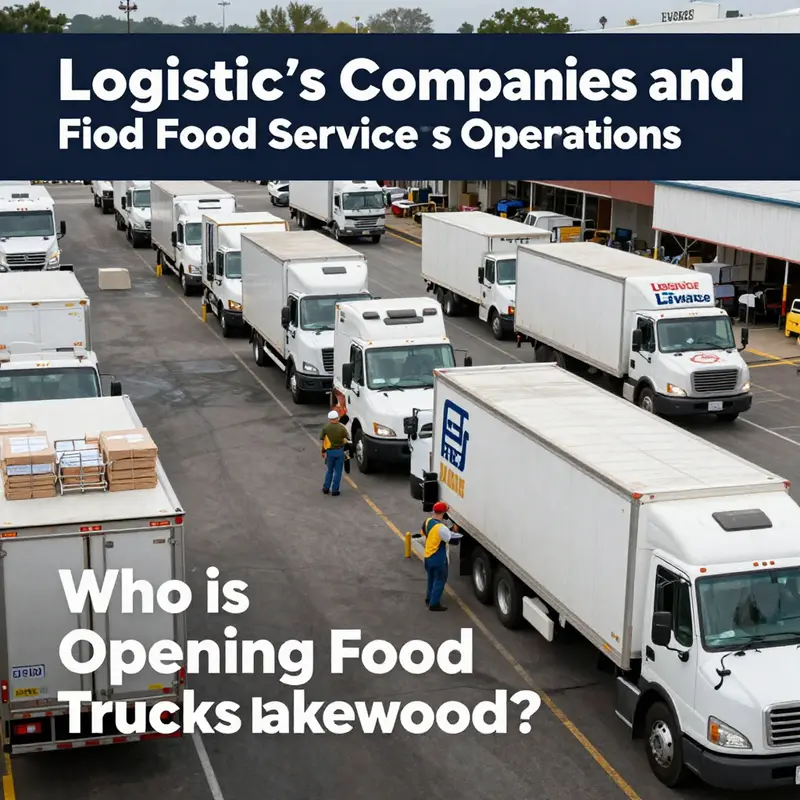
A food truck is more than a clever idea on wheels; it is a carefully choreographed system that relies on partners who rarely appear in the spotlight. Logistics companies and food service providers act as the quiet engineers of the mobile dining world, translating a concept into a reliable, repeatable experience. Their work begins long before the first sizzle and continues long after the crowd has dispersed. It hinges on a precise balance between supply, speed, safety, and brand storytelling, all delivered on a platform that must navigate city streets, noise ordinances, and ever-changing demand. In this light, the open road becomes a classroom for supply chain acumen, kitchen design, and the disciplined execution that keeps menus consistent from dawn to dusk and across neighborhoods that never sleep in the same way.
The journey of ingredients for a mobile kitchen is fundamentally a perishable tale. Fresh produce, dairy, proteins, sauces, and ready-to-assemble items demand strict temperature control, humidity management, and careful ventilation throughout transit. A truck’s kitchen lives in a compact space where insulation and airflow are not luxuries but lifelines. The transportation phase—bridging producers and consumers—requires meticulous planning: accurate temperature logs, secure loading procedures, and well-timed deliveries that align with prep windows and service hours. Unlike bulk commodities, perishable foods deteriorate quickly if mishandled, so every mile matters. This makes the logistics backbone not just a support function but a strategic differentiator that affects menu integrity, waste reduction, and the ability to honor a brand promise in a moving setting.
That is where third-party logistics (3PL) providers enter the scene as crucial partners. These specialists bring cold-chain expertise to a level of precision that small operators cannot easily achieve alone. They design routes and schedules that minimize time in transit, monitor temperatures in real time, and ensure compliance with evolving food-safety regulations. Real-time tracking and proactive alerts translate into fewer spoiled ingredients, steadier inventory, and a more predictable service cadence. For a mobile kitchen, regulatory compliance is not a static checklist but a dynamic discipline ranging from documented temperature histories to incident reporting and traceability. The payoff is clear: fewer spoilage events, greater menu consistency, and the confidence to scale to multiple trucks or new markets without sacrificing the core quality that customers expect.
A well-tuned 3PL partnership recognizes the peculiarities of the moving kitchen. It understands that a truck is a mobile facility with a finite payload, where every inch of space must be optimized for safety and efficiency. Route optimization takes on new meaning when the driver must navigate urban cores, loading zones, and event calendars, all while keeping ingredients within safe temperature envelopes. The ability to adapt quickly to traffic shifts, weather, or last-minute sourcing changes can be the difference between a flawless service and a rushed, compromised operation. For operators who want to collaborate with farmers and regional producers, 3PLs can act as the connective tissue, coordinating deliveries in a way that reduces stockouts and ensures freshness at the point of service. In this sense, the logistics partner becomes not only a corridor for goods but a strategic ally for quality and reliability across a mobile footprint.
On the equipment and kitchen-build side, food service providers and specialized truck builders shape the operational architecture that makes a menu executable on the street. These partners translate culinary concepts into compact, efficient layouts designed to pass health inspections while projecting a distinct brand. The kitchen’s flow—from receiving to prep, cooking, assembly, and service—must function smoothly within a vehicle whose proportions are dictated by urban space and safety constraints. A thoughtfully designed layout minimizes cross-contamination risks, ensures proper separation of raw and prepared items, and supports excellent ventilation and waste management. Beyond safety, these providers enable entrepreneurs to express their concept through form as well as function. The choice of cooking equipment, burners, griddles, ovens, and refrigeration modules reflects the menu’s demands and the operator’s service style. Even seemingly small decisions—where water is filtered and how it is heated or circulated—can become part of the brand narrative, signaling cleanliness, reliability, and attention to detail to customers as the truck cruises through markets or parks.
Today’s mobile kitchens increasingly integrate energy-efficient refrigeration, compact filtration systems, and beverage stations that empower operators to deliver consistent, high-quality offerings. These features do more than preserve freshness; they shape the customer experience. A well-equipped truck can deliver a robust breakfast, a quick lunch, or a specialty drink with the same level of precision, day after day. The equipment philosophy matters because it informs the staff’s workflow and the speed with which orders move from window to table or curbside pickup. In practice, many operators view equipment choices as extensions of their branding—how a line operates, how long a customer waits, and how the kitchen’s rhythm mirrors the pace of the surrounding neighborhood. This is especially important for beverage-forward concepts, where a compact coffee or smoothie station can set a tempo for the entire service and become a distinctive element of the truck’s identity.
The process of selecting logistics partners and equipment vendors is rarely purely economic. It is a strategic alignment of speed, safety, and storytelling. Operators assess potential collaborators by examining how well the cold chain integrates with sourcing cycles, whether data streams translate into actionable daily decisions, and how equipment configurations affect throughput and safety. A well-matched network reduces spoilage, stabilizes performance across shifts, and preserves the integrity of a signature dish or sauce that might travel with a truck across neighborhoods all week. The brand’s voice—warmth at the service window, the aroma from the cooking line, and the efficiency of the workflow—emerges from both the kitchen’s physical design and the reliability of the logistical backbone. When a truck arrives at an early morning event with precise temperatures and smooth service lines, confidence grows among customers and event organizers alike. In this sense, logistics and equipment are not ancillary; they are integral to the promise the operator makes: you can count on us to deliver a consistent, high-quality experience wherever we roll.
As the industry expands, the role of these partners becomes even more central. Governmental initiatives that promote tourism, urban renewal, and job creation often rely on a resilient logistics and kitchen infrastructure to realize their ambitions. A policy environment that encourages mobility must be matched by a robust network of service providers who can scale with demand, manage seasonal peaks, and support cross-market operations. For operators who intend to grow beyond a single cart, the ability to secure reliable deliveries, maintain strict food-safety standards, and reconfigure kitchens to accommodate new menus becomes a strategic asset. In practice, this means a mobile business can pivot between neighborhoods, adapt to events with different volumes, and preserve the quality that sustains repeat customers. The result is a more vibrant, responsive, and sustainable food culture where the mobile kitchen is not a novelty but a flexible, reliable agent of culinary accessibility.
The chapters that follow will continue to unfold this ecosystem, revealing how diverse founders—from culinary enthusiasts to corporate partners—build on these logistical and kitchen-design foundations. The pathway from idea to daily operation is paved with careful partner selection, continuous process refinement, and a branding-conscious approach to service that travels with the truck as it moves through the city’s rhythms. For operators evaluating expansion, the fusion of a dependable cold chain with a purpose-built kitchen layout offers a clear route to consistency, speed, and scale. As highlighted in the guide to the best food-truck models for Lakewood startups, choosing the right chassis and layout can influence how a kitchen travels from one day to the next, shaping storage, power, and workflow in ways that echo through every service window. https://lakewoodfoodtrucks.com/best-food-truck-models-for-lakewood-startups/
For readers seeking broader market context and strategic trends, the 2026 Food Truck Report offers deeper analysis of leadership dynamics and logistical innovations across the industry. It provides a comprehensive view of how fleet scalability, integrated supply chain solutions, and design customization influence supplier selection and overall business performance in the dynamic mobile food sector. External resource: https://www.foodtruckreport.com/industry-insights/2026-top-food-truck-companies-and-logistics-trends
Powering the Open Kitchen on Wheels: How Policy and Infrastructure Lift Food Truck Dreams
Governments around the world are beginning to see mobile food service not just as a culinary curiosity, but as a catalyst for urban entrepreneurship, neighborhood revitalization, and local economic resilience. The rise of food trucks has unfolded within a complex policy landscape that blends licensing clarity, financial incentives, and built environments designed for speed, safety, and accessibility. When you look at who opens a food truck, policy matters as much as passion. It shapes who can take the leap, how quickly they can launch, and how sustainably they operate in a crowded cityscape. In many places, the alignment between public policy and private appetite is creating a wider, more inclusive field. For the individual with a dream of cooking and serving in public spaces, government action can lower barriers that once seemed insurmountable. For existing food businesses, it can open new distribution channels and extend brand reach beyond fixed storefronts. And for communities, these policies translate into more vibrant streets, safer and cleaner transportation corridors, and broader food access. The result is not merely more trucks on the road, but a smarter ecology of mobile dining that complements fixed restaurants while honoring urban health and safety standards.
In China, city-level authorities have taken deliberate steps to grid this opportunity into the urban fabric. In Shanghai, the municipal bodies responsible for commerce, public security, urban management, and market supervision issued guidelines that allow mobile vendors to operate within communities, especially when the offerings are pre-packaged foods or agricultural products without on-site cooking. The practical effect is to treat certain mobile sales activities similarly to automated vending approaches under food safety regulations. The licensing process becomes simpler, the regulatory hurdle lower, and the path to lawful operation clearer for small entrepreneurs who might otherwise be deterred by rigid food-service rules. This approach reflects a broader trend toward flexible, context-appropriate governance that recognizes mobile vendors as legitimate contributors to local economies when they adhere to safety standards.
Beyond local licensing, national policy in some large economies explicitly channels support toward upgrading the tools of the trade. In China, the 2026 National Equipment Upgrade and Consumer Goods Trade-in Program signals a strong willingness to subsidize the modernization of commercial fleets, with particular attention to vehicles meeting stricter emission standards. While the program is framed around freight fleets, its design philosophy—ease of replacement, reduced operating costs, and environmental performance—has a direct, practical resonance for light-duty delivery vans used by mobile vendors. Small operators who might otherwise be saddled with high upfront costs gain an incentive to transition to low-emission or electric models, lowering ongoing fuel and maintenance expenses. This shift does more than shave a few yuan off monthly bills; it helps businesses meet increasingly stringent city air-quality expectations, enabling them to operate in more high-footfall zones and at times when the city is actively regulating pollution levels.
Internationally, the United Kingdom has taken a bold step to accelerate the electrification of mobile logistics, recognizing that heavy-duty and mid-sized delivery fleets can be pivotal to a city’s sustainable future. An extended program provides meaningful subsidies for electrifying trucks, including substantial support for new heavy-duty vehicles and meaningful, accessible funding for smaller delivery trucks. These incentives target upfront cost barriers, facilitating a faster transition to zero-emission fleets. The policy design acknowledges that urban food vendors rely on reliable, clean mobility to meet customer expectations for freshness and service speed. Subsidies lower depreciation risk, widen the technology options available to operators, and encourage the adoption of modern, safer, more efficient energy systems. The financial relief also helps operators plan longer-term investments in vehicle maintenance, cold-chain equipment, and on-board power management, which in turn supports the safety and quality of perishable foods transported through city arteries.
In another strand of policy, provincial governments have begun to offer targeted incentives that tie vehicle technology to broader transportation and infrastructure goals. Shanxi Province, for instance, provides full toll reimbursement for hydrogen-powered freight trucks operating on provincial highways. While not aimed exclusively at food trucks, the policy creates a broader, green transport ecosystem that lowers the cost of mobility for all mobile vendors who adopt alternative-fuel fleets. The knock-on effect is a more predictable, affordable movement of perishable goods, enabling operators to plan routes, maintain cold-chain integrity, and serve customers in neighborhoods that might previously have been underserved due to logistical costs. It is a reminder that clean energy policy, though often framed around freight and long-haul transport, has direct implications for the daily rhythms of street-level dining on wheels.
Cities that prioritize urban resilience and consumer protection are increasingly investing in the orbital infrastructure that supports mobile vendors. In Shenyang, municipal authorities have published an action plan to expand cold-chain logistics networks. The plan includes designated parking areas and refrigerated storage facilities for mobile vendors, ensuring that perishables stay within safe temperature ranges during transit and at rest. This kind of infrastructure investment addresses a practical, growing concern for operators who must secure consistent refrigeration for items like seafood, dairy, and fragile produce. It also reassures customers who rely on food trucks for quality and safety, strengthening trust between vendors and local communities. When mobile vendors can access reliable cold-chain support, they can extend their operating hours, diversify their menus, and participate more fully in urban food culture without compromising safety.
Taken together, these varied policy strands—licensing facilitation, fleet modernization incentives, green energy subsidies, and cold-chain infrastructure—create a more navigable environment for those who want to open and operate food trucks. The effect goes beyond individual convenience; it reshapes the economics of mobile dining, broadens who can participate, and aligns street-level entrepreneurship with sustainability and urban health goals. For the aspiring operator, the practical takeaway is that policy is not a distant backdrop but a tangible partner in lifting start-up costs, smoothing regulatory steps, and enabling dependable logistics. For the city, the benefit is a more dynamic food landscape that can attract visitors, spread economic activity across neighborhoods, and showcase local talent in safe, regulated settings. The door to the open-kitchen-on-wheels becomes less a leap of faith and more a calculated, achievable plan.
This evolving policy terrain helps explain the growing diversity of food-truck ownership. Individuals drawn by culinary ambition find a clearer, more affordable route to launch. Entrants from established food businesses can pilot mobile extensions of existing brands with comparatively lower risk. Logistics players and service providers, too, see opportunities for complementary services such as refrigerated transport, standardized cold storage, and route optimization that fit the needs of mobile vendors. The net effect is a broader ecosystem in which mobile dining is not a marginal niche, but a recognized channel for food distribution that can drive tourism, local procurement, and neighborhood renewal. In markets where governments openly champion such ventures, the practice of opening a food truck becomes less an act of rebellion against the status quo and more a strategic alignment with public aims for vibrant, sustainable cities.
For readers looking to connect practical considerations with policy realities, one practical resource explores equipment choices and configurations that fit regulated environments. See the discussion on Best Food Truck Models for Lakewood Startups. This piece helps bridge the policy conversation with on-the-ground decisions about cooking setups, power needs, and compliance considerations, illustrating how operators translate incentives into workable, compliant operations on the street. Best Food Truck Models for Lakewood Startups.
As these programs evolve, the conversation circles back to the fundamental question of who is opening food trucks and why. The answer now includes a clearer map of possible paths, from individual dreamers to larger corporate efforts, all anchored by a policy framework that reduces risk, lowers costs, and improves reliability. The chapters that follow will build on this understanding, examining how operators capitalize on these supports to craft menus, calibrate kitchen workflows to mobile realities, and measure impact on local economies. In the meantime, the growing chorus of policy actions—from city planning desks to national treasury departments—signals a durable trend: government support is not a peripheral accelerant but a core enabler of the open kitchen on wheels. For readers and practitioners alike, that shift matters, because it reframes what it means to open a food truck in the modern city. And as cities continue to align mobility, health, and economic vitality, the street becomes the living laboratory where policy and entrepreneurship collaborate to feed communities and fuel opportunity.
External policy context and updates continue to shape the pace of this transformation. For a detailed policy update from a major policy environment in Europe, see the government publication on electrification subsidies for trucks here: https://www.gov.uk/government/publications/plug-in-truck-grant-extension-2026
null
null
Final thoughts
The food truck scene in Lakewood is a testament to the diverse individuals and companies who are redefining our dining experiences. With strong community support and a vibrant entrepreneurial spirit, aspiring food truck operators are finding inspiration in both personal passion and strategic business models. From government initiatives that ease entry into the market to the cultural shifts that encourage unique cuisine, the landscape is rich and full of opportunity. Embrace the adventure, explore Lakewood’s food trucks, and engage with the innovative talents behind each culinary creation.