
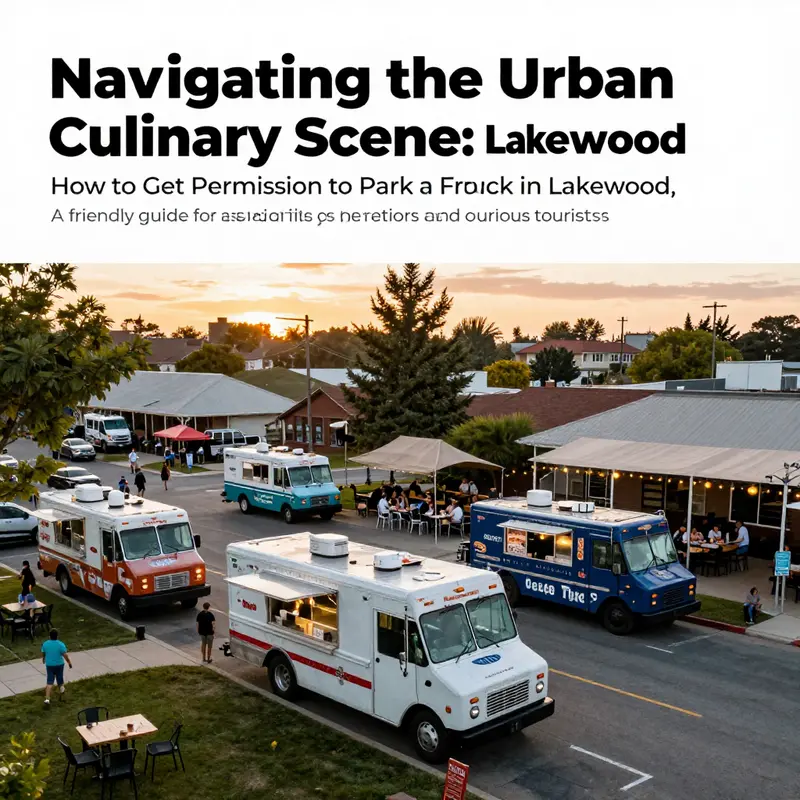
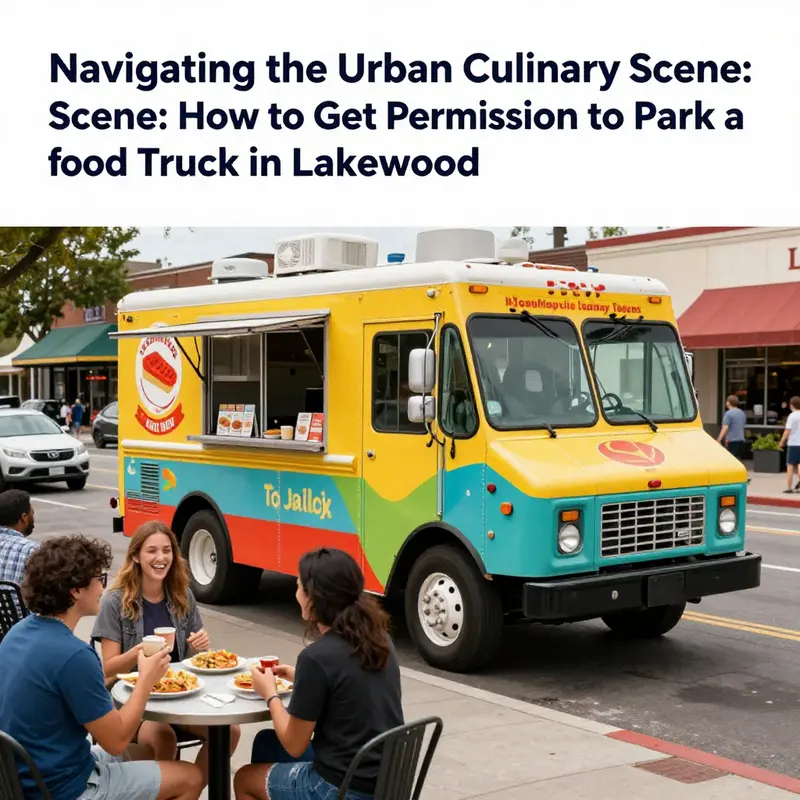
Understanding how to legally park a food truck is essential for aspiring operators and valuable for tourists craving street food in Lakewood. With its vibrant culinary scene, Lakewood welcomes mobile food vendors, but navigating the permitting process can be daunting. This article breaks down the necessary steps to obtain parking permission, clarifies local zoning regulations, and ensures compliance with health and safety standards. Each chapter offers insights to help you successfully establish your food truck while enhancing your experience as a visitor in this lively community.
null
null
Mapping the Legal Highway: Navigating Local Rules for Parking a Food Truck
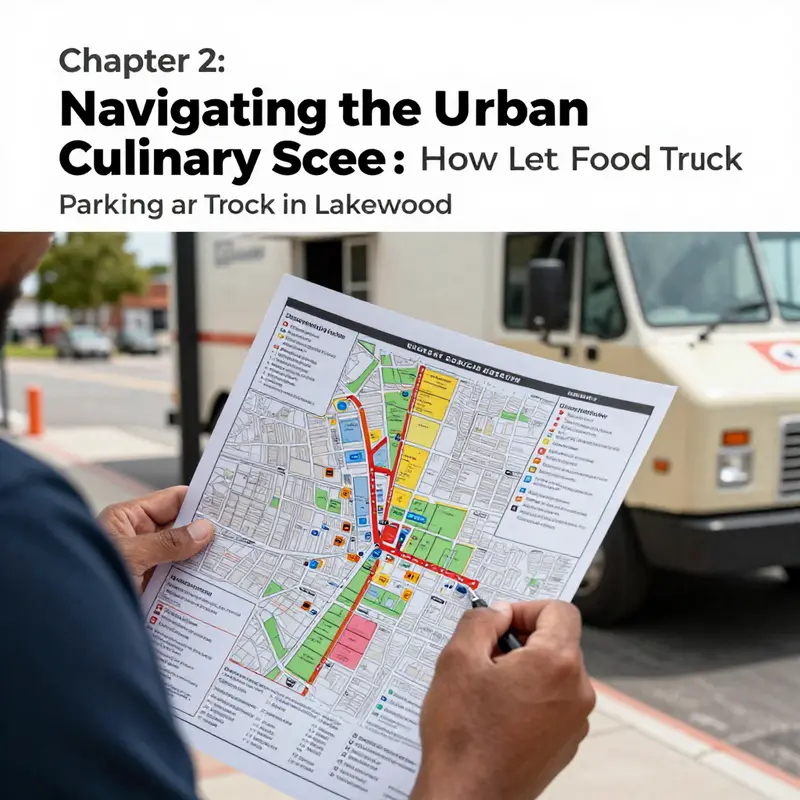
Regulations governing where and when a food truck may park form a framework that shapes every practical decision a vendor makes. The rules are not just bureaucratic hurdles; they are the architecture of a marketplace that balances public health, traffic safety, neighborhood character, and the viability of small food businesses. A reader stepping into this space quickly learns that local authorities do not issue a single national license that covers every street. Instead, they assemble a patchwork of zoning codes, health requirements, parking permits, and site-specific restrictions. This mosaic is why a successful operator treats regulatory compliance as part of the core business strategy, not as a one-time filing. The goal is not to chase permits in a frantic sprint but to design a day-to-day operation that sits comfortably within the contours of the community, while preserving the flexibility needed to respond to shifting demand and seasonal opportunities.
At the heart of this landscape is a simple truth: parking a food truck is a spatial act. It requires permission to occupy space that has been allocated or regulated by a municipal plan. The spaces are defined by lines on a map, but they are also shaped by time—the hours when a location is open to commercial activity, the days of the week when permits are valid, and the seasonal cycles that affect foot traffic. The interplay between location and time is where many operators find either smooth sailing or surprising friction. To navigate it well, an operator must cultivate a habit of looking beyond a single permit application and toward a living set of guidelines that describe what is possible, where, and when. The rules are most effective when they are understood as an ongoing dialogue with the city rather than a one-off form to fill out.
The regulatory environment varies widely from one city to the next. Some jurisdictions publish detailed maps of designated food truck zones, while others rely on general zoning districts that require additional public approvals for every parking decision. In cities with robust data portals, you can pull up the exact street-by-street requirements, see the permitted operating hours, and even view real-time status on permit applications. In others, you may need to call a zoning analyst or visit a licensing office to obtain a packet of forms and a verbal overview of the local expectations. The variability itself is a practical reminder that a successful operator must develop local literacy before money and menus are put to work. The more you know about the local regulatory logic, the more predictable your planning becomes, and the less time you waste chasing after ad hoc exceptions.
A recurring element across many municipalities is the proximity constraint. Regulations frequently specify a minimum distance between a mobile vendor and brick-and-mortar restaurants, with figures often stated in feet. The intent is to prevent crowding out established eateries while preserving a fair field for mobile merchants. Distance rules may also apply near schools, libraries, or government buildings, reflecting concerns about youth exposure to street-food environments during certain hours. These provisions force operators to map their potential sites with precision. A site that looks ideal on a sunny afternoon might be disqualified because it sits within a restricted corridor during school hours or because it blocks a fire lane or a hydrant. The practical upshot is that a winning site is as much about the regulatory footprint as about foot traffic and visibility.
Beyond geometry, the street-level texture of the rules includes operating hours, vehicle size limits, and noise or odor restrictions. Some cities cap the number of hours a truck may operate in a given area, or require that a permit be tied to a specific calendar window, such as a season or a weekly market night. Vehicle weight, height, and generator noise levels often appear in the fine print. While these rules may seem technical, they translate directly into how you schedule prep, plan breaks, and coordinate back‑of‑house routines. A vendor who understands these constraints can design a more efficient service model: where to pre‑cook, how to stage lines, when to rotate menus, and how to manage waste without running afoul of local environmental standards. In many communities, health and safety inspections are a mandatory, recurring checkpoint, not a one-time stamp. A good operator treats each inspection as an opportunity to demonstrate the consistency of their processes—delivery area cleanliness, cold-holding temperatures, proper handwashing facilities, and a documented food-safety plan—so that passing becomes routine rather than exceptional.
The scope of regulation also encompasses the bureaucratic path to permission. In practice, most vendors begin with a local authority—often the city or county department that handles transportation, parking, or business licensing. The process typically requires a formal application, proof of business registration, vehicle details, and a plan that specifies where and when the truck will operate. Fees are common, including an initial application fee and an ongoing permit or license fee. Because the cost of compliance is a component of everyday operation, many savvy operators budget for these expenses in the same way they budget for insurance or health inspections. In some jurisdictions, authorities offer online portals to submit applications and track status. While the interface may differ—from paper-driven to fully digital—the underlying rhythm is consistent: provide accurate information, demonstrate compliance, and await approval. The anticipation period becomes a test of how well an operator has prepared—organization of documents, clarity on proposed locations, and a demonstration that the business can operate safely and responsibly within the community’s standards.
A central source of reassurance for businesses navigating this space is the existence of official guides and standardized checklists. These documents translate regulatory intent into actionable steps. They often include maps of designated zones, lists of required permits, and contact points for regulatory agencies. They also help vendors avoid avoidable penalties by closing gaps before opening. The value of these guides increases when they are consulted early and updated regularly. Rules change as cities respond to new traffic patterns, evolving health codes, or the emergence of new public safety concerns. A diligent operator treats regulatory guidance as a current map rather than a static reference. This habit protects cash flow, protects licenses, and reduces the risk of disruption during peak business periods.
In some regions, the regulatory framework has evolved to recognize the unique role of mobile vending in the local economy. Designated vendor zones, farmers’ markets, or seasonal street markets are often laid out with clear rules about who can operate there, what equipment is allowed, and how long a vendor may stay in a given slot. For operators, locating in one of these zones can be both a strategic advantage and a regulatory shortcut. When zones exist, they tend to come with published standards that lower the friction of the permit process, while still enforcing essential safety and neighbor-conscious behavior. Even when such zones do not exist, the same principles apply: the rules should guide you toward sites that minimize conflicts with pedestrians, other businesses, and public services. This clarity reduces the risk of fines and revocation of permissions and helps you maintain community goodwill.
As you deepen your understanding, you discover that a comprehensive regulatory approach is not merely about compliance—it is also a strategic asset. Knowledge of the local rules allows you to forecast your revenue more accurately. If you map out the days and hours when a location is permitted, you can design a calendar that aligns with peak traffic, school release times, or community events. If you understand the distance requirements from other food vendors, you can sequence your site visits to reduce travel time and cooling losses. If you know the inspection cadence, you can institute routine internal audits, training, and checklists that become part of your operational DNA. In short, regulatory literacy is a productivity tool that yields smoother service, steadier supply chains, and better risk management.
To build this literacy, enlightened operators invest time in official sources and, when available, participate in community discussions about street vending. They compare guidance across cities when plans extend across municipal boundaries or when they consider expansion into new neighborhoods. In practice, this means developing a regulatory dossier: a living document that includes a map of potential sites, a file of permit applications, a record of conversations with licensing staff, and a set of standard operating procedures aligned with health, safety, and neighbor expectations. The dossier becomes a working asset in price negotiations with event organizers, landlords, and even banks that fund ventures. It also facilitates onboarding for new staff, who must quickly internalize the expectations for safe and compliant operation rather than learn through costly trial and error.
Because the regulatory environment is not static, forward‑looking operators stay curious about the broader regulatory ecosystem. They consult national compilations of municipal policies, track published exemplars, and compare how different jurisdictions structure similar requirements. A widely cited resource is a compilation known as a regulator’s guide, which aggregates municipal guidelines from multiple cities to illustrate common patterns and divergent practices. This approach is not about copying, but about understanding the spectrum of possibilities, the reasons behind particular constraints, and the pathways available to adapt to local demands. By studying these patterns, a vendor gains the foresight needed to choose locations with the least friction and the highest potential for sustainable operation.
The practical implication for a chapter on regulatory understanding is straightforward. A successful operator does not treat permit applications as a single gateway to start serving customers. Instead, they treat the regulatory environment as a dynamic map that informs site selection, vehicle readiness, staffing plans, and back‑of‑house systems. They approach compliance as a core competency that resonates through every decision—from the layout of a service window to the method for waste disposal and the timing of deliveries. They cultivate relationships with licensing staff and health inspectors, recognizing that these officials are partners who help ensure the business can safely contribute to the local food landscape. When concerns arise, the most skilled operators bring solutions—adjusted hours to avoid school traffic, modified layouts to protect pedestrian flow, or additional signage to communicate safety rules to customers. This collaborative posture reduces friction and helps build a reputation for reliability, which in turn translates into longer permits, easier renewals, and the opportunity to grow without repeated permission battles.
The landscape, of course, invites questions and thoughtful responses. How do you begin, practically, to anchor yourself in the local regulatory reality? The answer lies in a disciplined approach to research and engagement. Start with the city’s official channels—the transportation department, the parking services division, and the business licensing office are the usual points of contact. Read the posted guidelines, download the application forms, and request any supplemental documents that describe prohibited zones, restricted hours, or required setbacks from other business activities. Bring a clear business plan to these conversations: where you will park, how you will operate, what permits you will hold, how you will protect public health and safety, and how you will address noise, waste, and traffic. A well‑documented plan signals competence and reduces back‑and‑forth with regulators. If a city has an online portal, use it to track your progress, submit the required materials, and note deadlines. The discipline of careful documentation pays dividends when reapplications are necessary, or when you expand to a second site.
In some contexts, a special note about local nuance helps sharpen your approach. For instance, in regions that have embraced vendor markets or street‑food corridors, the regulatory system may provide a more predictable path to operation. These markets often operate on longer operating hours, with a shared infrastructure that supports waste management and food safety. Participating in such markets can deliver a built-in customer base, reduced permit complexity, and access to supportive networks. However, these opportunities still come with their own rules—timeline constraints, site capacity limits, and vendor rotation policies—that you must understand before applying. The key, again, is to view these rules not as barriers but as scaffolding that, when leveraged, accelerates your ability to serve customers and manage risk.
To illustrate this practical mindset, consider a concrete example of how a vendor might approach local regulations in a typical North American city. The vendor begins with a map of potential parking zones, aligned with the business plan’s target neighborhoods and anticipated customer segments. Next, they gather the permit requirements—proof of business registration, vehicle insurance, health clearance, and a plan for how service time will be allocated across the week. They identify potential conflicts with other traffic on high‑density blocks and, crucially, they confirm the distances to nearby restaurants. They prepare a site plan that demonstrates how customers will queue, how the truck will be positioned to prevent obstruction, how the service window will operate without blocking access to storefronts, and how the grease and waste will be managed in a sanitary and compliant manner. They then engage with licensing staff, presenting the map, plan, and supporting documents. They use the online portal to submit their materials, pay the fees, and request any necessary inspections ahead of time. If questions arise, they respond with additional documentation and, where appropriate, adjust their plan to align with local expectations. Through that iterative process, the operator not only secures the necessary permissions but also earns the trust of regulators and the community, which pays dividends in smoother renewals and better site access.
The chapter would be incomplete without acknowledging the value of external, authoritative references that illuminate the regulatory landscape beyond one city’s borders. A comprehensive resource is the AWS guide on regulating food trucks, which compiles examples of municipal guidelines from various U.S. cities. This guide can help an operator compare patterns, identify common permit structures, and recognize typical design considerations across different regulatory regimes. While the AWS resource is not a substitute for local specifics, it provides a useful horizon to frame local practices and to anticipate how other communities solve similar issues. By anchoring local practice in a broader understanding, a vendor can adapt more quickly when expanding to new neighborhoods or even pursuing multi‑city ventures. For a direct route to expansive, up‑to‑date regulatory context, refer to official sources and local guides, and treat AWS as a supplemental lens through which to view the regulatory ecosystem.
Calgary offers a concrete illustration of variability across jurisdictions. In that Canadian city, residents can apply for a “street parking permit” that covers personal vehicles near homes but notes that commercial food truck permits operate through a distinct framework with designated vendor zones and a formal application process via the City’s official portal. The example underscores a simple but important lesson: do not assume that a permit path you read about in one city automatically maps to another. Always verify the current requirements with your local authority, because rules, zones, and available spaces change as cities reassess traffic flows, economic priorities, and neighborhood character. In practical terms, this means you should approach each new city as a new regulatory project, building a fresh dossier, updating maps, and seeking guidance from the appropriate staff to avoid missteps that can delay opening or trigger penalties.
The careful integration of regulatory knowledge into daily operations also has a social dimension. When a vendor demonstrates responsibility—keeping sidewalks clear, managing queues to minimize disruption, and maintaining cleanliness in food prep areas—community members and property owners respond with trust and flexibility. This social capital matters because regulatory goodwill often translates into more favorable site access, easier permit renewals, and greater collaboration with neighborhood associations. The long arc of this approach is not only legal compliance but sustainable community integration, which supports the reputational capital that underpins long‑term growth. In effect, the regulatory journey becomes part of the brand narrative: reliable, safe, and considerate street service that contributes to the neighborhood’s vibrancy rather than competing with it.
The overarching takeaway is that understanding local regulations for parking a food truck is not a peripheral concern. It is a core strategic activity that shapes where you can stand, when you can operate, and how you interact with customers and neighbors. It requires a disciplined approach to researching, documenting, and engaging with regulators, as well as a willingness to adapt your plans when the published rules shift. The more thoroughly you map the regulatory terrain, the more you can design an operation that not only meets the letter of the law but also aligns with the community’s expectations for safety, accessibility, and quality. In practice, that means building a regulatory playbook that lives alongside your business plan, your menu, and your customer engagement strategy. It means viewing permits not as gatekeeping hurdles but as mutually understood agreements that empower you to serve delicious offerings with confidence and consistency.
For readers who want to connect the legal thread to the broader world of mobile food vending, consider a practical cross‑reference: Kenworth Truck Centres: 45 Years of Family Business. This link offers a glimpse into how professional considerations of vehicle design, maintenance, and service networks intersect with the operational reality of running a regulated food truck. While the page itself explores a different facet of the ecosystem, the underlying message is clear: reliable infrastructure and professional partnerships are essential to meeting regulatory demands and delivering consistent, compliant service to customers.
In the end, the regulatory journey is not an obstacle course to be rushed. It is a deliberate, ongoing process of alignment—alignment with local plans, alignment with health and safety expectations, and alignment with community interests. When you master that alignment, you create a stable platform from which your culinary offerings can travel, adapt, and thrive on the street. The path is never perfectly straight, and it will require periodic reassessment as you expand or as jurisdictions shift. But with a thoughtful approach to mapping rules, maintaining documentation, and engaging with regulators as partners, you can build a food truck operation that not only survives in a crowded market but earns a respected place in the neighborhoods you serve.
External resource for further depth: AWS guide on regulating food trucks: https://www.aws.amazon.com/
Chapter 3: Health, Safety, and the Gateways to Parking Permits for Food Trucks
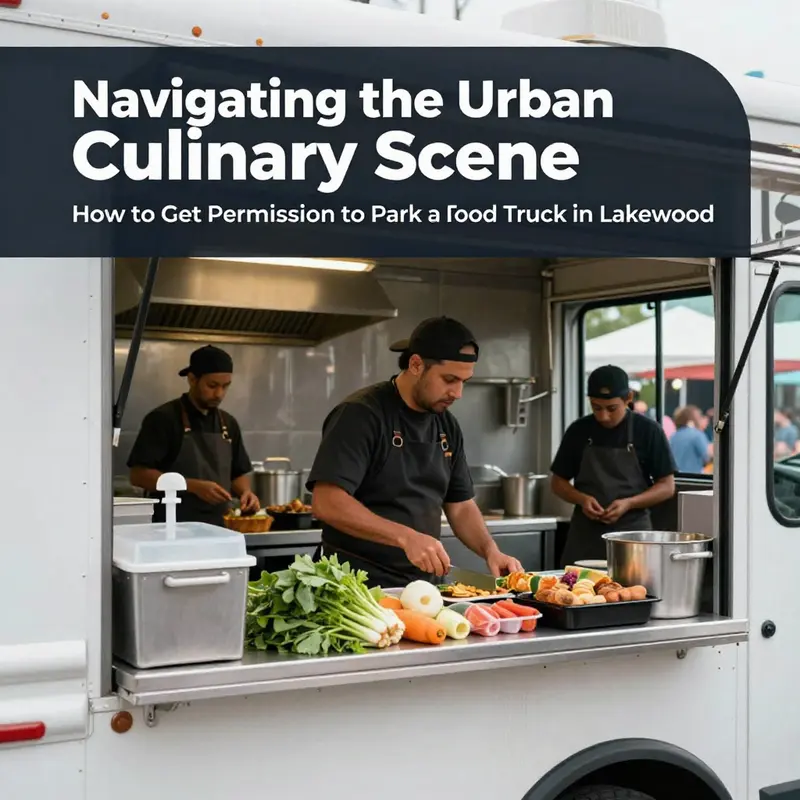
Health and safety compliance sits at the heart of every successful food truck operation and is the gatekeeper for parking permits. This chapter explains how health and safety is not a one-time hurdle but an ongoing framework that guides design, equipment, staff training, cleaning, waste and water management, and interactions with inspectors. It covers basic temperature control, cross-contamination prevention, sanitation routines, documentation practices, and how these practices influence permit decisions, site selection, and ongoing compliance. It also includes practical pointers on staying aligned with FDA guidance and local regulations, and concludes with a note on the importance of preparedness and proactive inspection readiness for successful permit renewal.
Final thoughts
Navigating the requirements to park a food truck in Lakewood doesn’t have to be overwhelming. By following the steps outlined, understanding the local regulations, and ensuring health compliance, aspiring food truck operators can secure their place in this vibrant culinary landscape. Fortunately, tourists can also benefit from knowing these details as they seek delicious offerings around the city. Embrace the culinary adventure that Lakewood’s food trucks provide, and enjoy the rich flavors and community vibes they bring to the table.