
For aspiring food truck operators eager to bring their culinary creations to Lakewood, securing the right financing is key. Whether you envision serving gourmet tacos or delightful desserts, understanding how to get a food truck loan can set you on the path to success. This article will guide you through four essential chapters: assessing your business plan, exploring lenders specializing in food truck financing, discovering equipment financing options, and preparing the necessary documentation. With this knowledge, you’ll be well-equipped to navigate the funding landscape and take your food truck dreams to the streets of Lakewood.
The Loan-Ready Blueprint: Crafting a Food Truck Plan That Moves Lenders to Yes
A loan for a food truck route isn’t won or lost on passion alone. It hinges on a carefully crafted blueprint that translates ambition into measurable, believable performance. Lenders want evidence that a mobile operation will not only launch but sustain itself through fluctuating seasons, crowded events, and the inevitable bumps along the road. The most persuasive blueprint is a living document: concise, data-driven, and anchored in a realistic understanding of the market, operations, and your capacity to manage debt. When you treat your business plan as the roadmap it is, you bring structure to a venture that can otherwise feel improvisational and risky. The road to funding begins with clarity about who you serve, where you will operate, and how you will translate your daily decisions into durable financial results. That clarity is what lenders read first, and it is what turns a hopeful concept into a loan-worthy proposal.
To start, picture your customer not as a single diner but as a slice of the local rhythm. Market research is not a box to check but a lens through which you interpret possible locations, peak hours, and the kinds of meals that will travel well in a cart on wheels. Your plan should map out segments of your target audience: office workers seeking a quick lunch, students craving affordable, flavorful options, families at weekend events, and night-shift workers near late-hour hubs. The more precise you are about when and where your truck will operate, the less you leave to guesswork. Competition is not merely a list of other food vendors; it is a dynamic canvas that shows you how you differentiate. Do you offer a niche cuisine, a sustainable sourcing story, or a speedy service model that outpaces fixed-location competitors? A compelling value proposition can be the difference between a loan that stagnates and one that accelerates. It is not enough to claim you will be different—you must demonstrate why that difference matters in your city and at the times you plan to serve.
A well-structured plan proceeds from this market clarity into a clear operational blueprint. What does a typical day look like from sunrise to late evening? How do you source ingredients, manage inventory, and schedule staff in a way that minimizes waste and maximizes service speed? A lender will want a realistic operational tempo: the number of events or street hours you expect to cover weekly, the route density that keeps you profitable, and the contingency plans for weather, permit delays, or supply hiccups. Your plan should also address maintenance—how you will keep the truck in good running order, schedule routine inspections, and allocate budget for unexpected repairs. There is a quiet power in showing you have a dependable maintenance rhythm; it communicates that the vehicle is a productive asset rather than a depreciating liability.
The financial heart of the blueprint is the forecast. This is not about magical revenue figures but about disciplined, conservative projections that emerge from your market and operations realities. A thorough plan includes a startup cost breakdown that covers the truck purchase or lease, essential kitchen equipment, permits and licenses, initial inventory, branding, and initial marketing. It should present 3- to 5-year revenue projections grounded in realistic pricing, anticipated foot traffic, and the cadence of your location strategy. Cash flow statements are crucial. They reveal when you will burn cash and when steady revenue begins to cover fixed costs, payroll, and the loan service. A break-even analysis translates this into a visible milestone—how much revenue you must generate each week or month to cover every cost and debt service. The most credible financials are those that withstand scrutiny: conservative assumptions, transparent drivers, and a clear line between investments that expand capacity and ongoing operating costs that sustain it.
The narrative around the loan purpose is as important as the numbers. A lender is looking for a direct link between the funds you are requesting and the incremental value you expect to create. Will the money finance a newer, more reliable truck that unlocks higher-volume routes? Or will it upgrade equipment to improve efficiency, expand the menu, or support enhanced food safety standards that unlock new permits or hours of operation? The repayment strategy should be anchored in projected revenues, with a straightforward plan for service that aligns with your cash flows. If you anticipate seasonal peaks, your model should reflect how you will handle slower months while continuing loan payments. A transparent repayment timetable, even if it includes a buffer for contingencies, reassures lenders that you have built a viable path to fulfill your obligations without compromising the business’s stability.
A professional presentation matters because a loan request is a business document as much as a business idea. Your plan should read with polish and organization: an executive summary that distills the core concept, a concise company overview, a practical marketing strategy, and appendices stuffed with permits, supplier contracts, and any evidence of early traction. Presentation signals seriousness. When a plan is neat and complete, it reduces the cognitive load on a lender and invites them to focus on the substance rather than the format. The executive summary should tell the story in a way that a reader can grasp the opportunity in a single pass: the what, the why, the how, and the anticipated payoff. The company overview explains who you are, why your team is prepared to execute, and how your background aligns with success in a mobile food business. The marketing section should demonstrate a coherent approach to building a loyal customer base through consistent branding, reliable service, and location intelligence that converts casual passersby into repeat customers. Supporting documents—permits, supplier agreements, health and safety protocols—are not mere addenda; they are the proof that your plan is grounded in real-world readiness.
As you assemble these elements, you may find it helpful to connect the plan to tangible, tried-and-true examples of vehicle configurations and service models. If you want inspiration on the vehicle setup itself and how that can influence operating capacity and customer flow, consider the broader conversation around best food-truck models for mobile startups. This resource can help you think through chassis choices, kitchen layouts, and equipment footprints in a way that aligns with your financial assumptions and location strategy. A practical template for structure can guide you through the executive summary, market analysis, operations plan, and financial projections in a way that aligns with real-world financing expectations. External resources like this can help you translate raw ideas into a polished, lender-ready package that stands up to scrutiny while preserving your unique business vision.
Finally, remember that a loan-ready plan is more than a formality; it is a tool you carry with you through every negotiation, every route decision, and every budget adjustment. When lenders see that you have studied the market, mapped a practical route to profitability, and prepared a disciplined plan to repay debt, they gain confidence in your leadership and your ability to steer the venture through the inevitable uncertainties of the mobile-food landscape. Your blueprint becomes a declaration of readiness: you are not just dreaming of a rolling kitchen—you are prepared to operate one, responsibly and sustainably, with a clear path to return on investment and ongoing growth.
Where to Find Funding for a Food Truck Route: Specialized Lenders and Smart Alternatives
Finding the Right Lender for Your Food Truck Route
Securing financing for a food truck route is less about discovering a single specialty lender and more about matching your route’s needs with the right kind of funding. Lenders evaluate how you run your operation, what equipment you need, and whether your projected route revenue supports repayment. The stronger your case, the broader the pool of lenders willing to work with you.
Start by thinking like a lender. Describe the route clearly: where you’ll park, what times you’ll operate, and which customer groups you’ll serve. Explain how the truck’s equipment and layout support your menu. If you need a large smoker or heavy-duty fryer, say so. If your concept relies on minimal cooking space and fast turnover, highlight those lower equipment costs. Lenders will look at the equipment list to determine collateral value and risk.
Community-focused financial institutions often offer the most flexible terms for food trucks. A local credit union or regional bank tends to understand neighborhood patterns and seasonal shifts better than a national institution. These lenders may ask fewer invasive questions and can offer relationship-based terms. They’ll still want clear financials, but they’re more likely to consider local market knowledge and management experience when making a decision.
For smaller capital needs, microloan sources provide a useful bridge. These organizations lend modest amounts with terms tailored to startups and early-stage operators. Microloans can cover initial inventory, permit costs, or minor truck upgrades. They often pair lending with business coaching, which can increase your chance of success and help you build the financial history needed for larger loans later.
Online capital platforms can fund a broad range of needs, from working capital to equipment purchases. They tend to underwrite based on cash flow and bank deposits rather than only credit score. That makes them accessible for operators with a solid sales history but thin credit files. Expect faster approval and more flexible underwriting, but also potentially higher rates. Use online offers to fill short-term gaps or to test new routes, but compare total cost carefully.
For equipment-specific needs, equipment financing is one of the cleanest answers. These loans are structured so the truck or kitchen appliances act as collateral. Lenders that provide equipment loans understand depreciation schedules and will align terms to typical life spans of stoves, refrigeration, and service windows. Payments are often spread over three to five years, matching the useful life of the asset. Because collateral is clear, interest rates may be lower than for unsecured borrowing.
If the route expansion hinges on acquiring a particular truck, leasing or lease-to-own arrangements deserve serious consideration. Leasing reduces the upfront cash needed and preserves working capital. Lease-to-own programs let you build equity as you pay. These arrangements are helpful when you want to test a new route or market without committing to full ownership. Carefully read residual and buyout terms so you know your long-term cost.
Some operators look for investment capital rather than loans. These investors can be individual backers or funds that focus on scalable operations. If your plan involves multiple trucks, a branded fleet, or franchising routes, investor capital may make sense. Investors want growth and returns, which can mean giving up some control or sharing future profits. If you prefer to retain full ownership, combine smaller loans, microloans, and leasing instead.
Alternative funding channels supplement traditional lending and often reduce reliance on loans. Grants for small restaurants or minority- and women-owned businesses are available through local economic development agencies. Crowdfunding campaigns can both raise funds and validate demand along your proposed route. Community loan funds or neighborhood development corporations sometimes offer favorable terms and technical assistance.
When you approach any lender, your documentation must be precise and credible. Bring a clear, route-focused business plan with daily and weekly projected revenue for each stop, not just monthly totals. Include permit timelines and a calendar of nightly or weekend events where you expect to operate. Show cost breakdowns for fuel, maintenance, staffing, and supplies along the route. Demonstrating an understanding of variable costs—like city event fees or increased labor on festival days—reduces perceived risk.
Lenders also want to see a polished equipment list with estimated replacement values. Provide photos, model numbers, and quotes for any work you plan to have performed on the truck. Point out safety features and maintenance records if you already own a vehicle. If you’re buying used, include the purchase agreement or conditional bill of sale. If leasing, include proposed terms and monthly obligations. Lenders will use these details to size the loan and set collateral requirements.
A simple, defensible cash-flow projection is more persuasive than an overly optimistic revenue forecast. Show realistic daily ticket averages, average sale per customer, and conversion rates for high-traffic locations. Demonstrate how a route performs under slow-weather scenarios. Include a repayment schedule that ties loan payments to expected slow-season reserves.
Another persuasive element is route validation. If you can show contracts or letters of intent from property owners, event organizers, or regular venues, your application gains credibility. Contracts for weekly lots, office complexes, or campus stops prove predictable revenue. If you plan to serve private events, include tentative bookings or a sample contract. Lenders treat confirmed, recurring stops as strong indicators of stable cash flow.
Some lenders and programs will also evaluate your digital systems. A modern mobile point-of-sale system provides a clear cash-flow history and sales reporting. Lenders like platforms that generate reliable daily deposit data. That transparency accelerates underwriting and can improve loan terms. If you plan to upgrade or buy a POS system for route management, present that need clearly and explain the expected lift in efficiency.
Insuring the route properly matters to lenders. They want to know you carry commercial vehicle insurance, liability coverage, and any required workers’ compensation. Include insurance quotes and a plan for addressing compliance with local health codes and inspections. The presence of valid permits and inspections reduces the lender’s perceived operational risk.
When assessing offers, compare more than the interest rate. Examine fees, prepayment penalties, collateral requirements, and covenants that might restrict how you operate. Some lenders will require personal guarantees or cross-collateralization with other business assets. If a lender wants unusually restrictive terms, push back or seek alternatives. Preserving operational flexibility matters as you scale routes.
If your first loan is small, treat it as a building block. Succeeding with one lender makes future borrowing easier. Pay on time, maintain records, and build credit. A track record of steady revenue and compliant operations will open doors to larger loans, better rates, and longer terms. For operators planning multiple routes or a fleet, that history can be the difference between being a small vendor and a regional brand.
There are practical ways to strengthen your application before you apply. Create a concise route map showing stop locations, hours, and expected customer counts. Prepare a conservative revenue model with a sensitivity analysis for slower days. Gather three years of personal tax returns if available. Organize bank statements that reflect steady deposits. And write a short biography emphasizing hospitality or operational experience.
For those unsure where to begin, local small business support organizations can assist. They help refine business plans, advise on equipment lists, and may even connect you to lenders sympathetic to mobile food businesses. These groups understand typical issues with route financing and can help you avoid common missteps.
Finally, remember that lenders evaluate risk and collateral, not passion. Present a logical plan that ties the loan to clear route-based revenue. Show how equipment purchases or vehicle upgrades will increase sales or reduce costs. Demonstrate that you understand daily expenses and have contingency plans for slow seasons. When you align your route story with the lender’s need for predictable repayment, funding becomes far more attainable.
For official guidance on loan programs that may be used for vehicle or equipment purchases, consult federal small business loan resources that explain guaranteed loan options and eligibility criteria: https://www.sba.gov/funding-programs/loans
For a practical reference on truck models and configurations that align with route needs, review the guide to the best food truck models for startups. This resource helps match equipment choices to your menu and route strategy: best food truck models for Lakewood startups.
Fueling a Mobile Kitchen: Smart Financing Paths for Food Truck Equipment and Growth
Financing a food truck route hinges less on one big check and more on stitching together a reliable, scalable plan for the equipment that makes the menu possible. A truck, a kitchen setup, a generator that keeps the burners warm and the fridges cold—these are the engines of a mobile business. Without solid financing for that equipment, even the best location strategy or the tastiest concept can stall in the parking lot. This chapter follows a cohesive path from understanding what you must finance to choosing the right funding approach and gathering the documents that can move your application forward. It treats equipment financing not as a discreet purchase but as the backbone of your route, shaping cash flow, maintenance, and growth over the life of your business. The aim is to illuminate practical routes you can pursue, while keeping your plan adaptable as you test markets, refine menus, and decide where your route will roll next.
The starting point is almost always the same: ground your financing in a clear, credible picture of how your equipment will drive revenue. A robust plan doesn’t stop at how much a truck costs. It expands to what you will equip it with, how you will operate, and how you will service debt even as you scale. When lenders evaluate an equipment loan, they want to see that the cost of the gear aligns with projected sales, margins, and the tempo of business you expect in your first years. Your budget should capture not only the upfront price of the truck and the kitchen apparatus but also ongoing costs like fuel, insurance, maintenance, utilities, and consumables. A practical forecast includes seasonality, daily traffic patterns, and a realistic plan for events or markets where you’ll park. The more your plan demonstrates a working rhythm—when you’ll generate revenue, how you will cover fixed costs, and how you will handle hiccups—the more likely you are to secure financing that fits your pace instead of forcing a rigid repayment schedule onto an evolving business.
As you map this path, you’ll encounter several primary avenues for equipment financing. Government-backed loan programs designed for small businesses are a traditional anchor. These programs typically offer more favorable terms, such as lower down payments and longer repayment periods, which can be crucial for equipment-heavy ventures like a food truck route. For smaller, early-stage needs, microloans can provide the lift you need to purchase essential equipment without onerous down payments. These options differ in size, terms, and eligibility, but they share a common thread: they look at the equipment’s value as a tangible asset that can secure the loan and, in many cases, at least partially collateralize the debt. In practical terms, equipment can act as its own support structure. If a lender feels confident that the cash flow from daily sales will cover the loan, the odds of approval rise.
Beyond government-backed and microloan tracks, the landscape includes alternative financing that emphasizes the value of the equipment and the business potential more than the credit score alone. Several nontraditional lenders focus on equipment financing specifically for mobile food businesses. They assess the quality, age, and expected life of the truck and kitchen gear, sometimes offering faster approvals and more flexible terms than traditional banks. This pathway can be especially appealing to new entrants who may not yet have a long credit history but can demonstrate a solid plan for generating revenue from the equipment itself. When you pursue this option, you should expect the lender to ask for a clear breakdown of the intended equipment stack, including refrigeration units, cooking surfaces, food prep areas, and any specialized gear needed for your menu. The idea is straightforward: the equipment is not just a purchase; it is the operating base of your entire route, and its value should be central to your financing decision.
But the equipment you finance does not exist in a vacuum. There are strategies that target cash flow and flexibility as you grow. One such approach is to consider lease-to-own agreements or equipment leases that convert to ownership after a set period. In practice, this can be a pragmatic bridge for operators who want to test a market before committing a large down payment or who anticipate expanding their fleet as their route expands. Leasing often provides lower monthly payments in the early stages, which can improve cash flow during the crucial first year. It also preserves capital for other operational needs, such as obtaining permits, fine-tuning the menu, or investing in staff training. At the end of a lease term, you may have the option to purchase the equipment at a reduced price or renew with updated gear. While lease terms vary, the core advantage remains the same: the ability to bring high-quality equipment online without tying up significant capital immediately.
In practice, many food truck operators blend financing approaches. A common pattern is to use a government-backed loan or a microloan to acquire core equipment and a newer, more scalable model for future growth, complemented by a lease-for-a-test period for additional gear. This blended approach supports both reliability and flexibility. It also helps you manage depreciation for tax purposes while aligning debt service with anticipated revenue streams. When you combine a strong plan with a realistic sense of how your route will perform in different locations and seasons, you create a narrative that lenders can follow. Your application moves beyond a request for funds and becomes a structured plan for how the equipment will drive cash flow, meet customer demand, and deliver a return on investment.
One practical element that cannot be overlooked is the documentation. Lenders want a clear dossier that demonstrates your readiness to operate and to repay. Start with the basics: valid business licenses and health permits, which establish your legitimacy and your ability to serve customers in a regulated environment. Then assemble your tax returns for the past two to three years so lenders can assess sustainability and growth trajectories. Bank statements that show consistent cash inflows help demonstrate a stable operating pattern, while any lease agreements or purchase contracts for the equipment you intend to acquire provide context for the collateral and terms. A detailed budget and expense projection is essential, ideally with scenario analyses that show how the business would perform under different sales levels or price points. Finally, not only a personal credit report but also business credit history, if available, will give lenders a fuller view of your financial management. These documents do more than satisfy a check-list; they convey discipline, foresight, and a credible plan for servicing debt even as you experiment with menu offerings and hours of operation.
Of course, many aspiring operators worry about where to start with the equipment itself. The route you choose can have a meaningful impact on your financing strategy. If you are just testing a concept or are uncertain about long-term commitment, starting with a used truck or a lease-to-own arrangement can mitigate risk. A used vehicle reduces the upfront cost and can be a stepping stone to a more ambitious fleet later. Leasing, including lease-to-own options, provides a way to evaluate market reception and refine the business model before committing to ownership of multiple units. This approach keeps cash flow manageable while you build a track record, which in turn strengthens any future loan request for additional vehicles or more sophisticated kitchen configurations.
On the topic of cylinder and heat, the equipment itself is a key variable in the debt equation. Reputable financing options typically require evidence that the equipment is suitable for commercial use and compliant with health and safety standards. They also expect a realistic life expectancy for each major component and a plan for maintenance. Lenders appreciate predictable maintenance costs because they reduce the risk of sudden declines in service quality or interruptions that could derail revenue. Your plan should include preventive maintenance schedules, anticipated replacement timelines for critical items like refrigeration and cooking surfaces, and a strategy for sourcing spare parts quickly. When you present a complete picture of equipment condition, maintenance readiness, and planned replacements, you give lenders confidence that the debt will be serviced through stable operations rather than reactive repairs.
A straightforward question often arises: how large a loan should you seek to finance equipment? The answer depends on several factors: the price of the gear, the expected useful life of the equipment, and how quickly you expect to recover your initial investment through sales. A common rule of thumb is to align loan terms with the equipment’s useful life. If you anticipate a five-year life for essential kitchen gear, a 5-year repayment period may be a natural fit, with monthly payments sized to fit your projected cash flow. In practice, you’ll likely encounter a mix of terms across different financing sources. You may secure a longer term for the truck and a shorter term for specific high-use appliances, balancing flexibility with cost. The key is to avoid overextending debt in the early stages when sales velocity is still developing. A thoughtful, staged approach to asset acquisition helps you preserve liquidity and keeps your route adaptable as you learn what works best in your market.
As you navigate these options, keep in mind an additional consideration: grants and non-repayable funding can complement debt financing by reducing total capital needs. Local economic development programs, minority- or women-owned business grants, and industry-specific innovation grants may be available in your area. While grants are not a substitute for a solid lending plan, they can reduce the amount you must borrow, improve cash flow, and offset some of the risk associated with early-stage ventures. Integrating grant opportunities into your financing strategy requires researching eligibility criteria, deadlines, and reporting requirements. A well-timed grant can fund a portion of the equipment that would otherwise strain your cash reserves, allowing you to deploy more capital toward marketing, permits, or a strategic test of an additional market or neighborhood.
Integrating all these threads creates a cohesive pathway for financing equipment and, by extension, the entire food truck route. Start by validating your operational plan in a realistic budget that includes a full picture of the equipment stack, maintenance, and ongoing costs. Then map out the financing options that best fit your stage—government-backed programs for the core gear, online or alternative lenders for speed and flexibility, and lease-to-own or manufacturer financing for flexibility and testing. Gather the necessary documentation with a view toward building a narrative of responsible, proactive management. When lenders see a clear link between equipment, cash flow, and a plan for growth, they are more likely to offer terms that sustain your route rather than constrain it.
To bring this closer to practical application, consider how a chapter in your financing journey might unfold in a real-world setting. You would begin by cataloging every piece of equipment needed for your initial route: the truck itself, refrigeration units, cooking surfaces, ventilation, electrical systems, and any specialty equipment required by your menu. You’d then estimate the life of each item and the replacement schedule, balancing that with expected sales volume and profit margins. With that data in hand, you could explore options for financing the core truck purchase and essential equipment through a government-backed program or a microloan, ensuring that the down payment remains manageable. For additional operational flexibility, you might look into lease-to-own arrangements for auxiliary gear, such as high-demand refrigeration modules or portable dishwashers, if applicable in your jurisdiction. Your plan would also include a parallel track for contingency: a small line of credit or revolving loan facility to cover unexpected expenses or seasonal demand spikes without forcing a larger debt draw. In this way, financing becomes a living part of your business model, not a one-time expense.
If you are curious about how this philosophy translates into concrete choices, you can explore related discussions on food truck models and startup considerations, which provide context for how equipment choices align with market opportunities. For example, one resource highlights different design configurations and their implications for startup costs, helping you think through what to prioritize in your initial build. This broader context can inform your equipment list and ensure that your financing plan does not just buy gear but secures a viable, repeatable path to customers. Best food truck models for Lakewood startups.
As you move through the process, remember that the goal of equipment financing is not to exhaust every dollar you can borrow, but to align every loan with a realistic plan for revenue, growth, and resilience. Your route may begin with a lean truck and a tight menu; over time, you can expand to a fleet or broaden your service areas as the business proves itself. Financing should be a tool that accelerates learning, not a rigid constraint that limits experimentation. A well-structured debt load, matched to an informed growth strategy, makes it possible to test markets, refine operations, and deliver consistent quality across your route. In that sense, equipment financing is less a hurdle and more a lever—one that, when used thoughtfully, can empower you to roll into more neighborhoods, participate in more events, and finally build a durable mobile business.
External resource and further reading: for foundational guidance on government-backed loan programs and how to evaluate eligibility and application steps, consult an external resource linked here. https://www.sba.gov/funding-programs/loans
Putting Your Loan Package Together: Documentation That Wins Approval
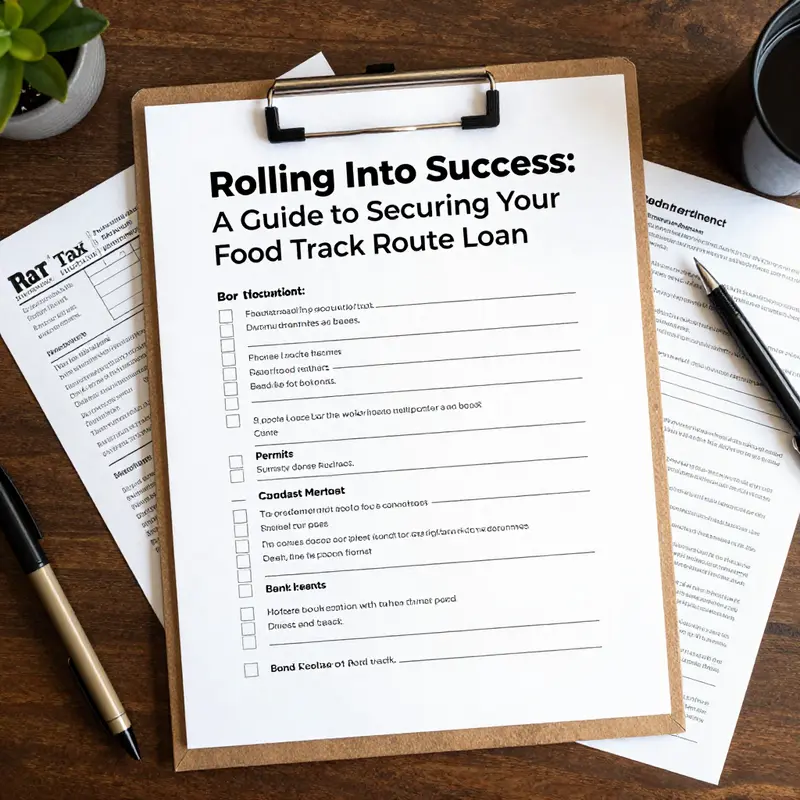
Building a loan package that lenders trust
A lender’s first decision is often made before they call you: can this borrower present a clear, organized case? Your documentation must do two things. First, it must prove the food truck route will generate enough cash to repay the loan. Second, it must show you are low risk and prepared to run the business. Treat the packet as a professional presentation. Think of each document as evidence that supports the single claim you are asking the lender to accept: this business will succeed and repay debt on time.
Start with a crisp executive summary. This one-page overview should state the loan amount requested, the purpose of funds, and the expected impact on revenue and profitability. Keep language direct and focused. Lenders skim first; make the essential facts obvious. Follow the summary with a polished business plan that tells the story in detail. The plan must include your concept, target customers, menu strategy, and location approach. Explain why your route, schedule, and pricing match customer patterns. Provide specific assumptions for sales and show how those numbers were reached. Lenders trust documented assumptions more than optimistic declarations.
Financial forecasts are the heart of your package. Provide a 12- to 24-month projection with monthly detail for the first year. Include projected revenues, cost of goods sold, labor, fuel, permits, maintenance, and any rent or commissary fees. Present a cash flow statement that demonstrates how receipts cover operating costs and debt service. Lenders look for consistent positive cash flow and a buffer to absorb slow periods. Where possible, include scenario analysis: a base case, a conservative case (lower sales), and a stretch case (higher sales). This shows you understand variability and have plans to cope.
Attach historical financials if they exist. Provide the last two to three years of business tax returns and profit and loss statements. If the food truck is new, provide personal tax returns for the same period. Lenders often rely on personal credit and income history when a business lacks track record. Add up-to-date bank statements for the prior three to six months. These show cash management, recurring deposits, and any seasonal patterns. Be ready to explain large or irregular transactions.
Document any current debts plainly. A complete liabilities schedule lists creditor names, balances, minimum monthly payments, interest rates, and collateral. Lenders want the full picture; hiding liabilities raises red flags. If you intend to use the truck or equipment as collateral, include an itemized equipment list with purchase values, ages, and current conditions. Provide receipts or invoices when available. If you already own the vehicle, include the bill of sale or title. If you are still shopping, include quotes from sellers or a lease agreement. For ideas on truck choices and configurations, reference industry model guides like this overview of useful food truck models to help document your vehicle selection: best food truck models for Lakewood startups.
Lenders also assess your operational readiness. Include copies of required permits and licenses or show evidence you can obtain them. Typical items include the mobile vendor permit, health department approvals, business license, and any route or parking permissions. If your market requires commissary agreements, attach those too. Without regulatory compliance, a lender cannot underwrite revenue projections. Where permits are pending, provide a clear timeline and proof of application.
Provide proof of relevant experience. If you have work history in food service, catering, or running a small business, include a resume and short biography. Highlight managerial skills, kitchen competency, and any prior success with food events or pop-ups. If you lack direct experience, show compensating plans: training programs, mentorships, or executive partners with relevant backgrounds. Letters of recommendation or testimonials from past employers or partners help build credibility.
When equipment financing or vehicle purchase is part of the loan, attach the purchase agreement or lease-to-own contract. The lender will want to see the exact terms and the asset valuation. If the truck will be the primary collateral, provide a current mechanical inspection, a maintenance history if available, and an appraisal when possible. These items speed underwriting and reduce surprises during closing.
Organize the documentation into a clear sequence. A recommended order is: executive summary, business plan, financial projections and assumptions, historical financials and tax returns, bank statements, liabilities schedule, resumes and experience proofs, permits and licenses, vehicle and equipment documentation, and any leases or contracts. Use a table of contents with page numbers or digital bookmarks in a PDF. Make the file size reasonable and ensure scanned documents are legible. A sloppy or disorganized packet feels risky to a reviewer.
Presentation matters. Create a clean, single PDF when submitting digitally. Use consistent fonts, headers, and page numbers. Highlight key figures with bold or callout boxes. Include a brief cover letter summarizing the ask and inviting the lender to request further detail. Keep sentences short and direct in the cover letter, focusing on what the borrower needs and why the repayment plan is reliable.
Be honest and proactive about risks. Every operation faces risks: weather, equipment failure, permit delays, or competition. A strong packet acknowledges these issues and offers specific mitigation strategies. For example, show how a contingency fund will cover repairs, or describe backup service providers you can call. Lenders prefer borrowers who anticipate problems and have practical responses.
Consider including supporting market research. Include foot traffic counts, event schedules, or data from nearby commercial centers that validate your location choices. If you have pre-booked events or wholesale contracts, attach signed agreements or letters of intent. Sales commitments from institutions or recurring event contracts significantly improve loan prospects.
If you seek a small or government-backed loan, make sure you meet the program’s documentation checklist. Different loan programs have unique requirements for forms, certifications, and personal guarantees. Read each lender’s checklist carefully and tailor your packet to match. When applying to multiple lenders, keep a master file and adapt it, rather than creating separate inconsistent versions.
Collateral and guarantees require careful documentation. If you pledge personal assets, like a vehicle or real estate, provide titles and current valuations. If you plan to use the truck as collateral, clearly state how depreciation is handled in the loan terms. Understand the implications of personal guarantees. Lenders often request them for new ventures; be prepared to negotiate terms and to provide personal financial statements that list assets and liabilities.
Credit profiles matter. Obtain your personal credit report before applying. Dispute any errors and be ready to explain derogatory items. Lenders will check credit, and an applicant who fixes or explains issues ahead of time looks responsible. If your business has a credit profile, pull that report too and include it in the package.
Make digital security part of your preparation. When sharing sensitive documents, use secure portals or password-protected files. Never email unprotected personal financial statements. Lenders will appreciate secure transmission and may provide guidance on accepted methods.
Finally, prepare for follow-up. Most lenders request clarifying documents after an initial review. Keep originals available and make additional copies quickly. Anticipate common requests such as an updated bank statement, mechanic’s inspection of the truck, or a lease agreement for a commissary. Respond promptly. Speed and completeness reduce friction and can shorten the approval timeline.
As you assemble materials, maintain a practical timeline. Set internal deadlines for collecting tax returns, scheduling inspections, and securing permits. Factor in delays and prioritize time-sensitive items like permit applications. A lender will note any proactive scheduling that shows you control the process.
A polished, complete package does not guarantee approval, but it shifts conversations from basic verification to negotiation of terms. It invites lenders to evaluate your plan, not to search for gaps. Approach the packet as both a financing tool and an operational checklist. Even if the loan is not approved, the documentation process will clarify weaknesses in your plan and help you improve operations before you launch.
For step-by-step checklists, sample financial templates, and loan program specifics, consult the authoritative federal small business resource. It lists loan options and application guides helpful to food truck entrepreneurs: https://www.sba.gov
Final thoughts
Embarking on your food truck journey in Lakewood is an exciting venture filled with potential. By assessing your business plan, understanding the types of lenders available, exploring equipment financing, and meticulously preparing your documentation, you can confidently move forward and secure the funding you need. Every successful food truck starts with a solid foundation, so take these steps to ensure your dream becomes a reality. The vibrant food scene in Lakewood is waiting for you!