
Have you ever thought about hitting the streets with your very own food truck or are you just excited to sample some delicious mobile eats during your visit to Lakewood? The food truck industry has been buzzing with activity, providing not only tasty treats but also a lively business venture for many. In 2019, food trucks touted a variety of profitability levels influenced by factors such as competition, niche markets, and operational challenges. Throughout this piece, we will explore the intricacies of the food truck business in that year, diving into the competition and obstacles, highlighting success stories in niche markets, and providing key industry-specific data. Our hope is to equip aspiring food truck operators with knowledge while helping tourists make the most of their culinary adventures in Lakewood.
When Streets Get Crowded: Competition, Permits, and the Profitability Puzzle for Food Trucks in 2019
The question of whether food trucks were profitable in 2019 cannot be answered without examining the friction that comes from intense competition and complex operations. In many markets, particularly fast-growing ones, the rapid influx of new operators changed the economics of mobile food. Where demand rose, supply rose faster. That imbalance pushed margins down. It forced owners to make hard choices about locations, product offerings, staffing, and permits. The result was a landscape where a handful of well-run trucks thrived, while many others struggled to break even.
The United Arab Emirates offers a clear example of how growth can turn into crowding. By 2019 the UAE market had already drawn more than 1,200 food truck operators. That number signaled a healthy appetite for mobile dining. It also meant that prime pitches, event bookings, and daytime city center spots became contested assets. When too many trucks chase the same clusters of customers, average daily sales for each truck fall. The arithmetic is simple. Fixed costs remain largely unchanged, while revenue per day drops. For operators with thin margins, this mismatch moves a business from profitable to precarious.
Competition in crowded markets reduces the margin for error. New trucks often enter with attractive promotions, lower introductory prices, or unique novelty items. Established operators respond by running their own promos. Price wars can erode margins quickly. Even when sales volumes hold up, the extra marketing, discounts, and product adjustments required to maintain traffic increase variable costs. For a food truck, where each meal carries a relatively higher overhead share than a comparable kitchen in a fixed-location restaurant, reduced per-meal revenue hits profitability hard.
In such an environment, differentiation becomes essential. Unique cuisine can command a premium. Strong branding creates repeat customers. A reliable presence on social platforms helps customers find a truck in a saturated field. But differentiation is not free. It demands investment in recipe development, staff training, and consistent quality. Those costs bite into early returns. Many trucks discover that the first year is a learning curve. Only after processes stabilize can operators reap the benefits of a distinct concept.
Beyond competition, operational complexity is a second major force shaping profitability. Several operational areas routinely trip up new and experienced operators alike. Permitting stands out. Obtaining the right permits is rarely straightforward. Regulations vary by emirate, city, and event organizer. The process can take weeks or months. Fees can be substantial. Some permits require proof of food-safety training, vehicle inspections, and commercial insurance. Delays in permitting delay revenue. They also add unplanned costs, such as temporary storage, idle staff payroll, and repeat inspection fees.
Site selection is the next critical variable. A location with steady foot traffic can make or break a day’s takings. But what looks like a good site on a map can be poor in practice. Pedestrian patterns shift with weather, office schedules, and nearby events. Access for suppliers and waste pickup matters. Some prime spots are controlled by private landlords or event planners. Securing those slots often requires relationships and long lead times. In a saturated market, established vendors and local organizers favor known entities. New entrants face a barrier to entry that is not just financial. It is relational.
Supply chain volatility compounds these challenges. Food trucks operate on tight inventory cycles. They hold smaller stock volumes than brick-and-mortar restaurants. That limits waste but increases vulnerability to price spikes and supplier disruptions. Sudden increases in meat, dairy, or produce costs quickly alter menu margins. For trucks offering niche or specialty items, sourcing consistent quality at a reasonable price is a daily task. Operators must balance stocking enough to meet demand without overbuying and spoiling product.
Efficient supplier relationships are thus a crucial part of profitability. Trucks that build direct links with local producers or that secure bulk purchasing arrangements often protect their margins. Others must contend with multi-tier distribution and higher per-unit costs. The cost of goods sold for a single menu item might seem small. Multiply that by hundreds or thousands of daily meals, and the impact is large. Smart menu engineering can mitigate some volatility. Flexible recipes, seasonal adjustments, and portion control help. But these tactics require culinary skill and management discipline.
Labor and staffing add another layer of operational pressure. Food trucks rely on small teams. Each team member often performs many tasks. Recruiting staff who can cook, serve, and manage cash flow is hard. High turnover is common. Training takes time and diverts hours from service. Wages and benefits contribute to fixed costs. In tight markets, owners compensate by cutting hours, cross-training staff, or assuming more labor themselves. Those measures help short-term cash flow. They can, however, limit growth and increase burnout risk. Effective staffing strategies balance cost control with service quality and employee retention.
Maintenance and vehicle downtime are often underestimated costs. A food truck is a commercial kitchen on wheels. Engines, generators, refrigeration units, and cooking equipment need upkeep. A breakdown on a peak day means lost revenue. Repairs can be costly and take days. Some operators maintain contingency plans, such as backup equipment or partnerships with local kitchens, but those options raise operating expenses. Preventive maintenance schedules add upfront cost but reduce unpredictable downtime. Savvy owners budget for maintenance as a fixed line item and monitor equipment health closely.
Marketing and customer acquisition are continuous obligations in crowded markets. Social media helped fuel the rise of many food trucks, giving them cheap ways to reach customers. By 2019, social platforms were essential, not optional. But social reach does not guarantee foot traffic. Algorithms change. Paid promotions cut into budgets. Trucks must invest time in content, updates, and engagement. Community building—responding to comments, maintaining a predictable schedule, and appearing at popular gatherings—drives loyalty. That loyalty converts occasional buyers into regular customers. For profitability, repeat business is gold. It reduces the need for constant new-customer acquisition and improves per-customer lifetime value.
Events and catering present another path to profit. Festivals, corporate lunches, and private events often produce concentrated revenue. A single event can generate a day’s or week’s revenue in a few hours. But event access is competitive. Organizers select vendors based on reputation, variety, and the perceived fit for attendees. Fees for premium events can be high. Trucks negotiate splits, flat fees, or minimums. Success at events depends on speed of service, menu portability, and the ability to manage high volumes without sacrificing quality. Well-run trucks use events to stabilize cash flow. Others find that inconsistent event bookings make revenue unpredictable.
The financial math of a food truck in a saturated market changes when fixed costs dominate. Vehicle financing or purchase, custom fit-outs, equipment, permits, and insurance create a base cost that must be covered. If daily sales slip, the weeks needed to break even lengthen. In some cases, owners find they must focus on volume-driven items with higher throughput. Others pivot toward higher-margin specialties. Each choice carries trade-offs. Higher volume often reduces per-item margins due to operational strain. Higher-margin items reduce sales volume but raise average ticket size. The best approach depends on local demand and the truck’s brand.
Local regulation nuances also shape outcomes. In some jurisdictions, municipal rules limit hours, designate allowed service zones, or prohibit trucks near certain businesses. Those rules can protect incumbents and stabilize the market. But they can also limit opportunity. In areas where regulations favor fixed-location restaurants, food trucks may find legal obstacles to accessing lucrative neighborhoods. Conversely, cities with clear, fair permitting processes and designated truck zones can foster a healthier competitive environment. Policymakers influence profitability by how they structure access, fees, and health standards.
Data and measurement separate lucky operators from consistently profitable ones. Trucks that track daily sales by item, measure peak hours, and monitor ingredient costs can respond more quickly to margin pressure. They adjust menus, alter portion sizes, or change suppliers based on data. Those that operate on gut instinct risk overproducing unpopular items or mispricing dishes. Simple point-of-sale tools and inventory apps reduce guesswork. They help owners identify best sellers and unprofitable lines. Over time, this discipline compounds into stronger margins.
Financing and capital structure matter as well. Operators who finance trucks with high-interest loans face different break-even points than those who use owner equity. Lease terms, down payments, and dealer mark-ups on fit-outs change fixed monthly obligations. In markets saturated with trucks, access to flexible financing can determine who stays in business. Owners with reserves can weather slow seasons. Those who financed aggressively may feel pressure to accept lower margins or take risky event bookings. Prudence in capital decisions improves the odds of long-term profitability.
Despite the headwinds, success stories in 2019 show what works. Thriving trucks combined several elements: a recognizable brand, reliable scheduling, streamlined operations, flexible menus, solid supplier networks, and a strong social presence. They often specialized enough to be memorable, yet flexible enough to adapt. They cultivated regular corporate lunchtime clients, secured festival slots, and avoided costly price wars. In essence, they treated the truck like a small business, not just a cooking venture.
For operators in saturated markets, the playbook is clear even if hard to execute. Focus on differentiation that customers will pay for. Build repeatable operational systems. Invest in relationships with suppliers and event organizers. Track performance metrics. Plan for maintenance and regulatory compliance. And maintain cash reserves for slow periods. Those steps reduce the randomness that crowds create. They convert a volatile hustle into a manageable enterprise.
Selecting the right truck model and initial equipment package also affects operational resilience. Choices made at launch influence fuel consumption, storage capacity, and service speed. For guidance on vehicle and layout decisions, consult resources that compare models and fit-outs designed for startup vendors. The article analyzing the best food truck models for Lakewood startups provides practical comparisons of layouts and equipment choices, which can help with early operational planning: https://lakewoodfoodtrucks.com/best-food-truck-models-for-lakewood-startups/.
Finally, the Ken Research analysis of the UAE Food Truck Services Market underscores what operators felt on the ground in 2019: strong growth, rising competition, and a need for sophisticated market strategies. For a deeper look at market dynamics and competitive structure, the Ken Research report provides detailed projections and context: https://www.kenresearch.com/industry-reports/uae-food-truck-services-market
Together, competition and operational complexity defined the profitability landscape for food trucks in 2019. The winners were those who planned for friction, who treated operations with rigor, and who developed a distinct value proposition. The losers were those who assumed demand alone would carry them through. In crowded markets, discipline and differentiation are the twin engines of margin preservation. They remain essential for any operator asking whether a food truck can be profitable.
From Niche to Net Profit: How Specialized Food Trucks Shaped 2019 Profitability
The year 2019 etched a clear line in the sand for the mobile food business. It was a moment of rapid expansion and growing specialization, where the profitability of the mobile kitchen depended as much on where and how a truck cooked as on what it cooked. Across major urban cores and burgeoning secondary markets, operators faced a landscape that was both crowded and full of opportunity. The overarching story was not about a single path to profit, but about the power of choosing a precise niche, understanding the rhythms of a given locale, and building a cohesive brand that could bank on repeat business even in the tempo of city life. The profitability picture that year emerged from a confluence of factors: the size and growth of the industry, the competitive pressure in dense marketplaces, and the sometimes dramatic returns that could come from focusing on specialized offerings and well-chosen venues. Data from that period shows an industry expanding in scope and scale. In the United States, industry research indicated a market swinging toward the billion-dollar mark, with tens of thousands of trucks rolling through parks, campuses, business districts, festivals, and street corridors. This scale did not erase the fundamental economics of the business, but it did create a context in which clever operators could carve out sustainable margins by leaning into niche demand, speed of service, and experiential branding. The takeaway is simple in principle: profitability in 2019 was achievable, but it was most often earned by those who had a clear point of difference and a disciplined operating model that could translate that difference into consistent customer value.
For many operators, the decisive factor was not just location or price, but the fusion of those with a distinct culinary or experiential proposition. In a crowded market, a well-defined niche could act as a beacon that drew people in, even among dozens of other food trucks within a few blocks. A segment that gained traction in many cities involved premium or authentic experiences delivered through a mobile format. Think high-quality, restaurant-style offerings that could command stronger price points without sacrificing the speed and convenience customers expect from a truck. In 2019, the logic of niche profitability became more than a trend; it reflected a mature understanding that margins improve when a truck can minimize price competition and maximize perceived value through specialty techniques, carefully sourced ingredients, and a narrative that customers could buy into with enthusiasm.
A practical snapshot helps illuminate how these dynamics played out. Industry observers noted that the market size and the sheer count of operating trucks created a bustling ecosystem. With a broad base of trucks, competition was intense, and operators could not lean on volume alone. Instead, those who found profitable traction tended to do so through targeted locations and events, selecting settings where their specific offerings aligned with the preferences of particular crowds. Farmers markets, upscale tastings, corporate events, and food festivals often became fertile ground for niche plays. These venues offered a built-in audience that valued certain attributes—authenticity, novelty, or a sense of culinary theater—and were willing to pay a premium for an elevated experience delivered quickly from a truck. In this context, the profitability story of 2019 was not about universal scalability but about strategic focus and execution.
Among the success stories that year, one common thread stood out: a disciplined cycle of learning, positioning, and delivering consistent quality. In some cases, aspiring operators committed to structured training that emphasized the interplay between menu design, kitchen layout, and the logistics of moving a vehicle through different sites. A representative narrative describes an entrepreneur who completed a comprehensive training program and, within six months, secured a suitable truck and a place to operate. The training emphasized strategic positioning and operational efficiency, underscoring how knowledge of niche markets—such as high-demand events or specific cuisines—could translate into sustainable profitability. It was not enough to have a clever idea; the business needed to execute with precision. The case illustrates a broader principle: that targeted education and practical planning could bridge the gap between concept and cash flow by accelerating the path to a viable location, a reliable supplier network, and a loyal customer base.
Another widely observed pattern was the appeal of concession-style formats within specific niches. In many markets, operators specialized in a focused offering that could be produced quickly, consistently, and at a level associated with restaurant standards. Concession-style methods applied to pizza, for example, demonstrated how a streamlined, high-quality product could stand out at farmers markets, at curated events, and at food festivals where attendees sought premium experiences. The key to profitability in these instances lay in several intertwined factors: the ability to deliver authentic tasting experiences that rival brick-and-mortar equivalents, the capacity to manage food costs through efficient sourcing and batch production, and the skill to preserve heat, texture, and freshness as products moved from kitchen to customer and then to the palate. The emphasis on quality and consistency created stronger brand equity, allowing trucks to command higher prices and cultivate repeat customers who valued the overall experience as well as the item on the plate.
What did these niche strategies require in practice? First, they demanded a tight alignment between menu fundamentals and the operational realities of a mobile kitchen. A smaller, intentionally designed menu reduces the complexity of prep work, speeds up service, and limits waste. When a truck’s offerings are clear and well-executed, staff can deliver a faster, more reliable experience, which translates into higher turn rates and more opportunities to monetize peak periods. Second, they required disciplined site selection and event targeting. High-traffic locations such as business districts or festival grounds could deliver consistent demand during peak hours and seasons, but success depended on a precise calculation of travel time, setup and teardown, and the ability to adapt to weather and foot traffic patterns. Third, branding and storytelling mattered as much as the food itself. Social media, visually distinctive presentation, and a narrative that connected customers to the sourcing and purpose of the cuisine created a sense of loyalty. When customers felt they had discovered a unique experience, they returned, shared, and recommended the truck to friends, strengthening the business’s organic growth in a crowded field.
These threads converge in a broader economic picture. A 2019 market analysis in the United States underscored the industry’s growth and diversification, with the market size approaching one billion dollars and a footprint of more than twenty-three thousand independent mobile kitchens. The sheer scale of the industry did not erase profitability challenges. On the contrary, it raised the stakes for execution. Profitability in this environment depended on balancing the overhead of a vehicle, equipment, insurance, and permits with the variable costs of ingredients, labor, and fuel. The same report that highlighted growth also acknowledged the structural realities of the business: margins were often slimmer than those in traditional sit-down operations because overheads per unit remain high and because the mobile format imposes constraints on kitchen scale and purchasing power. Yet the data also affirmed that those who could carve out a clear value proposition—through niche offerings, efficient operations, and a strong, recognizable brand—could generate meaningful returns even as the landscape grew more competitive. In short, 2019 did not offer a silver bullet for profitability; it offered a calibrated blueprint for those willing to invest in strategy, learning, and disciplined execution.
A closely watched development in this chapter of the industry was the impact of targeted education and mentorship on outcomes. A representative case involved an aspiring operator who joined a structured program designed to teach market positioning, route planning, and cost control. The course emphasized how to match a niche with the most advantageous venues and how to optimize the supply chain so that quality did not come at the expense of margins. The program culminated in a practical outcome: the participant found a suitable vehicle and began operating in a way that aligned with their niche strategy inside six months. The underlying lesson is robust: knowledge applied with discipline can shorten the time to profitability in a market where timing, site access, and customer sentiment are crucial.
The narrative around niche markets reveals the other side of the coin as well. Not every truck found profitability through a single standout concept. The realities of urban competition, the costs of compliance, and the volatility of events and weather meant that many operators faced months of uncertain revenue. A report from a market analysis firm highlighted an important caveat: in some contexts, average monthly revenues could be challenging to sustain, leading to profitability gaps that could threaten long-term viability if not addressed by scale, pricing strategy, or efficient operations. The regional variance underscored the importance of rigorous financial planning, as well as the value of choosing niches where demand aligned with the operator’s capabilities and price expectations. When combined with a robust customer acquisition plan and careful cost management, niche-focused strategies could still push profitability toward a favorable trajectory in 2019.
A focal point of these discussions is the role of location and timing in profitability. The mobile nature of the business is its greatest strength and its greatest risk. It allows operators to chase events, to adapt to seasonal patterns, and to test new markets with relatively modest capital expenditure compared with opening a brick-and-mortar restaurant. But it also requires ongoing decision-making about where to deploy a truck on any given day. The most successful operators built a mental map of where demand converges, when it peaks, and how to rotate through venues without exhausting any one location’s goodwill. In this sense, learning from 2019’s success stories means embracing the idea that profitability is not a fixed target you reach once, but a dynamic state you sustain through constant recalibration—by refining menus, negotiating better supplier terms, and continually improving the speed and reliability of service.
In this context, a practical takeaway emerges for readers who are thinking about the next move in the industry. First, locate a niche with durable demand—one that can withstand competition by offering something customers cannot easily replicate elsewhere. This might be a culinary style, a ritual around the dining experience, or a combination of quality and speed that creates a memorable event. Second, invest in the systems that translate niche value into margin: a lean menu, repeatable prep processes, reliable supply chains, and a workforce trained to execute with consistency. Third, make branding and community engagement a core ongoing activity. In an era when customers discover new trucks through social channels and word of mouth, building a story that people want to tell is as important as the product itself. And fourth, treat training as a strategic lever. The case of the six-month truck acquisition after completing a structured program demonstrates how education can concretely accelerate profitability by shortening the cycle from concept to cash flow, and by providing a framework for thinking about market fit, pricing, and scale.
For readers curious about how a specific market or business model might align with these insights, consider exploring material that discusses the range of startup models and their implications for profitability. For example, a resource focusing on startup options and best practices in food truck operations offers valuable perspectives that complement the narrative here. See the discussion on the best-food-truck-models-for-lakewood-startups for a deeper look at how model choice interacts with niche strategy and site selection, and how that pairing can influence profit trajectories in real-world settings.
The broader implication of 2019’s profitability experience is that niches can act as accelerants when paired with disciplined execution. The combined force of a differentiated offering, efficient operations, and targeted marketing can unlock margins that are hard to sustain with generic, price-sensitive menus. The success stories from that year show entrepreneurs who treated the truck as a mobile restaurant—investing in ingredient quality, consistent kitchen processes, and a brand story that customers could grasp and share. They also remind us that the road to profitability is rarely linear, but a path where momentum is built month after month by making informed decisions about menu design, location strategy, and customer engagement. This is a narrative about precision as much as passion—a reminder that in a crowded marketplace, profit comes to those who craft a distinctive, deliverable experience and then repeat it at scale.
As the industry continues to evolve, the lessons of 2019 remain relevant. The importance of niche markets, the necessity of robust operations, and the value of targeted education all contribute to a framework for evaluating profitability in any given year. The most durable profitability stories are those that blend a clear market position with operational discipline and a willingness to adapt. The chapter that follows builds on these ideas by examining how broader market dynamics, including consumer trends and policy environments, shape profitability in ways that reinforce or challenge the niche-centric approach described here. The key takeaway is that profitability is most reliably achieved not by chasing every opportunity but by choosing a focused lane, refining the offering within that lane, and relentlessly delivering value to a defined group of customers at moments when they most desire a high-quality, convenient dining experience. That combination—the clarity of niche, the reliability of execution, and the resonance of the brand—was the core driver of profitability for many food trucks in 2019, and it remains a useful compass for operators navigating subsequent years.
For readers seeking a practical glimpse into how these concepts translate into concrete decisions, the linked article on model selection provides a tangible starting point that complements the insights about niche strategy and profitability. The discussion emphasizes that choosing the right truck, equipment, and layout to support a niche menu can unlock efficiencies that support better margins and steadier cash flow. The takeaway is clear: in a market as dynamic as 2019, the smart path to profitability lies in aligning a distinct offering with the realities of operations, location, and customer expectations, then reinforcing that alignment with tested training, brand storytelling, and disciplined financial management. In this way, niche profitability becomes not just a theoretical concept but a practical roadmap for turning a mobile concept into a sustainable business.
External resource: For further reading on material composition, performance, and best practices for food trucks, see https://www.foodtrucks.com/insights/material-composition-performance-best-practices
Under the Bright City Lights: Profitability, Strategy, and the Realities of Food Trucks in 2019
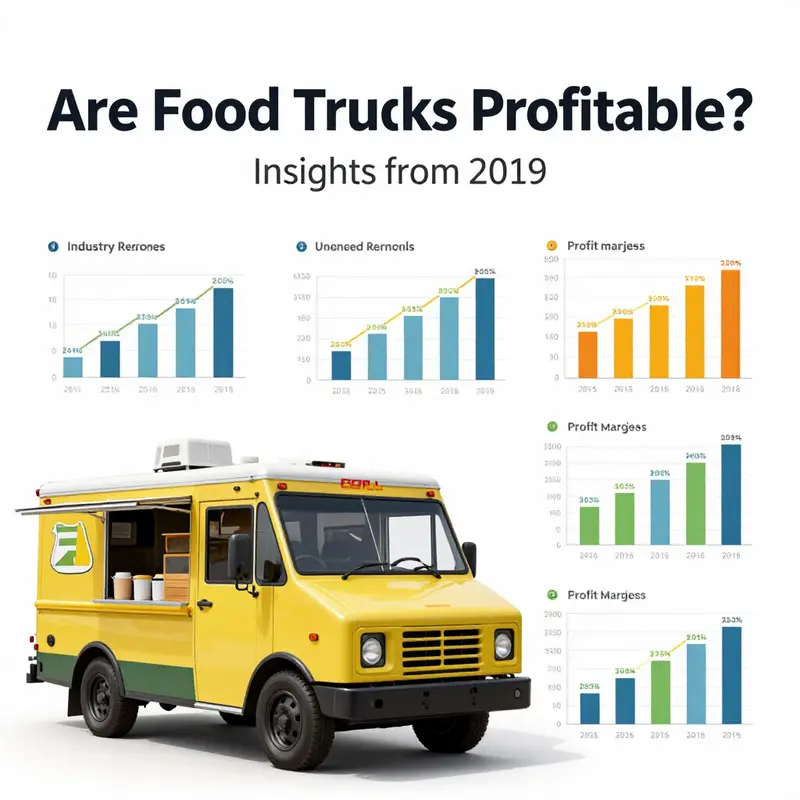
In 2019, profitability for food trucks did not follow a single script. Urban markets offered scale and visibility, but they also unleashed fierce competition, thick vendor rosters, and the constant pressure to reinvent menus and promotions. There was no universal statistic that declared all trucks profitable in that year, because profit is a function of many moving parts: the truck’s location, the cadence of the day, the particular cuisine on offer, and, crucially, the management discipline behind the scenes. The broader story that year, and the years immediately before and after, is less about a fixed margin and more about a set of operating truths that determined whether a vehicle on wheels could ride into real profitability or drift toward break-even at best. The 2019 landscape, as far as it can be reconstructed from the available materials, suggests an industry in ascent but with a wide gulf between the most savvy operators and those who stumbled over the basics of cost control, location scouting, and demand generation. In that sense, the profitability question was not answered with a single number, but with a constellation of indicators that pointed to who could outperform the field and who could not keep pace with the costs of doing business on four wheels. The stories from the year thus depend as much on execution as on the hours a truck spent on a curbside pull, and on whether the operator understood the economics of mobility and capital outlays that defined the mobile dining model.
The first lever shaping 2019 profitability was the cost structure that any moving kitchen carried into the street. A food truck is simultaneously a capital asset, a kitchen, and a brand in a compact package. The upfront costs are substantial: purchasing the vehicle, retrofitting equipment to meet health standards, and acquiring the permits and licenses required to operate in multiple jurisdictions. Ongoing costs compound quickly: fuel and maintenance, insurance, commissary or kitchen space fees, and the ever-changing prices of staple ingredients. Unlike a fixed-location restaurant, the truck’s value is tied not just to its culinary capability but to its uptime. Downtime—whether for service disruptions, maintenance, or relocation between events—translates directly into anticipated revenue loss. In 2019, the calculus was stark: if a truck spent more days idling in search of customers than it did in front of them, even strong margins on a few peak events could not compensate for the fixed overhead. The message is simple, yet powerful: operational efficiency in routing, scheduling, and stock turnover was as crucial as the menu itself.
The second major factor was the revenue engine—the ability to attract high-traffic locations and compelling events while protecting margins once the customer is engaged. Food trucks thrive on location strategy. A busy downtown lunch corridor, a university campus during exam week, a festival packed with families and food-lovers—each setting offers different mix and demand. Yet the city’s appetite for variety also means competition can be relentless. Analysts in the period surrounding 2019 emphasized that while a single high-traffic spot could generate a generous revenue spike, sustaining profit required more than a one-off victory. Operators who planned for the variability of demand—by diversifying locations, embracing recurring events, and building a loyal following—were better positioned to weather slow days and price-sensitive periods. Pricing discipline mattered too. The close look at the industry later in the decade showed that profit margins were generally lower than traditional brick-and-mortar restaurants because of higher overheads per meal and the necessity to absorb mobility costs. The reality of the mobile business is that price-per-meal must account for the per-mile and per-minute costs of moving, setting up, and breaking down. The smarter operators built value beyond the plate—through branding, consistency of service, and a reliable schedule that allowed them to anticipate cash flow and labor needs with more confidence.
A third factor—the menu and its alignment with customer expectations—shaped profitability in subtle but meaningful ways. In 2019, some trucks achieved profitability not by chasing broad appeal but by owning a niche. Cuisines that were perceived as novel or particularly timely—satisfying dietary preferences, cultural cravings, or comfort-food nostalgia—often attracted a steadier stream of repeat customers. A well-tuned menu, paired with efficient kitchen workflow, could reduce waste and shorten ticket times. In practice, that meant disciplined inventory control, vendor relationships that kept costs predictable, and a rotation of menu items that balanced novelty with reliability. The social ecosystem around a truck—reviews, photos, and the rapid rhythm of social media—became a force multiplier in some markets. A strong brand identity could convert a casual passerby into a repeat customer, and repeated visits lowered customer acquisition costs over time. In the most successful stories, the operator didn’t just serve food; they orchestrated an experience that made the minutes spent in line feel worth the wait. In those cases, the revenue per hour grew not solely from higher sales, but from a combination of higher average ticket and higher throughput, the two together expanding profitability in aggregate.
The research available for 2019 does not provide a neat, year-specific profit figure for every operator. Instead, it offers a framework for thinking about profitability that has continued to be relevant. A contemporaneous analysis from late 2025 cites an average annual revenue figure of about $346,000 for food trucks, with a profit margin around 6.2 percent. While that data point isn’t a direct 2019 snapshot, it does illuminate enduring factors that shape the economics of mobile dining: modest margins that improve with scale and efficiency, and the reality that many trucks earn far less than the average in the first year or two as they work through branding, route-building, and cost optimization. Another analysis notes that annual income for owners can range widely—roughly from $24,000 to $153,000—again underscoring the variability that characterized the industry across markets and business models. Taken together, these post-2019 figures help triangulate a plausible picture of profitability in 2019 by showing both the opportunities and the constraints that operators faced in that period. They also highlight the caution needed when applying current benchmarks to a prior decade in which data collection and industry reporting were not as standardized or as deeply published as they are today. Given the absence of authoritative 2019-specific numbers, researchers and operators alike encouraged consulting archival sources—such as the National Restaurant Association’s year-by-year reports and sector analyses—to gain a more precise historical view. The absence of a single, authoritative 2019 statistic does not diminish the relevance of the year’s lessons; it emphasizes the importance of execution, market strategy, and adaptability.
For operators who wanted to translate lessons from 2019 into practical planning, there is a clear implication about capital and operating discipline. A prudent strategy starts with a sober assessment of initial capital requirements and ongoing costs, then builds a pathway to revenue through location strategy, event participation, and a brand that draws customers back again and again. The capital question, in particular, remains central: even in a year of rising demand for mobile dining, the barrier to entry remained high. A truck, its equipment, and the regulatory framework together demanded a substantial upfront investment, and the ongoing costs of fuel, maintenance, insurance, and commissary cooperation required careful budgeting. Those who managed these constraints by selecting favorable markets, negotiating favorable vendor terms, maintaining tight control over labor and food costs, and leveraging a distinctive brand could translate positive demand into meaningful profits. Conversely, those who pursued growth without attention to these fundamentals—ignoring the cost per mile, overinvesting in a single location, or failing to build a consistent customer base—frequently found profitability elusive.
What emerges most clearly from the available material is a narrative of possibility tempered by discipline. The most profitable operators in 2019 did not rely on luck or a single perfect spot; they deployed a disciplined mix of strategy and execution. They identified high-traffic windows and seasons, then aligned their menus and operations to exploit those peaks. They created a brand that could travel with them, turning social media into a funnel that fed demand into their windows of operation. They kept a tight rein on conversion costs—labor, ingredients, and fuel—while ensuring that their pricing captured value without pricing out regulars. And they prepared for variability by diversifying locations, cultivating relationships with event organizers, and maintaining a flexible plan that could adapt to weather, policy shifts, and competitive pressure. The practical takeaway is thus not simply a set of numbers but a set of operating practices that could be replicated or adapted: aggressive but informed location scouting, a lean and repeatable kitchen workflow, a branding approach that builds trust in a mobile format, and a careful balance between the allure of novelty and the reliability customers seek when they crave a quick, satisfying meal on the go.
The historical absence of a single, definitive profitability statistic for 2019 should not dissuade current operators or researchers from drawing useful lines between that year and later periods. If anything, the 2019 context helps illuminate why many trucks did not become highly profitable right away and why others found their footing only after refining their approach. It underscores the importance of not treating profitability as a one-off outcome but as the product of sustained discipline across multiple dimensions: market selection, cost control, menu design, and brand-building. For anyone exploring the profitability question, it is valuable to look beyond a bare profit margin and examine the totality of the business model—the way a truck attracts customers, the predictability of its revenue streams, and the efficiency with which it converts sales into operating cash flow. Looking back at the era, it’s clear that success rarely rested on a single stroke of luck. Instead, it depended on assembling a living system that could adapt to the rhythms of a city’s appetite, while remaining nimble enough to pivot when a market demanded something different. If a truck could do that, profit was not merely possible in 2019; it could be sustainable in the sense of recurring revenue, repeat visits, and a brand that outlived the season or the festival run.
For readers who want to connect these lessons to practical, current decision-making, a closer look at equipment choices and startup models can be instructive. A widely referenced resource for startups outlines several viable configurations that operators in similar markets consider when launching or refining a mobile kitchen. While these configurations are tailored to local conditions, the underlying logic—matching capital outlay to expected volume, choosing a layout that supports efficient workflow, and planning for maintenance and compliance—remains relevant. If you are considering a jump into the field or evaluating a pivot in your existing operation, one useful path is to explore how other entrepreneurs in nearby markets have negotiated the balance between upfront cost and long-term reward. For example, a set of practical analyses on startup equipment and layout decisions emphasizes how a carefully chosen truck model can reduce downtime and improve throughput, ultimately contributing to stronger profitability in high-demand environments. This approach does not guarantee success, but it provides a framework for aligning your investment with your projected demand and operating cadence. Consider exploring the discussion on optimum configurations through the resource linked here: https://lakewoodfoodtrucks.com/best-food-truck-models-for-lakewood-startups/. The emphasis is on matching capabilities to expected patterns of daily traffic, event calendars, and the seasonal swings that often define a city’s appetite for mobile meals.
Beyond equipment and location strategy, the broader implication from 2019 is that profitability in the mobile dining space is more a function of repeatable systems than of sporadic strokes of brilliance. Operators who invested in branding that conveyed trust, reliability, and a clear sense of cuisine found a multiplier effect through social media engagement, return customers, and word-of-mouth referrals. In the absence of a universal profit metric for that year, the best guidance comes from watching how the top performers balanced their books and their calendars: they arrived at a predictable rhythm for when and where to serve, built a loyal following that sought them out by design, and kept a tight rein on the cost structure that most heavily burdens mobile operations. The challenges of 2019—high competition, escalating startup costs, fluctuating ingredients, and the need for constant marketing—were not unique to any one city. They reflected the structural realities of a growing, dynamic sector that was still discovering how best to monetize mobility and culinary creativity. Those who embraced that complexity and turned it into a coherent operating model were therefore most likely to convert the energy of a crowded street into sustainable profitability.
In the larger arc of the industry, 2019 should be understood as a year that tested the resilience and ingenuity of food truck operators. The lack of a precise, universal figure for that year does not diminish the insights drawn from the period. It underscores the need for careful market analysis, disciplined cost management, and a willingness to adapt to shifting demand. It also points to the value of learning from more recent industry data, which helps situate the 2019 experience within a broader trend toward measured growth and refined operations. For researchers and practitioners, the key takeaway is that profitability in mobile dining is not a fixed destination but an ongoing capability—the capacity to align capital, menu, location, and customer experience in a way that translates daily operations into durable earnings. As markets evolve, the lessons from 2019 endure: profitability requires more than a clever recipe or a strong night at a festival. It demands a robust operating framework that can sustain revenue in the face of cost pressures and competition. The year thus serves as a reminder that the path to steady profits in food trucks is built through repeatable systems, disciplined planning, and an intimate understanding of the specific urban ecosystem in which a truck operates. External data and industry analyses published in the years that followed continue to echo this conclusion, urging operators to measure profitability not by a single snapshot but by the trajectory of costs, revenue, and brand equity across multiple seasons and markets. For those who want a broader, outward-facing view of how profitability is evolving in the industry today, a comprehensive overview can be found in external industry analyses such as Nation’s Restaurant News, which provides context and benchmarking for mobile dining in the contemporary era: https://www.nrn.com.
Final thoughts
In essence, diving into the world of food trucks reveals a landscape filled with both challenges and exciting opportunities. While the competition can be fierce and the operational hurdles significant, success is certainly attainable for those willing to carve out their niche and brand themselves effectively. The stories from 2019 show us that with a unique offering and targeted efforts, food trucks not only can thrive but can become beloved mobile culinary experiences for the community. For everyone visiting Lakewood or aspiring to start their own food adventure, understanding these dynamics can make all the difference.