
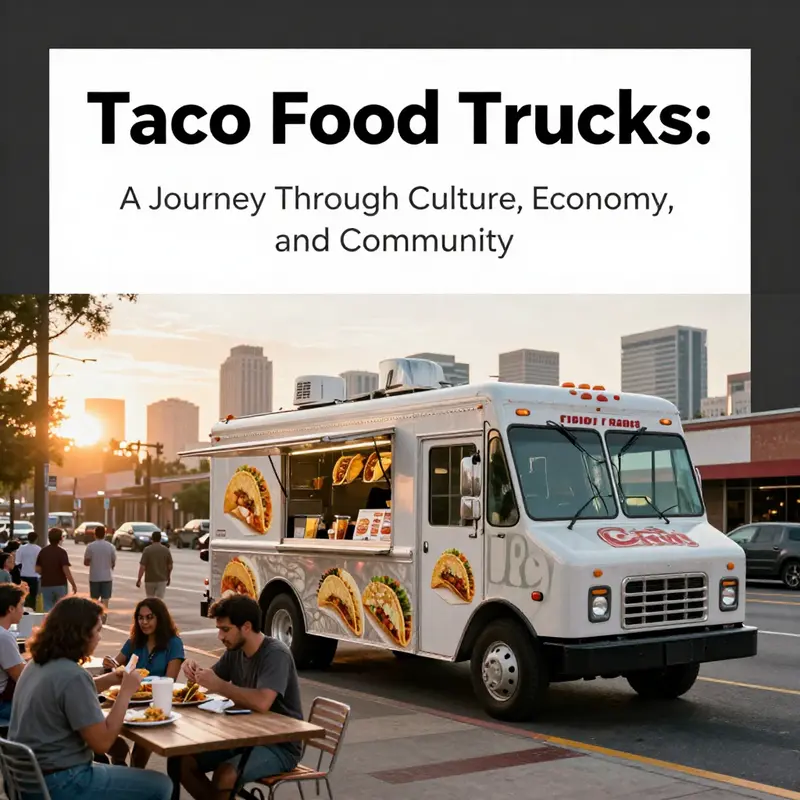
Taco food trucks are not just a trend; they’re a vibrant piece of culture, community, and entrepreneurship. Originally birthed from the humble lunch wagons of the 19th century, these mobile kitchens have evolved into cultural icons that serve delicious taco delights across cities like Lakewood. This article journeys through the evolution of taco food trucks, their economic viability, and their profound cultural impact. As we explore each of these chapters, we uncover how aspiring food truck operators can carve their place in this delicious niche, while tourists discover the rich flavors that bring local communities together.
The Evolution of Taco Food Trucks: From Lunch Wagons to Modern Mobile Kitchens
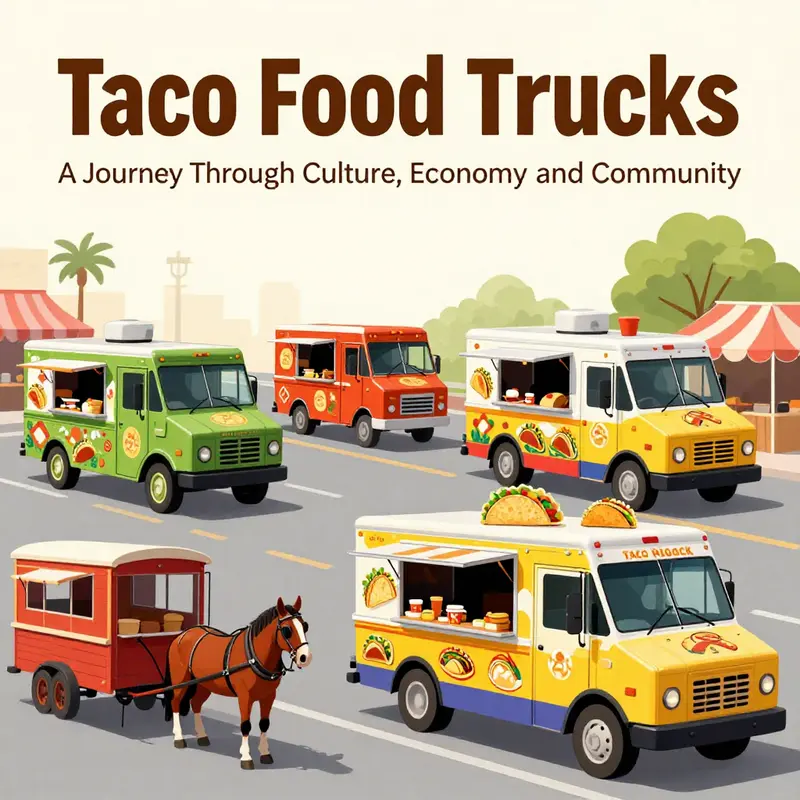
The evolution of taco food trucks traces a remarkable arc from improvised street corners to fully equipped mobile kitchens that function as both culinary studios and neighborhood hubs. It is a story told not only in menus and metal, but in the pulse of urban life, where mobility and flavor intersect to redefine what a meal can be when it travels. The journey begins in the late nineteenth and early twentieth centuries, when lunch wagons and cowboy cook carts rolled along factory yards and dusty streets, offering quick sustenance to workers who needed heat, heart, and speed before the clock released them to the next shift. Those early enterprises were modest in equipment and ambition, yet they carried a stubborn promise: food should be accessible, flavorful, and portable enough to keep pace with a workforce that moved as swiftly as a steam engine. In those small beginnings lay the DNA of today’s tacos on four wheels—the same insistence on fresh flavors, efficient routines, and the everyday magic that happens when a vendor and a customer meet at a curbside window. The transformation from simple wagons to sophisticated mobile kitchens is a story of adaptation, not spectacle. It grew through a series of pragmatic decisions: how to pack enough heat into a compact space, how to preserve ingredients for a long day, and how to serve a line of customers with minimal delay. At the heart of this story is a human dimension. In cities across the United States, immigrant families brought with them recipes, family rituals, and a devotion to cherished flavors. They learned to balance tradition with the demands of a bustling city, and their weekend stands—often tucked into corners near factories or markets—became the seeds of a movement. Austin, Texas, emerges in the narrative as a vivid example of these roots. There, taco trucks were more than food; they were cultural anchors. They anchored family histories, offered a space for sharing generations of technique, and gradually shaped a culinary identity that would later spread to neighborhoods large and small. The early stalls were not about glamour but about resilience: a griddle that could handle the heat all day, a few shelves to hold tortillas and toppings, and a sense that a good meal could travel with the people who needed it most. As the city grew, the trucks stayed. They adapted by moving with the trendlines of urban life, following festivals, office parks, and sports venues where crowds gathered and appetite met opportunity. The mobility that defined their essence turned into a strategic advantage. It allowed operators to test menus, refine cooking sequences, and curate experiences that a fixed restaurant could struggle to reproduce. A key shift occurred as operators realized they could treat the road as a living menu board. Seasonal ingredients, chef-driven ideas, and a willingness to respond to immediate feedback allowed the modern taco truck to graduate from simple sustenance to curated dining experiences. The trucks learned to optimize every square inch of space, turning tight setups into efficient production areas. They designed compact yet powerful cooking systems that could sear, steam, and fry with precision, all while keeping a clean line of sight to the customer through a wide serving hatch. The equipment under these roofs did not merely exist; it performed. The need to stay open through changing weather, to maintain food safety, and to sustain high service speeds pushed operators toward smarter layouts, better ventilation, and smarter workflow. In parallel, the rise of digital tools began to shape how a taco truck operates. Modern mobile kitchens now often feature a point-of-sale system that integrates ordering, payment, and inventory in one portable package. The trend toward cashless transactions grew steadily, and with it, the acceptance of digital payments and the normalization of tipping became visible across most trucks. The service encounter evolved too. What used to be a quick exchange of a warm taco at a crowded window has become a more deliberate, craft-oriented experience. Customers order, pay, and then watch as the cook completes the dish with a rhythm that echoes a compact kitchen in a traditional restaurant. This evolution did not erase the street vibe; it refined it. The hustle remains, but it is framed by a sense of professionalism that invites trust. The shift toward quality is perhaps the most telling thread in the narrative. No longer is a taco truck simply a place to grab a cheap bite between errands; it has become a venue for culinary curiosity. Operators began to emphasize ingredient sourcing, recipe development, and plating choices that elevate the meal while keeping it accessible. The trucks started to offer more than tacos—gourmet burritos, fusion snacks, small plates, and even dessert options started to appear along with the classic offerings. This diversification reflects a broader trend across the mobile food world, where flexibility and imagination determine success as much as speed and price. The trailer and van configurations expanded as well. Trailers became more than transportable kitchens; they turned into branded experiences designed around specific menus or concepts. Some operatives built out their rigs for specialized pursuits—dessert carts with pastry-grade refrigeration, or savory carts with distinct, chef-driven toppings. The modular nature of the mobile kitchen made it feasible to pivot between neighborhoods, seasons, and events without the heavy overhead of a fixed restaurant. The evolution of logistics is equally compelling. The urban landscape, once dominated by fixed storefronts, began welcoming a new formula: the ability to park, serve, and depart with minimal setup or teardown time. Regulations around licensing, parking, and food safety often shaped how and where trucks could operate, but the overall trajectory remained clear—affordable, portable access to high-quality food that could meet the rhythm of city life. The industry also matured in its business mechanics. Credit-based payments, digital receipts, and customer relationship tools moved from novelty to necessity. The cashless ecosystem grew to support a more predictable flow of business, enabling operators to plan more effectively, manage peak times, and maintain consistent service standards. In this shift, the social contract between a vendor and a community deepened. The truck became a trusted presence, a familiar face that returned to the same corners week after week, and a symbol of dependable access to flavorful, affordable food. Alongside this, the cultural significance of taco trucks broadened. They no longer functioned solely as lunch options; they became youth culture venues, community hubs, and venues for cultural exchange. In many neighborhoods, they helped introduce new flavors to curious eaters and gave a stage to families who preserved and shared ancestral recipes. The street became a classroom where techniques were learned, adapted, and passed on to the next generation of cooks. As the scene matured, industry associations began to document and support growth. Data show that a majority of trucks now accept card payments, reflecting a broader shift toward regulated, formalized service norms. This trend is paired with a growing emphasis on compliance, safety, and efficiency, as operators invest in better refrigeration, safer food handling, and more reliable power sources. Solar power has emerged as a practical solution for some operators, reducing dependence on external electrical grids and demonstrating how a mobile kitchen can align with sustainability goals. The appeal of solar-equipped trucks lies in the freedom they offer: the ability to operate in locations with limited infrastructure, the chance to lower operating costs, and the chance to demonstrate a commitment to the environment. The evolution of space and technology has also created new storytelling opportunities. The visual language of a taco truck—the bright colors, the sizzling grills, the serving hatch framed by the glow of a well-lit interior—has become a recognizable icon within urban life. This iconography helps communities form a shared sense of place around a mobile dining experience. People begin to identify neighborhoods by the trucks that frequent them, and in turn, the trucks contribute to the identity of those neighborhoods. The culinary story itself expands through this ongoing dialogue between cook and customer. Menus become collaborative canvases shaped by what people crave, what ingredients are locally available, and what feedback is captured at the window. The result is a dynamic menu that can shift with the seasons, reflect local tastes, and honor traditional techniques while inviting experimentation. In this way, the taco truck becomes a living, breathing micro-restaurant, capable of producing a nuanced dining experience in a compact space. The social and economic implications of this evolution are equally important. For many entrepreneurs, the truck represents a lower barrier to entry into the food service industry. The capital required to launch a brick-and-mortar restaurant is often out of reach for new cooks and families; a mobile kitchen offers a pathway to independence, a chance to build a brand, and an opportunity to cultivate a customer base with relatively modest risk. Even as the economics have become more favorable, the discipline required to succeed remains formidable. Operational excellence—managing food safety, maintaining equipment, coordinating locations, and sustaining customer relationships—demands focus and a willingness to adapt. Yet for many, the payoff is clear. The mobile kitchen allows for an agile response to market opportunities, whether that means following a festival circuit, tapping into office parks during lunch hours, or circling sports venues on game days. The craft of this work has matured into a discipline of its own, with mentors, networks, and shared knowledge guiding newcomers through the process of designing a truck, sourcing components, and refining a recipe portfolio. For those drawn to the urban food scene, the taco truck offers a blueprint for how culture, entrepreneurship, and craft can intersect in a remarkably compact space. It highlights how a community’s palate evolves when mobility, technology, and tradition converge. The journey from the lunch wagon to the modern mobile kitchen is not simply a story of improved equipment or better menus. It is a narrative about how a city’s appetite expands to accommodate new voices, how families preserve heritage while embracing change, and how food can become a traveling ambassador for flavor, memory, and shared experience. For operators charting their own path in this evolving field, practical guidance accompanies this rich history. A modern truck blends tradition with innovation; it respects the roots that gave rise to the movement while adopting the tools and practices that keep it relevant in a fast-changing landscape. The integration of a flexible layout, reliable power, and safe, efficient cooking is essential. Likewise, the choice to stage a menu around what is fresh and locally available—without sacrificing authenticity—remains central to the craft. The kitchen in motion must also be an education for customers. Each interaction at the window becomes a chance to tell a story, to reveal the provenance of ingredients, and to invite someone to participate in the experience of flavor. In this sense, the truck is more than a business vehicle; it is a platform for sharing culture, building community, and inviting new generations to discover the cuisines that travel with the street. For readers seeking practical pathways into this world, the evolving typology of equipment, layouts, and service models serves as a map. The modern taco truck is not a single design but a family of forms that can be tailored to different neighborhoods, climates, and business objectives. The best models offer a balance of durability, efficiency, and artistry; they provide space for a grill and a fryer, a compact refrigeration zone, a clean, safe workbench, and an inviting serving window that doubles as a stage for the cook’s craft. In this sense, the mobile kitchen is a constant work in progress, shaped by the needs of the people it serves and the places it calls home. The evolution remains ongoing, and its next chapters will likely bring further innovations in energy efficiency, data-driven operations, and perhaps even more adventurous flavor pairings. The taco truck will continue to adapt, carrying forward its legacy while embracing new possibilities. For anyone who has watched a truck pull into a curbside lot and smelled tortillas warming as a crowd forms, the narrative feels less like a business case and more like a cultural gift. It is a reminder that food travels not just in a vehicle but in the imagination of a city, inviting residents and visitors alike to participate in a shared, evolving feast. The journey continues in cities large and small, as each community adds its own note to the symphony of mobile dining. The modern scene invites readers to imagine practical pathways for people starting out: choose a layout that respects space, invest in reliable power sources, and tell a story through a well staged window and a thoughtful menu. The taco truck, in its many forms, remains a laboratory of flavor, design, and community, always ready to roll toward the next neighborhood and the next bite.
Rolling Economies: How Taco Food Trucks Turn Costs, Customization, and Market Trends into Profit
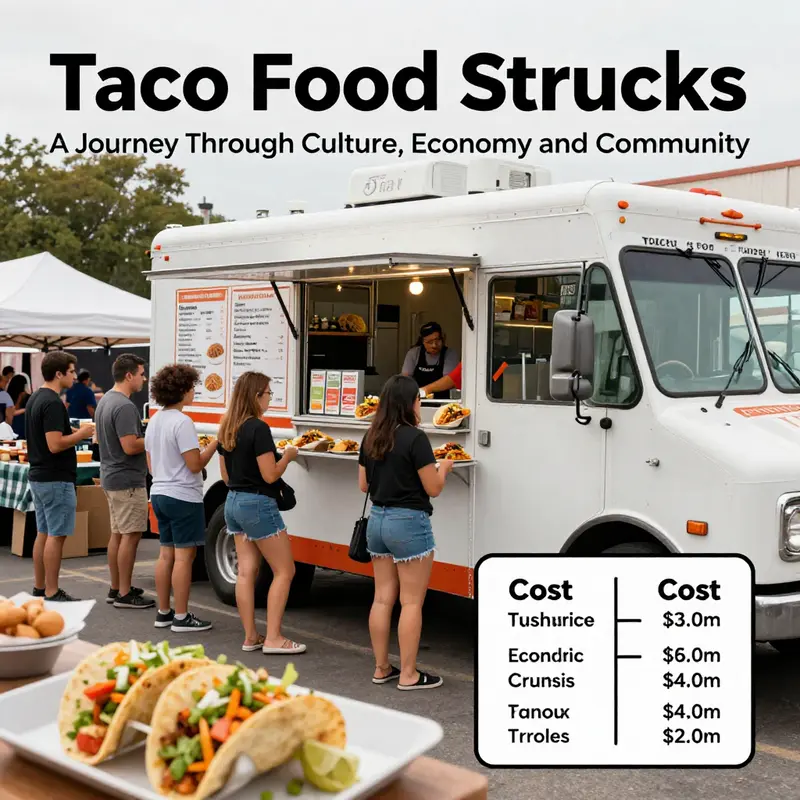
A taco food truck is more than a mobile kitchen; it is a portable business built on the steady rhythm of supply, demand, and a knack for turning space into value. The scene is familiar in many cities: a bright vehicle parked on a curb, the sizzle and aroma drawing curious pedestrians, and a menu that condenses a regional pantry into a few handheld bites. Yet beneath the appetizing surface lies a set of financial mechanics that determine whether a venture remains viable through lunch rushes, late-night shifts, and the ebbs and flows of foot traffic. The economics of these rolling kitchens rests on a balance between lean startup costs, adaptable design, and the ability to pivot with market moods.
Taken together, they reveal why taco food trucks have emerged as a durable option for aspiring restaurateurs and seasoned operatives alike, especially when compared with brick-and-mortar concepts that demand heavier capital and longer timelines to break even.
A practical path starts with the initial investment. The entry costs for a basic, mobile taco operation are notably lower than those for a traditional restaurant, because many units arrive with essential cooking appliances, refrigeration, and sanitation elements that meet basic safety standards. A modest trailer or compact cart can be obtained for a fraction of a storefront price, which allows a first-time entrepreneur to test concepts in multiple venues before committing to a fixed site. The speed to cash is shortened by the immediacy of serving fresh food and collecting payments through mobile point-of-sale systems.
Customization is the other half of the economic equation. Branding and workflow can decisively influence long-term profitability, sometimes even more than raw capacity or the number of seats in a dining room. Fully custom-built trucks offer the ultimate control over layout and sequence, enabling an operator to design a kitchen that fits a signature menu. The price tag climbs with bespoke cabinetry, ventilation, and interior finishes that communicate the brand as clearly as the signage outside.
Many operators prefer retrofitting or modular design for a balanced mix of branding and cost efficiency. Round or compact configurations, modular carts, and streamlined interiors can deliver substantial branding potential without the heavy premium of a bespoke shell. These configurations enable operators to craft a distinctive identity and scale as demand grows, while keeping setup times short and waste minimal.
Four Wheels, One Table: How Taco Food Trucks Shape Community, Identity, and Politics
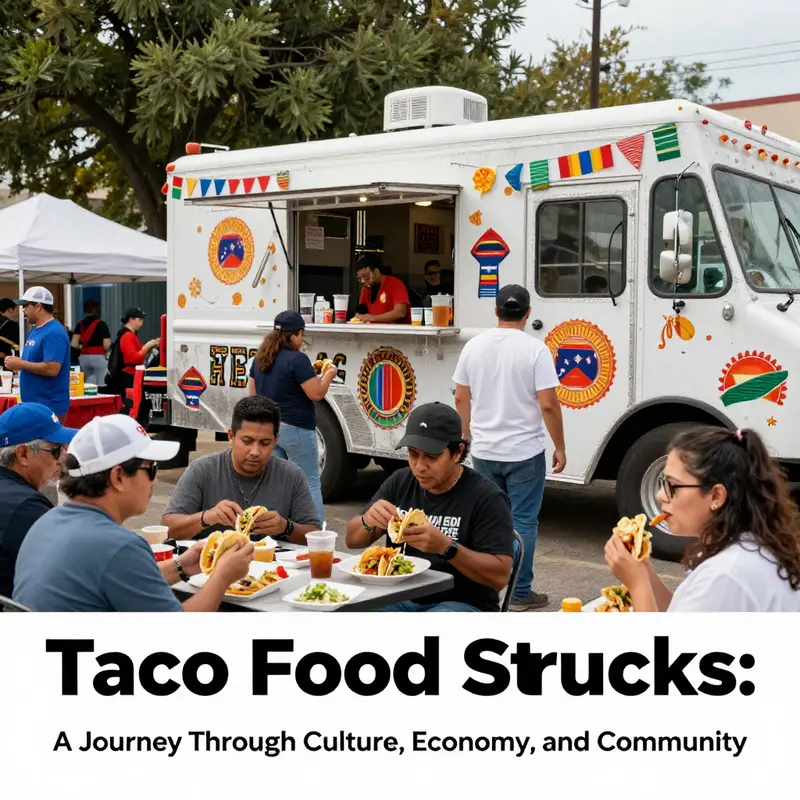
Four Wheels, One Table carries a quiet revolution on every corner where a taco truck idles and lights flare at dusk. These are not mere kitchens on wheels; they are portable cultural spaces that fold tradition into urban life, turn streets into gathering rooms, and turn neighborhood flavor into shared memory. The tale of a taco food truck begins with its body—aluminum panels, stainless steel worktops, a compact stove line, perhaps a solar array glinting on the roof—and ends with the conversations that happen around the serving hatch, the laughter that travels with a crowd of friends catching up over salsa and citrus. In cities with immigrant legacies, the truck becomes a moving salon where memories are told, reinterpreted, and passed along to younger generations who may never have cooked in a family kitchen the way their elders did, but who learn to season life with the same stubborn pride that once seasoned homeland recipes.
Cultural life on wheels crystallizes most clearly where streets intersect with the everyday economies of work and play. In a city like Austin, culinary voices from many regions converge, and the taco truck becomes a focal point of social life after a long workday or during late night shifts. The poetry of such a scene is not just in the recipe but in the reception: the way a grandmother in line nods at a plate a grandchild has brought to the table, the way a group of coworkers carries a stack of orders back to their office, the way a family chases the last bite of minty sauce as a friend laughs at a story about a first generation attempt at mastering masa. A respected culinary historian notes that taco trucks are the soul of a citys food culture, where immigrants bring their heritage and adapt it to local tastes to create something new. The truck becomes a laboratory of cultural adaptation, a place where tradition meets improvisation and identity is negotiated in real time with customers who help write the community story by sharing a meal.
The social function of the taco truck extends beyond the dining moment and into the rhythms of neighborhood life. These mobile kitchens often become late night hearths for cities that never quite sleep. They attract workers finishing shifts, students seeking an affordable meal, parents looking for nourishment for weary children, and curious newcomers who want a taste of the citys evolving character. In this sense, the truck acts as a community anchor, a hub where the flow of people becomes cultural circulation. The serving hatch transforms into an onboarding threshold, inviting strangers to become regulars, regulars to become extended family, and families to widen their circle across generations. The fusion of labor, flavor, and mobility creates a social gravity where conversations about travel, work and home mingle with the scent of cilantro and lime in the air.
Alongside culinary exchange, the taco truck has become a site for identity formation and political discourse. The politics of immigration, labor, and urban space surface in debates about who gets to occupy public streets and who shapes the citys cultural vocabulary. A widely read analysis framed the scene as a friction between elder, family run loncheras and newer trend driven food trucks, highlighting tensions between marginalized entrepreneurs and gentrifying forces. Public policy and policing practices accompany these debates, as licensing siting and enforcement shape where trucks can operate. Yet the truck demonstrates a practical model of inclusion by enabling small entrepreneurs to contribute to urban life, and by offering a platform for cultural storytelling that is accessible to eaters of many backgrounds.
The aesthetic dimension rests in design and public presence. A well designed truck functions as a moving advertisement for a communitys values as well as its flavors. Materials such as durable aluminum and stainless steel, along with solar powered options, signal care for the environment and a commitment to efficiency and long hours on the street. The physical form guides social behavior: a large serving hatch invites exchange, a compact kitchen focuses multitasking and rapid friendly interactions, and a bold brand banner welcomes curious newcomers and regulars alike. In this sense, the trucks body becomes a moving stage where cooks, servers and customers co create a shared ritual around fresh tortillas, zesty salsas, and the communal act of breaking bread.
The narrative also intersects with urban policy and space making. Public space carries histories of who has claimed it and who has been displaced. The trucks mobility can be a tool for affordable entrepreneurship in cities facing housing pressures, yet it can also trigger tensions with planners and residents who seek predictability. These debates reveal visions for how cities should welcome labor, culture, and commerce. The truck offers a practical model of inclusion by inviting a spectrum of voices into urban life, creating micro economies that support families, and providing a platform for cultural storytelling accessible to many eaters and policymakers alike.
What does this mean for readers building or imagining a taco truck in their own communities? It means recognizing that a truck is more than a business; it is a conduit for memory, a catalyst for neighborhood cohesion, and a provocateur in discussions about equity and space. Design decisions around equipment, layout and branding influence how communities engage with the space the truck creates. When these choices honor heritage and invite local adaptation, the truck becomes a trusted neighborhood partner rather than a passing trend. In this sense, the trucks cultural impact is inseparable from its design and its business model, and each choice helps shape trust, belonging, and dialogue in the community.
In closing, the taco food truck stands at the intersection of craft, mobility, and collective memory. It is a portable stage for identity formation and political expression, a catalyst for neighborhood connection, and a reminder that food is more than sustenance. It is a language through which people tell their stories, negotiate space, and imagine futures together. The trucks wheels carry not just ingredients but the experiences of generations, the hopes of new arrivals, and the stubborn optimism that urban life can be more humane, more inclusive, and more flavorful when people walk up to a hatch, share a plate, and become part of the citys evolving narrative.
Final thoughts
As we’ve journeyed through the evolution, economic aspects, and cultural significance of taco food trucks, it’s clear they are much more than just mobile kitchens. For aspiring operators, the tacos they serve carry the weight of culinary innovation and cultural identity. Meanwhile, tourists in Lakewood can immerse themselves in the vibrant tapestry of flavors these trucks offer. Embracing this culinary trend not only feeds the stomach but nourishes the community spirit, making taco food trucks a cornerstone of culture and companionship.