
Buying a small food truck is an exciting adventure for aspiring culinary entrepreneurs, especially in vibrant communities like Lakewood. Imagine serving delicious street food to happy customers while exploring your passion for cooking! Whether you’re a local with a creative food concept or a tourist dreaming of starting a food venture, knowing where to find the perfect food truck is crucial. In this article, we’ll explore online marketplaces, specialized manufacturers, budget-friendly options, and key factors to consider before making a purchase. This journey will help you set up your mobile kitchen and bring your culinary vision to life in Lakewood’s bustling food scene.
From Clicks to Kitchens on Wheels: Navigating Online Marketplaces to Buy a Small Food Truck
When you first imagine turning a dream into a rolling kitchen, the instinct is simple: find a vehicle, outfit it with a stove, a sink, a counter, and start cooking. The reality, however, unfolds online before you ever set foot in a showroom. Online marketplaces have transformed the way aspiring food entrepreneurs acquire a small food truck. They offer breadth, speed, and access to both new and used units that would have been out of reach a decade ago. The appeal is obvious: you can compare layouts, power options, and cooking configurations from the comfort of a kitchen table, and you can do it at a scale that helps you refine your concept without burning through cash on a single test vehicle. Yet breadth alone does not equal clarity. The very thing that makes online marketplaces appealing—their vastness—also makes due diligence essential. A listing can promise the moon, but only careful inspection, questions, and standards can confirm that a compact mobile kitchen will actually deliver on your business plan. The path from click to kitchen is a journey that blends curiosity with discipline. It begins with recognizing the variety of units available, moving through an exercise in realistic budgeting, and then navigating the practicalities of shipping, permitting, and startup operations.\n\nA practical truth that often gets overlooked is that there is no single right answer when you ask, “Where can I buy a small food truck?” The landscape is a spectrum. You can discover straightforward, compact push carts and mini trucks designed for street vending, or you can encounter full kitchen-equipped trucks with stainless steel countertops, refrigeration, exhaust systems, and built-in plumbing. Some buyers are drawn to electric configurations for cities with strict emissions rules, while others gravitate toward gas-powered systems for the power and the performance they offer. The choice hinges as much on your cuisine, service style, and market as it does on budget. So while the online market can feel like a warehouse of possibilities, your first mission is to translate your concept into concrete specifications. What cuisine will you serve? Will you operate in a dense urban corridor or at weekend markets? How many staff will you need, and what hours will you keep? Each decision narrows the field and makes a particular subset of online listings more relevant. In short, the marketplace is your laboratory, but you must be an experimenter with a plan, not a dreamer with wishful thinking.\n\nIn practical terms, the major online ecosystems present three broad categories of small food trucks. First are the compact, sometimes modular units that resemble push carts or small trailers. These are ideal for pop-up events, farmers’ markets, or night markets where tight spaces demand agility. They are usually lighter, easier to maneuver, and often the most affordable option for someone testing a new concept or launching with a limited budget. Second are the electric and gas-powered mobile kitchens that arrive as more complete platforms. They often come with a compact kitchen layout that includes essential appliances, a basic exhaust system, and plumbing provisions, so you can open operations quickly after delivery. Third are the full kitchen-equipped trucks that feel like miniature restaurants on wheels. They boast stainless steel counters, multiple cooking surfaces, refrigeration, water systems, and sometimes integrated waste management. Each category has its own advantages—and its own constraints. The compact units may require more improvisation and add-ons, while the fully equipped trucks demand a larger upfront investment—and a longer lead time for customization and delivery. The key is to map your concept to the possibilities, instead of trying to fit a concept to a pre-existing unit.\n\nThere is also a matter of sourcing. Online marketplaces allow you to see new builds, used vehicles, and customized builds from independent manufacturers. You might encounter sellers who offer “turn-key” solutions—units that come ready to operate, with branding and a basic service plan. Others are more modular, inviting you to select the frame and then choose the kitchen components that fit your menu. In many cases, the suppliers are based overseas, with manufacturing hubs in regions where costs are lower and production capacity high. This international element introduces both opportunity and risk. It expands your options and potentially lowers your initial outlay, but it also introduces variables around shipping timelines, duties, and after-sales support. When you evaluate a listing, you must consider not just the price but the total cost of ownership. This includes delivery, crating and unpacking, installation or retrofit costs, electrical work, plumbing connections, inspection fees, and potential modifications to meet local health and safety regulations. The total sticker price is only the beginning.\n\nIf you focus on a blanket price, you risk overlooking essential realities of a mobile kitchen. For example, an electric chassis that promises quiet operation is only as good as the battery system and the inverter that powers it. An appealing exterior finish can conceal an interior layout that fails to accommodate your intended workflow. A kitchen hood that’s described as compliant with code might be unsuitable for your ceiling height or exhaust routing in your chosen event spaces. And even within the same category, the layout matters. A compact truck with a single service window might flow efficiently for a coffee concept, but an ice cream unit could struggle to manage the customer queue without a second window or pass-through. This is where a thoughtful buyer must read between the lines of a listing. Look for careful descriptions of equipment, dimensions, electrical specifications, plumbing roughed-ins, and any included certifications. Photos are helpful, but they rarely tell the whole story. Request a comprehensive floor plan, high-resolution images of all surfaces, and, if possible, a video walkthrough that shows the unit in operation. Ask for the maker’s manual or a commissioning checklist. The more you can understand the unit’s actual capabilities, the better you can anticipate how it will integrate with your service model.\n\nIn the same spirit, you should interrogate the supplier’s credibility. A listing can look perfect, but the business behind it matters. Seek verifiable contact details, a recognized business address, and a track record of customer feedback. If a seller is willing to connect you with previous buyers, take the opportunity to reach out for a candid account of the purchase, delivery, and any post-sale service. Certifications can offer additional reassurance. While the exact requirements vary by jurisdiction, quality marks or compliance attestations—such as safety and electrical certifications—signal that a unit meets established standards. If a listing mentions ISO, CE, or SGS marks, treat those as indicators to perform extra verification rather than mere marketing. On the logistical side, confirm shipping arrangements. Some units ship as fully assembled on a trailer or truck bed; others arrive as modular kits that require assembly on site. Understand who handles the crating, who schedules delivery, and whether the seller can arrange installation support or on-site testing. The end-to-end experience—from the initial inquiry to the moment you power on your grills and burners—depends on clarity around these logistics.\n\nBecause you are often buying from a global marketplace, currency, payment terms, and protection plans deserve careful attention. A common approach is to request a formal quotation that itemizes each element: base price, customization charges, standard equipment, optional add-ons, and the precise model or configuration. Payment terms may include a deposit and balance on delivery, or, in some cases, escrow arrangements that protect both parties. If a seller insists on payment in a single lump sum with no recourse, proceed with caution. Even when a price seems favorable, you should factor in import duties, VAT, and any local taxes. Consider whether the unit can be shipped to your city or region and whether the seller can arrange or assist with port clearance and inland transportation. You cannot assume that the cheapest option is the best option. Instead, build a decision matrix that weighs the unit’s layout, the reliability of the equipment, the supplier’s responsiveness, and the anticipated total cost of ownership over at least the first year of operation.\n\nA thoughtful buyer also plans for brand and user experience. The truck is a moving storefront, and its interior design should promote efficiency and safety as much as it does aesthetics. Customization ranges from branding applications—color schemes and decals—to practical adjustments in the kitchen layout, such as alternate counter lengths, different cooking surfaces, or alternative refrigeration configurations. If your concept centers on a specific cuisine, you’ll want a layout that supports timed service, consistent portioning, and smooth movement of staff. The right supplier will often offer design services or CAD mockups that illustrate how the workflow would unfold during a shift. A good partner will also discuss practical matters that affect daily operations, such as water usage, drainage, and waste management, since these influence health compliance and service speed. The goal is a design that not only looks the part but also feels right when your team is working under pressure.\n\nTo manage risk while exploring online marketplaces, you should build a rigorous pre-purchase checklist. Confirm the exact dimensions of the vehicle, including length, width, height, and carrying capacity. Verify the electrical system’s voltage, amperage, and phase requirements, as these determine whether you can run a grill, fryer, and refrigeration simultaneously. Ensure plumbing details specify the presence of hot and cold water lines, drain locations, and hot-water availability. If a unit includes a hood system, check its ductwork and filtration to confirm it meets local requirements for your street or festival locations. Ask for service histories on used units, especially regarding refrigeration compressors, water pumps, and cooking elements that are high-wear items. If possible, arrange a video call with the seller to review the unit in real time and request a written condition report. Some buyers also hire a mobile inspection professional who can travel to your location or to the seller’s facility to assess the unit before you commit. This step, while adding a layer of cost, is often a wise hedge against surprises after delivery.\n\nBecause financing is a reality for many ventures, the economics of online purchases deserve careful sense-making. The broad spectrum of price points is striking. You may find tiny, budget-friendly shells that could be operational with a modest investment in appliances and utilities. Others present a complete turnkey opportunity at a higher price, justified by built-in equipment, durable finishes, and a ready-made branding package. It’s essential to estimate the total investment beyond the sticker price. That estimate should include the cost of any required retrofits, electrical upgrades, licensing, inspection fees, insurance, and ongoing maintenance. Also, consider the cost of training staff to operate a new layout, especially if you’ve chosen a multi-cook platform or an equipment set with specialized controls. A well-structured financial plan helps you decide how much you are willing to allocate to the vehicle itself versus the back-end investments that ensure your menu and brand can scale. If your objective is to minimize upfront risk while maximizing flexibility, you might pursue a modular approach: begin with a shell or a smaller unit and phase in additional equipment or a second location as demand grows. The marketplace supports this strategy, but it requires disciplined budgeting and a clear, staged plan for expansion.\n\nIn describing the search process, it helps to reflect on the ways buyers translate a concept into a reality. You begin with a clear concept—what you’ll cook, where you’ll operate, what the customer experience will feel like. Then you translate that concept into a practical spec: the type of unit, the size, the power source, the required equipment, and the needed water and waste capacities. After that, you compare options across several listings and filter out anything that doesn’t meet your criteria. The comparison isn’t only about price. It’s about reliability, service, and the ease with which you can access parts and maintenance. A unit that’s slightly more expensive but backed by a responsive supplier and robust warranties can save you money and stress in the long run. It’s also wise to build connections with potential suppliers so you can negotiate on timing, customization, and after-sales support. The goal is not simply to buy a vehicle; it is to secure a platform that supports your entire business model, from daily operations to growth over time.\n\nFor readers who want a sense of model options aligned with different launch plans, a helpful resource highlights a range of compact and larger configurations that fit diverse concepts. You can explore the possibilities further with the following internal reference: best food truck models for Lakewood startups. This resource provides practical examples and visuals that can inform your own specifications and vendor conversations, without locking you into a single path. It’s a reminder that the online market’s strength is not just variety; it is the potential to tailor a vehicle to your exact workflow and brand.\n\nAs you finalize your approach, remember that the online marketplace is a tool, not a substitute for thoughtful planning. It accelerates access to units, but it also demands rigorous evaluation, decisive budgeting, and proactive risk management. With a clear concept, a disciplined evaluation process, and a reliable supplier network, you can move from clicking a listing to serving customers in a fully functional mobile kitchen. The journey from a screen to a sizzling skillet is thoroughly navigable when you inventory your needs, verify details, and plan for the inevitable bumps along the way. Your small food truck can become a credible, scalable business sooner than you expect, provided you treat the online route with the seriousness it deserves and approach each listing with a calm, methodical eye. And as you build toward your first service, you may find that the online landscape rewards buyers who know not just what they want, but how they will operate it.\n\nExternal resource: https://www.alibaba.com/product-detail/Small-Food-Truck-For-Sale-Portable-Mobile_1600517528247.html
From Factory Floors to Your Street: Sourcing Small Food Trucks Through Specialized Manufacturers
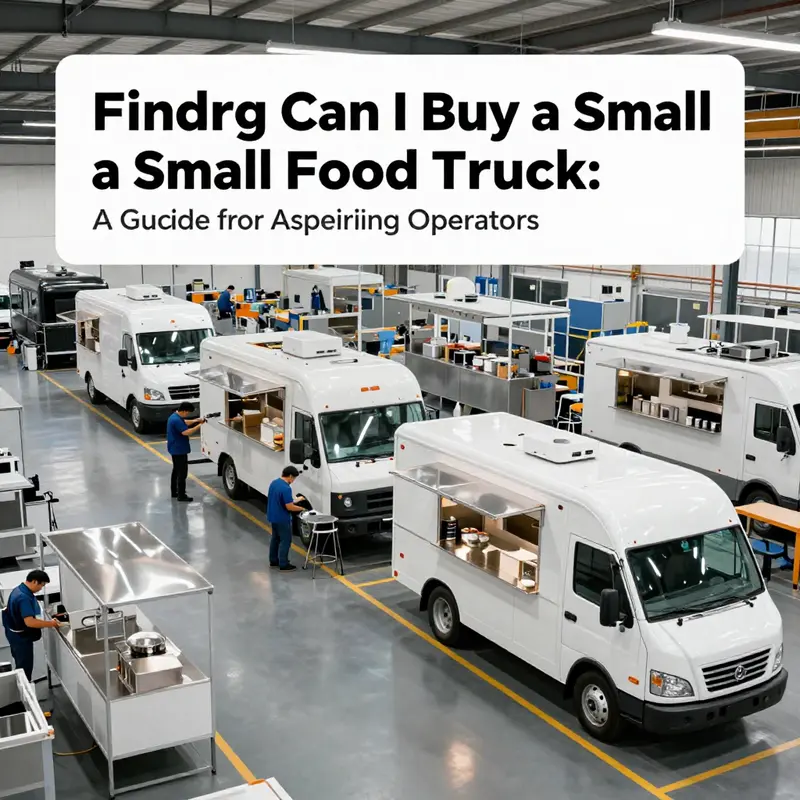
Sourcing a small food truck starts long before the first taste test of your menu. It begins with a clear vision of what you want to serve, where you will operate, and how much space you can realistically dedicate to a kitchen on wheels. The landscape for buying a small food truck has evolved into a world where specialized manufacturers and factory-direct suppliers can be reached with a few clicks, allowing aspiring entrepreneurs to tailor a compact, road-ready kitchen to their exact needs. The process blends practical engineering with an appreciation for branding, health regulations, and the realities of street logistics. A buyer today can choose between fully built, kitchen-equipped units and modular options that leave room for customization, all without stepping foot in a traditional showroom. The key is to understand the range of options, the engineering details that matter for daily operation, and the assurances that come with working with specialized producers who understand the unique demands of mobile food service.
At the heart of the buying decision is the sense that a small food truck is not just a vehicle but a compact, purpose-built kitchen. These units come in varying footprints, with layouts designed to maximize workflow in tight spaces. A compact footprint can still support a diverse menu—think burgers, tacos, coffee, or ice cream—so long as the kitchen equipment aligns with the menu’s needs and the local health codes. When evaluating options, it’s useful to picture your typical service scenario: the queue length you anticipate, the cold storage you require, and the prep work your staff will handle. A well-designed small truck should reduce bottlenecks during peak times, not just look attractive parked at a fair or market. The equipment mix matters as much as the chassis. A fully equipped unit might include a ventilation hood, a proper grease management system, a reliable refrigeration line, a sink with handwashing capability, and a cooking surface that suits your planned dishes. While some buyers dream of glossy finishes and premium fixtures, the practical buyer prioritizes serviceability, durability, and ease of maintenance.
Specialized manufacturers and factory-direct suppliers have adapted to this demand by offering options that balance cost and capability. Many buyers discover that a truly practical small truck is not a one-size-fits-all product but a configurable platform. You can start with a base unit that has a sanitation-ready interior, stainless steel surfaces, and a compact power system, then layer on kitchen appliances, branding elements, and a layout that minimizes motion between prep and service. The customization pathways are meaningful: you can tailor the kitchen layout to your menu, decide between electric and gas-powered options, specify refrigeration and insulation levels appropriate for your climate, and choose branding that turns a vehicle into a moving storefront. In lieu of a traditional showroom tour, you’ll likely review layouts and 3D renderings, confirm the feasibility of your electrical and plumbing plans, and receive a detailed bill of materials that covers everything from the fuel system to the exhaust ducting. This is not merely about purchasing a truck; it is about setting up a mobile restaurant that can sustain day-after-day operations in diverse environments.
A central consideration for any buyer is the balance between new, ready-to-run configurations and more modular, build-to-suit approaches. Some buyers prefer a turnkey unit that arrives with a complete kitchen and the minimum necessary fixtures, installed and tested by the manufacturer. Other buyers lean toward modular kitchens that can be assembled or disassembled with relative ease, allowing future changes in menu or branding without a complete teardown. Each path has its own advantages. Turnkey units reduce the friction of getting up and running, which is especially valuable for first-timers who want to test a concept quickly. Build-to-suit approaches, conversely, offer the freedom to optimize every square inch of space for a specific menu and service style. Either way, the ability to customize extends to branding and exterior presentation. A small food truck becomes not just a vehicle but a mobile symbol of the business, so many buyers choose options that align the interior workflow with an exterior that clearly communicates the concept to potential customers.
There is also a practical dimension to these options that often gets overlooked: compliance. Specialized manufacturers typically have experience navigating local health and safety codes, fire suppression requirements, electrical load calculations, and water supply considerations. They may provide layout design services that ensure the kitchen meets sanitation standards and that the vehicle can be inspected without major modifications after purchase. This is particularly important for operators who plan to move between jurisdictions or to operate in regulated markets such as farmers markets, special events, and city-street permits that require certain equipment configurations. While compliance is a serious consideration, it need not be a barrier. The right partner will offer documentation, recommended testing, and installation support to help you pass inspections on the first try. In many cases, these suppliers provide starter templates for common cuisines and menu profiles, which can accelerate the design phase while still leaving room for personal branding and operational tweaks.
Another practical layer centers on the financial architecture of the purchase. Price is a guiding factor, yet less expensive does not necessarily translate into a better fit. Buyers can encounter a spectrum of pricing depending on whether they choose a brand-new, fully fueled unit, a lightly used chassis with refurbished interiors, or a completely custom build with premium finishes. It’s not unusual to see base configurations at relatively accessible entry points, with the price climbing as the kitchen equipment becomes more robust, the thermal insulation improves, and the vehicle’s electrical infrastructure is upgraded to support continuous operation. The economics become more predictable when buyers consider the total cost of ownership, including maintenance, scheduled servicing, warranty terms, and the availability of spare parts. A small truck that looks affordable upfront can end up costing more if the electrical system is undersized for the planned workflow or if parts are scarce and hard to replace. Conversely, a higher initial price tag might reflect a durable chassis, a well-thought-out layout, high-quality stainless steel finishes, and a supplier with robust after-sales support. It is a balance of upfront affordability, long-term reliability, and the confidence that the kitchen will function under real-world conditions instead of in a showroom.
In studying these options, many buyers discover that the leading advantage of specialized manufacturers lies in the combination of customization and ongoing support. A capable partner will help with branding and layout design, provide drawings for permits and inspections, and offer guidance on power, water, and waste management. They also help align the interior configuration with the vehicle’s exterior footprint so that the truck remains street-legal and easy to maneuver in dense urban environments. The result is not simply a vehicle; it is an engineered space that enables a concept to sustain a business model. For some operators, this means selecting an electric platform and pairing it with a compact battery system that supports a full day of service at a busy market. For others, it means choosing a gas-powered or hybrid configuration that allows for high-power cooking during peak events while keeping emissions within acceptable limits through careful venting and filtration. The choice hinges on strategic considerations—menu, location, seasonality, and the expected cadence of events—and a careful evaluation of how the truck’s performance translates into customer experience, service speed, and cleanliness.
If you are exploring this path in depth, the journey begins with a clear specification and a supplier search that emphasizes reliability, safety, and post-sale support. A practical starter checklist includes confirming the kitchen’s basic footprint and airflow, verifying the availability of essential utilities (electric, water, waste), and requesting a floor plan with a detailed equipment list. Ask for a sample warranty and information on the service network that will come into play if a refrigerator compressor or a burner needs service during a busy weekend. It is equally important to review the company’s turnaround times, shipping arrangements, and the scope of pre-delivery testing. A trusted partner will provide transparency about scheduling, installation requirements, and on-site commissioning so that you can open for business with minimal delay.
While the traditional route may emphasize new, fully assembled units, there is a robust market for second-hand or refurbished mobile kitchens that can offer substantial savings without compromising essential reliability. These options frequently appeal to first-time operators who want to validate a concept before committing to a larger investment. A gently used truck or a trailer-style unit may come with some wear but can be a smart entry point if the interior has been refurbished, powered with a dependable electrical system, and backed by a seller who can provide maintenance history and transferable warranties where available. As with any used asset, a thorough inspection is critical. Prospective buyers typically focus on the condition of critical components: the integrity of the cooking line, the sanitation of the prep areas, the condition of the ventilation system, and the reliability of the water and waste plumbing. A pre-purchase inspection can save a buyer from expensive, unanticipated repairs after the vehicle enters service. The evaluation should extend to the chassis and tires, the condition of the refrigeration units, and the overall air quality of the interior—an indicator of prior usage and the likelihood of lingering odors that could require remediation. The goal of any purchase is a durable, serviceable platform that can reliably support your day-to-day operations, not a cosmetic facelift that struggles under heavy use.
As you weigh new versus used options and the breadth of customization, it is worth thinking about the menu you intend to run and how the kitchen will evolve with your business. A focused concept—such as a coffee-and-dessert cart or a compact burger-and-try-me menu—may benefit from a streamlined layout that minimizes equipment grind and maximizes throughput. A more diverse menu, like a street-food concept with multiple cooking stations, will require careful zoning of prep, cooking, and service areas, as well as an electrical plan that can handle heat, refrigeration, and ventilation simultaneously. The good news is that specialized manufacturers understand this matchmaking process. They can present layouts that optimize flow for your particular operation and help you connect the kitchen design to the exterior branding. The final choice—whether you lean toward a turnkey unit, a modular build, or a sturdy second-hand platform—will ultimately be shaped by your appetite for speed to market, your tolerance for ongoing maintenance, and the comfort level you have with a supplier who can stand behind the product through the life of the business.
For readers positioned in specific markets who want practical, real-world guidance on models that fit certain urban contexts, there is a helpful reference point within the broader ecosystem of startup resources. See the guide on the Best food truck models for Lakewood startups for a concise comparison of footprint, layout, and operation considerations tailored to startup markets. This resource, which is oriented toward emerging operators, highlights how different configurations interact with typical event sizes, permits, and street-access realities, helping you translate your concept into a vehicle that performs consistently across a variety of venues. It’s a reminder that the right vehicle is not just a purchase but a strategic foundation for a flexible, scalable business model. The chapter that follows will delve into how to navigate financing, permits, and insurance, but the core message remains: specialized manufacturers offer a way to translate your culinary concept into a mobile, compliant, and brand-consistent kitchen that can adapt as your business grows.
Ultimately, the question of where to buy a small food truck returns to a balance between intention and execution. You want a unit that supports your menu, fits the spaces where you will operate, and endures the wear of daily service across markets and seasons. You want a partner who can translate your ideas into specs, provide clear documentation for permits, and stand behind the build with reliable after-sales service. You want to move from concept to opening day with a timeline you can manage, a kitchen that behaves as promised, and a vehicle that communicates your concept at a glance. Through specialized manufacturers and factory-direct suppliers, that vision becomes attainable. The path requires careful specification, thoughtful trade-offs between turnkey convenience and custom-tailored efficiency, and a willingness to evaluate both new and used pathways to arrive at a solution that will reliably feed your ambition.
External resource for broader context and examples: https://www.alibaba.com/product-detail/Small-Food-Truck-For-Sale-Portable-Mobile_1600517528247.html?src=sem&spm=a2700.191088.0.0
From Start-Up Cart to Movable Kitchen: A Pragmatic Guide to Buying a Small Food Truck
The search for a small food truck is really a search for a mobile kitchen that fits your menu, your space, and your budget. It is a journey that begins with a broad understanding of what is possible and ends with a vehicle that can hit the street with reliability. There is no single best route; there are several viable pathways, each with its own rhythm of risk and reward. The landscape includes bare bones carts that can be outfitted with a few essential appliances, mid range trailers that feel almost like a compact restaurant on wheels, and higher end units that look and operate like a fully equipped kitchen on the move. The trick is to translate your concept into a practical set of specifications, then translate those specifications into a purchase that remains affordable while still supporting your growth. The ability to adapt, to retrofit, and to scale as demand changes is often as important as the initial sticker price.
Price ranges for small food trucks can be surprisingly broad, and the spread is not just about the size of the unit. It reflects the level of equipment, the materials used, and the readiness for operation. A truly basic setup might resemble a compact shell with a sink and a few storage options, enough to handle simple fare or beverages. A slightly more equipped version could include a grill or hot plate, a small refrigerator, and a robust work surface. Mid range configurations frequently bring a more forgiving work flow, with a full kitchen layout inside a sturdy trailer or a compact van conversion, plus better insulation, water connections, and waste management. The cost ladder expands further when you add features that improve efficiency or support a broader menu, such as more powerful cooking equipment, solar panels for off grid service, built in Wi Fi, or upgraded lighting and display areas. The practical upshot is that most buyers can start with a lean, transportable concept and then layer on capabilities as revenue allows.
If you want to anchor your expectations in real numbers, there is a spectrum that is frequently cited in market comparisons. On the lower end, a compact, electric powered trailer with basic kitchen gear can be found in the broad range of a few hundred to a few thousand dollars, depending on configuration and required delivery. Some compact shells and simple modules can enter the market around the two thousand dollar mark, especially if they come from options designed for beginners or for temporary events. On the other hand, fully functional setups with a complete kitchen footprint—refrigeration, sinks, cooking modules, and durable interiors—tend to land in the mid range, typically from a few thousand dollars into the five thousand dollar zone. When a unit ships with stainless interiors, LED lighting, and more generous footprints, the price often climbs into the higher end of that range. For buyers chasing continuity and long use, the value of investing in a solidly built shell with reliable serviceable parts grows quickly, since maintenance costs and downtime tend to accumulate with fragile, unproven configurations.
There is also a substantial opportunity in secondhand or pre owned units. Older models, especially those that have been well maintained or refurbished, can be found in a range that sometimes starts around two thousand dollars. The upside here is clear: lower upfront costs and the potential to customize over time as your brand and traffic evolve. The downside is that older equipment may come with wear, reduced energy efficiency, or outdated electrical layouts that require upgrading to meet current safety standards. A careful evaluation of the unit current electrical and plumbing configurations, and the expected cost of refurbishing can reveal whether a used unit truly offers a bargain or simply postpones a bigger investment.
If you are open to sourcing from international manufacturers, there is a separate set of realities to consider. Several factory direct suppliers in some regions offer compact mobile kitchen units at pricing that can surprise the budget conscious buyer. In this space, the range of offerings can begin with smaller carts designed for street vending and extend to kitchen equipped trailers that arrive ready to operate, with basic ventilation, water systems, and electrical capabilities installed. When you review prices in this tier, you quickly see a general pattern: lower sticker prices often reflect smaller footprints, fewer standard features, or longer lead times for customization, while more complete, turnkey configurations command higher prices but reduce the need for immediate retrofitting. It is also common to encounter options that include energy efficient features or certifications that help with compliance in international markets, which can be a meaningful long term savings as you expand beyond local events.
The practical path to choosing a price point starts with a clear culinary plan. What do you intend to cook, how many hours do you expect to operate, and what standards of cleanliness and efficiency do you require? If your plan calls for a quick service approach with compact equipment and a tight footprint, you may prioritize a lean setup that minimizes upfront risk and simplifies town permits. If you aim for a broader menu and longer service times, a mid range or higher end unit could be the better bet, because it reduces the extent of retrofitting and helps ensure consistent performance during peak periods. Regardless of where you land on the price spectrum, the decision typically hinges on three factors: the robustness of the kitchen infrastructure, the reliability of the electrical and water systems, and the long term cost of maintenance and parts replacement. The most durable choices tend to hold their value well, especially if they offer modular layouts that can be reconfigured as your offerings evolve.
For readers seeking a quick sense of direction without getting lost in a sea of options, a useful step is to compare not just the sticker price but the complete package. This includes the interior finish, the quality of the hardware, the ease of cleaning, the safety features, and the practicality of the cooking workflow. A kitchen that feels cramped or poorly arranged can slow service and erode margins, even if the initial price is appealing. Conversely, a well planned unit with a tidy layout and efficient workflow can support higher sales per hour, making the investment more justifiable over the life of the vehicle. When you inventory potential candidates, ask for photos and floor plans, a list of installed equipment, and a validation of electrical and water safety standards. This information helps you judge not only whether a unit fits your current needs, but also whether it will scale as your operation grows.
If you want to explore models that fit a local startup scene and see how other vendors have balanced price against performance, you can review resources focused on best fit options for local startup markets. The discussion emphasizes how the smallest shells can reduce upfront risk while still delivering a credible customer experience, and how mid range configurations can streamline service during busy periods. This kind of model comparison can be particularly helpful when your menu involves popular street foods or beverages that must be delivered quickly and consistently. For readers who want a closer look at model variety and practical choices, several guides provide concise, readable maps of options and expectations, underscoring that the right starting point is often a balance between your culinary ambition and your budget.
In addition to the internal market landscape, it helps to be aware of the broader procurement ecosystem. A few general channels tend to show up repeatedly for buyers who are building their first mobile kitchen. Marketplaces that aggregate multiple suppliers can be a good first stop for survey pricing, configurations, and lead times. These platforms often list a spectrum of units from very simple carts to fully equipped trailers, sometimes with options to customize interiors, add refrigeration, or install specialized cooking equipment. In many cases, the listings include basic certifications or assurances about safety and compliance, which can expedite the due diligence process when you are evaluating multiple candidates. Some buyers appreciate the ability to compare items side by side, filter by price, and see a sense of how equipment packages are assembled, including the relationship between shell quality, workflow design, and total cost of ownership. When you visit these catalogs, keep a running checklist that aligns with your concept: footprint, power options, water capacity and drainage, waste management, and the ease of cleaning. These factors are often the difference between a unit that just works and one that unlocks consistent revenue on the busiest days.
A practical decision tip is to start with a lean concept, then layer in features as confirmed demand grows. If you are new to street vending, consider a shell that can be easily retrofitted with a better grill, a larger refrigeration unit, or a more efficient layout after you have validated your traffic patterns. This approach helps you spread capital expenditure over time, while still giving you a credible on street presence from day one. For more guidance on how to think about model types and what fit looks like in different contexts, researchers and operators often point toward the middle ground: a compact, ready to operate kitchen that can be scaled with modular upgrades rather than a monolithic purchase. The idea is to reduce the friction between decision and deployment, so you can begin testing your concept in real markets with real customers instead of spending months negotiating a dream that may not materialize once the first rush is over.
If the thought of international sourcing appeals, you may encounter a broader catalog of compact mobile kitchens offered directly by factories. These suppliers typically present a range of configurations, from small, efficient carts to larger, more complete trailers, with varying degrees of customization and lead times. When evaluating such options, it is especially important to verify the safety and quality assurances offered by the manufacturer, including any certifications relevant to your intended markets. While factory direct purchases can deliver compelling price points, they also bring considerations around shipping, import duties, and after sales support. It is wise to include in your due diligence a plan for installation, local permitting, and potential retrofits that may be required to meet local codes and standards. A balanced approach—combining a clear concept, a disciplined budget, and a realistic timeline—will help ensure your investment translates into steady, dependable service on the street.
In short, the journey from concept to rolling kitchen is fundamentally a negotiation between ambition and practicality. You start with a vision of speed, flavor, and guest experience, then you map that vision onto a price envelope that makes sense for your business model. The right choice is not simply the cheapest option, nor is it necessarily the most feature-rich; it is the configuration that reliably delivers your menu at the pace your customers expect, within the margins you can sustain, and with the confidence that your equipment will last through the first busy season and many more after that. The market recognizes this balance, and the best buyers learn to assess not only what a unit costs today but what it will cost to operate, and to upgrade, over the next several years. With careful planning, even a modest start up can mature into a dependable street kitchen that supports a growing brand and a loyal customer base. For anyone considering this pivot, remember that the aim is to acquire not just a vehicle but a platform that can carry your culinary dream to markets, festivals, and neighborhoods with consistency and pride. External resources can provide further clarity on supplier catalogs and current pricing trends.
Sourcing Your First Small Food Truck: Practical Decisions Before You Buy
The allure of a compact, self-contained kitchen on wheels has drawn more aspiring restaurateurs into the world of mobile gastronomy than any single venue could. A small food truck offers the freedom to test a concept, reach new neighborhoods, and adapt quickly to customer feedback. But independence also comes with complexity. Before you commit to a purchase, you need to read the terrain—the market for mobile kitchens—and map out a path that keeps costs sane, operations legal, and your concept true to its core. The decision starts with a simple, almost paradoxical question: what do you truly need in a vehicle, and how will that shape your craft? The answer hinges on an ecosystem of factors that blend budget, space, cuisine, power, regulation, and the realities of daily running. In practice, the journey to a first small food truck is less about chasing a glossy new model and more about aligning a portable kitchen’s physical footprint with your business model, local rules, and your own capacity to manage a business on wheels.
To understand the landscape of where to buy a small food truck, imagine yourself stepping into a vast marketplace that serves every appetite for mobility, from bare-bones, chassis-based units to fully outfitted kitchens that arrive ready to serve. You’ll encounter options that range from low-cost, compact bases that require substantial customization to high-mileage, turnkey packages that streamline the launch. The spectrum reflects two realities: first, the market for mobile food is diverse because operators pursue very different cuisines, climates, and audience patterns; second, the practical economics of a mobile operation hinge more on layout and equipment fit than on headline price alone. A small truck is rarely a one-piece purchase; it is a system. It must accommodate the menu, the workflow of food prep and service, the needs of health inspectors, and the realities of road use, maintenance, and fuel. Keeping this in view helps frame the buying process as a series of deliberate trade-offs rather than a search for the cheapest or the flashiest vehicle.
Budget is the first gatekeeper. It’s tempting to search for the lowest price, and in the early days every dollar counts. Yet a truly lean approach recognizes that a vehicle’s sticker price is only part of the cost story. Consider the total cost of ownership: the vehicle’s condition, the reliability of its powertrain, insulation, exhaust systems, and the quality of its kitchen equipment. A compact unit designed for quick turnarounds might be inexpensive upfront but costly to operate if it lacks proper ventilation or energy efficiency. Conversely, a newer, fully equipped unit in a robust layout could save you substantial time in opening and reduce breakage of fragile components, but require a larger upfront investment. If you’re weighing new versus used, treat it as a two-track decision: what condition can you realistically achieve with your current budget, and what is the desired pace of your launch. In the market you’ll encounter a wide range of price points, from basic, mobile frames that offer light food preparation space to fully furnished trailers and trucks that come with refrigeration, multiple cooking modules, and integrated waste management. The price specter reflects both the vehicle and the kitchen components. If you begin with a clear sense of your core menu and service model, you can anchor your budget in the essential gear that makes your operation viable and scalable. It’s wiser to over-invest slightly in layout and equipment that deliver efficiency and durability than to compromise these on a tight budget and face repeated repairs or bottlenecks, which eat into margins and spoil service.
Size and layout follow budget but also shape your concept’s ability to function in real-world settings. A small truck can be deceptively roomy or surprisingly snug, depending on how the space is configured. For urban environments with tight streets and limited parking or queuing, a shorter, narrower footprint often yields better maneuverability and easier street space negotiation. The layout matters as much as the box itself. Think about the kitchen’s workflow in a commuter-laden kitchen space where the rule is to minimize movement and reduce cross-contamination risk. The layout should support a smooth sequence: storage, prep, cooking, assembly, service, and cleanup—without forcing staff to pivot in tight corridors or reach over hot equipment. The menu should drive the interior geometry. A smoke-liring smoke point and the need for venting will influence ceiling height and duct placement; a cold service line demands dedicated refrigeration capacity and proper insulation to regulate temperatures without overtaxing the power system. The physical form must also enable the inevitable adjustments that come with early-stage operations. A truck’s contents should be easy to reconfigure if a pop-up location reveals a preference for a different range of dishes or a new supplier network.
Cuisine type is not a cosmetic choice; it is a constraint and an opportunity wrapped into a single decision. The equipment you need—grills, fryers, steamers, refrigeration, warming cabinets—must align with your core offerings. A breakfast or coffee-forward concept prioritizes a compact espresso setup, a small pastry case, and efficient refrigeration for milk and perishables. A street-food concept, such as tacos or bowls, will require a compact grill or griddling module, a fryer, and robust cold storage in a way that does not overburden the vehicle’s electrical capacity. A dessert or frozen treat concept demands cold chain integrity and perhaps specialized display equipment that can attract attention in line with service dynamics. Each configuration has energy demands and maintenance implications. If you choose an electric-powered layout, you’ll prioritize battery capacity and charging options, especially if you plan to operate in locations without guaranteed power hookups. If gas or dual-fuel setups are your preference, you must account for ventilation requirements, fuel cost, and the safety systems mandated by local codes. In all cases, the vehicle’s electrical and plumbing systems must be designed to handle peak service loads and to stay within the limits of your electrical service plan. A well-considered layout not only ensures compliance with health codes but also creates a predictable flow that reduces the risk of long lines, bottleneck cooking moments, and stressed staff during rush periods.
Regulations and permits form the second layer of the purchase puzzle. A small food truck is a regulated kitchen on wheels, and the rules vary by city and county. You will typically need health department approval, a business license, vehicle registration, and perhaps a commissary agreement if your local code requires a designated space for food prep and dishwashing. The permitting process is not a hurdle to dread but a framework that ensures safety and reliability for both operators and customers. A smart buyer analyzes what permits are necessary in their target neighborhoods and whether the vendor’s unit can pass inspections with minimal retrofitting. It’s also prudent to verify that the truck’s electrical and gas installations are performed to applicable standards and that any auxiliary equipment carries safety certifications appropriate to the jurisdiction. Privacy, waste handling, and fire safety have to be part of the plan. These considerations may influence not only the initial purchase but also ongoing costs and how flexible the business will be across different markets.
When it comes to actually acquiring a small food truck, a landscape of online marketplaces and vendor networks becomes a practical map. Some platforms specialize in mobile food service vehicles, offering a spectrum from bare frames to fully equipped kitchens. A careful buyer learns to discern credibility among sellers, especially when negotiating online. It is essential to read user feedback, cross-check photos and specifications, and understand the shipping or delivery terms. A robust refund or return policy is not a luxury but a safeguard for when a vehicle turns out to be misrepresented or delayed in shipment. In addition to credibility, you should confirm what is included in the listing. Are the kitchen appliances installed and tested? Is the vehicle certified for operation in your state or city? Are there warranty options, even if they are limited or vendor-specific? Each of these questions can alter the purchasing calculus and help you avoid surprises after you take delivery.
For those who want the ease of a turn-key entry, certain vendors offer fully equipped units that are ready to roll and serve. These options can be appealing for entrepreneurs who want to minimize the time between signing and opening. They can also provide standardized layouts that are easy to operate once staff are trained. Yet even with a turnkey package, the prudent buyer should perform a rigorous due diligence process. Look beyond aesthetics and assess the actual performance: the reliability of the refrigeration cycle, fuel efficiency, insulation quality, and the accessibility of the water and waste systems. A device that looks polished but clanks during operation offers little value. The beauty of a smaller truck is that, with a thoughtful layout, you can maximize efficiency and reduce overhead, but that requires paying attention to the details—where equipment is placed, how you access it for cleaning, and how you prepare to scale as demand grows.
If your budget is more modest or you want to dip your toes into the market with a minimal risk, smaller mobility options such as ice-cream bikes, carts, or vending-type installations can be a smart stepping stone. These are not merely budget substitutes; they are real pathways into the mobile food world, offering the chance to build a customer base, learn compliance, and refine your concept before migrating to a full truck. They require far less investment and provide lean, flexible operations that can prove invaluable as you test menus, pricing, and location strategies. And if later you decide to upgrade, you carry forward the knowledge of what worked, what didn’t, and where to invest next for greater capacity or better service speed.
The practical act of evaluation is anchored in a blend of hands-on inspection and careful research. If you encounter a potential unit, inspect the engine or powertrain condition, examine the kitchen’s build quality, and verify the integrity of the body and insulation. Check for signs of water damage, corrosion, or misaligned panels. Review the medical-grade cleanliness of the interiors, the rating and calibration of refrigeration units, and the operability of cooking equipment. If the vehicle has been previously used, request a maintenance log and evidence of any major repairs. Ask for documentation of compliance with safety standards and for proof that the unit has passed inspections where required. When possible, arrange a live demonstration or a test run to observe how the kitchen operates during service-like conditions. Listen for chilling noises from compressors, leaks from plumbing, and the ease with which the system maintains regulated temperatures. A thorough inspection is not a show of cynicism; it is a practical step toward preserving your investment, protecting your customers, and ensuring that you can open without abrupt delays.
In this broad market, one practical way to approach the search is to align with trusted networks and curated recommendations. While every operator’s journey is unique, many buyers benefit from comparing at least a couple of viable configurations side by side. Look for buyers who can articulate how their layout would handle your menu and daily routine, and who can explain why a particular equipment arrangement optimizes your line flow. It’s also useful to compare communication timelines, delivery schedules, and after-sale support. The best vendors provide not only the chassis and kitchen but also guidance on compliance, maintenance plans, and training for your staff. The process becomes less daunting when you have a clear set of criteria drawn from your menu, your target markets, and your own working style. Ultimately, the choice to buy a small food truck is a commitment to a new operating rhythm. It is an investment in customer reach, in the ability to host pop-ups at urban events, and in the resilience to adapt to changing tastes and weather patterns.
For readers who want a quick route to a curated set of options and want to glimpse how others in similar markets are approaching the choice, there is value in exploring a well-regarded resource that aggregates models and layouts tailored for startup operators. This resource is especially helpful when composing a shortlist that reflects your menu ambitions and local regulatory realities. If your concept leans toward a Lakewood-style suburban-to-urban mix, you might find it illuminating to study the kinds of layouts that startups in nearby communities deploy and how they sequence their prep and service. A practical way to connect with that knowledge is to consult a local guide that highlights the best options for new ventures and compares different models based on real-world performance. This approach helps you avoid over-investing in a truck whose strengths lie outside your core menu or your service radius. It also sheds light on idiosyncrasies of the market—where certain layouts excel at high-volume lunch crowds, where others perform best at weekend markets, or where smaller footprints enable access to dense, pedestrian-friendly zones.
In the end, the question of where to buy a small food truck is not simply about a sale price or a glossy brochure. It is about aligning a mobile kitchen’s capabilities with a business plan that can withstand the irregular rhythms of opening weeks, local events, and seasonal demand. The best buyers treat the decision as a strategic alignment problem: how does the truck’s footprint, equipment, and power setup enable you to deliver your concept with reliability, consistency, and efficiency? How does it fit into your budget, your jurisdiction’s health and safety codes, and your long-term growth goals? And how will you maintain the heat of your service, the cleanliness of your work, and the satisfaction of your customers while you scale from a single truck to a fleet of mobile kitchens that share a common mission? The answers emerge most clearly when you proceed with a plan that respects the realities of the market, appreciates the nuance of layout design, and keeps the customer experience at the center of every decision.
As you explore, remember that the journey is also about building community and credibility in a space where trust matters as much as equipment. You will be buying more than a vehicle; you will be acquiring a portable business platform, a brand on wheels, and a means to reach people with food they crave. The road you choose should reflect not only your culinary vision but also your capacity to steward a small business through the early, dynamic phases of growth. With thoughtful budgeting, a clear understanding of the layout you need, a menu that informs equipment choices, and a careful eye on regulatory compliance, you can find a small food truck that serves as a reliable engine for your ambitions.
To continue your exploration, you may find it helpful to read about local model recommendations and startup-friendly layouts that have proven successful in similar markets. For example, a resource that focuses on the most viable models for startup operators in nearby communities offers practical comparisons and user-focused insights that can inform your short list. Best food truck models for Lakewood startups.
External resource for broader options: https://www.alibaba.com/product-detail/Small-Food-Truck-For-Sale-Portable-Mobile_1600517528247.html?src=sem&spm=a2700.191088.0.0
Final thoughts
Finding the right food truck to fulfill your entrepreneurial dreams doesn’t have to be daunting. By exploring various online marketplaces, connecting with specialized manufacturers, understanding pricing options, and carefully weighing your decision factors, you’ll be well on your way to launching a successful food truck business in Lakewood. Remember, each truck holds endless possibilities for culinary creativity and joy in serving others. So take that leap, find your perfect food truck, and start your delicious journey today!