
Embarking on a food truck journey in Idaho can be as exciting as serving up delicious meals to hungry patrons. However, to get your culinary wheels rolling, understanding how to get a food truck permit is crucial. This process can appear daunting at first, but fear not! Each chapter of this guide will walk you through essential steps: exploring the permit process in Idaho, delving into local regulations across different cities, ensuring you meet health and safety certifications, and understanding the fees and annual requirements to keep you compliant. With each piece of information, you’ll be one step closer to launching your food truck and serving the Lakewood community with your unique culinary creations.
From Startup to Street: Navigating Idaho’s Food Truck Permits with Clarity and Confidence
Opening the door to Idaho’s vibrant street-food scene starts with more than a clever menu and a well-loved recipe. It begins with understanding the permit landscape that governs mobile vending across the state. Idaho does not operate a single, all-encompassing food truck permit. Instead, licensing is a layered process shaped by state guidelines and the unique rules of each city or county. The result can feel intricate, but it becomes navigable once you adopt a steady, and almost methodical, approach. What emerges is a path that blends business structure, state health standards, local zoning, and practical workflow—an integrated routine that keeps a truck on the road and in compliance rather than chasing after one-off approvals. This chapter unfolds that path in a way you can apply, whether you’re eyeing Boise’s urban core, Idaho Falls’ riverfront zones, or a smaller community with its own pace and rhythm. It is a narrative of accumulation: establish the foundation, gather the required permits, satisfy health and safety expectations, and stay ready for renewals and shifts in local policy. At every turn the objective remains the same: operate legally, serve food safely, and cultivate a reputation that makes word of mouth as reliable as a well-timed lunch rush.
The first mile of the journey begins with how you structure your business. Your choice of business structure—whether you register as a sole proprietorship, form a limited liability company, or pursue another legal entity—has practical consequences beyond taxes. It influences how you register with the state, how you file annual reports, and what kind of liability protection you carry as you roll your vessel into parks, markets, and curbside spaces. A formal business entity often streamlines banking, licensing, and even insurance applications. It also helps clarify ownership, profit distribution, and succession planning as your food truck grows from a single truck to a fleet that can service multiple events in a single weekend. Once you decide on the structure, the next step is registration with the state. In Idaho, this means filing the appropriate paperwork with theSecretary of State to form an LLC or to register a trade name, and ensuring you reflect the chosen structure in all your filings and branding. If you plan to hire staff, you’ll also want to obtain an Employer Identification Number (EIN) from the IRS. An EIN is free and can be obtained online, and it will be essential for payroll, tax reporting, and opening a business bank account. The act of registering, then, becomes more than a bureaucratic step; it anchors your operation in a framework that supports scale and compliance as you begin to layer on health, safety, and zoning requirements.
With the business identity in place, the real work begins at the local level. Idaho’s mobile food vending rules are not uniform across counties and cities. Each jurisdiction charges forward with its own permitting logic, inspection schedules, and fee structures. The core local permits you’ll likely encounter include a Mobile Food Vendor Permit, a business license, and zoning or location approvals. The Mobile Food Vendor Permit is typically issued by the city’s health department or a code enforcement office. It confirms that your truck meets local sanitation and food-handling expectations and allows you to operate within designated districts. A city business license is often necessary to legally work anywhere that isn’t under a specific temporary event permit. Zoning and location approvals determine where your truck may actually park and operate. These considerations are more than a matter of letting business gently drift into a space; they shape your daily schedule, your seasonal strategy, and even your menu—because certain zones may require you to rotate locations or to limit hours in reaction to neighboring uses.
To bring these steps into sharper relief, consider concrete examples that illustrate how the process plays out in practice. In Boise, for instance, the licensing pathway commonly involves an application through the city’s health department, coupled with fee payment for the annual permit. The process typically includes passing a food safety inspection and submitting a menu for review. In Idaho Falls, the city code enforcement office handles mobile vendor permits, with requirements that often include proof of liability insurance, a food handler’s permit, and a completed application. These two examples underscore a broader truth: while the core idea is consistent—prove you can handle food safely, meet local standards, and comply with local zoning—the exact steps, fees, and sequencing differ by jurisdiction. The prudent operator treats the local health department as a primary partner, reaches out early for guidance, and reserves time to collect documents and address any inspections well before the planned launch date. In practical terms this means you will be coordinating with the local health authority, the city or county clerk, and potentially the planning or code enforcement office as you assemble your paperwork and schedule your inspections.
A central pillar of the Idaho permitting landscape is the chain of certifications that staff must hold. Beyond the business license and the local permits, your crew will need a certified food safety credential, commonly earned through a recognized program that covers safe temperatures, hygienic practices, and sanitation of equipment. While the exact certification label can vary by provider, the expectation is consistent: every person who handles food must demonstrate a baseline level of competence. Alongside this certification, most jurisdictions require some form of general liability insurance, typically with coverage in the neighborhood of one million dollars. Insurance is not merely a checkbox; it’s a practical tool that protects you, your investors, your customers, and the establishments where you park. It legitimates your operation in the eyes of landlords and event organizers, and it helps you manage risk as you navigate the complexities of street logistics—wind, rain, street-cleaning schedules, and the occasional surprise truck encounter.
Once state and local permissions align with your team’s credentials, health inspection looms as a pivotal milestone. A health inspector will appraise the truck as a working, compliant kitchen rather than a decorative prop. They inspect refrigeration and cooking temperatures to ensure safe storage and proper cooking, structural cleanliness of surfaces and equipment, and the implementation of safe waste disposal practices. The vehicle itself becomes a regulated space: the interior must be kept clean, the food-contact surfaces must be sealed and easily sanitized, and the cold chain must be maintained to prevent time-temperature abuse. A failed inspection is not a verdict on your recipe but a signal to adjust systems, retrain staff, or upgrade equipment to meet the standard. The inspection timeline is typically tied to your initial permit application, so you can anticipate a period of alignment where you address any deficiencies before receiving final approval to operate publicly.
Fees and renewals form the financial rhythm of operating under Idaho’s mobile vending framework. Across Idaho’s cities, annual permit fees can range widely, reflecting local costs and the scope of permitted operation. Boise, for example, has cited a typical annual range that tilts toward the mid-hundreds, while smaller cities may present lower rates. Rural counties can sometimes streamline the process and reduce fees, but they still require the same core elements: a valid business license, proof of liability coverage, and a health inspection that validates food-safety practices. The renewal cadence is not merely an annual ritual; it’s a reminder to keep your documentation current, refresh staff certifications, and re-validate your vehicle’s condition. Throughout a restaurant’s life on wheels, the renewal cycle becomes a faithful companion that ensures consistent compliance amid evolving regulations, seasonal events, and shifting public-health guidance.
A practical way to frame this journey is to think of the licensing puzzle as a sequence rather than a swamp. First comes business formation and registration, which sets the legal and financial groundwork. Then you align with state and local health and safety expectations by securing food-service permits and passing inspections. Next you attach the necessary insurance and credentials to your team and your truck. Finally you maintain the operation through timely renewals, updated documents, and ongoing compliance with zoning and parking rules. A well-timed plan makes it possible to open with confidence, then adapt smoothly as your route, menus, and partnerships expand. This path is not about rushing to a grand opening; it’s about building a foundation that can bear the weight of a thriving, compliant mobile business.
For readers who want to explore design and layout considerations that can influence permit viability and operational efficiency, there is value in studying broader industry examples. A resource focused on the best configurations for food-truck models can offer helpful perspectives on space planning, equipment selection, and workflow that translate across jurisdictions. You can consult a resource such as best food-truck models for Lakewood startups to gain a sense of how layout decisions impact safety, speed, and customer experience. The design lens matters because a well-planned interior supports consistent temperatures, easy cleaning, and smooth food handling—factors that influence health inspections and, ultimately, permit approval. The goal is not to adopt a specific model but to internalize principles that help you present a clean, safe, and well-organized operation to inspectors and customers alike. This blended approach—rigorous compliance paired with thoughtful design—helps ensure you won’t encounter unnecessary delays caused by preventable issues.
As you navigate the permit process, keep a line of sight to the broader regulatory framework that governs food safety and mobile vending. The Idaho Department of Health and Welfare’s food safety program provides current guidelines, application forms, and contact details for local health departments across the state. Rely on this official resource as your reference point for understanding the standards your operation must meet, and use it to identify the right local contacts early in your planning. In the course of your preparation, you’ll find it is essential to verify instructions with your city or county, because the same general requirements can be interpreted differently depending on where you intend to park most often. The path is straightforward in its logic but demands attention to detail in execution. A careful, deliberate approach will save you time, reduce the risk of fines, and accelerate your ability to serve delicious food to neighbors and visitors.
In summation, getting a food truck permit in Idaho is a layered, location-sensitive process that rewards preparation, organization, and ongoing stewardship. Start with a solid business structure and a clean registration record, then advance to the local permits and the health-and-safety certifications that prove you can operate a food business on wheels responsibly. Gather insurance, complete the required staff certifications, and anticipate a health inspection that will verify the integrity of your mobile kitchen. Understand the fee landscape and renewal obligations, and treat zoning and parking rules not as obstacles but as the guardrails that help you plan routes, markets, and event participation with clarity. While the exact steps and fees will vary by city, the overarching rhythm remains consistent: comply, demonstrate safe practices, and renew continually. If you stay aligned with this rhythm and maintain an open line to local authorities, your truck will not only pass inspection but also thrive in Idaho’s diverse and dynamic communities.
External resource: For official guidance and up-to-date information, consult the Idaho Department of Health and Welfare’s food safety page: https://idaho.gov/health-and-welfare/food-safety
Paths Through the City: Mastering Idaho’s Local Permits to Launch Your Food Truck
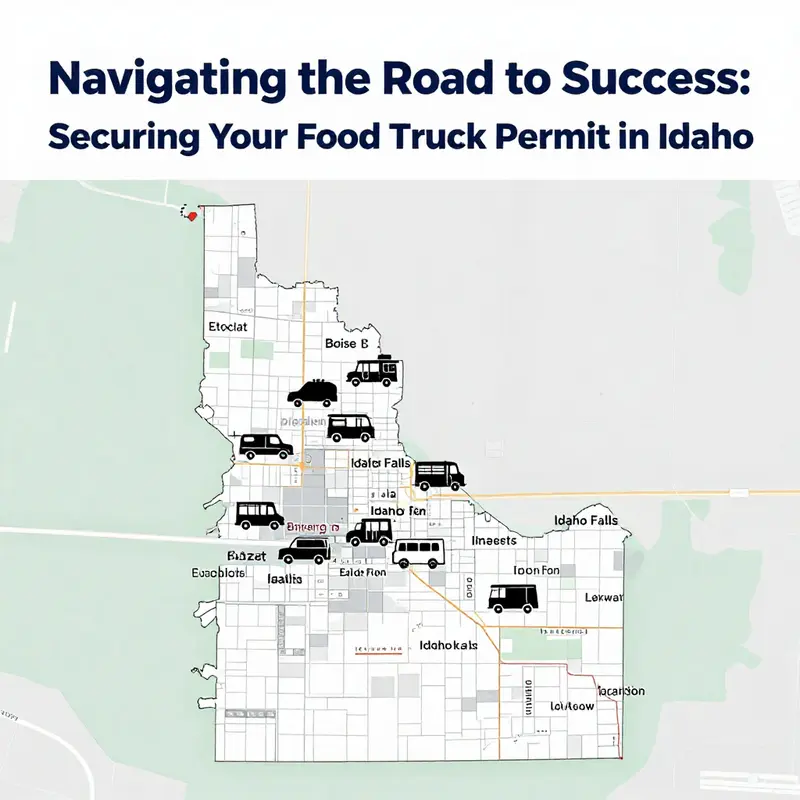
In Idaho, local rules can surprise even seasoned operators. State guidance exists, but the map comes from city and county agencies. Each jurisdiction may have health department forms, zoning rules, permit fees, and renewal timelines. The process is a sequence of steps that connect your business structure, state registrations, and local compliance into a workable operation.
The first decision shapes every step: what business entity will you register? A sole proprietor, an LLC, or another structure affects liability, taxes, and how you present your business to agencies granting permits. A sole proprietor is simple; an LLC offers asset protection. If you hire employees, obtain an Employer Identification Number (EIN) from the IRS; this number is free and essential for payroll and licenses. This phase is about creating a clean footprint that agencies can review without ambiguity. With a secured name and structure, you engage state registration and local licensing.
Registering with the state is a gateway to legitimacy. In Idaho you file with the Secretary of State to form an LLC or to register a business name. This formal task is the basis on which local jurisdictions build trust that you will operate responsibly. State registration links to tax obligations, workers’ compensation where applicable, and licenses you will present to city authorities. Keep copies of formation documents, your EIN, and operating agreements handy for cities that rely on precise documentation.
The core permit work lives at the local level: how cities translate state requirements into street rules. A common entry point is the Mobile Food Vendor Permit, often issued by the local health department or code enforcement. You may also need a city business license and zoning or location approvals. For example, Boise requires interaction with the City Health Department, an annual fee, a food safety inspection, and a menu review. Boise emphasizes not just the vehicle but how you present your operation—menu, site plan, waste management, and customer flow.
Idaho Falls uses the Code Enforcement Office to administer the Mobile Food Vendor Permit, with a requirement for proof of liability insurance (often around one million dollars), plus a valid food handler certificate and a completed application. Across Idaho you’ll see a common thread: demonstrate insurance, follow safety practices, and operate within defined zones. These requirements reflect local nuances and traffic or environmental considerations. Prepare documents tailored to each jurisdiction’s expectations.
Certifications validate readiness to serve safe, compliant food. A valid Food Handler’s Permit is commonly required, with programs such as ServSafe available nationwide. Training covers temperature control, cross-contamination prevention, hygiene, and sanitation. You enroll online, complete coursework, and present your certificate to the inspection team. Liability insurance, typically a million dollars, is a common threshold signaling readiness to operate in public spaces.
A health inspection becomes a turning point. Inspectors assess sanitation, refrigeration, temperatures, work surfaces, handwashing, waste disposal, and chain of custody from storage to service. They outline steps to bring operations into compliance and may provide timelines. Passing the inspection demonstrates a reliable system for daily operation.
Fees and renewals anchor the practical side. Permit costs vary by city; Boise often falls in a few hundred dollars per year, with Idaho Falls and Coeur d’Alene in similar ranges. Renewal requires updated proof of insurance, current food handler certification, revised menu documents, and possibly a reaffirmed site plan if operations change. Build these into annual planning to avoid closures or fines.
Together these steps reveal Idaho’s local permitting rhythm. The process is ongoing: you build a business that respects community standards, aligns with public health priorities, and contributes to Idaho’s street-food scene. Proactive engagement with city health departments and licensing offices helps you learn exact forms, step order, and city nuances such as event permits or seasonal restrictions. Assemble a compact dossier of formation documents, your EIN, insurance, food handler certificate, vehicle inspection data, and your site plan. If operating across multiple cities, maintain a master calendar of renewal dates and event permit windows to adapt demand and stay on the road.
Guardrails of Idaho Kitchens: Health and Safety Certifications That Open the Food Truck Permit
In Idaho, the road to a working food truck is paved not just with recipes and wheels, but with a verified commitment to public health. The state places a clear emphasis on who handles food, how it is stored, and how it is prepared. For operators, this means a layered journey through certifications, inspections, and local approvals that all feed into a single goal: a permit that means your mobile kitchen is safe for customers and neighbors alike. The path is practical, not glamorous, and it begins long before a single order is rung up. It begins with the people who stand behind the window, the trucks that carry the equipment that keeps ingredients at the right temperature, and the spaces where food is prepared in a controlled, sanitary manner. If you study the steps carefully, you’ll see that health and safety certifications are not merely hurdles; they are the framework that protects your business and the communities you serve.
First comes the recognition that the way you structure your business matters. Before you apply for any permit, you should decide on a business structure. A sole proprietorship offers simplicity, while forming an LLC can provide liability protection and may affect tax obligations. This decision will influence how you register with the Idaho Secretary of State and how you obtain an Employer Identification Number from the IRS if you plan to hire staff. The choice is more than paperwork; it shapes your ongoing obligations, including how you report income and how you insure the business. Once you lock in a structure, you can begin the formal process of registering your business, a step that legitimizes your plan in the eyes of both regulators and customers. As you file to form an LLC or to register a trade name, you lay the groundwork for a compliant operation that travels from city streets to county health codes with legitimacy and clarity.
The next phase is to secure the necessary permits at the local level. In Idaho, a mobile food vendor permit is typically issued by the health department or the code enforcement office in the jurisdiction where you intend to operate. A business license is commonly required by most cities, and in Boise, Idaho Falls, and Coeur d’Alene you will find distinct pathways and fees tied to the local environment. The general idea is straightforward: you must demonstrate that the operation aligns with local zoning and location rules, which often restrict where a truck can park or operate—especially near sensitive locations like schools or hospitals. The exact forms, fees, and timelines vary by city, but the underlying principle remains consistent: the community has a say in when and where food trucks can set up, and the health department has a say in how food is produced.
In Boise, for example, the pathway runs through the City of Boise Health Department. An applicant pays a typical annual fee that might fall within a moderate range, and the process culminates in a food safety inspection and a review of your proposed menu. It is common to see a menu submitted for review as part of the permitting process. This step ensures that the offerings, preparation methods, and handling procedures align with state and local expectations. In Idaho Falls, the City Code Enforcement Office takes the lead on mobile vendor permits. They require not only the application but also proof of liability insurance—often at a minimum of one million dollars—plus a valid food handler’s permit and other documentation. These examples illustrate how local nuances shape a national framework and remind operators that Idaho’s ad hoc flexibility is balanced by a firm base of health standards.
Beyond the paperwork, you must obtain essential certifications that demonstrate competence in food safety. The core credential in Idaho is the ServSafe Food Protection Manager Certification, or an equivalent certification that the state recognizes as meeting its standards. This manager certification is designed to prove that someone on the truck knows how to prevent foodborne illness through proper temperature control, sanitation, cross-contamination prevention, and safe handling practices. The ServSafe program is widely accepted across the United States, including Idaho, and it is administered by the National Restaurant Association. It involves completing a training course and passing a proctored exam. The manager certification is not a one-off requirement; it reflects an ongoing, responsible approach to managing a mobile kitchen where conditions can shift with the need to serve customers quickly in various locations.
In addition to the manager certification, the team members who actually prepare or handle food typically must complete a Food Handler’s Certificate. This is often achieved through a shorter program, such as ServSafe Food Protection Employee or another state-recognized online training. The goal is practical: ensure every person who touches food on the truck understands basic food safety practices, from handwashing to avoiding cross-contact between allergens and ready-to-eat foods. The state’s emphasis on certified staff aligns with broader public health expectations and helps maintain consistency across different jurisdictions within Idaho.
The truck itself is part of the safety equation. It must comply with sanitation and equipment standards that make safe operation possible. A properly designed and maintained kitchen unit is essential. Refrigeration must be adequate to keep cold ingredients at safe temperatures, cooking equipment must be set up to prevent cross-contamination and maintain a smooth flow of food—from receiving to storage, processing, cooking, holding, and service. Handwashing stations need to be accessible to staff, with soap, running water, and an approved method for drying hands. Waste disposal systems must prevent leaks and pests, and pest control measures must be in place to keep the truck clean and compliant at all times. Inspectors from local health departments will verify these conditions during inspections that occur before permit issuance and on an ongoing basis.
A health inspection is not a formality; it is the practical checkpoint that binds the certification framework to daily operations. Inspectors check refrigeration temperatures, the cleanliness of equipment and surfaces, safe food handling practices, and waste management. They look at how food is stored—separating raw proteins from ready-to-eat foods, ensuring labeled containers, and confirming the integrity of packaging and labeling. They examine the truck’s layout to ensure a logical workflow that minimizes the risk of contamination. They verify that sanitation practices are consistently applied, that cleaning schedules exist, and that staff know how to maintain a sanitary environment even on busy days. This inspection is a learning moment as well as a compliance moment: it helps operators identify potential gaps and address them before a customer is served.
Fees and renewals are the practical cadence of the permit life. Costs vary widely by location, but you can expect annual or periodic renewal requirements that reflect the ongoing cost of regulatory oversight and public health commitments. In Boise, the annual cost is often in a moderate range around two hundred dollars, while in Idaho Falls the figure may be closer to one hundred fifty dollars. Coeur d’Alene typically charges around the same ballpark as Boise or Idaho Falls, with local adjustments based on any special conditions. Rural counties may simplify or reduce fees, but even these lower numbers carry a non-negligible expectation of compliance and inspection continuity. It is easy to underestimate the ongoing investment that permits represent, especially when planning your menu, your supplier relationships, and your marketing. Yet this steady investment helps protect your brand, your customers, and your team, ensuring that the joy of serving good food in the open air remains a reliable and lawful enterprise.
The process, while seemingly a tangle of forms and inspections, rewards preparation and consistency. Start by clarifying your business structure, proceed to register with state authorities, and then engage your local health department early in the process. The goal is not just to obtain a permit but to establish a framework for safe operation that travels with your truck from event to event. If you want to envision practical layouts as you plan your setup, consider the broader planning examples available in industry resources like a guide focused on startup kitchen models. For reference, see the best food truck models for Lakewood startups, which offers a comparative look at layouts and equipment choices that support a compliant, efficient mobile kitchen. Keeping this broader perspective in mind can help you design a truck that not only meets health standards but also delivers a dependable, high-quality customer experience in Idaho’s varied service environments.
As you move through these steps, keep a tidy record and a proactive mindset. Maintain copies of your business registration, your EIN, your insurance certificate, your ServSafe certificates, and any state or local forms. Create a calendar or reminder system for renewal dates, inspection schedules, and training updates. Engage with your local health department beyond the letter of the law. Ask questions about your specific location, time-of-day service considerations, and any restrictions related to events or markets. The more you understand the local landscape, the more smoothly your application will progress. And remember, the process is iterative. If an inspector notes a deficiency, view it as a chance to improve rather than a stumbling block. A compliant, well-documented operation becomes easier to manage as you scale to multiple events, different cities, or expanded menus.
For anyone seeking the most authoritative, jurisdiction-specific guidance, the Idaho Department of Health and Welfare’s Food Safety Program remains the primary reference. It lays out the standards for certification, inspection, and enforcement and connects operators with the local health authorities who administer the programs. The state portal is a reliable starting point for understanding how Idaho views food safety, what counts as a valid certification, and how to interpret any changes in policy that affect mobile food businesses. You’ll also find practical links to local departments and to training resources that help you prepare for the ServSafe examinations and the staff certification requirements. As you map your journey, remember that the permit is a license to operate responsibly—a signal to customers that you take safety seriously and are ready to serve with integrity.
Internal linking note: when you’re assessing equipment layouts and workflow, consider the broader planning examples available in industry resources like a guide focused on startup kitchen models. For reference, see the best food truck models for Lakewood startups, which offers a comparative look at layouts and equipment choices that support a compliant, efficient mobile kitchen. Keeping this broader perspective in mind can help you design a truck that not only meets health standards but also delivers a dependable, high-quality customer experience in Idaho’s varied service environments.
In the end, the Idaho pathway to a food truck permit is a practical integration of business structure, state guidance, and local health rules. It rewards preparation, disciplined operation, and ongoing engagement with regulatory requirements. When you approach the process with clarity, you respect the communities you serve and set your own operation on a sustainable course. The result is not merely a permit on a wall but a reliable framework that supports growth, protects public health, and helps your food truck become a trusted fixture in Idaho’s vibrant street-food landscape. For authoritative, up-to-date information on health standards and local requirements, you can explore the state’s health resources at the official health portal, which provides a gateway to county and city health departments and their specific procedures.
Fees, Fines, and the Annual Roadmap: A Deep Dive into Idaho’s Food Truck Permit Finances
When you set out to turn a blank roadside space into a kitchen on wheels in Idaho, you’re really tracing a map through layers of regulation that touch every mile you plan to cover. The journey starts with business formation and registration, but the money and the annual routine you’ll keep up with are equally important. In Idaho, the true cost of operating a food truck isn’t a single upfront payment; it’s a layered cadence of state oversight, local licensing, health inspections, and ongoing renewals. Understanding this cadence is essential because the fees and requirements are not uniform across the state. They shift with the city you choose, the county you call home base, and the scale of your operation. What follows is a practical, integrated sketch of how those costs accumulate, why they exist, and how to plan for them so the truck can stay on the road rather than stalled at the curb by paperwork or penalties.
First, there is the baseline that most operators must acknowledge before any sizzling skillet meets the air. Idaho requires a state-level permit that signals a facility-wide commitment to food safety. This allows the state to verify that the operation adheres to core standards for storage, temperature control, cleanliness, and hygiene. The initial state permit fee is modest in the grand scheme of a startup budget—roughly in the vicinity of a hundred and fifty dollars—and the permit is renewed on a cadence that varies by jurisdiction. The essence of the state permit is not to authorize every single street corner you might want to occupy, but to certify your capacity to keep food safe across the environments you’ll encounter as you move from one location to another.
But a truck doesn’t operate in a vacuum. Even with a clean bill of health from the state, you must align with the locality where you intend to park, set up, and serve. Idaho’s cities and counties each maintain their own licensing regimes for mobile vendors. The most common local permit you’ll encounter is the Mobile Food Vendor Permit, typically issued by the city’s health department or code enforcement office. There is a practical reason for this: local authorities are closest to the day-to-day realities of street vending—parking rules, proximity to schools or hospitals, neighboring businesses, and the specific sanitation facilities available in the permit holder’s setup. Fees here can vary widely, and that variance matters. For example, in a mid-sized city with a robust downtown dining scene, annual mobile vendor fees tend to run higher to reflect the demand and the oversight required to manage high-traffic periods. In other places, especially those with smaller populations or less dense commercial districts, fees may be more modest.
To give a sense of scale, Boise—Idaho’s capital and a hub of activity for food trucks—typically bills in the range of a couple hundred dollars per year for a Mobile Food Vendor Permit. The ballpark you’ll commonly hear from city staff sits around two hundred to five hundred dollars annually, depending on the vehicle type, the kind of operation, and the scope of permitted activities. The numbers reflect more than the permit itself; they cover the health department’s ongoing oversight, inspections, and the administrative costs of maintaining a program that can respond quickly to changes in food safety standards. Other Idaho communities chart their own courses. A city like Idaho Falls or Meridian offers their own pricing structures, often in the lower hundreds, with occasional variations tied to factors like size of the truck, hours of operation, or the specific zones where you’ll be allowed to park. The important point is not the exact figure in every city, but the pattern: state permit plus city or county permit equals the core annual operating license.
But a permit is not a single, hollow piece of paper. It is earned through a process that includes health inspections and demonstrations of safe practices. The health inspection is a practical examination of the way your kitchen on wheels functions in real life. Inspectors look at refrigeration units to ensure they maintain correct temperatures, verify that cooking and holding temperatures are consistently monitored, and check that surfaces and equipment are cleanable and maintained. They assess waste disposal systems and handwashing facilities—elements that, in a moving kitchen, must work reliably in a variety of circumstances. This is not merely bureaucratic ritual; it is a safeguard that protects customers and the operator alike. Inspections carry their own fees, typically modest but not negligible, and many jurisdictions include these costs in the overall permit package rather than presenting them as a separate line item. Expect a range in the neighborhood of seventy-five to one hundred fifty dollars for an inspection, depending on local practices and whether the fee is bundled with the annual permit.
In addition to the quiet costs of ordinary operations, there are charges tied to special events. If you plan to participate in festivals, farmers’ markets, or other temporary gatherings, you will likely need a Temporary Food Service Permit. This permit acknowledges that the operating conditions are different at events: you may be serving a larger crowd, working in a space with different electrical and water access, and operating under a compressed schedule. Temporary event permits are typically priced to reflect the scale of the event, with a broad range—from roughly fifty dollars up to about one hundred fifty dollars—depending on the size of the venue and the length of time you’ll be there. The practical effect is straightforward: these event-specific permits provide a legal path to participate in the town’s or county’s seasonal rhythm without compromising safety standards.
Having secured the permits, the work doesn’t end. Idaho’s mobile food operators face annual renewal. Permits are issued for a fixed period—usually one year—and must be renewed on a timetable that ensures continued compliance and accountability. If you miss a renewal date, you risk suspension of operation, fines, or even revocation of the permit. Renewal is not a mere formality; it is a checkpoint to confirm that your standards remain current and that you’re still in compliance with local rules. The renewal process is often a straightforward recheck: updated documents, proof of insurance, updated menus or serving practices, and confirmation that your health inspection results remain clean.
Insurance is another throughline that runs across most jurisdictions. General liability coverage is commonly required, with minimums typically ranging from one hundred thousand to three hundred thousand dollars. The exact minimum depends on the city or county and the nature of your operation; a larger or more urban footprint tends to push the minimum higher. The policy needs to specify that the coverage includes food service and must be filed with the local issuing authority. This requirement isn’t just about protecting the public; it protects you as a business owner from the financial shocks that can come with accidents, equipment failures, or customer incidents. In practice, securing the right coverage means budgeting for a policy that aligns with the highest standard in your area so you won’t face last-minute surprises when you renew.
An important administrative detail often overlooked is change notification. Idaho’s permitting framework typically requires that you report changes—such as a different vehicle, a new address, a shift in the business structure, or changes in the person responsible for the permit—within a set window, commonly thirty days. Keeping your records up to date helps prevent the kind of administrative misstep that can delay an opening or trigger penalties. It also ensures that the authorities have accurate points of contact, vehicle details, and operating plans should a health or safety issue arise.
When you pull all these pieces together, the arithmetic of operating a food truck in Idaho becomes clearer. The state permit and the local licenses together form the core cost of entry. Add in the health inspection fee, the possibility of temporary event charges, and the annual renewals, and the numbers begin to resemble a budget rather than a one-off expense. In practical terms, most operators report that the total annual outlay—covering state permit, local licensing, inspections, insurance, and the occasional event permit—sits within a broad band that could reasonably be described as six hundred to twelve hundred dollars per year, depending on where in the state you operate and how many events or extra permissions you pursue. This range is not a fixed ceiling, but a useful lens for planning. It helps a starting entrepreneur understand that the path to opening is not just about the recipes or the menu; it’s also about mapping a predictable financial rhythm that sustains compliance and reduces disruption.
The practical takeaway for someone plotting the journey in Idaho is to treat permits as a year-long program rather than a single-day hurdle. Build a plan that stages the costs across the calendar, aligns renewal dates with your revenue forecasts, and keeps a shared calendar with reminders for when inspections are due. Maintain records of temperatures, cleaning schedules, and staff certifications so that an upcoming inspection or an audit won’t feel like a scramble. Speak with local health department staff early and often—these are the people who know your neighborhood’s unique concerns, the preferred formats for menu reviews, and the typical schedule for renewals. By approaching the process as a regular, predictable routine rather than a panic-driven sprint, you can keep the truck rolling through Boise, Meridian, Idaho Falls, Moscow, and any community that wants to taste what you’re cooking.
In short, the financial and administrative backbone of Idaho’s food truck permit regime is built on a straightforward logic: one state designation plus one or more local permissions, fortified by inspections, insurance, and timely renewals. While the exact fees vary, the structure remains consistent enough to allow careful budgeting and proactive compliance. The most reliable way to stay current is to treat each renewal as a milestone rather than a line item that can be forgotten. Keep your documentation complete, keep your staff credentialed with a recognized food safety course, and maintain a robust minimum insurance level. In doing so, you’ll ensure that the truck not only meets the letter of the law but also earns the trust of customers who expect safety as part of the experience.
For those who crave an authoritative, up-to-date map of the requirements, the official channels remain the best guide. The Idaho Department of Health and Welfare’s publishing on mobile food units offers precise guidance on application steps, fee structures, and compliance expectations, while city and county websites provide the local specifics that can shift from one jurisdiction to the next. As you plan your route—from registration through the annual cycles of inspection and renewal—keep in mind that consistency is your best friend: consistent record-keeping, consistent safety practices, and a consistent financial plan make the difference between a truck that thrives and one that stalls.
For authoritative guidance, see the official Idaho state resource on mobile food units, which outlines the application process, fee schedules, and compliance requirements: official guide on mobile food units.
Final thoughts
Securing a food truck permit in Idaho is not just a bureaucratic hurdle; it’s the key to turning your culinary dreams into reality. By comprehending the steps involved—from choosing your business structure to fulfilling local regulations and health requirements—you’ll pave the way for a successful food truck venture. Remember to continually engage with your local community, adapt to evolving regulations, and keep the passion for serving delicious food alive. With dedication and the right knowledge, your food truck will be a beacon of culinary joy in Lakewood.