
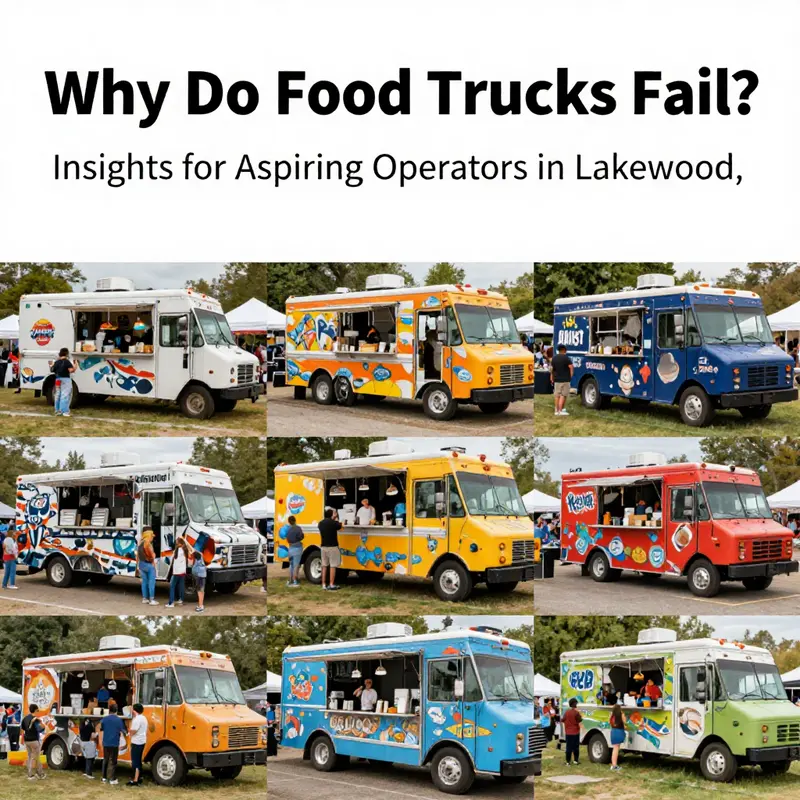
Food trucks have become a vibrant staple of local cuisine, bringing diverse flavors and experiences to communities like Lakewood. However, for many aspiring operators, the road to success is often fraught with challenges that can lead to failure. By examining the common reasons why food trucks falter, such as poor location choices, ineffective pricing strategies, operational inefficiencies, lack of strong branding, and an over-reliance on culinary skills, future food truck owners can arm themselves with knowledge and strategies to thrive. Each chapter of this article will dive into these key factors, helping you gain a comprehensive understanding of how to navigate the complexities of running a food truck business and avoid the common missteps that lead to failure.
The Spot That Bites: How Location Decisions Determine a Food Truck’s Fate
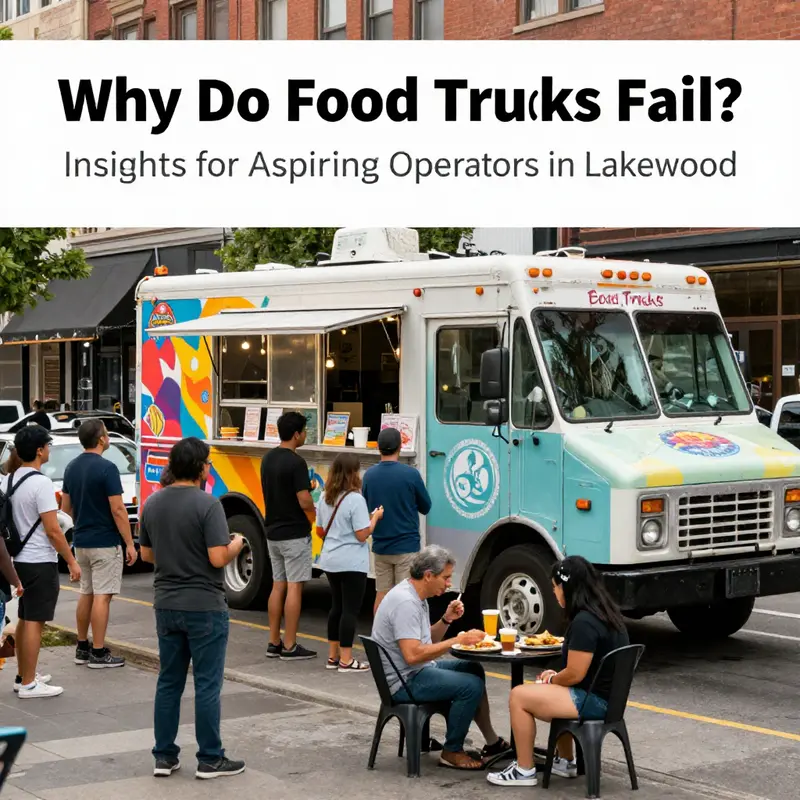
A food truck can cook the world’s most crave-worthy flavors, but if it never reaches the right people at the right time, all that talent and effort can evaporate into a quiet lunchtime sigh. Location is the quiet killer and the loud promoter of a mobile food venture. It is not merely about being seen; it is about being seen by the right people, at the right moment, in a way that converts curiosity into a daily customer. In this layer of the story of failure and success, the numbers tell a sharp, sobering truth: misjudging foot traffic accounts for a substantial share of troubled operations. Roughly a third of food-truck shortcomings can be traced back to the wrong site. Yet these figures are not a verdict carved in stone. They are a map, pointing toward a more disciplined approach to site selection that blends data with pragmatic testing. The landscape of a single city block can feel vibrant, but without a precise sense of who walks within a given radius and when they are most likely to buy, that vibrancy becomes a veneer of potential that never translates into profit.
A practical way to reframe location as a strategic decision is to shift from intuition to data-driven insight. Consider a busy downtown district that pumps with foot traffic: 20,000 pedestrians pass by on a typical day. It’s easy to assume that volume equals value, but the reality is more nuanced. If only 12 percent of those passersby fit the truck’s target profile—those with disposable income and a propensity to purchase mobile meals—the daily pool of viable customers shrinks to a fraction. The gap between visibility and viability is where revenue leaks occur. This is why sophisticated operators insist on mapping the catchment area not by sheer density of people but by the density of the right people. They measure office-building density within a 500-meter radius, track residential turnover to gauge how long potential customers stay in the neighborhood, and survey competitor saturation to understand how crowded the turf already is for similar offerings. Data becomes a lens, sharpening a chef’s sense of timing and a business’s sense of scale.
The core insight that emerges from rigorous site analysis is simple but powerful: location decisions that ignore the character of the local market are not just guesses; they are deliberate blind spots. When a truck sits at a corner with bold signage and a line of people in the first week, it can feel like proof that the spot is golden. But that initial surge may be a temporary storm front—an event, a festival, or a momentary curiosity that will fade. The disciplined operator looks beyond the first week and asks who is actually being reached, how often, and at what price point. They ask questions that many fledgling operators overlook: Are office workers within a short walk during lunch hours, and do they represent a repeat cohort or a one-off crowd? Do residents in nearby apartment complexes have a pattern of midweek consumption that aligns with a rotating menu? How many competing trucks are within a short radius, and what is the gap in the menu or price that could tilt a customer toward theirs instead of a rival’s? Questions like these transform a spot from a mere address into a proven revenue engine.
The evidence supports this approach with a compelling real-world example from recent industry analysis. A brand in 2024 implemented a predictive location model grounded in real-time demographic and behavioral data. Within weeks, its average daily revenue surged by more than two hundred percent. The model didn’t simply tell them where to park; it guided them to times of day, days of the week, and micro-areas within the city that aligned with their product and price position. It showed how some blocks performed best during late-afternoon shifts when nearby offices emptied, while others thrived near mixed-use hubs that offered a steady blend of workers, students, and residents. The outcome was not luck but a disciplined reframing of location as an ongoing, testable hypothesis rather than a single, fate-determined choice. This is not a call to abandon the romance of street-side visibility; it is a call to couple that romance with a steady cadence of data checks, experiments, and adjustments that keep the truck in the right zip code at the right hour.
What does this look like in practice for a small operator trying to build a sustainable business rather than a one-season fling? It begins with a deliberate definition of the target customer and a careful translation of that definition into a location strategy. The first step is mapping the catchment with a realistic travel radius and then layering demographic signals on top of it. Office density is not just a count of buildings; it is a proxy for potential lunch-hour demand, particularly when those offices are occupied by workers who prefer quick, flavorful meals over elaborate sit-down options. Residential turnover matters because it signals how quickly a neighborhood can replenish repeat customers who accrue as a routine in daily life. Competitor saturation is another critical metric because a crowded field can depress price points and lead to fatigue among potential repeat customers. When a site looks promising on one axis but falls short on another—say high foot traffic but low disposable income—the operator must recalibrate, perhaps by adjusting menu pricing or introducing a lighter, faster option during peak hours.
To translate these ideas into an actionable plan, consider the logic behind a predictable, repeatable process rather than a one-off discovery. Start by establishing a baseline: list several candidate locations with a similar flow of potential customers and compare them using the same set of criteria. Then run short, controlled experiments—lunch-hour pop-ups on two or three adjacent days, for example—to observe how customers respond to the truck’s presence, the menu, and the price point. The outcome of such experiments will reveal how much of the traffic is truly viable, how price sensitivity plays out in the local ecosystem, and whether a given site can sustain consistent daily revenue. The strength of this approach lies in its transparency: the data speaks, and the operator learns to hear it. If a site does not deliver the expected economics after a measured trial, it is not a failure of taste or skill; it is a corrective nudge toward a more precise, more profitable alignment with the market.
The conversation around location also benefits from looking outward to the ecosystem of events and seasonal demand. Static street corners are essential, but so are the dynamic surges that come from festivals, office park gatherings, and pop-up street markets. Operators who understand that a single venue is not a fixed fate can leverage itinerant strategies to maximize revenue. They can position the truck to serve a high-traffic area during the week and relocate to event-rich districts on weekends or special occasions. In this context, the concept of a single “best spot” dissolves into a flexible, intelligent network of locations that adapt to the rhythms of the city. For those eager to explore how event-driven demand can be harnessed in practice, see 2026s-best-food-truck-rallies-what-lakewood-has-in-store, which offers a window into how rally dynamics, crowd flow, and timing can reshape what counts as a profitable site.
Ultimately, the lesson from location-focused analysis is not that great spots are scarce, but that great spots are data-driven and context-aware. The spot must be evaluated with a clear picture of who is nearby, what they want, and when they are most receptive to a mobile meal. It must be tested and refined, with the willingness to shift or withdraw when the numbers no longer support the growth plan. It must also be integrated with broader business systems—pricing strategy, menu design, and marketing—to ensure that a high-visibility location is matched by efficient operations and a compelling value proposition. When location is treated as a strategic asset rather than a decorative backdrop, a food truck moves from chasing foot traffic to cultivating a sustainable, predictable stream of daily customers. That is the difference between a season of novelty and a season of steady, repeatable success.
For a wider view of how location interacts with other pillars of the mobile-food venture, consider the broader narrative of why food trucks fail and how location fits within that story. A strong site is powerful, but it must be supported by a cohesive system of product positioning, pricing discipline, and operated efficiency. The data-driven approach to location helps prevent missteps that stem from overestimating demand or underestimating competition. It invites operators to design a business that can endure the inevitable shifts in foot traffic, seasonality, and economic conditions, rather than chasing a single lucky moment. In the end, the fate of a food truck’s location is not fixed in a moment of street-level guesswork. It is shaped by disciplined inquiry, careful experimentation, and a willingness to move when the numbers dictate a change. A truck that treats location as a living part of its business, rather than a one-time choice, has a better chance of surviving the crowded, competitive landscape and turning street presence into lasting profitability.
External resource: https://www.foodbusinessnews.net/articles/2024-04-23-food-truck-success-factors
Internal reference for event-driven demand: 2026s-best-food-truck-rallies-what-lakewood-has-in-store
Differentiation on Wheels: How Weak Positioning and Pricing Undermine Food-Truck Success
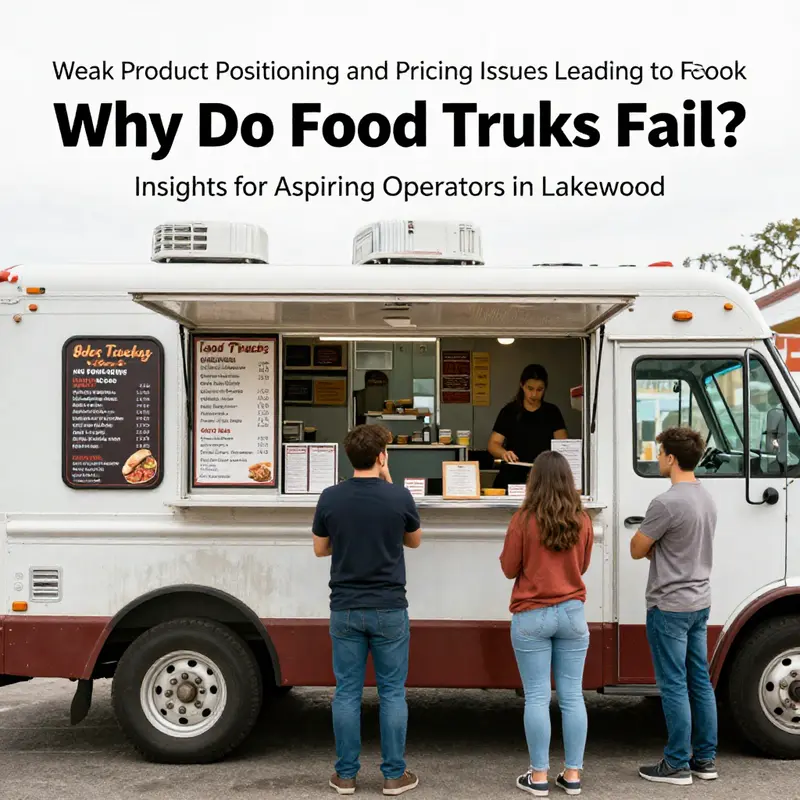
In a landscape where the next sizzling tray can be spotted two blocks away, a food truck’s fate often hinges on something more elusive than a chef’s flair: how well the truck positions itself in the market and how it prices its offerings. Positioning is the promise you make to a customer about what they should expect when they choose you over the dozen neighboring options. Pricing is how that promise translates into a tangible decision at the moment of choice. When these two elements are mishandled, even a truck with solid cooking can drift into obscurity, eventually failing not for lack of talent but for a failure to define and defend a clear, valuable place in a crowded marketplace.
A truck with weak product positioning tends to blur into the backdrop of a bustling street scene. Without a clear market differential, customers perceive little difference between options beyond the price tag. That perception is a dangerous trap because, once differentiation collapses to price, the decision frictions shrink to a single variable: cost. In such scenarios, consumers compare calories and color against the bottom line, and what remains is a race to the lowest price. This is not just a minor inconvenience for the operator; it is a structural threat to profitability. If two or three trucks offer similar menus and comparable quality, people will naturally drift toward the cheapest alternative, especially during peak lunch periods when time is scarce and convenience becomes a proxy for value. The resulting price competition erodes margins and makes sustainable growth feel like a mirage.
The antidote to this drift is a compelling, defendable USP—a clear reason the truck exists beyond cooking well. A strong USP can take many forms. It might be a signature dish that embodies a unique technique or a distinctive cultural lens. It could be a niche cuisine that has limited local supply, or a quality-focused promise that elevates ingredients to something unmistakable. The critical point is that the USP must be credible, consistently delivered, and relevant to a defined audience. Without it, the menu becomes a collection of generic items that could be offered from any street corner or storefront, leaving price as the sole differentiator and inviting a perpetual price war that chips away at margins.
Even when a truck has a discernible USP, pricing remains a delicate craft. The art and science of pricing converge where customers perceive value, not merely cost. Prices that are too high invite complaints and poor volume; prices that are too low erode profitability and can signal low quality in the eyes of discerning customers. The literature on mobile food pricing suggests a pragmatic band where customers expect to spend a certain range for a casual mobile meal. When a menu is priced outside this range, demand falls not because the food is unappealing, but because the perceived value fails to align with price expectations. A well-executed pricing strategy does more than cover costs; it communicates a value narrative that supports the positioning strategy.
The danger of a price-only mindset is a familiar trap in a market where differentiation is thin. If customers cannot perceive a meaningful difference between trucks, they default to the lowest price. In this environment, even a small miscalculation—whether a slightly inflated price for a mediocre portion or a modest discount on a weakly differentiated product—can tip the balance toward financial stress. The result is a fragile equilibrium that cannot withstand even modest fluctuations in foot traffic, weather, or competition. This “race to the bottom” strategy, once adopted, becomes a self-inflicted wound: margins compress, cash flow tightens, and the ability to invest in better ingredients, staff training, or marketing diminishes.
The real-world implications of weak positioning and poor pricing are not abstract. A poignant case study from a LinkedIn article titled Why Our Food Truck Failed (and Why it Didn’t) illustrates how pride and a reluctance to pivot can accelerate collapse. The author reflects on recognizing losses late and resisting data-driven adaptation, ultimately paying a heavy price for ego-fueled decisions. The narrative reinforces a crucial lesson: a successful food truck is a system, not a solo performance. It relies on data-driven insights to refine the USP, calibrate the price-to-value equation, and align day-to-day operations with larger strategic goals. When operators cling to unexamined assumptions—about what their customers want, what price the market will bear, or how their product should be perceived—their business can unravel quickly as costs rise and customer trust wanes.
Within this framework, branding and visibility emerge as essential levers that support positioning without inflating costs. A truck’s brand identity—its visual language, its tone of voice, and the story it tells—helps customers remember the promise it makes. When branding is cohesive, it reinforces the positioning and lends credibility to the price. Conversely, a weak or inconsistent brand can leave a promising dish feeling indistinguishable from the competition, making price the only lever left to pull. Research shows that professional, unified visual identity can boost customer acquisition by a striking margin, illustrating how critical branding is to the overall value proposition. A truly differentiated product, supported by a strong, coherent brand, creates a perception of higher value that can justify pricing that reflects quality rather than cost alone.
Establishing a robust value proposition also entails a practical approach to menu engineering. It is not enough to craft a signature dish; the menu must tell a coherent story that supports the price. A well-designed product matrix can guide testing and scaling, ensuring that the most distinctive items carry the most favorable unit economics. In practice, this means pairing high-margin core items with less expensive but complementary offerings, so the average check rises without compromising the perception of value. It also means resisting the temptation to chase every trend with a scattered menu. A focused, disciplined menu anchors the positioning and reduces waste, complicates inventory planning less, and bolsters consistency—each factor feeding back into customer trust and willingness to pay a premium for perceived quality.
From an operational standpoint, the link between positioning, pricing, and efficiency cannot be ignored. A truck that positions itself around a clear niche will naturally attract a specific customer segment. That alignment should cascade into marketing messages, social proof, and even partnerships that reinforce the value story. When the market sees a truck as the go-to option for a particular experience, price becomes an element of trust rather than a barrier to entry. The advantage of a well-structured positioning and pricing strategy is that it supports more stable demand signals. It reduces the risk that a single misstep in inventory or labor costs will wipe out the margin, because the business has built a buffer through its higher perceived value and through a more predictable demand profile.
To illustrate how positioning translates into practical choices, consider a path that many successful operators follow: define a precise audience and craft a compelling value narrative around a signature concept, test the market with a disciplined pricing framework, and iterate based on data rather than ego. The testing phase is not a luxury; it is a necessity. Small pilots with limited menus or temporary pricing experiments can reveal how customers perceive value and where the tipping point lies between affordability and profitability. The insights gained from this process can then inform a sustainable pricing model—often a tiered approach that captures different willingness-to-pay within the same brand universe. In real terms, this means that the price of a premium item can be justified by its distinctive ingredients, its preparation method, or its cultural resonance, while core items remain accessible to a broad audience. The goal is not to maximize price per item in a vacuum but to maximize the lifetime value of each customer by delivering consistent, valued experiences that justify what they pay.
A practical cue for operators seeking a more data-informed approach comes in the form of an accessible resource that aligns with the realities of a startup’s constraints. For those who want to see how a lack of data-driven adjustments can derail a venture, the LinkedIn piece mentioned earlier offers a sobering reminder. It underscores the importance of humility in business decisions and the need to respond to market feedback rather than clinging to luck or pride. Such stories, while cautionary, serve as a reminder that a robust positioning and pricing strategy is not a luxury but a prerequisite for sustainable growth in a sector where the competitive field shifts with every block party, festival, or commuter crowd.
As a concluding thread, the connection between positioning, price, and profitability becomes clear: a truck that communicates a clear promise and charges in a way that reflects true value stands a much better chance of thriving. The branding work—visual identity, narrative, and consistent experience—acts as the scaffolding that supports pricing by shaping perceived value. The operational discipline to maintain inventory, quality, and timely delivery ensures that the price-to-value equation remains credible in the eyes of customers. When these elements align, the business ceases to be a gamble of foot traffic and becomes a repeatable, defendable model. The lesson is not merely to cook well but to think strategically about who the food is for, what they are willing to pay, and how the market will perceive and remember the experience.
For readers who want a practical touchstone on how to translate this into action, consider exploring resources tied to industry best practices, such as the discussion of models and configurations that best support differentiation and reliability in a mobile format Best food truck models for Lakewood startups. And for a broader cautionary perspective, the external reflection on ego and data-driven decision making offers a sobering reminder that success rests on disciplined adaptation rather than attachment to a single vision—especially in a business as fluid as mobile food.
External resource: https://www.linkedin.com/pulse/why-our-food-truck-failed-and-why-it-didnt-michael-johnson/
null
null
Brand Identity as Compass and Catalyst: How Visual Storytelling Shapes Food Truck Success and Failure
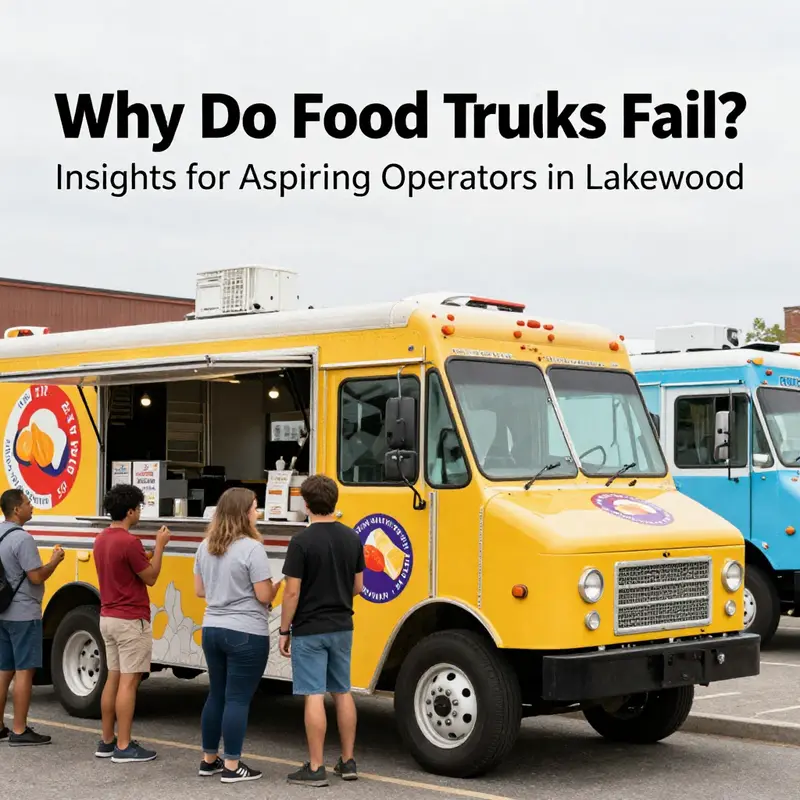
Brand identity is not a decorative afterthought for a food truck; it is the compass by which a struggling venture or a thriving one orients itself in a crowded marketplace. In cities like Kuala Lumpur, where a steady stream of new stalls competes for the same lunchtime crowds and after-work wanderers, a truck’s visual language, tone, and narrative become the first and most consistent signal to potential customers. It is the signal that says: We know who we are, we know what you will get, and we are reliable enough to return to. When identity is clear and authentic, customers instinctively feel they can trust the experience even before tasting the first bite. When it is muddled or derivative, the numbers speak in the negative—foot traffic dips, repeat visits falter, and word of mouth becomes a whisper rather than a shout. In the broader arc of why food trucks fail, brand identity sits at the center of a chain reaction: it shapes perception, guides pricing, influences location dynamics, and anchors operational discipline all at once.
Brand identity functions on two interlocking planes: the visible, tangible elements that people notice first, and the intangible story that people believe about a truck after a few interactions. The visible plane includes the truck’s livery, typography, color palette, and logo, extended across menus, napkins, and uniforms. But the story plane—the narrative the brand consistently tells on menus, social media, and in-person exchanges—matters just as much. A strong identity does more than attract attention; it creates expectations. If those expectations are met, a customer’s perceived value increases, and price sensitivity can soften. If the expectations clash with reality, even the best-tasting dish can fail to convert loyalty into repeat business. In markets like Kuala Lumpur’s vibrant street-food ecosystem, a cohesive brand helps a truck cut through the noise and establish a recognizable personality that can be recalled in a crowded app or a busy alley.
The research on brand identity in the food truck sector emphasizes not only the mechanics of a striking visual identity but also the storytelling consistency that carries across digital channels. Interviews with independent founders highlight what is described in industry circles as an excellent physique brand identity: a cohesive, authentic presence that feels built, not assembled, across all touchpoints. This is not simply about having a pretty logo; it is about aligning the truck’s visual identity with a clear brand promise and a distinctive narrative. When a truck tells a consistent story—whether it speaks to cultural heritage, seasonal ingredients, or a witty, on-brand voice in social posts—the audience begins to trust it more quickly. Trust translates into engagement, which in turn drives footfall and, critically, customer retention in a market where many operators offer similar menus at similar price points.
A strong identity is a force multiplier for differentiation. In a city where numerous stalls may share a similar menu style or price tier, brand identity becomes the differentiator that allows a customer to remember a truck in a lineup. It enables a truck to own a particular moment—be it lunch hours, after-work gatherings, or weekend street festivals—by signaling what makes the experience unique. The brand’s visual cues and its recurring narrative work together to create recognition. When someone has had a positive encounter with a truck, the next encounter feels less random and more like meeting a known character with a consistent set of expectations. This is precisely why a cohesive brand often correlates with higher customer acquisition and retention rates in crowded markets. A unified visual identity, paired with a credible story, makes repeat visits more likely and reduces the cognitive load a potential customer faces when choosing from a sea of options.
The consequences of weak brand identity are equally instructive for understanding failure. A beverage of this kind named “brand forgetfulness” can permeate through a market in which customers have to decide in a split second who to support. When a truck lacks a distinct selling point—whether that is a signature item, a memorable theme, or a compelling brand story—it struggles to capture attention in a saturated field. The absence of a coherent identity translates into underwhelming social media engagement, minimal word-of-mouth promotion, and fragile loyalty. In such conditions, even if the food quality is high, the brand’s lack of resonance makes it hard to convert casual testers into regulars. The risk is magnified by the fact that the food truck business often relies on impulse decisions and proximity. If a passerby cannot quickly recognize what your truck stands for, the chance they will stop declines dramatically.
Another dimension to consider is how identity interacts with broader business systems. A strong brand is easier to scale because it creates repeatable patterns across locations and channels. When a truck has a well-defined visual language and narrative, it is easier to translate that identity into standardized processes—consistent recipe development, uniform service rituals, and predictable customer experiences. In practice, this means a brand can support a more disciplined approach to pricing and menu design. Consumers tend to accept a price range when they feel confident in the brand promise and the quality it implies. Studies note that mobile food prices generally fall within a given band, and a robust brand helps justify being at the higher end of that band without triggering price resistance. The brand’s trust equity reduces the perceived risk of trying a new item, increasing trial rates of menu innovations and seasonal specials.
Brand identity also anchors operational decisions that can protect margins. When a truck’s identity emphasizes a core concept—say, a strong connection to a particular cuisine, or a commitment to locally sourced ingredients—the menu can be streamlined around that concept. This aligns with the broader insight that successful trucks often employ standardized product matrices and central-preparation strategies that maintain consistency while controlling waste and labor costs. A well-articulated brand story makes it easier to defend decisions around supply chain choices and vendor relationships, because those decisions become part of a larger narrative about quality, provenance, or cultural respect. In turn, this consistency reassures customers and reduces the churn that often accompanies transient menu experimentation.
Perhaps most important, brand identity shapes the emotional contract with customers. People do not just buy a meal; they buy an experience that resonates with who they are or who they want to be in that moment. A distinctive brand makes this alignment more likely. In competitive markets, where a dozen trucks may offer similar foods within a small radius, the brand’s personality can turn a one-time purchase into a habit. When the storytelling feels real and the visuals feel intentional, customers begin to interpret a meal as part of a larger lifestyle choice—the kind of choice that prompts them to seek out a particular truck again, to recommend it to friends, and to become ambassadors across their social networks. The moral of this narrative is not a simple maxim about branding as a nice-to-have; it is that brand identity is a survival mechanism in a crowded, price-competitive, and experience-driven sector.
The practical implication for operators is clear. Treat brand identity as a strategic asset rather than a cosmetic upgrade. Invest in a cohesive visual identity that aligns with a clear brand promise, then extend that promise consistently across every touchpoint—from the menu board to the返信 social media feed to the way staff greet customers. The goal is to create a seamless, authentic presence that customers can recognize and trust at a glance. In doing so, operators can create a stronger platform for controlled pricing, reliable partnerships, and scalable operations. It is not enough to be excellent at cooking; one must also be excellent at telling the story of that cooking in a way that invites trust and repeat engagement. A memorable brand becomes a navigator through complexity, helping a venture survive missteps in location, pricing, or logistics and emerge with a loyal base of customers who see the truck as a reliable feature of their daily or weekly routines.
For readers seeking a practical lens on branding and menu design, consider how these concepts translate into the specific context of a local startup ecosystem: the best food truck models for Lakewood startups, which illustrate how branding, menu standardization, and scalable design intersect to form a coherent business model. Best food truck models for Lakewood startups. This example underlines that brand identity is a shared language across product development, marketing, and operations, not a solitary banner only used for decorative purposes. It is this shared language that enables a truck to be memorable, trustworthy, and profitable in the long run.
Ultimately, the chain of cause and effect in food truck failure often loops back to whether the brand can convincingly articulate a unique value proposition and sustain that message through every customer encounter. A compelling brand identity does more than decorate a truck; it creates a framework within which a business can operate with clarity, resilience, and speed. In markets as dynamic as Kuala Lumpur and as crowded as any urban street, that clarity can spell the difference between fading into the crowd and becoming a go-to option for a growing circle of fans. When identity is strong, decisions around location, pricing, and operations align with a clear purpose, and the venture moves with a confidence that is difficult for more ad hoc enterprises to sustain. If the brand tells a true story and lives up to its promise, the food truck becomes less vulnerable to the shortcuts that often derail new ventures and more capable of weathering the inevitable fluctuations of the food economy.
External resource: Physique Brand Identity Persuasiveness in Social Media Message Content
Resilient by Design: Systems that Sustain Mobile Kitchens
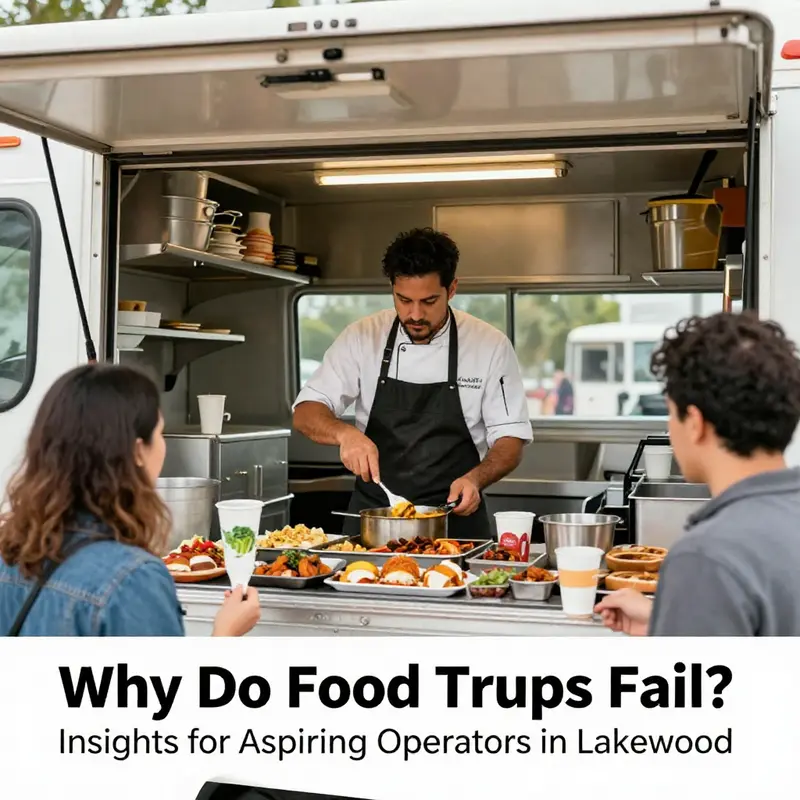
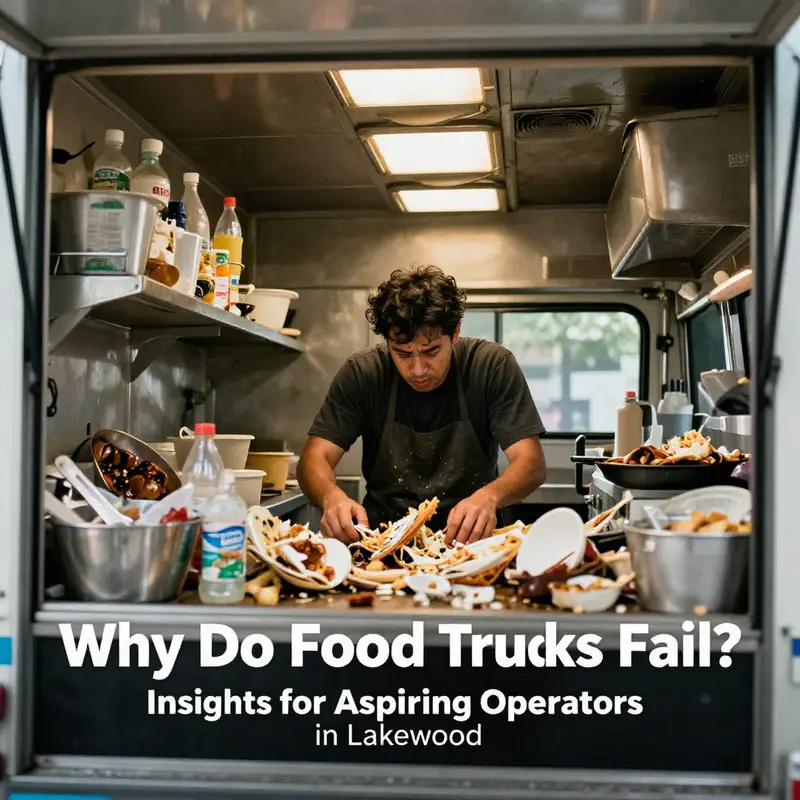
Culinary talent is the heartbeat of a food truck, but talent alone does not guarantee resilience. In a mobile kitchen, durable processes, scalable systems, and thoughtful contingency planning keep service steady when staff are unavailable or demand spikes. Without redundancy, even great meals can become a bottleneck that disrupts the entire operation.
The first fracture often shows during handoffs. If the menu, recipes, or preferred suppliers hinge on a single person, disruption travels through prep, assembly, and service. Cross training allows team members to rotate between tasks, reducing single points of failure and preserving consistency across shifts.
Technology offers speed and visibility but introduces new fragilities. Digital inventory, POS and analytics must be governed and supported by offline backups and simple SOPs so the business can run when the network hiccups. The better operators design tech to serve human judgment rather than replace it, and they document processes so the team can act with confidence when plans change.
A practical anchor is a compact standardized matrix for menu items, portions, pricing bands, and core steps. Standardization is not rigidity; it is a blueprint that enables scale, training speed, and reliable quality. It also creates room for iteration on margins without destabilizing operations.
Leading pieces of the architecture include a central kitchen or shared prep hub where feasible, creating consistent components and reducing waste. The fleet of trucks then delivers meals built from the same core processes, even when staff rotates or locations shift. Contingency planning, from offline order tracking to paper backups, keeps revenue flowing and trust intact.
Together these pieces form a durable craft on wheels: a kitchen where skill remains central, but systems carry the weight when the unexpected occurs. The result is growth that endures across days, locations, and personnel changes, keeping customers returning and operators profitable.
Final thoughts
Understanding the reasons behind food truck failures is vital for aspiring operators in Lakewood. By focusing on choosing the right location, effectively pricing products, improving operational efficiency, establishing a strong brand identity, and implementing solid business systems, you can mitigate risks and increase your chances of success. Emphasizing both culinary skills and strategic planning can pave the way for a thriving food truck business that resonates within the community. Remember, it’s not just about serving great food; it’s about creating a well-rounded business approach that aligns with local demands.