
Starting a food truck in Lakewood can be an exciting adventure molded by creativity, culture, and community spirit. Yet, amidst the thrill, it’s vital to understand your tax obligations. This guide breaks down the essential steps—from registering your business and securing the necessary permits to tracking your income and expenses, and understanding how to pay federal, state, and local taxes. Each chapter equips you with the knowledge to turn your food truck dreams into a successful reality while staying compliant and connected to the vibrant Lakewood community.
Registration That Pays: Building a Tax-Smart Foundation for Your Food Truck

Launching a food truck is an adventure in speed, flavor, and forward planning. The core idea is to treat registration as a foundation, not an afterthought. When you register properly, you create the framework that makes every dollar you earn traceable, deductible, and legally protected. This chapter outlines how to pick the right business structure, obtain an EIN, complete state and local registrations, and establish disciplined recordkeeping. You will learn why a separate business bank account and good bookkeeping matter for cash flow, taxes, and audits. The chapter also covers federal and state tax obligations, quarterly estimated payments, and practical tips to stay compliant without slowing growth. By the end, you should have a clear, actionable path to a compliant, tax-smart operation for your food truck.
Licenses, Permits, and the Tax Trail: A Unified Guide for the Mobile Food Business
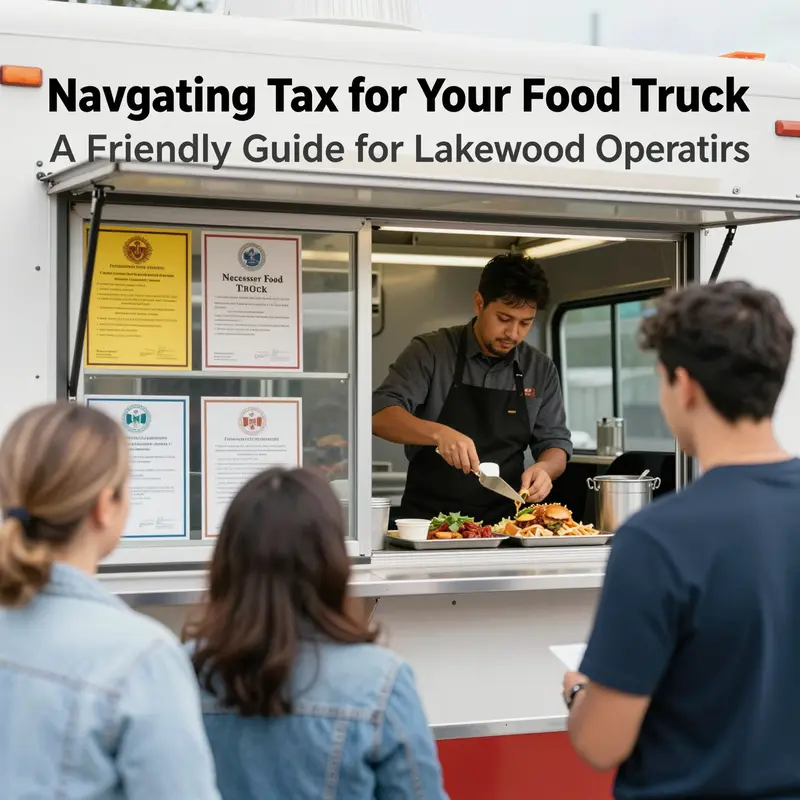
A food truck thrives on two kinds of momentum: the speed of service and the solidity of compliance. In the rush to serve fresh meals, it can be easy to overlook how licenses, permits, and tax obligations shape every shift you work. Yet these elements are not roadblocks; they are the framework that keeps your business running smoothly, protects your customers, and clarifies where profits go. When you understand how licenses and taxes intersect, you remove much of the guesswork from daily operations. You begin to see that the right permits are not just bureaucratic hurdles but essential signals of legitimacy that support steady sales, predictable cash flow, and the confidence of lenders, landlords, and partners. The path from yellow license plate to green, compliant operation is a single thread pulled through a careful wardrobe of approvals, each one tied to a specific facet of taxation and reporting. As you travel this path, you will learn how to keep your records clean, how to anticipate filing deadlines, and how to align your business structure with both tax efficiency and regulatory compliance. This is not about fear of penalties; it is about shaping a durable foundation for a mobile kitchen that can roam from one busy corner to the next with confidence and clarity.
To begin, think of licensure as the essential doorway to lawful operation in your city or county. The first door is the general business license. In most places, operating a mobile food vendor requires permission from the local government to conduct business within the jurisdiction. This license often comes paired with a seller’s permit, sometimes called a sales tax permit, which authorizes you to collect and remit sales tax on taxable food items. Without these, even if your recipes are flawless, your wheels can end up parked in the wrong driveway, with revenue trapped in the pocket where legal clearance should stand. The process typically involves a simple application, a modest fee, and confirmation that your business name, address, and ownership structure are in good standing with local rules. The reward for completing this doorway is tangible: you can legally present your menu, issue receipts that customers and regulators recognize, and create a traceable revenue stream that can be audited if ever needed.
Another critical gateway is the federal Employer Identification Number, or EIN. This unique identifier from the Internal Revenue Service serves more than a bureaucratic label. If you plan to hire employees or to organize your operation as a formal entity such as an LLC or a corporation, the EIN becomes your business’s social security in the tax world. It enables you to open a business bank account, file taxes under a recognized entity, and fulfill payroll obligations if your plan includes team members. Applying for an EIN is free and generally straightforward, done online in a brief session. Even if you start as a sole proprietor, knowing that you can obtain an EIN later without friction can shape your long-term strategy and make future growth more seamless.
Health and safety come next through the Food Service Establishment Permit. This permit is the health department’s stamp of approval that your kitchen meets sanitation standards, safe food handling practices, and proper facility maintenance. The path to this permit often includes an on-site inspection of your vehicle, kitchen setup, cold and hot storage, handwashing stations, and waste management, as well as proof that you meet local food safety requirements. In many jurisdictions, staff training in food handling is either required or strongly encouraged, ensuring that everyone who touches food understands cross-contamination risks, allergen management, and safe temperature controls. The permit is not a one-off badge; it is a living credential that can be refreshed through periodic inspections and continual adherence to safety standards. When you invest in compliant equipment, clean premises, and consistent hygiene practices, you reduce the risk of closures and the headaches that come with violations.
Where you operate also matters. If your plans include selling in public spaces like parks, streets, or festival grounds, you will likely need a Temporary Use Permit or Vendor Permit. These permits recognize that a mobile vendor occupies public space and may affect pedestrian flow, traffic, or the local vendors’ ecosystem. They come with specific operating parameters—where you can park, what hours you may serve, limits on portable equipment, and sometimes explicit insurance requirements. Fees are common, and sometimes you’ll be asked to submit an operating plan that demonstrates how you will manage waste, maintain cleanliness, and respect neighboring businesses. The goal of these permits is not to burden you; it is to ensure that a coordinated environment remains safe and inviting for everyone who visits the area.
All these licenses and permits are part of a broader tax landscape that affects every dollar you generate. Federal taxes come with two main threads for small food-service operators: income tax and self-employment tax. If you are a sole proprietor or a member of a single-member LLC, you’ll likely owe self-employment tax on net earnings, alongside ordinary income tax. The self-employment tax rate has historically hovered around a level that covers Social Security and Medicare contributions, with the remainder determined by your actual profits. The tax on income is calculated by reporting your business profits on Schedule C (Form 1040) and carrying any net income into your personal return. Because taxes aren’t withheld from a paycheck for a business of this kind, it’s essential to pay estimated quarterly taxes. This means making four tax payments spread across the year, aligned with your profit expectations. The due dates—April 15, June 15, September 15, and January 15 of the following year—provide a rhythm that, if followed, prevents you from facing penalties or large backdated liabilities. Your preparation hinges on good record-keeping: income, cost of goods sold, fuel, maintenance, insurance, permits, and marketing expenses all matter, not because they look good on a spreadsheet, but because they shape the tax you ultimately owe and the deductions you can claim.
State and local taxes add their own layers. Many states impose income taxes for small businesses, while cities may require additional business licenses or fees. Sales tax is a universal consideration for most food items, and the responsibility to collect and remit rests with you, the seller. This means your sales tax permit is more than a boundary; it’s the mechanism by which you pass tax collections to the state, typically on a monthly or quarterly cadence. The exact rules—rates, filing frequency, and exemptions—vary widely from one jurisdiction to another, so a careful, local study is essential. You’ll want to align your record-keeping with your tax obligations, making sure every taxable sale is captured, every exemption is documented, and every remittance reflects accurate totals. When you do this, the tax process becomes a predictable routine rather than a rogue charge that appears at the end of the year.
Technology, paperwork, and good habits all play roles in this system. Many operators find electronic payment systems and online filing platforms convenient for paying federal and state taxes. The core idea is to move away from manual, ad hoc calculations toward a disciplined, recurring process. You don’t need to become an accountant, but you do need to build a reliable workflow: track every dollar you earn, categorize expenses, and set reminders for quarterly estimates and filing deadlines. Keeping receipts for everything—from cups and napkins to propane and maintenance—creates a reliable paper trail that can protect you in an audit and support legitimate deductions. In an industry where margins can be thin, every legitimate deduction matters, from the cost of ingredients and packaging to licensing fees and insurance premiums.
To bring this together in a single, coherent picture, imagine your license and tax journey as a cycle rather than a checklist. You secure a business license and a seller’s permit, then obtain an EIN if needed. You pass the health inspection to earn the Food Service Establishment Permit, and you secure temporary use permissions when you operate in public spaces. With these doors open, you begin reporting—monthly or quarterly—your income and expenses to the federal and state authorities, while also collecting and remitting sales tax on your taxable items. You store every receipt, every invoice, and every ride to the gas station with equal care, because those records are the true currency of your tax compliance and your ability to claim legitimate deductions on your return. And as your business grows, you revisit these licenses and permits, renewing where required and expanding coverage to new jurisdictions. The result is not a rigid compliance regime but a flexible, integrated system that supports growth without surprises.
For a practical takeaway that also points toward broader industry insight, consider exploring resources on starting and scaling a mobile food venture. A useful starting point is the overview on the best food truck models for Lakewood startups, which can offer perspective on how operators balance mobility with regulatory considerations and efficiency in preparing for growth. You can visit that resource here: best food truck models for Lakewood startups.
As you move through these steps, remember that the ultimate aim is sustainable compliance rather than box-checking. A good regulator is a partner when you communicate openly about your plans, your schedule for inspections, and your commitment to safe, compliant service. A good tax practice is a partner too: it helps you keep earnings visible, reduces the risk of penalties, and frees you to focus on serving your customers with confidence. If you find the landscape overwhelming, you’re not alone. A qualified tax professional who understands the nuances of small food-service businesses can help you tailor your approach, identify eligible deductions, and ensure you’re meeting federal, state, and local obligations without overpaying. This partnership can be the difference between a season of stressful compliance and a longer arc of steady, lawful growth.
In the end, obtaining licenses and permits is not merely a bureaucratic formality; it is the transparent gateway to legitimate operation, informed tax planning, and the everyday reliability your customers expect. When you integrate strong permitting with disciplined record-keeping and proactive tax management, you build a foundation that makes your mobile kitchen resilient in a competitive landscape. Your truck becomes not just a vehicle for cooking but a compliant, scalable platform for entrepreneurship, ready to roll from one busy corner to the next with confidence. For further official guidance on starting and growing a small food-service business, you can consult the Small Business Administration’s resources, which offer broad, practical advice across licensing, permits, and taxes: https://www.sba.gov.
From Sizzle to Schedule C: Tracking Income and Expenses for a Tax-Ready Food Truck
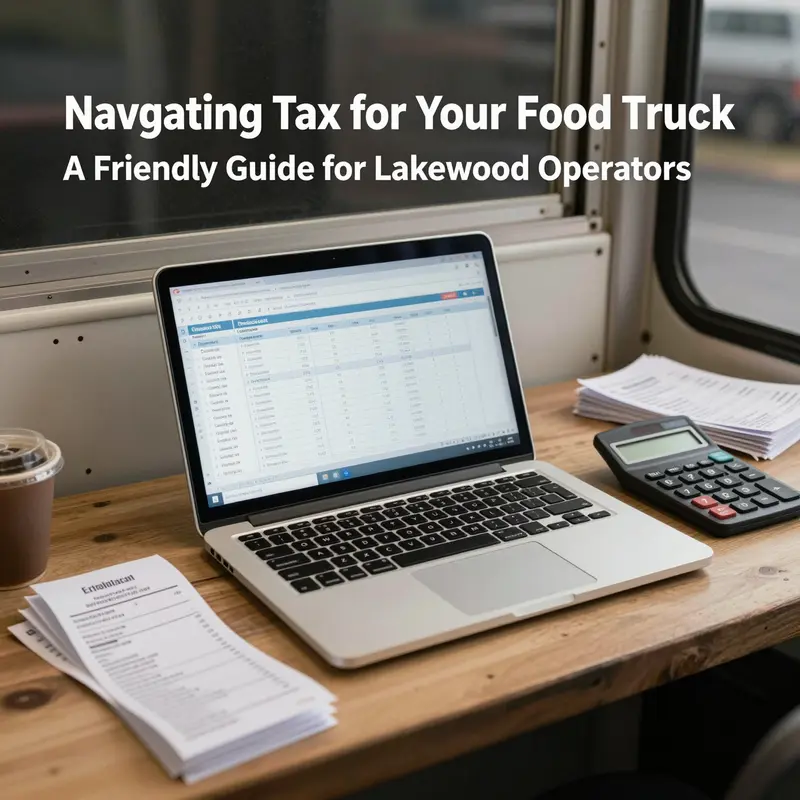
The streetfront is where your food truck earns its keep, but the back office is what keeps you in business. For many operators, the thrill of serving hungry customers can outshine the quiet discipline of bookkeeping. Yet the truth is simple: taxes don’t wait for a slow day, and the most reliable path to compliance, deductions, and steady cash flow begins with how you track every sale and every cost. The moment you start treating your truck as a small business with real-time data, the rest of tax season becomes less a guessing game and more a plan you can execute with confidence. Real-time recording isn’t about vanity metrics; it’s about accuracy, predictability, and keeping more of what you earn by understanding exactly where money comes from and where it goes.
A solid bookkeeping approach begins with choosing a system that fits how you operate. You can adopt a purpose-built small-business accounting package, or a straightforward spreadsheet if your volume is modest. The important thing is that you structure categories in a way that maps neatly to tax reporting. Income streams can include daily sales from the truck, catering gigs, and pop-up collaborations. Expenses can span ingredients, packaging, fuel, maintenance, permit renewals, insurance, and marketing. When you set up your chart of accounts, you give yourself a compass for the entire year. You’ll also want to create subcategories for things like inventory purchases and waste, which matter when you calculate cost of goods sold and potential deductions. Regularly updating this structure keeps your numbers honest when you prepare returns or respond to a sudden tax question.
One of the most powerful shifts you can make is to connect your point-of-sale and payment platforms to your bookkeeping. If you accept cash, card, or digital wallets, every transaction leaves a virtual footprint. The simplest path to reliable records is to ensure your POS system exports daily settlement data and that those settlements feed automatically into your accounting software. If automatic integration isn’t available, a routine that reconciles daily sales with your bank account and processor statements will achieve nearly the same result. The benefit is twofold: you have a clear, auditable trail for each sale, and you build a solid dataset for tax purposes. This is where the real value of tracking comes alive. It’s not just about at-a-glance profitability; it’s about being able to prove your income, document your expenses, and defend deductions when the taxman asks for supporting receipts.
As you log income, you’ll inevitably confront the distinction between gross receipts and net profit. The line is important because your net profit—sales minus deductible expenses—drives your Schedule C (Profit or Loss from Business) on your Form 1040. In practical terms, every dollar that flows through your register should be categorized: what portion is the cost of goods sold, what portion is labor if you hire help, what portion covers supplies, and what portion pays for fuel and vehicle upkeep. Inventory tracking matters here. If you carry ingredients for meals, you’ll need a reasonable method to value ending inventory and cost of goods sold. A simple practice is to tally beginning inventory at the start of a period, add purchases, and subtract ending inventory. This helps align your cost base with your revenue and ensures accuracy when you calculate deductions.
Beyond the numbers, there is the reality of payment methods. Most customers pay with a mix of cash, debit or credit cards, and mobile wallets. Digital payments create clean, click-to-audit records that are gold for tax reporting. If your card payments are routed through a processor, confirm that you can export or download the daily transaction details and that these match your bank deposits. Reconciliation is your guardrail against misposted funds, chargebacks, or missing payments. When a payment does fail or a dispute arises, your records should illuminate exactly what happened and when. Timely follow-up with customers and quick refunds when appropriate protect your reputation and your books alike. The goal is not perfection in real time, but reliability over the course of a week and a month so your quarterly estimates stay on track.
The federal layer sits atop the ledger: the internal mechanics of self-employment tax and income tax. If you operate as a sole proprietor or as a member of an LLC taxed as a sole proprietor, you’ll likely owe self-employment tax on net earnings, alongside income tax. That means you’ll be calculating both your federal income tax and the self-employment tax, typically on your annual return with Schedule C. However, because you don’t have taxes withheld from a paycheck, you’ll also need to think about estimated quarterly payments. The standard cadence is to pay these in April, June, September, and January. The exact thresholds and calculation are driven by your expected annual tax liability, which ties back to the consistency and accuracy of your bookkeeping. When you maintain current records, you can estimate those payments with a fair degree of confidence rather than guessing late in the season.
Tracking expenses is just as crucial as tracking income. Categories such as fuel, vehicle maintenance, tires, insurance, licenses, health permits, and marketing costs all feed into your deductible expenses. A thoughtful approach to categorization makes your tax return smoother and your year more predictable. For example, fuel costs aren’t just a line item; they interact with mileage records, which, in turn, support deductions related to the use of your vehicle for business purposes. If you’re running your truck in multiple neighborhoods or states, you’ll also want to mark location-specific costs and permit fees. The more granular your classifications, the easier it becomes to segment your deductions and to answer questions from a tax professional with authority and clarity.
Sales tax is another tax you’ll collect and remit, depending on your jurisdiction. While it sits separate from federal income taxes, it still flows through your business as a cash management component. You’ll need a sales tax permit in many states and a systematic process for collecting sales tax on taxable items and remitting it to the state on a cadence that can be monthly or quarterly. Your accounting setup should reflect this as a liability you owe to the state, not revenue you retain. The discipline of separating sales tax from your gross income prevents confusion come tax time and helps you avoid penalties from late filings or inaccurate remittances.
Bookkeeping is not a one-and-done task. It is an ongoing discipline that requires regular checks and reconciliations. A practical routine is to perform a weekly reconciliation: compare your bank and processor statements to your accounting records, verify each sale, and confirm that refunds and chargebacks are properly recorded. If a payment is missing or a transaction is recorded twice, the discrepancy should reveal itself during reconciliation, prompting quick correction. When disputes arise, your ledger should reflect the outcome and the net effect on your revenue and expenses. The peace of mind that comes from knowing your data is accurate cannot be overstated. It reduces stressful audits, speeds up tax preparation, and increases your confidence in financial decisions, whether you’re deciding to expand the menu, invest in a new cart, or hire extra hands during peak seasons.
With the mechanics of tracking clear, you still may wonder about the practicalities of staying compliant over the year. One helpful perspective is to think of tax readiness as a continuum rather than a sprint to April. Keeping current records means you can anticipate quarterly liabilities, mitigate penalties, and optimize deductions. It also makes it easier to work with a professional. A qualified accountant or tax advisor who understands small food-service businesses can review your books, identify overlooked deductions, and help you structure your entity in a way that minimizes tax exposure while maintaining compliance. The aim is not to dodge taxes but to ensure you pay what you owe—neither more nor less—while preserving cash flow for growth. The rhythm of accurate bookkeeping underpins every strategic decision, from pricing and menu planning to managing hours and staffing.
As you read these practices into your routine, consider how equipment and operations shape your numbers. The right truck configuration and a well-chosen set of tools influence both your revenue potential and your cost structure. For instance, a strategic layout may reduce fuel usage, streamline inventory ordering, and simplify maintenance tracking. To explore practical equipment considerations and models suited to your locality, you might examine resources such as the Best Food Truck Models for Lakewood Startups. This reference can provide context for how equipment choices align with your financial planning, helping you translate a shopping list into a budget that preserves tax readiness while enabling reliable day-to-day operations. Best Food Truck Models for Lakewood Startups
Finally, keep tax education at the center of your routine. The federal framework, including Schedule C, Form 1040, and Form 1040-ES for estimated taxes, has precise requirements that can feel technical at times. Rely on your bookkeeping to supply the numbers, but don’t hesitate to seek expert guidance when you need a second set of eyes. The IRS maintains a robust resource center for small businesses and self-employed individuals, and it’s wise to consult these official materials as you plan and file. Staying informed helps you navigate changes in tax law, adjust to new deductions, and align your record-keeping with the expectations of the tax authorities. For authoritative guidance, you’ll find comprehensive information at the IRS site dedicated to small businesses and self-employed individuals.
In sum, the pathway to tax readiness for a food truck is anchored in meticulous income tracking, disciplined expense management, and a proactive mindset about quarterly obligations. Your ledger, your receipts, and your reconciliations are not just paperwork; they are the backbone of your business’s financial health. As you refine your systems, you’ll gain clarity over profitability, gain confidence in pricing decisions, and build a foundation that stands up to scrutiny, whether you’re filing a return alone or with the help of a professional. The steam from your grill will continue to rise, but so too will the clarity of your numbers, turning daily hustle into sustainable business.
External resource for authoritative guidance on tax and business finances: https://www.irs.gov/businesses/small-businesses-self-employed
From Sizzle to Statements: Taxes for Your Mobile Food Business
Running a food truck means serving meals while managing numbers. The tax side of the business can feel complex, but with a simple framework you can stay compliant and protect profits. Start with the basics: register your business, obtain an EIN, and choose a structure that fits your goals. Keep clean records of every sale and expense, using software or a reliable spreadsheet. Federal taxes for many operators are handled as self-employment income reported on Schedule C, with quarterly estimated payments if you expect to owe taxes. State and local taxes vary, so check your state revenue department for sales tax permits, filing frequencies, and any local licenses. Maintain a calendar for renewals, filings, and payments. By separating the craft of cooking from the discipline of bookkeeping, you can run a mobile operation that scales without the tax roadblocks.
If you’re unsure, seek a tax professional who understands small food businesses. An accountant can help maximize deductions, navigate estimated taxes, and ensure you’re claiming the right credits. The goal is steady cash flow and predictable tax bills, not excess penalties. For official guidance, consult IRS resources on small-business taxes and your state’s department of revenue.
Final thoughts
Successfully managing taxes for your food truck in Lakewood doesn’t have to be overwhelming. By following the outlined steps—registering your business, obtaining the proper permits, tracking your finances, and understanding your tax obligations—you can operate confidently and foster your culinary passion. Embrace the exciting journey ahead, knowing that compliance ensures your food truck thrives within our community.