
Food trucks are the heartbeat of culinary experiences, especially in vibrant areas like Lakewood. For aspiring food truck operators, understanding the right size food processor for your unique menu can make all the difference in your cooking efficiency and overall operation. Whether you’re blending up sauces for sandwiches or whipping up smoothies, the size of your food processor plays a crucial role in your kitchen’s productivity. In the following chapters, we’ll explore compact options ideal for smaller menus, high-volume processors for large-scale operations, and essential features to look for to ensure your investment is worthwhile.
Sizing the Pulse of a Mobile Kitchen: Navigating Compact Food Processor Choices for Food Trucks
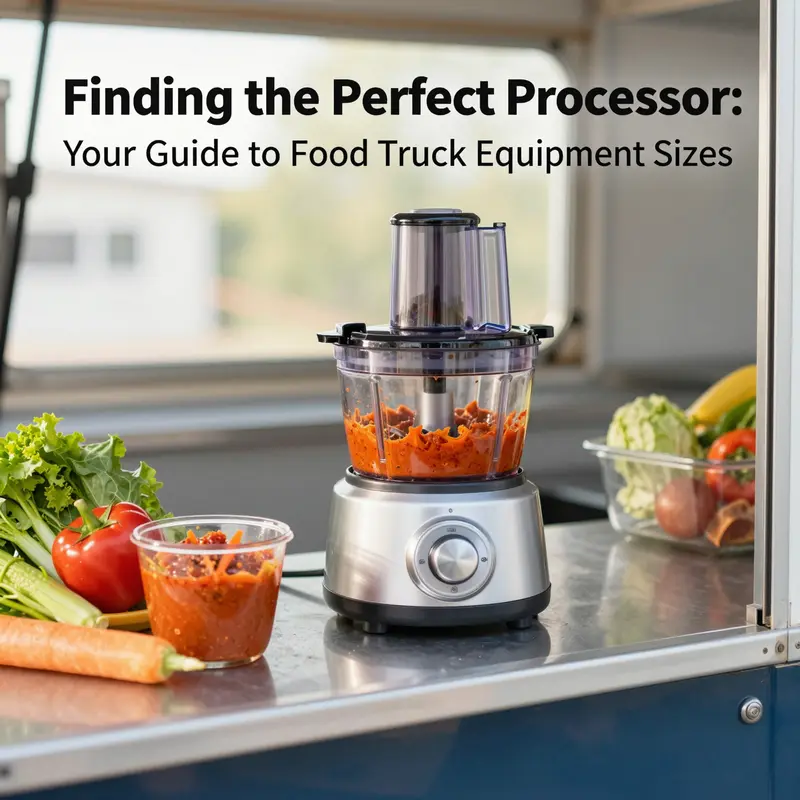
Choosing a compact food processor for a food truck means balancing speed, space, power, and safety against the menu you plan to deliver on wheels. In a truck, every inch of counter space is precious, and the pace of service hinges on how quickly you can move from prep to plate without compromising quality. The core question isn’t just what size sits on the shelf, but how that size fits into a broader workflow: ingredient prep, sauce production, emulsions, and the occasional on-site grind or blend that keeps a line moving during peak hours. The guidance that follows comes from observing the way mobile kitchens are laid out in practice, where the menu variety, daily volume, and available electrical or off-grid power shape a sensible choice. For many operators, this comes down to a compact model with only a small footprint yet enough muscle to handle vegetables, herbs, sauces, and small batches that you’ll need to churn out quickly every service window. In that sense, the decisive criterion is less about chasing the most horsepower and more about whether the unit integrates smoothly with a tight kitchen footprint while preserving cleanability and reliability across back-to-back shifts. The palette you work with—hamburgers, street corn fillings, salsa and guacamole bases, and quick sauces—often benefits from a single machine that can chop, blend, and emulsify with minimal fuss. This is what makes compact models so attractive: they provide a practical bridge between the demands of a bustling service and the constraints of a mobile kitchen. When planning, most operators cluster around a few core metrics that translate directly into everyday performance. First, consider counter space. Many compact processors fit within about 220 millimeters in width by 220 millimeters in depth, with a height around 405 millimeters. That footprint is small enough to tuck against a wall, fit beside a sink, or nestle into a corner of the prep station without obstructing movement. Second, look at capacity in liters. A range of one to three liters is typically adequate for processing vegetables, herbs, sauces, and small batches of fillings. It’s large enough to reduce repetition, yet small enough to keep batches fresh and manageable without waste. Third, power matters. Models in the 550 to 700-watt range provide a steady blend and chop without stalling on tougher tasks, which matters when you’re dehydrating peppers, emulsifying dressings, or pureeing beans for quick dips. Durability follows close behind: stainless steel construction offers longevity in a truck’s harsher environment, and it supports easy cleaning after a rush. Fourth, portability and stability are non-negotiable in a moving kitchen. A compact unit should be stable enough to withstand the shakes of transit, and ideally it either locks to the counter or has a compact base that prevents sliding during service. The moving kitchen is a tough testing ground, and any processor that wobbles or shifts under pressure can become a safety issue and a workflow bottleneck. When you map out the layout, you almost always end up prioritizing a balance: something small enough to tuck into a corner, yet robust enough to handle a couple of tasks without switching devices. This typically points toward a mid-range, durable, compact processor with a bowl capacity of around one to three liters and a width within the 220–325 millimeter range. That size hits a practical middle ground: it fits most truck layouts, accommodates a steady stream of prep, and remains cost-efficient. It gives you the flexibility to tackle a wide range of tasks—dicing onions for burgers, shaving corn into fillings, chopping cilantro, or blending sauces—without forcing a single machine into too many specialized roles. For many operators, this is the sweet spot: a single, reliable device that keeps pace with service while minimizing clutter and maintenance demands. It’s also worth noting that some trucks lean into larger, industrial-grade processing when the menu leans heavily on high-volume soups, sauces, or baked goods during a season or for a particular concept. In those cases, a higher-capacity unit—capable of handling ten liters or more per batch—may be justified. Yet even here, it’s essential to assess how such a bulkier machine will fit the layout and how frequently that extra capacity will be fully utilized. A large model that sits idle most days offers little return in a mobile kitchen. The most practical path for the majority of food trucks lies in a medium-sized, durable processor (roughly 220–325 millimeters in width) with a one-to-three-liter bowl. This combination tends to yield efficient performance, keeps initial costs reasonable, and preserves the kitchen’s flexibility for diverse menus. Consider power once more, because it’s the engine behind a fast prep cycle. A processor with a robust motor—typically in the 550–700 watt bracket—will deliver crisp chopping, smooth blends, and reliable emulsions, even when you’re trading in heavy onions or fibrous herbs. Stainless steel blades and a well-sealed bowl matter too, not just for longevity but for sanitation. The stainless interior stands up to regular cleaning, resists corrosion, and makes post-service cleanup less of a chore. A unit designed for heavy use should also feature easy disassembly, dishwasher-safe components where possible, and a lid that can handle quick liquid additions from the top as you refine a sauce or base on the fly. In the same breath, ensure the design minimizes cross-contamination risk. In a fast-moving concept, you may be prepping ingredients for multiple items in a single shift. A clean, simple path from chopping to blending to storage reduces the chance of cross-contact and supports smoother health inspections. Beyond the mechanical and structural features, think about how you actually plan to operate the device. Will you be using it primarily for herbs and vegetables, or will you need to purée bases and sauces repeatedly? Do you want a flexible, all-purpose unit or a specialized model that excels at one task but can also pull double duty? The answer will help you decide how much capacity matters and whether you should favor a compact, battery-powered mini model for certain tasks or a slightly larger corded unit for everyday heavy-duty use. Battery-powered, cordless mini processors, in particular, have gained appeal for their mobility and independence from fixed power sources. In a street-food context, a cordless unit can be a game changer when weather conditions or generator availability create gaps in power supply. Picture a cordless mini with a main bowl around nine hundred milliliters, designed to handle common prep loads such as onions, cilantro, and peppers within seconds. A dual-action blade system ensures quick chopping and grinding, and a safety lid that locks the blade during pouring reduces spill risk and supports quick, clean turnovers between tasks. These compact units typically offer a limited continuous-use window—enough to handle a single batch during a peak, followed by a cooldown period. Some models provide a practical charging cycle that allows for several minutes of nonstop operation after a short recharge, making it possible to service a rush without swapping to a larger, noisier unit. The important point is not to overspecure for a kitchen that doesn’t need it. A cordless mini can liberate you from outlet restrictions, but it also means you’ll need to consider battery life, charging times, and the ease of cleaning the smaller parts after each use. In practice, many operators find that a cordless mini complements a compact, docked processor rather than replacing it. You can reserve the cordless option for quick, on-the-go prep in areas with limited electrical access or during the service window when a generator is laboring. This approach preserves the overall efficiency of your kitchen without forcing a single device to shoulder every pre-service requirement. As you weigh choices, it’s helpful to anchor the decision in space and workflow realities. A water sink, a clean area for drying, a dry storage area for bowls and blades, and a small refrigeration corner all influence how large your main processor can be without crowding the prep line. The rule of thumb is simple: fit the machine into the truck’s current layout with room to move and still leave space for other essential tasks, including meat slicing, cheese grating, or tortilla preparation, depending on your menu. A safe, compact footprint reduces the risk of accidents during transit and service. From the standpoint of cost and maintenance, a mid-size, durable processor typically balances initial price with longevity and replacement cost of blades and seals. It’s prudent to choose a model with a reputable after-sales support network, readily available spare parts, and straightforward disassembly for cleaning. This saves time between shifts and helps maintain consistent performance over the life of the vehicle. For most food trucks, the practical takeaway is clear: adopt a medium-sized, durable food processor with roughly 220–325 millimeters in width and a bowl capacity of 1–3 liters. This combination tends to deliver reliable performance, fits the spatial constraints of a mobile kitchen, and remains adaptable to a wide range of prep tasks and menu items. It also aligns with the broader goal of keeping the kitchen compact, organized, and compliant with local health and safety regulations. If you want a real-world reference on how to approach the decision with a broader startup perspective, you can explore guides that discuss the best food truck models for Lakewood startups. For practical guidance on suitable models for small kitchens and startups, see Best Food Truck Models for Lakewood Startups. (Internal link) As you move toward final selection, imagine a typical service scenario: you’ll need onions diced efficiently, cilantro chopped evenly, peppers minced for salsa, and a smooth base for sauces. A compact processor that handles these tasks in bursts, without clogging or overheating, will maintain a smooth tempo across the shift. The device should clean quickly too, with dishwasher-safe parts and a lid that can be removed for thorough scrubbing. The goal is to create a seamless cycle: prep, blend, pour, wipe, and store. If the unit is easy to disassemble and dries fast, you’ll find that it stays in service longer and requires less downtime. This is especially important when the truck is in a tightly scheduled service window where a single prep station has to return to full speed quickly after each batch. In short, the most versatile and efficient approach for most food trucks combines a compact, durable processor with a moderate capacity and robust safety and cleaning features. It’s a practical middle ground that respects space, power, and cost while delivering consistent quality across dozens of batch tasks per service. Beyond the specific numbers, this mindset—prioritizing compatibility with your kitchen layout, your typical batch sizes, and your menu’s common prep tasks—will serve you well as you develop a system that keeps your truck running smoothly from prep to plate. That system is what ultimately turns a mobile kitchen into a reliable, repeatable experience for customers. External reading: https://www.fortress.com.hk/product/cuisinart-rmc100u-wireless-mini-food-processor
Power on the Go: Selecting a High-Volume Food Processor for a Busy Food Truck
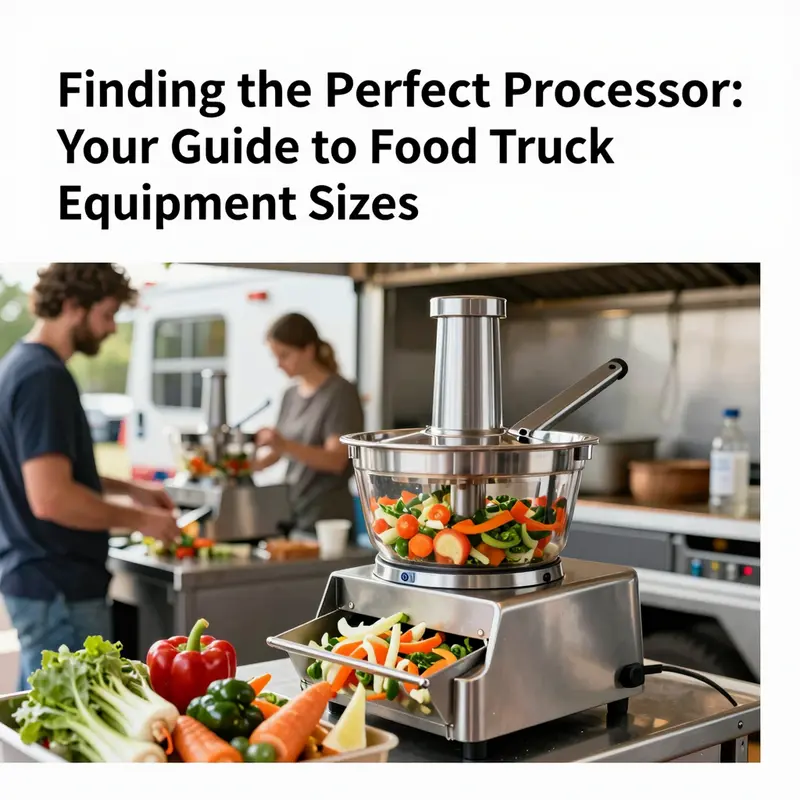
When a food truck drops into a crowded street corner at the height of a lunch rush, the rhythm of service hinges on more than just a flavorful menu. It hinges on throughput, consistency, and the quiet certainty that every batch leaving the station was prepared with the same pressure and precision as the one before. In this environment, a high-volume food processor becomes less a luxury and more a backbone of operation. It is the device that turns bulk prep into predictable pace, turning mountains of chopped vegetables, purees, and emulsified sauces into a steady stream of ready-to-serve components. The challenge for mobile kitchens is to balance power and resilience with footprint and mobility. The right processor is not simply a larger version of a home appliance; it is a purpose-built workhorse engineered to withstand constant use, frequent cleaning, and the jolts of road travel, all while fitting into a compact, efficient workflow that keeps the line moving and the kitchen humming.
For trucks, the starting point is power that remains reliable under pressure. The research suggests that for high-volume operations, a motor with a minimum of about 1.5 horsepower provides a baseline sturdy enough to handle dense components such as root vegetables, nuts, or frozen elements. This is not a ceiling but a floor. In practice, many operators find that stepping up to 2 horsepower or more brings a margin of safety, enabling cleaner chopping, quicker pureeing, and steadier performance across back-to-back batches. The goal is not to push the motor to its limit, but to grant the workflow a bit of slack—the kind that prevents stalls during peak moments and reduces the need to pause for motor relief. In the tight confines of a truck kitchen, that slack translates into seconds saved per batch, which compounds into minutes saved per service and, ultimately, a more reliable service window for customers who expect speed without sacrificing quality.
Durability becomes the second pillar. Mobile kitchens endure constant movement, vibrations, and a high level of sanitation scrutiny. Stainless steel is not merely a preference; it is a requirement in the sense that it resists corrosion, cleans easily, and withstands the daily heat and cleaning cycles that a busy truck endures. A high-volume processor intended for mobile use should also feature a robust, compact frame designed to handle regular transit and the occasional bump along a curbside course. Look for secure mounting options so the unit stays anchored during travel and set up quickly on service days. The ability to secure the machine with clamps or brackets, along with stable feet or wheels that lock into place when the unit is in use, allows the operator to focus on prep rather than rebalancing equipment mid-service. The design should anticipate the truck’s rough-and-tumble environment, offering rugged construction that can shrug off repeated washdowns and the daily grind of a kitchen that never stops moving.
Capacity and versatility are the third axis of consideration. A high-volume processor should be flexible enough to handle multiple tasks without forcing the kitchen to rotate between several machines. This means interchangeable blades, multiple bowl sizes, and a quick-release system that makes blade changes fast and safe. In a food truck, efficiency comes from eliminating steps, not adding them. A single unit that can chop, slice, puree, emulsify, and even mix with the right attachments reduces clutter, minimizes transfer steps, and speeds up service. While a large, single-bowl behemoth might seem tempting for sheer bulk, it can also hog space and complicate cleaning. The sweet spot lies in processors that offer a couple of well-chosen bowl sizes—enough to handle medium batches for sauces or soups and larger volumes for bulk purees or prepped components—paired with a small, quick-change blade system. This modular approach enables the operator to move from a coarse chop to a smooth puree in minutes, with minimal risk of cross-contamination or flavor carryover between tasks.
The question of blade configuration cannot be overstated. For high-volume mobile kitchens, a set of blades that covers chopping, grating, slicing, and pureeing broadens the menu without adding equipment. Quick-release mechanisms simplify routine maintenance, allowing staff to swap blades or bowls between tasks without fumbling with complex locking systems. Intuition becomes a practical asset here: controls that are straightforward, with clearly labeled speeds and a dedicated pulse or crush function, translate to fewer mistakes during service. In a truck’s environment, even small ergonomic advantages matter. A user-friendly interface reduces the cognitive load on staff who are juggling multiple tasks—measuring, timing, and tending to sizzling pans—while keeping a consistent product quality across batches.
But capability should not come at the expense of space or energy use. The typical kitchen layout in a food truck rewards compact footprints and thoughtful placement. A high-volume processor should fit within the truck’s kitchen layout without dominating the prep lane. It should be easy to position near prep sinks and refrigeration, avoiding cross-traffic hazards and bottlenecks on busy service days. Wall-mounted or under-counter options can yield precious counter real estate for sauce pans and cutting boards. The power requirements of the unit must align with the truck’s electrical setup, whether it relies on shore power or a generator. In practice, peak service times correspond to spikes in amperage draw. A processor that sips energy during idle moments and delivers robust performance when the line heats up is more valuable than a machine that simply runs hot and loud. In many operations, a compact, durable, multi-functional model with a reasonable power draw becomes the keystone of a lean system that can scale up during events or festivals without needing a full kitchen renovation.
The broader implications extend to maintenance and sanitation. A machine designed for high-volume, mobile kitchens should allow the operator to clean thoroughly between uses without disassembly that disrupts workflow. Detachable blades, dishwasher-safe components, and a design that minimizes crevasses to harbor residue are essential features. In the world of street food service, cleanliness intersects with food safety regulations, the chain of custody for ingredients, and the practicalities of a kitchen that doubles as a show space. The operator must trust that the equipment can be scrubbed, sanitized, and dried quickly and completely, with components that resist staining from vibrant sauces and spice blends. Durable stainless steel surfaces do more than resist corrosion; they project a professional image to customers and build confidence in the quality of the food being prepared. The daily ritual of cleaning should be straightforward, with components that can be reassembled without tools and that withstand frequent water exposure during the cleaning cycle.
From a workflow perspective, the ideal device supports a modular prep philosophy. Operators often segment their prep into stages: bulk chopping for sauces, dicing for garnishes, and pureeing for consistency in soups or gravies. A versatile processor can cover these stages with confidence, reducing the need to transfer ingredients to separate machines. This not only saves time but also minimizes the risk of cross-contamination and flavor interference. A well-chosen unit aligns with the truck’s menu strategy. For example, a truck that centers on hearty soups and thick sauces would benefit from a machine that excels at bulk pureeing and emulsification, while a menu focused on fresh salsas and chutneys would require precision, crisp slicing and uniform dicing capability. The operator should consider the typical batch size for each item on the menu and identify a model that can accommodate those volumes without forcing a second pass or a mid-service refill of ingredients.
To translate this into a practical decision, start with a realistic mapping of your peak service volume. Estimate the number of batches you routinely produce for sauces, soups, or blended items during the most demanding shifts. Compare this against the processor’s bowl capacity and operating time. A model with interchangeable bowls and a broad range of speeds will reduce the number of batches needed to complete a task, enabling you to keep the line flowing without having to sacrifice product quality. If your menu includes items that require freezing or rapid chilling, consider whether the unit supports quick cooling or has compatible attachments for blending ice or frozen components. The ability to integrate with ice cruching or freezing functions can open possibilities for dessert or beverage offerings, expanding the service card without additional equipment footprints.
The human element matters as well. In a compact kitchen, every square inch of counter space is sacred. The processor should be easy to reach, with a lid that closes securely and a control interface that can be operated by a single staff member, even when the other hand is busy stirring, tasting, or monitoring heat. This translates into faster commissioning during shift changes and more consistent outputs as staff rotate through functions. For shift supervisors, a processor that provides reliable, repeatable results across batches reduces the variance in product quality, which in turn stabilizes customer expectations and strengthens brand consistency. The impact extends beyond one service. Consistent texture and flavor across dozens or hundreds of servings per day build a robust reputation that customers return for, especially in markets where repeat visits and line cues create impressions as much as the food itself.
The decision framework naturally leads to cost and total ownership considerations. In the high-volume mobile kitchen, the upfront investment in a capable processor should be weighed against long-term savings in labor time, batch consistency, reduced equipment debt, and easier maintenance. A unit that costs more upfront but lasts longer, resists wear, and requires fewer replacements over several years will typically yield a lower total cost of ownership than a cheaper model that breaks down more often or requires more frequent blade changes and cleaning downtime. As with any critical piece of kitchen equipment, it is prudent to factor in serviceability and parts availability. A model with accessible blades, common component replacements, and straightforward repair pathways minimizes downtime and ensures the unit remains a reliable workhorse, even as service demands grow.
If you are mapping equipment investments within a broader kitchen plan, one internal resource that complements this analysis is a guide focused on comparing and selecting equipment for Lakewood-based startups. It provides a broader sense of how different models fit into a compact, efficient food truck layout and how to balance equipment needs with the realities of a specific locale. See the guide on best food truck models for Lakewood startups for practical layout considerations and to compare how various configurations support high-volume operations in a shared space. best food truck models for Lakewood startups
Ultimately, choosing a high-volume processor for a food truck is about matching the machine to the menu, the service rhythm, and the physical space. The most effective choice supports a workflow where ingredients are prepped, processed, and plated with minimal transfers and minimal downtime. It is a decision that blends engineering and culinary art—power and durability, capacity and versatility, safety and simplicity—so that the equipment not only performs at peak during the busiest times but also harmonizes with the truck’s overall design and operation. When those elements align, the result is a dependable, repeatable service that feels effortless to staff and satisfying to customers.
For those who want additional practical perspective on how to choose a commercial processor, several reputable guides emphasize core considerations such as motor power, build quality, and compatibility with mobile environments. While the exact models and specifications will vary by region and budget, the guiding principles remain the same: prioritize a motor capable of handling dense ingredients, favor stainless steel for durability and sanitation, choose a design that minimizes space impact and simplifies cleaning, and select a system that offers interchangeability and straightforward controls. This approach ensures the equipment you select will not only meet the demands of your current menu but also adapt as your concept evolves and scales up during events, festivals, and busy neighborhood runs. For further contextual guidance on how professionals evaluate commercial processors in 2024 and beyond, a comprehensive buying guide from a reputable source provides deeper analysis and comparisons. External buying guide
On Wheels and In Sync: Essential Features That Make a Food Processor Work in a Food Truck
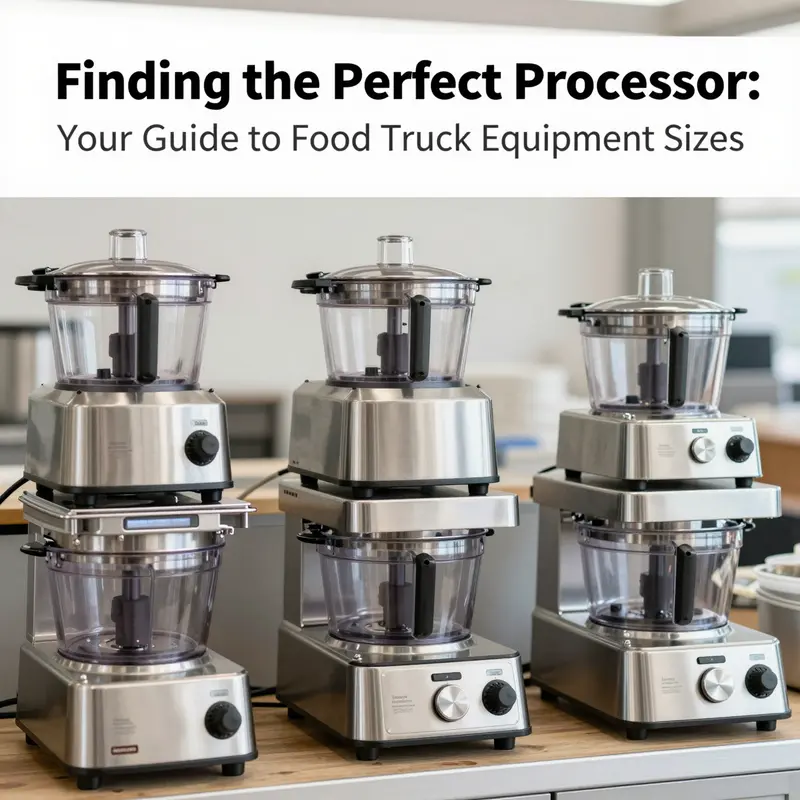
Choosing a food processor for a food truck is not merely a matter of horsepower or bowl size. It is a question of how well a single tool can fit the tight rhythm of a mobile kitchen, withstand the bumps and shifts of a moving workspace, and keep pace with a menu that changes with the day’s crowd. In this setting, the chapter on essential features becomes a practical map rather than a shopping list. It is about translating the general promise of a blender or processor into an instrument that can stand up to long shifts, diverse recipes, and the constant push-pull of space and power limits. The starting point is often the footprint, and here the real world helps to frame the decision. Compact models with dimensions around 220 mm in width and depth and about 405 mm in height fit snugly into the narrow corridors behind a service line. They typically offer bowls in the 1 to 3 liter range, which is enough to handle chopping vegetables for salsas, blending dressings, and puréeing sauces in batches that keep the line moving without requiring staff to choreograph a long dance of loading and unloading between every order. This is particularly important in a truck where the prep area doubles as the service counter and the path from prep to plate must remain unbroken. The aim, then, is efficiency without compromise: a unit that respects the constraints of counter space while delivering consistent results.
Beyond the compact, there is a need to understand the scenarios that demand larger capacity. For a truck that regularly churns out soups, bases, or doughs for flatbreads, or one that must feed multiple service lines in a busy market, a higher-capacity model becomes a strategic asset. Industrial-grade processors—those capable of handling tens of liters in a single cycle—offer the throughput that keeps a kitchen ahead of demand during peak hours. Yet even here, the decision is nuanced. A larger bowl brings its own challenges: it demands more space, potentially imposes greater weight on the vehicle, and can complicate cleaning routines. The right choice, once again, balances real-world constraints with the menu’s realities. A visionary kitchen might combine a larger-capacity unit that handles bulk prep with one or two compact processors for quick tasks, allowing staff to route the flow of work with minimal friction. The core idea is to ensure that the vehicle’s electrical system can support the load and that the setup aligns with how the team actually works during service. A well-considered pairing of equipment is not about having as many tools as possible, but about cultivating a compact, resilient workflow that is repeatable day after day.
Endurance matters as much as capacity. In the realm of durability, two features rise above the rest: blades and motor housing. Stainless steel blades are the workhorse here, prized for their ability to withstand repeated heavy use, maintain a sharp edge, and resist corrosion even after washing. They enable clean, consistent cuts and smooth blends across a spectrum of ingredients—from fibrous vegetables to herbs that release oil and aroma when minced. The motor housing must be rugged enough to endure the constant on-and-off cycles of a bustling truck, protect delicate electronics from dust and moisture, and resist wear from the vehicle’s vibrations. In a mobile kitchen, where every churn is a test of stability, a sound housing design keeps vibrations from rattling loose screws or loosening attachments and helps the unit stay secure during transit. It’s not merely about raw power; it’s about reliability in a harsh operating theater where the appliance must function smoothly under stress, time after time.
For many operators, the practical sweet spot sits around 550 to 700 watts of power. This range delivers solid torque for chopping and emulsifying without overtaxing the truck’s electrical system. A processor that runs hot or loses speed after a pulse can stall a line, create bottlenecks, and undermine the confidence of staff who must quickly adjust textures to match a changing recipe. The texture control afforded by multiple speeds and pulse functions becomes a central advantage in this environment. Multiple speed settings allow staff to tailor the texture to the task: quick pulses for a coarse chop or a rough dice, steady mid-speeds for emulsions and sauces, and high-speed puréeing for smoother finishes. The pulse feature, in particular, offers hands-on control that is hard to replicate with a single speed. It lets the operator break down ingredients in short bursts, stopping to check texture, and continuing until the desired consistency is reached. In a menu that veers from chunky guacamole to velvety tomato base, the ability to modulate texture without switching devices is a tangible gain in efficiency.
But power and texture are only part of the equation. A food truck is a space where every device must contribute to an uncluttered, predictable workflow. Compatibility with other kitchen equipment is a virtue that can turn a processor into a true hub of the mobile kitchen. Staff who already rely on a stand mixer for doughs or emulsions will appreciate a system designed to complement that mixer rather than compete with it. A processor that accepts compatible attachments or that shares a common drive mechanism with other tools can dramatically reduce clutter and maintenance tasks. In practice, this means seeking models that offer attachment versatility and a design philosophy that anticipates integration with stand mixers or additional modules. When a single power source or footprint can drive multiple tasks, the kitchen gains precious inches of counter space, and staff gain time for critical finishing steps that occur at the pass.
Cleanability is another non-negotiable feature in the mobile kitchen. A design that emphasizes ease of cleaning reduces downtime between service periods, supports hygiene standards, and minimizes the risk of cross-contamination. Dishwasher-safe components and a minimal number of crevices are not cosmetic concerns; they translate directly into faster turnover and more rigorous daily sanitation. When a truck moves through a variety of venues, from dawn markets to late-night fairs, the ability to quickly disassemble the bowl, blades, and lids, rinse them, and reassemble ensures that the operation remains compliant with local health regulations regardless of the day’s location. In addition to being practical, easy cleaning reinforces the quality of the product. Smooth surfaces and clean, simple seams prevent rogue bits from hiding where staff cannot easily reach, preserving both flavor integrity and the kitchen’s cleanliness rhythm.
An often overlooked, yet critical, dimension is performance across temperature variations. Food trucks can be subject to heat waves, sudden gusts of wind that drive cooler air, and rapid changes from indoors to outdoors. A processor that delivers consistent results in a climate-controlled setting may still falter in the field if ambient heat causes the motor to overwork or if cold ingredients begin to warm too quickly and lose structure. The right unit maintains consistent torque and blade speed, which equates to predictable texture and stable results from first batch to last. In practice, this means selecting a model with a well-engineered drive system and a robust mechanical design that can withstand the shifts in temperature and the occasional dusty or damp environment that comes with mobile catering. The resulting predictability minimizes the guesswork that chefs otherwise carry into service and reinforces the quality covenant with customers who expect the same taste and texture every time they order.
Capacity, in isolation, is not the sole predictor of success. The workflow, space, and power realities of the truck define what capacity actually delivers in a day’s work. A 1 to 3 liter bowl in a compact, sturdy frame may be everything a storefront-level operation needs when its menu centers on sauces, salsas, and small-batch emulsions. A larger, more powerful unit serves as a backbone for bulk prep, a hedge against the surges of crowd demand, and a reliable contributor to a kitchen that builds a broader, more varied base of items. The key is to avoid the trap of chasing the biggest bowl or the loudest motor simply because it sounds impressive. Instead, align the machine with the truck’s peak throughput, the most frequent prep tasks, and the electrical capacity available on site. The truth of the matter is that a well-chosen, mid-sized, durable processor is often the most valuable member of a mobile kitchen team, delivering the texture control and reliability staff rely on to produce consistent flavor under any service condition.
To bring these considerations into practical terms, imagine stepping through a typical day in a food truck kitchen. Prep begins long before orders arrive. A compact, dependable processor handles the brunoise for crispy toppings, the fine dice for salsas, and the emulsification needed for bright dressings. The staff listens to the hum of the motor as the operator selects a mid-range speed, watching the texture with an experienced eye, and adjusting as needed. If a batch of tomato sauce needs to be silky, a higher speed and a brief pulse will bring it to the desired finish without overheating the mixture. When dough is required for a handful of flatbreads, the compatibility with a stand mixer—whether through shared bowls or a common attachment system—helps keep the workflow tight and responsive, ensuring that the staff can pivot quickly from one task to another as orders come in.
The decision framework becomes more precise when you consider the menu’s core components and the truck’s peak hours. For menus that emphasize fresh toppings and quickly assembled bowls, a compact processor with a 1–3 liter capacity and multiple speed settings offers the balance of speed, texture control, and space efficiency needed to stay ahead of demand. For kitchens that rely on base sauces, soups, and larger batch items, a higher-capacity unit brings bulk prep into the same workflow without slowing service. The ideal solution, in practice, is a balanced combination: one mid-sized, durable processor that can handle everyday needs and at least one larger-capacity unit to manage bulk work during busy events. This combination keeps the kitchen flexible, preserves counter space, and preserves the integrity of the guest experience across a wide range of service scenarios.
This consideration is not merely theoretical. The mobile kitchen community often maps equipment decisions to space and menu strategy because a well-planned layout translates into reliable service. For readers who want a concrete sense of how these choices play out in the field, exploring case studies and real-world mappings can be illuminating. Best Food Truck Models for Lakewood Startups offers a practical reference, illustrating how different trucks balance power, size, and durability to sustain a busy day on the road. You can explore this practical example here: Best Food Truck Models for Lakewood Startups.
In short, the essential features of a food processor for a food truck are not a checklist of parts but a philosophy of fit. They are about aligning the machine’s strengths with the truck’s realities: modest footprint, solid capacity for the majority of common tasks, durable construction, easy cleaning, and a thoughtful path to integration with other kitchen tools. By prioritizing these features, a food truck can maintain a steady tempo through a busy service window, support a broad and evolving menu with minimal downtime, and protect the quality and consistency that customers come to expect. The right processor does more than chop or blend; it anchors the kitchen’s ability to deliver on flavor, texture, and speed, even when the road throws a curveball. It becomes a quiet, reliable partner that supports the chef’s craft without compromising the mobility and flexibility that define the mobile kitchen.
External resource: Why a High-Quality Food Processor Is a Must-Have in Any Kitchen. https://www.cookinglight.com/food-processor-guide
Final thoughts
Having the right food processor can significantly impact your food truck’s workflow and customer satisfaction. Whether you’re opting for a compact model for quick tasks or a robust high-volume processor for larger batches, understanding the needs of your menu and operational style is vital. By focusing on size, capacity, and essential features, you can ensure your food truck kitchen remains efficient while delivering delicious meals to the Lakewood community. Choose wisely, and your food truck will ride smoothly on the culinary journey ahead.