
Choosing between ABS vs fiberglass fairings comes down to how each material holds up next to a motorcycle’s exhaust header. The header surface runs hot enough to bake plastic and resin, and a panel mounted close to the pipe will eventually show the damage. Over repeated heat cycles, ABS softens and sags out of shape, while fiberglass keeps its form but blisters or cracks as the resin breaks down.
Three things decide whether a fairing keeps its shape: the material, the mounting, and the airflow. They interact. A heat-resistant panel clamped rigidly into a dead-air pocket can still distort, and a cheaper panel given clearance and moving air often survives. Knowing how the three work together lets riders, buyers, and shops judge real durability instead of trusting a spec sheet.
ABS is a thermoplastic that softens gradually as it nears its glass-transition range. Fiberglass is a thermoset composite: it will not melt or reflow, but its resin can craze, blister, and delaminate under sustained heat. The two behave differently next to a hot header, and the gap widens the longer the fairing stays on the bike.
What follows covers where the heat comes from, how each material responds, the mounting and airflow factors that matter, and the fixes that keep a fairing true to its original form.
The Material Science Behind Heat Warping
A fairing that sags, ripples, or blisters near the header is not failing at random. Two things determine the outcome: how heat travels from the pipe to the panel, and how the panel’s chemistry responds once the heat arrives.
How Heat Reaches Your Fairing
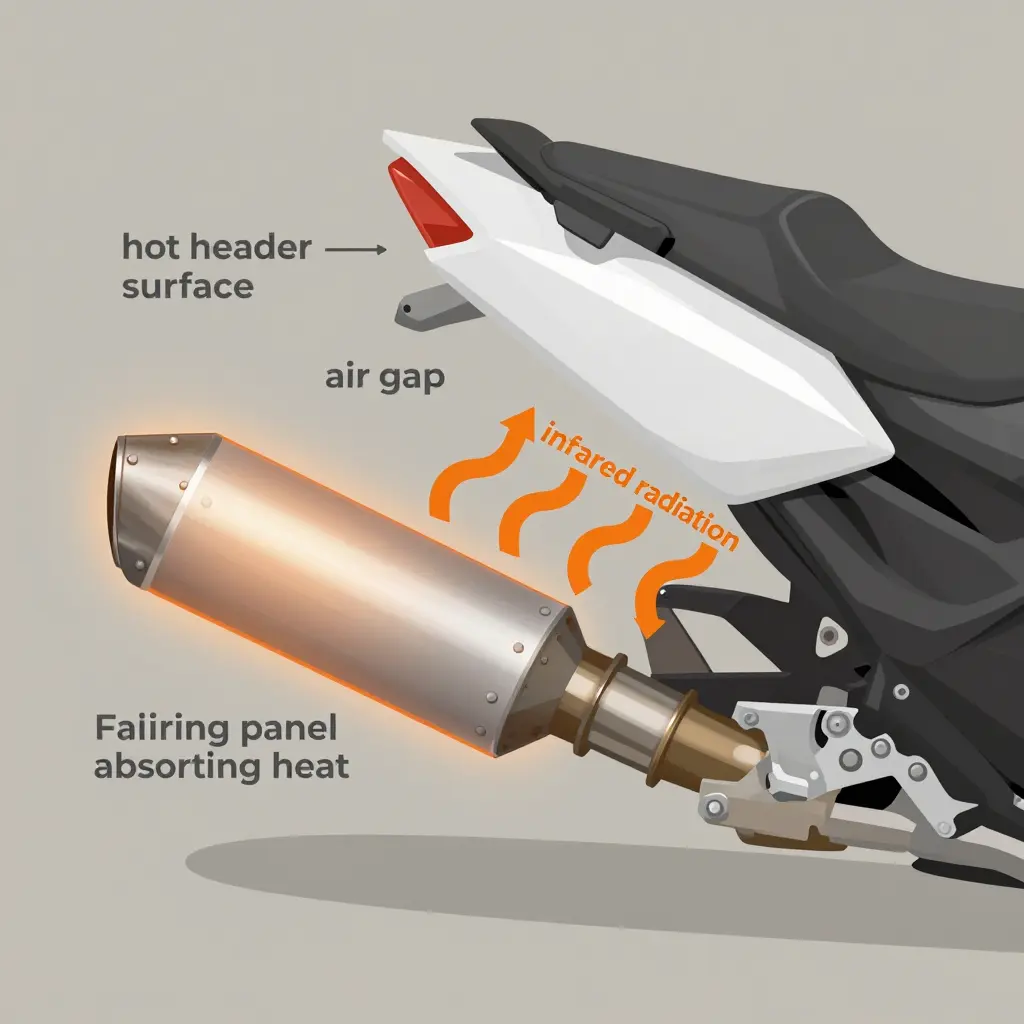
- Radiant heat needs no contact. A hot header emits infrared radiation, and any panel with a line of sight to it absorbs that energy directly. The air gap does nothing to block it.
- Distance often matters more than thickness. Radiant intensity falls with distance, so halving the gap can roughly quadruple the energy reaching the panel. A few extra centimeters of clearance can do more than a thicker panel.
- Airflow can help or hurt. Moving air carries heat away. A fairing that traps air against the header does the opposite, turning the pocket into an oven.
Thermoplastic vs Thermoset: Two Different Failure Modes
Here the thermoplastic vs thermoset distinction decides what breaks.
- ABS is a thermoplastic. Its polymer chains are held together by weak intermolecular forces rather than chemical bonds. Heat lets the chains slide, so the part softens and re-hardens in whatever warped shape it settled into. It does not burn first; it sags.
- Fiberglass uses a thermoset resin, usually polyester. Its chains are permanently cross-linked, so it never melts or flows. Heat drives it toward brittleness instead: the resin blisters, discolors, crazes, and eventually delaminates. The glass fibers themselves tolerate far more heat than the resin holding them.
Glass Transition Temperature: The Real Threshold
Tg is the temperature where a polymer shifts from rigid and glassy to soft and rubbery. Below it a panel holds its shape; above it, the panel deforms under whatever load it carries.
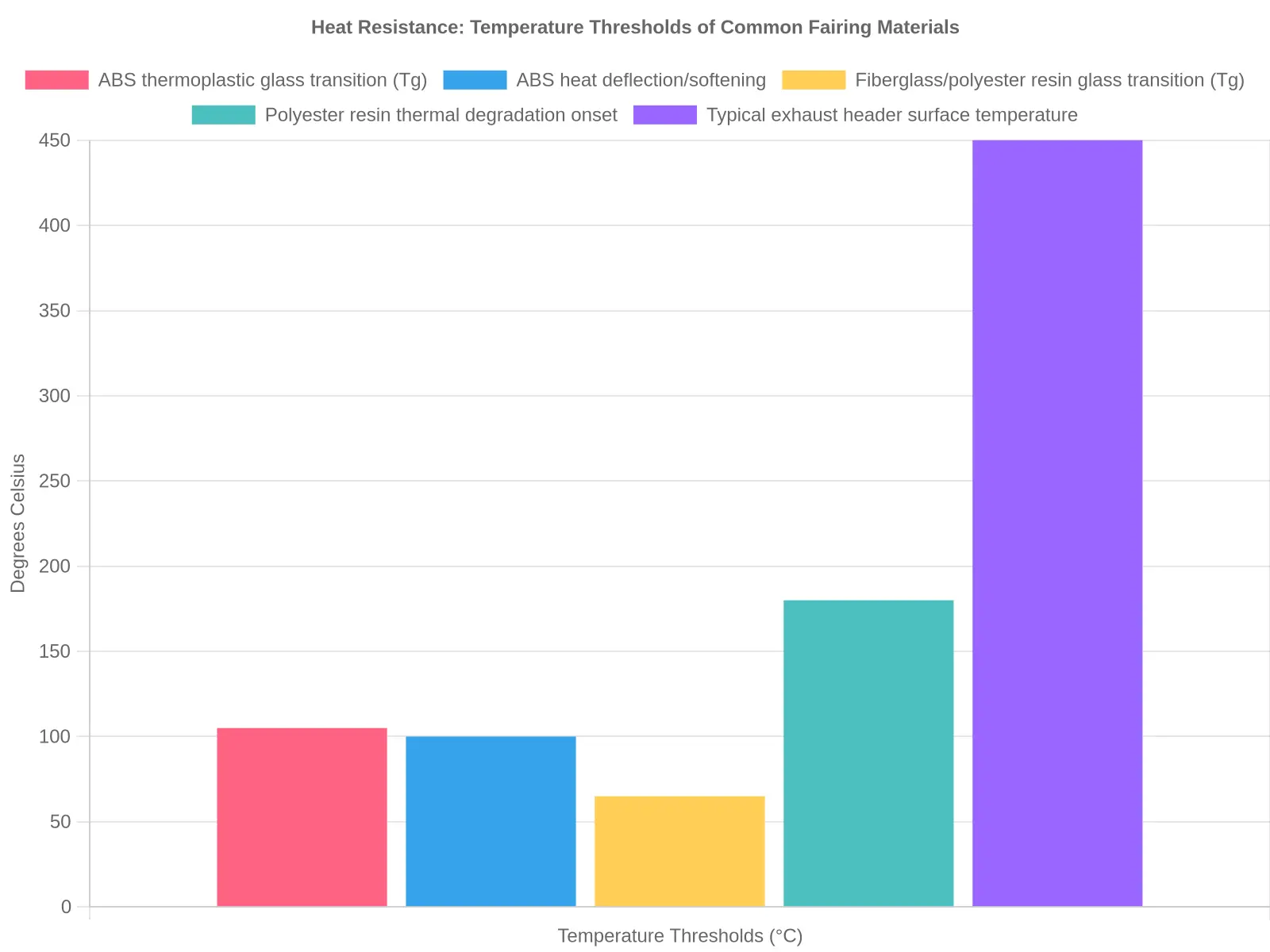
- ABS typically holds its shape to around 100-105 degrees C, with its heat-deflection temperature a little lower.
- Polyester resin softens (its Tg) near 65 degrees C, yet resists outright breakdown until roughly 180 degrees C.
Exhaust headers run at 300-600 degrees C at the surface, so a fairing bolted close to one sits well past the limits of either material. Heat resistance, not thickness or price, is the property that decides whether it survives.
Why Proximity Is the Deciding Factor
Radiant energy concentrates at close range, so a fairing bolted tight against the header absorbs far more heat than an identical one with room to breathe. The material sets the ceiling; the distance sets how fast you reach it. Give the panel clearance, add a reflective heat shield, and manage trapped airflow, and you keep surface temperatures below Tg regardless of which material you run.
Reading the Heat Threshold Chart
The chart below plots temperature (x-axis, in degrees Celsius) against degree of dimensional deformation (y-axis, as a percentage) for ABS and fiberglass. Keep in mind what the axis measures: shape change. A thermoset can be damaged without changing dimensions at all.
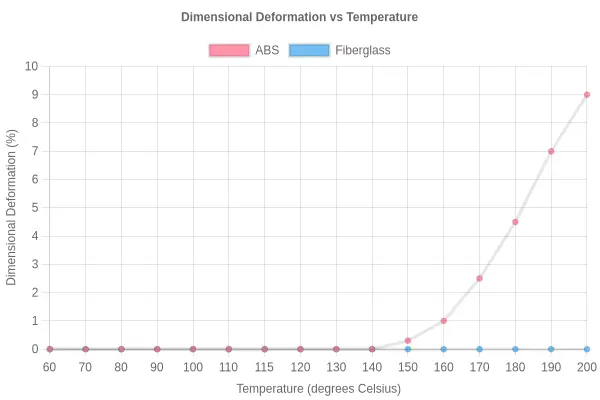
Caption: Comparative heat-deformation curves for ABS and fiberglass fairings. ABS begins deforming at lower temperatures than fiberglass, and the two curves pull apart as header heat rises.
What the Two Curves Reveal
- ABS holds its shape, then gives way quickly. The ABS line stays near the baseline until roughly 140 C. After that it turns sharply upward: about 4.5% deformation by 180 C, and close to 9% by 200 C.
- Fiberglass barely moves on this axis. Its line stays flat across the whole 60-200 C range. That is the thermoset doing what it does: cross-linked resin does not sag or flow.
- A flat line is not a clean bill of health. Because fiberglass cannot reflow, it shows no dimensional change even as its resin starts to degrade. It fails by cracking, blistering, and charring, not by warping.
Why This Matters in the Real World
Exhaust headers on air-cooled and high-performance engines radiate enough heat to push a nearby fairing past the point where ABS softens. That is why ABS panels near a header develop wavy edges, warped mounting tabs, and drooping curves, while fiberglass panels keep their lines even as their resin may already be scorching. In a hot spot, ABS announces the damage early with visible warping; fiberglass hides it until the resin gives out.
How Fiberglass Fairings Respond to Exhaust Heat
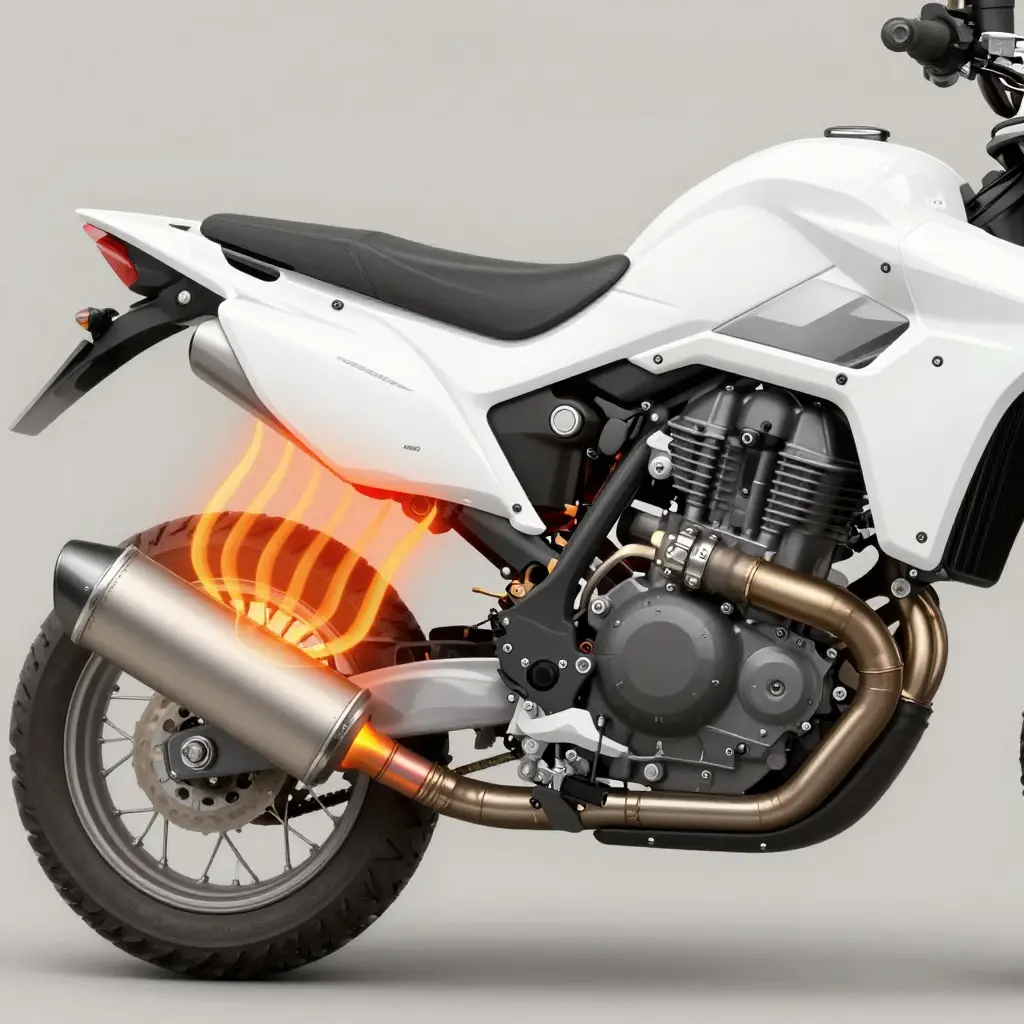
Fiberglass behaves nothing like ABS once the exhaust header starts radiating serious heat, and the reason is chemistry: fiberglass is a thermoset composite, while ABS is a thermoplastic. That difference explains both why fiberglass keeps its shape near a hot pipe and why it cracks instead of bending.
Thermoset resins resist softening
Polyester and epoxy resins cure into a permanently cross-linked network. Once set, they cannot melt or flow, so a fiberglass fairing will not sag or droop the way a thermoplastic does. The glass fibers carry the structural load; the cured resin locks the panel’s shape in place.
But extreme heat still takes a toll
Higher heat tolerance is not unlimited tolerance. When the temperature passes what the resin can take, the matrix fails before the glass does:
- Resin degradation, leaving a dull, chalky, or scorched surface
- Micro-cracking that spreads under repeated heat-soak cycles
- Delamination, where glass layers separate from the resin
The glass fibers tolerate far more heat than the resin bonding them, so the matrix is the weak link.
How the gelcoat behaves
The gelcoat is the outer cosmetic skin. Under sustained exhaust heat it yellows, chalks, blisters, or develops fine spider cracks. Those are cosmetic at first, but ignore them and the laminate underneath is exposed.
Fiberglass vs ABS: Shape vs Brittleness
ABS softens around 90°C and then heat warps permanently near a hot header. Fiberglass fairings hold shape better in high-heat zones because cross-linked resin and rigid glass do not flow. The trade-off is real: fiberglass is more brittle, cracking or chipping on impact rather than flexing back.
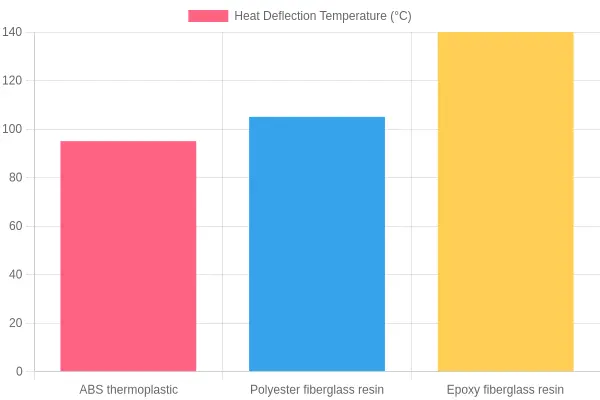
| Material | Type | Typical heat deflection temp | Behavior near header |
|---|---|---|---|
| ABS | Thermoplastic | ~90-105 C | Softens, then heat warps permanently |
| Polyester fiberglass | Thermoset composite | ~90-120 C (resin) | Holds shape; resin degrades at extreme heat |
| Epoxy fiberglass | Thermoset composite | ~120-150 C | Holds shape longest; cracks or delaminates if overheated |
The takeaway
Fiberglass keeps its form near the exhaust header because it is a thermoset that will not reflow. ABS stays flexible and takes impacts better, but it softens and heat warps. Use fiberglass in the hot zones, and ABS where impact flexibility matters more than temperature.
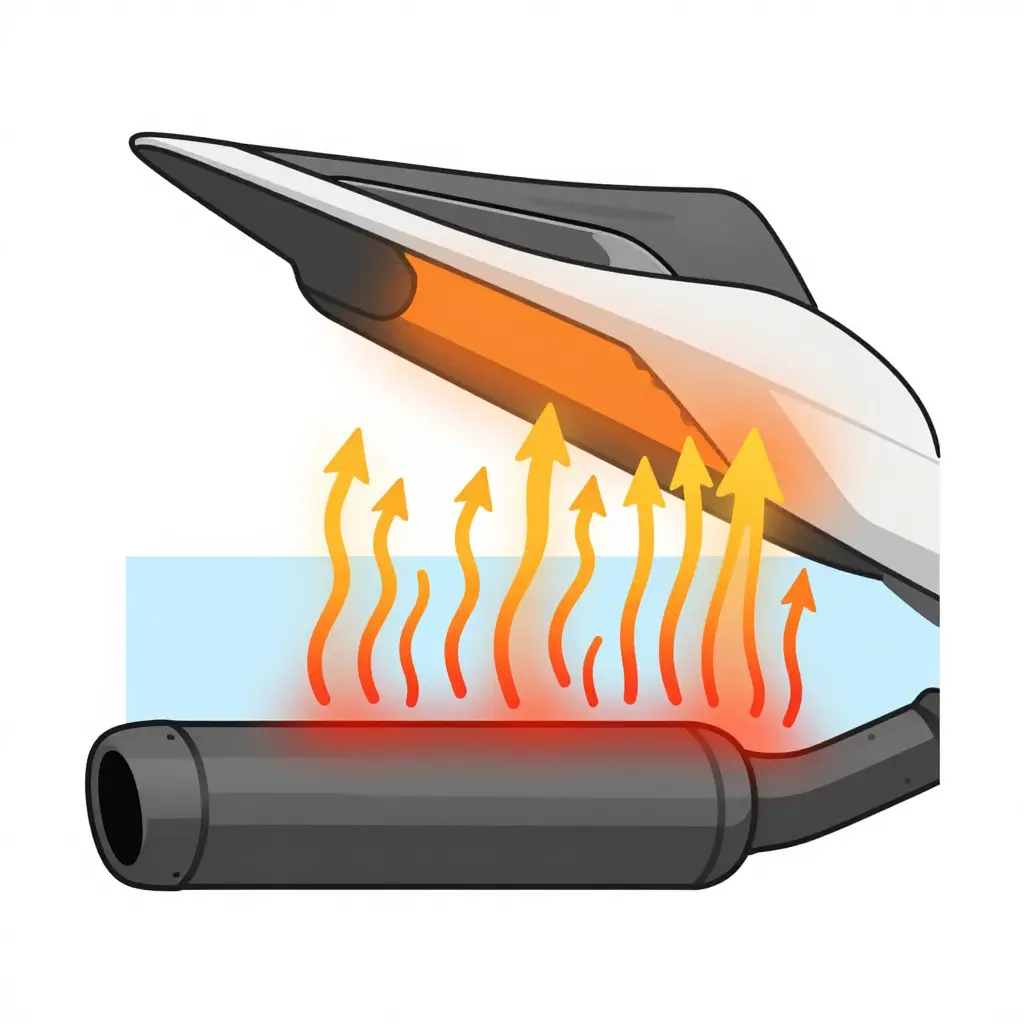
The schematic shows the two heat paths that matter when a fairing sits close to a header.
- The exhaust header (bottom zone) is the source, glowing red as metal temperatures climb well past where plastics soften.
- The air gap (middle band) is the buffer, and its size counts. Wavy arrows show infrared energy crossing the gap with no medium at all; curved arrows show convective heat riding the rising air.
- The fairing panel (top plate) is where the combined energy lands, tinted orange to mark the hot spot that forms directly above the header.
The diagram makes the case for clearance, shielding, and material choice in one picture: together they decide whether a fairing survives the heat or slowly deforms.
Heat Warping Signs Near the Exhaust Header
Before you blame the fuel map, the tune, or a worn header gasket, inspect the plastic itself. Radiant heat reshapes fairing material slowly, and the clues show up long before a panel fails outright. Use this as a quick field checklist:
- Panel sagging – the fairing droops or loses its crisp contour directly above or beside the header.
- Rippling or wavy surfaces – a once-flat section develops gentle waves that catch light unevenly.
- Paint bubbling or lifting – clear coat and color flake away in blisters near the hottest zone.
- Mounting tab stress marks – whitening, cracking, or stretching around the small tabs that hold the panel.
- Gap misalignment – panel seams pull apart or overlap where they used to sit flush and even.
- Fastener loosening – screws and clips back out repeatedly because the material around them has relaxed.
- Brittle or chalky texture – the surface feels dry and crumbly instead of smooth and slightly flexible.
- Localized discoloration – a scorched, yellowed, or faded patch that maps directly to header proximity.
Why ABS and Fiberglass Fail Differently
These indicators read differently depending on the material, which matters for riders, buyers, and shop technicians alike. ABS is a thermoplastic: it softens, sags, and ripples early, but it often recovers some shape when cool, so mild sagging can look almost cosmetic until stress marks and loose fasteners appear. Fiberglass is a thermoset composite: it resists sagging far better, but when it finally gives, it fails through resin scorching, delamination, cracked gelcoat, and brittle tabs that snap rather than bend. Reading those material-specific patterns is the fastest way to confirm genuine fairing heat damage and decide whether a panel needs shielding, repair, or full replacement.
Tradeoffs and Buying Considerations
Heat is the deciding variable here. If your fairing sits close to the exhaust header, the ABS vs fiberglass debate stops being theoretical and becomes a durability question you answer on every ride.
Cost. Thermoplastic ABS aftermarket fairings are usually cheaper up front and simpler to source in pre-painted colors. Fiberglass tends to cost more because of the hand labor in laying and finishing each panel, though that same process allows low-volume or custom shapes.
Weight. ABS is lighter and generally the better pick for street bikes where low mass matters. Fiberglass sits heavier, but it can be laid thin, so an experienced builder narrows the gap more than the raw materials suggest.
Heat warping. This is where the two diverge most. ABS softens as temperatures climb, so sustained radiant heat near the header can cause sagging, distortion, and paint stress. Fiberglass tolerates higher temperatures before its resin degrades, making it the more forgiving choice in tight engine bays. Neither material is magic; both still need heat shielding, airflow, or a reflective barrier to survive long-term exposure.
Repairability. Fiberglass can be sanded, filled, and re-laminated, so cracks and gouges are often restored rather than replaced. ABS responds well to plastic welding and heat-staking, but a warped thermoplastic panel rarely returns to its original geometry, which pushes many riders toward full replacement.
Paint finish. ABS accepts paint nicely and flexes with the panel, which suits flexible primers and satin finishes. Fiberglass offers a rigid, stable surface that takes high-gloss, show-quality paint more predictably.
Impact resistance. ABS flexes and absorbs light impacts; fiberglass is stiffer and cracks, but those cracks are usually local and repairable rather than fatal to the panel.
Long-term durability. Near a hot header, fiberglass generally holds its shape longer, while ABS demands more vigilance about clearance and insulation. Away from heat, ABS can outlast expectations and is easier to swap.
| Factor | ABS | Fiberglass |
|---|---|---|
| Upfront cost | Lower | Higher |
| Weight | Lighter | Heavier, can be laid thin |
| Heat warping | Warps sooner | Tolerates more heat |
| Repairability | Weldable, hard to reshape | Sand, fill, re-laminate |
| Paint finish | Flexible, good | Rigid, excellent gloss |
| Impact resistance | Flexes, absorbs | Cracks, locally repairable |
| Long-term durability | Needs heat management | Holds shape near heat |
The tradeoff is not about which material wins. It is about matching the panel to your exhaust layout, budget, and willingness to maintain it. Riders who share fixes at local community workshops and enthusiast projects often mix both materials, using fiberglass near the header and ABS elsewhere.
This is the same reasoning behind choosing the right base platform for any build: the smartest result comes from picking the option that fits the real constraints, not the one that looks best in isolation.
Design and Installation Mitigation: Cooling the Zone Near the Header
Whether you fit ABS or fiberglass, most heat warping near the exhaust header is a design and installation problem, not just a materials problem. The rules below work for both, and most cost far less than replacing a melted fairing.
Build in an air gap
Never bolt a panel flat against the header. Even a 10-15 mm gap lets hot air escape instead of soaking into the surface. That trapped pocket of air is your first and cheapest defense.
Add heat shielding and reflective barriers
Line the inner face with proper heat shielding. An aluminized reflective barrier reflects radiant heat before it ever reaches the plastic or glass. Face the shiny side toward the header and overlap seams so heat has no straight path through.
Get bracket geometry and standoff distance right
Brackets should hold the fairing at a fixed standoff distance so it never drifts toward the pipe. Use rigid, heat-tolerant mounts and design them so the panel’s natural vibration does not flex it into the hot zone.
Create ventilation paths
Plan exit vents at the top or rear of the fairing so hot air rises and leaves. Stagnant air is what actually cooks a panel, so keep it moving.
Torque fasteners correctly
Over-tightened bolts distort panels and pull reflective barriers out of position. Follow the manufacturer’s torque spec, tighten in a crisscross pattern, and use washers to spread the load.
Coatings and insulation wraps
Heat-resistant ceramic coatings add a thermal barrier, while insulation wraps on the header itself cut radiant heat at the source. Combine both for the toughest zones.
If you want parts that are already engineered to handle these loads out of the box, explore ready-made overland upgrade packages built for punishing heat. And if you would rather see pre-fitted, factory-sorted options in person before buying, it helps to browse the new showroom overview before you commit.
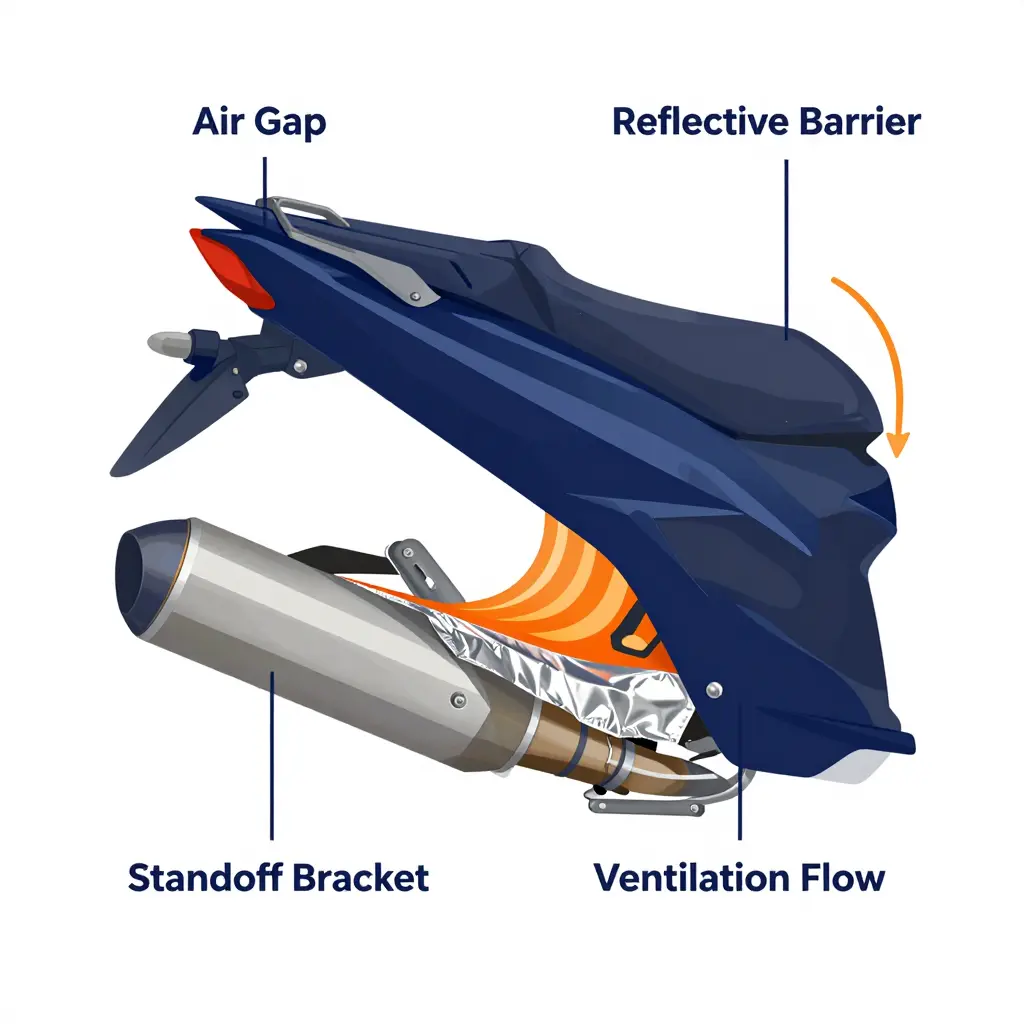
The takeaway: material buys you tolerance, but smart design and careful installation keep any fairing cooler.
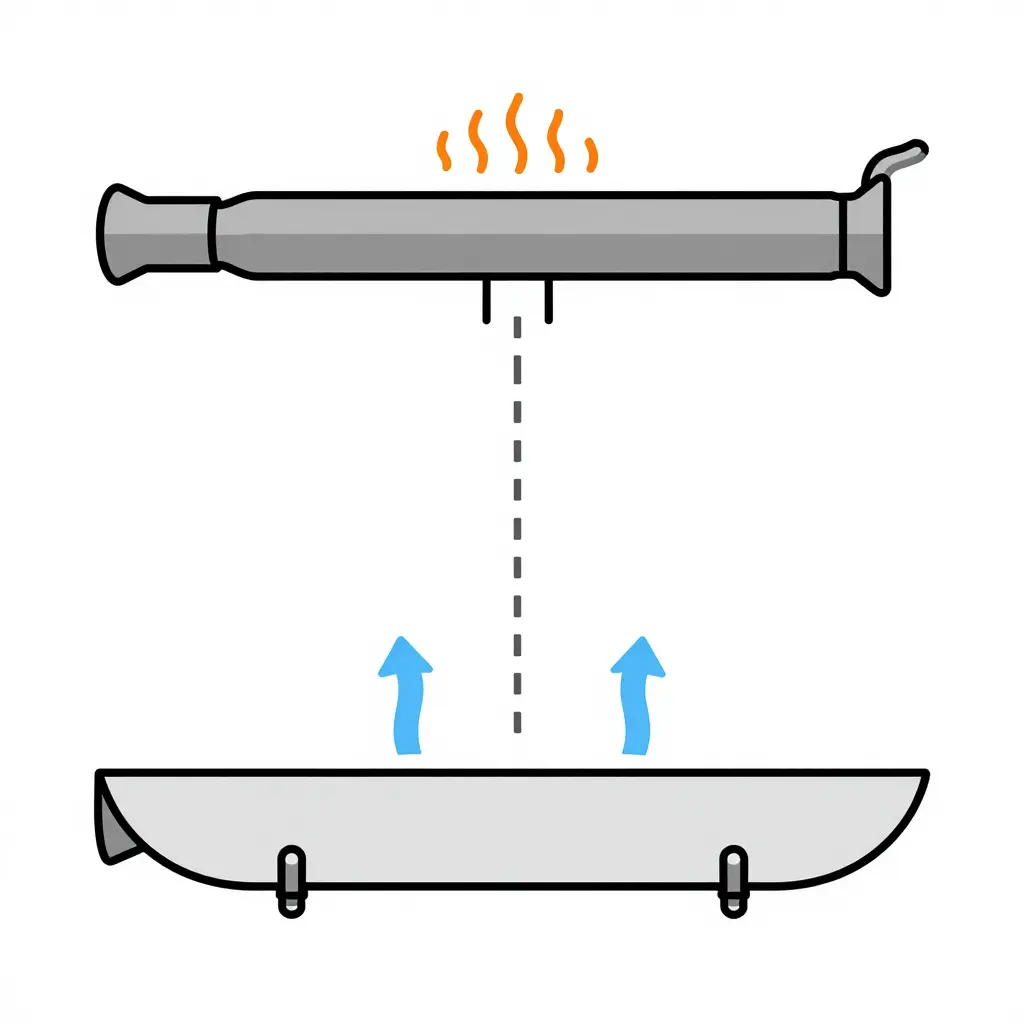
This schematic illustrates the core mounting principles for reducing heat warping near the exhaust header. Reading from the source outward, it diagrams four elements: the exhaust header (the heat source), a defined air gap that lets hot air escape and cool before it reaches any panel, a heat shield layer that reflects and blocks radiant energy, and the fairing itself, which is held off the shield by standoff brackets. The arrows show how airflow moves through the gap and how the standoff spacing keeps the fairing clear of direct contact, which is what prevents concentrated hot spots from softening and distorting the panel.
Frequently Asked Questions: ABS vs Fiberglass Fairings and Exhaust Header Heat
Which material resists heat better near the exhaust header?
Fiberglass generally does, because its thermoset resin will not reflow and its glass fibers hold shape at higher temperatures. ABS is a thermoplastic that softens below the temperatures a hot exhaust header can radiate, so it tends to warp sooner when clearances are tight. Neither material is invincible, and both can fail if they sit too close to sustained heat.
Can ABS fairings be repaired after warping caused by heat?
Often yes, but the result is rarely perfect. Because ABS is a thermoplastic, a technician can gently reheat a warped panel and reshape it, though the softened area loses some rigidity and may sag again later. Fiberglass fairings are usually easier to restore properly, since distorted sections can be sanded back and rebuilt with fresh resin and cloth.
Is heat shielding always necessary?
No, but it is a smart safeguard whenever a panel sits close to the exhaust header heat. If your fairing has a generous air gap and good airflow, damage may never appear. Tight clearances, stop-and-go riding, and aftermarket exhausts are the situations where a reflective barrier or heat shield really pays off.
How can I tell if warping is heat-related or impact-related?
Exhaust header heat produces smooth, gradual distortion, often with a slight sag, a dulled gloss, or a softened edge closest to the heat source. Impact damage leaves sharper signs such as cracks, creases, spiderwebbing, or chipped gelcoat on the outward-facing panel. If the distortion is isolated to the area nearest the header, heat is the likely culprit.
Are fiberglass fairings worth the extra cost?
For riders who push their bikes hard or run high-heat exhaust setups, fiberglass fairings are often worth the higher price. They resist exhaust header heat better, hold their shape longer, and can be repaired with resin instead of being replaced outright. If you ride gently and keep stock clearances, budget-friendly ABS fairings can still serve you well. Riders who upgrade other components for demanding conditions often apply the same durability logic, as seen in innovative vehicle component builds for tougher rides.
Does mounting affect warping risk?
Absolutely. Rigid mounts with no room to expand can force a panel to buckle as heat makes it grow, while flexible or rubber-isolated mounts absorb that movement and reduce stress. Correct bolt torque and even spacing also matter, since an over-tightened corner can create a concentrated hot spot that warps first.
Do both materials eventually degrade from exhaust header heat?
Yes, prolonged exposure takes a toll on both. Fiberglass fairings may slowly discolor or develop surface crazing, while ABS fairings can lose their shape and stiffen over time. Managing airflow and adding shielding remains the most reliable way to extend the life of either material.
The Bottom Line on ABS vs Fiberglass Fairings
Choosing between ABS vs fiberglass fairings comes down to three practical factors: heat exposure, budget, and the durability you expect over the life of the bike. Neither material wins everywhere, so the right answer depends on how and where you ride.
Which material for which use case
- ABS plastic: Best for street riders, commuters, and bikes whose fairings stay clear of the hottest zones. It costs less, resists cracking from vibration, and flexes on minor impacts, but it warps if it sits too close to a header.
- Fiberglass: Best for track riders, custom builders, and repair shops doing frequent paint work or structural fixes. Fiberglass tolerates higher, more direct heat near the header, is easily repairable, and takes finishes cleanly, but it costs more and demands more labor.
- High-heat zones: On any bike where a fairing sits close to the header, add heat shielding regardless of material, since sustained direct contact can still deform ABS and fatigue fiberglass resin.
Where to buy
For enthusiasts and shops comparing options, summitfairings.com offers over 3,000 styles across almost all motorcycle models, typically 10-40% less than other sites, with a six-hour response promise for questions.
With those trade-offs clear, a well-informed purchase starts with matching material to your real riding conditions, not just the lowest sticker price.