
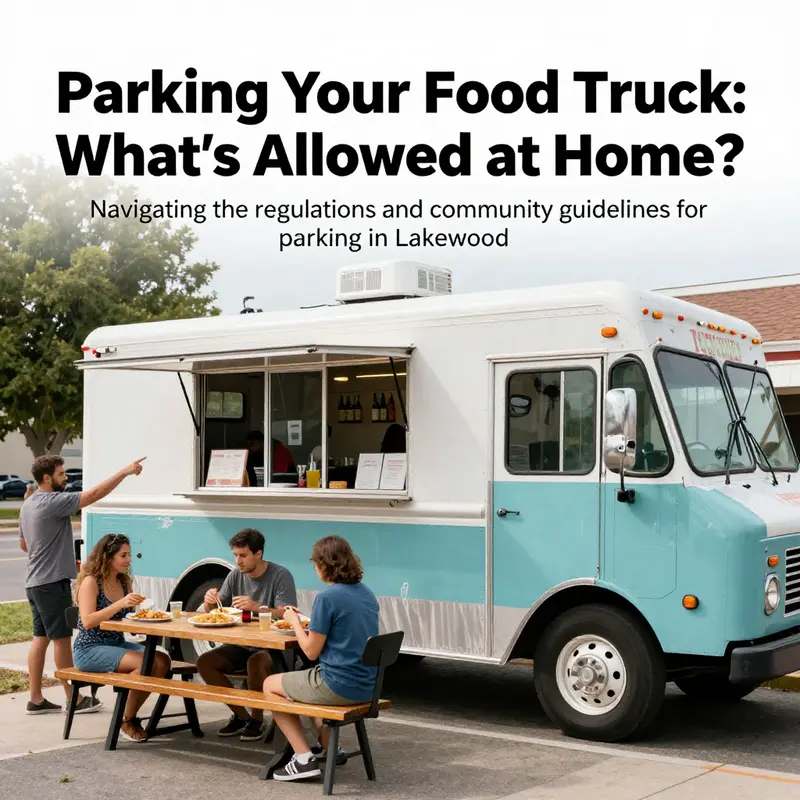
As aspiring food truck operators, you may be dreaming of turning your passion for food into a vibrant business. One important question often comes to mind: Can you park your food truck at home? This article dives into the various regulations and considerations that you should be aware of before setting up shop from your own driveway. From zoning laws to homeowners association rules, each chapter will provide crucial insights that will help you understand what’s truly possible in your local context. Whether you’re a first-time truck operator or a curious tourist exploring Lakewood’s culinary scene, there’s valuable information ahead that will guide you.
When Home Isn’t a Lot for a Kitchen on Wheels: Navigating Zoning, Permits, and Practical Realities of Parking a Food Truck at Your House
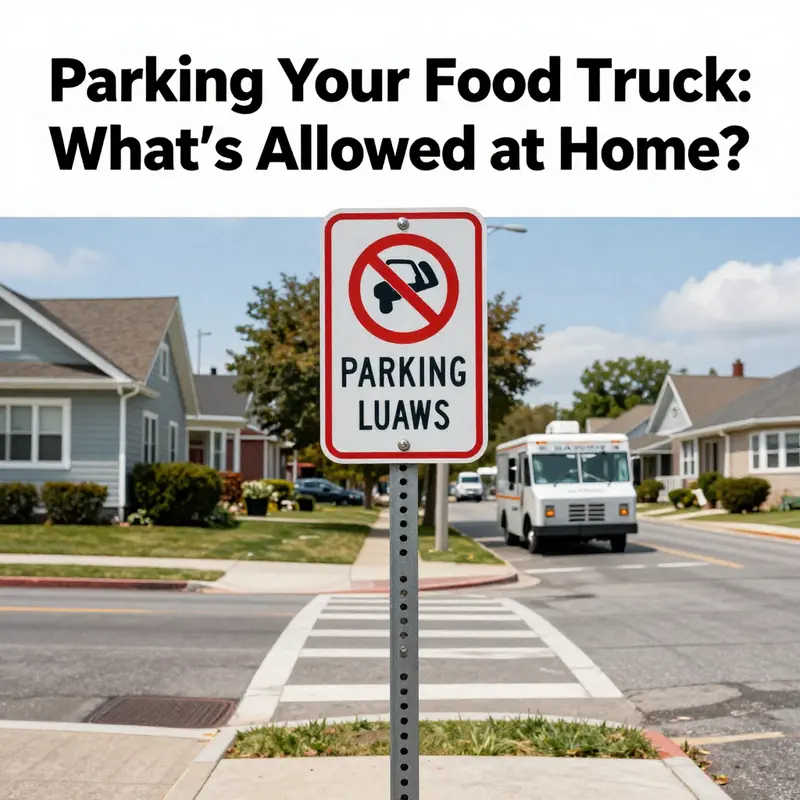
The idea of turning a food truck into a neighborly feature of a residential street tempts many aspiring cooks and small business owners. Yet beneath the gleam of a bright truck and the promise of flexible hours lies a tangled web of zoning codes, parking rules, and health requirements that can quickly turn a dream into a legal headache. The core truth is straightforward: in most places, parking a food truck at home as a regular, ongoing operation is not simply a matter of finding a private driveway with plenty of space. It requires navigating municipal zoning, obtaining permits, and aligning with safety and neighborhood standards. Without that alignment, the truck sits not at the curb of opportunity but in the garage of risk. The path from “could” to “could be legal” is rarely direct, and the boundaries are defined by jurisdiction, neighborhood covenants, and the public interest in traffic, noise, waste, and quality control. As you move from curiosity to planning, you begin to see why the question often becomes less about where the truck is parked and more about where it can legally operate and under what conditions.
Zoning laws are not merely bureaucratic gatekeeping; they are public health and safety controls that reflect the way a community wants to balance commerce with daily life. In residential districts, the default assumption is that commercial activities should occur in zones designed for business activity, not in garages, driveways, or backyards that serve as homes. This separation is designed to minimize noise during quiet hours, reduce traffic flow through residential streets, and ensure that waste handling, grease management, and vehicle maintenance do not spill into a living environment. The practical effect is that a food truck, which is a moving kitchen on wheels, does not neatly fit into typical home settings without a formal framework of permissions. Even when a truck is used for occasional loading or unloading at a residence, most jurisdictions treat those moments as activities requiring authorization and oversight rather than as incidental parking.
HOA rules often add another layer of constraint. In many planned communities, covenants forbid the display or use of commercial vehicles on private property. A single, well-placed sign of a mobile kitchen can prompt neighborhood complaints about aesthetics, property values, and perceived nuisance. Even if local zoning occasionally permits a temporary loading window, an HOA can still prohibit long-term parking or commercial use of a driveway. The tension between personal aspiration and community agreements is common and rarely resolved by good intentions alone. Those who have faced the conflict report that the real work begins with a careful, patient survey of the governing documents that apply to their lot, followed by a respectful conversation with neighbors, and then a formal consultation with the local planning department.
The practical implications of these rules are easy to miss in the early stages of planning. Many municipalities permit road-ready food trucks to operate only in designated commercial or industrial zones. That means a truck could legally park in an office park’s lot, a shopping center, or a gas station site, provided the operator meets off-street parking requirements and other site-specific standards. The crux is that the vehicle’s presence must not undermine the integrity of the residential neighborhood—noise, fumes, waste, foot traffic, and the timing of operations all become critical questions. In other words, the home driveway is not a default staging area for a mobile kitchen; it is a potential case study for a granted variance, a conditional use permit, or a carefully delineated exception. The process is rarely swift, and it often requires a clear plan that addresses parking design, traffic impact, hours of operation, sanitation facilities, and the long-term viability of the culinary venture.
A concrete illustration of how these ideas play out on the ground is the experience in Fairburn, Georgia. The Fairburn Zoning Ordinance is explicit that the parking and operation of mobile food trucks must align with Article IX, which covers off-street parking, loading, and landscaping requirements. This provision signals that the basic infrastructure of the site—how you park, how customers access the site, how loading occurs, and how the surrounding landscape is managed—must meet standards that are designed for commercial activity, even when that activity takes place in proximity to residential zones. The ordinance does not simply prohibit street parking or curbside operation; it requires that any such activity occur in spaces that have the proper designation and the necessary off-street facilities. The takeaway from this example is not to dishearten aspiring operators but to illustrate the seriousness with which local codes treat the interplay between mobile food vending and the built environment. It also underscores the essential step many would-be operators overlook: consult the official ordinance before assuming a home-based operation is permissible.
For those who want a sense of what this looks like in practice, the first step is to check the zoning map for your property and then read the relevant sections of the municipal code. If you’re in a city or county that allows some form of home-based activity, you will still likely need a special permit for mobile vending and a business license. These permits are not automatically covered by a general home occupancy or home business approval. The line between a hobby and a regulated business is drawn with specificity in modern codes, and crossing it without permission can trigger compliance actions, fines, or even the removal of the truck from the property. The permit process can involve disclosure of operating hours, sanitation plans, waste disposal methods, fire safety measures, and the vehicle’s readiness to meet health department standards. In many cases, the permit will tie to a defined location rather than a general permission to park at home. That is the practical reality that turns a romantic notion into a policy question with a formal road map.
As you weigh the options, consider the vehicle’s footprint as part of the calculus. A food truck is not a stationary cart; it is a complex mobile kitchen that requires a continuous supply of utilities, a reliable plan for grease and waste management, and a clear, legally compliant path for queuing and customer flow. The sanitation regime must be robust enough to prevent cross-contamination, grease traps and waste tanks must be properly maintained, and clean-up routines must be designed to minimize disruption to neighbors. These are not mere afterthoughts; they are central to obtaining and maintaining any permit. A home site, therefore, must be evaluated not only on space for the vehicle but also on the adequacy of the infrastructure to support ongoing commercial activity without compromising public health or neighborhood peace.
In practice, many operators discover that the most viable route is to situate the culinary venture in an approved commercial or industrial setting. Office parks, shopping centers, or gas station sites are often the intended hubs of mobile vending. These locations typically have already designed parking patterns, loading zones, and the necessary utilities to support a commercial kitchen on wheels. They also tend to have established processes for waste disposal, pest control, and waste-water handling that align with health regulations. Moving operations away from residential zones reduces risk for the operator and for the community while enabling a steady, predictable business model. The cost and effort of negotiating a zoning variance or a conditional use permit, while nontrivial, are often outweighed by the long-term benefits of operating in a setting designed for this kind of commerce. The operational discipline that comes with such a site is not about limiting ambition; it is about preserving the quality of service, safeguarding neighbors, and meeting the standards that health and safety codes demand.
If you’re still exploring, you can deepen your understanding by reviewing practical resources that discuss the realities of truck specifications, licenses, and the regulatory landscape in more depth. Even as you study, the central thread remains: the home as a base of operations for a mobile kitchen is rarely a default permission. The right path is to map out the regulatory terrain, identify the right venue for operation, and then lay a plan that proves to the authorities and the community that your business will be safe, compliant, and considerate of neighbors.
Among the practical considerations is the vehicle itself. The choice of truck, its dimensions, how it will be parked, and how customers will access the service are not trivial questions. If you are evaluating how to match a vehicle to available space, a resource on truck models tailored to a startup environment can be helpful. See this overview for a sense of how different configurations align with real-world constraints and permitting dynamics: Best food truck models for Lakewood startups. This kind of resource can inform your planning by giving a sense of how trucks designed for mobility and kitchen operation balance footprint, weight, and service layout, which in turn affects where and how you might legitimately park and operate—from a zoning and site-design perspective.
Putting all the pieces together means recognizing that the journey from home to a legally compliant operation is neither quick nor automatic. It requires a careful, staged approach: verify your zoning, engage early with the planning department, secure the appropriate licenses, and craft a site plan that addresses parking, loading, landscaping, and health standards. Even when a neighbor expresses enthusiasm, the surrounding rules demand a formal process. If your goal is to run a full-time or frequent operation, your best route is to look beyond the private driveway and toward sites where the regulatory framework is designed to accommodate mobile vending. In that path, the home becomes a stepping stone rather than a final destination—a starting point for understanding how mobile food service fits within the fabric of a city’s planning and zoning, rather than a simple extension of private property.
For those who want to keep a foothold in the residential context while exploring compliant options, building a relationship with the local planning staff can be invaluable. Ask for a zoning interpretation, request the exact code sections that would apply to a mobile vending operation from home, and request a map of zones where special use permits might be entertained. In many jurisdictions, a permit is a gateway to a well-defined operational envelope, including the hours, the site layout, and the sanitation plan that must be maintained. If the results are encouraging, you can begin shaping a proposal that reduces disruption to neighbors, demonstrates a responsible plan for deliveries and customer flow, and clearly addresses environmental and safety concerns. If not, you will still walk away with a clear understanding of the boundaries, which is a powerful asset for any business decision.
As you reflect on these layers, consider the broader aim of a food business: to serve people with good food in a way that respects the community around it. The balance between entrepreneurial ambition and civic responsibility is delicate, but it is precisely what zoning and permitting are designed to safeguard. The home, in this sense, remains part of the emotional and social fabric of a community; the rules governing it ensure that a food service on wheels enhances that fabric rather than fraying it. By embracing the regulatory process, you gain not only legitimacy but also a framework for sustainable growth that can adapt as your business expands beyond the driveway. And if you ever need a practical nudge on vehicle choice or layout considerations, that Lakewood resource offers a grounded lens on how real-world operators translate concept into compliant practice.
External resource: For a clear, authoritative overview of how a municipality can regulate mobile food vending and the specific considerations that a site must meet, review the official zoning framework in Fairburn: https://www.fairburnga.org/156/Zoning-Ordinance. This external reference provides a concrete backdrop to the principles discussed here and can help you map a realistic path from curiosity to compliant operation.
Home Base, Heavy Permits: The Realities of Parking a Food Truck at Home
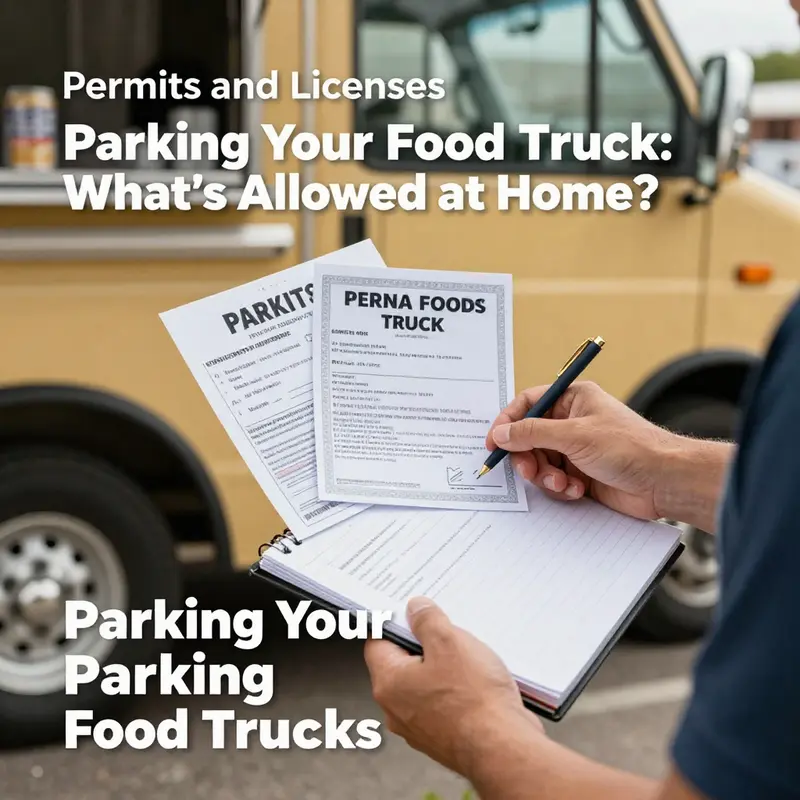
The dream of parking a food truck in a residential driveway can feel like a sharp intersection of ambition and practicality. A home base offers proximity to suppliers, a familiar routine, and the possibility of testing new ideas in familiar surroundings. Yet the ease vanishes once you begin to treat the space as more than storage. When you move from parking a vehicle to running a street food operation, you step into a web of rules designed to protect neighbors, pedestrians, and diners. The line between a handy test site and a full on site kitchen is a regulatory threshold that many aspiring operators discover only after they have already pictured the daily flow of orders, prep, and pickup in a compact home setting. The reality is that legitimacy requires more than enthusiasm; it requires a disciplined understanding of local governance, health standards, and community expectations.
Zoning laws form the frontline of this landscape. In most residential zones, commercial activity is heavily restricted to avoid turning neighborhoods into business districts. Some jurisdictions allow small-scale storage or occasional loading on private property, but placing a cooking or serving operation on site often triggers a change of use review. The practical effect is that a driveway or backyard might handle a truck’s presence, but not its operation as a customer-facing kitchen. Inspectors and planners assess factors such as traffic generation, hours of operation, lighting, and the proximity of living spaces. Even when the physical footprint is modest, the character of the use matters. A plastic sign on the driveway, a regular queue of customers, or recurring deliveries can push the activity into a category that requires formal approval. The aim is not to quash entrepreneurship but to ensure neighborhood livability and to prevent escalations that could affect property values, safety, and infrastructure.
Permits and licenses form the second pillar of legitimacy, and they come with a clear rationale: food safety, labor standards, and accountability. A Mobile Food Vendor Permit, commonly issued by the local health department or a dedicated food safety agency, signals that your sanitation plan, temperature controls, equipment maintenance, and pest management meet established standards. A separate Business License from the city or county confirms that you operate as a legal business entity under local tax rules and reporting obligations. A Zoning Permit or equivalent clearance may be required to verify that the property’s current use aligns with zoning codes. Some areas also require vehicle registration as a commercial vehicle and proof of insurance tailored to the risks of on site food service. Each piece of paperwork protects public health and clarifies responsibility in case of a complaint or incident. While this sounds exacting, it is a systemic approach that helps prevent foodborne illness, spills, and fire hazards from becoming neighborhood problems.
The pathway to compliance begins with precise information gathering and a proactive mindset. Start by contacting your local planning department and health department to determine whether home parking of a food truck is possible at all, under what conditions, and for what duration. A practical first step is to document the exact activities you intend to conduct on site: storage, basic food preparation, limited warming, customer pickup, and waste handling. Then map the site specifics: water access, power supply, drainage, waste lines, and where customers would stand if a temporary service occurs. This groundwork is essential because permit applications typically hinge on technical diagrams, sanitation plans, and environmental considerations. Many municipalities publish mobile food service guidelines online that spell out the permit flow, inspection criteria, safety expectations, and renewal requirements. Reading these resources early reduces the chance of missteps and costly delays.
There is a meaningful distinction between storage and active use that many jurisdictions emphasize. Some places permit a truck to remain on private property for storage or staging, provided it is not actively cooking or serving. Others insist that even storage must be bounded by conditions that mitigate noise, glare, and traffic impact. The overarching health perspective is consistent: the more on site, the more rigorous the sanitary controls must be. This is not a punitive stance but a practical one. A small-scale operation in a compliant, contained space is manageable; a sprawling on site kitchen in a residential setting tends to strain waste systems, odor control, and neighbor relations. The balance must be struck between entrepreneurship and responsibility, and it often determines whether a home base remains a testing ground or a stepping stone toward a compliant, non residential footprint.
Beyond the regulatory mechanics lies the reality of risk management. Vehicle registration and insurance take on new significance when a truck becomes a business asset parked on private property. In some regions, insurers expect commercial coverage that reflects on site operations, food handling, and potential liability for customers or staff. A practical route is to work with a local broker who can tailor coverage to a mobile food context, covering general liability, product liability, and on site incidents. Permit fees, inspection costs, and license renewals become predictable line items in a business budget, not afterthoughts. Planning for these costs upfront clarifies the economics of a home based concept and helps prevent surprises that could derail growth or push the venture underground.
Neighborhood and HOA dynamics add another layer of complexity. Even when a city allows a limited on site presence, guidelines established by a homeowners association can restrict commercial vehicles, signage, lighting, and hours. A transparent approach—sharing plans with neighbors, outlining noise and waste management schedules, and agreeing on pickup times—often reduces friction. When neighbors feel informed and respected, the chances of complaints or formal action drop significantly. In many communities the social contract is as important as the permit packet. A well managed on site operation that minimizes disruption not only passes inspection, it earns social license to grow.
For those who envision testing concepts from home while avoiding regulatory bottlenecks, alternatives naturally present themselves. One viable path is to use a licensed commercial kitchen or a shared commissary for on site cooking and service, while the vehicle remains the moving part of the business. In these spaces, compliance infrastructure is already in place, inspections are aligned with the facility, and waste and odor controls exist as shared resources. This separation reduces risk for the residence, gives you predictable licensing timelines, and still preserves the core entrepreneurial elements—menu planning, branding, and customer experience. A second path is to operate in designated public zones during approved times or events. Such a model lets you test demand and refine operations in a regulated setting, before expanding to a broader footprint. A blended approach—home testing paired with public operations—can unlock growth while maintaining alignment with the broader regulatory framework.
Readers who want to imagine how space and equipment influence feasibility can benefit from visualizing different configurations for a home based footprint. If you are weighing how much space you need and what kind of vehicle fits a home based concept, review the guide on best food truck models for Lakewood startups. This resource helps you imagine scale, storage, and workflow without anchoring you to a particular brand. It serves as a planning aid, not a shopping list, inviting you to design a layout that keeps food safety and neighbor considerations front and center. best food truck models for Lakewood startups
Ultimately, the journey from idea to compliant practice is a learning curve rather than a simple yes or no. The first move is a direct inquiry to the local authorities to clarify what is permissible at your address. Following that, you’ll map the activities, confirm site suitability, and prepare any required permit packages with diagrams, sanitation plans, and proof of staff training. If approvals are granted, inspections become a routine part of the process, and you adjust the operation to meet the feedback. If not, the insights gained still refine your business model, catapulting you toward a compliant path or a decision to pursue a non residential operation. The aim is clarity, not speed, because a careful, lawful approach produces a more sustainable business in the long run. For those who want to consider equipment and space planning in more detail, see the options described in this guide on best food truck models for Lakewood startups. The suggestion is not a prescription for one model but a framework for thinking about scale, site, and safety.
For official guidance and the granular requirements that apply to a given location, refer to the city or county portal that hosts the mobile vendor program. A practical starting point is the program page that outlines permits, inspections, and compliance standards. External resource: https://www.austintexas.gov/department/mobile-food-vendor-program
Beyond the Driveway: The Hidden Rules of Parking Food Trucks in Residential Areas
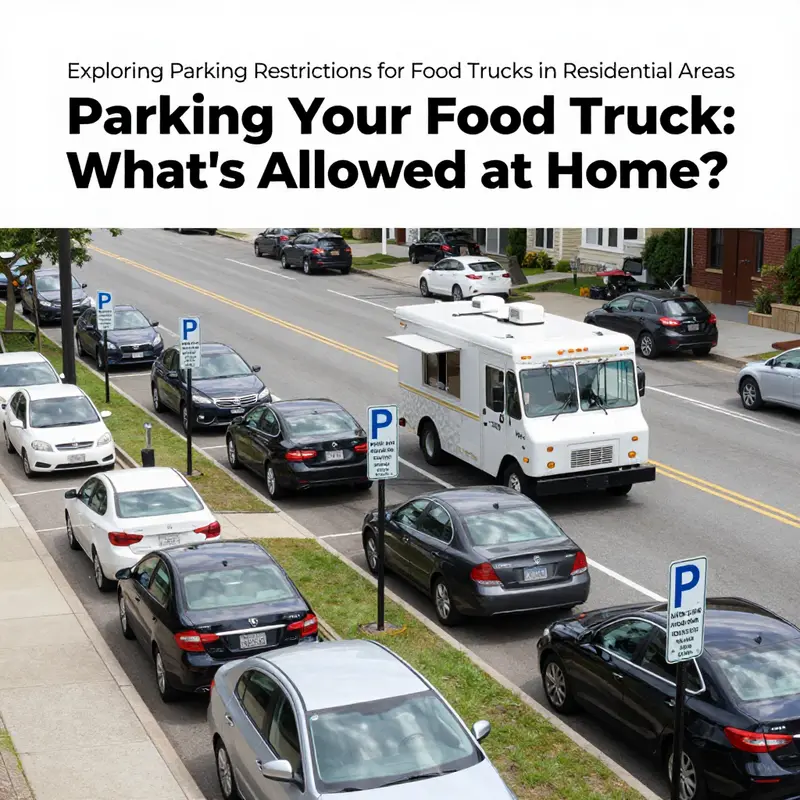
When people ask, can I park a food truck in my driveway or backyard, the first impulse is often a practical fantasy: a steady stream of customers in a familiar, friendly neighborhood, no storefront lease, just a familiar curb and a recipe that works. The answer, however, is rarely simple. In most places, residential zoning and the practical realities of safety, health, and neighborhood harmony converge to make regular parking and operation of a food truck at home a path blocked by rules rather than a lane toward easy, casual commerce. The tension between entrepreneurial impulse and regulatory caution sits at the heart of understanding what is possible and what remains strictly off limits in a home setting. The logic behind these restrictions is not mysterious. It is built from concerns about noise, traffic, health, parking turnover, and the ability of emergency services to move quickly when needed. The road to lawful operation, if it exists at all in a given home, lies through careful navigation of zoning, permits, and community guidelines, not through a clever workaround in a private driveway.
Zoning laws are the first and most telling gatekeepers. In many residential districts, the land use map treats private property as a place for living, not for operating a business that serves the public. Commercial activities near or on private lots carry the risk of blurring lines between a quiet home and a bustling storefront. Local planners argue that without clear boundaries, the cumulative impact—traffic from customers, deliveries, and staff; amplified noise during service hours; and potential health code concerns—can erode the residential character that zoning aims to preserve. Even if a parcel sits on the edge of a mixed use zone, the default assumption in many municipalities is that a food vending operation belongs in a commercial zone or in a designated public or semi public space, not in a standard private driveway or backyard.
Permits and licenses form the next layer of gatekeeping. The formal permissions required to operate a mobile food vending business vary by jurisdiction, but they commonly include a business license and a specific mobile vending permit. These documents often come with conditions about where and when the truck can be parked or staged, how customers can access the service, and how waste and sanitization are managed. Importantly, a permit to operate a mobile food business is not always sufficient to authorize parking a truck on private property for routine, ongoing service. Many municipalities expect that the actual on site activity will occur in a location expressly approved for commerce, not merely in a private drive or yard. In other words, the permit covers the business model, but the location still matters greatly. The practical effect is that even enthusiastic home based operators may discover their plans encounter one administrative roadblock after another, requiring additional variances or permanent changes in land use designation.
Parking restrictions close the loop. Even when a city grants some room for mobile vending, it often strips or severely curtails the ability to park a truck on private property. Rules frequently prohibit blocking sidewalks, hydrants, driveways, or access points for neighboring businesses and homes. There are often distances to be observed from other food vendors or residential structures, intended to minimize congestion, confusion, and safety hazards. Some cities restrict parking to certain hours, either to protect quiet hours or to align with waste removal schedules and street cleaning routines. In practice, this means a truck might be allowed to occupy a public curb only during a narrow window, and only if it is part of a broader, clearly defined vending operation in an approved zone. The effect is that a home based food truck is rarely a long term, everyday feature in a typical yard or driveway; it is more likely to be permitted only as a temporary loading/unloading arrangement or in a specifically permitted zone during limited hours.
Community associations and neighborhood covenants can add another layer of complexity. In neighborhoods governed by a homeowners association, CC&Rs often address the visibility of commercial vehicles, the appearance of the property, and the risk of ongoing commercial activity from private residences. Even if the city seems to permit a certain setup, an HOA might prohibit commercial vehicles from being parked on private property at all, or require special approvals before any such use is allowed. The combination of zoning, licensing, parking restrictions, and HOA covenants means that a home-based food-truck operation rarely survives as a stable, day-to-day enterprise in a typical residential community.
These regulatory frameworks do not simply exist as abstract hurdles. They are actively enforced by municipal code enforcement officers and sometimes by local police. Violations can lead to warnings, fines, or more serious actions such as the removal of the vehicle, a stop-work order, or the revocation of permits. The practical takeaway is that the risk of noncompliance is real, and the consequences can disrupt your plans, finances, and reputation more quickly than a stalled cookfire ever could.
If your goal is to explore the possibility of serving customers from a home base, the most reliable path is to seek information directly from the local authorities. City or county planning departments maintain zoning maps, permitting guidelines, and contact information for the offices that oversee mobile vending, business licensing, and health compliance. A careful review of these resources will reveal whether a home-based configuration is permissible, and under what conditions. The landscape varies widely from one jurisdiction to the next, and a plan that seems viable in one city may be categorically prohibited in another.
An illustrative example underscores the point. In large, image-conscious cities with dense commercial corridors, authorities typically funnel mobile vending into designated zones — often along busy streets or in officially approved market districts — and require licenses that speak to health, sanitation, and food-safety standards. Some communities allow operation only during special events or in temporary pop-up configurations in approved spaces. In many cases, the permit process emphasizes the location more than the vehicle, underscoring the principle that the operation must occur where the public can be expected to access it without compromising residential life. The upshot is that a residentially parked food truck, if it exists in any legally permissible form, is likely to do so only in a narrow window and under strict supervision of the authorities.
For those wrestling with this dilemma, practical alternatives often present themselves without forcing a risky legal compromise. Consider partnering with a nearby commercial kitchen that rents space to food vendors. A shared kitchen can provide the required health compliance infrastructure, equipment, and licensing support while keeping the home address off the operational footprint. Another option is to cultivate a business model around a commercial-venue partnership, where the truck serves customers at events, markets, or in a permitted neighborhood corridor rather than directly from a private residence. In some cases, communities offer permitted pop-up days in public spaces or at events where temporary food service is allowed under a coordinated permit regime. These routes preserve the essence of mobility and flavor without inviting a confrontation with local zoning or HOA rules.
The road to compliance also invites a disciplined approach to planning and documentation. Before you even think about parking a truck near home, assemble a dossier that includes the intended service area, hours of operation, anticipated customer flow, sanitation plans, waste disposal methods, and a maintenance schedule for the vehicle. This preparation is not merely bureaucratic; it demonstrates to regulators that the venture recognizes and mitigates the consequences of operating near a residential setting. It enhances your chances of obtaining any necessary variances or approvals and reduces the post-approval iteration that may otherwise derail your project.
If you are determined to explore home proximity in earnest, here are practical steps that fit within a careful, lawful framework. Start with the local planning department’s website to review zoning designations and any mobile vending overlays that might apply to your parcel. Then contact the appropriate office to discuss your plans; ask what licenses exist for mobile vending and whether a private property parking arrangement can be included as part of the permit package. Verify whether your HOA covenants even permit the discussion to take place, and whether an architectural review or variance process applies to your request. As you gather information, keep an eye on health-safety requirements, waste management expectations, vehicle size restrictions, and expected ingress egress patterns for customers and staff.
The underlying message is simple: parking a food truck at home in a residential area is not a given right but a privilege granted only after a careful regulatory dance. In most cases, the dance entails moving away from private-property parking as a routine practice and toward a legally permitted model that situates the truck in a designated zone or a controlled environment. When you accept this framework, you can preserve the integrity of your home life and your neighborhood while still pursuing a legitimate, customer facing food business. For those who need a concrete example of how these rules unfold in a major city, the City of Los Angeles provides a detailed look at the layered system of zones, permits, and health standards that govern mobile vending. It serves as a reminder that compliance, not provocation, is the foundation of a sustainable mobile food operation. For a direct reference to the official guidance, you can explore the citys regulations at the transportation department food truck resources, which outline where and when trucks may operate, and the kinds of approvals required. https://www.lacity.org/transportation/food-truck-regulations
The HOA Gatekeeper: Navigating the Reality of Parking a Food Truck at Home
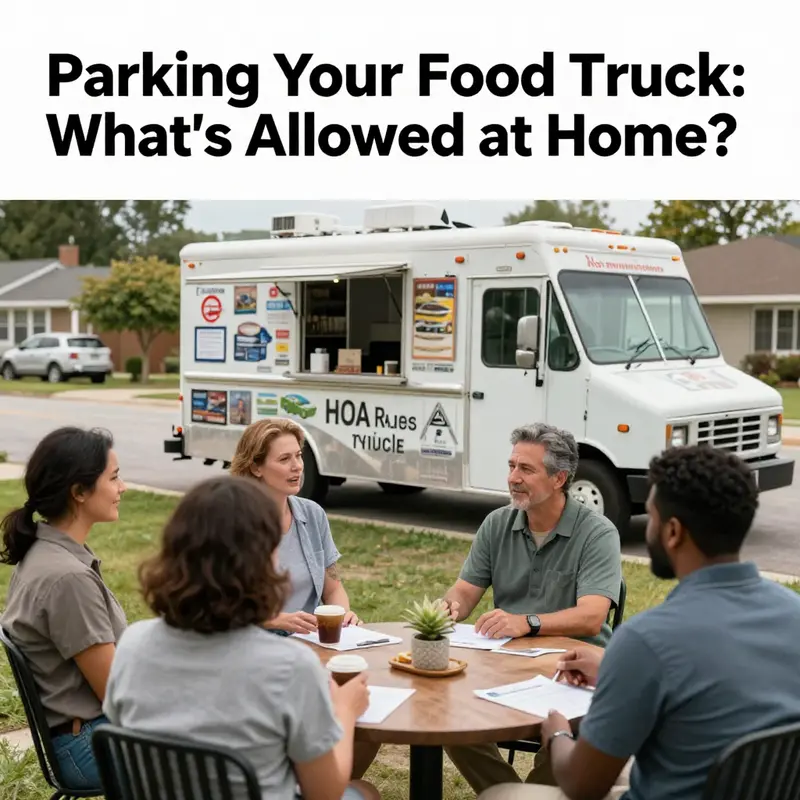
When the dream of a home-based food venture takes shape, many imagine a gleaming truck parked in the driveway, ready to serve neighbors with the push of a button. In theory, the aroma of fried simplicity wafts through the gate of possibility. In practice, however, a quiet residential street is rarely set up to accommodate a moving kitchen perched on wheels. The reason is not a lack of appetite for new ideas but a network of rules that homes and their communities rely on to protect property values, safety, and the quiet rhythm that defines family life. Central to that web are Homeowners Associations, or HOAs, which manage covenants, conditions, and restrictions that govern what can and cannot reside in a private yard or driveway. The chapter you are reading sits at the intersection of aspiration and governance, and it plays a crucial role in understanding whether a home-based food truck can exist in harmony with a residential neighborhood.
HOAs tend to treat a food truck as a commercial vehicle, even when it sits idle in a driveway. The covenants and restrictions they enforce are designed to preserve a certain aesthetic and character—one that many residents chose when they bought in a particular community. The trucks are large, often brightly colored, and symbolically tied to commerce rather than quiet domestic life. It’s not merely about the truck’s presence; it’s about how that presence affects the street’s appearance, the flow of pedestrians and vehicles, and the perceived balance between homes and businesses.
A recurring theme in HOA rules is the prohibition or strict limitation of commercial vehicles parked on private property. The rationale is straightforward: a residential area should minimize visual clutter and the disruption that commercial activity can bring. Noise during early morning prep, the emission footprint from a large engine running at odd hours, and waste disposal concerns all compound the worry about everyday life in the neighborhood becoming a tiny industrial zone. Even if a truck is not actively in operation, many CC&Rs (covenants, conditions, and restrictions) treat the vehicle as a symbol of ongoing business activity, which can clash with the community’s design guidelines. This is why the mere sight of a food truck in a driveway or yard can trigger HOA scrutiny, rather than a simple, informal neighborly nod of approval.
The consequences of disregarding HOA rules are not theoretical. Fines, formal notices, and, in the worst cases, removal orders can disrupt both personal plans and family budgets. In some communities, repeat offenses may escalate to legal action. The financial and social costs of such violations often far exceed any temporary convenience of parking a truck at home for a weekend pop-up. These outcomes underscore a critical point: HOAs are not merely gatekeepers of curb appeal; they are active custodians of a neighborhood’s agreed-upon norms. The practical implication for anyone harboring a dream of permanent home parking for a food truck is that a successful arrangement requires alignment with the CC&Rs, not a loophole around them.
To move from possibility to permission, residents typically begin with disciplined due diligence. The first step is to read the HOA’s CC&Rs carefully, focusing on vehicle standards, the definitions of commercial use, and any prohibitions on large vehicles in driveways or on visible portions of private property. This is not a one-off task but an ongoing conversation with the board and, in some cases, with a management company that enforces these covenants. Some newer guidelines might carve out narrow allowances for certain work vehicles or utility fleets under clearly defined conditions. Yet food trucks as a general category are often excluded because their status as mobile culinary businesses signals ongoing commercial activity—precisely the outcome HOA rules aim to limit in the heart of a residential zone.
Beyond the CC&Rs, many communities have additional layers of oversight. HOA boards interpret rules, and their interpretations can vary over time with changes in board leadership, resident needs, or city policy tweaks. Consultation with the HOA board is essential before any commitment to parking a truck at home is made. A direct conversation offers a chance to present a well-thought-out plan that addresses the HOA’s concerns—noise abatement strategies, waste management plans, and strict operating hours, for example. In some cases, boards may require documentation such as licenses, health code compliance, a waste disposal agreement, or a professional assessment of the site’s safety and aesthetics. The aim is to demonstrate that the kitchen-on-wheels would operate within a controlled, predictable framework rather than disrupt the neighborhood’s everyday rhythm.
In practice, few HOAs extend permission for a food truck to operate as a regular feature on private property. Some communities allow certain types of work vehicles to be parked temporarily in driveways for loading and unloading or for short-term service needs, under specified conditions. But the bar remains high for anything that resembles ongoing commercial activity. The difference between a one-off service call and a sustained home-based business can be more a matter of degree than of kind, and HOA rules are often calibrated toward the lower end of that spectrum. Consequently, for most residents, the path to a legally parked food truck at home isn’t paved with a loophole but with careful negotiation and a willingness to adjust plans to fit community standards.
If the HOA stance feels like a rigid wall, it is worth reframing the conversation around options rather than surrender. There are constructive routes that respect both the homeowner’s entrepreneurial impulse and the neighborhood’s expectations. For many, the solution begins with a frank assessment of the practical constraints: space, driveway width, visibility from the street, and the potential for foot and vehicle traffic to accumulate around peak service hours. In some cases, a compromise could involve using a dedicated storage or prep area off-site, with the truck kept in a garage or gated area that is not visible from public view. For others, the model might shift toward complementary arrangements—pop-up events at approved community spaces, or collaborations with nearby commercial kitchens that operate under a commissary model, where the truck travels to a separate, licensed facility rather than dwelling on private land.
A practical, neighborly approach might also involve reimagining the venture as a neighborhood partnership rather than a private residence turning into a storefront. If a resident can align the business with the community’s goals—such as contributing to a local farmers’ market, supporting charity events, or participating in sanctioned street fairs—the line between home and business can blur in ways that feel more acceptable to the HOA and to neighbors. In those scenarios, the truck becomes part of a shared ecosystem rather than a solitary fixture in a private yard. When such partnerships are feasible, an internal guideline can emerge: a home-based business that relies on a sanctioned schedule, adheres to health codes, and respects the quiet hours of the community may find more room to maneuver than a standalone home operation.
For the curious reader who wants to visualize practical space management in these conversations, consider how on-site storage and transport arrangements are handled in modern mobile setups. If a reader seeks a model for non-traditional parking or storage solutions that still preserve the look and feel of a residential street, there are resources that discuss how to maximize garage space, organize a portable kitchen, and plan for off-site preparation when allowed. A relevant example examines how dedicated garage space and trailer storage can support motorized living or mobile operations while keeping the public-facing areas in compliance. See truck-camper-garage-new-showroom-overview for broader ideas about how many households manage large vehicles and temporary setups without compromising curb appeal or safety. This reference is not a guarantee of HOA approval, but it helps frame the spatial feasibility questions every homeowner must answer before attempting any parking plan.
Despite the constraints, there is also a broader policy landscape that can influence HOA decisions. Municipal regulations interact with HOA rules in sometimes unpredictable ways. Some cities explicitly allow temporary loading and unloading of mobile vending units in residential areas under strict time limits or permit conditions, while others reserve commercial activity for zones that are zoned for business use. In short, even if a city grants permission for a vehicle-based business to operate under certain circumstances, the HOA may override that permission on private property if the covenants are more restrictive. This layered reality makes proactive research essential. Before any truck is rolled into a driveway, a resident should confirm both the city’s stance and the HOA’s CC&Rs and, ideally, document every step of the approval process if a favorable outcome is possible.
If your aim is to keep the dream alive without courting conflict, the conversation often shifts to alternatives that keep the spirit of the business intact while honoring community expectations. One option is to focus on a business model that uses a home base for prep but does not rely on on-site customer service from a parked vehicle. A licensed kitchen space, sometimes called a commissary, can be the backbone of a mobile operation, allowing the truck to travel to customers without making the home property the storefront. Another is to host private events or pop-up lunches in approved locations that provide the necessary permits and sanitation standards, then transport the goods to the chosen venue. These routes preserve the social and culinary energy of a food-truck concept while aligning with HOA and municipal constraints. In addition, residents might explore phased schedules that minimize disruption, such as operating only during hours when the HOA neighborhood is least sensitive to traffic and noise, provided the board approves and monitors those conditions.
Ultimately, the question, can you park a food truck at home, resolves not to a simple yes or no but to a careful alignment of expectations, rules, and practical constraints. The HOA acts as a gatekeeper who can either facilitate a plan through compliance or close the gate if the proposed use fundamentally disrupts the community’s harmony. The best path is a transparent, well-documented process that respects the CC&Rs, communicates with neighbors, and remains adaptable. It is a process that values the neighborhood as a shared home and treats culinary ambition as a possibility that can be pursued in ways that keep the street welcoming and safe for everyone. If you are exploring this path, begin with a thorough review of your HOA’s rules, contact the board with a respectful plan, and be prepared to pivot to off-site or community-based solutions if the answer is not yes. For readers who want practical ideas about storage and space management for large vehicles connected to mobile operations, a related resource offers perspectives on garage space and showroom overviews that can help frame what is technically feasible on a property while staying within broader design norms. See the linked internal resource for context on how others in similar situations approach space planning: truck-camper-garage-new-showroom-overview.
And if your research extends beyond HOA boundaries to a wider regulatory understanding, a useful external reference outlines how parking and vehicle-based work may be addressed in evolving local laws. For broader policy context on parking allowances in driveways and the potential for waivers or updates to HOA protocols, consider reviewing the updated parking guidelines available here: https://www.hoa.org/new-parking-rules-allow-work-vehicle-driveway/ . This resource can illuminate how communities are rethinking driveway use while emphasizing the importance of staying within both HOA and municipal frameworks. In the end, the path to a home-based food truck remains nuanced and personal. It rewards patient planning, neighborly communication, and a readiness to adjust the business model to fit the home, the street, and the shared standards that keep a community thriving.
Final thoughts
Deciding to park your food truck at home in Lakewood is not just about convenience; it’s about understanding the intricate web of laws and guidelines that govern local food business operations. Zoning laws can dictate where you can park, while permits and license requirements solidify your ability to operate despite how tempting that home driveway may seem. If you’re part of a homeowners association, ensure you’re up to speed with their rules to avoid any unwanted conflicts. For any aspiring food truck operator, being well-informed will make your culinary venture much smoother and more enjoyable.