
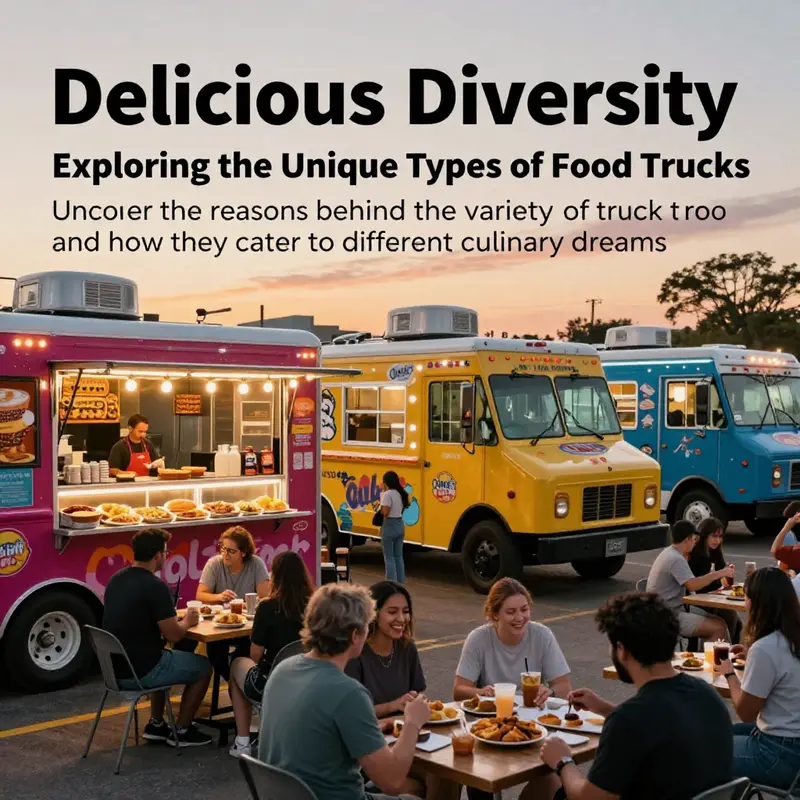
Food trucks are more than just mobile kitchens; they’re culinary adventures on wheels! In Lakewood, where food lovers converge, you’ll find an array of food trucks with distinct identities, each crafted to meet specific needs and serve up an unforgettable experience. Whether you’re an aspiring food truck operator or a tourist exploring the local food scene, understanding the different types of food trucks can open your eyes to the limitless possibilities of this vibrant dining option. In our first chapter, we’ll dive into box-style food trucks, the versatile workhorses of the industry. Next, we’ll explore expandable food trucks that adapt to varying spaces and customer needs. Lastly, we’ll look at specialized food trucks that celebrate specific culinary traditions. Together, these chapters will provide you with insights into why this variety is crucial for both food truck operators and the communities they serve.
Box-Style Kitchens on Wheels: How a Versatile Core Explains the Wide Range of Food Truck Types
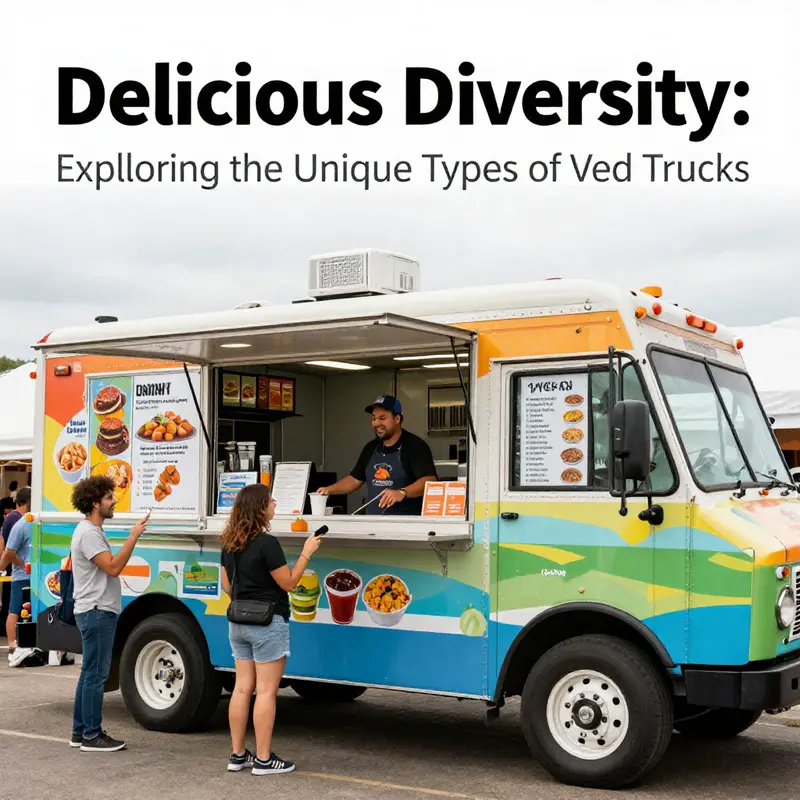
A box-style food truck sits at the center of the mobile dining world not because it is the only option, but because its simple geometry—a large, rectangular enclosure mounted on a chassis—offers a uniquely flexible stage for countless culinary ambitions. The box, in its most practical sense, is a blank canvas shaped by interior planning. Its long, unbroken interior walls set up a logic of space where equipment can be arranged, reconfigured, and expanded without compromising the vehicle’s mobility. That is the heart of why there are different types of food trucks: design constraints and operational goals converge in ways that invite experimentation. The box truck’s interior can be partitioned for multiple cooking stations, stacked with refrigeration, and lined with durable, easy-to-clean surfaces. It can host a full-service kitchen on wheels for catering and events, or it can be pared down to a streamlined two- or three-station setup that prioritizes speed and turnover for lunch crowds. Its interior geometry supports both, and that is a form of versatility that other designs can only approximate. The driver of this versatility is not just capacity, but a willingness to reimagine the kitchen inside the box in response to market signals, weather patterns, and the evolving expectations of diners who increasingly see mobile food as a local dining alternative rather than a mere convenience.
In practice, that interior flexibility translates into decisions about how the truck will be used, what cuisine it will carry, and how it will present itself to customers. A dessert-forward box truck, for example, leans on refrigerated display cases and visually engaging décor to create an ambience suitable for celebrations or intimate gatherings. A fried-dish operation, on the other hand, prioritizes grease management, heat resistance, and a robust ventilation system that can handle high-heat cooking while keeping the air safe for workers and compliant with health standards. The same box can pivot toward healthier offerings with modular cold storage, or toward a casserole-style service with warm-serve equipment that keeps items at safe temperatures during long events. The point is not merely to fit equipment into a space, but to choreograph movement, storage, and workflow so that the kitchen operates like a well-rehearsed stage production. The box is a platform for work rhythms as much as it is for recipes.
Regional variation is a natural outgrowth of this core. The box-style platform travels differently in different climates, regulatory regimes, and consumer expectations. In climates with intense heat or heavy rains, operators emphasize weather resistance and insulation. In milder regions, efficiency and energy use may take precedence, with upgrades focused on better insulation, more compact layouts, and smarter waste management. California restaurants on wheels, for instance, often integrate advanced HVAC systems and flexible equipment racks to accommodate a wide culinary spectrum—from fusion fare to gourmet burgers—while maintaining year-round operation. The state’s dense customer base and diverse foodie culture reward a truck that can switch between menu concepts without a lengthy retrofit. In Texas, the operational emphasis shifts toward robustness under outdoor conditions, high-speed service during festivals, and compact, efficient workflows that keep the kitchen humming during peak hours. The interior is configured to minimize steps for staff, with proximity between cold storage, prep areas, and service windows designed to maximize speed and consistency in a hot, crowded environment. These regional adaptations are not mere afterthoughts; they are built into the box’s design logic by way of insulation, weatherproofing, and fire safety considerations that protect both workers and customers.
The engineering beyond the shell is equally important in understanding why there are different types of food trucks. The box truck’s interior can be insulated with materials that reduce energy loss and stabilize temperatures, an attribute that becomes increasingly critical as operators mix culinary styles and service times. Energy-efficient appliances, compact waste systems, and integrated drainage plans help maintain compliance with health regulations while keeping operating costs manageable. Modern iterations emphasize cleanability and modularity: surfaces that resist corrosion, anti-slip floors that endure frequent wet-cleaning cycles, and rust-resistant coatings that extend the vehicle’s lifespan in environments that would otherwise take a toll. The economics of the box lie in the balance between interior capacity and the cost of adding more specialized equipment. A well-planned box can host multiple cooking stations, a full complement of refrigeration, and ample prep space, yet still fit within a standard curbside footprint and meet local weight restrictions. This balance—between interior abundance and transitable practicality—is what allows a single box design to realize a broad menu and a broad set of service models.
Aesthetics and branding are inseparable from function in the box narrative. Operators often view the truck as a rolling storefront, where interior layout and exterior presentation reinforce the brand story. Colorful graphics, thematic interiors, and carefully staged service windows transform the vehicle from merely a kitchen on wheels into a mobile experience that customers remember. The box’s generous interior real estate makes it easier to embed branding elements inside as well—custom lighting, display shelving, and signage that fits cleanly within the large, uninterrupted wall spaces. In turn, this branding helps explain why some operators favor the box platform for signature concepts that rely on guest engagement and photo-worthy moments. The result is a feedback loop: a versatile kitchen supports varied menus, while a compelling brand identity invites a wider audience to explore those menus across different neighborhoods and events.
The box truck’s adaptability does not render other types of trucks obsolete. Rather, it highlights why the market offers a spectrum of formats: each type answers a distinct set of constraints and opportunities. Expandable trucks, with their outward-extendable kitchens, pursue volume when parked in open lots or at festivals where space is temporarily abundant but safety remains paramount during transit. Grill- and fryer-based trucks are engineered around ventilation, grease management, and high-energy output for specific cuisines such as barbecue, tacos, or fried chicken, where the cooking demands are intense and the throughput is variable. Steam and soup carts prioritize hygiene and precise temperature control, serving comforting dishes that rely on steady heat and clean lines of service. Cold-food trucks emphasize refrigeration, display, and the balance of freshness with energy efficiency. Each type represents a response to a particular market dynamic—whether it is the expected customer environment, the dish profile, or the operational tempo—yet all share a common progenitor in the box’s interior logic: a space that can be reimagined to suit almost any culinary ambition while maintaining safe, compliant, and durable operation on wheels.
This unifying theme—design as a driver of diversity—also helps explain the strategic decisions operators make when they plan growth or pivot during a season. A starting concept might be a compact, box-style kitchen that fits a limited menu and low-volume events. As demand grows or as opportunities shift to larger venues, the box can scale by expanding equipment footprints, adding more refrigeration, or reconfiguring prep zones without abandoning the core chassis. Alternatively, a business might begin with a specialized truck—perhaps focused on a single cuisine or service style—and then move toward a more versatile box configuration to broaden its appeal or to support a broader catering portfolio. In either case, the box model provides a reliable platform from which to experiment, scale, and refine, a practical explanation for why there are many types of food trucks even within the broader category of mobile dining.
The practical takeaway for someone exploring this landscape is straightforward: the variety of food truck types emerges from a shared commitment to convert space, time, and routine into appetite-driven experiences. The box-style kitchen explains the breadth of potential because it is not constrained by a fixed layout—it is a malleable system that can be reconfigured to serve new menus, new environments, and new business models. Operators can tailor the interior to meet a wide range of demands, from the tactile needs of a busy prep line to the visual storytelling of a brand, all while keeping a close eye on safety, sanitation, and efficiency. That capacity to adapt—to retool, to rebrand, to re-enter a new market with confidence—defines the box as more than a vehicle. It is a dynamic platform for culinary entrepreneurship.
For readers seeking a practical sense of how these configurations translate into real-world choices, a case in point is found in industry roundups that examine current trends in mobile dining. A representative resource that showcases how operators weigh model choices and space allocations is the article on best food truck models for Lakewood startups. This overview highlights how a box-style foundation can support everything from high-volume catering to compact, fast-service concepts, and it underscores how regional expectations shape the “fit” of a given configuration. See the discussion here: Best food truck models for Lakewood startups.
Beyond the interior, the shell and its safety features play a critical role in determining how widely a box-style truck can operate. Weather resistance, insulation, and fireproofing are not cosmetic concerns but essential components of a reliable, year-round business. A robust cold aisle, upgraded insulation, and well-sealed compartments help maintain product quality and protect staff in climates that swing between freezing nights and scorching afternoons. Fire suppression systems, meets-and-acknowledgments with local codes, and corrosion-resistant materials are non-negotiable in establishing a track record of consistent service, particularly for venues that rely on outdoor events where conditions can be unpredictable. Stainless steel frames, non-slip flooring, and rust-resistant coatings are not flashy features; they are the quiet backbone of durability and safety that operators count on as they navigate permits, inspections, and supply chain fluctuations.
The box’s interior space also invites creative workflows that improve throughput and reduce bottlenecks. When the kitchen is laid out with a logical sequence—from cold storage to prep to cook to pass and service—the staff can move through tasks with minimal backtracking. This streamlining matters most during peak hours, when a few extra feet gained through smart stacking and clearly defined zones translate into tangible gains in speed and consistency. In a sense, the box becomes a microcosm of city-scale urban planning: a carefully orchestrated network of touchpoints and corridors where people, ingredients, and orders flow smoothly. The more operators can choreograph this flow, the more confidently they can serve a broad range of dishes, respond to last-minute changes from customers, and maintain high standards regardless of the day’s pace.
All of this helps explain why the box-style kitchen persists as a dominant form in the mobile dining ecosystem. It is not merely a default choice; it is a flexible, scalable, and brand-friendly platform that accommodates the highest variety of culinary ideas within a single vehicle. The versatility is not accidental but the result of deliberate design decisions that connect interior geometry, material science, environmental resilience, and customer experience. When you look at the landscape of food trucks and consider the different types—box, expandable, grill- and fry-focused, steam and soup, cold-focused—the box stands as the enabling architecture that makes all those variations possible. It is the chassis upon which the entire spectrum of mobile food ventures can be built, tested, and retuned for new markets and new tastes.
External resource for deeper reading on the engineering foundations of box trucks can be found here: Understanding Model Box Truck: Grades, Properties, and Engineering Applications.
Designing Mobility: The Varieties of Food Trucks
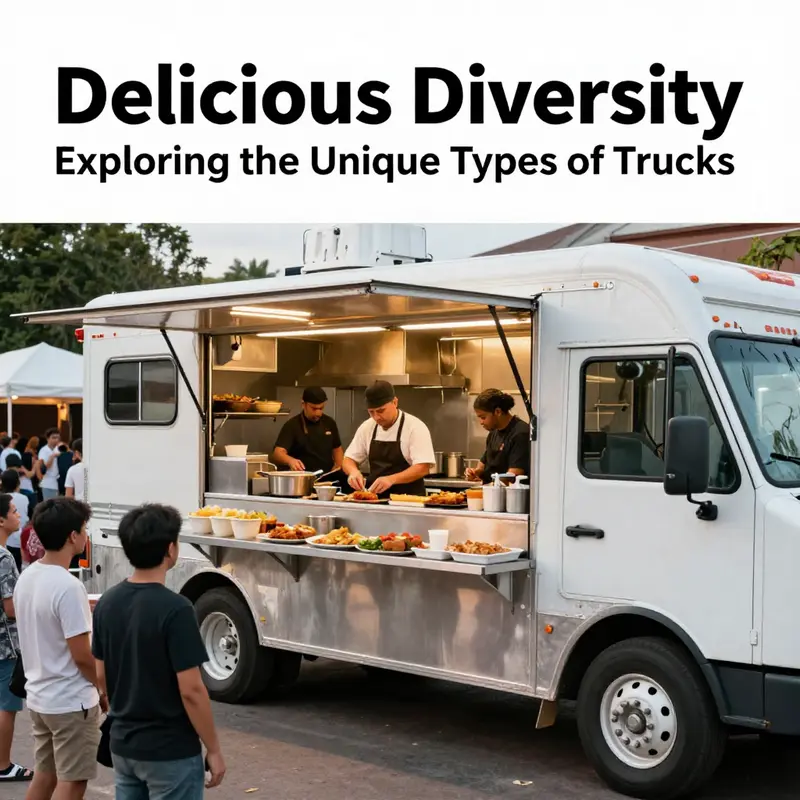
Food trucks come in many forms because mobility itself is a design challenge. From compact carts to boxy vans, each layout answers different questions about space, safety, and service speed. This chapter explores how form follows function in a moving kitchen, and how operators tailor equipment, ventilation, and branding to meet diverse environments.
History and practicality drive this diversity. Early mobile kitchens prioritized ruggedness and portability, while modern fleets balance efficiency with a wider menu. Technology expands what’s possible: compact refrigeration, efficient grease management, and reliable hot-water systems enable more complex offerings while keeping up with high-traffic events. Yet hardware alone does not define a truck’s potential; digital tools, weather resilience, and urban design all shape what kinds of menus can thrive on wheels.
Urban context matters: a city block, a festival, or a campus plurality demands different footprints, storage strategies, and workflow. Box trucks, trailers, and expandable designs each serve a niche, allowing operators to scale up for big events or stay nimble for daily foot traffic. Branding and experience complete the picture, turning a mobile kitchen into a portable restaurant and a small business into a recognizable local presence.
The takeaway is simple: the variety of food trucks reflects a continuum of constraints and opportunities. By aligning form, function, and branding with the settings where food travels, operators can deliver consistent quality and memorable experiences wherever the road takes them.
Specialized Food Trucks: How Niche Craft and Purpose-Built Design Shape the Mobile Kitchen Landscape
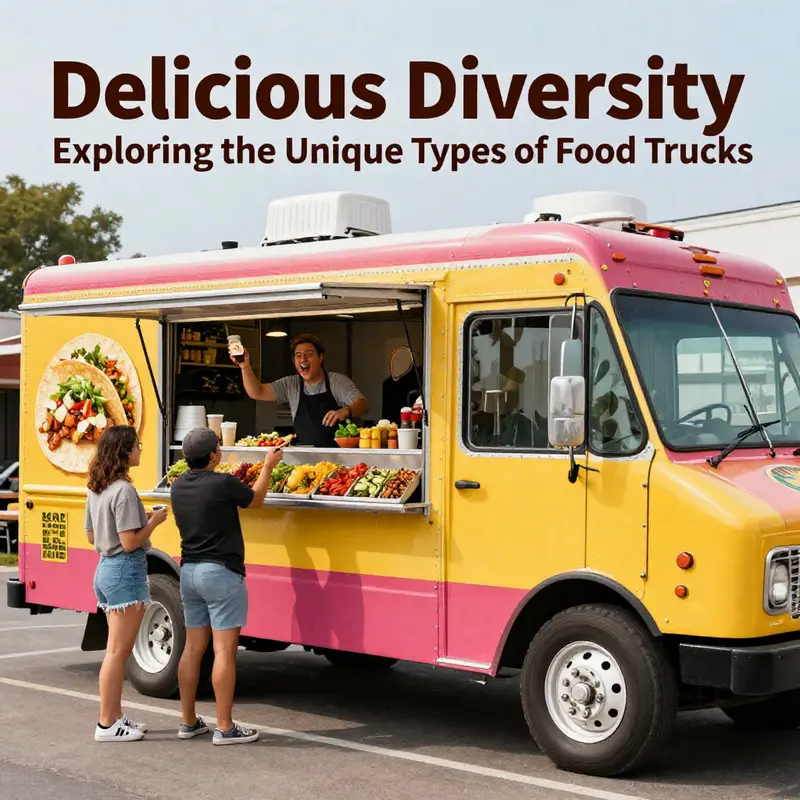
Specialized food trucks are not simply smaller versions of brick-and-mortar kitchens; they are deliberate instruments designed to execute a precise culinary vision in a shifting urban ecosystem. The diversity of these vehicles mirrors the spectrum of tastes, service tempos, and environmental constraints that mark modern street food. When a vendor chooses to center a truck around a narrow niche—whether it be a grilling and smoking focus, a dessert-forward display, or a cold-food cadence—that choice becomes a foundational decision. It informs not only the menu but the entire operating model: the layout, the ventilation and fire safety strategy, the sanitation plan, the insulation, and even the branding that travels with the vehicle. In a crowded cityscape where space is limited and attention is scarce, specialization becomes both a practical tactic and a narrative device. It allows a business to claim a distinct space on a crowded curb while delivering a consistent, repeatable product that customers come to recognize and crave.
From a design perspective, specialized trucks are built around the function they must serve. A barbecue or grill-and-fryer truck, for example, prioritizes heavy-duty ventilation to manage smoke, heat, and the byproducts of high-temperature cooking. It requires robust grease containment, easily cleanable surfaces, and a workflow that shields customers and staff from heat while maximizing throughput. The kitchen layout tends toward multiple cooking stations—grills, smokers, fryers, and prep zones—with efficient access to refrigeration and storage that keeps a broad menu both feasible and safe to operate in a small footprint. In contrast, a steam-and-soup or hot-hydro-cook truck centers on temperature control and hygiene. In these configurations, the emphasis shifts to stable heat retention, steam management, and meticulous, cleanable surfaces that resist corrosion and biofilm formation. The product is not only the dish but the chain of custody: the ability to produce steaming bowls or brothy soups that remain safe and appealing from the first ladle to the last serving.
Dessert trucks carve out a different space altogether. They lean into precise ovens, display cases, and refrigeration units that can present delicate pastries, gelato-like textures, or stabilized creams with a glassy shine. The equipment choices are driven by the need to maintain texture and appearance while offering a visually engaging customer experience. The display becomes as much a performance as a kitchen function. A cold-food-focused truck, which might emphasize smoothies, salads, or frozen desserts, prioritizes cold-chain integrity and hygiene above all. Insulation plays a starring role here; even a brief warm spell can collapse a carefully maintained cold line, so the vehicle must minimize heat transfer, prevent sweating, and avoid temperature excursions that could compromise quality.
The environmental envelope of specialized trucks—weather resistance, insulation, and fireproofing—often tricks the eye into thinking these are mere variations on a theme. In truth, they are strategic adaptations that enable year-round operation and consistent quality across climates. Stainless-steel frames, anti-slip flooring, rust-resistant coatings, and carefully selected wall and ceiling materials are more than durability details; they are investments in safety, sanitation, and reliability. These features matter as much when a truck sits idle between events as when it is on the move, because the long-term health of a business hinges on the reliability of its core equipment and structure. The aesthetic dimensions—the palette, the graphics, the thematic interior—are not superficial add-ons. They encode brand personality, tell a customer a story about the food before the first bite, and help a mobile venture appear professional in a marketplace that rewards both quality and trust.
Choosing a specialized truck also means negotiating the realities of second-hand options. A used truck can be a smart route for someone starting a niche concept, especially when the plan centers on a limited or pre-prepared menu. A second-hand vehicle may be perfectly adequate for a cold-food concept like a salad bar or smoothie vendor, where the emphasis is on display, refrigeration, and sanitary handling rather than heavy on-board cooking. However, for more complex menus that demand robust cooking equipment, a used chassis might carry wear and older ventilation systems that fail to meet modern standards. The decision to buy used versus new hinges on the intended volume, the complexity of the menu, and the willingness to invest in upgrades such as a more efficient hood system, improved fire suppression, or enhanced grease management. Even when a second-hand truck is suitable, careful testing, inspection, and customization are essential to ensure that it can reliably support a specialized menu without compromising safety or regulatory compliance.
Specifications and standards function as a kind of north star for operators entering or expanding within this space. Customized or semi-custom trucks—where the design is tailored to a particular cuisine or service style—are increasingly common, partly because they provide a way to optimize workflows. The right configuration matters: a tight, well-planned path from cold storage to prep to service reduces bottlenecks and lowers the risk of cross-contamination. That path becomes even more important when an operation aims for consistent, high-volume output in a high-traffic setting, such as a busy festival or a recurring urban market. In this sense, specialized trucks are not merely mobile kitchens; they are carefully engineered extensions of a brand’s concept. They translate a culinary philosophy into a physical space that can be moved, reset, and scaled according to demand.
The strategic decision to pursue a specialized format also intersects with market dynamics. In dense urban areas, where foot traffic patterns and event calendars create peaks of demand, a specialized truck can capitalize on a dedicated niche with predictable, repeatable performance. A barbecue truck trained for smoky, bold flavors can lean into guest expectations for that cooking method, while a dessert-forward truck can pair visual appeal with precision baking or pastry work to create a captivating storefront-on-wheels. The brand experience—the look, the aroma, the sound of hot equipment, the gleam of a polished display—becomes inseparable from the product itself. In this sense, the truck is a branding vessel as much as it is a kitchen. It carries a story through its design, its colors, its signage, and the choreography of its service.
An important practical takeaway for aspiring operators is that specialization does not imply rigidity. A well-designed specialized truck can be configured for events that demand high-volume service just as readily as for daily street vending. Some operators choose expandable or modular designs to expand workspace when parked. The outward extension concept preserves safety on the road while delivering extra production room at the event site. This hybridity—between mobility and fixed capacity—offers a flexible middle ground suitable for ambitious concepts that start in a single city block but aim to scale to larger events or multiple venues. It also points to a broader truth about the industry: the best trucks are often those that can bend to new menus, new events, and new neighborhoods without requiring a complete rebuild.
For readers exploring this topic through a practical lens, consider how real-world operators balance cost, function, and scalability. A specialized truck is not a one-size-fits-all instrument. It is a tool that must harmonize with a brand’s menu architecture, its service tempo, and its geographic footprint. A barbecue concept may demand a long, ventilation-forward hood and a robust grease-management system, while a dessert focus may prioritize display refrigeration and precision ovens that deliver consistent results with delicate textures. The choice of whether to pursue a full-scale custom build, a modular design, or a second-hand platform depends on the envisioned customer experience, the menu’s complexity, and the operator’s appetite for risk and growth.
To ground these considerations in a practical frame, many operators look to existing models and planning resources. For practical guidance on which models suit your city and brand, see the article on Best food truck models for Lakewood startups. This resource can help translate the theory of specialization into concrete selection criteria—layout considerations, power and water demands, and the up-front investment required to realize a niche concept. While the specifics of each city’s regulations and market conditions vary, the underlying design logic remains consistent: specialization is a deliberate response to the intertwined pressures of supply, demand, and safety.
Beyond the mechanics of construction, specialized trucks reveal how the mobile food economy negotiates space, identity, and community. The aesthetic language of a truck can turn a functional space into a cultural invitation. A well-executed graphics package, a coordinated interior, and a menu presentation that echoes the exterior all contribute to a coherent experience. In urban food scenes, where a dozen vendors may cluster around a plaza, a truck’s appearance and its performance become part of a neighborhood’s culinary identity. This is where the vehicle transcends its status as a mere instrument and becomes a mobile ambassador for a niche cuisine—an evolving, edible emblem that travels with the operator and travels with the brand.
Finally, the broader ecosystem—from supply chains to city permitting—continues to shape how specialized trucks innovate. Standards and certifications ensure that high-quality, safe food is produced and transported, and they often drive the adoption of technologies that improve sanitation, energy efficiency, and waste management. The push toward sustainability and resilience further informs design choices, as operators seek to minimize emissions, optimize energy use, and protect staff working conditions in sometimes crowded environments. The resulting landscape is one of measured complexity, where culinary ambition, engineering insight, and regulatory compliance converge to create a fleet of mobile kitchens capable of delivering specialty dishes with reliability and personality. The end effect is not simply a diversified market of dishes, but a diverse ecosystem of kitchens that share space, scale, and mission while pursuing distinct culinary narratives.
For readers drawn to the technical and strategic sides of this topic, the chapter underscores a simple but powerful idea: the variety of food truck types arises from differences in how food is cooked, how it is stored, how it is served, and how a brand wants to be perceived. Specialized trucks codify those differences into physical form, ensuring that each concept can operate safely, efficiently, and with a clear sense of purpose in a mobile world where the next curb, festival, or block party is always around the corner. The result is a vibrant spectrum of mobile kitchens, where every niche has a home and every home tells a story about food, craft, and the city itself. For ongoing readers, the practical thread remains constant: your choice of truck is a direct expression of your culinary philosophy, your operational priorities, and your plans for growth.
External reference to standards can offer a broader blueprint for aligning your specialized concept with recognized practices. For a deeper dive into the technical standards that govern these vehicles, see https://www.foodtrucks.org/industry-resources/specifications-and-standards
Final thoughts
Understanding the diverse types of food trucks helps aspiring operators and food lovers appreciate the dynamic food truck culture in Lakewood. Each type, whether box-style, expandable, or specialized, serves a specific purpose and meets unique demands in the culinary landscape. So, whether you’re dreaming of starting your own food truck venture or simply looking to savor delicious meals on-the-go, embrace the exciting variety and creativity that each food truck brings to our community.