
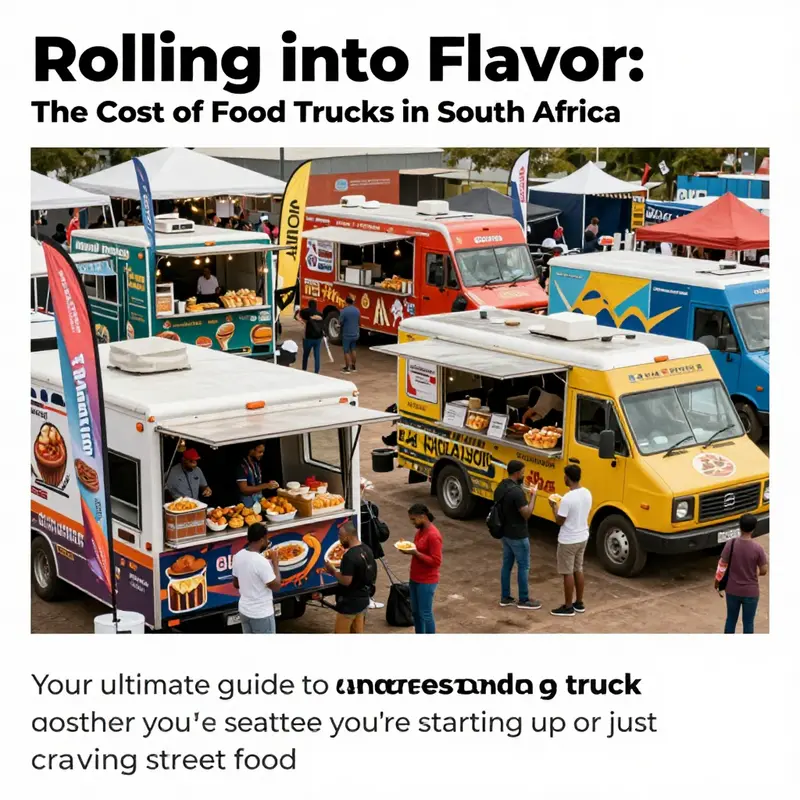
If you’re dreaming of serving delicious meals on wheels in the vibrant landscapes of South Africa, you’ve come to the right place! Starting a food truck is an exciting venture, and understanding the costs involved is crucial to steering your culinary dreams in the right direction. From the foundational expenses of a new vehicle to the budget-friendly options of used trucks, and not forgetting the various ongoing costs you’ll face, we’ve got it covered. Join us as we break down each aspect to help you make informed decisions without breaking the bank, ensuring your journey into the food truck world is as delightful as the dishes you’ll serve.
From Blueprint to Brisk Breakfasts: Navigating the Price Landscape of a South African Food Truck
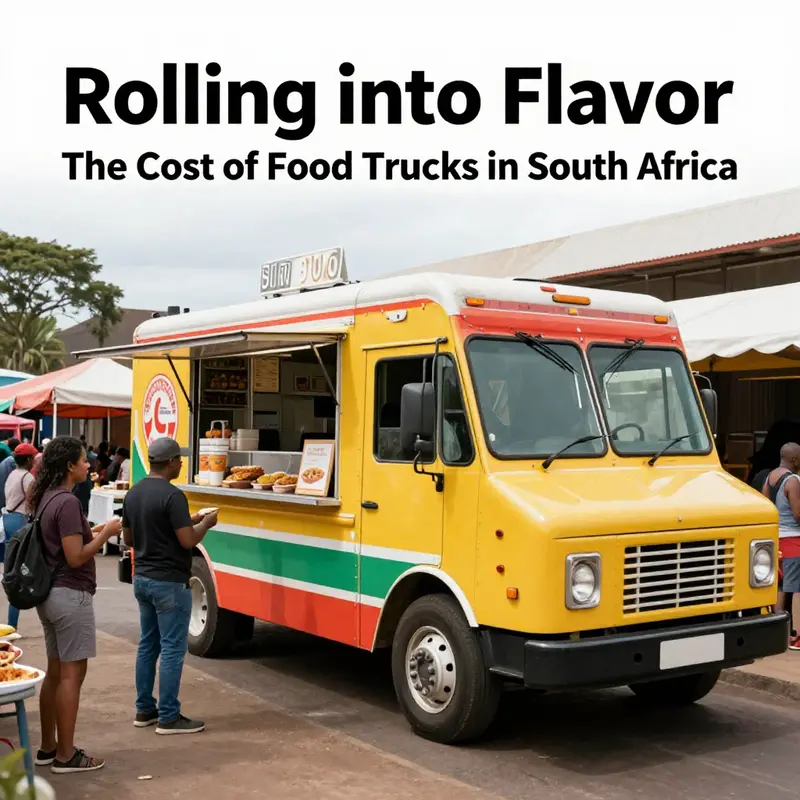
Launching a food truck in South Africa is as much about capital strategy as it is about cooking. The price tag for a new, fully fitted unit sits in a broad band, reflecting unit size, fit-out quality, and compliance. In early 2026, a brand-new truck with a complete, health compliant kitchen can range roughly from R600 000 to R1.5 million. That translates to about $30,000 to $75,000 depending on exchange rates and the finishes chosen. For many aspiring operators, the price is a decision point that influences when and how fast a venture can start generating revenue.
The biggest cost drivers are the chassis and the kitchen fit-out. A larger footprint means more cooking zones, more refrigeration, and more prep space, all of which push the budget higher. Custom branding and high end equipment add to the top line. The choice between a fully integrated, high-end system and a modular, flexible layout affects both upfront cost and ongoing maintenance.
Beyond the truck, ongoing costs matter. Permits and licenses, insurance, and initial inventory form the foundation for legality and service readiness. Ongoing expenses include fuel, tyres, maintenance, back-up power, consumables, and marketing. A prudent operator also sets aside reserves for maintenance and repairs in the first months of operation.
Used trucks offer a lower entry point. A well audited used unit might start around R200 000 to R500 000, but the total cost of ownership can rise quickly if major components or compliance upgrades are needed. A rigorous pre-purchase inspection and a plan to upgrade critical systems are essential.
Local sourcing matters as it can affect lead times, parts availability, and service support. Buying locally aligned builds often yields lower downtime and better long term reliability, though sometimes at a higher upfront price. Budgeting should include not just the sticker price but also a realistic forecast of depreciation, financing, insurance, and working capital to cover the first 90 to 180 days of operation.
To plan effectively, many operators build a simple forecast that captures upfront capital, kitchen fit-out costs, licenses and insurance, and a reserve for maintenance and unplanned repairs. A clear revenue model that accounts for peak service windows, seasonality, and off-peak demand can help determine a viable price point and menu strategy.
Ultimately the choice between a new, fully customized unit and a modular, cost-conscious build reflects risk appetite, time to market, and confidence in managing a mobile kitchen. A new build offers the peace of mind of warranties and predictable performance, while a carefully chosen used unit can enable faster market entry with a lean burn rate if upgrades are planned.
For those seeking deeper pricing insights, industry resources and market guides from SA buyer networks can provide ongoing context on cost trends, lead times, and regulatory changes. External references can complement bids and help map a realistic timeline to profitability. A practical takeaway is to frame the decision around total cost of ownership, not just the sticker price, and to build a plan that aligns capital, cash flow, and service capacity with the chosen market.
The Price Tag on the Move: Estimating Costs for Used Food Trucks in South Africa
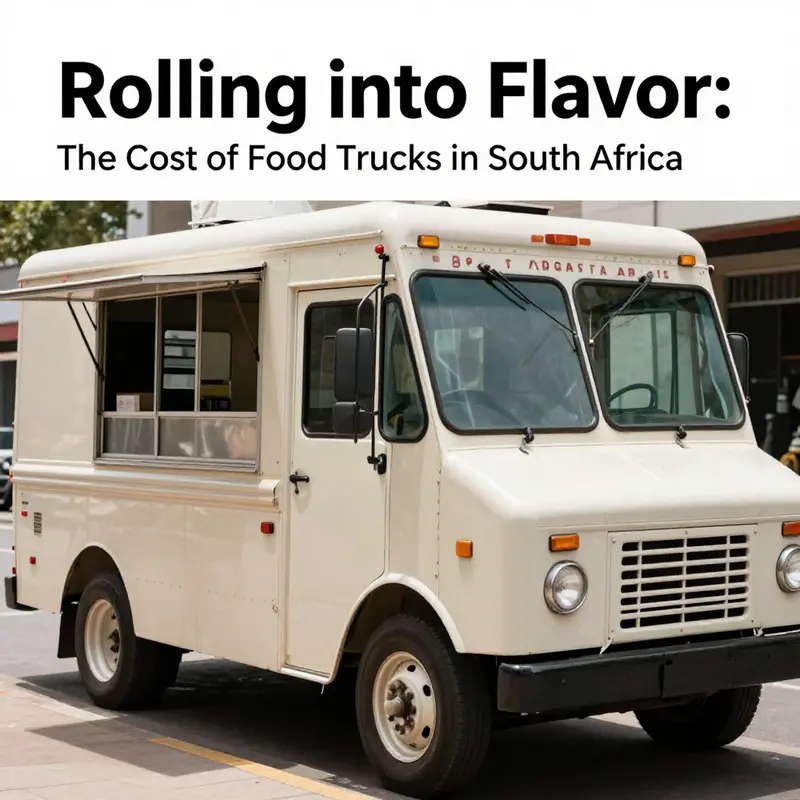
Across South Africa, the decision to launch a mobile food venture often begins with a question that blends aspiration with practicality: what will it cost to own a used food truck, and how can a budding operator ensure that price translates into a sustainable business? The chapter that follows takes a measured approach to answering that question. It acknowledges the lure of a compact, mobile kitchen and the realities of a market that rewards both frugality and smart investment. The landscape is not monolithic. Prices shift with age, condition, and the quiet but persistent pressure of regulatory and operational requirements that turn a good deal into a good decision only when observed with care and discipline.
Fundamentally, the cost of a used food truck in South Africa is a mosaic built from several interlocking pieces. The core is the vehicle itself, but the price people encounter at a market or online listing is rarely the whole story. A selling price might sit somewhere in a broad band—from roughly ZAR 150,000 to more than ZAR 1,200,000—depending on a bundle of characteristics that matter just as much as the truck’s outward appearance. The youngest, most thoroughly equipped units in excellent mechanical condition naturally demand the top of the range. They come with modern refrigeration, cooking appliances that meet food-safety expectations, plumbing that won’t leak when the lunch crowd grows, and an interior layout that supports smooth service and quick turnarounds. Such trucks are the exception rather than the rule, and their prices reflect that premium.
Age plays a decisive role. A truck that has logged fewer years on the road can still be a fortress of reliability if it has been well maintained and updated with current equipment. Conversely, a newer badge may sit on a used chassis only to conceal wear elsewhere or to indicate that the kitchen fitment was inherited from another operator. In either case, the true value is not merely the year on the odometer but the condition of the workhorse and the kitchen’s heart. A unit with robust refrigeration, efficient cooking appliances, a proven plumbing system, and a well-thought-out, easy-to-clean interior is likely to command a higher price, yet it also tends to deliver steadier performance and lower maintenance surprises in the first months of operation. The reverse is equally true: older models or those that require significant repairs can be affordable up front, but they carry the risk of ongoing maintenance costs that gnaw away at profits and complicate budgeting for a first year of operation.
Size matters in a different way. A compact unit may slip into tighter urban environments and venue restrictions but might squeeze workflow and inventory capacity. A larger truck can carry more equipment and stock, supporting a broader menu and longer service windows, yet it comes with higher running costs and the need for more experienced technicians to maintain complex systems. The equipment level inside the truck—ranges of grills, fryers, or steamers; refrigeration capacity; sinks and water heating; waste management; and the quality of electrical and gas installations—constitutes a substantial portion of the price. In some cases, a high-end fit-out can push the price to the upper end of the used-truck range, but it also helps to command better service efficiency, food consistency, and a smoother inspection process by health authorities.
Modifications for commercial use—such as a custom exhaust system, dedicated grease traps, or enhanced electrical protection for equipment in a tropical climate—add another layer of complexity and cost. These upgrades can improve safety and reliability, which are non-negotiable when health inspectors visit and when customers expect a clean, fast service. However, each modification carries a price tag, and some improvements may become unnecessary if the buyer’s plan focuses on a simpler, more flexible setup. That is why prospective buyers often perform a careful triage: what changes are essential to meet local health and safety standards, what changes would be nice to have for competitive advantage, and what changes can be postponed until the cash flow is robust enough to support them.
Beyond the vehicle and the kitchen, ownership costs in South Africa extend into a spectrum of ongoing obligations. Registration fees and municipal trading permits vary by city and province, and they can alter the once-off entry cost into a more predictable annual commitment. Insurance is not a mere add-on; it’s a safeguard against the unpredictable—road incidents, theft, equipment failure, or liability claims. A comprehensive policy will typically address vehicle insurance, public liability for customers, and coverage for equipment inside the truck. Then there is fuel, routine maintenance, and tire replacements, all of which accumulate with service frequency and the miles that the truck accumulates as it roams from one market, street corner, or event to another.
An often underappreciated cost is the initial inventory and soft marketing push that accompanies a new venture. While a used truck signals lower upfront vehicle investment, the business still needs enough stock to meet customer demand in the first weeks. An effective opening period usually requires a modest but sufficient stock of ingredients and disposables, plus packaging, napkins, and signage to establish a visible brand. Some operators also plan for a basic marketing budget aimed at creating local awareness—flyers at nearby offices, social media light-touch campaigns, and partnerships with event organizers. The cumulative impact of these starting logistics can be a substantial factor in early cash flow, and it is necessary to have a realistic cushion in the budget.
From a practical sourcing perspective, the market for used food trucks in South Africa is dynamic and diverse. Listings on widely frequented platforms provide snapshots of what is currently available, including the age, condition, and equipment of prospective units. While each listing comes with its own caveats, they collectively offer a realistic sense of current market values, enabling buyers to calibrate expectations. A careful buyer will not rely on a single listing; instead, they will compare several options, measure them against a checklist of essential requirements, and set a price range that assumes some flexibility for minor refurbishments and improvements. In this sense, the used-truck market behaves much like any specialized asset market: price signals reflect scarcity, usefulness, and the cost of bringing the asset into alignment with operating standards.
For many buyers, the pathway to a sound decision also includes hands-on diligence. A physical inspection is paramount. This inspection should probe the integrity of the chassis, the condition of the refrigeration and electrical systems, the reliability of the plumbing, and the overall cleanliness and organization of the interior—because an orderly, well-conceived interior usually signals a careful previous owner and a higher likelihood of smoother day-to-day operations. A test run or a short trial service helps reveal hidden weaknesses or performance gaps that static photos cannot show. It is in those moments of practical testing that a potential buyer uncovers nuanced truths about an asset’s readiness for launch and the likely trajectory of maintenance costs over the first months of ownership.
The research community emphasizes that the total cost of ownership for a used food truck is more than the sticker price. It includes registration and permits, insurance, fuel and maintenance, and the essential investment in initial inventory and marketing. Each of these components deserves thoughtful budgeting, even when the vehicle itself appears attractively priced. The more disciplined the buyer is about forecasting these costs, the better the odds of achieving a sustainable cash flow, a stable menu, and a loyal customer base. In practice, this means building a clear financial model before negotiating. A model that includes a realistic monthly burn rate for fuel and maintenance, a conservative revenue projection based on typical footfall in target markets, and a sensible contingency for regulatory delays or permit renewals is invaluable. It not only aids in securing finance if needed but also acts as a lighthouse that keeps the business aligned with its own strategic aims rather than drifting toward overspending in a crowded market.
Market context also matters. Industry observers point to a South African landscape where urbanization and flexible dining formats are reshaping consumer expectations. The broader market dynamics reinforce the viability of the used-truck approach for the right operator: a well-chosen, properly equipped unit can deliver a strong return on investment when paired with disciplined cost management and a clear pricing strategy. In this setting, the decision to buy used becomes not merely a cost-saving tactic but a strategic move to enter a high-priend market with a lean, adaptable platform. The decision to acquire a used truck is most compelling when it is integrated into a broader business plan that prioritizes efficiency, quality, and local relevance—key ingredients that help a mobile kitchen stand out amid a crowded street-food ecosystem.
As buyers weigh their options, a useful frame is to consider the range of available used units as a continuum rather than a binary choice between “cheap” and “premium.” A unit priced toward the bottom of the range may require more upfront refurbishment, but it can be a pristine canvas with a carefully staged upgrade plan. A higher-priced unit in good condition offers immediate service capability and reliable performance, and it may justify a shorter path to profitability if the kitchen fit-out aligns with the operator’s menu and service style. A critical takeaway is that price alone never tells the full story; the composition of the truck’s equipment, the condition of the systems that support food preparation, and the practicality of its layout in relation to the intended service model are what ultimately determine how large a portion of the upfront price becomes a durable, profitable return.
For buyers seeking a structured way to approach the market, it can be helpful to establish a pipeline of potential options and a standardized evaluation rubric. This rubric should cover mechanical condition, equipment inventory, compliance readiness, and potential upgrade needs. It should also account for city-specific requirements, which can vary significantly from one municipality to another. The variances matter because a unit that meets the standard in one city may need modifications to pass inspection in another. Being strategic about where the truck will operate reduces the likelihood of expensive last-minute upgrades and helps keep the total ownership cost within a realistic budget envelope.
In the end, the path to a successful used-truck investment in South Africa comes into sharper focus when a buyer couples market awareness with meticulous due diligence. Platforms that list used units offer valuable glimpses into what is available, but the real discernment happens in the field: a careful inspection, a flexible budgeting approach, and a readiness to negotiate terms that reflect both the asset’s true state and the buyer’s operational plan. This is not merely a transaction; it is the first step in a venture that will require ongoing attention, prudent financial management, and a keen eye for opportunities to optimize both menu and workflow as the business grows. Hence, the decision to buy used is best viewed not as a shortcut to ownership, but as a strategic lever for turning a lean asset into a resilient platform for culinary entrepreneurship.
For readers seeking a concrete point of reference on practical options and models, consider exploring resources on the best food truck models for Lakewood startups. This internal guide offers a framework for assessing chassis, layout, and workflow that translates well to South African conditions where space, efficiency, and reliability govern the day-to-day success of mobile kitchens. Best food truck models for Lakewood startups.
Beyond individual units, prospective buyers should keep an eye on the broader market signals. Market intelligence compiled for the sector suggests that demand for flexible, on-the-go dining concepts continues to grow, driven by urban density and the increasing appetite for speedy, high-quality food. The sector’s trajectory, including a forecast that places significant market momentum toward 2030, indicates that a carefully chosen used truck can be a viable vehicle for growth, as long as operators maintain disciplined financial management and stay aligned with local health and safety standards. The feasibility of turning a used-truck purchase into a solid business rests on a simple premise: balance price with practicality, price with performance, and price with a realistic path to profitability. In this way, a used food truck becomes more than a vehicle—it becomes a flexible platform for entrepreneurial endurance, capable of adapting to the rhythms of busy markets and the evolving tastes of customers across South Africa.
External data context and ongoing market intelligence reinforce that this is not a gamble on a single asset but a calculated investment in a working platform. For readers who want a broader macro view of the market, the external data resource provides a comprehensive overview of the sector’s growth trajectory and potential. External resource: https://www.marketresearchfuture.com/reports/south-africa-food-truck-market-4726
Counting Every Rand: Navigating the Full Cost Landscape of a South African Food Truck
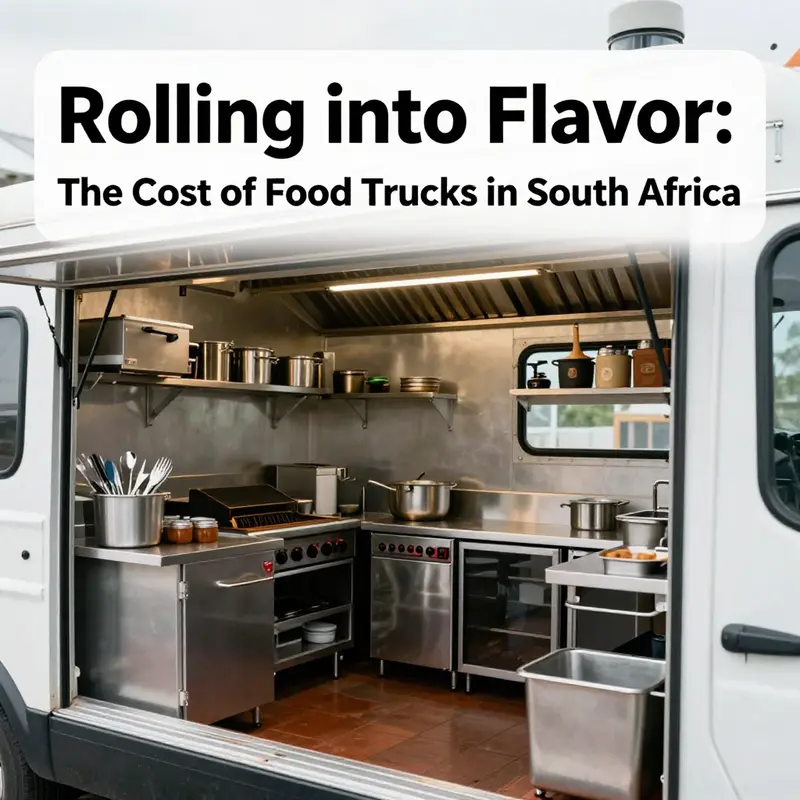
Launching a food truck business in South Africa begins with a practical reckoning of costs, not just a spark of culinary ambition. It is a landscape where every rand matters, and where the numbers you see on a price tag reflect more than metal and wheels. In the broadest strokes, the initial investment splits into two streams: the vehicle itself and the kitchen that turns it into a working kitchen on wheels. The vehicle may come as a brand-new, purpose-built unit, or as a used platform with a few miles left in its engine. The kitchen is an integrated ecosystem of commercial-grade equipment that must meet local safety and health standards. When you add permits, licenses, insurance, fuel, maintenance, stock, staff, and marketing, the cost picture expands quickly. This is not merely a financial accounting exercise but a planning discipline that shapes feasibility, cash flow, and long-term resilience in a market that is as dynamic as it is competitive.
On the cost side, the most visible entry point is the price of the truck or trailer itself. If you opt for something fresh and customized, you can expect a price range that broadens with the scope of your kitchen: from roughly six hundred thousand rand to well beyond one and a half million rand. In U.S. dollars, that translates to about thirty thousand to seventy-five thousand, depending on how far you push the customization envelope, the quality of the kitchen equipment, and the volume of storage and refrigeration you require. The opposite path is the used market, which often presents a more approachable entry point. A pre-owned food truck can start in the low hundreds of thousands of rand, sometimes dipping toward two hundred thousand to five hundred thousand rand, depending on age, condition, and whether the original fit-out remains intact. For an entrepreneur testing the market or starting lean, a basic, compact setup—such as a mobile kitchen camping trailer—might be available around the equivalent of roughly US$6,100, equating to about R128,000 at current exchange rates. These numbers illustrate a fundamental truth: your vehicle choice does not exist in a vacuum; it shapes the level of equipment you can justify, the speed with which you can operate, and the risk profile you carry.
This is where the next layer of costs comes into play: the compliance and permits that proceduralize a food vendor’s presence in a city or town. Municipal regulations in South Africa impose a spine of requirements that serve food safety and consumer protection, but they also layer in predictable and sometimes surprising costs. Certification fees, health and hygiene inspections, and the installation and approval of commercial-grade appliances such as refrigeration, gas lines, and waste management systems all contribute to a startup budget that can differ substantially by province and city. You might see a handful of fees that include a trading license, business registration, and a municipal food vendor permit; the total can run into several thousand rand depending on whether you’re in Johannesburg, Cape Town, Durban, or another locale. Even once you clear the initial hurdles, ongoing compliance remains a recurring expense—regular inspections, renewals, and the need to maintain equipment in a compliant state to avoid sudden shutdowns or fines. In practice, the compliance track becomes less a one-off checkpoint and more a driver of annual operating costs that must be forecast with care.
Then there are the everyday costs that sustain a moment-to-moment operation. Fuel and electricity for the truck and the cooking appliances, as well as gas for certain cooking methods, constitute a steady outflow. Maintenance is another constant—it covers the vehicle’s mechanical health and the life of the kitchen gear, which in a high-demand service environment endures frequent cycles of use and wear. Stock for the menu—ingredients, seasonings, napkins, disposables—demands reliable supply chains and cash flow discipline. If you employ staff, wages become a meaningful part of the monthly burn, alongside social security contributions, leave, and payroll taxes. Insurance remains non-negotiable: vehicle insurance, public liability, and equipment cover all cushion the business against accidents, losses, and liability claims. Each of these items, while recurring, is not merely a cost to be minimized. It is a foundational investment in reliability, consistency, and the ability to deliver a quality experience day after day.
Beyond the operational core lie the branding and marketing costs that translate a good recipe into customer traffic. In the mobile world, visibility is currency. Signage must be legible from a distance; branding must be coherent across social media, signage, and the truck’s own design. While a strong, memorable brand can pay dividends, it requires investment—both in tangible assets like banners and menus, and in the softer currency of digital presence, eye-catching posts, and local partnerships. The menu’s scope also influences costs in a more nuanced way: a broader menu requires more storage space, specialized equipment, and a greater variety of ingredients that complicate procurement and waste management. Conversely, a tighter menu can streamline operations and reduce spoilage, but it also sets boundaries on revenue opportunities. The balance between menu ambition and cost discipline is a central tension for any aspiring operator and often drives strategic decisions about whether to stage a phased rollout or go all-in from day one.
Equipment specifics matter, too, in the cost calculus. When you tailor a mobile kitchen to a particular cuisine or service style, you unlock the ability to deliver a consistent product, but you also add layers of specific gear that may be critical to the concept. A coffee-forward unit might require portable espresso machines and grinders, which carry a price premium and maintenance considerations. A cart focused on grilled meats or baked goods may need steamers, grills, and warming trays, each with its own durability and energy footprint. The equipment mix affects not only upfront investment but ongoing energy use, service reliability, and the speed with which you can scale. If you are choosing to test the market with a smaller footprint, an incremental approach—starting with a push cart or a basic trailer and upgrading as demand confirms itself—can help preserve cash and reduce the risk of overcommitting to a heavy, complex setup prematurely.
A practical, still-evolving picture emerges when you thread together these ingredients: initial vehicle cost, compliance and permits, ongoing operating expenses, marketing, and equipment choices. The planning lens becomes one of staged investment and disciplined budgeting. The question is not merely how to secure funding, but how to structure it so that the cash runway supports early stage testing, adjustments, and eventual growth. In South Africa, where the street-food ecosystem is vibrant yet diverse across cities and towns, it helps to scenario-plan for a range of possibilities. For example, you might model a lean start using a used trailer with a limited equipment list, then outline a growth path to a fully customized, larger vehicle as sales volumes justify the upgrade. You would also anticipate regional differences: a larger municipality might require more frequent inspections or different licensing steps, while a smaller town could offer more forgiving permit processes but with smaller customer bases. Those nuances matter when you are building a budget that can stand up to the reality of daily operations.
The strategic takeaway is that cost planning in this space is not a single-phase exercise but a continuous discipline. A successful food truck venture does not merely survive on what it earns in peak service windows; it thrives on a carefully calibrated balance of upfront investment and disciplined ongoing costs. The numbers you observe at the outset should serve as guardrails that keep you from over-investing in equipment you cannot yet support and from under-investing in the essentials that keep customers satisfied and compliant. The best practice is to anchor your plan in a clear understanding of the core cost drivers—the vehicle, the compliant kitchen, the licenses that unlock the street, and the reliable supply chain that keeps the menu stocked—and then build a flexible financial model around them. As you consider the menu, the location strategy, and the team you will hire, the costs you forecast will begin to feel less like abstract figures and more like concrete milestones that guide decisions, funding needs, and the pace of your rollout.
For operators who are seeking practical comparisons and concrete pathways through this cost landscape, one useful reference point is the way seasoned start-ups evaluate model options side by side. The aim is not simply to pick the cheapest route but to align the choice with the business plan’s trajectory—whether it aspires to rapid scaling, steady local presence, or a strong weekend specialty operation. In this sense, cost becomes a language that helps you articulate risk, opportunity, and timing to lenders, partners, and customers alike. As you move from theory to action, the budgeting discipline you develop will pay dividends in the form of fewer surprises, more predictable cash flow, and a sharper ability to respond to changing market conditions.
To ground these considerations in a practical reference point while you plan, consider exploring guidance on selecting an appropriate truck model that fits your concept and budget. Best Food Truck Models for Lakewood Startups offers a view into how different configurations translate into cost, capability, and compliance requirements. While the page reflects a specific context, the underlying idea—matching model choice to concept, equipment needs, and regulatory footprint—resonates across South Africa. The central lesson is that the most successful cost strategy blends realism with ambition, ensuring that every rand you commit underwrites a service that is not only delicious but compliant, dependable, and repeatable in the demanding rhythm of street vending. In that spirit, the journey from budget to business becomes a narrative of deliberate, staged investments rather than a leap into a single, opaque expenditure.
All of this underscores a core insight: the cost of a food truck in South Africa is not a static price tag but a living budget that evolves with the venture. It depends on how soon you want to deploy, how far you want to push your concept, and how rigorously you manage risk across compliance, maintenance, and operations. The spectrum—from a lean, testable setup in the low hundreds of thousands of rand to a fully equipped, high-capacity unit in the millions—reflects the diverse ambitions of aspiring street-food entrepreneurs. The best approach is to map out a few realistic scenarios, each with its own allocations for vehicle, kitchen, permits, insurance, and working capital. Then test these scenarios against your expected revenue streams, the foot traffic you anticipate in target locations, and the cadence of peak business opportunities that characterize your chosen markets. In practice, this means building a living budget that is revisited quarterly, updated with actuals, and adjusted to reflect changes in regulation, inflation, fuel prices, and supplier terms. When you view costs through this lens, the process becomes less about chasing a single perfect number and more about constructing a resilient financial framework that can adapt as the road ahead unfolds.
External markets continue to influence the cost dynamics, too. The price of equipment, vehicle refurbishments, and even insurance can shift with broader economic factors, demand cycles, and currency movements. Operators who cultivate strong vendor relationships, negotiate favorable terms, and maintain disciplined inventory practices can soften the impact of these fluctuations. In South Africa’s diverse urban tapestry, location strategy—whether you anchor in business districts, universities, markets, or events—also interacts with cost in meaningful ways. A well-chosen location can lower some marketing costs while raising others, such as the need for higher-capacity refrigeration or more robust drainage and waste management systems. The interplay between location, equipment configuration, and regulatory compliance often defines the practicality of a given budget and the speed with which a venture can become self-sustaining.
If you are looking for a practical path to get started without overcommitting, think in terms of a staged build. Start with a smaller unit that covers your essential cooking function, a compact storage setup, and a simplified service window. Use this phase to validate your menu, pricing, and customer flow. As sales grow and you gain confidence in your processes, you can incrementally upgrade the vehicle, expand the menu, or add staff. This approach helps preserve cash while still providing the platform to explore market fit. It also aligns with the realities of South Africa’s regulatory environment, where compliance costs, though essential, can become more manageable when spread across a longer timeline. From there, the path toward a larger, fully customized unit becomes a natural extension of validated demand, not a speculative leap.
The career of a food truck entrepreneur in South Africa is thus a narrative of measured sums, not miracles. It rewards practical research, thoughtful budgeting, and a willingness to adapt as you learn what your customers crave and where they gather. In this broader sense, the initial price tag you confront—whether you choose a cheaper used platform or a premium new build—belongs to a much larger story. It is the price of entry into a market that values community, flavor, and mobility. It is the cost of building a brand that can endure the inevitable ebbs and flows of business cycles, from seasonal festivals to quiet weekdays. And it is the investment in the daily discipline of running a venture that can deliver consistent food, reliable service, and a memorable experience to diners who are ready to seek you out, again and again, in the street markets and urban corridors where South Africa’s vibrant street food scene continues to thrive. To those who plan with care, the rand becomes not a barrier but a compass guiding you toward a feasible, scalable, and tasty future. For more on how to balance model choice with costs, considering real-world configurations and limits, explore related guidance on the broader market of mobile food ventures and the options that align with your concept and budget. The journey is as much about prudent planning as it is about culinary courage, and the receipts you save early on may fund your first, pivotal year of service and growth. External resources and listings can provide the live data you need to calibrate your plans, while the fundamental discipline of budgeting keeps you grounded as you turn ideas into a rolling kitchen that serves delight on wheels across South Africa.
External reference for further context on mobile kitchen configurations and current listings: https://www.alibaba.com/product-detail/Mobile-Kitchen-Camping-Trailer-South-Africa_1600597414356.html
Final thoughts
Launching your food truck business in South Africa can seem daunting, but with a clear understanding of the financial landscape, you’ll be better equipped to navigate it. From the exciting prospects of owning a new truck to the economical choice of a used one, and being aware of ongoing costs, you are now armed with knowledge that can turn your dream into reality. Remember, every successful food truck starts with a great meal but is sustained by savvy financial decisions. So take the plunge and start serving up your passion for food!