
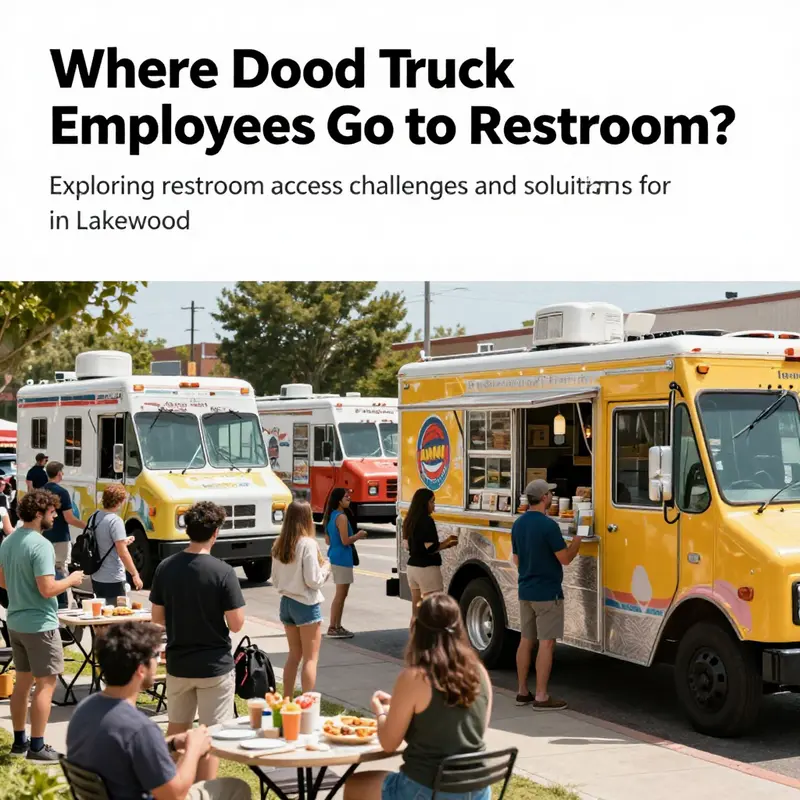
Navigating the streets of Lakewood, food trucks serve up delicious meals that tantalize taste buds and bring the community together. Yet, behind the scenes, food truck employees face unique challenges, particularly when it comes to restroom access. It’s an essential, yet often overlooked, aspect of running a successful food truck. In this exploration, we will delve into how public restroom access, regulatory changes, and portable toilet solutions impact food truck staff. Each chapter will shine a light on the struggles and ingenious solutions food truck operators are implementing in the vibrant tapestry of Lakewood’s food scene.
On the Move, Within Reach: Public Restroom Access for Food Truck Employees
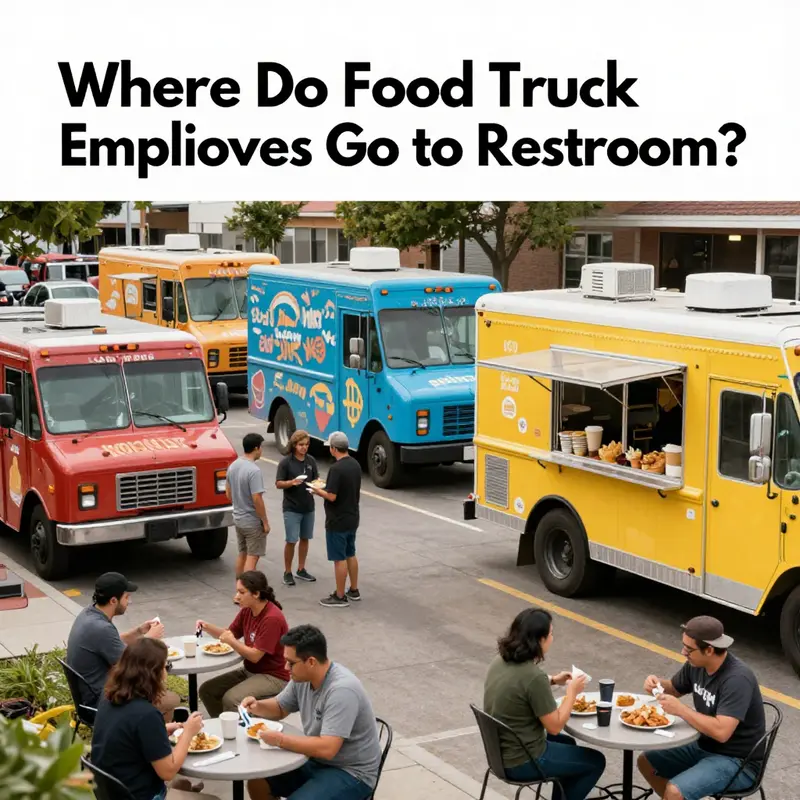
Restrooms are ordinary spaces in ordinary buildings, yet for food truck crews they are sometimes the hardest piece of infrastructure to secure. A shift that begins with the sizzle of onions and the hiss of a griddle often ends with a question that has no glamorous answer: where can the team relieve themselves, wash hands, and attend to sanitary needs without breaking the rhythm of service or compromising safety? The reality for many mobile kitchens is that restroom access hinges not on a fixed brick-and-mortar policy but on a patchwork of local rules, nearby facilities, and the operator’s willingness to negotiate with adjacent businesses or invest in on-site solutions. This chapter threads together the regulatory landscape, the practical realities of day-to-day operations, and the evolving approaches operators take to keep workers healthy, productive, and dignified while the cart stays hot and the line stays steady. It is not a celebration of a single solution, but a careful reckoning of tradeoffs, responsibilities, and the kinds of ingenuity that emerge when public health and private enterprise intersect on sidewalks and highways alike. The broader arc here is simple—as food trucks become more professionalized, the question of sanitary facilities moves from afterthought to essential element of workforce welfare and regulatory compliance. And that shift matters not only for the people who toil in the heat and the wind but for the communities that rely on mobile food vendors for meals, culture, and local color.
Regulatory frameworks set the outer boundaries within which every operator must maneuver, and within those boundaries, there is a spectrum of approaches. In many states and municipalities, regulations do not require a food truck to provide a restroom directly on the vehicle, but they do demand that employees have access to clean, safe facilities during shifts. A common thread across jurisdictions is the notion of proximity: employees should be able to reach an approved restroom within a reasonable distance, typically measured in feet rather than blocks. The rationale is straightforward and unromantic: prolonged exposure to unsanitary conditions can compromise hygiene, leading to foodborne illness risks as well as impaired worker health. Historically, some rules specified a fixed distance to a public or accessible restroom—an important safeguard for hygiene, yet one that could translate into real-world hardship when the nearest facility is several minutes away on foot in inclement weather. A recent revision by a State Board of Health, which aims to increase the maximum distance from a mobile unit to a restroom, signals a policy shift toward balancing worker welfare with practical mobility. The details of such revisions vary by jurisdiction, but the intent is consistent: make access more workable for crews who spend long hours in tight urban or rural corridors where restrooms are scarce yet demand is high. The implications of distance are not abstract: they affect how a crew schedules breaks, whether they can respond quickly to a customer rush, and how they manage hydration and fatigue over a long day. Operators must translate regulatory language into on-the-ground practices that do not disrupt service while preserving the standards that protect worker health.
The legislative text is complemented by city ordinances that sometimes require either on-site portable facilities or guaranteed access to nearby restrooms. In practice, this translates into a few different viable paths. First, some operators choose to place portable restrooms or restroom trailers directly at the operating site. These units are designed for outdoor use, with features that accommodate frequent cleaning, waste disposal, and ventilation—elements essential in hot weather and humid conditions. The cost of such setups can be a significant consideration, with units priced in the range of several thousand dollars per set, depending on size, features, and whether the arrangement is rental or purchase. Maintenance is another recurring cost: regular pumping, cleaning, restocking of supplies, and ensuring accessibility for all crew members, including those with mobility challenges. These portable facilities offer the advantage of privacy and proximity, reducing downtime between tasks and offering a stable routine that can improve job satisfaction and hygiene outcomes. A second path involves partnerships with nearby restaurants, gas stations, or shopping centers that allow crew members to use their restrooms during breaks or after shifts. These arrangements can be pragmatic and cost-effective, but they rely on goodwill, scheduling alignment, and the ability to secure keys, access codes, or shared space without compromising the business interests of the host facility. When such arrangements exist, crews often develop a ceremonial rhythm: a quick wash before service, a coordinated shift in the mid-afternoon to optimize water usage, and a discreet, respectful approach to using facilities that might be shared with the public. The third approach, which is increasingly discussed in health and safety circles, imagines a broader model of on-site hygiene that integrates portable restrooms with handwashing stations and waste management so that a single, self-contained footprint serves the team across peak periods. Although the details differ from one operator to another, the throughline is clear: accessible restrooms are a matter of worker dignity and operational hygiene, not merely a compliance checkbox.
From the worker’s perspective, the provision of restrooms influences more than comfort; it directly touches health, safety, and productivity. Long shifts in hot weather or cold winds can dehydrate the body and strain the kidneys, making timely restroom access a public health concern as well as a humane one. In the absence of on-site facilities, crews face the added burden of walking or driving to a distant facility, which may also involve navigating crowded streets, parking constraints, and the interruption of a service flow that customers rightly expect to continue without disruption. The psychological dimension matters, too. When workers feel that their basic needs are acknowledged and safeguarded, morale tends to rise, with spillover effects into consistency of food preparation, cleanliness of the service area, and the overall customer experience. Conversely, insufficient access to clean facilities can contribute to stress, reduced focus, and higher incident rates during busy periods. This is not merely a matter of comfort; it is a direct correlate of safety and quality in the kitchen and out front.
Industry practices reflect a spectrum of ingenuity, budget considerations, and local market realities. Portable toilets, for example, have become a practical mainstay for many operators who want to maintain a constant, private space for the crew. These units are designed to withstand the energy of the day—constant movement, multiple crews per shift, exposure to sun and rain, and the need for reliable waste disposal. They are often paired with handwashing stations, which helps reinforce hygiene practices that are critical in food preparation environments. The upfront cost of such installations can be weighed against long-term benefits: improved compliance with health codes, reduced downtime during service, and a more consistent standard of sanitation for employees who spend hours at the truck. Beyond the economics, there is a broader social dimension: portable facilities can democratize access to restrooms for workers who might otherwise be dependent on the hospitality of nearby businesses or on public facilities that have limited hours or restrictive policies. For operators who are committed to fair and respectful treatment of their crews, portable on-site facilities embody a tangible approach to addressing inequities in access to basic sanitary services.
The question of access also intersects with urban planning and the ethical obligations that communities bear toward workers who operate within them. Urban areas with dense commercial activity offer a mosaic of potential partnerships with restaurants and other businesses, but they also create complex constraints. Zoning rules, noise ordinances, and street-use permits come into play, affecting where a mobile unit can operate and how easily crews can access facilities during a shift. In rural or semi-urban settings, the challenge shifts toward distance and facility availability; a food truck may serve a harvest festival or a rural fair where public restrooms are provided by organizers or by the venue, yet those facilities may be limited to certain hours or require entry fees. The intermediate space between policy and practice is where operators craft workable, humane routines: scheduling predictable breaks, maintaining close contact with host facilities, and investing in on-site solutions that preserve dignity and health regardless of the crowd or weather. In all cases, the operative principle is clear—sanitation facilities must be accessible to workers in a timely, private, and sanitary manner, and regulations should reflect the realities of mobile service without creating perverse incentives to delay or skip rest for the sake of throughput.
To translate policy into practice, operators often undertake a careful assessment of site-specific realities. A one-size-fits-all mandate would fail to account for the variability of street layouts, parking constraints, and the physical footprint of a given mobile unit. The operator’s decision-making process typically begins with a risk assessment that weighs the likelihood of beer-stained benches, muddy sidewalks, or crowded customer lines against the need for a private, clean facility. It then proceeds to an economic calculation: what is the cost of adding portable restrooms and wash stations on-site, versus the potential penalties for noncompliance or the revenue lost due to contingent restroom access delays? This analysis rarely rests on a single factor. It blends workforce welfare with business performance and public health, recognizing that healthy, rested employees are more likely to maintain high standards of food safety, plate presentation, and customer interaction. A practical anchor for this decision-making is the long arc of regulatory evolution. When boards of health revise distance requirements to acknowledge operational realities, they open space for more diverse, practical solutions. The result is a more flexible regulatory environment that still prioritizes hygiene and safety, while allowing operators the room to tailor restroom access to their unique circumstances. Within this space, the internal integration of facility design and crew workflow becomes a strategic asset rather than a mere compliance obligation. An operator who sees restrooms not as a burden but as a core element of personnel management can also design more resilient schedules, clearer break opportunities, and better coverage when a team member needs to attend to personal hygiene mid-shift.
One of the most visible indicators of how seriously the industry treats restroom access is the extent to which operators communicate and document their practices. Clear standard operating procedures around restroom access, hand hygiene, and waste disposal can help prevent confusion during busy services and reduce the risk of noncompliance with health codes. Training for crew members often includes simple, concrete steps: where to wash hands, when to switch gloves, how to secure the space when stepping away, and how to report any facility-related issues that could affect safety or quality. These practices are not about policing the crew; they are about establishing a shared norm that sanitary facilities are a non-negotiable part of the workday. And when crews know the expectations—and when they see visible investments in their welfare—the culture of the operation shifts toward professionalism. It becomes easier to maintain high rates of sanitation, reduce cross-contamination risks, and sustain a steady pace during peak times.
For readers who want to dig deeper into how contemporary mobile operators approach layout and crew facilities, there is a wealth of practical guidance in industry-focused resources that discuss scalable truck configurations and workspace ergonomics. A relevant overview highlights how layout choices can influence restroom access, workflow, and maintenance logistics. This kind of resource helps bridge the gap between abstract regulation and concrete day-to-day practice, offering real-world scenarios and lessons learned from operators who have navigated the transition from ad hoc arrangements to more structured, compliant setups. Operators contemplating a redesign or a first-time portable facility installation might find it helpful to review such analyses alongside local health codes to ensure that any proposed changes harmonize with both law and labor welfare. The aim is to move from reactive accommodations to proactive design thinking, where the restrooms are planned as an integral part of the truck’s ecosystem rather than an afterthought bolted on after the first service.
In many markets, the best way to balance these competing demands—compliance, cost, and crew welfare—has been to fuse on-site facilities with selective public access and formal partnerships. On-site portable restrooms provide autonomy and privacy, while partnerships with nearby businesses can supply reliable, scalable access during periods when on-site capacity may be strained. This hybrid model recognizes that the geographic and temporal realities of mobile service demand must guide facility strategy. A key feature of successful hybrids is scheduling discipline: coordinating breaks with customer flow to minimize service disruption, ensuring that restrooms remain accessible without dragging down throughput, and maintaining clear lines of communication with host facilities about availability and expectations. The result is a more resilient operation that can adapt to weather, event-based crowds, and the inevitable delays that can occur during a busy day.
Moreover, the industry is gradually naming the broader human dimensions of restroom access. Beyond the technicalities of placement and costs, there is a growing recognition that equitable access to sanitation is a matter of social justice within the gig economy of street food. Workers who might otherwise be forced into unsafe or unsanitary conditions—especially those working back-to-back shifts or in underserved neighborhoods—benefit from a policy environment that places dignity and health at the center. This shift is not merely rhetorical; it translates into concrete improvements in facility quality, privacy, and hygiene practices, all of which contribute to safer food handling, reduced absenteeism, and higher morale. In this sense, restroom access is part of a broader agenda to professionalize the mobile food sector and to embed worker welfare into the performance metrics by which operators gauge their success. When health departments and city councils look at mobile food vendors, they should see not only a street-level business model but also a commitment to the people who keep the service moving day after day.
For readers interested in exploring how these ideas translate into practical ideas for upgrading or reconfiguring a mobile kitchen, one practical avenue is to examine how operators think about space optimization and crew welfare in tandem. The conversations that arise around restrooms often reveal parallel concerns about storage, workflow, and safety. For example, decisions about where to place a future restroom trailer may coincide with thoughts about maximizing refrigeration access, ease of cleaning, and the visibility of the workspace to customers. Operational designers emphasize that the best solutions do not merely check a box on a health inspection form; they actively support a safer, cleaner, and more efficient work environment. With this mindset, restroom access becomes a design parameter that can be integrated into daily routines, contingency planning for busy service days, and long-term growth strategies for mobile food ventures. The upshot is a more holistic approach to running a food truck, where health, safety, efficiency, and respect for workers’ needs are built into every decision rather than bolted on as a separate obligation.
To close this reflection, consider how the conversation around public restroom access connects to the broader landscape of information sources and professional networks that support food truck operators. For instance, industry articles and practical guides can illuminate how to balance cost, compliance, and crew welfare while maintaining a competitive edge. A particularly relevant resource discusses how operators can adapt their configurations to accommodate evolving regulatory expectations without sacrificing efficiency or customer service. For readers who want to explore more about layout and model configurations that might influence restroom access, the following resource offers a thoughtful, practical overview: Best Food Truck Models for Lakewood Startups. This reference helps connect the conceptual discussion of access to concrete design choices that can be implemented on the ground, reinforcing the idea that restrooms are not a peripheral issue but a core component of mobile-service success.
The discussion would be incomplete without acknowledging the broader safety framework that undergirds all workplace facilities. In the United States, federal guidance on workplace safety emphasizes sanitary facilities as a basic provision for worker well-being, and many states extend that principle with their own additional requirements. OSHA and related public health authorities highlight that access to clean, functional restrooms and handwashing stations is an essential element of safe food handling and overall occupational health. While the specifics of enforcement vary, the principle—safe, accessible sanitation for workers—remains central. As operators continue to navigate a landscape of evolving rules, the integration of restroom access into the standard operating procedure becomes not only a matter of compliance but of ethical employment practice, safety, and sustainable business performance. For those who wish to review authoritative safety guidance, the OSHA website provides comprehensive information about sanitary facilities, infection control, and general workplace health guidelines that can be adapted to the mobile kitchen context: https://www.osha.gov.
In sum, public restroom access for food truck employees sits at the intersection of policy, practice, and people. It demands attention not just to the letter of health codes but to the lived realities of crews who rely on mobile services for their livelihood. It requires thoughtful design, strategic partnerships, and a willingness to invest in solutions that prioritize hygiene, privacy, and dignity. As the industry continues to evolve, the conversation will likely grow more nuanced, with regulators and operators collaborating to refine distance rules, expand on-site options, and promote equitable access across diverse neighborhoods. The goal remains consistent: a mobile food landscape where workers can perform their essential duties with confidence, customers receive consistent service, and communities experience food service that is safe, efficient, and respectful of the people who bring flavor and vitality to streets and events alike.
Redrawing the Restroom Map: How Rule Changes Reshape Where Food Truck Workers Find Relief
Regulatory shifts are changing where food truck employees can go when nature calls, and operators must adapt. A wave of new rules now frames restroom access as both a public health issue and a practical operations challenge. Modifications to proximity requirements, varied local approaches, and added sanitation provisions create a new landscape for mobile food vendors. This chapter traces those regulatory changes, explains their practical consequences, and outlines realistic strategies food truck teams can use to meet rules while preserving service efficiency and staff dignity.
Recent regulatory changes center on a seemingly simple detail: how far a food truck can be from an approved employee restroom. Where the former standard required access within two hundred feet, some jurisdictions have extended that limit. The revised rule many health boards now favor increases the allowable distance to three hundred feet. That extra one hundred feet matters. It gives mobile operators greater flexibility in site selection. Yet it also raises questions about actual access time, privacy, and worker well-being.
Distance matters beyond the number itself. A three-hundred-foot allowance can mean crossing parking lots, navigating curbs, or walking between buildings. For a worker in the middle of a lunch rush, those trips interrupt service. For a worker handling hot equipment or perishable foods, they add safety risks. Regulators typically account for these concerns by pairing distance limits with conditions. Where longer distances are permitted, officials often require documented, reliable access to a nearby facility. A signed agreement with a neighboring business or a written plan describing access routes may suffice. This approach balances the needs of the community and the constraints faced by mobile vendors.
Local variation is a defining feature of modern food truck regulation. Some municipalities require direct, immediate access to an indoor restroom on-site or within a very short walk. Others allow partnerships with nearby restaurants, gas stations, or public buildings, provided employees can reach facilities promptly during peak service. A few jurisdictions authorize portable units placed at the truck site. Enforcement and interpretation differ widely. A food truck permitted under one city’s rules may need to alter operations to run in another jurisdiction, even across a county line.
These differences matter for operators planning routes, events, and daily locations. They also matter for event organizers and property owners who host food trucks. When planning a block party or farmer’s market, event managers should confirm restroom requirements ahead of time. Sites without approved facilities may face last-minute refusals or fines. Truck operators who plan ahead reduce the risk of disruption.
Regulatory packages often include more than proximity limits. Sanitation expectations are prominent. Where employees use shared restrooms, health departments frequently require clean, functioning facilities with soap, potable water, and waste disposal. This standard applies equally to on-site portable toilets and to restrooms in partner businesses. Municipal rules may specify disability access, minimum cleaning frequency, and signage about permitted use. These details ensure that restroom access supports food safety standards and prevents cross-contamination.
Other related provisions sometimes accompany restroom rules. Noise control and hours-of-operation limits appear in many local ordinances. The logic is coherent: regulators consider the impact of mobile vendors on neighborhoods holistically. Restroom access rules can be paired with noise limits to reduce late-night disturbances. Operating hours restrictions reduce potential conflicts over shared facilities during quiet periods. For operators, this means restroom planning cannot be isolated from other compliance areas.
Municipalities also consider worker protections. Long shifts, sudden rushes, and physically demanding work make restroom breaks essential for dignity and health. Access rules recognize that employees need timely breaks. When restrooms are distant or unreliable, workers may delay visits. That leads to discomfort and possible health consequences. It can also impact service quality if staff are distracted or forced to take abrupt breaks between orders.
Given the regulatory environment, many operators choose to invest in portable restroom solutions. Mobile restroom units designed for outdoor food service can be placed at the operating site. These units offer privacy and control over cleanliness and availability. They come in options ranging from simple chemical toilets to multi-stall trailers with running water. Purchasing or renting such equipment requires cost evaluation. Basic portable units can be relatively affordable, while higher-end trailers involve greater initial expense. Yet for many operators, the operational stability and reduced reliance on partner facilities justify the investment.
Choosing the right portable option requires practical thinking. Consider expected daily foot traffic and staff size. A single portable toilet might suffice for a small crew at short events. For extended service or larger teams, multi-stall or trailer solutions minimize wait times. Placement is important. Units should be positioned to allow easy access without obstructing walkways or violating local rules. Operators must also plan for servicing the unit, including waste removal, cleaning, and restocking supplies. Many rental agreements include regular service visits, but clear scheduling is essential.
Cost is a core consideration. Renting units for occasional events can be cost-effective. Long-term operators may find purchase more economical over time. Financial calculations should include set-up, transport, servicing, and storage. Operators should also factor in potential regulatory savings. A truck that meets restroom rules independently may avoid fines or lost revenue due to denied permits. These intangible benefits can swing the decision toward investment.
Building relationships is another pragmatic strategy. Where rules permit, forming reliable partnerships with nearby businesses can secure restroom access. Written agreements minimize misunderstandings. Agreements should spell out access windows, expected behavior, and any compensation. Compensation can be monetary or take the form of referrals that send customers across the threshold. Clear protocols for staff use preserve goodwill and reduce friction. Importantly, these agreements must align with health department expectations for timely and reliable access.
Compliance is not only about following the letter of the law. Documentation matters. When rules require proof of access, operators should keep copies of signed agreements, receipts for rented units, or logs of restroom servicing. Inspectors often request such documentation. Consistent record-keeping helps a truck demonstrate due diligence and avoid penalties. It also helps operators manage their own operations more effectively, revealing patterns in staffing needs and peak periods for restroom use.
Enforcement varies. Some health departments rely on routine inspections at permitted events. Others react to complaints from neighbors or property owners. Enforcement may begin with warnings and escalate to fines or permit suspension. Jurisdictions that have recently tightened proximity rules often focus enforcement on high-traffic zones where access problems most affect public health. For operators, understanding the local enforcement approach is as important as knowing the written rule.
Regulatory change is also a driver of innovation. The need for accessible, hygienic facilities has prompted creative solutions. Shared restroom pods deployed at event sites, modular trailers that integrate handwashing stations, and coordinated service schedules among clustered trucks help maintain hygiene and reduce downtime. These innovations reduce the friction between regulatory compliance and practical operations.
Regulatory shifts also influence where trucks choose to operate. Sites with reliable restroom access become more attractive. Parking lots adjacent to businesses, farmers markets that provide facility plans, and event organizers who supply restroom infrastructure gain a competitive edge. Conversely, locations without approved access can lose vendors. The market naturally begins to reward hosts who accommodate health and safety needs.
For mobile vendors, regulation-driven choices impact staffing. Truck operators may stagger breaks to maintain service levels, rotate staff to reduce wait times, or hire additional helpers during known peak periods. These operational adjustments have cost implications. But they also support staff welfare and reduce the risk of burnout.
Ultimately, regulatory changes that address restroom access aim to protect public health and worker dignity. They remind operators and regulators that food safety extends beyond cooked temperatures and cross-contamination prevention. It includes basic needs like restroom accessibility. Trucks that proactively align with these expectations not only comply with law. They also improve working conditions and customer perceptions.
Practical next steps for operators include mapping local rules, evaluating facility options, and creating documented plans. Start by checking municipal and state guidance. If permitted, explore partnerships with nearby businesses and draft written access agreements. If those options seem unreliable, assess portable restroom rentals or purchases. Factor in staffing patterns, servicing needs, and costs. Keep thorough records and review them periodically.
Local chapter organizers and event hosts also play a role. Providing shared, well-maintained facilities lowers barriers for vendors. It reduces confusion at events and helps ensure uninterrupted service. Event planners who invest in adequate restroom infrastructure often attract more trucks and create a smoother guest experience.
For more detailed regulatory guidance, consult state resources. The Minnesota Department of Health provides clear, practical information on restroom rules for mobile vendors, including distance standards and documentation expectations: https://www.health.state.mn.us/divs/eh/foodtrucks/restroomrule.html
Finally, operators should remain adaptable. Rules will continue to evolve. Advances in portable sanitation, expanded municipal guidance, and shifting community expectations will shape what acceptable restroom access looks like. Staying informed and planning proactively helps food truck teams turn regulatory change into an opportunity for better operations, safer food handling, and improved staff wellbeing.
For operators seeking practical equipment and vehicle advice that supports compliance and efficient service, consider reviewing guidance on suitable truck configurations and startup models, such as the resource on best food truck models for Lakewood startups: best food truck models for Lakewood startups.
These regulatory changes are not mere paperwork. They are tools that can raise standards across the mobile food sector. When applied thoughtfully, rules that clarify restroom access improve safety and dignity for employees. They also help the industry sustain growth while respecting the neighborhoods it serves.
Hitching a Restroom to the Route: How Portable Solutions Keep Food Truck Crews Comfortable and Compliant
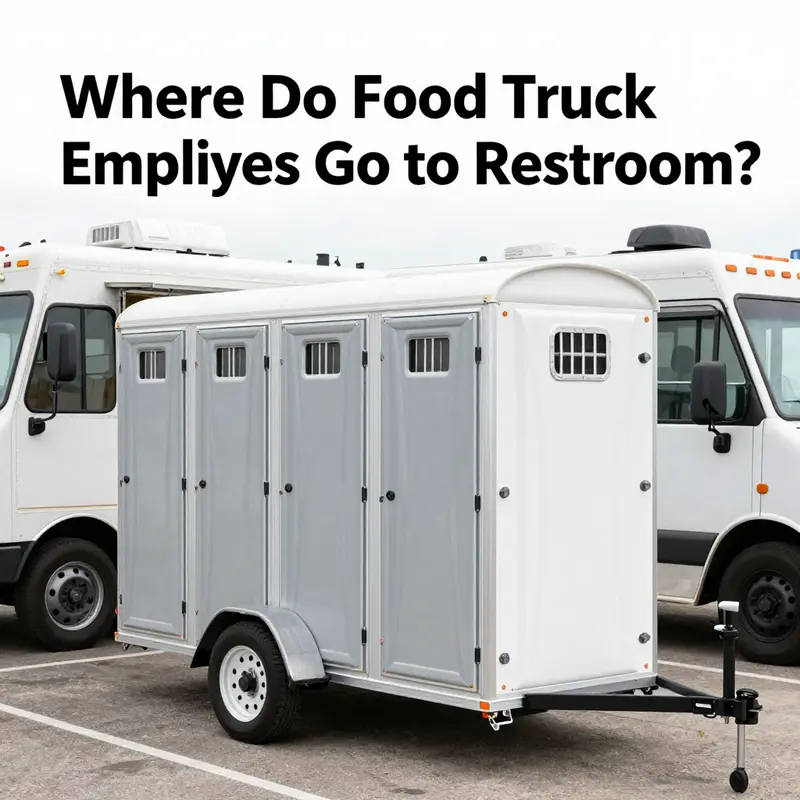
The life of a food truck crew is a study in logistics on the move. A handful of cooks, dishwashers, distributors, and service staff weave through city blocks, festivals, and neighborhoods, chasing the next line of customers or the next event. In this world, time is money, and space is at a premium. Restroom access, which seems ordinary on a fixed storefront, becomes a real challenge when the truck is parked on a curb, in a lot, or at a remote outdoor site. Workers often rely on public restrooms that cluster around nearby restaurants, gas stations, or shopping centers. Those facilities, however, come with lines, hours, and sometimes security checks, all of which interrupt the flow of service. The result is a daily negotiation: how long can a cook stand at the hot grill before a break, and where can a worker find a clean, private space to attend to basic needs without sacrificing food safety, customer service, or the money you’re trying to earn on a busy shift? The needle moves as hours lengthen and locations shift, and the stress of finding a reliable restroom becomes a quiet, persistent factor in the operation’s efficiency and the crew’s well‑being.
Regulatory conversations have only intensified this issue in recent years. In some jurisdictions, proposals have considered adjusting the rules about how far a mobile unit must be from an employee restroom. The idea behind increasing the maximum distance from a mobile food unit to an employee restroom signals a growing recognition that workers deserve better access—and that the existing framework sometimes falls short of practical needs. Yet even with a looser distance standard, the reality remains that a walk of hundreds of feet can take time, and a distracted line of customers or a weather warning can compound delays. The conversation around health and safety is not abstract in this context; it translates into real consequences for throughput, sanitation, and morale. This is where the emergence of portable restroom solutions begins to feel less like a convenience and more like an essential infrastructure investment for operators who want to maintain both compliance and dignity on the job.
Portable toilet solutions are now part of the standard equipment toolkit for many food trucks and their supporting crews. These units are designed to withstand the rigors of mobile service, with durability built in from the chassis up. They are engineered to be hygienic in everyday use and to stay clean even when frequented during peak hours, rain, mud, or dust is part of the operating environment. The health and safety dimension is critical here: many portable units are built to meet widely recognized safety standards, including CE-certified specifications that help ensure the units are compatible with health regulations and local building codes wherever the truck operates. This alignment with safety norms is not merely about compliance; it is about creating predictable routines for teams that often work under pressure. A unit that is reliable, easy to sanitize, and simple to service minimizes the risk of cross‑contamination and helps maintain a hygienic workflow for the kitchen and the handwashing stations that support it.
The portability of these solutions matters as much as their cleanliness. A key advantage is the speed with which a unit can be deployed to a site, whether it is a bustling street festival, a city square, or a rural fairground. The mobility of portable restrooms means that operators can place them close to the food preparation area during peak hours and then relocate them as the crowd moves or as the event footprint shifts. That flexibility helps reduce the distance staff must travel and, by extension, minimizes the potential exposure to heat or cold during transit from the truck to a distant facility. In practical terms, the ability to wheel a restroom trailer into a high-traffic zone, position it behind the service window, or tuck it alongside a loading dock translates into tangible gains in efficiency and morale. It is not merely about convenience; it is about safeguarding the rhythm of the service and ensuring that the team can step away, take a moment, and refresh without losing precious minutes from the order flow.
In discussing portable restrooms, it is important to focus on what makes a unit fit for food truck life. Durability is the baseline. These are not decorative add-ons; they are rugged, weather-resistant structures designed to handle repeated transport and quick site setup. They come with integrated waste tanks that can be emptied and cleaned with minimal downtime, which keeps the operational cycle moving. A well-designed model will offer handwashing stations, proper ventilation, and slip-resistant floors—features that matter in a busy outdoor kitchen where spills and heat are everyday realities. The environmental footprint is another area of emphasis. Eco‑friendly designs, efficient waste management, and the responsible use of water and chemicals align with the broader shift toward sustainable business practices in the mobile food industry. In an era when customers ask more questions about how a business treats its workers and its surroundings, portable restrooms can be part of a larger narrative that emphasizes stewardship and accountability as much as hydrant-pressure and grill heat.
From the operator’s perspective, the decision to invest in portable restrooms often follows a simple calculus. The convenience of a private facility on the site reduces the downtime that can otherwise erode a shift’s efficiency. A unit is a single point of service that travels with the truck in essence, becoming an extension of the front of house rather than a distant, impromptu stop. The upfront costs are real—ranging in the low thousands for a portable unit, with ongoing maintenance and waste disposal expenses—but the long‑term returns can be measured in steadier service, happier crew members, and cleaner queuing dynamics. As with any equipment choice, there are tradeoffs: the initial investment versus rental flexibility, the value of on‑site privacy against the need for regular service from a waste management partner, and the balance between full mobile independence and dependence on public facilities for overflow during exceptionally busy periods. Nevertheless, the trajectory is clear. A growing number of operators see portable restrooms as an essential, scalable response to a problem that otherwise erodes efficiency and worker well‑being across multiple shifts.
Interestingly, the economics of portability are shifting as more providers enter the market with adaptable pay structures and modular designs. For a small fleet that operates indoors on a tight schedule, a rental model can deliver the right mix of reliability and cost control. For larger operations that run weekly markets or series of events, purchasing a private unit or a small fleet of trailers can pay dividends in predictable service levels and brand reputation. The options vary, but the underlying logic is consistent: a stable, private, on-site restroom reduces the friction of the workday, supports hygiene and health compliance, and ultimately sustains the pace of service that customers have come to expect from a well-run street operation.
Within this evolving landscape, a broader ecosystem is emerging. One pathway for operators who want to balance on-site privacy with environmental stewardship is to explore portable restrooms that emphasize integrated water use, waste management, and energy efficiency. The market now demonstrates a spectrum of designs that accommodate single shifts or multi-day events, and the best solutions integrate seamlessly with the truck’s workflow. They can be positioned to minimize the walk between the service window and the restroom, and some designs are tailored to the demands of food trucks in ways that reduce cleaning time and simplify maintenance. For example, models that feature easily accessible waste tanks and changeable odor-control systems are particularly well-suited to high-volume operations where turnover is rapid and the kitchen must remain clean and efficient.
A practical note for operators is the scheduling of sanitation. Even with a portable restroom on-site, a robust cleaning routine remains essential. The most effective setups pair an on-site unit with a contracted sanitation service that regularly empties waste tanks, replenishes supplies, and ensures that the unit remains in a sanitary condition between meals. This arrangement supports consistent hygiene while freeing crew members from additional maintenance tasks so they can focus on cooking, crafts, and service. A well‑programmed sanitation cycle also reduces downtime by limiting the time the unit is out of operation for cleaning and disposal. In a busy shift, any interruption can cascade into longer wait times for customers and stress for staff. The cleaner and more reliable the on-site facility, the more smoothly the kitchen can function, which in turn sustains customer satisfaction and repeat business.
In this chapter’s wider frame, portable restrooms are more than a stand-alone amenity. They are part of a broader approach to workplace design that recognizes the realities of mobile food service. The private on-site facility helps protect workers from exposure to crowding, weather, and public restrooms that are sometimes poorly maintained or hard to access during peak times. It also reinforces hygiene practices by providing a convenient space for handwashing and self-care without requiring staff to traverse long distances. When a crew member can step into a clean, private unit that is adjacent to the cooking area, there is a perceptible improvement in morale and focus. The physical act of stepping out to relieve oneself becomes less of a disruption and more of a routine that fits the rhythm of the shift. Over time, these small improvements accumulate, shaping a culture that values worker comfort and operational efficiency in equal measure.
This evolving practice has a visible ripple effect on how a mobile kitchen is planned and how events are staffed. Operators increasingly map restroom access into their site plans and crew schedules. They factor in the time needed for breaks, the placement of the unit relative to food preparation areas, and the paths staff will take to reach the facility while minimizing disruption to service. In festivals and markets, where space is at a premium and queues are long, the ability to quickly deploy an on-site restroom becomes a strategic advantage. It can translate into faster turnover, more consistent cooking temperatures, and improved customer experience, because staff are not forced into workarounds that compromise sanitation or safety. The world of street cuisine is competitive in part because every minute matters. Portable restrooms, when designed and managed well, help keep those minutes flowing in the right direction.
For readers who want a tangible sense of how these facilities can integrate with a mobile operation, consider how an on-site restroom could be part of a broader on-site infrastructure that makes the truck more self-contained. The idea is not to isolate the restroom as a separate amenity but to weave it into the day-to-day workflow so that the crew can move between cooking, serving, and personal care with minimal friction. In practice, that means coordinating when the unit is cleaned, when supplies are restocked, and how the waste is managed in concert with the truck’s downtime schedule. It also means recognizing that the right unit can become a quiet performer in the background, enabling the front of house to stay focused on delivering a great customer experience rather than chasing down a public facility that is never quite convenient when needed.
The topic naturally invites comparisons to other mobile-ready infrastructure, such as how off-grid travel and remote operations have reimagined how we think about vehicle-based living spaces. In that vein, a notable body of related discussions highlights how mobile living solutions—be it a compact food truck, a bus converted into a kitchen, or a trailer that serves as both workspace and break area—seek to balance autonomy with practicality. The unifying thread is the same: if you can bring essential services closer to the point of use, you unlock a higher level of performance, safety, and comfort for the people who keep the operation humming. And when it comes to restroom access, proximity and privacy are not luxuries; they are essential components of a stable, humane, and productive workplace on wheels.
As with any operational decision, the numbers matter. Portable restrooms for food truck use sit in a price range that reflects the balance between investment and return. Some models are available for purchase, while others are offered through rental programs that provide flexibility for seasonal peaks or special events. The price spectrum can give a rough sense of the scale of the investment: units priced in the low thousands for a single set may be complemented by ongoing maintenance and sanitation costs. A more comprehensive setup with multiple units, efficient waste tanks, and integrated handwashing facilities will offer higher upfront costs but can also yield greater efficiency and lower downtime over time. Operators who plan ahead, and who consider their crew’s comfort as part of the operational budget, are often the ones who see the strongest long-term benefits, both in terms of worker retention and in the consistency of service during peak demand.
An important nuance in adopting portable restrooms is recognizing that the market is not a one‑size‑fits‑all proposition. The right choice depends on the truck’s footprint, the environments in which it operates, climate considerations, and the expected peak load. A unit mounted on a trailer or integrated into a modular setup might be ideal for a truck that frequently moves between shifts or across multiple venues. A smaller, self-contained unit could be perfect for a compact setup that operates in a single location for extended periods. Whatever the configuration, the guiding principle remains: prioritize clean, private, accessible facilities that integrate smoothly with the daily flow of food preparation, service, and cleanup. When that principle is met, the question of where employees go to the restroom ceases to be a constant logistical headache and instead becomes a straightforward element of the overall operation.
To illustrate the broader landscape without getting mired in brand names, it is worth noting that a growing portion of operators are exploring portable solutions that emphasize both durability and ease of maintenance. The market favors designs that incorporate waste tanks that are easy to empty and clean, with accessible panels for servicing. It also rewards eco‑friendly approaches, from water-saving handwashing stations to waste-odor control systems that keep the surrounding area comfortable for customers and neighbors. In this sense, portable restrooms are not just a work-around but an opportunity to elevate the standard of mobile dining. They empower operators to maintain a clean, compliant, and humane work environment regardless of where the truck is parked or how long the shift lasts. The practical implications extend beyond the crew; they reach the customers who expect quick service, consistent quality, and a restaurant-grade sanitation standard even when the kitchen is on wheels.
For operators who want to explore options, the market now includes a broad catalog of portable toilet solutions designed for outdoor use. These units, crafted for mobile operations, are crafted to be reliable, easy to deploy, and comparatively straightforward to maintain. They are built with features that support health and safety, mobility, and sustainability, making them an appealing addition to the fleet of tools a food truck operator relies on. The ease of setup means that a unit can be on-site in minutes, not hours, and the integrated waste system helps reduce the downtime needed for service interruptions. In the long run, this combination of features supports a more stable and scalable business model that can adapt to different venues, weather conditions, and customer demand while safeguarding the health and comfort of the crew.
To provide readers with context for ongoing industry discussions, consider a deeper look into on-site infrastructure as it relates to mobile operations. A related exploration highlights off-grid, self-contained travel and living solutions that resonate with food truck teams who operate in places where public facilities are scarce or inconvenient. This link offers a sense of how portable, self-contained systems—designed to support daily life on the move—can inform best practices for restroom accessibility and overall site resilience for mobile food businesses. Unleash Off-Grid Adventures
For readers who want to survey market options beyond narrative guidance, a practical external resource provides a broader catalog of portable toilet solutions suited for outdoor operations and food trucks. These listings reflect the diversity of design, capacity, and maintenance approaches that operators can compare as they plan upgrades or seasonal shifts. External reference: https://www.alibaba.com/product-detail/Portable-Toilet-Truck-Solutions-For-Outdoor_1600487593286.html
Final thoughts
As the food truck scene continues to flourish in Lakewood, so does the need for innovative and practical solutions to restroom access for employees. From utilizing public facilities to investing in portable toilets, food truck operators are finding ways to enhance their staff’s well-being and efficiency. By understanding these challenges and the ongoing regulatory changes, aspiring food truck operators and community members can support a more sustainable and enjoyable food truck experience for all. Let’s champion the hardworking individuals behind the counters and promote a thriving food culture with dignity and respect.