
Operating a food truck in Lakewood can be an exciting adventure, offering a chance to share your culinary talents with your community. However, before you roll out your wheels and serve up delicious dishes, it’s vital to understand the licenses and permits you’ll need to operate legally and safely. This guide will help aspiring food truck operators navigate the complex landscape of licensing. In the following chapters, we’ll outline the key licenses required to start a food truck, the regulations surrounding transporting food, the importance of vehicle-specific permits, and how digital compliance is revolutionizing the food truck industry.
Licensing on the Move: Navigating a Regulated Path for Food Trucks in a Digital Era
Licensing for a mobile kitchen is the backbone of safe, compliant street dining. In a rapidly evolving regulatory landscape, operators must secure a sequence of permits that cover business registration, public health, transport, and digital record-keeping. The foundational step is a valid business registration, which unlocks the Food Business License required for any food operation. Digital submissions and electronic records are increasingly accepted, improving traceability and reducing inspection friction. For movements that involve liquid foods, a Road Transport Permit for Key Liquid Foods governs handling, storage, and transport, with standards for containers, trained staff, and a robust food safety management system. Vehicle-level controls, such as Transport Container Certificates, provide end-to-end traceability of containers and contents. Across the board, the regulatory approach emphasizes transparency, auditable data, and continuous compliance rather than one-off filings. Operators should plan licensing in parallel with vehicle design, kitchen layout, and waste management, and keep training up to date to align with Food Handler’s Permits and related requirements. Digital tools are not optional; they are the means by which licenses are issued, inspections are conducted, and safety is demonstrated to regulators and customers alike.
null
null
On the Road to Compliance: Vehicle-Specific Permits as the Crucial Framing for Licensed Food Trucks
The art of serving hot meals from a compact kitchen on wheels begins with more than a well-tuned engine and a catchy name. It starts with a map of regulatory obligations that frame what a food truck can and cannot do in a given jurisdiction. In many places, the speed and simplicity with which operators can turn a truck into a healthy, legal, and sustainable business hinge on one core idea: vehicle-specific permits. These permits are not an afterthought or a formality; they are the architectural pillars that support health, safety, and zoning compliance as the vehicle moves from one curb to the next. In the specific regulatory context that has taken shape over the last few years, and crystallized in 2026 with a distinct operational framework, the vehicle is no longer just a vehicle. It is a regulated platform, a mobile facility that must meet technical, sanitation, and location-based standards just as a fixed storefront would. The implications are practical and real: without the appropriate vehicle-specific permits, the rest of the licensing stack—food handling, transport of ingredients, and customer-facing service—can topple like a house of cards at any moment of inspection or audit. The lesson is straightforward. A truck that is compliant in its structure, equipment, and operation is much more than a legal safeguard; it is the foundation for trust with customers, regulators, and partners who want to see a business that prioritizes safety and accountability as it travels city to city.
The core concept behind vehicle-specific permits is that one size does not fit all. A mobile kitchen tailored to a small city block that travels short distances will present a different safety profile and risk exposure from a larger truck plying major corridors or ferrying liquids across districts. Local health departments, city planning offices, and transport authorities recognize this distinction. They require a detailed dossier that reveals how the truck is laid out, what equipment is installed, how waste will be managed, and how the vehicle will be maintained during its journey. The process begins long before a wheel turns. It begins with a formal application to the jurisdiction that will license and monitor the truck’s operation, typically through the health department or the planning authority. The application is not a mere form to fill; it is a comprehensive audit trail that shows the operator understands and can prove the truck meets every criterion that keeps food safe and the public protected.
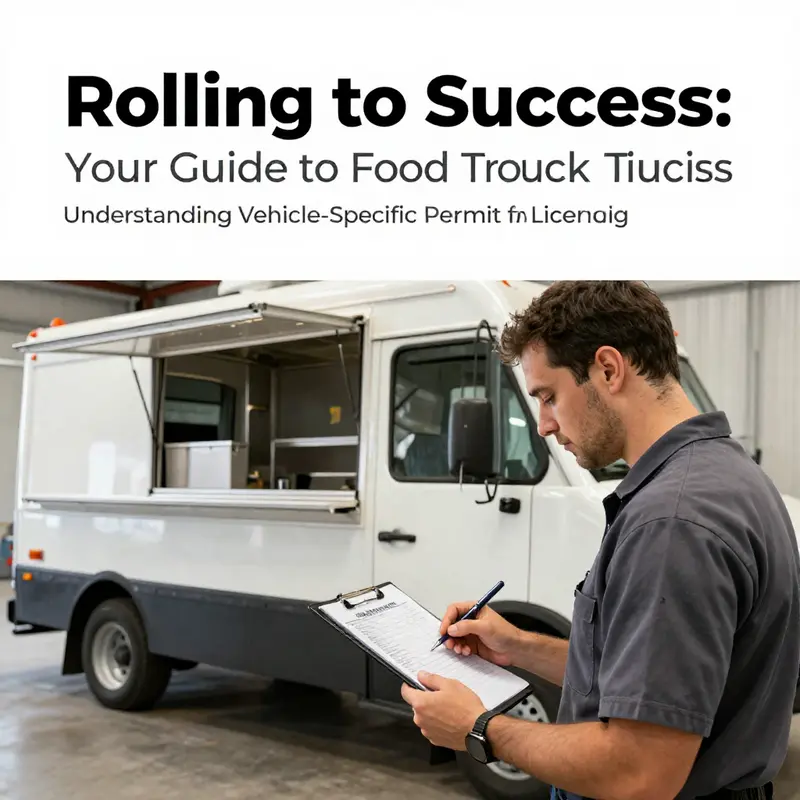
To appreciate the weight of these requirements, consider the documentation that often accompanies a vehicle-specific permit. An operator will typically submit detailed blueprints or layouts of the interior, outlining where food preparation occurs, where hot surfaces are located, and how cross-contamination is prevented. This blueprint is not an artistic sketch; it is a utility map used by inspectors to verify that the kitchen workflow aligns with sanitation codes. Alongside the layout, proof of insurance is required to demonstrate financial responsibility for potential incidents that could arise in transit or on location. A current list of all cooking and refrigeration equipment is essential. Inspectors want to know the capacity of cold storage, the placement of sinks for handwashing and utensil washing, and the presence of fire safety measures such as extinguishers or suppression systems appropriate to the size and layout of the vehicle. The sanitation codes demand evidence that the truck can operate without compromising food safety, with clear lines of responsibility for staff to follow in day-to-day practice.
In many jurisdictions, these expectations are reinforced through on-site inspections before a permit is issued. Inspectors examine the vehicle not as a static exhibit but as a dynamic workspace that must function safely while in motion and in a variety of storefront locations. They check structural integrity, electrical wiring, gas lines, ventilation, hot surfaces, and the capacity to maintain appropriate temperatures for raw ingredients, ready-to-eat foods, and beverages. They verify that handwashing stations are accessible and properly stocked, that surfaces are easily cleanable, and that sanitation protocols are visible to staff and enforceable in daily routines. The aim is to ensure that, when the truck pulls up to a new site, the operator can maintain consistent cleanliness, prevent cross-contact, and quickly respond to any spillage, equipment failure, or temperature excursion.
The process, however, is not a static gate. Vehicle-specific permits are often subject to renewals, especially if the operator makes changes to the vehicle or shifts the business model. A change in equipment, a modification to the kitchen layout, or a move to operate at different hours or new locations can trigger a re-review. This is by design. It creates a dynamic accountability loop wherein the truck remains under scrutiny, not as a punitive exercise but as a continuous commitment to safety, quality, and neighborhood compatibility. In practice, this means operators should embed a culture of proactive compliance. They should maintain updated documentation, track any alterations to the vehicle, and keep records that show ongoing adherence to sanitation, pest control, waste management, and fuel safety standards. When a regulator requests information, a well-prepared operator will respond with clarity, providing exact diagrams, certificate numbers, inspection dates, and corrective actions taken. The cost of not doing so is real: fines, temporary shutdowns, or even revocation of the right to operate in a given district.
The advantage of vehicle-specific permits becomes particularly evident when viewed through the lens of a modern, digital regulatory environment. Many jurisdictions have begun to deploy online portals that make permit applications and renewals more accessible, with electronic documents treated as fully valid as their paper counterparts. The digital shift simplifies record-keeping, enables real-time status checks, and supports traceability from the moment a product is loaded onto the truck to the point where it reaches a customer’s hands. For operators, this means less time spent managing piles of paperwork and more time devoted to cooking, serving, and planning for event-driven opportunities. It also means regulators can monitor compliance more efficiently, catch anomalies quickly, and maintain a transparent record of a truck’s journey across multiple stops and neighborhoods. The integration of digital tools—sometimes described as a blend of Internet-based administration and artificial intelligence for oversight—has the potential to reduce waste, improve safety margins, and increase public confidence in mobile food services.
To ground this discussion in the practical realities of obtaining a vehicle-specific permit, it helps to consider how the process unfolds in daily operations. A prospective operator starts with a formal submission to the local authority or health department. The submission will include a detailed interior layout that maps out every station: the grill or hot-held unit, cold storage, prep areas, utensils, handwashing facilities, and waste containment. It will include proof of insurance and a roster of all permitted equipment with model numbers and certificates of conformity. It will include a sanitation plan that describes daily, weekly, and monthly cleaning routines, how temperatures are monitored and recorded, and how potential allergen risks are managed. It will also include proof that the truck meets fire safety requirements appropriate for its size and type of operation. The health department or planning official may also require a zoning check, confirming where the truck can operate legally and how its activities align with neighborhood plans and parking restrictions. If the plan passes the desk review, the jurisdiction schedules an on-site inspection. The inspector’s task is to verify that the truck, as configured, can deliver safe food service in real-world conditions, not just on paper.
If the vehicle passes inspection, the permit is issued, and a timeline for renewal is set. This renewal cycle is a recurring reminder that compliance is not a one-time achievement but a sustained practice. Any modifications to the truck, such as changing the layout to improve workflow, adding a new piece of equipment, or altering the refrigeration configuration, typically necessitate a new review. Even seemingly minor changes can trigger a fresh wave of questions about sanitation, ventilation, or electrical safety. In recognition of the evolving nature of mobile vending, many operators create a compliance manual that documents every procedure, from how food is received and stored to how spills are handled and how equipment is cleaned and sanitized between shifts. The manual serves as a living document, updated whenever the truck’s configuration changes or when regulatory guidance evolves.
One clear takeaway from the vehicle-specific permit landscape is that operators should think about their truck as a regulated facility rather than a simple cart on wheels. This framing has consequences for planning, budgeting, and vendor partnerships. It means that the initial investment in the truck includes not only the cost of kitchen equipment but also the costs of design features engineered to meet sanitation standards, electrical safety, and mechanical reliability. It also means that partnerships with suppliers, technicians, and service providers should be evaluated through the lens of compliance, not just price or performance. A busier, more ambitious route plan may require a larger footprint, more robust waste management solutions, or enhanced fire safety systems. Each of these decisions will be scrutinized in the permit review and renewal processes, reinforcing the idea that every operational choice has regulatory implications.
The link between vehicle-specific permits and the broader licensing ecosystem is both direct and essential. While the vehicle permit is the gateway to legal operation, it works in tandem with the Food Business License, which confirms that the entity producing or serving food is registered and authorized to operate. In some jurisdictions, the vehicle permit and the food business license are issued together or in a closely coordinated sequence, ensuring that the vehicle’s capabilities and the business’s practices align with local standards. For operators serving liquid foods or other high-risk categories, there can be additional road transport permits or container-specific certifications that address the safe transport of materials, contamination controls, and container traceability. These layered requirements are designed to prevent accidents, protect consumers, and assure regulators that mobile food service can function reliably in various environments, from bustling markets to quiet street corners.
A modern operator would do well to study exemplars of robust licensing frameworks. The City of Georgetown in Texas, for instance, provides public-facing guidance on mobile vending licensing and zoning that illustrates how a well-structured municipality communicates expectations to operators. This type of resource helps demystify the process and offers a clear view of what regulators look for during licensing and inspection. While the specific forms and processes differ by city, the underlying philosophy is consistent: upfront planning, transparent documentation, and enduring vigilance over safety and compliance create a stable platform for growth and community trust. For operators seeking a concrete example of how licensing and zoning standards are articulated in a single city framework, the Georgetown Planning Department’s guide serves as a valuable reference point and a model for other jurisdictions.
In the broader arc of the article, these vehicle-specific permits tie into digital and smart regulatory compliance. Online submissions and digital document management have become standard, enabling faster turnaround times and easier record keeping. The ability to supply electronic versions of blueprints, inspection reports, and safety certificates streamlines renewals and makes it easier for regulators to verify ongoing compliance. The world of mobile food service is moving toward a model where permits are not merely a gate but a dynamic, trackable system. The goal is to ensure traceability—from the moment ingredients are loaded into the truck to the moment a customer receives a safe, regulated meal—and to maintain accountability for every person who works within this mobile facility.
For operators who want to bridge the gap between planning and execution, the practical takeaway is simple but powerful. Start with the vehicle itself as a regulated workspace. Design the interior with sanitation and safety at the forefront, document every element with precise drawings, and keep the equipment list and certificates up to date. Prepare a sanitation and maintenance schedule that aligns with the expectations of the health department and the local planning authority. Embrace digital tools that simplify submissions, storage, and monitoring, and recognize that renewals will require ongoing attention rather than a one-off effort. As you prepare to apply, consider how your vehicle will adapt to different sites, weather conditions, and customer flows while remaining compliant. The legitimacy and resilience of your operation rest on this alignment between the physical space you cook in and the regulatory space that governs how you cook, store, transport, and serve.
If you’re in the early stages of evaluating vehicle options and layout decisions, it may be helpful to explore resources that discuss how design choices intersect with compliance needs. For operators weighing their vehicle choices, that exploration is helpful; see Best Food Truck Models for Lakewood Startups for ideas on layout, equipment integration, and how those choices interact with compliance. While the specifics will vary by city, the core lesson remains universal: the vehicle is a moving platform that must be engineered to meet the highest standards of safety and accountability, not merely to deliver convenience.
In sum, vehicle-specific permits are not a bureaucratic hurdle but a framework that enables responsible, sustainable growth in mobile food service. They ensure that the kitchen on wheels operates like a clean, well-regulated restaurant, even as it travels from neighborhood to neighborhood. The fusion of rigorous on-site inspections, thorough documentation, and a forward-looking digital ecosystem creates a compelling model for trust and reliability. Understanding and embracing this framework is essential for anyone who dreams of turning a truck into a thriving, compliant, and community-friendly food business.
External resource:
For broader licensing and zoning context, a detailed example of a municipal framework can be found here: https://www.georgetowntexas.org/departments/planning/food-truck-guide
Permits in the Cloud: Digital Compliance and the Lifecycle of a Food Truck License
Permits in the Cloud marks a shift toward digital regulatory management for mobile food businesses. In modernizing regimes, the licensing journey for a food truck begins with the Food Business License, followed by specialized permits for liquid ingredient transport and container traceability. A digital backbone enables online applications, electronic documents, and real time oversight, turning compliance into a proactive, data driven discipline. The core permits include the Food Business License, the Road Transport Permit for Key Liquid Foods, and the Transport Container Certificate, each anchoring operations to safety, traceability, and regulatory alignment. Digital regulatory compliance emphasizes transparency, automated dashboards, and AI assisted inventory and logistics, reducing delays and improving service reliability. The lifecycle from permit procurement to route planning and maintenance becomes a single digital workflow, and equipment choices are evaluated for compatibility with digital compliance. External resources, like USDA guidance, provide broader context for how digital compliance scales globally.
Final thoughts
By understanding the essential licenses and compliance regulations needed to operate a food truck in Lakewood, you’re not only ensuring success for your business but also contributing to food safety and community welfare. As you gear up for your culinary journey on wheels, remember: proper licensing is your ticket to exciting adventures ahead. Embrace the paperwork, and your food truck dreams will soon be on the road!