
Are you dreaming of serving delicious bites from your own food truck while exploring the vibrant streets of Lakewood? While the aroma of your culinary creations draws in hungry customers, it’s essential to understand the tax responsibilities that come with operating a food truck. From income tax to social security contributions, each aspect plays a crucial role in maintaining your business legally and financially. This guide aims to simplify the complexities. We will break down income tax requirements, VAT thresholds, social security contributions, permit obligations, and the invaluable assistance of tax advisors to illuminate your path as a food truck operator in Lakewood and beyond.
Accounting on the Move: Navigating Income Tax Obligations for Mobile Food Ventures
Tax season for a mobile kitchen is rarely a spectator sport. It arrives not as a single district court decision but as a daily discipline formed by the way you run the business. For food trucks, income tax responsibilities are not an abstract obligation; they are a ledger you carry through every shift, from the first prep bell to the last customer tip. In the United States, the tax picture for a food truck aligns with the path of many small businesses: you report business income on your personal return, yet you must treat the venture as a separate activity with clear records, expenses, and calculations. The rhythm of your tax life begins with how you file and ends with how you document, justify, and defend the numbers when the IRS or your state agency asks for clarity. Understanding these obligations is not just about avoiding penalties; it is about improving cash flow, maximizing legitimate deductions, and turning a day’s sales into sustainable growth for the next season.
At the core, income taxes for food trucks are filed through Form 1040 with Schedule C, which reconciles gross receipts to net profit. The law treats the truck as a business you own, even if you are the sole operator. All revenue, from fresh meals sold, beads of change from cash sales, and even cash tips that you report as business income, should find their way into Schedule C. The narrative you tell on Schedule C matters as much as the numbers themselves. You list gross receipts, and then you subtract legitimate business expenses to reveal net profit or loss. The expenses you claim must be ordinary and necessary for your line of work—these are not arbitrary deductions but costs that keep the truck rolling and the meals sizzling.
A disciplined approach to documenting expenses is not glamorous, yet it is foundational. Common deductions include food ingredients used for menu items, ingredients that don’t end up as direct cost of goods sold, maintenance and repairs for the vehicle, fuel, and insurance that specifically cover the truck and its operation. Permits and licenses necessary to operate legally, as well as the costs of compliance with health and safety regulations, are legitimate business expenses. Marketing costs—from a social media boost to a street-side banner design—also count when they promote the business and connect to sales. You should remember that some expenses have to be allocated between the vehicle and your other personal use if you share a vehicle for personal trips, but the guidance for allocation depends on how you track and use the vehicle. It is wise to preserve receipts and to record daily sales activity in a ledger that ties to your monthly P&Ls. When you sit down to prepare Schedule C, you will want an organized cascade: receipts and invoices, mileage and fuel logs, insurance policies, and depreciation schedules for the truck and equipment.
The tax code also requires you to confront the self-employment tax, a cornerstone of the social safety net for self-employed earners. Self-employment tax covers Social Security and Medicare contributions and is assessed on net earnings from self-employment. This tax is calculated using Schedule SE and, as a rule of thumb, runs at about 15.3 percent of your net earnings. It is not an optional add-on; it is a fundamental component of your tax bill as a mobile entrepreneur. Importantly, the threshold for owing self-employment tax is relatively low: you generally owe SE tax if your net earnings from self-employment exceed a modest amount in a given year. Because SE tax is separate from income tax, it adds to the total tax burden you must plan for when you forecast quarterly payments and year-end liabilities.
The cadence of quarterly taxes is another practical feature of food-truck ownership. If your expected tax liability for the year is $1,000 or more, you must make estimated quarterly payments to the IRS. These payments are due on four dates—April, June, September, and January. The goal is to avoid penalties for underpayment. For many operators, the discipline of quarterly payments is a good counterbalance to the seasonality of sales. Business owners who keep a steady calendar of income and expense tracking can anticipate tax due dates well in advance, aligning tax planning with cash flow planning. The discipline of projecting annual taxes, then paying in four installments, is not merely about compliance; it is a practical tool for smoothing the financial bumps that come with peak season and off-season margins.
Another dimension of tax for food trucks is sales tax collection and remittance. While sales tax is not an income tax in the strict sense, it is a critical daily obligation that can trip up a business if mishandled. If you operate in a state or locality that imposes sales tax, you typically must register for a sales tax permit, collect the proper tax on the goods sold, and remit those funds to the appropriate tax authority. And if your truck moves across jurisdictions or operates in multiple states, the complexity multiplies. You must track where you have a tax nexus and how much tax you owe in each locale. The right approach is to treat sales tax as an operational cost that is separate from profit and loss; track it meticulously, report it accurately, and maintain transparent records that show tax collected and remitted by jurisdiction.
The practical discipline around recordkeeping cannot be overstated. Daily sales logs, receipts for every expense, and mileage logs that capture the distance traveled for business purposes form the backbone of an auditable file. You should maintain a robust paper trail or, increasingly, a digital archive that is easy to audit. At minimum, your records should support the amounts reported on Schedule C and Schedule SE. The IRS provides public guidance to help you align your records with your filings, notably through publications that walk you through small-business expenses and self-employment tax calculations. A thoughtful recordkeeping system not only makes filing simpler but can also illuminate opportunities to optimize deductions and improve year-end cash flow.
In practice, the negotiation between your books and the tax return often comes down to method choices. On the vehicle side, you can claim actual expenses for your transportation and deduct depreciation, or you may opt for the standard mileage rate, whichever yields a larger deduction. The choice has long-lasting implications for Schedule C and Schedule SE, so you should revisit it if your circumstances change—such as buying a new truck, adding specialized equipment, or altering the way you operate the menu. The decision about whether to capitalize improvements or to expense them immediately also matters for your depreciation schedules, which in turn influence your net income and your tax payments.
As you file, you should remain mindful that state and local tax regimes can diverge from federal rules. Some states piggyback federal definitions of income while others impose their own treatment of deductions, credits, or specific business exemptions. Local licensing regimes can sometimes attach their own tax obligations, so you may find yourself navigating a lattice of compliance requirements that stretch from the federal line to the city curb. Given the diversity of rules, many food-truck owners find it valuable to work with a tax professional who understands the realities of a mobile food operation. A seasoned advisor can help you map your revenue streams, align your deductions with the IRS guidance in publications such as Publication 334 (Tax Guide for Small Business) and Publication 535 (Business Expenses), and avoid common missteps that trip up filers after the season ends.
If you want a practical model of how operators balance equipment choice and tax strategy, consider the broader ecosystem of food-truck entrepreneurship. For business growth and operational planning, exploring the latest insights on vehicle models and startup considerations can be informative, even when tax decisions take center stage. For example, you can explore the best food truck models for Lakewood startups to understand how different rigs influence capacity, efficiency, and compliance needs. This connection between equipment choices and financial planning underscores a simple truth: the way you equip and operate your truck feeds directly into your tax picture, affecting both deductions and the potential for audits. The link below offers a real-world look at how operators think about their rigs within a growing culinary market: best food truck models for Lakewood startups.
Ultimately, the path to a clean, accurate tax return for a food truck rests on deliberate systems, not improvisation. Clear recordkeeping, disciplined expense tracking, and timely tax payments convert the complexity of the tax code into a practical operating discipline. The aim is not just to file on time but to file with confidence, knowing that legitimate costs have been captured, that you have fairly accounted for self-employment contributions, and that you are prepared to respond if the tax authorities ask for documentation. To that end, many operators keep a quarterly mindset, reviewing revenue and expenses mid-season, adjusting estimates for the remainder of the year, and updating depreciation and mileage records as the truck evolves. This ongoing attention does more than reduce risk; it builds a foundation for future growth, whether you expand your routes, upgrade your equipment, or explore new markets.
For readers who want additional guidance beyond this chapter, the IRS offers detailed, official resources that can anchor your preparation. These resources include the Tax Guide for Small Businesses and the publication that explains the treatment of business expenses. Access to these official materials ensures your approach stays aligned with current rules and interpretations, which can shift with tax reforms or administrative updates.
External resources and ongoing education can play a valuable role in staying compliant across the tax year. To dive deeper into the official guidance, many operators consult the IRS publications and the agency’s online portal for forms and instructions. For an authoritative overview of the federal framework, refer to the public-facing guidelines and forms on the IRS website, which provide the foundational framework for Schedule C, Schedule SE, and the quarterly payment requirements. As you plan ahead, consider equipping your accounting and recordkeeping routines with a clear understanding of how deductions, credits, and compliance interact in your specific state and locality. The financial discipline you bring to the business today will translate into greater resilience when the annual return arrives, and into more predictable growth for the seasons ahead.
External resource reference: https://www.irs.gov/publications/pubs-pdf/p334.pdf
Across Borders and Beyond: Decoding VAT Thresholds for Mobile Food Vendors
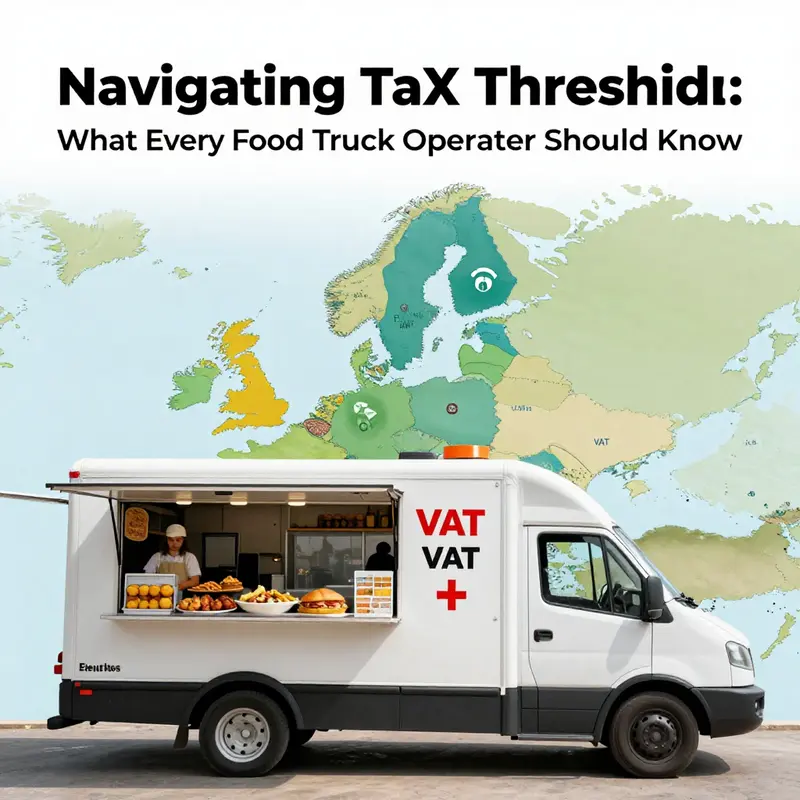
Tax obligations for food trucks follow the same basic logic as any small business that sells goods or services: you must collect and remit value-added tax where applicable, and you must do so in a way that reflects both local rules and the realities of a mobile enterprise. Yet the way those rules appear on the ground can differ dramatically from one country to the next. A food truck that moves between towns or even between countries has to juggle where it registers, when it charges VAT, and how often it files returns. The central issue in this chapter is the VAT thresholds themselves: the point at which a vehicle operator must begin collecting, reporting, and paying VAT, and how those thresholds shape cash flow, bookkeeping, and even business strategy. The thresholds are not merely numbers; they are policy signals about when a small operator becomes a formal, tax-filing taxpayer and when a business must shift from a casual enterprise to a regulated one. Even among countries with similar economic profiles, thresholds can be set very differently, which means a food truck that operates across borders must approach VAT with a careful eye trained on the local law of each place it serves.
In practice, the variation is as important as the concept. Some jurisdictions adopt a low or no-threshold approach, effectively requiring VAT registration from the outset. In those places, every sale contributes to a tax liability, and even the smallest mobile kitchen must account for VAT on its receipts, file returns on a regular schedule, and comply with invoicing and record-keeping standards. For instance, some countries levy VAT from the first sale, making the threshold a formal registration for every operator. For operators who plan to scale or to operate in multiple corridors, such a regime can be both a compliance burden and a strategic driver, since taxation and compliance costs must be anticipated and built into the pricing and cash-flow model from the first day of operation.
Other jurisdictions deploy thresholds that kick in only after a business reaches a certain turnover. The idea is to ease the compliance burden on very small operators while still capturing revenue from more established vendors. Threshold figures vary widely. In many European contexts, examples cited by practitioners include thresholds around ten thousand euros in some jurisdictions and thirty-five thousand euros in others. These amounts are not simply fiscal milestones; they determine whether a food truck must register for VAT, charge VAT on sales, and file periodic VAT returns. Even when a small operator falls below a threshold, many countries encourage voluntary registration to simplify input tax recovery on business purchases or to participate in a formal tax regime that can build trust with suppliers and customers alike. The upshot is that thresholds create a practical calculus for operators: at what point does the business become a VAT-registered entity, and how does that choice affect pricing, procurement, and day-to-day accounting?
Beyond threshold mechanics, the regulatory landscape asks the same operator to consider the other layers of compliance that accompany VAT in mobile commerce. VAT registration commonly entails collecting VAT on every sale at the applicable rate, issuing VAT-compliant invoices, and filing periodic returns—monthly, quarterly, or annual, depending on jurisdiction. It also means maintaining meticulous records of sales, purchases, and any VAT paid on equipment, supplies, or fuel. For a food truck, where sales are cash-heavy and the operation moves between locations, robust record-keeping is essential. The challenge lies in separating what is taxable from what is exempt, how to classify advertising and promotional expenses, and how to account for input tax on ingredients and equipment purchases. Even in countries with a straightforward rate, the functional complications of a mobile operation—such as varying local tax rules when moving from one city to another within the same country—mean that operators must adopt a consistent, auditable process for VAT accounting.
This is where practical guidance matters. A food truck owner who plans to operate across regions should engage with a local accountant or tax advisor who knows small-business tax law in each jurisdiction. People who work in tax and finance for mobile enterprises emphasize that understanding the threshold rules is only the starting point. The ongoing obligations—record-keeping, invoicing, and timely returns—often require more discipline than the initial registration itself. In places with no threshold, the emphasis shifts to continuous compliance from day one: the operator must be ready to calculate VAT at the point of sale, monitor any rate variations, and align pricing to maintain profitability after tax remittance.
To ground these ideas in a concrete sense of how a real-world mobile operation navigates VAT, consider the journey of a food truck that has built a reputation across a regional circuit. The operator’s daily routine blends cooking, service, and logistics with the quieter but essential work of tax compliance. On a typical market day, the truck may move between venues, each with its own permit considerations and potential local taxes. The turnover from sales triggers VAT obligations only if the threshold is met, but even when registration is voluntary or mandatory, the operator benefits from good habits: consistent sales recording, transparent invoicing, and a conservative approach to cash flow planning. For readers who want a glimpse of a tangible path through the mobile-food tax landscape, a practical reference is the broader global guidance on thresholds and rates that tax authorities publish. The core message remains: understand your local threshold, keep precise records, and plan pricing to accommodate tax remittance.
The broader takeaway for a reader weighing the question, do food trucks file taxes, is that the answer is almost always yes, and the timing and scope of that filing depend on the local thresholds plus the operator’s registration choice. In countries with explicit thresholds, the key decision is whether to register when turnover is below the limit or to wait until crossing it. In no-threshold regimes, registration is effectively mandatory from inception, and the administrative demands begin immediately. In either case, the prudent course is to approach VAT as an ongoing planning tool rather than a one-and-done compliance exercise. It means budgeting for the tax impact on every menu price, tracking VAT on purchases in parallel with sales, and building a documentation system that can sustain audits or inquiries years after the business has started.
It is also worth noting that cross-border operations add a layer of complexity. If a truck serves customers in multiple jurisdictions, registration may be required in more than one place, with potential intra-community rules or import-export considerations depending on whether goods are sourced across borders. In such scenarios, the operator should map out a jurisdiction-by-jurisdiction plan: determine where revenue is sourced, identify the applicable VAT rate in each location, and decide whether to use simplified schemes or VAT representations to manage compliance efficiently. The legal and administrative landscape is rarely uniform, but a well-planned approach—rooted in threshold awareness, robust record-keeping, and timely reporting—can turn what looks like a thorny patch of rules into a manageable operating framework.
Globally, the VAT landscape continues to evolve, which is why the most reliable way to stay current is to consult up-to-date official resources. The guidance from global tax authorities and portals offers country-by-country details on thresholds, rates, and filing requirements that can change with policy updates. For readers who want a consolidated view of current global guidelines, a practical reference is the Worldwide VAT, GST and Sales Tax Guide. This resource provides practical, real-time data on registration thresholds, rates, and compliance requirements by country, including those relevant to small and mobile businesses such as food trucks. To explore the broader global landscape, you can consult the guide at the following external resource: https://www.taxdome.com/vat-gst-sales-tax-guide.
null
null
Taxes on the Move: How Local Licensing Rules Shape the Financial Footprint of a Food Truck
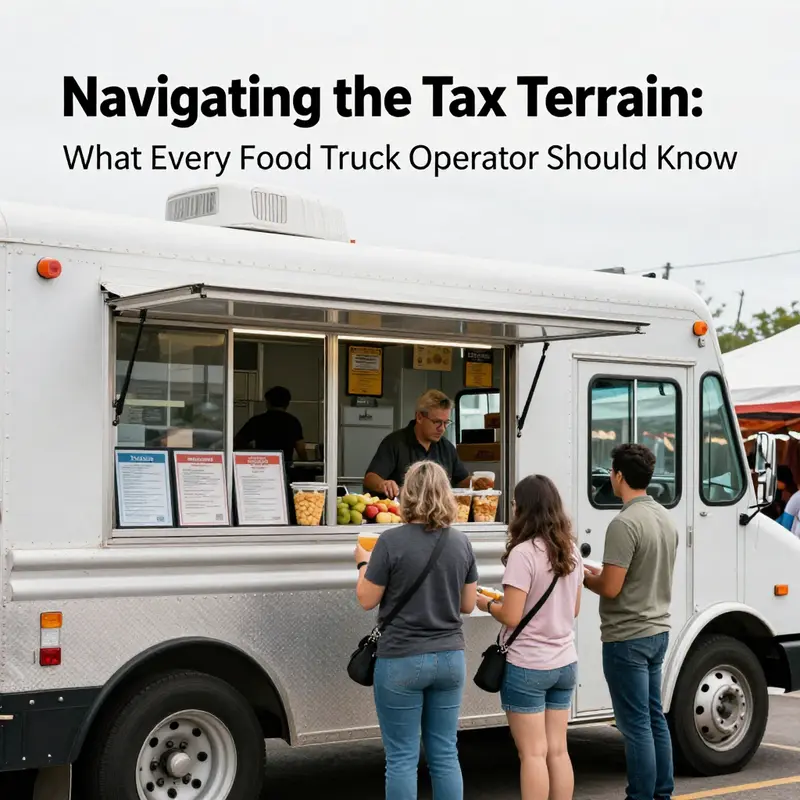
When a food truck hits the street, the public’s appetite for convenient, flavorful meals is only part of the equation. Behind every sizzling grill and every carefully organized menu lies a tangle of local licensing and permit requirements that do more than authorize operation—they shape the true cost of doing business and, by extension, the taxes a operator must file. Local authorities come at this from many angles: business licenses, health permits, mobile vendor permissions, and zone or parking authorizations, all of which carry fees. These fees aren’t mere line items on a regulatory sheet; they influence cash flow, determine where a truck can operate, and affect the reliability of revenue forecasts. In a landscape as variable as city regulations, the tax burden that operators carry isn’t just about income or value-added taxes. It’s about the cumulative effect of mandatory costs that must be budgeted and accounted for in annual tax returns. The result is a practical lesson in tax preparedness: licensing and permit expenses, though often treated as operating costs, can significantly alter the bottom line and the way a business tracks and reports income.
Across major cities, the structure and cost of local approvals reveal how differently regulated the same service can be from one block to the next. In some jurisdictions, the core license to operate is relatively straightforward, with predictable annual renewals. In others, the process is labyrinthine, inviting multiple layers of fees tied to permit issuance, periodic inspections, and even location-based restrictions. These differences aren’t merely bureaucratic quirks; they translate into real and growing tax considerations. For instance, a health department permit might require an upfront payment and annual inspections. A separate mobile vendor permit may be tied to specific zones or hours of operation, effectively capping where a truck can earn revenue and what portions of the day are viable. When a truck is required to obtain signage permits or proof of liability insurance, those costs accumulate month after month. Each fee, each inspection, each zoning restriction contributes to the overall cost of doing business and, indirectly, to the tax base that operators must report to tax authorities.
This dynamic is not restricted to one city. In the United States, where numerous municipalities host vibrant street economies, operators who expand to multiple locations must navigate a patchwork of rules. Some cities have streamlined their processes to encourage small business growth, reducing unnecessary bureaucracy and even offering bundled permits or centralized applications. Others maintain rigorous, costly regimes designed to preserve street plans, traffic flow, and neighborhood character. The inconsistent regulatory climate complicates tax planning for multi-location fleets. Operators cannot assume that a permit cost in one city will resemble the cost in another, nor can they assume that a given license will be renewable in the same way across jurisdictions. In Europe, while forms differ, the principle holds: local taxes and local fees associated with licensing contribute to the total tax burden and must be anticipated in both bookkeeping and strategic planning.
From a practical standpoint, the tax implications of licensing begin with how you classify and track these costs. Ordinary and necessary business expenses, including many licensing and permit fees, are typically deductible against business income. This means that, when preparing income tax returns, a portion of these costs can reduce taxable profit. However, the precise treatment can depend on local tax law and the nature of the fee. Some charges, especially those that confer long-term benefits or attach to a specific asset, may be capitalized or depreciated rather than expensed in the year they’re incurred. It is not a one-size-fits-all answer, which is why meticulous record-keeping matters. Keep copies of every permit application, renewal receipt, inspection notice, and license fee receipt. Separate them from general operating expenses so your accountant can determine whether a fee should be treated as an ordinary deduction or capitalized as part of an asset or improvement. In Europe, while VAT thresholds and tax rates vary by country, the underlying principle remains: local costs that enable operation are part of the business cost structure and influence net taxable income.
The payroll of a food truck ends up playing a supporting role here as well. Social contributions, health coverage, pension schemes, and even contributions to unemployment funds—these are not only compliance items but also cost items that shape the fiscal picture of the business. When these social security obligations are calculated, the interplay between labor costs and regulatory fees becomes visible. In a city with a dense permission regime, the cumulative effect of licensing, insurance, inspections, and location-based fees can push the effective operating cost per hour higher than anticipated. This is where sound tax planning is essential. A well-documented history of permit payments helps demonstrate the ordinary nature of these costs to tax authorities and reduces the risk of disputes about deductions. At the same time, it emphasizes why chief financial officers and business owners should maintain a dynamic forecast that accounts for periodic permit renewals and possible regulatory changes.
That forecasting becomes more complex when operators run multiple trucks across different neighborhoods or cities. A single city’s fee schedule might be modest, while another’s could be a major line item in the annual budget. The disparity can erode profit margins and complicate tax reporting if revenues and expenses become too decentralized. The only antidote is proactive compliance: a centralized system for tracking licenses, permits, and related expenditures that feeds directly into the accounting and tax planning process. This system should map every fee to its purpose—whether it’s a health permit, a mobile vendor permit, a parking or zoning fee, or an insurance requirement—and tag each item with its renewal cycle. When the time comes to file, the business can present clear, auditable records showing which costs were necessary to stay in good standing and which revenues were produced under those licenses.
For operators who are growing beyond a single location, there is an additional layer to consider: the regulatory overhead that accompanies expansion. The decision to move into a new city is not merely a strategic choice about markets and food concepts; it is a calculation of how local regulations will modify the tax footprint. Some markets offer improved operating flexibility at the cost of higher licensing fees or more stringent inspections. Others keep fees low but restrict certain hours or parking zones, which can affect revenue streams and, consequently, income tax calculations. The tax consequence of expansion is thus twofold: direct effects from new permit costs and indirect effects from changes to revenue potential and expense profiles. In that sense, licensing becomes part of the financial map a business must navigate as it scales.
To make these ideas concrete, consider the importance of keeping licensing costs visible in your financial planning. The practical takeaway is not merely to pay the fee and move on, but to forecast how each licensing step affects profitability and tax outcomes. A simple, disciplined approach is to incorporate license and permit expenses into monthly budget reviews, differentiating recurring annual fees from one-off application costs. This distinction helps in allocating the correct tax treatment and ensures that the cash impact of regulatory obligations is understood before it impacts profitability. It also supports more accurate pricing strategies. If permit costs rise in a given location, operators may need to adjust menu prices or sales strategies to preserve margins, and those adjustments should be reflected in tax planning as part of the broader revenue-management strategy.
For readers who want a broader sense of how license-related costs interact with the practical realities of running a mobile food business, a real-world look at equipment choices and startup costs can be instructive. See Best Food Truck Models for Lakewood Startups for a discussion of how upfront investment decisions—like the choice of truck size, kitchen configuration, and supporting systems—can influence ongoing licensing and operating costs. Those decisions often determine not just initial capital expenditure but ongoing maintenance, insurance, and permit needs that feed into the tax and regulatory picture.
The regulatory landscape also invites a cautious approach to where and when to operate. Operators should regularly consult official municipal resources and, when necessary, engage with local business development offices or licensed accountants who specialize in small-business tax law. This due diligence helps ensure that a mobile operation remains compliant, avoids penalties, and optimizes tax outcomes in the face of changing local rules. In Europe, as in the United States, this means understanding not only the general tax framework but also the local permit portfolio that accompanies street commerce. The goal is to maintain a clear, auditable trail of licensing costs and their tax treatment, while staying adaptable to regulatory shifts that could alter both costs and revenue opportunities in ways that ripple through the annual tax return.
External resources can provide concrete, jurisdiction-specific guidance. For instance, the New York City Department of Health and Mental Hygiene outlines the permits required for mobile food vending, including the MFV permit and related inspections. While the specifics vary by city, the principle remains the same: licensing and permit regimes are integral to the cost structure that taxes seek to capture. See the official overview of New York City’s mobile food vendors for a detailed look at how local health and permitting requirements intersect with operating costs and revenue planning: https://www.nyc.gov/site/dcp/businesses/mobile-food-vendors.page
Guided by Experts: How Tax Advisors Keep Your Food Truck Tax Compliance on Track
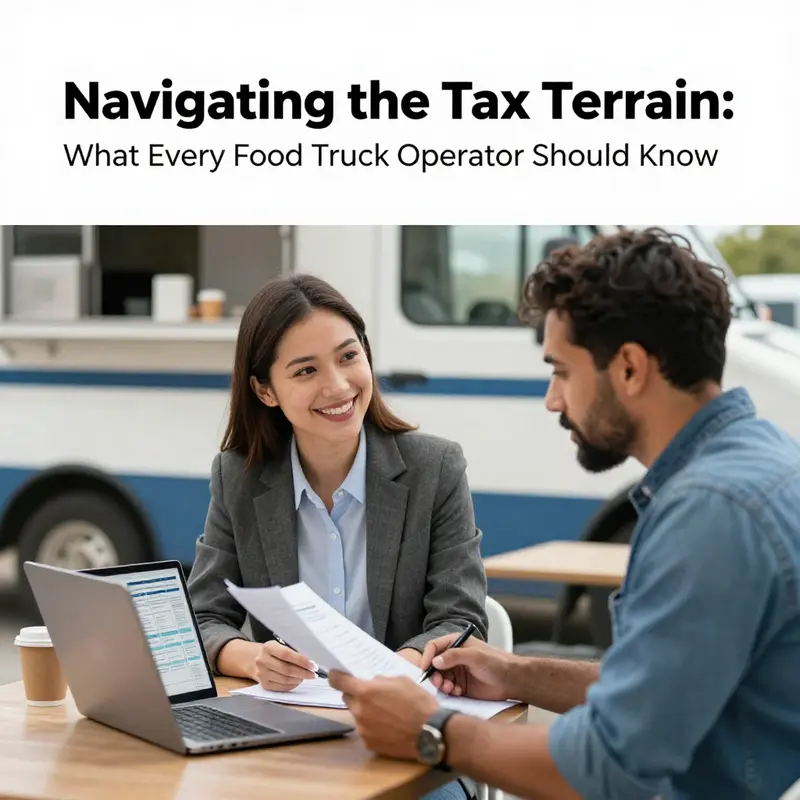
When a food truck pulls into a bustling square, the sizzle of the grill often steals the show. Behind that buzz, however, runs a different kind of revenue engine: a set of tax rules that can change with every street corner, license, and kWh of electricity. The decision to rely on a tax advisor is not merely a courtesy; it is a strategic move that can salvage margins, prevent costly mistakes, and keep a business operating legally across multiple jurisdictions. For mobile kitchens, where sales patterns swing with weather, events, and foot traffic, expert guidance helps translate a daily hustle into predictable, reportable numbers. The core of this guidance is not a single rule but a framework—an accounting rhythm and a filing strategy—that aligns daily operations with federal, state or national, and local requirements. In Europe, for example, a food truck might encounter income tax, value-added tax, social security contributions, and a layered set of local licenses. In the United States, the complexity multiplies with self-employment taxes, deductions, and potential multi-state reporting. A qualified tax advisor can bridge these worlds, turning the unknown into a plan you can live with rather than survive. This is especially true for operators who want to protect cash flow, maximize legitimate deductions, and reduce the chance of an audit-driven disruption to their schedule and their customers’ trust.
Establishing Proper Accounting Systems is the first practical frontier where tax advisors make a tangible difference. The daily receipts from a food truck can vary dramatically—from a few hundred dollars on a slow weekday to several thousand during festivals or weekend markets. An advisor helps design an accounting system that captures every sale, every tip, and every discount in real time, while also tagging expenses with the right categories. This is more than book-keeping; it is the engine that powers accurate tax returns and informed business decisions. A sound system tracks not just income, but the cost of ingredients, the depreciation of the vehicle and equipment, fuel, maintenance, insurance, and permits. When a truck operates in multiple locations or jurisdictions, consistent recordkeeping becomes essential to determine nexus points and to allocate income and expenses properly. The payoff is practical: fewer surprises at tax time, smoother cash flow planning, and a clearer view of which menus, events, or locations are most profitable.
Accurate Classification of Business Expenses is another area where tax advisors provide critical clarity. A misclassification can shrink your deductions or trigger an audit flag. Advisors walk operators through the nuances of ordinary and necessary expenses in a mobile food business. Ingredient costs and packaging are obvious, but so are vehicle maintenance, fuel, and portable equipment rentals. Permits and licensing fees are not merely line items; they can have different tax treatments depending on jurisdiction. Likewise, depreciation for the truck and kitchen outfittings is a frequent source of confusion. By establishing a consistent chart of accounts and providing concrete guidelines, a tax advisor ensures that costs are claimed in the right category and at the right time. That disciplined approach matters when the season peaks and the year closes, because the difference between an $8,000 deductible and a $2,000 missed deduction can determine the bottom line for a small operation.
Maximizing Deductions and Credits often hinges on professional insight rather than hustle alone. Advisors keep an eye on deductions that may be overlooked by casual filers—expenses tied to vehicle preparation, parking, and event-related costs that directly support sales. For operators with complex structures—perhaps a family-run truck that includes several part-time helpers or a shared kitchen facility—the potential to optimize through credits or special tax provisions grows larger. In the United States, for instance, the Qualified Business Income (QBI) deduction for pass-through entities can meaningfully reduce taxable income, where applicable. While not every operator will qualify, a knowledgeable advisor can determine eligibility, guide documentation, and help structure the business to take advantage of such provisions if the law permits. The same principle applies to specialized credits or incentives that may exist in a given jurisdiction, such as energy-related deductions, equipment depreciation schedules, or licensing relief programs designed to support small mobile vendors.
Guidance on Estimated Tax Payments is a practical lifeline for cash management. Self-employed individuals, including most food truck operators, are typically required to make quarterly estimated tax payments. Tax advisors do more than calculate a number; they translate the cadence of sales into predictable quarterly obligations and teach operators how to adjust for seasonal peaks and slowdowns. This reduces the risk of penalties and interest that accrues when withholding is not aligned with actual earnings. A well-timed advice session can translate into budget buffers for vehicle maintenance, new equipment, or staff training, all while staying compliant. The discussion naturally leads to a broader literacy about how to handle withholding, self-employment tax, and the balance between reliable daily wages and the tax bills that follow.
Navigating Multi-Jurisdiction Tax Filings is perhaps the most daunting arena for a food truck owner who travels from one city to another, or operates in several countries. Each location can impose its own nexus rules, tax rates, and filing deadlines. A tax advisor helps map where the truck has a taxable presence, how to apportion income to each jurisdiction, and what records to keep to support that allocation. This is not merely about avoiding penalties; it is about aligning the operation with the most favorable filing posture. In Europe, for instance, the interplay between income tax and VAT can be nuanced, and the timing of VAT registration, thresholds, and periodic submissions can differ significantly from country to country. Even within a single regulatory framework, local licenses and permits may carry separate levies that intersect with tax filings in ways that only a seasoned advisor will anticipate. The guidance that a tax professional provides is not a one-off fix; it is an ongoing partnership that adapts as menus shift, events multiply, and tax authorities adjust rates or rules.
The Risks of Non-Compliance loom large for mobile vendors. The tax landscape is dynamic, and the combination of underreporting income and improper expense claims can invite audits that disrupt service. A trusted advisor minimizes this risk by emphasizing timely recordkeeping, proper classification, and transparent disclosures. The moral of this point is practical: a proactive stance—seeking expertise before the filing deadline—often preserves freedom to operate and the ability to plan. As with any professional relationship, the credibility of the advisor matters. Look for a practitioner who understands small business taxation and has familiarity with the unique rhythms of a food-service operation. Short-term relief from a problem is not the goal; the objective is a sustainable framework that supports growth while preserving compliance.
Putting the Relationship into Practice means translating advice into action. The first step is often a comprehensive intake session. The advisor asks about the structure of the business, the scope of operations, and any cross-border activity. The client brings recent financial statements, a ledger of receipts, and copies of permits. From there, the advisor helps establish a routine: monthly reconciliations, quarterly reviews, and a tax calendar with reminders for estimated payments and deadline-driven filings. The result is not merely a tax return, but a transparent map of the business’s financial health. The operator gains a clearer sense of which locations or events yield the strongest margins, how changes in pricing or portion sizes affect profitability, and where the most effective cost controls lie. In turn, this clarity feeds into pricing strategies, menu development, and the pace at which a crew expands or contracts for the season.
For operators seeking to integrate this practice into their daily workflow, one practical step is to start with a simple, consistent habit: tag every purchase, every sale, and every receipt with a date and a brief note about its purpose. The advisor can then build from that foundation to create reliable financial statements. It helps to prepare a concise list of questions for the initial consultation: Which forms and schedules will be required in my jurisdiction? What expenses qualify as deductions after the local rules and any vehicle depreciation rules are considered? How should I handle special events or temporary licenses? What if I hire family members or subcontract labor? How do I manage the implication of cross-border sales or multiple sites? A thoughtful answer will tailor a plan to the operator’s exact situation, rather than relying on generic tax guidance.
Within this framework, a meaningful internal connection helps keep the journey grounded in ongoing learning. For readers who want a concrete anchor to a practical, asset-management mindset, consider consulting resources about fleet and equipment planning as it relates to tax outcomes. For instance, exploring the best food-truck models for Lakewood startups provides a sense of how truck selection, equipment, and upgrades influence depreciation schedules and tax planning over time. best food-truck models for Lakewood startups offers a broader view of how capital investments align with business strategy, shop chatter, and regulatory considerations. Linking this to tax planning creates an integrated narrative: the truck you choose not only serves customers but also shapes your tax posture and cash flow forecast. This is why a tax advisor is valued not just at tax time but as a collaborator in capital decisions and long-range planning.
To anchor the discussion in authoritative guidance, many operators rely on foundational resources that translate complex rules into practice. One widely respected reference is IRS Publication 334: Tax Guide for Small Business. It provides comprehensive guidance on recordkeeping, deductible expenses, self-employment tax, and estimated tax payments—precisely the kind of framework that supports a sound, growth-oriented food-truck operation. For those operating in or dealing with the U.S. tax system, consulting this publication, and discussing its implications with a qualified advisor, helps ensure that day-to-day decisions are aligned with long-term compliance and financial health. External sources, including official government guidance, serve as a reliable base for any tax strategy and should be reviewed in parallel with personalized professional advice.
In sum, the path to tax compliance for a food truck is not a lonely sprint but a coordinated collaboration. The advisor brings a trained eye to the details that can otherwise slip through the cracks, while the operator holds the daily, dynamic reality of a mobile business. The result is a sustainable cycle: precise recordkeeping, accurate expense classification, strategic utilization of deductions and credits, disciplined estimated tax payments, and a practical approach to multi-jurisdiction filings. This partnership does not replace the operator’s hands-on engagement; it enhances it, turning the tax chapter from a source of anxiety into a built-in mechanism for cash flow stability and strategic growth. The road may twist with new licensing requirements, changing VAT rates, or evolving employment rules, but with an expert partner in tax compliance, a food truck can keep its lights on, its customers fed, and its ambition well within reach. For readers navigating this landscape, the message is clear: invest in professional guidance early, maintain meticulous records, and use the tax process as a lever for smarter decisions rather than a barrier to progress. External resource: https://www.irs.gov/publications/p334
Final thoughts
Navigating the intricacies of tax responsibilities can feel daunting, but understanding the essentials of income tax, VAT, social security contributions, local permits, and the value of tax advisors can help you confidently launch and operate your food truck. With this comprehensive overview, you are better equipped to manage your culinary business in Lakewood while keeping the taxman at bay. Start your journey towards delicious success with the right knowledge!