
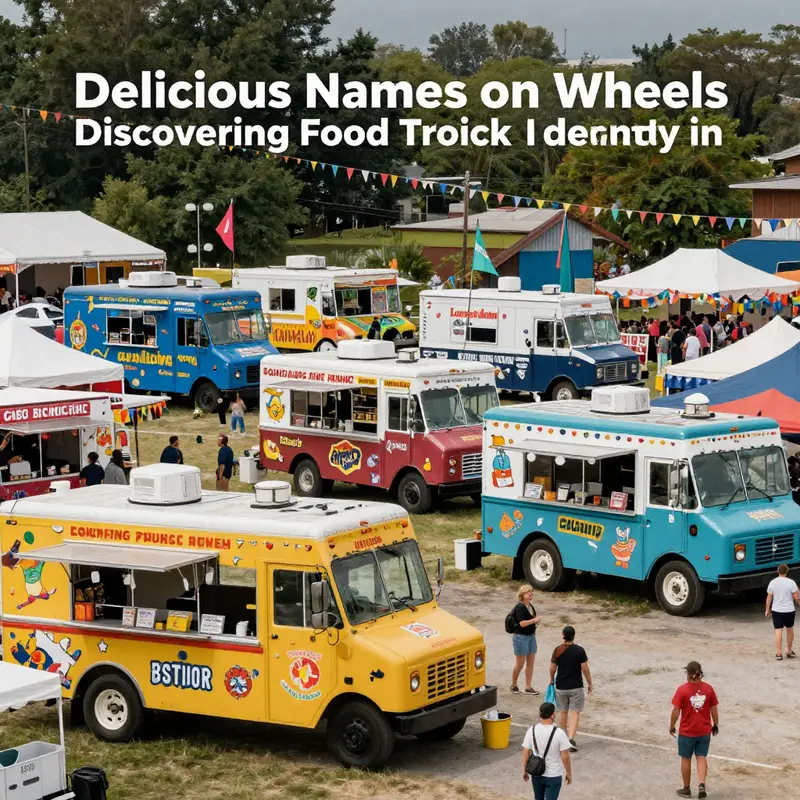
As food trucks continue to gain popularity among Lakewood’s vibrant culture, having a memorable name is essential for aspiring operators. A captivating food truck name not only piques the interest of passersby but also encapsulates the culinary offerings that define your mobile eatery. In this exploration of food truck names, we’ll delve into catchy and fun labels that evoke a sense of joy and community, unique concepts that can make your business stand out, and themed or niche-focused ideas that cater to specific tastes. With a name that resonates, your food truck can become a beloved staple of Lakewood, drawing in both tourists and locals eager to discover what flavors await them.
Naming the Ride: How Catchy, Fun Food Truck Names Drive Flavor, Memory, and Foot Traffic
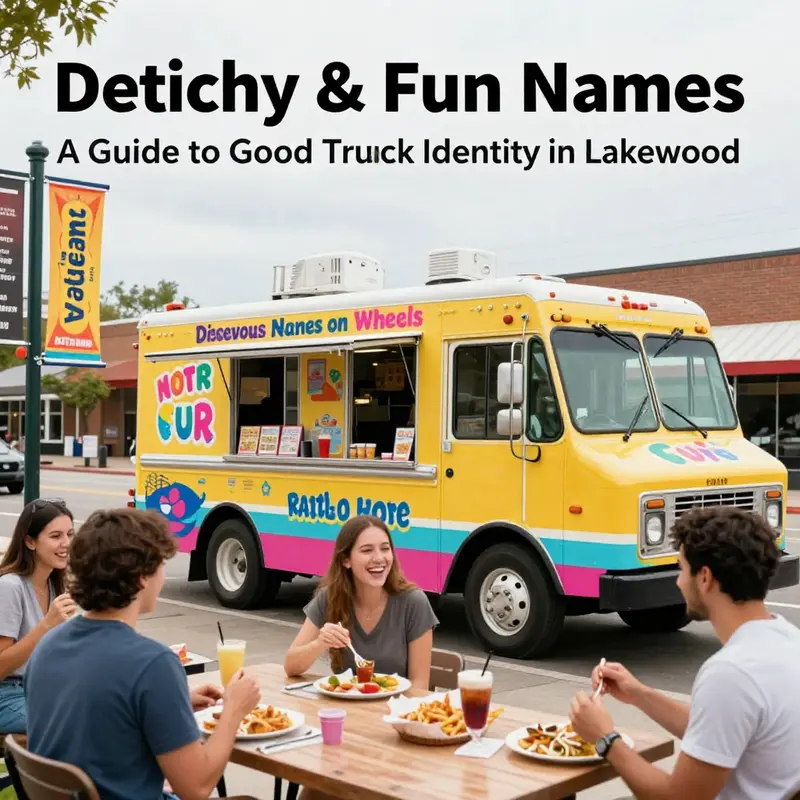
A food truck’s name is the first handshake with a potential customer: it signals cuisine, tone, and the experience you promise. In crowded mobile-dining markets a strong name must be memorable, pronounceable, and aligned with your concept—whether playful and punny, specialty-focused, or evocative and adventurous. Consider clarity (does the name hint at what you serve?), rhythm and brevity (short, snappy names travel easily in conversation and on signage), and adaptability (will the name scale with menu changes and digital needs?). Practical exercises include listing core flavors, the emotional ambiance you want to evoke, and local ties; then mix those elements with devices like alliteration, light wordplay, and action verbs that convey motion and appetite. Test names aloud, check domain and social availability, and visualize them on trucks, menus, and icons. The best names create a coherent story that informs design, service style, and marketing, turning a passersby into a repeat customer. For hands-on guidance connecting name choice to vehicle and logistics, operators can consult resources such as guides to the best food truck models for local startups to ensure the name harmonizes with the truck’s physical presence and business plan.
Brand on the Move: Creative and Unique Concepts for Good Food Truck Names
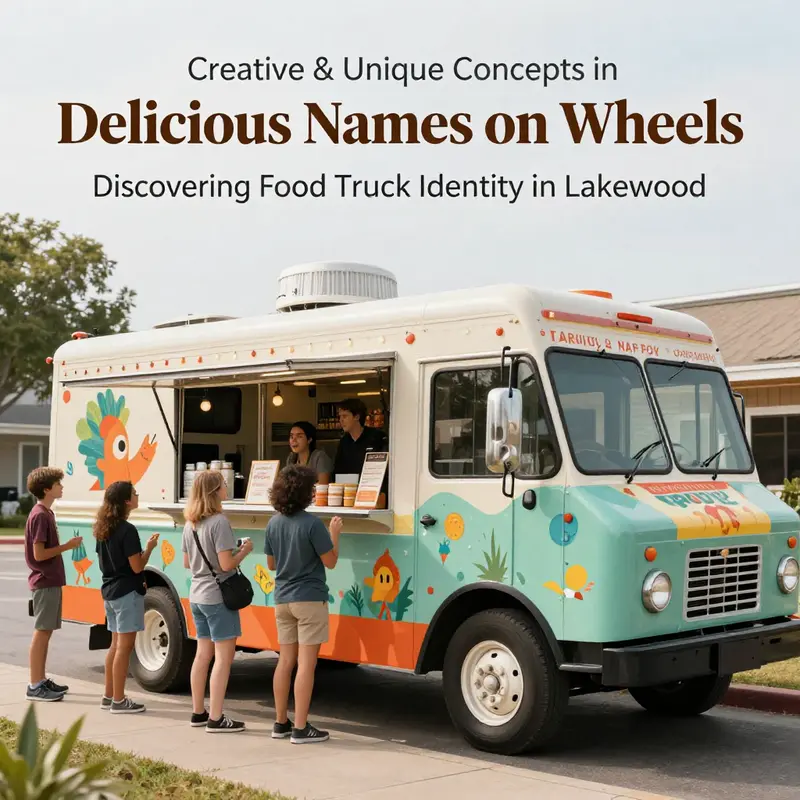
A food truck brand begins with a name, and a name begins a conversation. It signals what the customer can expect, sets a tone, and offers the first hint of a story that could unfold at a curbside window or in a bustling festival lineup. In the crowded world of mobile dining, a name is more than letters on a sign; it is a promise of experience, a cue for appetite, and a compass for the branding that follows. This chapter explores how good food truck names emerge from a mix of intention, play, and practicality. It examines five broad trajectories that storytellers and operators frequently lean on when shaping a name, and it emphasizes how those trajectories can be blended, adapted, and tested to fit a specific cuisine, customer base, and geographic setting. The aim is to offer a cohesive way to think about naming that honors both taste and travel. As you read, you’ll recognize the core idea that a strong name does not merely describe the food—it invites a person to imagine a moment of delight and a memory worth chasing down the street. It is about catching attention without shouting over the noise, sharing a hint of personality, and leaving room for the business to grow in directions that feel authentic.
Names that travel well tend to be memorable and clear. They often carry a rhythm you can hum, a visual cue you can picture in a logo, and a sentiment you can sense in the first bite. The research behind good naming highlights five interrelated concepts that food truck teams can borrow and recombine. First, playful and whimsical names invite joy, curiosity, and a sense of adventure. These names don’t take themselves too seriously; they spark a smile and a sense that the truck is a welcoming, kid-friendly, or family-friendly option for a quick, joyful meal. Second, food-centric and visual names foreground the core product and pair nicely with logo ideas that show the key ingredients or a signature preparation. A strong visual cue in the name helps the brand translate to signage, napkins, and digital assets, allowing customers to recognize the truck from a distance and recall it in a social feed. Third, evocative and sensory names aim to trigger taste memories and emotional resonance. They lean on verbs and adjectives that evoke aroma, texture, and warmth, inviting customers to anticipate the sensory thrill of eating on the move. Fourth, simple and impactful names rely on brevity and clarity. Short, potent phrases with easy pronunciation tend to travel well across ages, accents, and communities and can become shorthand for the entire culinary concept. Finally, punny and clever names use wordplay to spark recognition and shareable moments. When done well, puns feel charming and clever, but they require careful balance so that the meaning remains obvious and accessible.
The real magic happens when operators don’t treat these categories as rigid checkboxes but as flexible design tools. A name can inhabit more than one trajectory at once. A brief, visual-oriented moniker might also carry a playful undercurrent, or a sensory descriptor can be wrapped in a short, punchy phrase. The art lies in alignment: the name should harmonize with the menu, the cooking technique, the truck’s design, and the culture of the neighborhood it serves. In practice, a naming process begins with a careful inventory of what makes the food unique, followed by an exploration of the mood you want to evoke. Is your truck anchored in comfort and nostalgia, or are you chasing bold experimentation and surprises? Are you aiming for broad appeal or a subcultural niche that attracts a devoted audience? The best names answer questions like these in a way that feels both inviting and honest. And because naming happens early in the lifecycle of a business, it deserves thoughtful testing and refinement as the brand evolves.
A concrete way to approach this is through a quiet, methodical exploration of tone rather than a sprint through random word lists. Start by identifying three core adjectives that describe your concept—things like warm, spicy, playful, and fast, or clean, precise, and modern. Then map these adjectives onto the five trajectories described above, looking for natural overlaps. For instance, a concept that centers on quick, satisfying bites can be both simple and impactful while leaning into a food-centric visual theme. A smoky barbecue truck might benefit from evocative language that conjures aroma and memory, while a taco truck seeking mass appeal could balance a playful cadence with a crisp, simple tag. The idea is not to pick a single path and lock in stone, but to allow a name to exist at the intersection of several signals: what the food is, who it serves, how customers feel in the moment of discovery, and how the brand will look on street corners and feeds in the digital realm.
To illuminate how these signals operate in the wild, consider the way a name can become a narrative anchor. A playful, whimsical option often invites customers to think of a mini-journey—the truck as a mobile playground where flavors roam freely. A food-centric name anchors the consumer in the promise of a signature dish or method, with the logo reinforcing that idea through imagery of grills, skewers, or iconic ingredients. An evocative name conjures atmosphere—the scent of spice, the crackle of fat, the glow of a hot griddle—and it uses rhythm and cadence to make the phrase memorable. A simple, impactful name acts like a well-tuned instrument that can accompany an entire identity system across signage, packaging, and digital touchpoints. A punny name invites a moment of recognition and a chance for social sharing, turning a curbside encounter into a playful bite of humor that customers want to tell friends about.
The work of naming, then, is less about chasing a single clever line and more about cultivating a flexible core idea that can scale. It should maintain legibility when translated into a logo, a menu, and a social profile. It should be pronounceable by a broad audience, easy to spell when a customer looks it up online, and resilient as the brand grows in new neighborhoods or expands into additional concepts. It should also be mindful of the dish’s identity and the truck’s culture. A name that feels right in a trendy downtown district may not translate with equal ease to a suburban setting or a festival circuit. The best names emerge from listening to the market while staying true to the chef’s or operator’s own story. And while the examples in research results offer a spectrum of ideas, the true test is whether the name feels alive to the people who taste the food and share the experience with others.
As you consider a potential name, think about the visual ecosystem that will surround it. The typography, the color palette, the shape of the truck, and the layout of the menu all interact with words to shape perception. A name with long vowels and soft consonants may feel welcoming and approachable, suitable for comforting fare or family-friendly brands. A name with hard consonants and compact rhythm tends to feel energetic and punchy, which can suit fast-casual concepts or bold flavor profiles. The interplay between audio, visual, and tactile cues is crucial because customers remember the moment they see the truck in the street, hear the sizzling sound of the grill, and taste the memory when they bite into a taco, a dumpling, or a slow-smoked rib. A well-chosen name becomes the bridge that connects those senses, inviting repeated encounters and social sharing that extend beyond the fare itself.
In practice, many operators also rely on practical checks during the naming journey. Some may test pronunciation with friends and family to ensure it lands clearly across accents. Others verify domain and social handle availability early to prevent backtracking later, which can erode momentum and dilute brand coherence. It’s wise to consider trademark visibility in the regions you plan to operate, since a name that works in one city might collide with an existing mark elsewhere. These checks don’t diminish creativity; they focus it. A name that survives this triage—cultural resonance, ease of use, and legal clarity—stands a higher chance of becoming a durable asset rather than a passing trend. With that groundwork, the entrepreneur can present the brand with confidence, knowing that the name will serve as a steady beacon across every new stop the truck makes.
The narrative dimension of naming deserves emphasis too. A name that hints at a backstory can become a recurring thread in marketing campaigns, social posts, and customer engagement, offering a route to deeper content without artificial force. A well-tointed name can invite a backstory of origin, a journey of discovery, or a philosophy of cooking that customers can relate to, share, and pass along. And because the road is long for any food business, the best names are not brittle; they adapt as menus evolve, as teams change, and as the brand expands into new formats or themes. A flexible name is one that can hold a line of signature dishes, a seasonal menu, or even a crossover concept without losing its core identity. When naming reflects a true essence—whether it’s warmth, speed, restraint, or audacity—the brand gains a steadier footing for the long haul.
In the spirit of storytelling, consider how a name can become a doorway to a broader journey. The following example—though not referenced by name here—illustrates the idea of a mobile venture that matured by leaning into its narrative. The project started as a simple concept but grew into a recognizable journey that people followed across streets and festivals. The name carried a sense of movement, play, and shared discovery that resonated with a wide range of customers. It wasn’t just about what was on the plate; it was about the sense that life on the street could be one long, delicious detour. That is the essence of naming as storytelling: a phrase that invites curiosity, invites a taste, and invites a memory that scallops across time as the truck continues to roll. For readers who want to explore a concrete example of how brand and narrative can intertwine in the mobile dining space, the Rockdog Adventures food truck journey offers a compelling case study of naming as a living, evolving story. See the linked exploration to understand how a name can become the heartbeat of a traveling food culture and a touchstone for a community that follows on social streets as much as on crowded sidewalks.
Choosing a name is not a solitary exercise. It benefits from collaboration among cooks, designers, marketers, and the communities the truck serves. It benefits from testing among a sample audience who can react to sound, meaning, and imagery. It benefits from stepping back to observe the ecosystem—the other trucks nearby, the palettes in the neighborhood, the events you hope to attend, and the kind of customers you want to attract. The best ideas emerge from a patient, iterative process rather than a single eureka moment. In the end, a good food truck name becomes a shared shorthand for a collective memory—of late-night bites after a show, of family dinners at a street fair, or of a simple, satisfying plate that makes someone pull over again tomorrow. When that happens, the name ceases to be a label and becomes a living invitation: join us, taste this, and be part of the journey.
As you move through your naming exploration, keep the broader arc of your brand in view. A strong name should be able to travel with you as your concept expands—from a single truck to a fleet, from street corners to festival circuits, from one cuisine to a family of related offerings. It should be legible on a sign from across the lot, readable in a tiny avatar on a social feed, and resonant with the tone you set in your menu design. It should carry a memory that customers can share with friends, turning a simple bite into a story they want to tell. This synthesis of clarity, charm, and durability is what separates names that merely exist from names that endure. And while the examples in the research materials provide a spectrum of directions, the core principle remains constant: a good name speaks to the appetite for experience, not just the appetite for food. It is a spark that can light a longer conversation about quality, community, and journey across the open road.
In closing this exploration of creative and unique concepts in food truck naming, consider how the journey itself informs the name you choose. A name that implies movement, appetite, and delight can guide your brand toward partnerships, menu evolution, and a welcoming presence at every stop. It invites customers to imagine a moment of curiosity and a memory they want to repeat. And if a narrative thread can be threaded through the name—one that feels authentic to the people behind the stove and the communities they serve—then the brand is well positioned to grow with intention. For those who want to visualize the impact of a strong name in action, the episode of Rockdog Adventures food truck journey offers a window into how a name can become a sustained, shared adventure rather than a one-off encounter. Its existence reminds us that naming is less about clever phrasing and more about inviting a community to lean in, taste, and return.
As you carry these ideas forward, remember that the end goal is a name that endures through the miles, the crowds, and the changing tastes of the neighborhoods you serve. It should be a touchstone you can point to when you’re refining your menu, designing your logo, or pitching your concept to investors. A good name supports growth, honors the craft, and invites the city to become a tasting room without walls. The chapter that follows will continue to unpack how style and substance interweave with naming, helping you align language with cuisine, culture, and community. In the meantime, let your brainstorming be guided by the idea that the best names transform a simple bite into a shared memory—a moment that lingers long after the last crumb has disappeared from the plate.
Internal link reference for further reflection on branding in motion: Rockdog Adventures food truck journey.
Themed and Niche-Driven Names: Crafting Food Truck Identities That Tell a Story
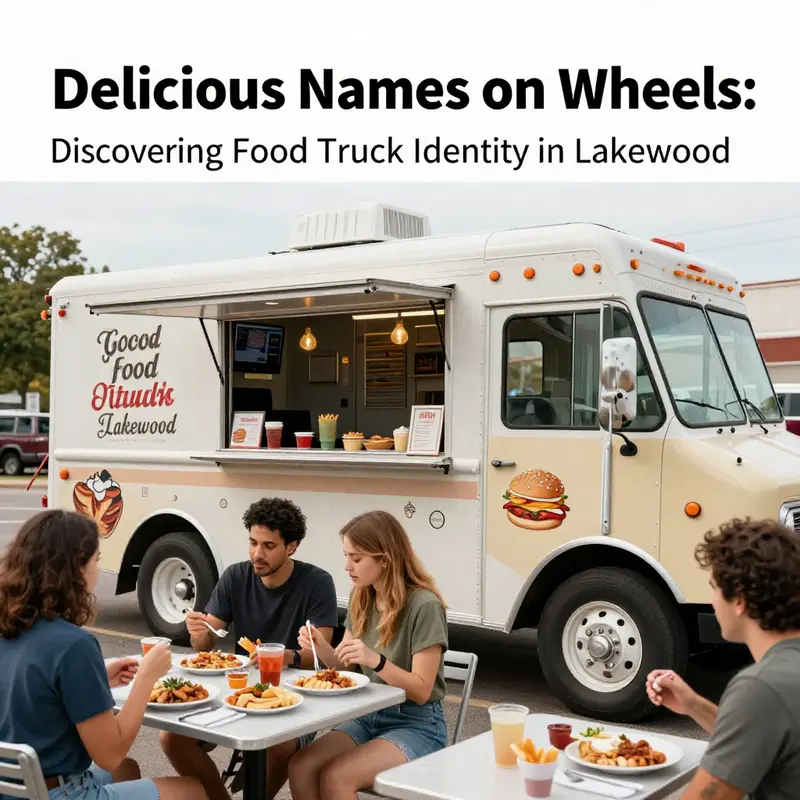
A food truck doesn’t just serve food; it delivers a story on wheels. The name is the first line of that story, a headline that invites curiosity, signals what’s on the menu, and hints at the personality behind the flame. When you choose a themed or niche-focused name, you aren’t merely labeling a cart—you’re inviting a particular audience to feel seen, understood, and hungry for more. The power of a well-chosen name lies in its ability to distill a complex idea into a single memorable phrase, one that can travel farther than the truck ever will. In the crowded street-scene of street food, where dozens of carts compete for attention within a couple of blocks, a niche-driven name acts as a compass for branding across the entire experience: from the menu design to the truck wrap, from the social feed to the way the staff greet customers. It’s a promise, a persona, and a signal that the business is not trying to be every kind of kitchen, but precisely one kind of kitchen that serves a distinct taste, story, or purpose.
Themed and niche-focused naming is not about narrowing vision for the sake of simplicity; it’s about clarity of promise. A truck that leans into a strong, story-rich concept can attract a devoted following. It helps people understand what they’re in for within a few seconds of seeing the name, which is crucial when a busy block is filled with aromas and neon. The initial choice of a niche often determines the visual language of the brand—how the truck is wrapped, what kind of typography feels right, which imagery aligns with the meals, and which audience the menu will feel most welcoming to. For instance, a vehicle built around a place-based or story-centered concept can evoke regional pride or a personal journey, instantly connecting with locals who recognize the reference and travelers who crave an authentic experience. The name acts as both invitation and invitation-forwarding pointer, guiding customers to a specific flavor world rather than a vague variety pack.
Consider a line of branding thoughts that come from the spectrum of niche aims. One avenue leans toward storytelling anchored in place and myth. A truck with a name built around a dramatic landscape or a personal odyssey can feel like a small expedition on a curb, inviting passersby to join a taste-driven voyage. The notion here is not to conjure a tale that requires a customer to memorize an entire backstory, but to plant a seed of curiosity: where am I, what am I tasting, and why does this cart exist in this corner at this moment? A second path centers on a single, distinctive ingredient or culinary technique. When the menu leans into a single star element—think tapioca, for example—the name communicates a laser focus and promises dishes that honor that ingredient with creativity and depth. A third path celebrates sustainability or a forward-looking philosophy. An eco-aware brand name signals responsibility as part of the flavor equation, signaling to a growing audience that every bite is part of a larger story about how food is grown, sourced, and served. Finally, there is the global-cuisine journey, which invites customers to travel the world bite by bite, a concept especially appealing to curious eaters who value variety and cultural storytelling on a mobile stage.
In the research you’re drawing from, these routes show up as practical cues to naming. The idea behind a location- or story-driven name is to forge a sense of place and memory that customers can carry with them after the last bite is gone. It can make the experience seem intimate and authentic, as though the truck has its own passport and is eager to share stamps from the road. A single-ingredient focus creates a brand identity that is instantly recognizable, even from a distance, because the promise is specific and singular. An eco-oriented name signals a mission beyond flavor—a commitment to the planet that you can feel in the materials, in how you source, and in the choices you make in-kitchen. And a passport-ready label for global flavors invites the palate on a voyage, suggesting that every stop on the map is a new chapter, a new dish, and a new memory to be minted through food.
To translate these ideas into a resonant, durable name, you don’t need a long list of clever puns. You need a clear through-line that can be visually rendered, verbally spoken, and remembered. A name should pair well with a simple, legible logo; it should be easy to pronounce, spell, and share in social posts; and it should be adaptable as the menu evolves. The best niche names resist faddishness: they feel built to evolve while preserving the core concept. They’re not a one-season joke; they’re a signal that the cart has a voice, a point of view, and a promise that customers can trust.
In practice, a themed naming approach often blends narrative clarity with a touch of whimsy. The narrative might draw from a sense of origin, a journey, or a cultural homage. Whimsy—without tipping into gimmickry—can be the glue that makes a name memorable in a noisy market. A well-chosen niche name can hint at the menu’s range while not locking the business into a rigid, unchangeable identity. It can accommodate occasional menu updates while preserving brand coherence. The narrative, therefore, should be roomy enough to accommodate growth, yet specific enough to feel anchored. This balance is the sweet spot where the right name can become the center of a marketing universe rather than a single line on a receipt.
One might imagine the naming process as a private dialogue between the business’s heart and its customers’ curiosity. Start with a core question: what makes this truck distinct in its tastes, its origins, or its environmental stance? Then translate that essence into a phrase that is vivid but concise. A name that resonates often carries a sensory cue—sound, texture, color, or aroma—that evokes the dishes on display. It might imply a story of travel, a mythic figure from a region known for the cuisine, or a clever juxtaposition that hints at the menu’s playfulness. The best outcomes celebrate specificity without sacrificing universal appeal. They are the kind of names that a friend can recall after a single encounter and share with a gleam of recognition.
Beyond the initial naming, the thematic approach informs the entire branding ecosystem. The color palette can be chosen to reinforce the story—earthy tones for a story grounded in heritage, bright contrasts for a playful, global kitchen, or cool greens and blues for an eco-forward concept. The typography can mirror the storytelling pace: a bold, compact typeface for a single-ingredient focus, a handwritten script for a travelogue vibe, or a clean, modern font for a wellness-forward concept. Even the menu layout can echo the same through-line; for a global kitchen, you might present a “map” of dishes by region, each with a short anecdote about its origin. The point is coherence: the name sets expectations, and every touchpoint in the customer journey reinforces that expectation in a way that makes sense visually and experientially.
The narrative lens also helps with selectivity. When new items join the menu, you have a built-in filter to test whether they fit the brand’s identity. If a new dish or snack strays too far from the core concept, you have a clear reason to decline it or to adapt it thoughtfully. This discipline protects brand integrity in a world where trends flicker quickly and attention spans can wane. It’s easier to pivot a menu than to untangle a misaligned brand, and a strong niche name provides a constant sounding board for decisions. Customers who discover the cart through a carefully named concept will be more forgiving of occasional evolutions in the menu, because they came for a story they already found compelling.
An essential part of this approach is embracing the regional or cultural specificity that a niche name can imply, without leaning into stereotype or caricature. Authenticity matters. A name built around heritage, landscapes, or culinary lineage should invite dialogue rather than caricature. It’s about showing respect for the culture you’re drawing from while offering a personal, fresh interpretation. That respect translates into how you source ingredients, how you describe dishes on the menu, how your staff speak to guests, and how you present the truck’s exterior. When a name aligns with authentic practice, customers sense the sincerity and respond with loyalty. They aren’t merely buying a meal; they’re buying a small, portable story they want to tell themselves and others.
In thinking through examples—without naming specific brands—you can imagine several archetypes that demonstrate the power of niche naming. One archetype centers on a strong sense of place and memory. The name evokes a landscape or a journey and invites customers to feel connected to a particular locale, even as they sample a modern interpretation of its flavors. A second archetype zooms in on a star ingredient or technique—perhaps a plant-forward focus or a regional staple treated with contemporary technique. This gives the menu a clarifying lens and positions it as a destination for people who crave that particular flavor profile. A third archetype emphasizes sustainability, signaling a promise that the kitchen operates with an ethic that customers can easily support with their dining choice. The final archetype offers a passport to global flavors, where every bite is a new offset on a culinary map. The beauty of these archetypes is that they can blend and overlap: a globally inspired truck might also highlight a hero ingredient, or a place-based narrative can be tied to a sustainable sourcing story.
To translate such archetypes into a name that will carry far beyond the curb, the process benefits from a quiet discipline. Draft several options that capture the essence of your niche and then test them in real scenarios: conversations with staff, conversations with potential customers, and quick social posts that gauge resonance. Listen for what people remember, what they repeat, and what they misinterpret. The goal is clarity, not cleverness for cleverness’s sake. A good niche name should feel inevitable when you hear it—like you’ve known it all along—and it should invite a second look, a second bite, and a second share. If you land on a name that can grow with you as the menu shifts and the audience expands, you’ve likely found a strong anchor for your brand’s future.
When the naming work aligns with the rest of your branding strategy, you’ll notice how easy it becomes to tell your story across channels. A well-chosen niche can be a magnet for partnerships, pop-ups, and collaborations, because it signals a clear value proposition with a specific audience in mind. It also helps you budget more effectively: you’ll know which design elements, which social channels, and which storytelling angles to invest in to keep the narrative coherent. The end result is not simply a catchy label but a living brand that invites customers to participate in a shared flavor journey. In that sense, a themed or niche-focused name is less a one-off marketing trick and more a strategic foundation for growth, community, and lasting appetite.
If you want a practical bridge from theory to practice, look to the way some narrative-focused branding has translated onto the street. A truck that positions itself as a traveling story invites customers to become co-authors of its journey. They may share their own memories or regional ties, and the brand becomes a locus for storytelling in real life and online. A single-ingredient concept invites chefs and crew to construct menus around a culinary heartbeat, letting the audience come to know that star ingredient well enough to crave its next evolution. An eco-leaning concept makes sustainability part of the conversation, encouraging customers to consider the lifecycle of their meal as they savor it. A global cuisine concept turns each stop into a passport stamp, stimulating curiosity and repeat visits as people chase new regional flavors. All of these threads reinforce the same truth: a name with a defined niche is a compass that guides the entire brand, ensuring coherence, recognition, and loyalty that can outpace frequent menu changes and seasonal gimmicks.
The research that informs this approach offers concrete takeaways without prescribing a single path. It demonstrates how varied the niche spectrum can be—from place-based narratives that anchor a truck in a landscape and a memory, to street-food clarity that centers on a distinctive ingredient, to mission-driven branding that speaks to a sustainable ethos, to an adventurous path through global flavors. The common thread is intention. The more intentional the naming, the more customers sense that the business has a clear purpose, and the more likely they are to become returning guests who feel seen and understood by the brand. If you treat the name as a living promise—one that can adapt to menu shifts while preserving its core identity—you have a durable asset that can travel as far as your truck does.
To illustrate how this plays out in practice, imagine a small, mobile kitchen that decides to carve out a niche around a globally inspired street-food concept focused on a single, beloved ingredient used in innovative ways. The owner might craft a name that hints at a culinary passport while foregrounding that ingredient’s star status. The menu then becomes a curated selection of dishes that highlight regional preparations of the ingredient, each served with a brief tale about its cultural origins. The branding—colors, type, and imagery—would reinforce the sense of journey, while the social voice would balance warmth and curiosity. Customers would come not only for the flavor but for the story, and they would feel invited to participate in the journey by sharing their own experiences and cravings. In such a setup, the name isn’t a slogan; it’s a doorway to a broader experience that grows with the business rather than constraining it.
An important note arises when considering the broader ecosystem of naming resources. Naming fixtures and generators can help tailor options to cuisines or target audiences, but they should be used as accelerants rather than formulaic crutches. The best results come when you bring your own lived experience, taste priorities, and community context into the process. A name that reflects where you come from, what you believe in, and the kind of meals you take pride in serving has a stronger chance of resonating deeply, enduring through menu evolution, and sparking authentic connections with guests who become ambassadors for your brand. The aim is not to chase the trend of the moment but to cultivate a naming narrative that ages well and travels well—much like a well-crafted dish, it should be memorable, comforting, and worth recommending to a neighbor who asks, “What’s good today?”
As you continue to refine your kitchen’s identity, keep in mind the practicalities that accompany a strong niche. Check for name availability in your region to avoid conflicts with existing businesses. Consider how the name translates visually onto your truck wrap and what kind of photography or illustration will best communicate the essence of the niche at a glance. Think about the social media scapes you’ll inhabit; your handle, your bio, and your post cadence should reflect the same through-line as your name. And remember the power of the pause—that moment when someone hears or reads your name for the first time and experiences a spark of recognition. If that spark lasts even a beat longer than a blink, you’ve captured something substantial: a brand that people will talk about, remember, and seek out again on the next corner.
For readers seeking a concrete example of how a story-driven, niche-tuned brand can take shape in the real world, explore the journey of a food truck that leaned into a narrative of adventure and place. The project shows how a name can underpin the entire customer experience—from the way the crew introduces the menu to the way guests retell their meals to friends. The name, in that case, became a mnemonic for discovery and connection, not just a label for a dish. It’s a reminder that the best niche names are not just clever phrases but invitations to return, to share, and to become part of a larger, flavorful conversation on wheels.
Finally, a practical tip for moving from concept to naming reality: frame a brief that captures the niche you want to embody—your geographic or cultural anchor, your signature ingredient or technique, your sustainability ethos, and your global or regional inspirations. Then let that brief guide the brainstorming until you land on a few strong candidates. Test them in conversation, on your social channels, and with potential customers you encounter at markets. When a name feels both specific and spacious—the kind that can grow with you while remaining unmistakably yours—it’s more likely to endure the test of time and trends. The right niche name will not merely label your cart; it will frame your entire culinary philosophy, entice the curious, and cultivate a community around your food. And that, in the end, is what makes a good name worth branding across every mile of your road-tested journey.
For readers who want to explore further and see how others have braided narrative into their branding, a hands-on example worth reviewing is a particular journey documented online. RockDog Adventures food truck journey offers a case study in how a story-driven identity can inform not just a name but the overall guest experience—from the tone of the menu copy to the visuals on the truck and the cadence of on-site storytelling. It’s a reminder that the strongest brands are not built on a single clever line but on a coherent, evolving narrative that invites participation and exploration from customers.
To close with a nod to the broader conversation about how names can anchor branding, consider the value of looking beyond the curb and into the culture of food entrepreneurship. The global dialogue about best practices in naming and branding features conversations around narrative authenticity, visual storytelling, and community resonance. As you refine your concept, you may want to widen your net to include industry discussions, local culinary histories, and sustainability conversations. The aim is to keep your brand honest, your visuals consistent, and your menu aligned with the story your name promises. When these elements align, the name becomes a compass that guides flavor decisions, service style, and the guest journey, all while leaving room for evolution as your truck discovers new plates to plate and new stories to tell.
External resource: For a broader look at branding strategies and naming considerations that can complement niche-focused approaches, see https://www.shopify.com/blog/branding-ideas-for-food-trucks. It offers practical perspectives on how branding intersects with menu design, customer perception, and online presence without prescribing a single formula, leaving room for your unique story to unfold on busy streets and festival lanes.
Final thoughts
Choosing the right name for your food truck is more than just a catchy phrase—it’s about creating an identity that resonates with your community and entices both tourists and locals. Lakewood’s diverse food scene thrives on innovation and creativity, so take the inspiration from this guide to craft a name that reflects your culinary passion. This name will not only serve as an invitation for curious diners but will also tell the story of your food journey on wheels. As you continue to develop your food truck brand, remember that the right name can set the tone for memorable experiences and satisfied customers.