
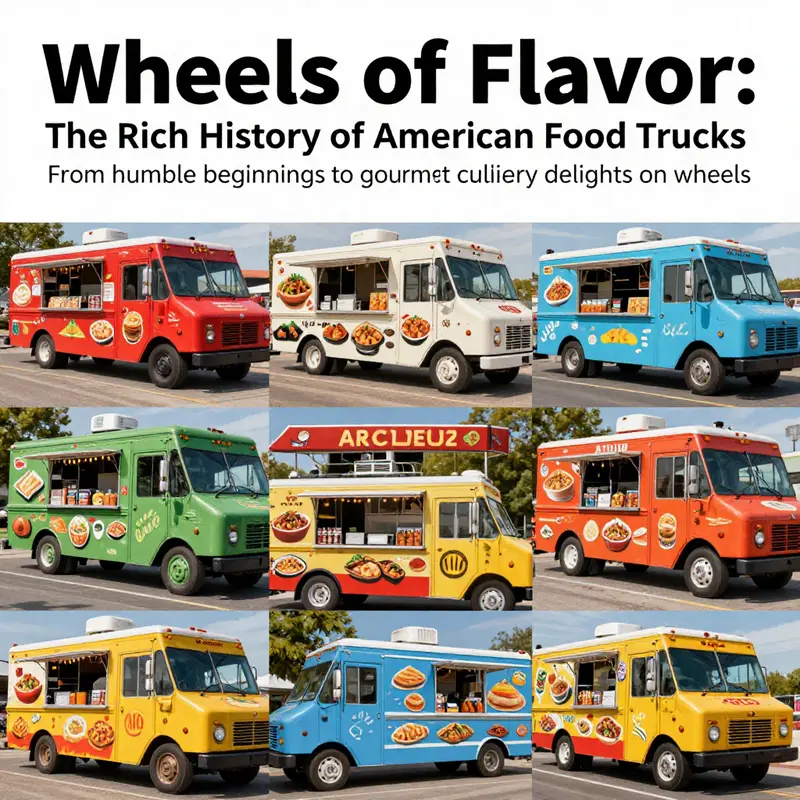
Food trucks have become a beloved part of American culture, offering a diverse array of delicious cuisine on the go. This article explores the origins of food trucks in America, highlighting their humble beginnings, the transformation into gourmet street food, and the explosive growth in popularity during the 2010s. Whether you’re an aspiring food truck operator or a tourist visiting Lakewood, this journey through history will deepen your appreciation for these mobile kitchens that serve up creativity and community spirit.
From Carts to Cuisines on the Move: A Living History of American Food Trucks
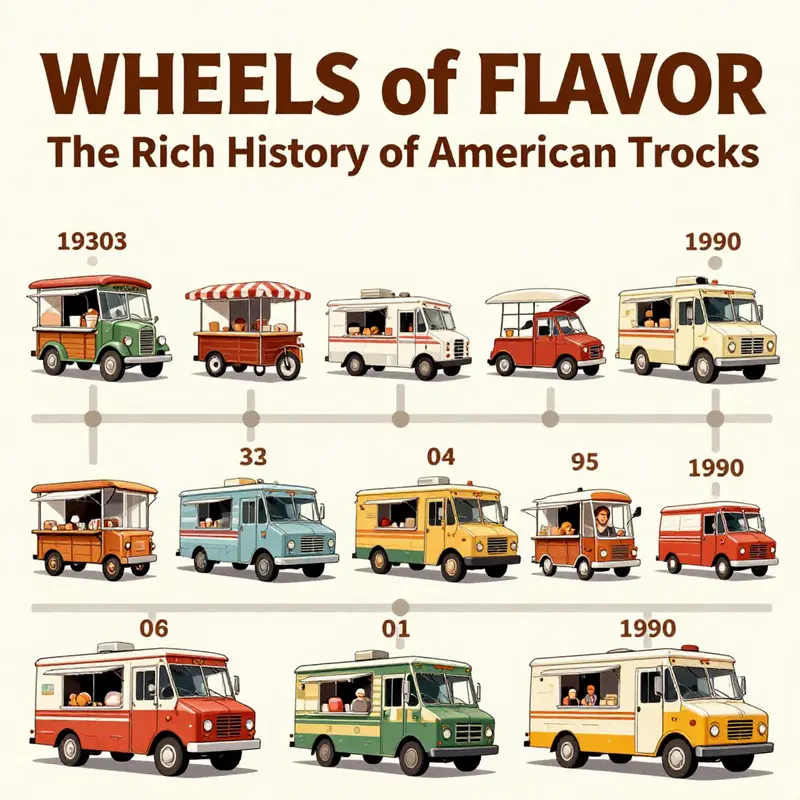
The story of American food trucks is a story of movement itself. Meals that travel have always followed the pace of work, travel, and change, tracing a line from carts to city blocks and the open lanes of modern downtowns.
Before automobiles, mobile eating emerged from street vendors who pushed or pulled carts, offering meals that could be grabbed on the run. These early vendors fed workers, travelers, and neighbors, adapting what could be carried: stews kept warm in pots, fried dough, and portable breads baked in simple ovens.
As the centuries turned, wagons and carts evolved into small kitchens on wheels. In port towns and railroad hubs, vendors read crowds, learned to meet demand, and moved from neighborhood to neighborhood. The postwar era brought vehicles designed for neighborhoods, parks, and events, with better heat sources and kitchen layouts. Mobility remained the core value: a way to reach customers where they were.
The late 20th century cemented food trucks as a cultural and entrepreneurial force. The right vehicle, permits, and focused menus allowed cooks to balance speed and quality, turning meals into experiences and stories into brands. The industry grew with artisanal ingredients, local sourcing, and digital tools that helped fleets adapt routes and hours in real time.
Today, trucks continue to reshape urban dining. Modular kitchens, diverse crews, and a thriving ecosystem of parks, events, and regulations keep the scene dynamic. For some operators, trucks are stepping stones to permanent venues; for others, a lifelong mobile career. Across the country, food trucks reflect a culture of mobility, innovation, and community around the curb.
Gourmet on Wheels: How Street-Driven Innovation Rewrote the History of American Food Trucks
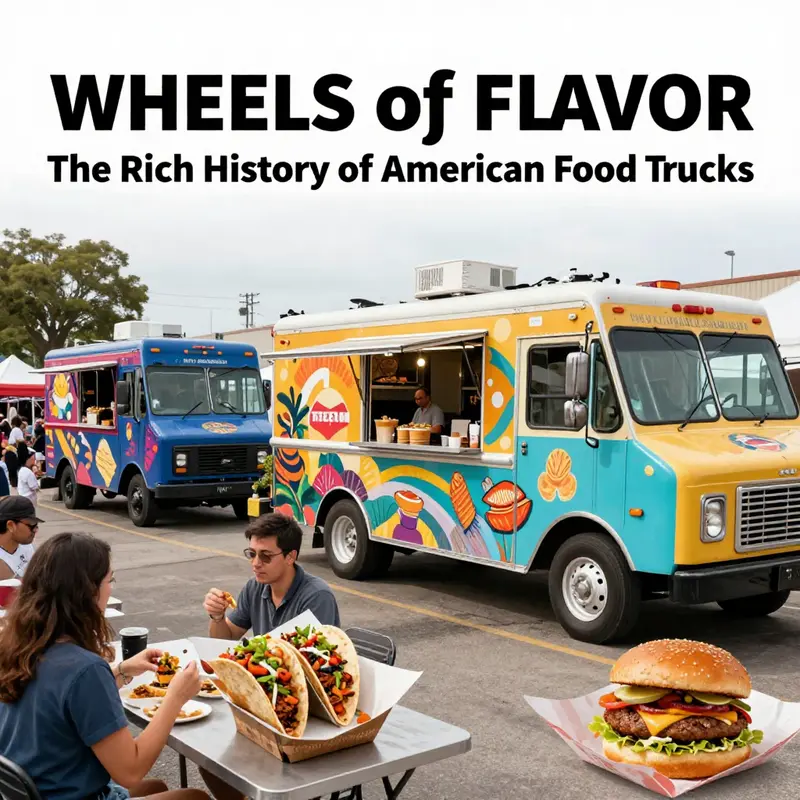
The street is a kitchen, and the kitchen is a stage where craft, economy, and culture meet on four wheels. The rise of gourmet street food did not merely add new flavors to the curb; it rewrote how Americans imagine food, mobility, and entrepreneurship. What began as a pragmatic adaption to smaller capital and flexible spaces grew into a disciplined practice of culinary storytelling. In this evolution, modern food trucks became not only places to eat on the go but engines of artistic risk and urban renewal. The transformation can be traced through a line from practical, portable grills in the early 20th century to the sophisticated, design-forward fleets that roam city blocks today. The arc is as much about people and place as it is about menus and equipment, and it reveals a broader shift in urban dining: a preference for high-quality, portable experiences that fuse global flavors with local ingredients, all delivered with immediacy and personality.
Long before the gourmet trend took hold, there were mobile kitchens that answered the simplest of questions: how to feed a community with limited fixed infrastructure. In the United States, one of the earliest documented mobile hamburger operations occurred in the mid-20th century, when a modified van in California began selling burgers to passersby. It was a modest beginning, a practical adaptation rather than a culinary manifesto. Yet it planted seeds for a broader belief: food could travel, and chefs could manage risk and opportunity from a compact, movable workspace. As decades passed, this lineage broadened. The 1980s and 1990s saw a noticeable uptick in street-based ventures in places like Los Angeles and San Francisco, where urban space grew tight and startup costs for brick-and-mortar restaurants remained daunting. Entrepreneurs learned that a mobile kitchen could test ideas quickly, adjust menus with agility, and reach neighborhoods that traditional storefronts often overlooked. The ethos here was not simply convenience but experimentation. The street became a laboratory where chefs could refine concepts with direct feedback from diners who found value not only in speed but in novelty and personality.
The real turning point, however, arrived in the new century when the appetite for artisanal, locally sourced, and thoughtfully composed meals intersected with the logistics of mobile cooking. A broader cultural trend—toward food as an experience, not merely sustenance—began to permeate menus, markets, and media narratives. Even as concerns about food safety and regulatory compliance persisted, a sense emerged that street food could be a legitimate, even prestigious, venue for culinary excellence. This shift was not about abandoning the speed and accessibility that defined street food; it was about elevating what could be offered in that space. The idea that a lunch truck could deliver a refined, contemporary dish—one rooted in technique, seasonality, and global influence—gained traction. Chefs and restaurateurs who previously viewed street vending as a stopgap started seeing it as a strategic platform for brand-building and experimentation. The street became a workshop where the ordinary could be reimagined through precise technique, thoughtful sourcing, and a narrative that connected dish, story, and origin.
Media played a pivotal role in this redefinition, though the history here is nuanced and deliberately non-glitzy. It is not that television or online cooking programs singlehandedly created a movement; rather, they amplified a growing curiosity about how premium ingredients could travel. The public began to expect more from portable meals: more technique, more presentation, more storytelling about the people behind the food and the places from which ingredients came. In response, trucks started to carry more sophisticated equipment, turning vehicles into compact, professional kitchens. Attentive chefs began outfitting their rigs with high-grade stainless steel workspaces, streamlined ventilation, and modular stations designed for consistency as much as for speed. These improvements mattered. They enabled cooks to execute complex preparations under the pressure of curbside service, maintain hygiene and efficiency, and preserve the integrity of the dishes across a variety of urban environments.
This evolution toward a gourmet sensibility did not unfold in a vacuum. It reflected a broader urban gastronomy trend that embraced diversity and the kitchenette as a vehicle for cultural exchange. Immigrant communities, long shaping the American palate, contributed to a more expansive vocabulary on the truck. From the spices and techniques of the Middle East and North Africa to the umami-driven depth of East and Southeast Asian cuisines, the mobile kitchen became a canvas for cross-cultural dialogue. The resulting menus often feature multiple influences within a single operational concept, a fusion that feels natural rather than forced when the chef treats the truck as a mobile studio rather than a fixed storefront. The flexibility of the format encouraged experimentation with textures, temperatures, and presentations that would have required significant capital in a brick-and-mortar setting. It allowed chefs to tell evolving stories—how a dish reflects a particular season, a regional harvest, or a personal memory—without the gravity of a fixed, long-term lease.
If the late 2000s introduced the idea of the gourmet food truck as a serious culinary alternative, the 2010s cemented it as an organized ecosystem. Cities across the United States began to respond with parking zones, dedicated food-truck parks, and coordinated festivals that celebrated mobility as a social, gastronomic, and economic phenomenon. The appeal was practical as well as romantic: trucks offered lower startup costs, lower ongoing overhead, and the ability to move between neighborhoods or adapt to market demand with ease. The economics of the mobile kitchen allowed chefs to test concepts before committing to a full-scale restaurant, enabling a form of iterative entrepreneurship that was especially attractive to ambitious cooks with limited capital but abundant ideas. The entrepreneurial pathway for culinary talent widened, inviting artists who might have previously found the industry exclusionary. Suddenly, a carefully curated fleet of trucks could become a neighborhood institution, a traveling dining room that drew crowds, shared memories, and constant curiosity.
Technology and design became the quiet accelerants of this transformation. The vehicles themselves grew more specialized, not merely for transport but for culinary precision. Custom rigs emerged with features that respected the discipline of professional cooking: heat and cold zones that could accommodate delicate sauces as well as high-heat sears; integrated waste management that kept the footprint of curbside service sanitary and efficient; and compact storage systems that preserved ingredients without sacrificing workflow. The kitchens inside these trucks were not afterthoughts; they were professional spaces that demanded planning, maintenance, and careful calibration. The work surfaces—often premium-grade stainless steel—were chosen for durability and ease of cleaning, while the ventilation systems were engineered to manage the intensity of back-of-house activity in a moving environment. The mobile kitchen became a rare blend of theater and craft, where a chef could reveal a technique to an audience of passersby while maintaining the discipline of a serious kitchen.
Menu strategy followed suit as chefs refined how to present ideas in a small, fast context. The most successful gourmet trucks offered a tight rotation of signature items that could be prepared with reproducible precision yet offer room for seasonal adjustments. They built narratives around ingredients, sourcing, and technique, turning a cart into a stage where the dish carried an authentic backstory. The menus often drew on a tapestry of influences sourced from immigrant communities and agricultural producers, allowing for a form of culinary diplomacy on wheels. This approach meshed with consumer desires for transparency and connection: diners wanted to know not only what was on the plate but where it came from, who prepared it, and how the process reflected a broader ethical or culinary philosophy. In practice, this meant emphasizing traceable ingredients, smaller-batch preparation, and a commitment to minimizing waste—principles that resonated with urban diners who were increasingly attentive to sustainability and community impact.
Of course, working a gourmet truck is partly about the chemistry of cooking and the artistry of plating; it is also a business that must contend with location, timing, and momentum. The social dimension cannot be underestimated. Today’s gourmet trucks cultivate followings not only through their menus but through their presence in communities. They use platforms that allow real-time location updates, enabling hungry pedestrians and office workers to align their cravings with a truck’s precise position. They participate in weekly markets, fabulous street fairs, and seasonal festivals that become ritual occasions for locals. In doing so, they convert a simple bite into a social event. Diners become ambassadors, sharing photos and recommendations with friends and followers, multiplying word-of-mouth reach in a way that used to require a storefront’s enduring visibility. The effect is a feedback loop: the more visible a truck is, the more its equipment and concept must stand up to public scrutiny, and the more its dish must feel worth the detour. The trucks evolve not just when the cook adjusts a recipe but when the audience’s expectations rise—demanding more sophisticated technique, better sourcing, and more coherent storytelling.
This is where the design and branding of gourmet trucks intersect with their cuisine. The appearance of a truck, the organization of its interior, and the rhythm of its service all encode a story. A well-conceived mobile kitchen becomes a traveling brand that communicates its values through texture, aroma, and cadence as much as through the words on a menu board. The relationship between form and function matters here: the vehicle must be navigable on crowded streets, safe in tight alleyways, and hospitable to a line of customers who gaze at a chef at work. Yet it must also carry an aesthetic that signals care, quality, and a willingness to push boundaries. The result is a lively ecosystem where design, technique, and storytelling coexist as core competencies of culinary practice.
Central to this story is the idea that gourmet trucks offered a new form of culinary mentorship and opportunity. Because a truck can be established with a lighter financial footprint than a brick-and-mortar restaurant, aspiring chefs—especially those from underrepresented communities or from outside traditional culinary hubs—found a viable entry point into the industry. The truck became a platform for professional growth, a place to prove culinary ideas on a real-time stage, and a stepping stone to permanent ventures for many operators who desire to remain nimble or who simply value the freedom of mobility. In this sense, the rise of gourmet street food is as much about access and agency as about flavor. It represents a democratization of culinary ambition, where the act of cooking in public becomes a shared cultural event rather than a solitary pursuit behind a closed kitchen door. The food truck movement, then, is a narrative about people who harness mobility to reimagine what food can be, where it can be consumed, and how it can be produced with intention and care.
To support this growth, cities and communities began to respond with signals of legitimacy rather than friction. Parking zones, parks designated for food trucks, and pairing trucks with curated markets created environments that acknowledged street food as a legitimate, even valued, component of the urban dining ecosystem. In many places, these developments went hand in hand with a broader appetite for festival culture, where people gathered not just to eat but to explore a rotating cast of culinary voices. The result has been a durable, if sometimes contested, coexistence of trucks and traditional restaurants that has broadened the public’s sense of what counts as a dining experience. It is not merely about speed, price, or convenience; it is about the ability to encounter culinary ideas in motion, to meet the person behind the plate, and to discover a sense of place through the plate that travels with you through the city.
For those curious about the practical mechanics behind these vessels, a growing body of resources has emerged to guide aspiring truck operators toward sustainable, scalable models. This is where the link to practical, fleet-minded guidance becomes relevant. Consider the emphasis on fleet design, equipment choice, and workflow optimization when developing a mobile concept. A good starting point for understanding current thinking about truck configurations is the resource focused on best practices for Lakewood startups, which discusses how to balance cooking capacity with mobility and reliability: Best Food Truck Models for Lakewood Startups. Such guides underscore that beyond the cuisine itself, the sustainability of a gourmet truck rests on careful planning of spaces, utilities, and service protocols, ensuring that the food remains consistently excellent whether in a busy downtown corridor or a quiet neighborhood street.
Amid the practical and the poetic, the movement continues to evolve in ways that keep urban life dynamic. The truck becomes not only a kitchen but a story vehicle, carrying narratives about place, people, and possibility. It invites communities to engage with food as process—how ingredients travel, how menus shift with the seasons, and how a chef negotiates the demands of service with the integrity of craft. In this sense, gourmet street food has decisively altered the cultural map of American dining. It has moved the emphasis from the mere availability of eating options to an awareness that food on wheels can be a center of innovation, education, and belonging. The street becomes a dining room that moves, the city becomes a menu, and the chef becomes a conductor who choreographs both the plate and the moment. And as customers follow these itineraries—through apps, social posts, and word-of-mouth—the trucks help redefine neighborhood identities, turning corners and curbside corners into destinations worth visiting again and again.
If one looks closely at the broader arc, the story of gourmet street food is not a break with tradition but a continuation. It respects the street’s long history as a site of exchange while layering in contemporary priorities: sustainability, transparency, and cross-cultural exchange. It foregrounds a form of culinary education delivered not in a classroom, but in a bustling, public kitchen that invites participation, observation, and conversation. It also highlights the ongoing tension between mobility and permanence. The culinary lines drawn by the modern truck are about leverage and risk, but they are also about belonging and community. A street food operator who can translate a concept into mobility can reach diverse urban audiences, build a loyal following, and, in time, sustain a meaningful business that contributes to the city’s cultural fabric. The result is a cuisine that travels with a clear voice and a willing audience, the two elements that make modern food trucks more than a passing trend and more than a collection of clever recipes on wheels.
For readers seeking deeper context on the bold, cross-cultural direction of gourmet street food in America, a broader external perspective offers valuable reflections on how this movement is shaping urban dining across continents and generations. See https://www.foodandwine.com/food-trucks-gourmet-trends for an extended analysis of how this trend has matured and what it suggests about the future of food, craft, and mobility across cities.
From Sidewalks to Skyline: The 2010s Renaissance of American Food Trucks
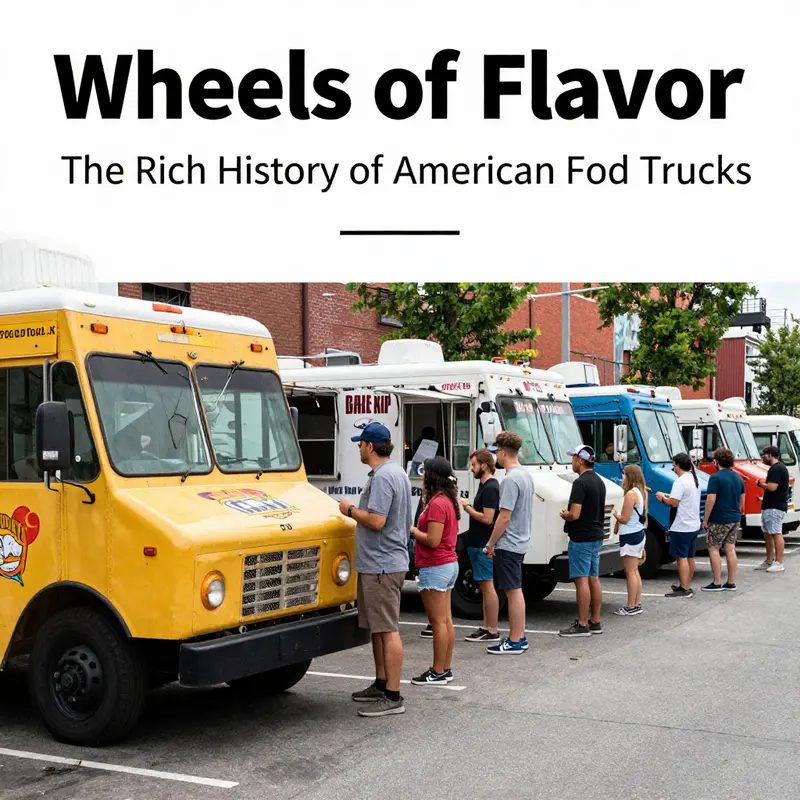
The 2010s mark a turning point in the American food truck story, the decade when the mobile kitchen became a recognizable anchor of urban life rather than a fringe option for budget-conscious diners. It was a period when cities, already dense with diverse populations and fast-paced rhythms, embraced the idea that a single vehicle could deliver a chef-driven, highly crafted meal in the time it took to park, pay, and bite. The streets became a testing ground for culinary risk, branding, and logistics, and the trucks themselves evolved from simple, practical conveyances into expressive platforms where concept, design, and menu chemistry converged. The rise of street-level gastronomy did not happen by accident. It followed a long arc that began with earlier forms of mobile concessions and ice cream wagons and accelerated as urban densities intensified and consumer curiosity broadened. By the end of the decade, the mobile kitchen was not just a way to reach customers quickly; it had become a decisive channel for experimentation, storytelling, and economic opportunity.
The evolution into the 2010s was enabled by a confluence of conditions that allowed a broader array of cooks and critics to see value in mobile entrepreneurship. First, urban centers continued to grow denser, and the need for flexible, efficient dining options increased in step with that growth. Second, a culture of street food—once viewed as rough and casual—began to be celebrated for its ingenuity and its ability to translate global flavors into accessible, affordable meals. Third, a digital landscape emerged that could amplify a truck’s voice. Social media enabled trucks to announce their locations in real time, showcase menus, and cultivate loyal followings without the overhead of traditional advertising. Together, these currents nudged the food truck from a niche convenience into a recognized, legitimate segment of the dining ecosystem.
What the decade revealed was a shift in perception as much as a market shift. No longer were trucks seen merely as portable fryers or temporary stopovers for late-night crowds. They became design-forward micro-restaurants, each with a distinct concept and a coherent philosophy about sourcing, technique, and service tempo. Culinary visions that had once required bricks, mortar, and a long permitting process could now be tested in a compact kitchen-on-wheels. This was not just about cheap eats; it was about democratizing access to innovation. The trucks presented a new pathway for chefs who valued speed to market and closeness to the customer, and for entrepreneurs who understood that a compelling brand could travel as far as its food. The menus reflected a broad appetite for variety: craft burgers built with precise fat-to-lean ratios, tacos and bowls that fused street flavors with regional cooking traditions, plant-based options that did not compromise on depth or satisfaction, and a steady stream of regional and immigrant influences that added texture to the urban palate. The result was a mosaic of tastes that kept evolving as communities, farmers, and vendors learned to collaborate in more intentional ways.
The storytelling around food truck culture intensified in the 2010s, aided by the rise of visually driven platforms and the appetite for shareable experiences. A truck’s curb appeal—its signage, its color palette, the chef’s visible craft in the open kitchen—became as important as the dish itself. Patrons in cities long familiar with the model could spot a truck from a distance and anticipate something that would feel fresh and personal. This emphasis on branding created a new dynamic: customers didn’t just crave a meal; they pursued an encounter, a moment of connection with the people who prepared it and the ideas they represented. In many cases, the trucks cultivated a narrative of locality and seasonality, partnering with nearby farms or small producers to underscore a commitment to quality and traceability. The result was not only delicious food but a sense of place that could be consumed on a street corner, in a park, or at a festival, with the same intensity once reserved for sit-down restaurants.
The menu philosophy that defined the era was grounded in flexibility and clever restraint. Operators learned to balance complexity with speed of service, using technique and seasoning to punch above the perceived value of fast, affordable meals. The range of offerings grew to include what many diners would come to expect from a modern gastropub or contemporary bistro, adapted for the constraints and realities of a mobile kitchen. A carefully composed menu could feature a few core protein choices, a handful of vegetables prepared with skill, and a handful of rotating specials that reflected seasonal ingredients and cultural exchange. The most successful trucks treated their menus as a living portfolio, evolving with feedback from daily encounters with customers, farmers’ markets, pop-up nights, and cross-city collaborations. They were laboratories on wheels, testing textures, smoke profiles, spice balances, and the boldness of concept.
Public space became a central part of the story. The proliferation of designated food truck zones, parks, and festivals created predictable stages on which these mobile kitchens could perform. In many metropolitan areas, the city’s appetite for variety catalyzed the development of formalized spaces where multiple trucks could gather and offer a curated experience. These clusters became hubs of community interaction, where buyers could compare offerings, discover new tastes, and form social bonds around shared meals. The growth of these spaces also stimulated a broader ecosystem of support services: commissaries that supplied shared equipment and inventory systems, financing that understood the different financial rhythms of a truck business, and mentorship networks that connected seasoned operators with first-time entrants. The infrastructure around the trucks began to resemble the scaffolding of a conventional restaurant, even as the core product remained refreshingly portable.
Of course, the 2010s did not pass without challenges. The very features that fueled growth—low overhead, modularity, rapid concept iteration—could also amplify risk. Competition intensified as more operators entered the field, each seeking to carve out a distinct niche in crowded urban geographies. Maintaining consistent quality across daily shifts became a central discipline, requiring rigorous training, standardized procedures, and a culture of accountability that could scale with the brand. Regulators in many cities responded with a set of rules aimed at ensuring safety, fairness, and order in public spaces; the pace of compliance required a new kind of entrepreneurial flexibility. Yet these hurdles did not derail the movement. Instead, they sharpened the craft and spurred operators to be more sophisticated about sourcing, sanitation, and governance, reinforcing the sense that this was not a hobby but a serious entry point into the broader restaurant economy.
The decade also saw a maturation of the food truck brand as a social and cultural phenomenon. The appeal extended beyond the plate. People traveled to a location for the whole experience—the sense of discovery, the chance to participate in a citywide food culture, the speed with which a novel concept could become a local favorite. In this climate, partnerships and collaborations flourished. Truck-to-truck collaborations could yield limited-time menus that mixed specialties, attracting curious diners who followed the trains of flavor from one stop to another. Farmers and artisans found new venues to reach customers, and this reciprocal relationship helped strengthen regional food ecosystems. The result was a more integrated, more resilient narrative about how food could travel, how taste could be portable, and how a truck could function as a platform for community-building as well as commerce.
Within this broader canvas, a handful of trucks achieved notable visibility, not simply because they served exceptional dishes, but because they exemplified a broader pattern: food trucks that built sustainable brands grew into permanent venues or expanded into multiple locations. The stories were not about overnight success but about deliberate growth—cultivating a loyal following, refining operations, and leveraging branding to retain customers while exploring new markets. The most enduring brands treated the mobile kitchen as a starting point rather than a destination, using it to develop a core fan base, a reliable supply chain, and a tested menu that could scale when the time was right. The shift from novelty to stability did not diminish the creativity but rather provided a stable platform from which to explore more ambitious forms of cooking, seasonally driven menus, and cross-cultural fusions that reflected the nation’s ever-shifting demographics.
If you trace the arc of the decade, it becomes clear that the food truck movement achieved legitimacy by proving it could deliver experience and value on a par with traditional dining options while still preserving the benefits that make a truck unique: mobility, speed, and a direct line to the urban palate. The trucks became ambassadors of culinary curiosity, inviting diners to rethink what “street food” could mean when it was conceived with intention, executed with skill, and shared through a brand that could weather the daily grind. The social fabric around these trucks—consumers posting, commenting, and returning with friends—turned food into a social ritual rather than a solitary act of sustenance. In this sense, the 2010s didn’t just expand the footprint of mobile dining; they redefined what it could symbolize for a city’s cultural identity. The movement’s influence extended into the urban imagination, shaping how people talked about food, work, and the possibilities of small-scale entrepreneurship.
At the same time, the 2010s were a period of experimentation with supply chains, sustainability, and ethical sourcing. Operators recognized that transparency and accountability could be part of the brand’s value proposition, appealing to a generation that wanted to know where ingredients came from and how they were handled. This led to a closer alignment with local producers and an emphasis on seasonal menus that reflected the agricultural calendar. It also meant that trucks could partner with community groups, schools, and neighborhood associations, turning culinary endeavors into community-building projects. In many places, these partnerships helped elevate the conversation around food justice, accessibility, and the role of street cuisine in shaping a city’s lunch culture. The conversation around price points also matured; while the appetite for affordable meals remained strong, diners increasingly valued the balance between cost and craft, a balance that the most successful trucks managed with discipline and creativity.
The cultural resonance of the decade was reinforced by a growing sense that food trucks could be engines of local pride and regional storytelling. Each truck carried a narrative about its origin, its cooks, and its culinary philosophy. The dishes, whether rooted in long-standing traditions or born from novel riffing on familiar flavors, functioned as portable artifacts of cultural exchange. The industry’s reach extended into neighborhoods that had long felt overlooked by mainstream dining, providing access to innovative food experiences that were often less expensive and more accessible than many urban sit-downs. This democratization of culinary access mattered not only for food lovers but for aspiring chefs who saw a viable, scalable way to test ideas, learn from feedback, and gradually build a business that could evolve with the market.
As the decade drew to a close, the line between street food and restaurant formally blurred in the public imagination. It was not unusual to find trucks that had honed their craft so precisely that they attracted a devoted following large enough to sustain a brick-and-mortar outpost, or operators who used the mobile model as a launchpad for broader concepts—small restaurant groups anchored by flagship trucks, storefronts that emerged from the kitchen’s visible process, and collaborative spaces that fostered innovation across borders of cuisine and technique. The 2010s thus stood as a defining era, not only because it saw more trucks on more streets, but because it embedded the idea that mobile dining could be high in culinary ambition, rigorous in quality control, and deeply rooted in the social and economic fabric of American cities. The chapter of trucks in the 2010s closes with the recognition that mobility and craft can coexist, that speed and depth can accompany one another, and that the street can be a stage for serious gastronomy just as it is for casual, joyful, everyday meals.
For readers curious about the geographic and cultural breadth of this transformation, the movement’s energy often coalesced around gatherings and festivals that brought together diverse cuisines and communities in a concentrated, celebratory format. These events showcased how the same city could taste multiple heritages in one afternoon, and they underscored a shared belief among operators that the best ideas travel quickly when the city’s appetite is ready to follow. The ecosystem—comprising customers, producers, regulators, and investors—moved in tandem, shaping a framework in which creative risk could be pursued with a clearer sense of financial and operational viability. As a result, the decade did more than expand a market; it expanded a vocabulary for thinking about food, space, and the ways in which a single, mobile kitchen could influence urban life as a whole. The narrative of the 2010s is thus a story of convergence: taste converging with technology, small business ambitions converging with cultural expectation, and local foods converging with global flavors in a city landscape that had learned to reward curiosity and resilience.
To connect this historical arc to what follows, consider how the urban appetite for innovation in the 2010s set the stage for ongoing experimentation beyond the city grid. The momentum carried forward into new formats, whether in pop-up collaborations, hybrid models, or multi-site brand expansions. The chapter you’ve just read is not meant to be a conclusion but a bridge—an invitation to see how the values, challenges, and opportunities of the decade quietly prepared the ground for what came next, including how communities continued to shape what street food could be, how entrepreneurs could navigate the demands of city life, and how taste and technology would keep migrating together across the map.
External resource: https://www.britannica.com/topic/food-truck
For further reading that expands on related themes, see the evolving stories of city food scenes and mobile dining communities in the broader literature and on credible reference sites. And for readers looking to track current and future trends in this evolving space, consider exploring ongoing city-specific initiatives and events, which often reveal how regional preferences and regulatory environments continue to shape the mobility, cuisine, and branding of American food trucks. The conversation around these mobile culinary platforms remains dynamic, and the best indicators of where the movement is headed can be found in how cities design spaces for trucks to gather, how communities respond to new flavors, and how entrepreneurial cooks translate the promise of mobility into durable, value-driven businesses. In that sense, the history of American food trucks in the 2010s is less a closed chapter than a living record of how food, technology, and urban life continue to reinvent each other on wheels. The next chapter will pick up by tracing how these forces evolved into new forms of culinary expression and urban experience in the years that followed, including the emergence of hybrid concepts that blur the line between street food and fine dining, and how digital platforms continue to redefine proximity, discovery, and loyalty in the mobile kitchen landscape.
Final thoughts
The history of American food trucks is not just about food; it’s a story of community, creativity, and entrepreneurship. From their early days as simple mobile kitchens to their current status as culinary icons, food trucks have significantly influenced the dining landscape. Aspiring food truck operators in Lakewood can draw inspiration from this rich history as they embark on their journeys, serving delicious and innovative food while connecting with the local community. Get ready to hit the road and be part of this exciting chapter!