
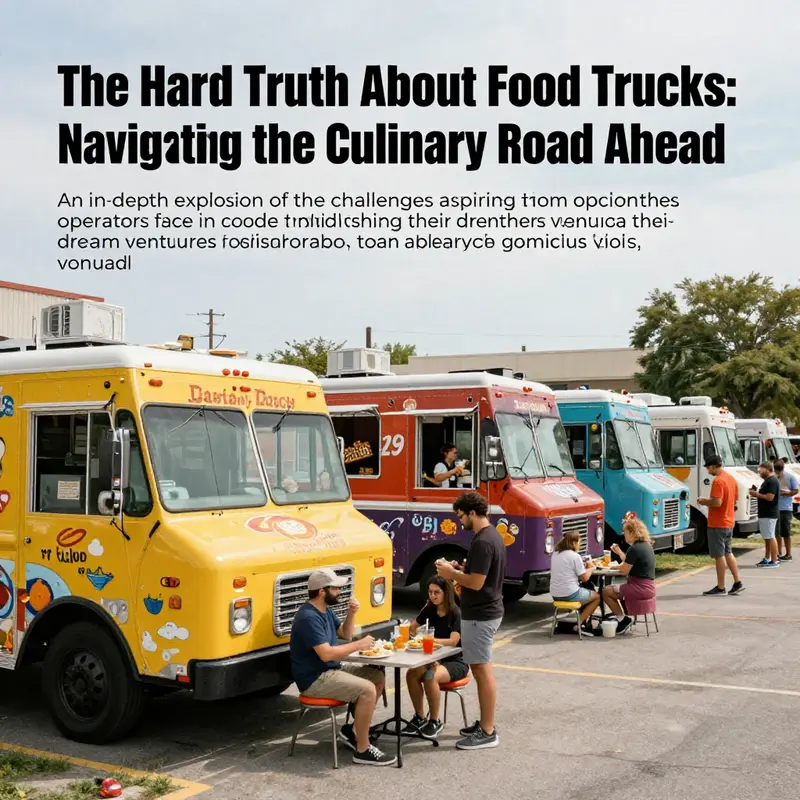
Operating a food truck may appear to be a vibrant and exciting journey through the culinary landscape, especially in a community-focused area like Lakewood. However, the reality is that this endeavor can be riddled with obstacles that aspiring food truck operators must navigate. From initial financial investments to regulatory hurdles, the learning curve is steep. This article delves into the primary challenges faced by those seeking to launch a food truck business, dissecting financial considerations, compliance demands, and the crucial role of market dynamics. Each chapter will equip you with vital knowledge to make informed decisions and prepare for the road ahead.
Rolling Through the Realities: The Hard Path of a Food Truck Venture
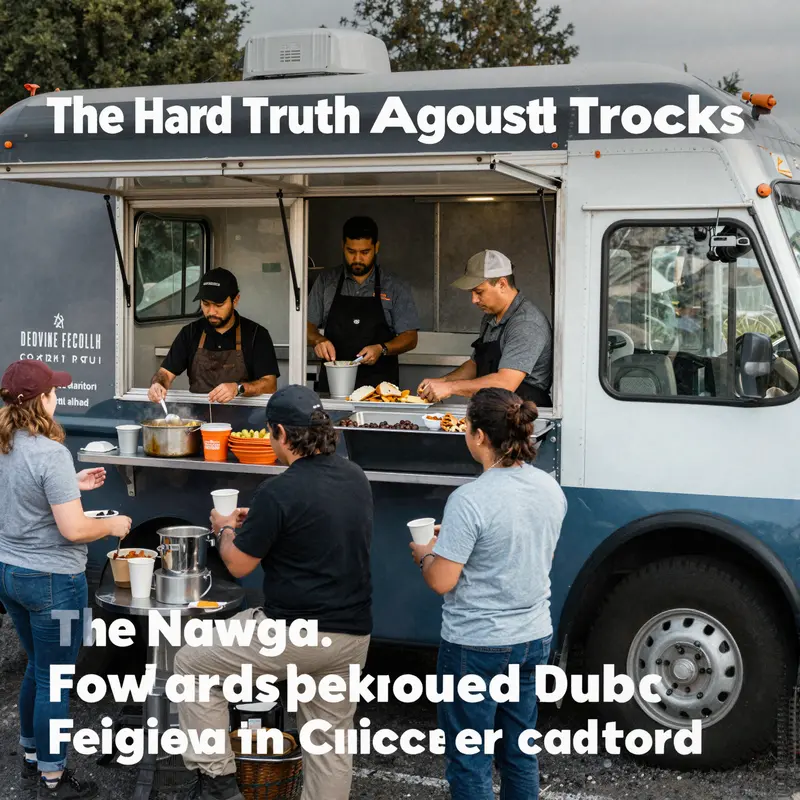
The dream of a rolling kitchen is often brighter than the ledger at first glance, yet the path from idea to profitable operation is paved with costs, constraints, and quiet compromises that test even the most determined entrepreneur. A food truck promises mobility and lower overhead, but those advantages come with a price tag that grows as soon as the wheels roll. The initial capital outlay is only the beginning. You must equip a kitchen with commercial-grade standards, secure a vehicle that can handle long hours of service, and secure a basket of permits, licenses, and inspections that can feel like a moving target from city to city. In practice, the upfront expense is a trapdoor that opens into a maze: purchase or lease of the truck, outfitting it for safety and efficiency, and the myriad fees that accompany operating in crowded urban spaces. The allure of independence can blind you to the real cost of compliance, which in many regions is a shifting landscape driven by health codes, zoning, and parking restrictions. In places like Sydney, operators must meet a complex set of technical standards and practical applications that dictate everything from the ventilation system to waste disposal, a reminder that local requirements shape the everyday rhythm of a mobile kitchen. The mechanical heft of a truck is not just a matter of keeping flames under control; it is about sustaining a kitchen within a metal shell that must endure heat, vibration, and the demands of a 12-hour day, week after week. A prudent operator treats the truck not as a single purchase but as a long-term investment in reliability, safety, and brand promise. This is why the discussion around truck selection often hinges on more than aesthetics or a shiny facade. It involves discipline in choosing materials, layouts, and components that will keep the operation compliant and functional throughout fluctuating seasons, market cycles, and event calendars. The right choice begins with understanding the scale of your ambition. A compact setup may suffice for weekend markets, but a broader plan to service multiple high-traffic venues or partake in festivals requires a larger footprint, more robust storage, and better climate control. The decision-making process extends beyond the kitchen itself. It includes the logistics of moving between sites, the pace of service at busy events, and the ability to quickly restock, clean, and reset for the next location, all of which demand a carefully designed workflow and a dependable crew. The financial strain multiplies when you consider fuel costs, maintenance, insurance, and the capricious price of ingredients. Fuel costs follow the weather and the calendar; they spike during peak travel periods or when a truck is forced to shuttle between sites that offer little parking or unpredictable draw. Maintenance is not a courtesy but a mandatory investment; a minor failure can halt service, leading to lost hours or more drastic revenue shortfalls. Insurance premiums reflect the risk of road travel, open flame, and food safety exposures, and these premiums tend to rise in tandem with the truck’s age and the breadth of your operation. Ingredient prices, though they respond to broader market forces, bite most directly into profit margins. Even as consumer demand for convenient, flavorful bites grows, the cost of core ingredients can shift with supply conditions, weather-induced harvest variability, or disruptions in supply chains. This is the stubborn arithmetic that underpins the economics of any mobile kitchen. The market is unforgiving if you treat pricing and procurement as afterthoughts. You might resolve to offer a tight, rotating menu to control waste and simplify sourcing, but that strategy must be balanced against the need to stand out in a crowded field. The competitive landscape for food trucks is not just about delicious food; it is about visibility, timing, and location. A truck must show up where foot traffic intersects with appetite, and that intersection is often a moving target. A strong brand helps, but branding alone cannot guarantee consistent crowds. Operators learn to blend location strategy with a flexible schedule, chasing events and popular corridors where lines form and repeat customers begin to recognize the truck’s voice in the crowd. The art of being present—season after season—becomes a discipline in itself. This is where the practical craft of running a mobile kitchen diverges from the romantic narrative of entrepreneurship. You learn to balance a weekly calendar, negotiate parking windows, and precompute a route that minimizes downtime between sites. You become adept at forecasting traffic patterns for different days of the week, adjusting your menu to reflect local tastes, and leveraging partnerships with event organizers to position your truck near a steady stream of potential customers. Even the equipment choices inside the truck must be aligned with this operational tempo. Temperature control is non-negotiable; a misstep here can compromise safety and flavor in seconds. Storage is a constant constraint, a reminder that space is a scarce resource. Perishables require disciplined inventory management, a system that tracks stock levels, forecasts demand, and reduces waste. Time is the most precious currency on the road. Quick turnarounds at a bustling site translate into more sales, but they also demand a kitchen layout that favors speed, ergonomic workflow, and easy cleaning. Every move, from the ordering window to the final wipe-down, counts. In this sense, the challenges are not solely financial or regulatory; they are experiential, shaping how the operator thinks, hires, and adapts. The human element matters deeply. A successful mobile kitchen depends on a team that can operate under pressure, maintain high food safety standards, and keep a friendly, reliable demeanor in the face of long hours and unpredictable conditions. Physical stamina matters, but so does mental resilience. The schedule can be punishing, demanding early mornings, late nights, and frequent travel across urban landscapes that test patience and focus. Building a loyal customer base emerges from consistent presence, reliable service, and the small rituals that customers come to expect: a quick, efficient line, a recognizable aroma, and a menu that promises comfort with originality. Yet consistency is hard-won; it requires the operator to be everywhere at once in spirit, if not always in person. The emotional toll is real. The pace of a day on the road compresses time for reflection, and the constant need to perform — to adapt, to appease, to repair, and to restart — can erode enthusiasm if the business is not anchored in a clear mission and steady cash flow. For those who persist, the payoff comes in the form of tangible flexibility and the potential for scalable growth. A well-planned mobile kitchen can adapt to seasonal demand, reallocate resources between neighborhoods, and exploit partnerships with local producers to strengthen supply lines and storytelling. The narrative around a truck becomes stronger when the operator understands supply chain dynamics and builds resilience into procurement. The rising cost of operations is not a single spike but a pattern of pressures that require ongoing financial discipline. Operators find themselves negotiating better terms with suppliers, hedging against fuel volatility, and maintaining a lean but capable maintenance schedule that reduces emergency repairs. They study cash flow with the same rigor they apply to menu design, recognizing that a successful truck thrives on a delicate balance between revenue streams and cost control. A critical piece of that balance is choosing the right vehicle and kitchen layout. The selection process translates long-term objectives into tangible design choices. It starts with the size of the truck, its weight capacity, and the layout that will maximize workflow. It continues with the choice of materials that endure heat, moisture, and road wear while remaining easy to clean and compliant with health standards. The decision to source from a particular manufacturing ecosystem can be decisive. Some operators look toward international skill sets and proven performance metrics when selecting a vehicle, recognizing that a sturdy construction reduces downtime and supports a durable brand story. The decision to source from a particular manufacturing ecosystem may also carry implications for maintenance, spare parts availability, and certification. It’s not about chasing a bargain at the expense of reliability; it’s about investing in a platform that’s built to withstand the daily grind and the moral certainty that the food will be safe and enjoyable at the moment of service. Within this braided fabric of costs, compliance, and cadence, the role of strategic planning emerges as non-negotiable. A robust business plan maps out capital needs, expected sales, break-even points, and contingency scenarios for weather disruptions, event cancellations, and supply shocks. It also articulates how to keep the truck visible and attractive in crowded urban environments, where brand recognition must be earned anew at each street corner or festival gate. The best practice is not a single silver bullet but a disciplined set of habits: maintain rigorous inventory controls, run a tight marketing clock around peak events, and cultivate a network of partners who can vouch for your consistency and quality. For anyone evaluating entry into this space, a sober, reality-grounded view is essential. The industry’s promise remains real — mobility, lower overhead, and the freedom to experiment with menus and communities — but the execution demands unwavering attention to cost, regulation, and operations. A thoughtful entrepreneur will ask hard questions about location strategy, the stability of supplier relationships, and the ability to scale without losing the intimate connection to customers that often defines a successful truck. The discussion is not purely theoretical; it is practical, actionable, and steeped in the everyday labor of keeping a kitchen on wheels running smoothly and profitably. In contemplating the long arc, it helps to see the journey as a balance between craft and commerce: the craft of cooking good food in a constrained space, and the commerce of managing time, space, and capital under constantly evolving rules and tastes. The end result, for those who persevere, is not a mythic overnight triumph but a steady, repeatable performance that earns loyalty, supports livelihoods, and proves that a mobile restaurant can be as resilient as it is delicious. For those curious about the mechanics behind the dream, the path forward often begins with learning from diverse experiences, testing in multiple locales, and refining the model until it feels both controllable and creative. The practical wisdom is born from doing the work: testing menus in varying climates, tracking costs with precision, and building a routine that can weather the inevitable setbacks. If you are considering this journey, remember that a thriving food truck is a product of disciplined planning as much as it is of flavors that tempt passersby. The road can be long, but it is not without reward when the operation aligns with patient preparation, enduring resilience, and a clear sense of purpose. For readers seeking a deeper dive into the structural realities behind the numbers, a data-driven perspective on market dynamics offers a valuable backdrop: https://www.marketresearchfuture.com/reports/food-truck-market-2879. And for those who want to see how others have turned the logistics into a learning curve, the path to practical insight often runs through shared experiences and tested strategies in the field, including steps that begin with understanding the hardware and before turning to the hustle of foot traffic. Where the opportunity lies is in the synthesis of reliable equipment, regulatory clarity, disciplined spend, and the relentless cadence of getting out there, day after day, with a kitchen on wheels ready to serve. For readers who want to explore related operational considerations while pondering setup options, consider pursuing insights from industry voices that describe the journey of choosing and optimizing a truck as part of a broader business plan. If you want a concrete example of how the model pieces connect in real life, you can start with a practical overview of truck selection and model considerations by exploring the guide linked here: Best Food Truck Models for Lakewood Startups. This resource helps anchor the theory in a tangible step that many new operators face: selecting a chassis and layout that will sustain the day-to-day grind while leaving room to grow. The narrative of the hard path, however, remains universal. It is a story of discipline in the face of unpredictability, a testament to the idea that success in a food truck venture comes not from luck but from the careful orchestration of costs, compliance, and consistent, compassionate service that keeps people coming back again and again.
Balancing the Ledger on the Move: Investment Realities and Profitability in the Food Truck World
A food truck is often framed as a lean way into a cuisine-focused business, a mobile storefront that sidesteps some of the capital burdens of a brick-and-mortar site. But the reality behind the wheel is that financial discipline sits at the core of whether a truck can move from fragile pilot to enduring operation. In markets like Nigeria, the financial calculus is not simply about revenue per customer; it hinges on a web of upfront investments, recurring expenses, and the timing of cash inflows that can stretch months or even years. The initial price tag is only the opening line of a very long contract with the road. A truck needs to be bought or leased, outfitted with a commercial kitchen, and fitted with safety and regulatory components that are not uniform from one city to the next. Where some operators might see a flexible dream, investors quickly notice that compliance costs—permits, inspections, health certifications, and insurance—create a ceiling on cash flow before the first sale is even rung up. In the broader discussion of how hard food truck ventures can be, the Nigerian context underscores a simple truth: the mobility that makes the model attractive also concentrates financial pressure into a finite window of time, and that pressure does not vanish with a few good weeks of sales. The math, when laid bare, is less about glamour and more about timing, scale, and the discipline to spend wisely as revenue trickles in rather than surges out in one dramatic weekend. The very concept of being “on the go” becomes a test of whether the operator can translate erratic daily income into steady, reliable margins over many months. In this light, the financial story of a food truck becomes less a tale of a chef’s whim and more a ledger of disciplined choices, each choice reverberating through the season, the festival circuit, and the long tail of repeat customers who expect consistency as much as flavor.
The cost structure begins with the truck itself, but it quickly expands to a spectrum of dependents that can erode working capital if not managed tightly. In Nigeria, where access to financing for small, mobile food ventures can be constrained, the price of the entry point matters even more. A truck with advanced technical specifications or a larger footprint may promise higher throughput, yet it also demands more power, more fuel, and more maintenance. These two forces—capability and cost—must be balanced with a clear plan for how and where the truck will operate. The strategic decision to anchor the business at a few reliable sites, rather than chasing every event on the calendar, can conserve cash during the earliest months. It is here that the potential for profitability begins to tilt toward the operator who designs an itinerary with predictability in mind, even when the market itself remains volatile. On the supply side, the choice of equipment and the complexity of the kitchen are not cosmetic. They dictate energy consumption, downtime for repairs, and waste, which in turn erode margins. A compact but well-built kitchen reduces power draws and makes it easier to sustain service during peak hours. By contrast, a sprawling setup with high energy demands can push a small operation into a cycle of expensive maintenance and frequent replenishment of consumables, pushing break-even points further into the calendar. The capital allocation decision, then, must account for not just the initial purchase but the total cost of ownership over the first year and beyond. This includes tires, generator fuel, battery backups, refrigeration reliability, and the inevitable replacement parts that arise when a busy kitchen on wheels vibrates through long routes and unpredictable weather.
The ongoing costs are not merely line items; they are the rhythm of daily operations. Fuel, generator maintenance, routine servicing, and the cost of spare parts accumulate as the truck travels from one site to the next, chasing the next event or the next crowded corner where hungry pedestrians accumulate. Power requirements—especially for open-air setups—can become a recurring challenge. In places where electrical infrastructure is inconsistent or where generators add to operating costs, operators must decide whether to invest in a more robust power solution or to design menus and workflows that minimize peak energy use. The cash flow implications of these decisions are profound. If a truck spends a sizable portion of its earnings on fuel and power, it narrows the window for profitable labor, ingredient procurement, and marketing activities that attract repeat customers. Staffing is another major variable. While a food truck can run with a lean crew, the need to maintain speed and quality during busy periods crowds the payroll line. In practice, many operators discover that reducing back-of-house staff through simpler menus or better-prepared components can yield a healthier bottom line, even if it means sacrificing some menu complexity. Waste reduction becomes not just an environmental or quality goal but a direct financial lever. By fine-tuning portion sizes, forecasting demand more accurately, and standardizing recipes, operators can cut out overproduction and spoilage—two silent drains that quietly shrink margins over weeks of operation. This is where a careful approach to procurement matters. Negotiating reliable supplier terms, aligning with local producers, and forecasting seasonal demand help stabilize costs in a market where price volatility can cut into profits more quickly than the most aggressive revenue scheme can offset.
The strategic response to these pressures often hinges on product and format choices that directly influence total costs and service speed. One path is to pursue smaller, more efficient mini trucks designed for targeted events or fixed routes. A smaller footprint can lower upfront capital, reduce energy needs, and simplify maintenance, while still delivering a distinctive brand experience. Another path, increasingly common in frontier markets, is to explore pre-packaged or semi-prepared concepts that minimize on-site cooking without compromising flavor. Such models reduce labor needs, limit the number of rapid-fire cooking steps, and lower the risk of bottlenecks during peak periods. With fewer moving parts, the business becomes more predictable and less vulnerable to disruption from weather, traffic, or last-minute site changes. The trade-off, of course, is a possible narrowing of menu options and a shift in the customer value proposition. Operators must weigh whether the market they serve values breadth over speed and reliability, or vice versa. The link between menu design and profitability is not abstract. It is a daily calculus about how to present a compelling offering that can be produced consistently with minimal waste and maximum yield per hour. In practice, this means that culinary creativity must be married to operational discipline, and that the most profitable routes often emerge from cases where the cooking process is the simplest and most repeatable.
The story becomes more nuanced when one considers the financing environment and the longer arc of business viability. In many emerging markets, access to capital is selective and often tied to collateral or proven cash flow rather than a clean business plan alone. This makes the initial push particularly difficult for first-time operators who are trying to scale from a street stall to a highway-ready mobile kitchen. The literature and market analyses suggest that the upfront investment, while daunting, can be justified through disciplined capital planning, phased equipment upgrades, and a focus on high-frequency, high-margin sales rather than low-margin volume gambits. In this context, pre-planned growth, rather than rapid expansion, tends to produce healthier long-term profitability. An operator who budgets for contingencies, sets aside working capital, and maintains a flexible supply chain is better positioned to weather the lulls between events and the seasonal dips in demand. At the same time, choosing the right truck model and configuration remains a crucial determinant of financial performance. A well-matched platform can cut energy costs, reduce maintenance downtime, and enable faster service, which translates into more transactions and, ultimately, higher per-event profitability. For readers who want a practical sense of how model selection influences cost and throughput, consider exploring the best food truck models for Lakewood startups, which offers a sense of how different configurations map to upfront costs and ongoing operating efficiency. Best Food Truck Models for Lakewood Startups.
Even with a well-tailored plan, the journey to profitability is not guaranteed. It depends on the operator’s ability to interpret cost signals, manage working capital, and stay disciplined in the face of tempting but risky expansion. A crucial discipline is the ongoing appraisal of pricing strategy relative to costs. If prices rise due to supply gaps or currency fluctuations, the operator must decide whether to absorb the hit, adjust portion sizes, or pass some of the increase to customers. Each choice affects demand and brand perception in different ways. The smart operator treats pricing as a dynamic lever, not a fixed lever, and aligns it with service level, speed, and the overall customer experience. The most successful ventures often create a sustainable cycle: reliable revenue streams from repeat customers, controlled costs that keep variable expenses in check, and a lean operating structure that supports reinvestment in equipment, staff training, and branding. Branding, in particular, deserves careful attention because a strong, consistent identity helps command premium in markets where competition is fierce and mobile audiences are easier to reach than fixed ones. A robust brand reduces the marketing cost per customer, increases return visits, and improves the predictability of daily sales. The interplay between brand, location strategy, and menu design is where the profitability story most clearly reveals its shape. The operator who treats this interplay as a coherent system—where each decision supports the others—builds a business that can survive the inevitable disruptions, from regulatory shifts to weather events and traffic patterns. Taken together, these elements form a practical blueprint for evaluating whether a particular food truck opportunity will deliver the desired financial outcomes.
For readers seeking a broader frame of reference, this analysis benefits from looking at market-specific case studies and deeper market dynamics. A deeper market-wide view can be found here: Understanding Food Truck For Sale In Nigeria: Grades, Technical Specifications, and Uses in Industry. External resource.
On the Road to Compliance: How Regulatory Hurdles Redefine the Food Truck Journey
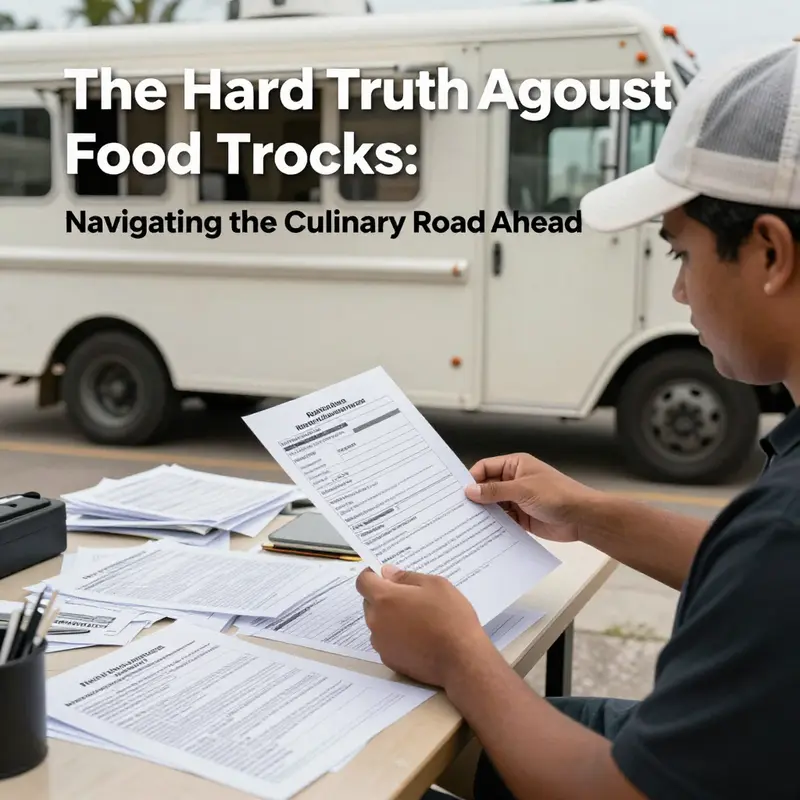
Regulatory regimes are not distant abstractions; they sit in every corner of the food truck journey. They determine how fast a truck can roll, where it can park, how long it can stay, and what it must prove about safety and consistency. For crews chasing speed to market, the paperwork might feel like a drag, but in practice it creates a framework that protects customers and, when managed well, smooths operations across multiple sites. The road to profitability winds through licensing, inspections, and spatial rules as surely as it does through customer demand and seasonal trends. This is not merely a garde for compliance; it is a set of invisible rails that shape daily decisions—from route planning to menu design to how a kitchen is laid out inside a compact vehicle. The more attention operators pay to these rails, the more agile and credible they become in a crowded street economy.
Licensing and permits form the first gate. In most jurisdictions, a business license is the steady rhythm beneath every shift. Health permits, a mobile food service permit, and possibly a separate permit for a street-cart format can all be required, each with its own application process and renewal cadence. The landscape is rarely uniform; what is mandated in one city may be optional or unavailable in another. This is one reason many operators treat the regulatory map as a product of strategic planning rather than a one-time checkbox. They study where a truck can park, how long it may stay, and what events invite the most reliable traffic, all while ensuring the permits cover both the vehicle and the evolving menu. The practical consequence is a planning discipline that threads through a business plan: permits are not incidental costs, but a predictable input that informs site selection, staffing, and even product sourcing.
Health inspections sit at the center of day-to-day operations. They are less about punishment and more about creating a consistent baseline for customer safety. Inspectors review critical elements: proper storage temperatures, cross-contamination controls, cleaning schedules, and validated staff training. Documentation becomes a living artifact of performance: temperature logs, sanitation checklists, and proof of staff certifications. When a kitchen on wheels is inspected regularly, it rewards operators with predictable expectations and fewer surprises during peak service. But when records lag or training gaps appear, the consequences can be severe—ranging from fines to temporary closures, or, in the most stringent jurisdictions, revocation of the health permit. The discipline this requires translates into daily rituals—digital or paper logs, quick-reference temperature charts, and a culture where every team member understands why compliance matters beyond avoiding penalties. In short, health inspections do not merely enforce safety; they advance operational reliability and customer trust.
Parking regulations and zoning laws add a different dimension to the challenge. Urban centers often restrict where a mobile kitchen can set up, with rules about proximity to brick-and-mortar eateries, time allowances, and even noise levels or exhaust considerations. The operators who perform best here are those who see space not as a constraint but as a resource to negotiate. They learn to anticipate high-foot-traffic windows, partner with event organizers, and scout secondary corridors—parks, university campuses, or office districts—where vehicle movement and customer flow align with city policy. Zoning can be a stubborn gatekeeper. It may confine a truck to certain districts or require temporary-use permits for specific hours. That reality forces a deliberate approach to location strategy: rather than chasing every pop-up, the most successful operators design a rotating playbook, balancing fixed events with flexible, permitted street corners. The result is a business that feels mobile in spirit but remains legible to authorities—the kind of operator who can pivot without suddenly losing access to space.
The type of vehicle itself matters for compliance and for day-to-day efficiency. Compact, lightweight trucks are often easier to certify and move through inspection pipelines, and they excel at snaking through crowded streets and tight lanes. Yet they may bear heavier scrutiny if they lack certain safety certifications or if their power units fall under stricter emission or equipment standards in some jurisdictions. Larger, more capable models offer longer operational ranges and can support more elaborate menus, but they can trigger stricter emissions regimes, permit constraints, or parking restrictions. The broad lesson is that vehicle choice cannot be separated from regulatory strategy. A truck’s design—from its cooking layout to its exhaust configuration—becomes part of an operator’s risk profile and a lever for efficiency. In regions where vehicle standards are harmonized, operators can push for standardization across markets; in places with fragmented rules, they must tailor each truck to fit the local code while preserving a coherent brand and workflow. The careful balance between mobility and compliance is not a luxury; it is a core determinant of how often and where a truck can operate.
Strategies for managing these regulatory demands turn up in the planning phase long before the first sizzle hits the pan. The smartest operators treat compliance as a product of good systems, not mere diligence. Early regulatory mapping is essential: chart the permits needed for launch, identify any permits that govern where the truck may be parked on any given day, and build a calendar that flags renewal dates well in advance. Detailed record-keeping becomes a core capability, not a byproduct of audits. A centralized digital system or a well-organized manual log can track inspections, maintenance on the vehicle, and staff certifications, with reminders that prevent lapses. Training is not a one-time event but a recurring practice; it covers food safety, slip-and-fall prevention, equipment operation, and emergency procedures. When teams internalize these priorities, compliance stops being a hurdle and becomes a competitive differentiator: it signals professionalism to customers and credibility to regulators, which makes site approvals smoother and future expansion more plausible.
Technology helps, too. Real-time permit tracking and geographic scheduling tools can coordinate where a truck will be on a given day, aligning operations with city rules and event calendars. Such tools reduce the cognitive load on operators, letting them focus on the core of the business—delivering consistently good food. The discipline of technology becomes a force multiplier when several trucks or pop-up vans operate across multiple sites. Then the strategic decision about vehicle choice, route planning, and staffing all harmonize under a shared compliance framework. The result is a more resilient operation, capable of weathering regulatory shifts, seasonal changes, and the inevitable friction that arises when markets evolve.
An operator’s relationship with inspectors and city staff often yields the most tangible gains. Building trust through transparent communication, timely responses to inquiries, and visible investment in staff training can shorten approval cycles and ease the path to new sites. It also signals to customers that the business takes public health and community standards seriously, which strengthens brand integrity. Within this ecosystem, one practical move stands out: preparing for every interaction as if it were a formal audit, with clear records, legible procedures, and an accessible menu of policies for staff and customers alike. When a truck can demonstrate that it understands and respects local norms, it can move more freely, adapt quickly to new neighborhoods, and weather the uncertainties of policy changes with fewer disruptions.
For readers who are weighing the best way to approach vehicle selection and location strategy, a hands-on consideration is to explore what models suit startups facing varied regulatory landscapes. See, for instance, the guide on Best food truck models for Lakewood startups, which synthesizes practical insights about chassis, layouts, and regulatory compatibility in a way that translates well to broader markets. This resource helps operators envision how a given truck’s design can support efficient compliance workflows, from how cold storage is arranged to how cleaning stations are mapped within a compact footprint. Access to such practical references can shorten the learning curve and inform negotiations with permitting bodies, landlords, and event organizers. Best food truck models for Lakewood startups.
The overarching takeaway is that regulatory hurdles are more than a hurdle list; they crystallize into a roadmap for operational discipline. The more comprehensively an operator integrates licensing, health, parking, and zoning into every planning decision, the more predictable and scalable the business becomes. This does not erase risk, but it changes its texture. Compliance becomes part of the value proposition—the proof that a mobile kitchen can deliver safe, consistent meals at the speed and flexibility customers expect. When that alignment is achieved, the road ahead, long and winding as it may be, feels navigable rather than punitive. And for operators who succeed in this integration, the appeal of mobile food service grows: less overhead, greater mobility, and a franchise-like potential to replicate a reliable model across new neighborhoods and events. The journey through regulation is thus not a prison sentence but a craft—one that, when mastered, raises the bar for the entire industry and keeps customers coming back for the dependable, safe, and tasty experiences they seek on every crowded street and festival lawn.
External resource: https://www.foodtruckchina.com/guide/2026/01/27/food-truck-made-in-china-guide
Market Dynamics in Motion: How Location, Timing, and Strategy Determine a Food Truck’s Hard-Won Success
The road to profitability for a food truck runs through a landscape that shifts with the hour, the street, and the season. Location is not simply a backdrop; it is a live, data-driven instrument that plays a decisive role in whether a cart can sustain clear lines of revenue or drift into the fog of vacancy. In this chapter, the conversation about how hard it is to run a food truck pivots from “can you cook good food?” to “where and when will customers show up, and how will you show them you’re there?” The answer hinges on mapping demand, understanding neighborhood rhythms, and layering strategy on top of mobility. A strong operation can bend the odds in its favor by treating each site like a short-term store with the added advantage of movement, while a weaker plan lets the unpredictability of foot traffic rule the day. The reality is that success emerges at the intersection of where you position yourself, when you choose to be visible, and how relentlessly you pursue repeat business through purposeful, location-aware tactics.
Location is the first and most visible hinge on which a truck’s fate swings. A high-visibility spot in a dense corridor—near office towers at lunch, or in a vibrant entertainment district at night—can convert passing interest into immediate sales. The literature is clear that proximity to target markets matters: people buy more when their needs align with the moment and the place they already inhabit. A truck near a university campus, for example, tends to thrive on the predictable midday cadence of students hunting a fast, affordable bite between classes. A second truck at a busy commuter hub may capture the after-work sprint for a quick, warm meal before heading home. Yet visibility is not purely about being seen; it is about being encountered by the right audience at the right moment. The value of a location compounds when you understand the local demand patterns and tailor your offering to fit them. In practice, this means not only choosing spots with footfall but interpreting who is present in that spot and what they crave at that time.
Beyond sheer location, strategy provides the engine that turns potential foot traffic into reliable revenue. In a market crowded with creative concepts, a truck’s value proposition is not a one-off menu flourish but a coherent approach to how, where, and when it serves. Strategic planning for a food truck begins with the daily decision of location but extends into a broader picklist of tactics. Social media becomes a map of where you will be today and tomorrow, with updates that create anticipation and peel back the mystery of a moving target. Loyal customers are not born from a single visit; they are earned through consistency, a predictable rhythm, and rewards that reinforce repeat visits. A well-structured loyalty program, delivered through a simple mobile interface or a friendly stamp card, can convert a casual stop into a routine, especially when coupled with a distinctive, repeatable flavor profile. The strength of a menu, then, is not merely its taste but its adaptability to different sites and times. A fleet of rotating specials can align with seasonal patterns and the shifting crowd that each location attracts, turning a lunch-hour push into a longer, afternoon line or a short evening rush.
A practical, integrated approach to location and strategy also means strategically choosing where to place the brand rather than merely where to park. Events, partnerships, and local collaborations widen the stage for a mobile business to perform beyond ordinary street corners. The most successful operators think in terms of location scarcity and opportunity, not only in terms of daily spots but in the way they curate experiences around their food. This means planning for space beyond the kitchen; it means understanding queuing dynamics, waste management, and the flow of customers from curb to counter. In other words, every site is a micro-venue with its own rules, audience, and tempo. The savvy operator builds a flexible playbook that can adapt to a campus lunch period, a festival weekend, or a late-night cluster near a concert hall. In this sense, strategy functions as the connective tissue between the physical geography of streets and the intangible geography of consumer behavior. This is the core of why location and strategy matter together: you cannot optimize one without aligning it to the rhythms and tastes of the people you intend to serve.
To translate these concepts into day-to-day practice, operators must master the choreography of movement. Route planning is not a back-office afterthought; it is an essential discipline that shapes inventory needs, staffing, and the ability to respond to demand shifts. Efficient routing reduces idle time, preserves food quality, and minimizes fuel consumption—three levers that materially affect margins when every minute counts and every mile costs money. The operational calculus also includes how many trucks or trailers you deploy, how you allocate kitchen capacity, and how you layer off-site or pop-up experiences into your schedule. A compact vehicle with a robust, easy-to-clean kitchen layout can unlock more aggressive site roams, letting a team visit university walkways in the midday lull and then swing to nightlife zones as the city shifts gears. The choice of equipment and material quality matters here; weather, heat, and humidity place demands on design and durability. The efficiency of your setup becomes just as critical as the creativity of your recipe, because a slick system sustains quality and speed across a rotating cast of sites.
Weather and environment, often neglected in the press about flavor and concept, are central to the hard realities of operating mobile food. Open-air setups are exposed to sun, rain, wind, and changing temperatures. The awning and structural integrity of a truck must withstand the environment while presenting a clean, inviting face to potential customers. In this context, procuring a truck with proven performance metrics and robust construction can materially reduce downtime and maintenance headaches. When a truck is dependable, a team can focus more energy on customer service, consistency, and creative outreach rather than firefighting weather-related breakdowns. Operators frequently learn the hard way that a well-built shell protects every dollar spent on ingredients, labor, and marketing, because reliability preserves the user experience that keeps people coming back.
Market dynamics also demand a disciplined approach to safety, compliance, and health standards, which becomes a strategic differentiator rather than a mere checkbox. Each jurisdiction brings its own regulatory texture—permits, inspections, and operational guidelines that shape where you can operate and how you present your product. The most resilient operators anticipate these constraints, embedding compliance into the daily workflow so it never becomes an obstacle to service. A truck that can demonstrate consistent cleanliness, accurate labeling, and proper food handling is not only compliant but credible; it builds trust with customers who may otherwise take a pass when they doubt the safety of a mobile operation. In practice, this means pre-emptively implementing quality checks, standard operating procedures, and training that align with local expectations. The result is a brand that can travel with confidence, expanding the geographic reach without sacrificing standards.
All of these elements—location, strategy, operations, weather resilience, and compliance—coalesce in the opportunity to leverage recurring events and the social fabric of a city. The field has shown that a well-timed presence at the right event, paired with a compelling story and consistent execution, can anchor a brand during slow periods and compound word-of-mouth momentum. For operators listening to the market, serialized appearances at predictable quarters, summer street fairs, or campus events can create a recognizability that more permanent storefronts envy. In practice, this means planning a calendar around food-centric happenings, aligning your menu and pricing with the audience you expect at each gathering, and using the event to collect data on what works where. The effect is not merely incremental sales but the long arc of brand affinity, which in turn enhances visibility across the entire route map you operate. The integration of this calendar with digital outreach—live updates, location pins, and loyalty incentives—transforms events from isolated moments into a coherent narrative about where your truck belongs and when people should seek it out.
A subtle but important element of market dynamics is the way operators think about their brand presence at each spot. A consistent color scheme, signage that tells a story, and a recognizable service approach all contribute to a memorable encounter that travels with customers between locations. When a visitor becomes a fan, the location-driven strategy becomes a magnet for repeat visits, not just a one-off bite. This approach requires a disciplined, data-informed mindset: track which locations produce repeat customers, which times maximize profit margins, and which menu items travel best across different sites. The value of data shows up not in abstract charts but in the cadence of a day—a rhythm you can optimize through disciplined scheduling, inventory awareness, and proactive marketing. In the long run, a truck that treats each location as a living, evolving piece of a broader, location-centric strategy stands a better chance of sustaining momentum through market shifts, competition, and the inevitable ebbs and flows of consumer interest.
As you consider the practical implications of location and strategy, the concept of opportunity centers around more than just a good spot or a clever post. It involves cultivating a brand ecosystem that makes movement an asset rather than a liability. The most resilient operators design a feedback loop: they observe which spots deliver the best balance of speed, volume, and guest satisfaction; they refine their menu and pricing to fit that rhythm; they plan future routes that mirror successful patterns; and they invest in experiences that turn first-time visitors into regulars. In this sense, the difficulty of running a food truck is reframed from a single-skill challenge to a dynamic, ongoing optimization problem. Success then hinges on the ability to read the city’s tempo, respond with agility, and consistently deliver value at the crosshairs of location and strategy. For those exploring whether the food truck path is worth walking, acknowledging and embracing this duality—location-driven demand paired with strategic execution—reveals the core truth: hard work here is not just about cooking; it is about intelligent, deliberate placement, timing, and relationship-building in a mobile, ever-changing marketplace.
To dive deeper into how location-driven opportunities can shape your truck’s calendar and routes, consider the latest industry discussion on seasonal and event-based strategies. For example, one practical resource discusses the value of aligning daily spots with target demographics and the importance of building a loyal following through consistent locations and promotions. When you combine this with a robust plan for seasonal shifts and crowd psychology, you begin to see how a mobile business can punch above its weight even in a crowded market. As you map your own geography, you may find that certain spots feel more like chapters of a larger story than mere stops along a route. The narrative you craft around those stories—tied to times, places, and people—becomes the engine that sustains growth, even when margins tighten and competition intensifies.
The theme that threads through all these considerations is that hard work in the food truck arena is not just about the quality of what you cook. It is about creating a pattern of presence that people can recognize and trust. Location and strategy are not separate gears; they are intertwined wheels that propel a mobile business forward. When you approach them as a unified system, you gain the leverage to turn unpredictability into a repeatable performance. That is the practical heart of the chapter: success is not a single perfect site or one clever promotion. It is a reliable, location-aware operation that uses strategy to optimize every visit, every route, and every interaction with a customer who walks away not just with food but with a sense that this truck knows the city, and knows them.
2026s-best-food-truck-rallies-what-lakewood-has-in-store
External perspective: for a broader look at how location strategy shapes food truck outcomes, see the ongoing analysis at this external resource: https://www.foodtrucks.com/insights/location-strategy-food-truck-success
Final thoughts
The journey of operating a food truck is not an easy one. From the financial investments required to get started to navigating the complex regulatory landscape, challenges are abundant. Understandably, the flexibility and creativity that food trucks offer can be alluring, but it’s essential for aspiring operators to prepare for the realities of this venture. By equipping yourself with knowledge about the financial, regulatory, and market dynamics of the food truck industry, you can enhance your chances of building a successful culinary business in Lakewood or any other community. So, gather your recipes and research, and take informed steps toward food truck success.