
Are you dreaming of rolling out your food truck in the vibrant streets of Chicago? You’re not alone! With an ever-growing demand for gourmet street food, food trucks attract aspiring operators and curious food lovers alike. But how much do these mobile kitchens really make? Join us as we navigate through the intricacies of income variability in Chicago’s food truck scene, examining not just potential earnings but also the elements like location, cuisine, and market trends that can significantly impact revenue. Each chapter will break down essential factors—from manager salaries to operational trends—empowering you with the knowledge to chart your culinary journey.
Income Under Streetlights: Mapping How Much Chicago Food Trucks Really Make
Chicago’s food truck scene is a moving canvas of flavor and ambition, a street-level theater where economics, location, and timing perform in real time. The income picture for operators in this city is not a single number but a spectrum stitched from daily deals, seasonal demand, and the stubborn realities of running a mobile kitchen in a crowded market. The city’s dense density—office towers by day, university campuses nearby, and evening entertainment corridors—creates a natural laboratory for understanding how much a Chicago food truck can earn. Yet behind every headline of high-volume revenue lies a web of costs that can tighten margins just as quickly as high traffic can expand them. The story, then, is less about a fixed figure and more about the variability—how revenue can swing with the same weather eyeing a season, or how a few key decisions can tilt a day from decent to prosperous.
To begin with, labor costs loom large in any mobile business, and Chicago’s wage environment reflects its competitive urban market. The available data on wage levels for those who run and staff these operations show a city where labor costs are both higher than national averages and a critical lever in profitability. In Chicago, the average hourly wage for a food truck manager sits around $16.90 as of 2025, a figure that points to the ongoing premium operators must pay to attract capable leadership to coordinate crews, schedules, and customer flow. For staff—the cooks, line cooks, and servers who keep service moving—the numbers from local reports indicate higher-than-average wages as well. Indeed’s salary data for Chicago food truck roles shows staff wages hovering near the $18 per hour mark, a figure that translates into meaningful payroll obligations across every shift. In a city where the labor market is tight and capable hands are in steady demand, those payroll costs do not simply vanish with a dip in customer traffic; they scale with the schedule, the event calendar, and the day’s length.
Those labor costs are only one facet of the expense wheel. Fuel, permits, insurance, maintenance, and the cost of high-quality ingredients all press on the bottom line. Permits and compliance in a major market are not merely formalities; they are ongoing operational costs that must be accounted for in pro forma planning. Add to that the need to maintain a dependable, eye-catching vehicle—because in a city like Chicago, where street presence matters as much as the menu—and the capital and maintenance outlays can be substantial. It’s not simply about turning a profit on good days; it’s about sustaining a truck that can perform reliably on the busiest days and still be financially viable when demand flags.
The research landscape for Chicago-specific earnings is not a single, clean dataset. Instead, it sits within a broader market context that has shown robust growth across the country. The broader U.S. food truck market has demonstrated resilience and expansion, with projections that underscore opportunity for operators who can navigate local nuances. The market’s trajectory from a lower base to a larger, more diversified footprint signals not just growing demand but a shifting competitive dynamic. The numbers tell a story: a dynamic market that can support higher price points in peak areas or during special events, while still presenting price sensitivity and heavier competition in less trafficked zones. In 2026, market size reached a notable magnitude and is projected to continue expanding toward 2031, underscoring a compound annual growth trend that strengthens the case for new entrants who can align menus, branding, and location strategy with consumer appetite.
Seasonality and location are the twin engines of income variation. Downtown cores, corporate campuses, and university quads tend to generate higher daily revenue thanks to foot traffic, lunch-hour crowds, and the speed with which a well-orchestrated service can convert lines into turnover. In Chicago, these advantages come with trade-offs: higher labor costs, the need for frequent restocking and route optimization, and the necessity of staying compliant with city regulations that affect where and when a truck can operate. The seasonality observed in many markets means a different income rhythm across the calendar—from brisk spring and summer lunch peaks to the slower heat of late fall and winter, when demand often shrinks and the same fixed costs continue to roll in. For seasoned operators, the rhythm is a source of planning discipline: maximize revenue during peak windows, and protect margins during slower periods through strategic menuing, pricing, and route resilience.
A practical way to frame what “income” means in this context is to separate revenue from net income. Gross revenue can be robust on busy days and in prime locations, but net income is a function of how well an operator manages the cost stack. Startup costs for a mobile kitchen, typically ranging from about $50,000 to well over $100,000 depending on the vehicle type and equipment, set the baseline that any annual revenue must overcome. Ongoing costs—ingredients and supplies, fuel, maintenance, insurance, permits, and payroll—shape the daily and monthly profitability. The literature on Chicago operators emphasizes that while some trucks can gross over substantial figures, others may operate in a narrower band, especially during off-peak seasons or in less-trafficked pockets of the city. This reality helps explain the variability in reported earnings and underscores why investors and operators alike must tailor their expectations to their specific operational footprint.
Beyond the math of dollars and cents, there is a strategic layer that determines whether a truck’s revenue becomes sustainable income. Branding and customer engagement act as a multiplier, converting ordinary meals into repeat visits and word-of-mouth referrals. A customer-centric approach—consistent taste, efficient service, and a menu that leverages local tastes and seasonal ingredients—can turn a mobile kitchen into a recognizable, trusted brand in a competitive market. In practice, that means planning for a stable customer base that can weather the inevitable fluctuations of a busy city environment. It means maintaining a dependable schedule, investing in a well-organized supply chain to minimize waste, and delivering a customer experience that encourages loyalty, rather than simply chasing the highest daily peak.
For entrepreneurs stepping into Chicago’s food truck scene, the economics demand a balanced lens: the city offers real upside if you can command high-traffic lanes and smart operating hours, but the cost structure requires discipline. The data suggest the market’s growth trajectory—driven by rising consumer interest and expanding mobile dining formats—will continue to support higher potential ceilings for revenue. Yet the same growth compounds competitive pressure and cost of labor, which are pivotal to profitability. A robust plan, therefore, aligns the revenue model with a cost structure that prioritizes efficiency—efficient routes, fast service, and disciplined inventory management—while preserving the culinary quality that distinguishes a truck from other food options. The blend of speed, quality, and location becomes the fulcrum on which income tilts.
The literature also points toward a broader ecosystem component: competition from alternative food service formats and the emergence of new mobile and semi-mobile concepts. Ghost kitchens and other mobile vendors intensify the need for sharp differentiation and brand clarity. In such a market, a truck that can deliver consistent quality, an appealing narrative, and reliable service becomes not just a source of meals but a mobile brand with a distinctive identity. The Chicago operator who understands this dynamic and who builds a sustainable cost structure around labor—while leveraging peak-demand moments—stands a better chance of converting variable daily revenue into steady, long-term income.
To those weighing entry into this field, there is a grounded reminder in the data and the experience of operators: while headlines may celebrate high-earning days, the reality is that profitability hinges on disciplined planning and execution. A realistic forecast begins with acknowledging startup and ongoing costs, recognizing the wage environment in Chicago, and mapping out a location strategy that uses the city’s dense foot traffic to advantage. It also means building a brand that resonates in a crowded field and maintaining a menu and service that keeps customers coming back. For equipment and setup decisions, a practical companion resource can be helpful in navigating the choices that influence both the customer experience and the bottom line. See the resource on equipment models for guidance on selecting a layout that supports smooth service in busy streets. Best food-truck models for Lakewood startups
No single figure will tell you exactly how much a Chicago food truck makes. What the data and experience illustrate is a landscape of opportunity tempered by cost and competition. If a truck can land in a high-traffic zone during strategic hours, maintain a lean cost structure, and deliver a consistently excellent product, the potential for meaningful annual income exists. If, instead, a truck fights to fill the schedule, or pays for rent-like fixed costs without corresponding revenue, profitability can stay elusive. The variability is not a failure of the model; it is a natural feature of a business that lives and breathes in the rhythms of a city. For operators, the path to sustainable income lies in aligning these rhythms with practical cost control, smart branding, and relentless attention to customer experience.
External resources can ground this discussion in current wage realities and broader market dynamics. For those who want a grounded view of labor costs and how they factor into net income, see the salary and wage data for Chicago’s food-truck roles. This data helps anchor expectations about payroll obligations and planning horizons, especially for new entrants who need to forecast staffing needs across peak and off-peak periods. External reference: https://www.indeed.com/q-Staff-Salary-for-Food-Truck-jobs-in-Chicago,-IL.html
Wheels, Wages, and the Bottom Line: How Chicago Food Trucks Turn Revenue into Real Profit
Chicago’s food truck landscape moves with a rhythm that matches the city’s own tempo—fast, diverse, and relentlessly practical. In every block, a different aroma threads through the streets, and the question isn’t just what people want to eat, but where and when they want it. The city’s density, the sheer volume of foot traffic, and the mixture of office workers, students, and evening revelers create a testing ground where a well-run food truck can convert high demand into meaningful revenue. Yet the journey from a bright idea on four wheels to a profitable operation hinges on a careful accounting of costs, schedules, and the often invisible costs that accompany every mile traveled in Chicago traffic and weather. In this chapter, we trace that path through the lens of salaries, operating expenses, and the broader market dynamics that shape earnings for mobile kitchens in the Windy City.
At the heart of any food truck’s labor costs is the managerial role, the on-board captain who steers day-to-day operations, oversees staff, and keeps inventory aligned with demand. In Chicago, the average hourly wage for a food truck manager sits around $16.90, with a typical range from $16.20 to $21.16 per hour. Those numbers matter because they anchor the payrolls that every operator must absorb as the business scales. Managers aren’t just schedulers; they are the financial stewards who translate a busy lunch rush into a controlled workflow, ensuring that the crew cooks consistently, serves quickly, and minimizes waste. Their decisions ripple through a truck’s ability to serve more customers in peak windows and to maintain service levels during slower periods that still require attention to quality and compliance.
Staffing costs extend beyond the manager’s wage. In Chicago, kitchen and front-line staff tend to earn around $18.00 per hour, a rate that sits roughly a quarter higher than the national average for similar roles. This premium reflects both Chicago’s competitive labor market and the demand for capable, reliable staff who can handle the pace of a city where unpredictable weather, traffic, and a dense pool of events test a mobile kitchen’s operational resilience. Higher wages can enhance service quality and consistency, which, in turn, can drive repeat customers and favorable word-of-mouth—critical in a market where customers often judge a truck by speed, accuracy, and the warmth of the face behind the window.
But labor costs tell only part of the story. A Chicago food truck, like any small business, must wrestle with a constellation of operating expenses that accumulate with every mile and every service window. Vehicle maintenance is not a luxury but a daily necessity; a breakdown can derail a schedule and erode trust with event organizers or campus managers who depend on predictable service. Fuel costs fluctuate with city driving patterns and seasonal weather, while permits and licenses—renewed, modernized, and sometimes contested—constitute a recurring overhead that operators must budget into every route and calendar. Insurance protects against the risks inherent in a moving kitchen—collisions, liability during service, and equipment loss—and it is a line item that many operators treat as insurance for the future as much as a safeguard for today. Ingredient sourcing, the heart of any menu, must balance cost with quality and freshness, especially when a truck moves through neighborhoods that may have wildly different supply access from one block to the next.
Marketing, while sometimes overlooked in the day-to-day churn, becomes a practical lever in a city where competition for a loyal line of customers is intense. Unlike a fixed storefront, a truck’s ability to capture attention depends heavily on timing, location, and the perception of value. A well-timed post on social channels, a vibrant truck wrap, or a collaboration with a nearby office park for lunch events can lift daily sales in ways that local permit costs cannot. In Chicago, where ghost kitchens and other mobile vendors are part of the landscape, a truck’s differentiator often rests on speed, flavor, and the credibility that comes from consistent execution across many days of operation.
Together, these costs form a picture of the ongoing financial obligations a Chicago operator faces. The formal figures—manager wages, staff pay, maintenance, fuel, permits, insurance, ingredients, and marketing—are complemented by more subtle costs: the capital tied up in a vehicle, depreciation, shifts that require overtime or alternate staffing during high-demand days, and the need to withstand seasonality. The seasonal flux in a city with long winter months and bright summer events means that a single calendar week can swing from brisk lunch traffic to quiet periods if a truck isn’t aligned with events or campus calendars. Those realities require a disciplined approach to budgeting, with careful attention paid to how price, portion sizes, and portion control align with cost of goods sold and labor expenditure.
Startup costs can be a decisive factor in shaping the path to profitability. In Chicago and across the country, initial investments for a food truck venture typically fall in a broad band—from roughly fifty thousand dollars to well over one hundred thousand dollars—depending on vehicle type, kitchen equipment, and the level of customization. These upfront costs set the stage for the break-even horizon and determine the pace at which a new operation can begin to accumulate profit after fixed costs and ongoing expenses are covered. Given that, many operators emphasize a runway that provides room to tune menus, optimize routes, and stabilize staffing during the first several months of operation. It is here that the broader market context matters: the U.S. food truck market is projected to grow from about $1.09 billion in 2025 to $1.59 billion by 2031, signaling expanding demand and opportunity for well-run truck-based concepts. In practical terms, growth in the market translates into more potential venues, events, and corporate partnerships that can sustain momentum beyond the core lunch window.
The city-specific reality is that location remains a primary determinant of daily revenue. Downtown corridors, neighborhoods near corporate campuses, university quads, and evening entertainment districts attract different customer mixes and traffic rhythms. A truck parked near a high-rise during a weekday lunch can capture a steady stream of office workers, while one positioned near a university at a shift change or a concert venue during an evening event can ride spikes in demand that dramatically alter daily outcomes. It’s not simply about being in the right place; it’s about being in the right place at the right time. The ability to pivot—moving from a staple menu to a limited-time offering that resonates with a particular crowd, adjusting portion sizes to balance cost with perceived value, and calibrating the menu to maximize speed of service without sacrificing quality—becomes a core competency for operators seeking to translate traffic into sustainable profits.
As operators weigh these dynamics, a practical reality emerges: precise profit figures are not publicly disclosed in the same way as salaries or corporate revenues. What is clear from the data is that the combination of elevated labor costs, variable ingredient costs, and the need to manage a rotating cast of events and locations requires disciplined financial management and a willingness to adapt. For a truck that can capitalize on peak lunch hours or a well-timed festival appearance, revenue potential can be substantial on busy days, but those opportunities come with corresponding costs that must be controlled through savvy scheduling, inventory management, and a responsive supply chain. The trade-off is clear: the more disciplined the operations—especially in staffing, inventory, and route planning—the higher the odds that revenue can be converted into meaningful profit over a full business cycle.
For operators exploring the practicalities of equipment choice and layout, there is value in looking at guidance that translates ideas about efficiency into on-the-ground decisions. A resource focusing on truck models and layouts for startup chefs offers a useful starting point for thinking about how a kitchen on wheels should be configured to maximize throughput, minimize waste, and keep maintenance costs manageable. See the guide on best food truck models for lakewood startups for a framework that can help align kitchen design with operational goals, even if the location differs from Chicago’s urban core.
Ultimately, the question of how much a Chicago food truck makes is inseparable from how it controls costs and captures demand. The city’s combination of high labor costs, robust demand, and a competitive landscape means that profitability hinges on more than being busy. It requires a steady hand on pricing, portions, and schedules; it demands a relentless focus on service speed and quality; and it challenges operators to plan for the long run, balancing one-off events with recurring downtown routes. In that sense, the bottom line is less about a single number and more about the cycle of revenue and cost that a well-run truck can sustain across seasons and across neighborhoods. This is where the real work happens: the alignment of people, process, and product in a city that rewards efficiency as much as appetite.
For those who want to benchmark more formally, salary and staffing data provide a baseline against which to measure operational decisions. A broader salary reference offers context for expected payroll scales in Chicago, which, when combined with the other cost categories described here, helps frame a realistic path to profitability in this dynamic market. External benchmarking resources can provide additional perspectives and are useful for operators planning growth or considering new hires as they expand routes or anchor more frequent locations. For reference, see the external benchmark resource linked at the end of this chapter.
External reference: https://www.indeed.com/salaries/food-truck-manager-salary-in-chicago-IL
Where the Money Comes From: Market Forces and Future Earnings for Chicago Food Trucks
Chicago’s food truck scene sits at the crossroads of creativity and commerce. Streets, parks, and event lots across the city have become laboratories for culinary entrepreneurship. That context shapes how much a food truck can make: earnings are not fixed, but they are predictable when you understand the market forces at work. This chapter explains those forces and translates industry trends into practical earning expectations and strategies for operators in Chicago.
The bigger picture matters. The U.S. food truck market is projected to grow from roughly $1.09 billion in 2025 to $1.59 billion by 2031. That growth suggests rising consumer demand and greater opportunity for operators who position themselves well. In Chicago, that means focusing on concentration points where foot traffic and discretionary spending converge: downtown lunch corridors, entertainment districts that swell at night, parks and festivals in summer, and university-adjacent streets when classes are in session. These are the places where daily sales can jump from modest to very profitable.
Labor costs anchor many operators’ margins. The average hourly wage for a food truck manager in Chicago is about $16.90. This figure signals payroll expectations for a small team and informs break-even calculations. Labor is one piece of the expense puzzle; operating costs also include fuel, ingredients, vehicle maintenance, insurance, and licensing. Startup costs vary widely too, from approximately $50,000 for a used, well-outfitted truck to over $100,000 for a custom build. When you combine startup, fixed, and variable expenses, you begin to see why revenue variability is so important to understand.
Seasonality produces predictable swings. Chicago’s winters compress outdoor vending windows. Many trucks pivot toward private catering, deliveries, or event-based income during colder months. Conversely, spring through early fall often brings the largest revenue windows. Weekday lunch rushes in business districts can yield steady daily returns, while weekends and evenings shine during festivals and block parties. Participation in well-attended events can produce outsized returns for a few days and make a major annual contribution to net income. For ideas on the kinds of events that drive strong returns, see resources that list major regional rallies and gatherings, such as 2026’s best food truck rallies.
A food truck’s cuisine and concept also dictate earning potential. Trucks that offer higher perceived value—quality ingredients, unique recipes, or a trusted brand—can command higher prices and benefit from stronger tip flows. Tipping norms have shifted; it’s common for patrons to tip 15–20%, similar to sit-down restaurants. That behavior raises average ticket value and helps cover labor and card-processing fees. Conversely, low-margin concepts that rely on commodity ingredients must compensate by increasing volume and optimizing cost of goods sold.
Competition and alternative formats shape price and access. Ghost kitchens and delivery services expand a vendor’s reach but also intensify competition. In neighborhoods with many mobile vendors, location exclusivity becomes a premium. Securing exclusive spots near company campuses, entertainment venues, or on privately leased lots can lift revenue per hour. Partnerships with property owners or event promoters are an underused lever for reliable daily streams.
What does this look like in practical revenue terms? Specific averages for individual Chicago trucks are not publicly available. Still, operators and industry observers indicate large variability. A strong, well-located truck can generate substantial daily sales during peak hours. Example scenarios illustrate the range: a lunch-focused truck in a busy downtown spot might average several hundred to over a thousand customers per week, translating to daily revenues that peak during weekday lunch. Trucks that add a profitable evening or event schedule can multiply those earnings. Conversely, a truck with inconsistent location access and lower price points may see thin daily margins and slower cash flow.
Profitability depends on margins more than gross sales. Keeping ingredient costs reasonable, managing waste, and streamlining labor and prep are immediate levers. Effective branding and social media amplify returns by turning occasional customers into regulars. A truck that builds a following can advertise daily locations, sell pre-orders, and increase per-transaction revenue through add-ons and upsells. Participation in targeted festivals and curated pop-up nights helps too. Those events concentrate customers for concentrated returns and reduce the friction of finding a new audience.
Operational strategy matters. Trucks that rotate between high-traffic daytime locations and evening event circuits often maximize weekly revenue. Others lock into stable contracts with corporate campuses or private venues for predictable income. Diversification is a safeguard: catering private events and offering delivery or wholesale partnerships during slow street-slinging seasons smooths revenue streams and protects margins. Many successful operators blend street sales, catering, and event bookings to fill seasonal gaps.
Regulation and permitting present real constraints. Fees and inspection requirements vary by location. Time spent securing legal access and meeting health codes is not optional. Those compliance costs, both monetary and administrative, should be included in financial planning. Smart operators factor permit timelines into their rollout plans and prioritize relationships with local enforcement agencies and property partners.
Technology and data use are differentiators. Tracking daily sales by location, traffic flow, and product profitability reveals which spots and items drive margin. Mobile point-of-sale systems simplify bookkeeping and deliver real-time insights. Promos and loyalty programs, when tied to data, can steer repeat visits. Many trucks that treat their operation like a micro-restaurant—using analytics and optimized scheduling—outperform peers who rely on intuition alone.
Risk and reward are a balance. The upfront cost is significant, but the business model offers flexibility and lower fixed overhead than a brick-and-mortar restaurant. A strong location strategy, nimble seasonal planning, and disciplined cost control tilt outcomes toward profit. Conversely, poor location choices, lax inventory practices, and underinvestment in marketing quickly erode margins. The market growth projections through 2031 suggest more customers are choosing mobile dining. Operators who adopt operational rigor, sharpen their concepts, and pursue strategic events will capture the largest share of that growth.
Finally, remember that numbers tell a story but not the whole one. Community integration, menu authenticity, and consistent service build trust and repeat business. Neighborhoods with deep culinary traditions, such as Pilsen, reward operators who respect local tastes and culture. Where a truck adds value to a block, it gains more than a sale: it earns loyalty and word-of-mouth that buoy revenues for years.
For those planning finances, use the average manager wage as a baseline for labor forecasting. You can find updated wage and salary data, which helps when modeling payroll costs and break-even scenarios, at Indeed’s salary data page: https://www.indeed.com/salaries/food-truck-manager-salary-IL
Understanding how market growth, location strategy, seasonality, and operational discipline interact gives a clearer picture of how much food trucks can make in Chicago. The market is expanding. Smart decisions about where to park, when to pivot to events, and how to price and promote offerings will determine whether a truck simply survives or achieves consistent profitability.
How Much Do Chicago Food Trucks Make? Operational Trends and Revenue Strategies for Maximizing Profits
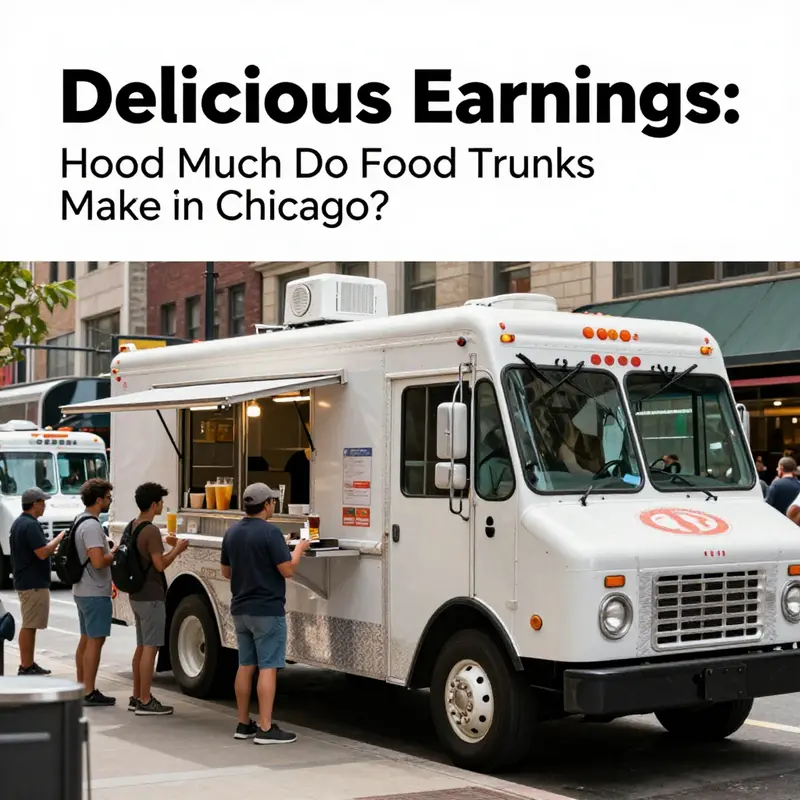
In Chicago, the answer to how much a food truck makes is less a fixed figure and more a tapestry of location, timing, menu, and disciplined cost control. The city’s street economy thrives on quick, high‑quality turns and on trucks that can flex with the pulse of the day—lunch crowds spilling onto sidewalks near office districts, students converging on campus nodes, and evening foot traffic sweeping through entertainment corridors. While there is no public, one‑size‑fits‑all profit stat for Chicago’s mobile culinary scene, a cluster of data points from related industry observations helps illuminate what the best‑performing trucks are doing to extract real value from their operations. For instance, labor costs are a meaningful slice of the expense pie in Chicago’s market, where the average hourly wage for a food truck manager sits around seventeen dollars per hour in 2025–2026. That figure is more than a payroll line item; it shapes scheduling, service speed, and the ability to scale during peak periods. A truck that runs smoothly through a busy lunch rush or a city festival depends on a capable, well‑managed crew, and the manager’s pay reflects the need for reliable oversight in an environment where demand can flip on a dime. The key takeaway for operators is that efficient staffing is not optional; it’s a direct lever on revenue potential.
Beyond labor, equipment and culinary approach set the ceiling for what a truck can sell and at what price. The spectrum runs from compact setups with simple electric ovens or hot plates to premium configurations featuring high‑end, custom‑built wood‑fired ovens capable of temperatures above eight hundred degrees. Those premium setups unlock the ability to deliver restaurant‑quality pies or other blistered, smoky items that command higher price points and draw crowds at high‑traffic events. But with greater capability comes greater regulatory scrutiny and higher upfront investments. Open combustion and ventilation requirements, safety standards, and maintenance routines add layers of complexity that a budget operator must plan for. The strategic choice between a streamlined, low‑cost kitchen and a premium, high‑tech rig often maps to the carrier market the operator is pursuing—mass appeal with quick turnover versus differentiated offerings that attract a smaller, more price‑sensitive crowd willing to pay for quality and novelty.
Chicago’s market reality also includes a crowded field of opportunities and competitors. High‑traffic venues—downtown corridors, corporate campus clusters, university quads, and nightlife districts—offer the density of potential customers necessary to generate meaningful daily revenue. Yet these advantages come with competition from other mobile vendors and the broader shift toward ghost kitchens and delivery models that can erode street traffic if not balanced with distinctive on‑the‑ground experiences. Operators who succeed here often blend location strategy with an event calendar that aligns with the city’s rhythm: farmers markets and food festivals for exposure and volume, plus targeted appearances at upscale events where guests are more tolerant of premium pricing. In a city with a deep, diverse food culture, a truck that leans into a signature concept—whether a deep‑dish inspired bite, a regional heritage dish, or a modern reinterpretation of a classic street food—can carve out a reliable niche during peak seasons.
Startup costs to launch such a venture are nontrivial, with estimates commonly ranging from fifty thousand dollars to over a hundred thousand, depending on the vehicle type and the equipment selected. This upfront investment is not merely purchase price; it signals the scale of the operation, the capacity for speed and consistency, and the ability to weather slower weeks. Ongoing expenses—fresh ingredients, fuel, permits, insurance, ongoing maintenance, and occasional event fees—continue to test the operator’s discipline. The combined effect of these ongoing costs and the revenue environment explains why the most profitable trucks are the ones that marry strong food quality with tight cost controls and a relentless focus on location, timing, and turnover. The broader market growth in the United States reinforces the opportunity: the sector is projected to rise from about a billion dollars in 2025 to nearly two billion by 2031, underscoring growing demand and the potential for robust earnings when operators execute well. In Chicago, this growth narrative meets a dense urban fabric that rewards those who plan for seasonality, traffic patterns, and the city’s particular permitting and operational realities.
A practical thread runs through successful Chicago operations: the balance between premium product and scalable execution. The appeal of a high‑end pizza concept, for example, lies in a product that delivers tangible value to customers—distinct texture, a crisp blistered crust, and a smoky aroma—while still being deliverable in a mobile environment. The trade‑off is cost and complexity: a wood‑fired oven elevates product quality but adds fuel costs, maintenance, and regulatory hurdles. An alternative approach emphasizes efficiency and volume: a compact truck equipped with electric ovens or hot plates can reheat pre‑made slices or assemble quick pizzas with quick service lines. This model reduces initial outlay and ongoing costs, enabling high turnover at public gatherings and at busy lunch chimes, where speed and consistency matter as much as flavor. The choice between these paths hinges on the operator’s brand promise, target audience, and geographic strategy. If a truck aims to charge premium prices, it must justify those prices with both product quality and a predictable, rapid service experience—two attributes that are hard to reconcile if a kitchen is underpowered or repeatedly bottlenecks during peak periods.
Location remains the most consistent predictor of daily revenue, but its impact is amplified when paired with a disciplined operating tempo. In practice, that tempo means aligning hours with the city’s pulse—capturing the lunch crowd near office parks when it’s busy, then shifting to entertainment districts or university hubs as the evening energy builds. A successful operator thinks in cycles: a daytime cycle around corporate campuses and transit hubs, a late afternoon push around neighborhood centers or campus quads, and an evening drive through entertainment districts on weekends. This cadence is not just about being present; it’s about being present at the right moments with the right menu. A truck that can offer a few high‑value items during lunch and pivot to a compact, high‑margin menu in the evening can secure a steadier daily intake than one that chases everspread demand without a clear targeting plan.
The operational discipline that sustains this rhythm often hinges on a well‑trained team and a lean supply chain. Labor discipline matters: a capable manager who can supervise food prep, queue management, and customer flow reduces wait times and increases table turns for those truck‑to‑customer transactions that make the day. The labor cost is tangible in daily output. Operators who optimize staffing around anticipated peaks—using part‑time staff for lunch periods and a core team for setup and post‑event breakdown—achieve better efficiency and more predictable margins. In Chicago’s dense market, the margin is the story you tell customers and the speed with which you fulfill it. That story is reinforced by the quality of the product, the consistency of service, and the degree to which the truck can scale during a rush without trading off stability for speed.
The narrative of profitability is also shaped by customers’ willingness to pay for an experience. A premium product tends to justify higher prices, but it requires consistent quality and reliability in sourcing, cooking, and serving. An emphasis on authentic, high‑quality ingredients can differentiate a truck in a crowded street scene, particularly in neighborhoods like Pilsen, where local flavor is celebrated and residents crave authentic, carefully prepared bites. A menu built around heritage cuisine or regionally inspired specialties can resonate with Chicago’s diverse food culture, provided the operator reinforces that appeal with thoughtful execution, a clean and efficient service model, and a story that connects with the neighborhood. Yet even when pursuing a premium strategy, careful attention to costs is essential. The combination of high‑end equipment, premium ingredients, and skilled labor can create a profitable business only if the operating tempo and location strategy deliver sufficient volume to cover fixed costs and generate real net income.
In this landscape, the role of industry knowledge becomes obvious. A marketer or strategist can learn from the broader market dynamics and from adjacent models that explore how different truck formats balance cost and revenue. For example, some operators study the range of truck configurations and their performance in nearby markets, looking at best practice models for startup layouts and menu design. This body of knowledge emphasizes a critical point: the most profitable trucks do not rely on a single trick or a lone high‑value item. They deploy a coherent, repeatable system that matches the product, the price point, and the target customer with the right location at the right time. The Chicago market, with its generous demand corridors and festival calendar, is especially favorable to operators who can design that system around a clear core concept and a dependable service engine. To support this, many entrepreneurs reference practical exemplars and community resources as they refine their plans, negotiating the balance between capital outlay, operating costs, and revenue potential.
For readers seeking a concrete, illustrative link to industry practice, consider a focused resource that discusses how truck models suit different market ambitions. Best Food Truck Models for Lakewood Startups offers a compact lens on choosing a truck layout, equipment mix, and workflow that can inform Chicago operators who are weighing premium versus budget strategies. While the market and neighborhoods differ between Chicago and Lakewood, the underlying economics—how equipment choice, labor, and location influence profitability—translate across urban contexts. The principle is straightforward: align your physical setup with your menu, your pricing, and your city’s rhythm to unlock consistent revenue, then pair that with disciplined cost management to convert revenue into real profit.
Ultimately, the city’s growth trajectory for the food truck sector signals opportunity, but it also demands rigor. The potential revenue each truck can realize in Chicago grows when operators map out a precise site strategy, optimize their labor and kitchen configurations, and curate a menu that balances price point with culinary distinctiveness. The practical takeaway is that profitability is not merely about selling more; it’s about selling smart—choosing times, places, and products that maximize turnover while controlling costs. For aspiring operators, the most reliable path is to test concepts in several micro‑markets, learn which combinations of location, price, and product yield the strongest daily revenue, and then duplicate that success with a scalable playbook. The Chicago street is generous to those who plan for it with clarity, discipline, and a willingness to adapt as the city’s appetite evolves.
External resource: https://www.indeed.com/career/salary/food-truck-manager-salary-in-chicago-il
Balancing the Books: Startup Outlay and Monthly Costs Behind Chicago Food Truck Earnings
Understanding gross sales versus take-home earnings is vital for any Chicago food truck operator. A truck that grosses between $25,000 and $40,000 per month can appear profitable at first glance. Yet substantial startup and recurring costs often narrow margins. This chapter walks through those costs, explains how they affect net income, and highlights tactical choices operators use to protect profits in Chicago’s competitive market.
Most food truck revenue in Chicago clusters around peak times. Lunch service in downtown corridors and weekday corporate zones often drives the largest daily checks. Evening work near entertainment districts and events fills gaps. A truck that nails both lunch and evening spots can push toward the higher end of the $25k–$40k monthly gross range. But revenue alone doesn’t tell the story. Startup expenses and monthly overhead reshape that top-line number into realistic owner pay.
Startup costs for a Chicago food truck typically land between $75,000 and $150,000. The vehicle itself usually represents the largest single expense. Buying or leasing a compliant truck, often retrofitted for kitchen work, runs $30,000 to $80,000. Less expensive trucks exist, but they often need more mechanical or sanitary upgrades. Newer, customized trucks cost more up front but may reduce repair downtime.
Kitchen equipment follows. Installing grills, ovens, refrigeration, and extraction systems commonly costs $15,000 to $30,000. These systems determine daily capacity and menu options. Heavy-duty gear supports a broader menu and faster service. Lighter setups limit offerings but reduce initial spend.
Regulatory compliance is smaller but crucial. Permits and licenses generally cost $1,000 to $3,000 at startup. Chicago’s rules cover health permits, mobile food vendor licenses, and inspection fees. Administrative missteps can create delays and surprise costs. Budgeting conservatively avoids that risk.
Initial inventory, smallwares, and training also add up. Operators must stock ingredients, packaging, and spare parts. Branding and marketing for launch often require $5,000 to $10,000. A strong brand helps secure high-traffic locations and event bookings. It can change how quickly a truck reaches steady sales.
How those startup costs are financed matters. Cash purchases reduce interest costs but require more capital. Loans or leases spread payments across months or years. Operators should model monthly debt service against expected revenue. That modeling clarifies the realistic timeline to profitability.
Monthly operational expenses are where profit is truly made or lost. Fixed monthly outlays can range widely but often total $15,000 to $25,000. Truck lease payments may sit near $6,000 per month. Commissary rent, necessary for food prep and storage, often runs about $4,000 monthly. Digital tools and app maintenance can be another $3,500 per month, a figure rising as customers expect online ordering.
Labor is both essential and variable. Employee wages for a small crew typically total $3,000 to $6,000 per month. For context, an average food truck manager wage in Chicago is about $16.90 per hour. Labor planning must reflect peak windows and slow periods. Overstaffing wastes money. Understaffing harms service speed and sales.
Other recurring costs include fuel, insurance, utilities, cleaning supplies, and ingredient procurement. Fuel costs depend on location strategy and daily miles. Insurance is critical for liability and vehicle protection. Utilities cover water and power demands at commissary spaces and sometimes at events. Cleaning and sanitation supplies keep the truck compliant with health codes.
Ingredient costs, especially protein prices, can swing margins fast. Menu design must consider ingredient volatility. Operators often protect margins through menu engineering. They price dishes to include food cost buffers and promote high-margin items.
To translate those expenses into a monthly outlook, consider a mid-range example. A truck that grosses $30,000 monthly might see cost breakdowns like this: $10,000 in combined fixed costs (lease, commissary, digital tools), $5,000 in labor, $6,000 in food and packaging, $1,000 in fuel and utilities, and $2,000 in insurance and miscellaneous. That schematic yields $6,000 before taxes and debt service. Add a $2,000 loan payment and the owner’s pre-tax discretionary cash becomes $4,000. This simplified example shows why many operators aim for higher gross sales.
Seasonality and location amplify this math. Chicago’s weather influences foot traffic. Winter months often depress street sales, while festivals and summer events boost them. Many operators plan seasonal cash reserves and cultivate event bookings to offset slow sidewalks in winter.
Location is a multiplier. High-traffic downtown blocks, corporate campuses, university quads, and nightlife corridors deliver predictable volume. Event and catering work can spike revenue occasionally, often at higher margins. Effective operators build mixed schedules. They secure steady weekday lunch contracts and slot in event weekends. That approach smooths cash flow.
Competition and new formats also influence profitability. Ghost kitchens and delivery-only concepts compete on price and convenience. They lower barrier-to-entry for new food entrepreneurs. Food trucks differentiate through on-site presence, experiential appeal, and mobility. Trucks that combine strong branding with efficient operations outperform those that rely on foot traffic alone.
Smart operators focus on margin management and capacity utilization. Menu engineering drives profitability by steering customers toward higher-margin dishes. Daypart optimization—dedicating resources to lunch, dinner, or event windows—improves staff scheduling and reduces wasted inventory. Operational efficiencies—consistent prep routines, reliable suppliers, and preventive vehicle maintenance—cut unexpected costs.
Financing choices and depreciation affect long-term returns. Capital expenditures such as truck purchase and equipment install often get capitalized and depreciated. That accounting decision affects reported profits but not immediate cash flow. Many owners track both cash basis profits and tax-adjusted earnings to get a full picture.
Practical steps to protect margins include negotiating supplier contracts and locking ingredient prices when possible. Building relationships with local vendors can secure fresher produce at better terms. Integrating simple digital ordering systems reduces wait times and increases throughput. Tracking daily sales and food costs in a shared spreadsheet or simple app allows prompt course corrections.
Choosing the right vehicle also matters. A truck optimized for quick service and low fuel consumption reduces daily operating costs. For those evaluating vehicle options, resources on suitable models can help identify a balance between upfront cost and operational efficiency. For a primer on truck models and fit-for-purpose design, see this guide to the best food truck models for startups.
When estimating owner pay, remember that gross revenue is only the starting point. Monthly overhead often consumes a large share of gross sales. Many successful Chicago trucks achieve owner draws by increasing daily volume, expanding into catering and events, and keeping fixed costs in check. Market growth through 2031 suggests opportunity. The U.S. food truck industry is expected to rise from $1.09 billion in 2025 to $1.59 billion in 2031, indicating expanding demand and new niches to exploit. For the market outlook and trends, consult this industry report: https://www.statista.com/statistics/1337239/food-truck-market-us/
This chapter aims to make the cost structure clear. Operators who model startup amortization, separate fixed and variable expenses, and pursue consistent high-traffic placements position themselves to convert gross sales into meaningful income. The numbers are achievable, but only with disciplined cost control and strategic scheduling.
Final thoughts
Understanding the earning potential of food trucks in Chicago is an intricate mix of various factors—from the bustling locations and unique cuisines to the operational costs involved. While there isn’t a one-size-fits-all answer to how much food trucks make, aspiring operators can find inspiration and strategies in the trends and insights we’ve explored. By staying informed and adaptable, you’re not just dreaming of a food truck; you’re laying the groundwork for a thriving mobile kitchen that could very well become a beloved part of the Chicago culinary scene.