
For aspiring food truck operators and tourists visiting Lakewood, understanding advertising costs is key to connecting with the community and ensuring your food truck stands out. Effective advertising not only promotes your delicious offerings but also builds a loyal customer base. In this handy guide, we’ll explore the costs associated with different advertising methods including vehicle wraps, social media marketing, and local print advertising. Each chapter is designed to equip you with knowledge that can help you craft a successful advertising strategy tailored to your food truck business.
Wrapping the Budget: How Vehicle Wraps Shape a Food Truck’s Advertising Costs
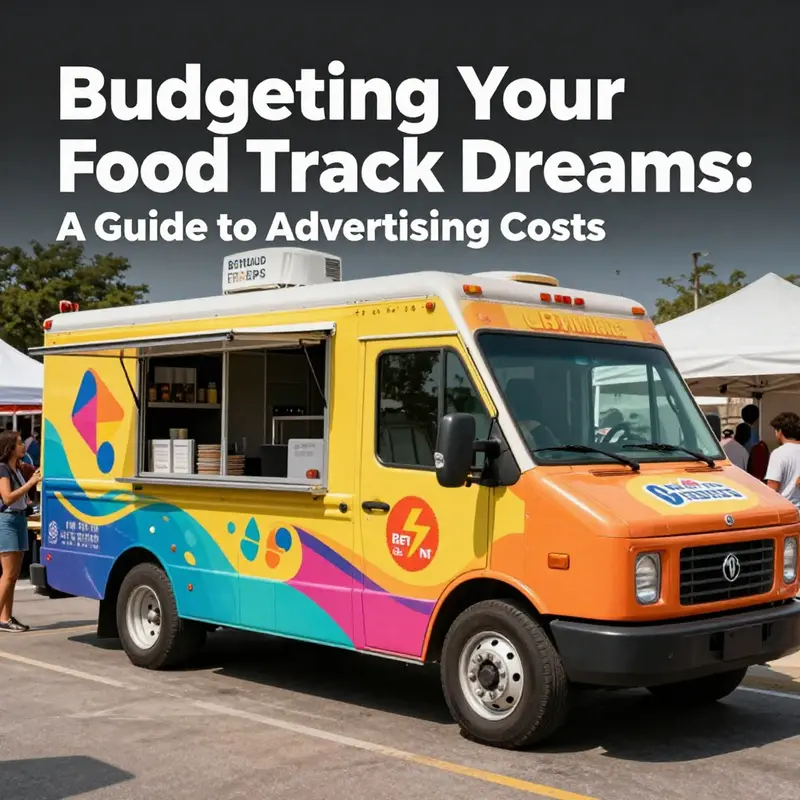
Vehicle wraps are often the single largest upfront advertising expense for a food truck. They change the truck from a simple service vehicle into a moving brand statement. For budgets and planning, understanding what drives that cost matters more than the sticker price. This chapter walks through realistic price ranges, the elements that push costs up or down, and practical ways to think about value. It also covers durability, maintenance, and how a wrap fits into a broader advertising budget.
A clear starting point is the typical price range. A full, professionally installed wrap for a standard food truck most commonly lands between $2,000 and $5,000. For trucks with unusual shapes, added design complexity, or premium materials, prices frequently approach or exceed $8,000. Partial wraps and basic graphic packages can fall below the lower end. The final figure depends on a handful of predictable variables: truck size, design complexity, material quality, printer and installer reputation, and prep work required on the vehicle.
Size matters first. A compact truck takes less material and less install time than a larger rig. Taller or longer trucks use more printed vinyl and take more labor hours to align panels and trim around fixtures. Trucks with many rivets, external hardware, or complex door configurations slow installation and can raise labor costs. If you’re deciding between vehicle models, consider how the truck’s shape will affect wrap pricing and longevity. For guidance on truck sizes and models that work well for mobile businesses, see resources for choosing the right vehicle like the best food truck models for Lakewood startups.
Design complexity drives both creative fees and production costs. A wrap with many gradients, photographic elements, or precisely matched brand colors requires higher-resolution printing and careful color calibration. Intricate die-cut elements and multi-layer assembly call for experienced technicians and more install time. Conversely, a bold, simple layout with strong, flat colors will cost less to produce and faster to install. Expect to budget separately for design work if you don’t supply print-ready artwork. Design fees commonly range from a few hundred to over a thousand dollars depending on the designer’s experience and the number of revisions.
Material quality is not the place to cut corners. Vinyl quality, lamination type, and UV-resistant inks affect both appearance and lifespan. Mid-grade vinyl will look fine for a year or two but may fade or shrink sooner. Higher-end cast vinyl with a robust laminate maintains color and resists peeling for three to five years under normal conditions. A quality wrap also protects the truck’s paint, which offsets some cost when you later sell the vehicle. Ask providers about warranties and the specific vinyl brands they use.
Installation skill and shop conditions influence price and outcome. Wrapping is a skilled trade that blends art and craft. Experienced installers work faster and produce cleaner seams, fewer bubbles, and longer-lasting results. Shops with controlled environments cut errors from dust and moisture during install. Cheaper installers might reduce your bill but increase the odds of bubbling, premature lifting, and quicker failure. When comparing quotes, check installers’ portfolios and customer references. A slightly higher up-front fee for a reputable shop often saves money over time.
There are alternatives and cost-lowering strategies worth weighing. Partial wraps, where only sides or rear panels receive vinyl, are cheaper. Decals and vinyl lettering add branding at a lower price point and are easier to update. Magnetic signs allow easy removal but look less integrated. If budget is tight, combine a modest wrap with strong social media promotion and event presence. Balance visibility with financial flexibility rather than overcommitting to one expensive asset.
Think in terms of amortized cost. A high-quality wrap that lasts four years and costs $4,000 equates to about $83 per month. This framing helps compare the wrap to recurring costs like paid social campaigns. Many successful food truck operators spend $50 to $500 per month on social media ads. When the wrap’s monthly equivalent is added, you can see how much of your ongoing advertising budget is a fixed, long-term investment versus short-term spend.
Return on investment is rarely instantaneous, but it can be significant. Wraps convert the truck into a moving billboard seen by pedestrians, drivers, and event attendees. Mobility means repeated impressions across different neighborhoods. Industry data suggests a well-executed wrap can boost brand awareness substantially; one report estimates up to a 30% lift in brand awareness over six months. That value is hard to capture in raw sales numbers, but you can measure lift with tracking tactics like unique promo codes, QR codes on the wrap, or asking customers how they found you.
Durability and maintenance determine the wrap’s real cost per year. Modern wraps typically last between three and five years with basic care. Avoid automatic car washes with stiff brushes, and use soft cloths and mild detergents when cleaning. Small tears or lifting edges should be repaired promptly to prevent wider failure. Many installers offer maintenance packages or warranties that include minor repairs. Factor potential maintenance and repair costs into your budget, as neglect can turn a multi-year asset into a short-lived expense.
There are practical design choices that affect both cost and effectiveness. Keep essential information legible from a distance. Large, readable logos and a concise message work better than dense copy. High-contrast colors and simple typography increase visibility when the truck is moving or parked on busy streets. Consider where customers will see the truck most. If you spend time at evening events, include elements that read well in artificial light or consider reflective accents for safety and visibility.
Permitting and local regulations can affect what you can wrap and how you use it. Some municipalities regulate signage and might require specific permits for commercial graphics in certain locations. Window coverage can also be restricted if it interferes with safe operation or violates local business signage codes. Check local rules before finalizing a design that covers windows or includes illumination. Failing to comply can lead to fines or forced removal, which add costs and delay operations.
Choosing the right vendor requires both quotes and trust. Get multiple bids and ask installers to break down the estimate into material, labor, and design costs. Request references and view completed work on similar vehicles. Ask about warranty terms and what constitutes normal wear versus installation defects. Clarify timelines: thorough prep and careful install can take several days. Rushed installs in poor conditions increase the chance of blemishes and future issues.
A wrap is part of a broader marketing ecosystem. It pairs powerfully with social content. Use the wrap as a visual anchor in photos and video. Launch a campaign when the wrap goes live with social posts that show the transformation. Promote a wrap-focused special or include a QR code on the design for exclusive offers. Combining the long-term visibility of a wrap with targeted short-term campaigns leverages both investments and helps measure impact.
Some food truck owners finance wraps to preserve cash flow. Spreading the cost over months converts a large upfront expense into manageable payments. Financing may be available through installers or third-party lenders. Review interest and fees carefully. If you can estimate the wrap’s monthly revenue lift from additional customers, you can judge whether financing makes sense.
The resale angle is often overlooked. A professionally wrapped and well-maintained truck can command a higher resale value. Buyers see a ready-made brand and less immediate repainting cost. However, custom branding that is too niche can deter buyers. Consider designing wraps with removable elements or modular panels if you expect to sell the truck within a few years.
Window covers and screen printing have special considerations. Full window coverage reduces light and visibility and may be restricted. Perforated vinyl allows visibility from the inside while showing graphics outside. It costs slightly more and requires careful installation to avoid distortion. If your truck uses windows to serve customers, avoid designs that interfere with service flow or customer sightlines.
Measuring success requires simple systems. Track foot traffic and sales before and after installation. Use short-term promotions tied to the wrap, such as a promo code printed on the truck. Ask customers how they heard about you during busy shifts, or run quick surveys. If you invest in mobile analytics or location-based promotions, compare reach and conversions with other channels.
Finally, plan for updates. Trends, menus, and brand identities evolve. Wraps are an investment that should serve you for years, but make a plan for mid-life updates. Partial overlays or decal additions allow you to refresh visuals without a full rewrap. That approach reduces cost and keeps the truck looking current.
Vehicle wraps are not just cost items. They are brand infrastructure. When planned and executed well, a wrap pays back through increased visibility, protection of the truck’s paint, and long-term consistency. For many operators, the decision to wrap is less about the upfront price and more about the value of constant, passive advertising over time. Consider amortized costs, vendor quality, design choices, and integration with other marketing tactics. Those factors will determine whether a wrap becomes your best advertising investment or a costly experiment.
For more detail on cost breakdowns and benefits, refer to practical industry guides that explain how wraps affect long-term branding and budgets at https://www.foodtruckbusiness.com/vehicle-wraps-cost-benefits.
Making Every Dollar Count: Social Media Costs and Strategies for Food Truck Advertising
Social Media Marketing Costs: What to Budget and Why it Matters
Social media is the advertising channel most aligned with a food truck’s mobility and immediacy. It lets you announce where you are, show what you’re cooking, and build a local following quickly. Costs can range from zero to several hundred dollars each month, but the real question is what those dollars buy and how to translate them into more customers at the window. This chapter walks through practical budgets, trade-offs, and measurable ways to spend so advertising for your food truck delivers real value.
Starting at the low end, a food truck can maintain a meaningful social presence for essentially no cash outlay. Free posting on major platforms, casual photography taken with a phone, and direct replies to comments and messages cost only time. That approach works best when your operation is consistent, your menu has clear visual appeal, and you already have some local name recognition. The labor cost is the key expense: planning posts, taking photos, and answering followers. Time spent consistently creating and engaging is how many trucks build their first wave of loyal customers.
Paying for help changes the equation. Hiring a part-time social media manager, a freelance photographer, or a designer lifts the quality and frees the owner to handle food service. For many food trucks, a realistic entry point is $50 to $500 per month. At the low end, that might cover occasional sponsored posts and a small ad budget. Mid-range budgets permit more polished content and targeted ads. Near $500 a month, you can expect a regular cadence of posts, boosted posts targeting neighborhood audiences, and a few well-shot images or short videos per month.
Above that, costs rise when campaigns become strategic and aggressive. Spending more than $500 per month usually involves targeted advertising during high-traffic events, paid promotions aimed at acquiring followers, or influencer collaborations. Influencers are useful for introducing a food truck to new neighborhoods or event-goers, but they can be expensive. Micro-influencers often charge modest fees in exchange for a local audience, while partners with larger followings demand higher pay or trade deals. If your truck appears regularly at rallies, markets, or festivals, investing in short, high-reach campaigns around those dates can produce outsized returns on foot traffic.
Understanding how to allocate a modest budget delivers the biggest advantage. The two essential spending buckets are content production and paid reach. Content production includes photography, short videos, and graphics. Paid reach buys impressions and places your posts in front of targeted local users. For a practical monthly split, consider allocating 40 to 60 percent of your marketing budget to content production during launch months. High-quality visuals remain shareable and usable over months. Once you have a solid library of content, shift the spending to paid reach to maximize visits.
A short, sample budget clarifies how these choices play out. Imagine a $300 monthly budget. Spend roughly $120 on producing two to four high-quality photos and one short video, $150 on paid ads targeted within a 5–10 mile radius of your regular locations, and $30 on occasional boosts for special menu items or event nights. That mix improves the day-to-day feed while ensuring new customers discover your posts. With a $100 monthly budget, prioritize boosted posts tied to a location and produce content yourself. If you can add a one-time $300 spend for a professional shoot, your ongoing monthly cost can shrink while your post quality stays strong.
Measuring performance is critical. Spend without tracking is guesswork. Track simple metrics: impressions, engagement rate, follower growth, and, most importantly, conversions to real-world visits. Conversions can be monitored by asking new customers how they heard about you, running location-specific promos that require a mention, or using trackable coupon codes displayed only in certain ads. Cost per conversion gives a clear sense of value. If a $100 campaign brings 50 new customers, your acquisition cost is $2 per customer. Compare that against average spend per customer to determine profitability.
Organic reach and consistency amplify the effect of paid spend. A page with strong organic engagement needs smaller ad budgets to reach the same number of people. To build organic traction, post consistently, use short videos and carousel posts, and share stories from behind the scenes. Short, honest captions that show personality often perform better than overproduced copy. User-generated content is also powerful: encourage customers to tag the truck and reshare their posts. A single well-timed reshare can convert a follower into a regular.
Timing matters. Social media ads scheduled around meal windows, pre-event hours, and the 30 to 60 minutes before you arrive at a location are the most effective. People decide where to eat during commute times and breaks. Running small, targeted ads 30 minutes to two hours before arrival increases walk-up sales. For special events, increase ad frequency and budget in the 48 hours before the event and emphasize visuals that highlight limited-time items or lines where other customers are already ordering.
Creative format choices affect cost and results. Static image ads work well for menu items and are inexpensive to produce. Short videos or animated reels generally require more effort but generate higher engagement and reach because platforms favor dynamic content. Stories and reels are discoverable formats. If your budget is tight, invest in a few high-quality short videos early. Those videos can be repurposed as shorter clips, thumbnails, and stills. Repurposing reduces the recurring content cost and stretches each creative asset across multiple campaigns.
Paid targeting should be sharply local. Geographic targeting is the simplest lever: advertise within a specific radius of your truck route. Layer on interest and demographic filters only as they improve performance. Overly broad targeting wastes impressions on users unlikely to visit. For most food trucks, a radius of 3 to 10 miles around high-traffic stops is ideal. If you serve at events with attendees traveling from other areas, expand the radius for those event-specific boosts.
When you hire professionals, clarify deliverables and results. A photographer should provide a set number of edited photos and short clips. A social manager should outline posting frequency, response protocols, and ad budgets. Agree on goals and tracking methods. Even a simple monthly report showing follower growth, engagement, and estimated visits justifies the expense and helps adjust strategy.
Influencer partnerships can work, but treat them as targeted campaigns, not ongoing dependencies. Micro-influencers with local audiences often yield the best returns. Negotiate for specific deliverables, such as a story tag, a feed post, and a promised location mention on a particular day. Provide tracking mechanisms like unique promo codes or time-bound offers. Pay by results where possible, or combine a small fee with a product trade to make partnerships affordable.
Ad spend ramping is a useful tactic. Start small and increase budgets for ads that perform. If a boosted post shows a strong click-through rate and good comments, double its budget for a few days. Platforms reward engagement, so well-performing posts become cheaper to amplify. Conversely, pull back quickly from content that performs poorly and test an alternate creative. A disciplined testing mindset lowers waste and finds winning creative sooner.
Tools and automation can reduce time and cost. Scheduling tools let you plan several weeks of posts at once. Analytics platforms help you compare campaigns by reach, engagement, and estimated visits. Many low-cost tools exist that aggregate comments and messages, so you can respond faster. Investing in one paid tool can free significant owner time, effectively turning time savings into advertising value.
Community building adds long-term value and reduces paid needs. Engage food bloggers, neighborhood groups, and event organizers on social platforms. Participate in community conversations, sponsor a small local event, or offer a charity night. Those activities create content and earned media, lowering the need for continuous ad spend. A single well-timed community partnership can deliver months of organic new followers.
Plan for seasonality. Weather, holidays, and local event schedules shape demand. During peak months, increase ad budgets to capture tourists and festival-goers. During slow months, reduce paid reach and focus on retention with loyalty posts, specials, and email sign-ups. Saving a small portion of profits from peak months to fund off-season promotions smooths cash flow and keeps visibility steady.
Estimate returns conservatively. Expect initial campaigns to prove channel fit and to require iteration. A good early goal is reducing your cost per customer acquisition until it is less than your average sale. If the average sale per customer is $12 and your acquisition cost is $3, you have room to scale. Track lifetime value too: loyal repeat customers reduce long-term marketing costs.
Finally, social media should integrate with other forms of advertising. Use wrap designs, signage, and event partnerships to reinforce digital campaigns. When someone sees your truck and your post at the same time, conversion likelihood rises. Promote your social handles visibly on the truck to convert drive-by interest into followers and future customers. For event planning, consider listing your truck on local rally pages to attract attendees; events often publish schedules and boost visibility through their channels. You can learn more about local event opportunities in resources on 2026’s best food truck rallies.
For deeper reading about overall food truck costs and how marketing fits into startup budgets, consult this external resource: https://www.foodtrucks.com/pricing-breakdown
By aligning content, paid reach, timing, and measurement, a food truck can convert modest monthly investments into steady customer growth. Whether you operate with zero cash outlay or invest several hundred dollars each month, the focus must always be on creating shareable content, targeting local audiences wisely, and measuring the results that matter at the window.
Ink, Impressions, and Online Footprints: Understanding Local Print and Online Advertising Costs for Food Trucks
Advertising for a food truck is rarely a single tactic; it is a mosaic of print, signage, and digital touchpoints that deliver presence in neighborhoods, markets, and events. Local audiences encounter you while they are deciding where to eat, often within minutes of passing by. Because of that immediacy, the costs of local print and online advertising deserve careful attention. They are not a mere line item but an integrated part of how you build awareness, attract first-timers, and convert them into repeat customers. The balance between tangible, on-the-ground materials and nimble online campaigns creates a sustainability plan that can scale with your truck’s growth and seasonal rhythms. In practice, the numbers you allocate to each channel reflect not just the price tag but the expected impact on foot traffic, order size, and return visits. A sound approach treats print as a durable, local anchor while online channels provide the flexibility to shift messaging, track responses, and reach new neighborhoods as your routes evolve.
Local print advertising remains a dependable anchor for trucks that park in markets, along busy corridors, or at recurring events. Flyers handed to passersby and posters displayed near partner venues can be remarkably effective when the messaging is clear and the offer is compelling. The value of print grows when it is tied to a concrete action—an appealing photo of a signature dish, a QR code that links to a daily menu, or a limited-time promo tied to a local festival. The cost structure here is straightforward but cumulative: design, printing, and distribution. A one-time design might be necessary for a specific campaign or event, but the production runs deliver the best value when the distribution is targeted to places with high foot traffic. Printing costs for a batch of flyers or small posters are generally modest, but they add up when you aim to saturate a market or support a regional push during peak seasons. A single listing or small print run might fall in the range of fifty to two hundred dollars, depending on quantity and the quality of the stock. Design costs vary as well; even a clean, legible layout demands time or a professional touch. A one-time design investment, plus printing, can yield a decent return if the materials are reused across multiple events or neighborhoods with only minor tweaks to the offer.
Banners and signage form another practical print category, especially for markets with long hours and steady streams of visitors. A high-visibility banner announcing a daily special, a new menu item, or a weekend event can pay for itself by leveling the perception of your brand from the moment a potential customer steps into the zone where you operate. The physical durability of the materials matters here; weather resistance and color fastness ensure that your message remains legible across a busy day. While the per-unit cost of banners can be higher than that of flyers, their broad visibility often justifies the expense when you know you will be stationed in the same location for multiple shifts or days. Overall, print expenditures are typically modest in isolation but grow when you commit to frequent, recurring campaigns that accompany your evolving menu and location strategy. As a practical rule of thumb, expect local print to contribute a few hundred dollars at a minimum for a campaign, with the potential to scale into the low thousands when you align multiple print collateral pieces with a well-timed event calendar.
On the online side, the flexibility and reach of digital advertising complement print by enabling precise targeting, rapid iterations, and measurable outcomes. Social media advertising, along with light search advertising on major platforms, can be tuned to neighborhoods, times of day, and even weather- or event-driven patterns. For many operators, starting with a DIY approach—posting daily updates about locations, menu changes, and specials—incurs little to no ongoing cost beyond time investment. When you decide to scale, the monthly ad spend can range from roughly fifty to five hundred dollars, depending on how broad you want the reach to be and how aggressive your goals are. This budgeting range reflects modest campaigns aimed at boosting awareness among a defined local audience, as well as more aggressive efforts to promote a daily location or a limited-time promotion. The core value of digital campaigns lies in the ability to adjust the messaging quickly in response to what resonates with customers, track engagement, and measure the incremental visits that result from online exposure.
Beyond simple ad spend, many operators employ a broader marketing retainer that covers both print and online efforts, along with ongoing content creation and performance tracking. Recent industry patterns suggest that a comprehensive marketing retainer to support both offline and online campaigns tends to land in a higher range—roughly two thousand five hundred to five thousand dollars per month—depending on the scale of outreach, the number of locations served, and the cadence of campaigns. This figure is not a universal ceiling; rather, it reflects a concerted effort to maintain brand visibility across multiple channels, ensure consistency in tone and design, and harvest data that can steer decisions about where and how to spend future budgets. For many food trucks, this level of investment correlates with a comprehensive suite of activities: designing print collateral that aligns with the current menu, coordinating distributed materials with partner venues, producing digital creatives tailored to specific offers, and managing audience reach across several platforms. It also encompasses analytics and optimization—tracking impressions, engagement, click-throughs, and ultimately foot traffic—so the budget remains anchored to real-world results rather than theoretical reach.
The budgeting choice between print and online channels is not a binary decision but a complementarious one. Print compounds awareness in the physical world, particularly where trucks routinely park for events or in busy districts. Online campaigns, though more elastic in cost, offer the advantage of rapid adjustment, diverse creative formats, and the ability to measure outcomes with precision. The reality for many operators is a blended plan: a modest print package designed to support on-site attractiveness (menus, specials, and directions to the truck), paired with a disciplined but adaptive online strategy that amplifies messages to the right people at the right times. The incremental cost of online ads may be modest at the outset, yet the value can escalate as you optimize targeting, test new creative, and extend your reach to new neighborhoods.
A practical way to navigate this landscape is to imagine your campaign as a calendar rather than a static budget. Start with a baseline of offline materials—design and print a core set of flyers, posters, and a few banners tied to your current menu or a seasonal offer. Pair this baseline with a light online program: a small monthly ad pot, a cadence of posts that highlight daily routes, and a few boosted posts that showcase particularly photogenic items or limited-time promotions. The aim is to establish a consistent presence that customers can anticipate. Then, as data accrues, you refine both the print and digital components. If a particular market or event proves especially fruitful, you can channel more resources into that area while dialing back elsewhere. Tracking tools—promo codes, QR codes on print materials, and analytics from digital campaigns—help quantify this process, turning intuition into evidence and enabling you to reallocate funds more effectively over time.
In the context of local events and mobility, the value of print and online advertising is not just in the numbers on a receipt but in the narrative you weave across multiple touchpoints. The same daily motor routes, the same signature dish, and the same friendly service become more memorable when they appear consistently in the places your audience frequents. A tangible example of how local actions translate into broader engagement can be seen in regional rally coverage where multiple trucks converge to draw crowds. The synergy of on-site presence, printed materials handed to attendees, and timely digital updates around the event can amplify attendance, orders, and social chatter. For a concrete exploration of such local rally dynamics, you can consult a regional roundup of rallies here: 2026s-best-food-truck-rallies-what-lakewood-has-in-store. This example underscores how print and online strategies corner a larger audience without relying solely on a single channel.
As with any budget, it helps to anchor advertising expenses to measurable outcomes. A simple framework could include tracking foot traffic linked to print materials through unique identifiers, monitoring discount code redemption and online check-ins associated with digital campaigns, and evaluating repeat visits after a first exposure. You will often find that small, consistent investments in both print and online channels yield a steadier flow of customers than a few bursts of activity that are difficult to measure. The purpose of a local advertising budget is not to flood the market with noise but to create a recognizable rhythm that makes your truck a familiar and anticipated sight in the communities you serve. With this rhythm in place, the numbers start to feel less like a mysterious line on a spreadsheet and more like a predictable driver of growth—the kind of sustainable marketing that can support a steady increase in daily sales and average order values.
In shaping a local advertising plan, it is helpful to consider both the immediate and the long-term benefits. Print, with its physical presence, often yields a higher conversion from passersby than one might expect, particularly when the material is visually striking and placed in contexts where consumers are primed to make quick decisions about eating. Online campaigns contribute not only to immediate orders but to sustained awareness. They create a channel for engaging with customers between visits, sharing menu updates, and inviting feedback that can improve product and service. The most successful food trucks view their print and online assets as a single ecosystem: print draws attention and credibility in the moment, while online campaigns nurture ongoing relationships that translate into repeat business and referrals. This integrated approach tends to offer a more resilient marketing foundation than an overreliance on any one tactic.
For readers seeking a broader perspective on operating costs and how marketing expenditures fit within the overall financial picture of a food truck, a comprehensive guide on operating costs can provide context and benchmarks. The linked resource offers a broader framework for evaluating how print and online advertising fit into the monthly and seasonal rhythms of a food truck operation, helping owners align marketing spend with revenue opportunities across neighborhoods and events. What Operating Costs Food Trucks Incur? This external resource can supplement the discussion here by connecting advertising budgets to the full spectrum of costs that define day-to-day viability and long-term profitability.
Final thoughts
Advertising your food truck successfully involves understanding and managing various costs. Whether you choose to invest in vehicle wraps for striking visibility, engage customers on social media, or explore local advertising options, each approach plays a crucial role in building your brand. By comprehensively planning your advertising spends, you can maximize your outreach and have your culinary creations thrive in Lakewood’s exciting food scene.