
You’re sitting at your desk – maybe during yet another lunch break that tastes like leftovers and resignation – and you catch yourself daydreaming. What if you traded the cubicle for a food truck? What if the sizzle of a flat-top grill and the chatter of hungry customers replaced the hum of fluorescent lights? It’s a beautiful dream, but almost immediately, the practical questions creep in. Chief among them: how much does the average food truck make?
It’s the one question every aspiring food truck operator asks – and for good reason. You’re not just chasing a passion; you’re looking to build a sustainable livelihood. You want to know if swapping a steady paycheck for a life on wheels is a smart financial move or just a recipe for stress. And honestly? That question deserves a real, honest answer – not just vague encouragement or scary warnings.
Here’s the thing: food trucks are serious business. According to industry data, average annual revenues for food trucks range from $250,000 to $500,000, with owner-operators earning between $30,000 and $100,000 per year depending on location, menu, and how efficiently they run their operation. Profit margins typically land between 6% and 15% for savvy operators. That means the potential is absolutely there – but so are the variables.
In this article, we’re pulling back the curtain on food truck finances. We’ll break down real revenue numbers, explore what drives profitability, and share tips to help you turn that daydream into a thriving business. Whether you’re just starting to research or you’re ready to pick your first rig, you’re in the right place. And if you need some inspiration, check out these Lakewood food truck success stories from operators who’ve made the leap – or our guide on choosing your first food truck to get started on solid footing.
Let’s dig in!
Hello World
This is test content.
Before we dig into the numbers, here’s a quick look at how different food truck concepts stack up when it comes to annual earnings, profit margins, and startup costs. This table will help you spot which style of truck gives you the best shot at profitability – and which ones demand the biggest upfront investment.
Revenue by Food Truck Type: Who’s Cashing In?
| Food Truck Type | Average Annual Revenue | Profit Margin Range | Startup Cost Range | Peak Season |
|---|---|---|---|---|
| Burgers & Fries | $300,000 – $350,000 | 6% – 9% | $80,000 – $150,000 | Summer (June-Aug) |
| BBQ | $270,000 – $310,000 | 7% – 12% | $100,000 – $180,000 | Summer (May-Sept) |
| Ethnic Cuisine (Tacos, Asian, Mediterranean) | $245,000 – $290,000 | 8% – 14% | $55,000 – $130,000 | Spring & Fall (Mar-May, Sept-Nov) |
| Coffee & Beverages | $215,000 – $260,000 | 10% – 18% | $45,000 – $100,000 | Fall & Winter (Oct-Mar) |
| Desserts (Ice Cream, Baked Goods) | $180,000 – $210,000 | 9% – 15% | $40,000 – $90,000 | Summer (June-Aug) |
| Breakfast & Brunch | $165,000 – $195,000 | 5% – 9% | $60,000 – $120,000 | Year-Round (Mornings) |
Data compiled from industry sources including IBISWorld, FoodTruckProfit, and vendor surveys (2024-2026). Figures are representative averages and may vary by location, menu pricing, and local demand.
Key Takeaways for Aspiring Operators
- Burgers & Fries leads in raw revenue thanks to high volume and universal appeal, but tight profit margins mean you’ll need to manage food costs carefully.
- Coffee trucks punch above their weight with the highest profit margins (up to 18%) and relatively low startup costs – a great entry point for first-time owners.
- BBQ and Ethnic Cuisine offer a sweet spot: strong revenue with healthier margins, especially if you source ingredients smartly.
- Desserts may bring in less annually, but the low overhead and strong summer demand make them a fun, accessible option.
💡 Lakewood tip: If you’re looking to get started in our community, check out our guide on the best food truck models for Lakewood startups and how to choose your first food truck – both are packed with practical advice for local aspiring vendors.
Costs That Cut Into Your Dream 💸
Of course, revenue is only half the story. Let’s talk costs-because your take-home pay is what really matters. Every food truck owner quickly learns that margins are built (or broken) in the details. From the moment you fire up the grill to the last ticket of the night, expenses stack up fast. But here’s the thing: knowing where your money goes is the first step to keeping more of it. Let’s walk through the major cost categories you’ll face on the road.
-
Permit & Licensing Fees – Every city, county, and health department wants a piece of the action, and Lakewood is no different. Expect to budget anywhere from $500 to $3,000+ annually for permits, health inspections, and business licenses. Renewals sneak up fast, so mark your calendar.
-
Commissary Kitchen Rental – Most municipalities require food trucks to operate out of a licensed commissary kitchen for prep, storage, and cleaning. Monthly rentals typically range from $500 to $2,000, depending on location and amenities. It’s a non-negotiable line item that keeps you compliant and your food safe.
-
Food & Ingredient Sourcing – Your menu is your star, but ingredients are your biggest recurring cost, usually eating up 25-35% of your revenue. Smart sourcing-buying in bulk, building relationships with local suppliers, and minimizing waste-can make or break your profitability.
-
Vehicle Maintenance & Repairs – Your truck is your lifeline, and breakdowns don’t care about your weekend rush. Routine maintenance (oil changes, tire rotations, generator servicing) runs $200-$500 monthly, and unexpected repairs can easily hit the thousands. If you’re just getting started, check out this guide to choosing your first food truck for tips on picking a reliable rig.
-
Fuel Costs – Between driving to events, running the generator, and keeping the fridge cold, fuel adds up. Depending on your route frequency, you’re looking at $300-$800 per month in gas and propane. Rising fuel prices mean this is one category you’ll want to track closely.
-
Staffing Wages – You can’t do it all alone forever. Hiring even one or two part-time helpers can run $15-$25 per hour per person, plus payroll taxes and tips. Labor typically represents 20-30% of total revenue, so schedule wisely.
-
Insurance Premiums – General liability, commercial auto, and workers’ comp insurance aren’t optional-they’re your safety net. Monthly premiums range from $200 to $600+, and the peace of mind is priceless. Given the investment you’re making, it’s also smart to brush up on tips for preventing food truck theft in Lakewood to protect your hard-earned assets.
-
Marketing & Branding – Social media ads, menu boards, custom signage, loyalty programs-none of it is free. Budget $100-$500 per month to keep your truck top-of-mind. In a community like Lakewood, a strong local presence pays dividends.
Here’s the mindset shift: every dollar you spend on permits, ingredients, maintenance, and marketing isn’t just a cost-it’s an investment in your future. The operators who succeed aren’t the ones who avoid expenses; they’re the ones who manage them wisely.
Average Profit Margins by Food Truck Category
Not all food trucks are created equal – at least when it comes to the bottom line. Your menu choice plays a huge role in how much profit you take home at the end of the day. Whether you’re dreaming of flipping burgers or pouring specialty lattes, here’s a look at how different food truck categories stack up on profit margins.
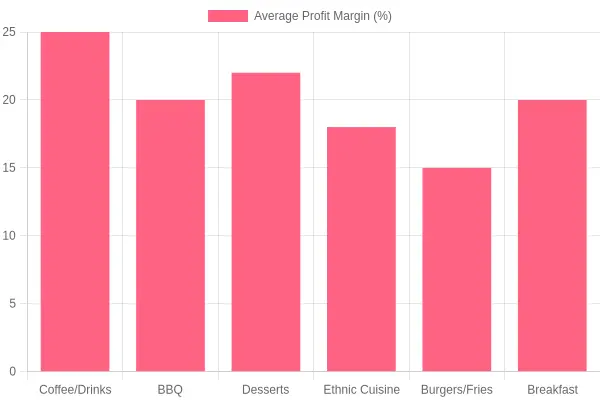
Coffee trucks often lead in margins thanks to low ingredient costs and high perceived value.
What the Numbers Tell Us
Take a close look at that chart – Coffee/Drinks trucks are sitting pretty at a 25% profit margin, and it’s easy to see why. Coffee beans and tea leaves are relatively inexpensive wholesale, and customers happily pay $4-$6 for a specialty drink. That’s a recipe for strong returns!
Here’s the full breakdown in table form:
| Food Truck Category | Average Profit Margin (%) |
|---|---|
| Coffee / Drinks | 25% |
| Desserts | 22% |
| BBQ | 20% |
| Breakfast | 20% |
| Ethnic Cuisine | 18% |
| Burgers / Fries | 15% |
Desserts (22%) and BBQ (20%) follow close behind. Desserts shine because ingredients like flour, sugar, and chocolate cost pennies compared to the final selling price. BBQ does well thanks to lower-cost cuts of meat that get transformed into mouthwatering pulled pork and brisket – but the long cook times mean you’ll want to plan your energy usage carefully.
Breakfast trucks (20%) are another hidden gem. Eggs, bread, and breakfast meats are affordable, and the morning rush brings in steady, repeat customers looking for a quick bite before work.
Ethnic cuisine (18%) and Burgers/Fries (15%) round out the list. While still profitable, these categories often deal with slightly higher ingredient costs and more competition, which can squeeze those margins a bit.
How to Pick the Right Category for You
Your profit margin is just one piece of the puzzle. You’ll also want to think about what you’re passionate about cooking, what equipment you’ll need, and what your local community craves. If you’re just starting out, check out our guide on choosing your first food truck for tips on matching your menu dreams with the right setup.
And if you want to hear from folks who’ve already been through it, our food truck model lessons from Lakewood vendors shares real stories from local operators who’ve figured out what works – and what doesn’t – right here in our community.
The Takeaway
Whether you go with coffee, BBQ, or something in between, knowing your numbers upfront sets you up for success. A 15% margin on burgers is still a solid business – especially when you’re serving up Lakewood’s hungriest crowds at the next big rally or event!
Real Talk: Hidden Income Streams Food Truck Owners Don’t Talk About
Let’s be real for a minute. If you’re just counting the cash that slides through your service window, you’re leaving a mountain of money on the table. The savviest food truck operators I know have a little secret: they don’t rely on daily sales alone. In fact, many of them are quietly pulling in 30-50% of their total revenue from sources you’d never guess. Ready for some insider intel? Here’s what nobody tells you about (until now).
📅 Catering Private Events
Corporate luncheons, wedding rehearsal dinners, birthday bashes-private catering is a goldmine. Unlike street vending, catering gigs are typically booked weeks in advance, paid with a deposit, and require a fraction of the marketing effort. Many trucks find that a handful of weekend catering bookings can outperform a full week of lunch service.
“Our catering contracts now bring in 40% of our annual revenue-it’s changed everything. We went from guessing where our next paycheck would come from to sleeping soundly knowing our weekends are booked.” – Maria T., owner of Curbside Cantina
🍻 Partnering with Breweries & Wineries
Local breweries and wineries are constantly looking for food vendors to keep patrons happy and sipping. These partnerships offer built-in foot traffic, a built-in party atmosphere, and regular weekly schedules. Imagine setting up every Friday night at a packed taproom without having to fight for a parking spot. Many trucks in Lakewood have turned these collaborations into consistent monthly income that rivals their best street-side days.
🧢 Selling Branded Merchandise
T-shirts, hats, stickers, tote bags-if your customers love your food, they’ll wear your brand. Branded merchandise is high-margin, low-effort income that also doubles as free advertising every time someone walks down the street in your hoodie. It’s not unusual for a well-loved truck to pull in an extra $500-$1,500 a month from merch alone, especially during festival season.
👨🍳 Offering Cooking Classes
Here’s a creative one: invite your biggest fans behind the curtain. Host an intimate cooking class where you teach folks how to make your signature sauce or perfect that secret spice blend. Charge a ticket fee, sell them ingredients, and watch your community engagement soar. It builds customer loyalty while padding your bottom line.
🚚 Ghost Kitchen Delivery Partnerships
Ghost kitchens let you operate a delivery-only menu without taking up precious space in your truck. By partnering with a commissary kitchen and apps like DoorDash or Uber Eats, you can serve customers who’d never catch you on the street. This opens up a whole new revenue channel that runs alongside your mobile operation.
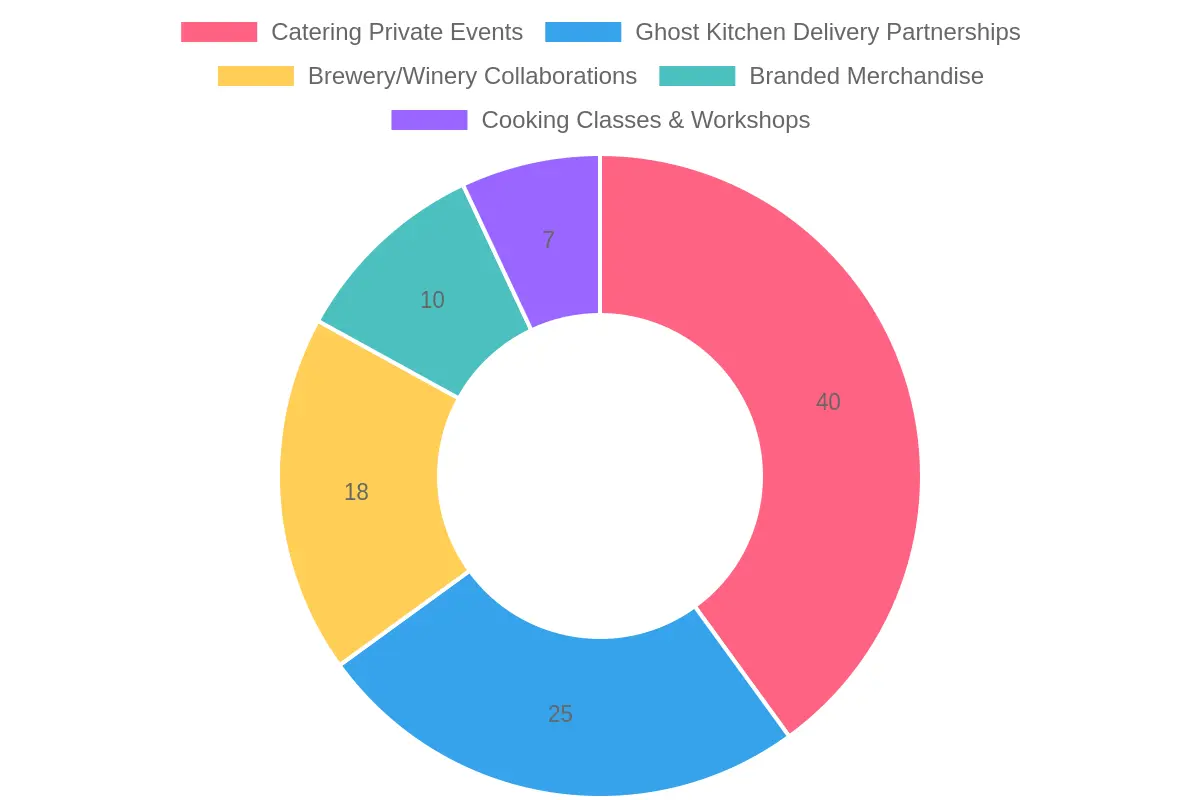
Illustration showing the potential breakdown of hidden income streams for a food truck business.
💡 Your Turn to Think Outside the Menu
The food truck game has evolved. Street sales alone are just the beginning. Whether it’s catering a wedding, slinging shirts at a brewfest, or teaching a sold-out taco class, the opportunities are only limited by your imagination. So take a hard look at your calendar, your customer base, and your brand-and ask yourself: what hidden income stream am I leaving unclaimed?
Location, Location, Location: How Geography Impacts Your Bottos Your Bottom Line
If you’ve ever unfolded a map (or, let’s be honest, pulled one up on your phone), you know that not all dots are created equal. The same goes for food truck parking spots – where you drop your anchor can mean the difference between a slow afternoon and a sell-out frenzy. Let’s pull up a chair and talk about how geography shapes your earnings.
Urban vs. Suburban vs. Rural: The Three Realms
Urban centers are where the action is – dense foot traffic, hungry office workers, and late-night crowds. A well-placed truck in a downtown business district can pull in $1,000-$1,400 a day, especially during lunch rushes. Suburban spots offer more competition but less volume – think $400-$700 a day near parks or shopping plazas. Rural areas typically see the lowest traffic, averaging $250-$400 daily, though costs are lower too. The trick? Match your menu and pricing to the neighborhood’s appetite.
Events vs. Street Parking: The Revenue Showdown
Street parking is your bread and butter – consistent, reliable, but capped. Events, on the other hand, are rocket fuel. Festivals, concerts, and farmers’ markets can spike daily revenue to $1,500 or more in a single afternoon. The trade-off? Events are seasonal and require permits, permits, permits. Smart operators use street parking as their steady income and events as their bonus round.
The Gold Mines: Office Districts & College Campuses
Want predictable crowds? Park near a business district during the workweek. Office workers need lunch like clockwork, and food trucks offer the speed and variety they crave. College campuses are another jackpot – students are always hungry, and they love affordable, grab-and-go options. Many trucks report that campus locations deliver $800-$1,200 daily during the school year.
Seasonal Tourism: The Lakewood Advantage
Here’s where things get exciting. Tourist-friendly locations like Lakewood offer a seasonal windfall that can transform a good year into a great one. During peak summer months, Lakewood’s lakefront attractions, festivals, and community events draw crowds hungry for unique culinary experiences. The town’s vibrant food truck scene means operators can tap into both local regulars and visiting tourists looking for a memorable meal. Check out Lakewood’s upcoming food truck rallies to see how this community turns geography into gold.
Top 5 High-Traffic Spots for Food Trucks
Here’s your cheat sheet – the five locations that consistently deliver for food truck operators:
- Downtown Business Districts – Lunch rushes from 11 a.m. to 2 p.m. deliver reliable, high-volume sales with office workers who appreciate speed and variety.
- College Campuses – Student populations provide steady foot traffic from breakfast through late-night study sessions, especially near dorms and student unions.
- Festival & Event Grounds – Concerts, fairs, and food festivals can generate 2-3x your normal daily revenue in a single weekend.
- Tourist Hotspots (Like Lakewood!) – Waterfronts, parks, and attraction zones bring in both locals and visitors eager to spend on unique eats. Lakewood’s seasonal tourism makes it a prime spot for summer-focused operators.
- Hospital & Industrial Zones – Hospitals, factories, and warehouses employ shift workers who need breakfast, lunch, and dinner options – often with less competition than downtown.
The takeaway? Your food truck’s success is written in the geography of your parking spot. Study the map, know your audience, and don’t be afraid to chase the crowds – especially when those crowds are headed to Lakewood’s seasonal events.
What Does the First Year Really Look Like? Let’s Talk Numbers 🚚💵
So, you’re dreaming of firing up that griddle, rolling down to a Lakewood street corner, and serving up something unforgettable. But there’s that one question that keeps popping up: How much does the average food truck make?
It’s the million-dollar question – or, well, the tens-of-thousands-of-dollars question. The truth is, your first year in the food truck world is a journey full of twists, turns, and seasonal surprises. And the numbers? They can look wildly different depending on where and when you launch.
Let’s break down two real-world scenarios to help you see what’s possible.
The Chart: First-Year Monthly Earnings Trajectory
Here’s a side-by-side look at how two different launch strategies play out over 12 months. The data reflects real industry patterns – summer-focused trucks riding seasonal highs, and urban operations building steady, reliable momentum.
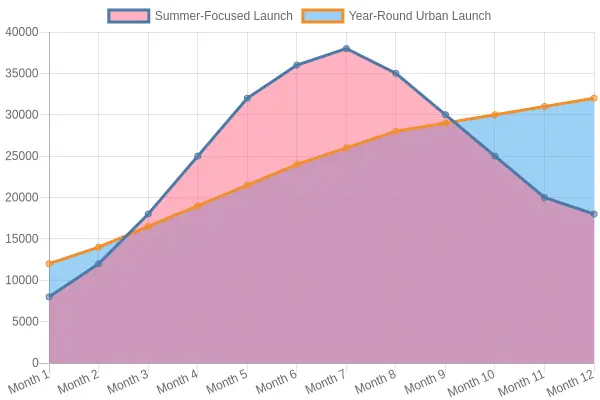
Location and seasonality dramatically shape your first-year journey. Plan accordingly.
What This Chart Tells Us
Summer-Focused Launch (Orange Line) – If you time your debut for late spring, you can ride the wave of festivals, fairs, and outdoor gatherings. Revenue can climb from around $8,000 in Month 1 to a peak of $38,000 by Month 7 (typically August). But here’s the catch: when the weather cools and event season winds down, earnings dip to about $18,000 by Month 12. That seasonal swing is real – research shows summer months can generate 25-30% more revenue than the annual average, while winter months often see a 20-35% drop.
Year-Round Urban Launch (Blue Line) – If you’re parked in a high-traffic city location with consistent foot traffic, your story is different. You start stronger at $12,000 in Month 1 and steadily build a loyal customer base, reaching $32,000 by Month 12. There’s no dramatic peak – but there’s also no steep drop-off. It’s the tortoise-and-hare approach: steady, predictable, and sustainable.
Which Path Is Right for You?
Your choice depends on your goals, your budget, and your appetite for risk. If you’re just getting started, choosing your first food truck is one of the most important decisions you’ll make. The right vehicle, equipment, and layout can make or break your ability to serve efficiently during those peak rushes.
And if you want to see how others have navigated their first year, check out some Lakewood food truck success stories for inspiration and real-world lessons.
A Quick Reality Check
| Metric | Industry Average |
|---|---|
| Annual Revenue (Year 1) | $250,000 – $500,000 |
| Monthly Average | $20,000 – $42,000 |
| Profitable by Year 1 | Over 60% of trucks |
| Summer Revenue Boost | 25-50% above average |
| Winter Revenue Dip | 20-35% below average |
Pro Tip: Whether you’re chasing summer crowds or building an urban fanbase, the key is planning. Know your seasonality, know your location, and know your numbers. Your first year is a learning curve – but with the right strategy, it’s one delicious ride.
Break-Even Timeline: When Will You Start Profiting?
So when does the dream start paying for itself? It’s the question every aspiring food truck owner asks-and honestly, it’s the right one to ask. Let’s get real about timelines so you can plan with confidence, not guesswork.
The Honest Answer: 6 Months to 2 Years
Here’s the encouraging truth: most food trucks reach their break-even point somewhere between 6 months and 2 years of operation, depending on your concept, location, and how tightly you manage your costs. According to industry data, food trucks that consistently sell 80-130 meals per day can break even in as little as 4-8 months. But for others-especially those with higher initial investments-the road to profitability stretches closer to 18-24 months.
A big part of that equation comes down to choosing the right setup for your budget. If you’re just starting out, it’s worth exploring the best food truck models for Lakewood startups to find a concept that matches your financial comfort zone.
Three Real-World Scenarios
Every food truck journey looks different. To give you a clearer picture, here are three common scenarios based on real industry averages:
| Concept | Initial Investment | Monthly Net Profit | Break-Even Timeline |
|---|---|---|---|
| Low-Investment Coffee Cart | $10,000 – $25,000 | $2,000 – $3,500 | ~7 months |
| Mid-Range Food Truck | $50,000 – $100,000 | $5,000 – $8,000 | ~12 months |
| Premium Custom Truck | $150,000 – $250,000 | $8,000 – $12,000 | ~18-24 months |
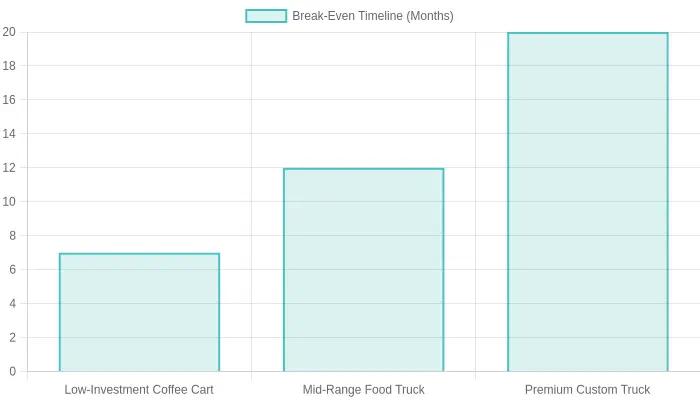
Source: Industry averages based on data from Square, Toast, and BPlanMaker (2024-2025).
What This Means for You
Notice something? The lower your initial investment, the faster you can start turning a profit-but the trade-off is often lower earning potential down the road. A coffee cart might pay for itself in under a year, but a premium custom truck can generate significantly more revenue once it’s established.
The key is matching your investment to your goals. Starting small doesn’t mean staying small. Many of Lakewood’s most successful vendors began with a modest setup and scaled up over time-you can learn from their journeys in these Lakewood food truck success stories.
A Few Friendly Tips to Speed Up Your Timeline
- Keep your menu tight. Fewer ingredients mean lower food costs and faster service-two things that directly boost your monthly net profit.
- Lock down prime locations early. A consistent lunch crowd in Lakewood can slash months off your break-even timeline.
- Track every dollar. From permits to propane, knowing exactly where your money goes helps you spot savings opportunities.
- Plan for seasonality. Summer rallies and festivals can give your revenue a massive boost, but winter months may be slower. Budget accordingly.
The bottom line? Getting to profitability takes patience, smart planning, and a willingness to adapt. But with the right concept and a clear understanding of your numbers, that first month in the black is closer than you think.
Success Stories: Real Food Truck Owners Share Their Numbers
Numbers don’t lie – but they also don’t tell the whole story. Behind every revenue figure is a real person who took a leap of faith, rolled up their sleeves, and brought something delicious to their community. We’ve gathered three success stories from food truck owners across the country to show you what’s actually possible when passion meets persistence.
🌮 Maria’s Tacos – Austin, TX
Maria grew up making her grandmother’s salsa recipe on weekends. After being laid off from her corporate job in 2021, she poured her $12K in savings into a used taco truck and parked it outside a bustling co-working hub in East Austin. Within six months, her birria tacos had a cult following.
Annual Revenue Range: $160K-$195K
“I started with $12K savings. By year two, I was pulling $180K. The key? Show up consistently and love your customers. Learn their names, remember their orders – that’s what turns a taco stand into a neighborhood staple.” – Maria G.
🍔 Smash City Burgers – Denver, CO
Chef Dave left his fine-dining kitchen gig to reclaim his weekends and cook food he actually loved. He launched a no-frills burger truck that parks at breweries and local events. With a tight menu of three smash burger variations and hand-cut fries, he keeps overhead low and quality high.
Annual Revenue Range: $210K-$260K
“People think you need 40 menu items to succeed. I learned the hard way that less is more. Master three things and do them better than anyone else in town. Your margins will thank you.” – Dave R.
🥗 Green Wheel Eats – Portland, OR
After years of food blogging, Jenna wanted to prove that plant-based eating could be fast, affordable, and craveable. She retrofitted a vintage step van and launched a rotating seasonal menu focused on grain bowls, fresh juices, and locally sourced toppings. Her truck became a fixture at farmers’ markets.
Annual Revenue Range: $140K-$175K
“Don’t underestimate the power of community partnerships. I collaborated with local farms and a nearby coffee roaster – they sent customers my way and I sent business back to them. We grew together.” – Jenna T.
What These Stories Tell Us
A few patterns emerge from these three very different trucks. First, consistency beats perfection – every owner emphasized showing up, rain or shine. Second, profitability doesn’t require maxing out revenue – even trucks in the $140K-$175K range can be highly profitable with smart cost control. And finally, community is everything. The most successful owners didn’t just sell food; they built relationships.
If these stories inspire you, you can read more real food truck success stories from Lakewood operators or dig into our guide on choosing your first food truck to start mapping out your own journey. The average food truck brings in around $250K-$500K annually, but as Maria, Dave, and Jenna prove, the real magic happens when you stop dreaming and start cooking.
Pitfalls to Avoid: Lessons from Failed Food Trucks
Let’s be real for a moment – not every food truck story has a happy ending. But here’s the beautiful thing: those who stumbled along the way have left us a roadmap of what not to do. Think of these common mistakes as learning opportunities signed by the folks who walked the path before you. Learn from them so you don’t have to make these mistakes yourself.
📋 5 Common Food Truck Pitfalls (and How to Dodge Them)
-
Underestimating Health Department Requirements. It’s one of the top reasons new food trucks shut down before they even get rolling. Health inspections are no joke – from proper handwashing stations to grease trap maintenance and temperature logs, the checklist is long. Connect with local health inspectors before you launch, budget for permits and upgrades, and treat every inspection as a chance to build trust, not a hurdle to dread. For more lessons straight from Lakewood vendors who’ve been through it, check out key lessons from local food truck operators.
-
Ignoring Social Media Marketing. You could have the best birria tacos in Lakewood, but if nobody knows where you’re parked, your grill stays cold. Too many aspiring operators think \”if you build it, they will come\” – but in the food truck world, you need to announce it, post it, and share it daily. A simple Instagram story or a quick Facebook post about today’s location can be the difference between a lunch rush and a lonely afternoon.
-
Poor Menu Pricing. It’s tempting to price low to attract customers, but that’s a fast track to burnout. You need to factor in everything – food costs, fuel, permits, employee wages, insurance, and even that inevitable generator repair. On the flip side, pricing too high can scare off first-timers. Do the math, research what other Lakewood trucks charge, and find that sweet spot where your margins are healthy and your customers feel they’re getting a deal.
-
Choosing a Bad Location. Even the most delicious menu can’t survive a spot with zero foot traffic. Location is everything in the food truck game, and many rookies settle for a parking lot that’s convenient for them rather than visible to customers. Study traffic patterns, attend local events and rallies, and don’t be afraid to move around until you find your sweet spot. Lakewood’s food truck gatherings are a fantastic place to test different spots and learn what works.
-
Neglecting Vehicle Maintenance. Your food truck is a kitchen on wheels, and when it breaks down, your business literally stops. Failed engines, faulty generators, and broken refrigeration units have ended more than a few food truck dreams. Set up a regular maintenance schedule, build an emergency repair fund into your budget, and always have a backup plan for power and cooling. A little oil change today beats a tow truck bill tomorrow.
💡 A Hopeful Closing Thought
Every failed food truck left behind a lesson, and every successful one started with someone who was willing to learn. The mistakes above aren’t dead ends – they’re detours. As long as you stay curious, stay humble, and keep talking to other vendors in the Lakewood community, you’re already ahead of the game. Your food truck journey is yours to write, and every chapter – even the hard ones – teaches you something valuable.
Your Dream Is Worth the Investment
As we wrap up this journey together, let’s take a moment to reflect on everything we’ve uncovered. The food truck industry isn’t just about flipping burgers and serving up fries – it’s a legitimate, thriving business opportunity with real earning potential. We’ve seen that successful food trucks can pull in $200,000 to $500,000 or more annually, a figure that turns heads and opens eyes. But as we’ve also discussed, that kind of success doesn’t happen by accident.
Here’s what we’ve learned along the way:
- Revenue is real, but so are the costs. From permits and insurance to commissary fees and ingredient sourcing, every dollar counts. Smart operators budget carefully and plan for the unexpected.
- Location can make or break your business. Whether you’re parking near a busy office district during lunch rush or setting up at a weekend festival, being where the people are is half the battle.
- Community support is everything. The food truck scene in Lakewood isn’t just a collection of vendors – it’s a family. From regulars who stop by every week to fellow truck owners who share tips and encouragement, this community lifts each other up. Check out some inspiring Lakewood food truck success stories to see what we mean.
“The food truck community showed me that I wasn’t just starting a business – I was joining a family.” – A Lakewood food truck owner
Now here’s the thing – once you’ve invested in your dream food truck, you start to think differently about quality. You realize that reliable equipment, durable builds, and thoughtful design aren’t luxuries; they’re necessities. And that mindset doesn’t stop at the kitchen window.
Just like your food truck needs reliable equipment to keep rolling, your other rides deserve the same quality care. Whether you’re serving tacos on the weekend or hitting the open road, having gear you can trust makes all the difference. That’s why we’re proud to point you toward Summit Fairings – because your motorcycle deserves the same level of craftsmanship and reliability that you demand from your food truck. From sleek aerodynamic designs to durable, road-ready builds, Summit Fairings offers the quality and performance that riders like you can count on. Don’t let your bike be an afterthought – explore how building customer loyalty in your food truck business starts with the same care you give every vehicle you own.
So here’s our final thought for you, friend: Your dream is worth the investment. Whether that dream is a sizzling food truck parked at a Lakewood rally, a long-distance motorcycle adventure, or both – you deserve equipment that works as hard as you do. Keep cooking, keep riding, and keep showing up for your community. Because when you invest in quality, you’re not just buying gear – you’re building a life you love.
See you on the road, Lakewood. 🚚🏍️💛