
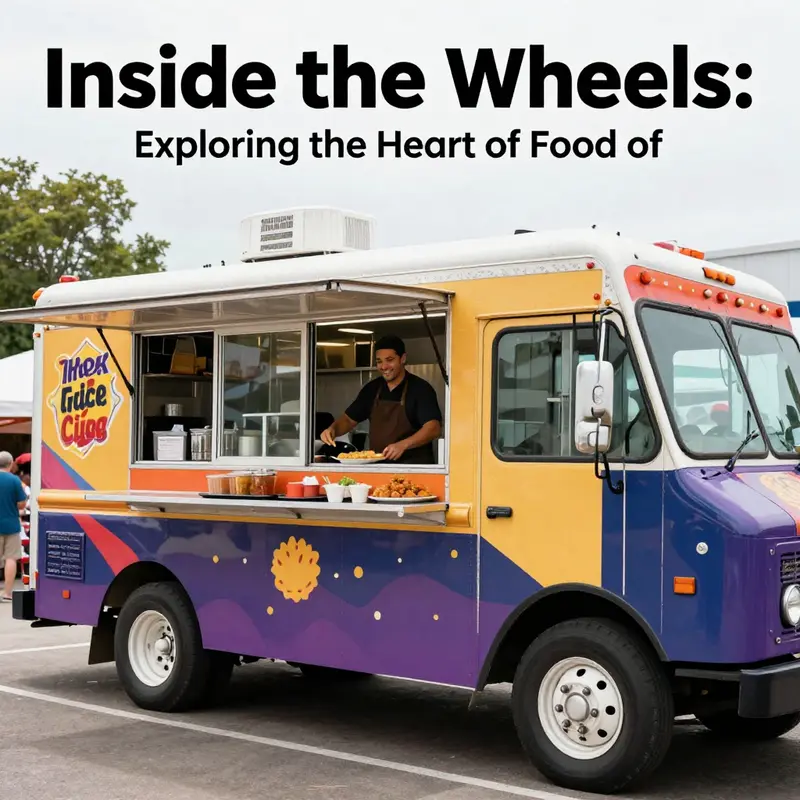
Ever wondered what the inside of a food truck looks like? These mobile kitchens are bustling hubs of culinary creativity, designed for both efficiency and style. As aspiring food truck operators and curious tourists, it’s crucial to understand the layout, equipment, workflow, and unique aspects that differ across various cuisines. This exploration will provide you with insights into the essential components that make food trucks not just functional, but a vibrant part of the Lakewood community. From the intricate design features to the essential equipment, we’ll delve into everything you need to know about what goes on inside these charming culinary vehicles.
Inside the Kitchen on Wheels: Design, Flow, and Branding in a Mobile Eatery
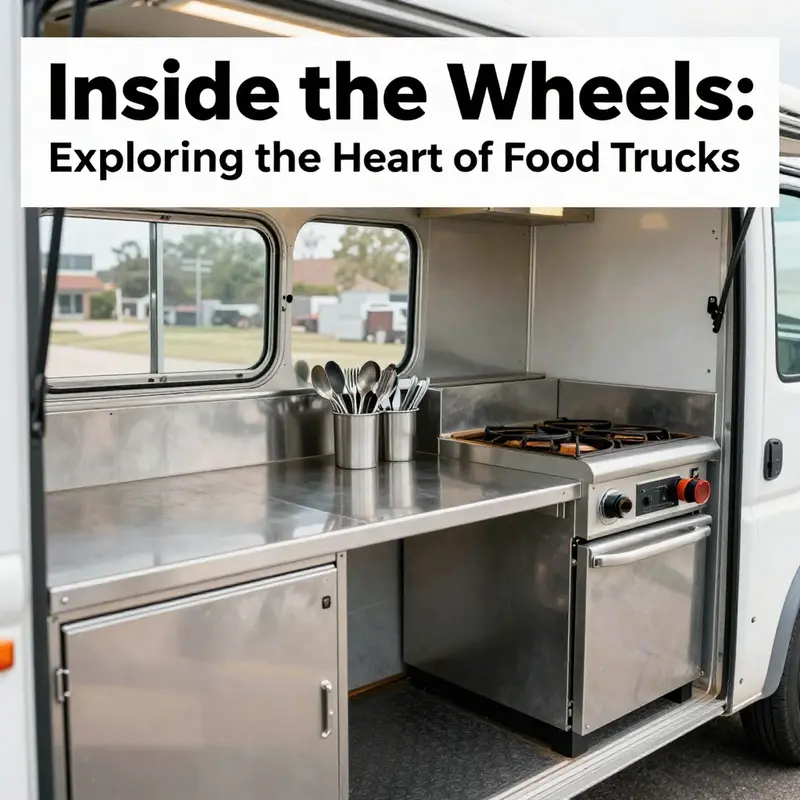
The interior of a food truck is more than a compact space with appliances; it is a purpose-built workshop on wheels where every inch serves a function. The design starts with a clean commitment to efficiency, but it grows from there into a small, mobile stage where a cook can turn ingredients into meals with speed and consistency. The walls are typically clad in stainless steel, chosen not just for durability and easy cleaning but for the way the metal catches light and frames the work area. Stainless steel walls are precise installations, and their sheen can become part of the brand’s visual language. They offer a premium, almost clinical backdrop that signals to customers and inspectors alike that cleanliness and professionalism are priorities. In higher-end interiors, these metal surfaces can be used as accent walls, treated with a brushed finish to reduce glare while still giving the space a modern, industrial vibe. The result is a setting that looks tailored rather than improvised, even when it’s built into a compact chassis at the back of a vehicle that must also carry fuel, water, and a payroll of daily tasks.
The heart of the truck is the layout, which is custom-built to the cuisine and the driver’s workflow. A well-planned kitchen inside a truck resembles a scaled-down, high-efficiency version of a commercial kitchen, with zones dedicated to cold storage, hot prep, cooking, assembly, and cleaning. In practice, this means a carefully choreographed sequence of moves: a server hands off an order at a window, the prep person fetches ingredients from a cabinet, the cook engages a hot line, and a final plate leaves through the window to the awaiting customer. The goal is to minimize crossing paths and avoid backtracking. Equipment is arranged to reduce walking distance and to keep the most frequently used items within easy reach. A compact but robust hot line might feature a commercial-grade stove, a fry station, and a high-heat deck or grill, all positioned for quick, rhythmic work. For a pizza-focused concept, the deck oven becomes the star, designed to deliver 2–4 minutes per pie at peak temperature. For a coffee-led truck, the espresso setup, a grinder, a small cold-food display for pastries, and a compact water filtration system take center stage. Each configuration tells a different story about the cuisine, but every one shares the same underlying principle: efficiency through layout.
Storage is the other backbone of a mobile kitchen. Cabinets and drawers must be accessible from both the prep zone and the service window without creating clutter or hazards. There is a premium on everywhere-inches of space that can function as shelves, bins, or pull-out organizers for utensils, spices, and dry goods. Under-counter refrigeration is common, keeping perishables close to hand without occupying precious floor space. A vertical refrigerator or a compact cooler can be tucked along a wall, while a deeper cabinet might hide bulk supplies in an orderly system of labeled bins. The goal is not only to maximize storage but to make it obvious where everything belongs, reducing the time spent hunting for a missing tool in the middle of a rush. When the truck moves, this organization helps maintain a calm rhythm rather than a frantic scramble.
A service window is more than a doorway between kitchen and customer; it is a social and operational hinge. A large, well-placed window invites customers to watch the process, select toppings, and engage with the brand. The window becomes a focal point where branding, color, and lights do a quick storytelling job. Behind the window, the kitchen can stay calm and sleek, while the front of house presents the business’s personality through colors, signage, and lighting. The window’s height and width influence what can be displayed and how food is handed off. Some operators create a sense of theater by placing certain actions within view, such as a quick pizzas being slid into the heat or pastries being boxed in view of the line. This open arrangement balances operational clarity with a level of showmanship that customers remember.
The material choices for the interior contribute to both cleanliness and the brand’s perception. Steel works are common, but so are treated wood accents, durable plastics, and sealed surfaces that resist moisture and heat. The interplay between metal and color—whether a bold backsplash, a painted cabinet, or a branded stripe along the wall—gives the truck character without sacrificing sanitation standards. The design can lean toward a minimalist, almost clinical look, or toward a cozy, retro charm. In practice, a designer may integrate a boxy, modular chassis with a warm palette and a few charismatic details to create a space that feels both functional and friendly. For an operator who wants a hint of nostalgia, the interior can echo a classic roadside diner with rounded edges and period-style lighting, while preserving the modern benefits of stainless steel and modular cabinetry. The key is to marry visual appeal with the practicalities of a mobile kitchen, not to sacrifice one for the other.
From a systems standpoint, the inside must support water, power, and waste handling in a compact footprint. A reliable three-compartment sink and a small hand-wash sink often anchor the hygiene setup, with drainage routed to appropriate tanks that keep odors contained and meet health standards. An integrated water filtration or treatment system may improve the taste of beverages and the quality of wash water, especially for a coffee or beverage-led truck. Electrical needs are met through a combination of shore power connections when stationary and on-board generation when on the move. Efficient lighting, refrigeration, and cooking equipment help keep energy demands manageable while maintaining reliability during peak service hours. Ventilation is essential; a properly sized hood and exhaust system remove steam and smoke and keep the operator comfortable, even during long days of service. The interplay of these mechanical elements with the kitchen’s layout is subtle but critical—the wrong ventilation, for instance, can render a space uncomfortable or unsafe for workers.
Cuisine and culture are both expressed through the interior design. The same truck could feel cutting-edge and clean for a modern fusion concept or intimate and rustic for a wood-fired, small-batch operation. Even without naming brands or specific equipment lines, the design speaks to the cuisine’s rituals: the cadence of a high-volume service, the precision of a delicate pastry, or the heat and speed of a street-food favorite. A high-temperature cooking zone needs robust insulation and heat-resistant surfaces to protect nearby drawers and shelves. A café-style truck, by contrast, prioritizes quiet, reliable espresso equipment and a compact display case for pastries, with a gentle color scheme and tactile textures. The interior thus becomes a reflection of the business philosophy as well as a practical tool; it is where branding is enacted in a tactile way, through color, texture, and the way the space invites people to look, wait, and order.
Practical branding within the interior extends to organizational features that support a strong, consistent customer experience. Lighting can highlight the service window and guide eyes toward the display or the steaming beverage station. Color choices can reinforce a brand identity while also signaling cleanliness and quality. Signage and labels, kept within reach and clearly legible, reduce hesitation for customers and speed up service. Even the sounds and rhythms of the kitchen—cuts, clanks, sizzles—contribute to the sensory identity of the truck, forming an audio signature that patrons associate with the brand. The interior thus becomes both a working machine and a stage where a brand story unfolds in real time.
Among the design conversations, there is often a debate about the balance between retro charm and modern efficiency. Some operators prefer a boxy, spacious interior that prioritizes a clear, comfortable workflow and easy cleaning over ornate details. Others chase nostalgia, using color palettes, vintage lighting, and simplified forms to evoke a memory of a roadside diner while packing every inch with modern equipment. In either direction, the best outcomes emerge when the layout respects the vehicle’s dimensions, weight distribution, and the regulatory requirements that govern food trucks. A well-designed interior never feels cramped; it feels precisely engineered for the business that uses it.
Operators thinking about how to translate their concept into a functional, mobile kitchen may find it helpful to compare the interior to a small, portable restaurant. It has a service window for interaction, a compact but capable cooking line, cold storage that’s easy to reach, and plenty of thoughtful places to store tools and ingredients. The space is optimized to keep the line moving efficiently, not to impress guests with raw space or unnecessary gadgets. The strongest interiors create a sense of order and purpose—an environment where a cook can focus on the craft, and a guest can feel confident in the care that goes into every dish. For those exploring different layout ideas and materials, a practical starting point is to study how various cuisines organize their kitchens in moving spaces, then adapt the principles to fit the truck’s size and the business’s needs. The result is a mobile kitchen that is as much about discipline as it is about flavor. See the discussion on the best food truck models for Lakewood startups to gain insight into how layout choices align with vehicle form and business goals: Best Food Truck Models for Lakewood Startups.
External resources offer deeper dives into professional interior concepts and kitchen layouts for mobile eateries. For a broader, design-focused perspective you can consult external guidance here: https://www.foodtrucks.com/insider-guide-to-food-truck-interior-design-and-kitchen-layouts.
Inside the Kitchen on Wheels: The Hidden Design and Essential Equipment of a Food Truck
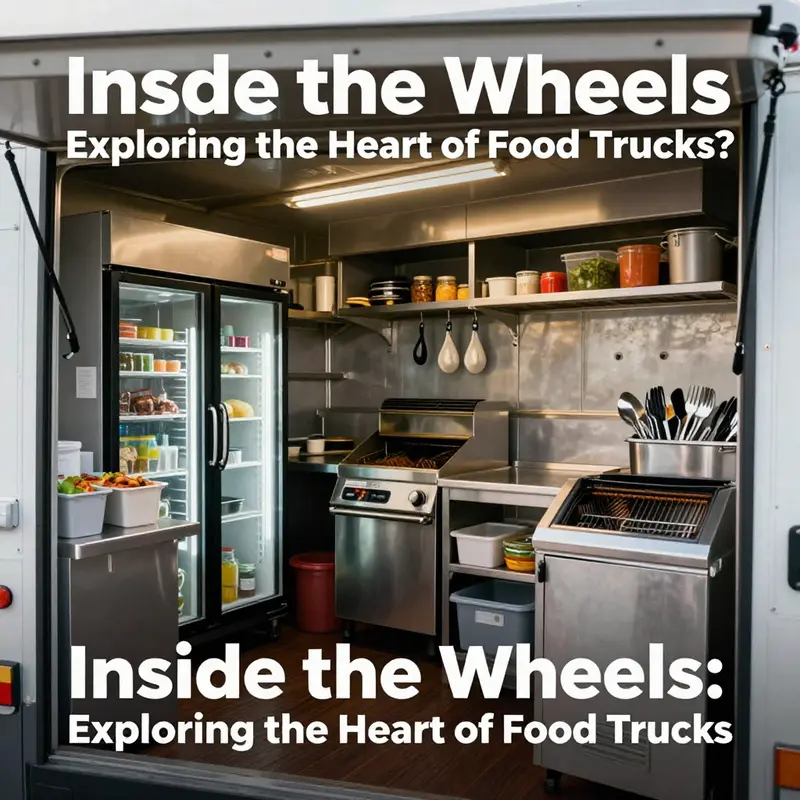
The interior of a food truck unfolds like a well-rehearsed routine in a theater of stainless steel. From the outside, the vehicle is a compact silhouette; inside, it becomes a fully functional, small-scale kitchen that must perform as efficiently as a bustling brick-and-mortar operation. The space is not an afterthought but a carefully engineered ecosystem where every tool, surface, and valve has a purpose. It is a place where form and function braid together, where safety, speed, and sanitation are not mere requirements but the rhythm that keeps a line moving and a business thriving. This is the heart of a food truck—the mobile kitchen that wears its clever engineering on the inside so customers experience only the heat, aroma, and hospitality of good food served fast.
At the core of most interiors lies a compact yet capable cooking station. The exact configuration depends on the cuisine, but the throughline is clear: a station built for high-volume output within a restricted footprint. A traditional truck might feature a commercial-grade griddle, a robust fryer, and a versatile grill, each drawing on a power source and venting system designed to clear steam and smoke without exhausting the small footprint. In trucks focused on noodles or fusion riffs, you may find a large induction cooktop paired with a steamer, a layout choice that favors precise temperature control and rapid recovery between orders. A meat-centric concept, by contrast, may rely on a dedicated charcoal or gas-powered setup, with a smoker or low-and-slow rig tucked into a corner where heat management remains predictable and safe. What binds these configurations is not the brand or the exact model but the shared discipline of space—how the cooking surface sits in relation to prep zones, how heat travels, and how staff move from one task to the next without backtracking.
The prep battleground sits adjacent to the cooking surface, and here the countertop design matters almost as much as the stove itself. Stainless steel countertops are more than a hygienic shield; they are work surfaces that withstand daily scrubbing, accidental spills, and the constant march of knives and blades. A well-planned layout places cutting boards and board-mounted utensils in easy reach, aligning with the natural grip and stride of the cook. The sink, often with hot and cold running water, anchors the sanitation workflow. In many trucks, the sink is paired with a freshwater tank and an integrated filtration system, a practical setup that ensures water quality for cooking and handwashing alike. The efficiency of this system influences everything—how quickly a station can pivot from washing to chopping, how reliably the team can maintain clean hands during peak service, and how well the space complies with health regulations.
Refrigeration and storage are the quiet workhorses of the interior. Perishables demand a controlled environment, and most trucks house one or more refrigerated units tucked beneath counters or built into the walls. These units are optimized for rapid access and temperature stability, keeping the core ingredients at safe temperatures while the crew moves through the day. Dry storage cabinets and pantries stand nearby, filled with dry goods, spices, sauces, and packaging materials. The choreography of storage is subtle but essential: ingredients should be visible, organized, and never buried under a pile of clutter where a quick grab becomes a search. In a well-designed truck, a rotating system keeps perished items away from ready-to-use components, and the layout prevents cross-contamination by separating raw proteins from ready-to-serve components. Temperature control isn’t just about quality; it’s a statutory obligation. Health departments scrutinize how a mobile kitchen maintains safe temperatures and how it handles waste and cleaning schedules.
The beverage-focused configurations reveal another layer of interior design. A coffee truck or beverage hub transforms the space into a specialty shop on wheels. Here, the heart of the operation is a professional-grade espresso setup, with an espresso machine and burr grinder occupying a compact corner. Milk must stay cold, so a dedicated milk fridge is nursed by a precise workflow that minimizes waste and guarantees consistency. Water quality, too, becomes critical, especially when machines demand filtered or purified water for taste and equipment longevity. Even with a broader culinary scope, the beverage area hints at a fundamental truth of mobile food service: every inch of space can be repurposed to deliver a consistent product, and the equipment kit mirrors the menu’s demands.
Beyond the cooking and cooling zones, the interior is a study in human factors. The flow from prep to cook to service is a choreography shaped by the constraints and opportunities of the vehicle’s footprint. A well-considered layout reduces unnecessary movement, letting a two-person crew work in harmony rather than in a perpetual game of musical chairs. The service window stands as more than a transaction point; it is a boundary that defines interaction, speed, and customer experience. A wide, transparent barrier allows customers to observe the work, heightening trust and anticipation. Digital menu boards, often mounted near the window, provide real-time updates and pricing, while branded wall panels lend a cohesive identity to the space, turning practical equipment into a recognizable, marketable image. The interior becomes not just a kitchen but a portable storefront where hygiene, efficiency, and brand promise converge.
Electrical systems are the unseen backbone that supports this on-the-move kitchen. Inverters, generators, or a hybrid power approach keep the appliances running even when utilities aren’t readily available. This is where science meets logistics: careful power management prevents brownouts during peak service, keeps refrigeration stable, and ensures that the coffee machine reaches its extraction temperature without knock-on delays for cooking lines. The better designs anticipate demand surges—lunch rushes, late-night events, or farmers’ markets—by staging power loads and sequencing equipment to preserve both temperature control and performance. The same attention applies to waste management. Grease traps and holding tanks are not glamorous, but they are indispensable for compliance and environmental responsibility. A clean-out plan, accessible plumbing, and a routine for daily or pre-event cleaning make a truck not only safe but pleasant to work in. The interior, then, is a living system, a compact city where water, waste, electricity, and heat are managed with precision so the team can focus on the craft of cooking.
This is where the design philosophy reveals itself. A food truck interior is a balance between rugged durability and tactile finesse. Materials are chosen for longevity and cleanability; surfaces that endure heat, moisture, and constant washing can still reflect the personality of a business through polished finishes and well-considered color accents. The work zones are never merely functional; they are modular to accommodate different menus and service styles. A truck that shifts from a spicy street-food concept to a more refined, artisanal offering will often reconfigure the prep and service areas, bringing in different equipment modules or re-securing storage so that the kitchen breathes differently without sacrificing safety or efficiency. The modular approach also supports maintenance. Quick-access panels and removable sections mean technicians can reach connections, hoses, and fittings without dismantling entire walls. In this sense, the internal architecture of a food truck resembles a small, highly adaptable kitchen that can reinvent itself while remaining compliant with health and safety standards.
The interior does more than house equipment; it communicates with customers, staff, and regulators. Branding is not an afterthought but a functional element of the space. Brushed steel, clean lines, and a consistent vertical rhythm on cabinets and doors create a sense of order that translates into trust. A well-branded interior reinforces the narrative of the business—its values, its cuisine, and its reliability. Even the service window, when designed with care, becomes a performance area where staff maintain eye contact with customers, answer questions, and deliver a sense of hospitality that outpaces many brick-and-mortar venues. The interior, in this sense, is a theater of service, where every tool has a line to deliver and every surface has a story to tell about the people who built the truck and the meals they serve.
The interoperability of components—how the stove, the sink, the refrigeration, and the service window coexist in a single chassis—speaks to a larger truth about mobile food service: success is built on disciplined planning and relentless attention to workflow. The most revered interiors are the ones that disappear into the background while the food takes center stage. The operator’s eye learns to trust the layout; staff learn the routes; and customers experience a smooth, almost effortless exchange that belies the complexity of the behind-the-scenes choreography. This seamlessness is not accidental. It is an outcome of designers and operators reconciling three imperatives: maximize usable space, ensure safety and sanitary compliance, and create a product and experience that reflect the brand as effectively as the food itself.
For readers curious about how interior layouts vary and what that means for choosing a truck, consider exploring resources that compare models and configurations. For example, you can explore a range of interior layouts and models at the following internal resource: Best food truck models for Lakewood startups. This guide offers insight into how different dimensions, storage schemes, and equipment packages converge to shape a business’s daily reality. It is a useful companion to the more general principles described here, helping translate the theory of mobile kitchen design into practical choices when starting or expanding a fleet.
As the day winds down and the crew cleans down, the interior reveals its second, less visible function: it is a disciplined machine for hygiene and accountability. Routine cleaning, proper separation of raw and cooked ingredients, and strict adherence to handwashing protocols ensure that the truck remains compliant with health regulations while also creating a safe and pleasant work environment. The equipment becomes not just a tool for cooking but a partner in hygiene, with design features that simplify cleaning and reduce the chance of cross-contamination. A good interior resists clutter because clutter invites mistakes, waste, and delays. The best kitchens on wheels are therefore those that anticipate these risks—providing ample, clearly delineated zones for prep and cooking, easy-to-clean surfaces, and a waste management plan that is straightforward to execute under the pressure of service.
Ultimately, the inside of a food truck reveals its core identity: a compact, mobile kitchen engineered for efficiency, safety, and high-volume service. It is a space where professional-grade equipment is scaled to fit a vehicle, where workflow dominates layout, where branding is stitched into every corner, and where the daily ritual of cooking becomes an act of hospitality performed on wheels. The interior is not a mere container; it is the engine room of a mobile business, a place where craftsmanship, logistics, and personality converge to deliver food and experience wherever the truck roams. For anyone curious about what the inside looks like, it is worth remembering that the appearance of a food truck’s interior is only the surface of a much larger story—a story of design, discipline, and the constant push to bring restaurant-quality outcomes to streets, fairs, and neighborhoods with nothing but wheels beneath.
Wheels in Motion: Inside the Compact Kitchen That Powers the Food Truck
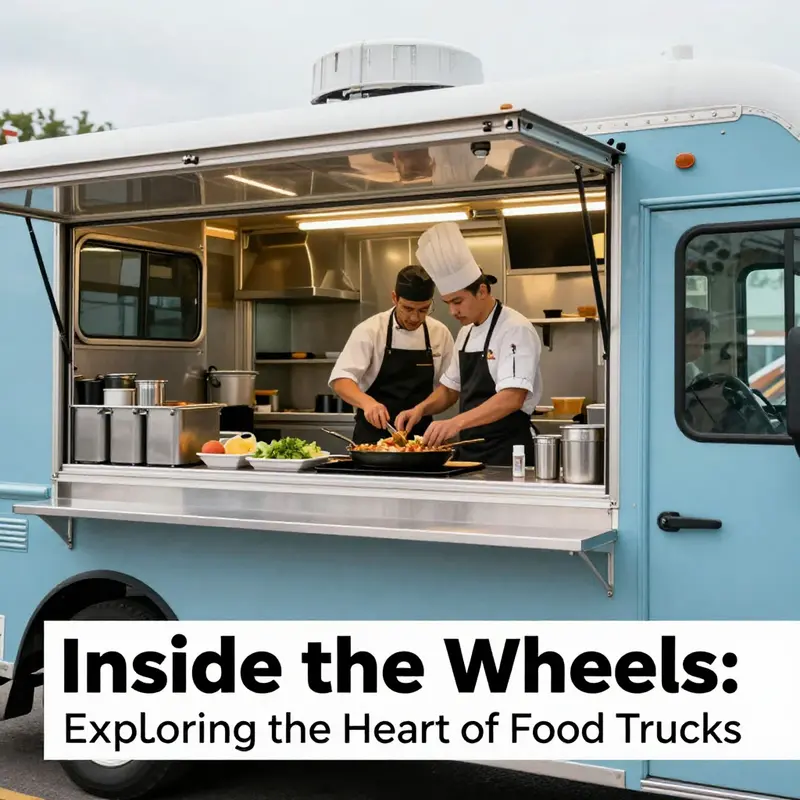
The inside of a food truck is more than a kitchen on wheels. It is a purpose-built, mobile workspace where heat, precision, and timing converge in a compact footprint. From the moment a driver unlocks the service window, the interior announces its dual mission: to maintain the standards of a high-volume kitchen while preserving the agility required for street service. A careful balance of materials, layout, and equipment turns a small box on four wheels into a fully functional culinary theater. This is where the most fundamental questions about what a food truck looks like become answers in motion: where does the mise en place live, how does the stove breathe, and how does the flow of customers and cooks stay in harmony under pressure?
At the heart of the design is a stainless steel backbone. A long, seamless countertop typically runs along one side of the truck, hosting built-in sinks and prep surfaces that are both sanitary and easy to clean at the end of a shift. The steel is more than a visual cue; it is a workhorse that resists dents, corrosion, and heat, a critical feature for the demanding realities of street service. Under that counter or tucked along the opposite wall, refrigeration units slide into place—under-counter freezers or compact reach-ins that keep perishable ingredients within arm’s reach while not crowding the prep space. The refrigeration is often one of the most carefully positioned elements, because every degree saved in temperature control translates into fresher ingredients and safer handling during a busy service.
A dedicated cooking zone anchors the truck’s workflow. Depending on the concept, this zone may feature a commercial-grade stove, a robust griddle, or a powerful fryer. The aim is to minimize movement while maximizing performance: a heat source near the prep area reduces the steps between raw ingredient and finished plate, and a well-placed vent hood keeps the space breathable and compliant with air quality standards. It is common to find a modular approach here, where a single cooking module can be swapped or augmented to match changing menus or seasonal specials. This flexibility matters because a truck that travels from festival to market must be ready to pivot without sacrificing speed or safety.
The famous central work triangle exists in miniature but with the same logic: the cooking zone, the prep station, and the serving counter form a loop that lowers travel time and keeps hands busy where they belong. Prep boards, knives, and small tools find homes in drawers and cabinets that sit within arm’s reach of both heat and cold storage. A well-conceived triangle keeps cooks in their natural rhythm, reducing walk time and avoiding bottlenecks that show up as the line grows. In practice, this means a station where the user can chop and season within steps of a clean cutting board, a sink, and a small stash of reusable containers. It is a choreography learned by seasoned operators and refined by countless shifts across markets and routes.
A customer-facing service window is a defining feature that shapes both interior logic and exterior perception. It is more than a point of sale; it is a stage prop and a throughput control. Customers place orders in plain sight of the kitchen helpers, while the staff transfer completed dishes with clean, practiced motions. The window’s height and width are calibrated for rapid exchange: orders travel through, food exits on plates or in wrapped parcels, and a separate window or pocket often serves as the pickup lane for mobile orders. Hygiene protocols are visible and practical here, with hands-free or quick-dip options for drivers and clear separation between raw and cooked items as they pass the line. The design discourages clutter in the window area and encourages a steady rhythm that sustains a steady churn during peak moments.
In practical terms, the inside of a food truck doubles as a compact, working kitchen designed for mobility. The boxy, modular form is not a constraint but a feature—every square foot is optimized, every surface chosen for durability, and every appliance sized to fit the instrument of service. The choice of materials speaks to that ethos: stainless steel surfaces resist heat and moisture, are easy to sanitize, and can withstand the rough handling and baggage of daily operation. The ceiling and walls often feature light, easy-to-clean panels and flexible mounting points for hanging tools or reorganizing shelves as menus shift with the season.
The interior also accommodates the quiet engineering that keeps a mobile kitchen reliable. Electrical systems are planned around a generator or shore power, with outlets distributed to feed the espresso machine, the refrigeration, and the lighting that keeps the workspace safe and inviting. Water is another critical system—an integrated sink setup supports handwashing, dishwashing, and food preparation, with a waste line directed toward a portable or fixed holding tank. While these elements might seem mundane, they are the lifeblood of consistency: the ability to clean rapidly between orders, to keep temperatures stable through a long rush, and to meet health and safety standards no matter the location or the temperature outside.
That reliability extends to the way space is organized for different culinary approaches. Coffee trucks, for example, demonstrate how a small footprint can support high-quality beverages and light fare. A professional-grade espresso machine and grinder anchor the drink station, with a milk refrigerator and a compact water filtration system ensuring temperatures and purity meet barista standards. Nearby storage holds pastries and a few grab-and-go snacks, creating a café-on-wheels that can thrive on short lines and quick turnover. The interior is not just about hot drinks; it is about a complete, efficient workflow that makes a coffee bar feel seamless, even when the queue stretches beyond a few minutes.
Cuisine-specific adaptations illustrate how interior design evolves to meet demands. BBQ trucks emphasize large, durable grills and an efficient ventilation system capable of evacuating heat, smoke, and odors while maintaining safety standards. The chassis and interior surfaces are often high-grade stainless steel to withstand daily use and aggressive cleaning routines. A wood-fired pizza truck, by contrast, carves out an oven area that respects heat management and insulation, while preserving access to the prep station and serving counter. The oven must be fed by a dedicated heat source, with careful clearance, ventilation, and temperature control so that it can perform consistently during a long service. Multi-course street foods or fusion concepts push the layout toward modular shelving, multiple burners, and ample refrigeration to manage diverse ingredients. Open shelving helps operators locate items quickly, while tight seals and secure latches keep everything in its proper place during movement.
In regions such as Malaysia, where trucks often serve as ambassadors for brands at festivals and seasonal events, interiors are designed for flexibility and robust use. The layout can be adapted to accommodate a variety of offerings—from ramen and sushi to brunch items like sandwiches and salads—without sacrificing speed or hygiene. The result is a space that reads as both a kitchen and a workshop, with robust materials able to withstand long hours, shifting menus, and the wear and tear of outdoor service.
Beyond the visible equipment, the interior communicates a philosophy of performance under constraint. The compact footprint forces operators to be intentional about every action: where to store a bottle of sauce so it can be grabbed in a moment, how to route waste without blocking the passport of the next ticket, and where to place a small window of exposed surface that invites a quick wipe without interrupting the flow of orders. The way a truck is organized is a direct reflection of the operator’s training, their standards for cleanliness, and their insistence on consistency. The inside may be small, but it is designed to function as a fully operational kitchen on wheels, balancing normal kitchen hygiene, safety, and performance with the mobility that makes a food truck possible in the first place.
As with any portable kitchen, the interior is a map of compromises and clever solutions. It is where the decision to go modular has the most practical payoff: a single base unit can be reconfigured for a new cuisine or a new route without a full rebuild. This is not merely about swapping a stove for a grill; it is about shifting the entire rhythm of the space, rethinking where the prep happens, how a dish travels from station to window, and how the team communicates across the bench of the kitchen and the counter. The design language of the interior—clean lines, durable surfaces, efficient lighting, and a clear sense of order—speaks to the pursuit of high-volume service without sacrificing quality.
For readers charting the path toward their own mobile kitchen, consider the practical lesson embedded in these interiors: the best configurations live at the intersection of durability, accessibility, and adaptability. The interior is not a fixed monument but a living system that grows with the business. A truck that can rearrange its workflow to support a changing menu is not just a vehicle; it is an expanding canvas for culinary expression. In the spirit of sharing ideas and sparking inspiration, many operators look to established templates and models that balance cost, space, and performance. See the discussion on the best food truck models for Lakewood startups for a consolidated look at layouts that have proven their worth in the field.
This chapter ties together the core truth about what the inside of a food truck looks like: it is a compact, high-functioning kitchen designed to be as flexible as the routes it travels. It is a space built for hygiene, efficiency, and resilience, where every inch and every appliance serves a purpose. The interior communicates the operator’s standards and personality, while keeping the customer experience clean, fast, and reliable. It is a dynamic space that continues to evolve with advances in equipment, shifts in menu strategy, and the unpredictable tempo of street service. As the industry refinements go on, the inside of a food truck remains the engine that powers the outside world of flavor and mobility—an invisible but essential stage on which every plate, every drink, and every smile passes through before making its way into the hands of a hungry crowd.
Internal link reference for further exploration of layouts and models: best food truck models for Lakewood startups. For visual inspiration and broader concepts, see external resources such as a comprehensive Pinterest board on food truck interiors at the following URL: https://www.pinterest.com/search/pins/?q=food%20truck%20interior
Inside the Moving Kitchen: Sanitation, Speed, and the Quiet Architecture of a Food Truck
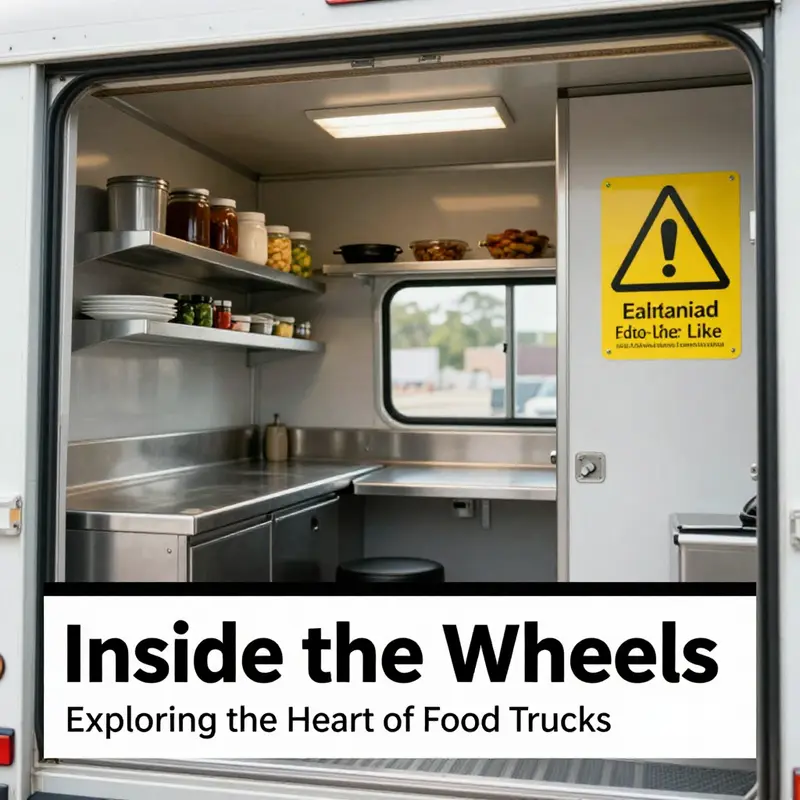
The interior of a food truck reads like a compact, purpose-built kitchen that travels instead of remains stationary. It isn’t a showroom of form alone; it’s a working blueprint for speed, safety, and sanitation that folds a full-size kitchen into a space not much larger than a small apartment. The first impression is sensory: the clean, almost clinical gleam of stainless steel, the hiss of a hot surface hard at work, the muffled whirr of a ventilation hood, and the steady rhythm of a sink and drain completing their weekly chore list. The interior does more than hold equipment; it frames the choreography of a high-volume service while adhering to the strict expectations of food safety. In this space, every square foot is a technically optimized zone, one that sustains the flow from order to plate with minimal friction and maximal hygiene.
A typical food-truck interior centers on a stainless steel core—countertops, walls, and often the cabinet surfaces—because steel is non-porous, easy to sanitize, and resistant to corrosion. This is not merely durability; it’s a practical choice rooted in health codes that emphasize smooth, easily cleanable surfaces. The countertop is more than a work surface; it is a workspace that accommodates a built-in sink, drain, and sometimes a small hand-washing station. The sink’s location and size are deliberate, designed to facilitate quick, frequent washing during meal prep, minimizing the chance of cross-contamination. The under-counter refrigeration units and refrigerated drawers nestle beneath the prep surface, quietly preserving perishables at safe temperatures while keeping them within arm’s reach for the cook. There is no wasted reach or rummage; every ingredient, every utensil, every spice jar has its assigned, easily accessible place.
The cooking station is the visible heartbeat of the operation. A commercial-grade stove, a griddle, and a fryer—each piece of equipment chosen not only for power and reliability but for ease of cleaning and maintenance—occupy a defined footprint. The arrangement emphasizes a linear workflow: prep on the left, cooking at the center, finishing and plating to the right. This zoned approach mirrors the same logic you’d find in a full-scale kitchen, distilled to fit a narrow footprint. The design anticipates intense, back-to-back service without the disruption of wandering between distant stations. A small, dedicated area for restocking and a separate, clearly demarcated zone for cooling and cooling-down tasks prevent cross-contact between raw ingredients and ready-to-eat foods.
Storage in a truck is a study in intelligent compression. Cabinets and drawers line the walls, optimized to hold ingredients, utensils, and disposables in orderly, labeled arrangements. In many trucks, shelves are adjustable to accommodate seasonal menus or changing dish runs, a practical flexibility that keeps a single vehicle capable of switching styles with little reconfiguration. The goal is to keep bulk ingredients out of the immediate prep space while ensuring quick access to the items used during each phase of service. The mental map inside a truck—where to find a whisk, a herb bottle, or a clean sheet of parchment—becomes part of the tacit training that seasoned operators rely on during peak hours.
A distinctive feature of the interior is the customer-facing service window. It is not just a point of sale; it is a transparent link between the kitchen and the customer. With a clear line-of-sight to the food being prepared, customers gain confidence in the cleanliness and care of the process. The window frame itself is often reinforced to withstand constant use and weather exposure, and the area around it is kept spotless so that the act of receiving food feels immediate and hygienic. The service window also acts as a physical barrier that reduces hand-to-food contact and helps contain heat and steam, contributing to a safer, more predictable operating environment for cooks and servers alike.
Ventilation is a silent but essential component. A compact hood system, properly sized for the cooking load, channels heat, steam, smoke, and cooking odors out of the confined space. A well-installed ventilation system serves multiple purposes beyond comfort: it reduces condensation on cold surfaces, preserves the integrity of stored ingredients, and minimizes the buildup of grease that can become a fire hazard if neglected. The ducting is sealed and accessible for routine cleaning, an acknowledgement that regular maintenance is part of the health-and-safety discipline rather than an occasional afterthought. The presence of a properly installed venting network is a reminder that inside a mobile kitchen, even the air has to be managed with the same discipline reserved for the food itself.
Alongside the hood and the steam line, a fire-suppression system is a non-negotiable feature. The need for quick, automated response to a flare-up is especially acute in a truck where space is tight and access to a traditional fire station may be delayed. The system is integrated, with no loose connections, and it is regularly tested as part of a broader maintenance schedule. The visual cues around this system—clear signage, locked panels, and unobstructed access—signal the professional seriousness with which operators treat safety. In such a compact environment, any delay or misstep could escalate quickly, so the hardware and procedures are designed to be almost instinctive.
The walls, while functional, also serve as branding surfaces. Premium interiors often feature smooth, seamless walls that can withstand frequent wiping and sanitizing, with the option to add accent panels or branding elements that are still compatible with fast-cleaning routines. The emphasis on smooth, non-porous surfaces is more than aesthetic; it reduces potential harboring spots for bacteria and simplifies the sanitation cycle. Even the doorways receive attention: well-sealed doors that keep pests out and moisture in check, yet are easy to open during service. Proper seals prevent tiny leaks, which could otherwise create damp corners where grime collects and hygiene standards slip.
One of the most telling aspects of interior design is how a truck accommodates the variability of human work. The layout must transition from one cook to two or more without collapsing into chaos. Counter heights are calibrated for comfort and efficiency, reducing fatigue during long shifts. Lighting is bright but not glare-inducing, helping cooks see color changes in meat, bread, or sauces without straining. Electrical outlets are thoughtfully placed to support equipment but tucked away enough to avoid tripping hazards. The floor, typically a textured, non-slip surface, withstands water and oil and is designed for quick mopping and thorough sanitizing between shifts. Even the smallest fixtures—door handles, sink faucets, trash bin latches—are chosen for durability and ease of cleaning, with rounded edges to minimize grime accumulation and to prevent splashes from becoming a hygiene problem.
In specialized trucks, the interior storytelling shifts slightly toward precision and temperature control. An espresso truck, for example, with a water filtration system and a compact grinder, demonstrates how professional-grade equipment extends beyond mere capability. These setups require consistent cleanliness to protect both flavor and safety, from the filtration unit to the espresso machine and the milk cooler. Temperature-sensitive operations demand tightly controlled cold storage, careful drainage, and a systematic routine for wiping down surfaces that contact dairy and other perishables. Even the soundscape of these interiors reflects a kind of discipline: the steady rhythm of a water line filling, the soft hum of a commercial refrigerator, and the precise cadence of pulling a shot that satisfies both taste and safety standards.
From a regulatory perspective, the interior layout and its components are not decorative choices but compliance decisions. Health authorities emphasize cleanability, separation of zones, proper ventilation, and pest prevention. The interior is designed to reduce cross-contamination risks by keeping raw and cooked foods in clearly separated areas, by maintaining secure storage, and by ensuring that all gear is easily inspectable and records-friendly. While the knowledge base here does not list every regulatory clause, its themes align with the core principles of food safety codes: smooth, non-porous surfaces; properly installed walls, doors, and ventilation; dedicated zones for prep, cooking, storage, and serving; and high-quality, sanitized equipment with regular maintenance.
The traveler’s nature of a food truck adds layers of complexity to the sanitation and safety equation. Road vibrations, variable climates, and the need to seal spaces against pests are realities that raise the stakes for installers and operators. The architecture of the interior—how a panel locks into place, how a cabinet seals when the truck rocks, how a drain remains unclogged through a rough ride—becomes the difference between a smooth shift and a service disruption. Operators learn to anticipate contingency: extra gaskets, spare screens for vents, backup power strategies in case of a brief outage, and a stocked toolkit for minor field repairs. In this sense, the inside of a food truck is not a static stage; it is a living, adaptable system that must endure the daily grind while preserving safety, taste, and speed.
All of this matters to customers who may not notice the steel gleam, the precise arrangement of shelves, or the quiet efficiency of a well-tuned hood. What they notice is the confidence in the hand that prepares their meal—the sense that the kitchen is a clean, well-run space where ingredients meet heat in a controlled, hygienic environment. The interior design becomes part of a larger narrative about trust and quality, a narrative that travels with the truck, across streets and neighborhoods, just as the food itself travels from stall to customer. The service window becomes a stage for a brief, transparent exchange: a lid of steam lifted, a plate slid over, and a final glimpse of the cleanliness that underwrites every bite.
If you want to compare layouts and see how different entries into this field have solved similar problems, you can explore examples of the best approaches that startups in this space are choosing for their physical footprints. For instance, a resource focused on opportunities for mobile food ventures highlights models that balance mobility with kitchen efficiency. This is not merely a catalog of equipment choices; it is a discussion of how a truck’s interior grows with the business, adapts to new menus, and stays compliant with safety standards as it scales. Such insights can illuminate how a small, portable kitchen evolves into a reliable, repeatable experience for customers, no matter what city a truck calls home on any given night. Best Food Truck Models for Lakewood Startups
The look inside a food truck is, in many ways, the look of a small commercial kitchen with a bold constraint: it must behave like a factory in a single, narrow corridor. Yet the constraint is liberating, forcing designers to think deeply about flow, sanitation, and durability. It invites a disciplined approach to materials, an honest assessment of what equipment will endure, and a respect for the rituals of food safety that keep customers safe and satisfied. The moving kitchen is a system, and like any good system, it rewards clarity: a defined work area, a cleanable surface, a well-sealed enclosure, and a routine of maintenance that makes the interior not just functional but trustworthy. When these elements align, the interior feels less like a cramped space and more like a highly specialized workshop where craft, cleanliness, and conduct meet on wheels.
For those seeking deeper regulatory grounding, the FDA Food Code 2022 provides the framework that underpins many of these design choices. The code outlines expectations for equipment materials, surface finishes, temperature control, and the separation of raw and ready-to-eat foods. It is not a design manual, but it is a map of the standards that inform every practical decision inside a mobile kitchen. Understanding that map helps both operators and consumers recognize why a certain layout feels right and why others might raise questions about safety. The code emphasizes a proactive approach to maintenance, regular cleaning schedules, and ongoing attention to the integrity of installations—from walls and doors to ventilation and storage. It is a reminder that the look of a food truck interior is inseparable from the standards that govern what comes out of it, plate after plate, day after day.
In the end, the inside of a food truck is a remarkable blend of engineering, hygiene, and hustle. It is designed to endure the bumps of the road while preserving the integrity of the food and the safety of the people who prepare it. The stainless steel gleam is not merely a material choice; it is a statement that cleanliness and efficiency can coexist in a space that is constantly in motion. The service window, the hood, the sealed walls, the storage compartments, and the floor all work in concert to create a working environment that feels deliberate and dependable. The interior tells a story of how a mobile kitchen can scale, adapt, and persist without compromising the core values that food safety regulations seek to protect. It is this quiet architecture—the careful placement of surfaces, the disciplined routines, and the cyclical rituals of cleaning and inspection—that makes the moving kitchen a credible, trusted place to dine, even as it travels through different neighborhoods and climates.
External reference for further regulatory context: FDA Food Code 2022 at https://www.fda.gov/food/fda-food-code/food-code-2022
Driven by the Menu: Inside the Mobile Kitchen, Interiors That Tell a Cuisine’s Story Across Service Models
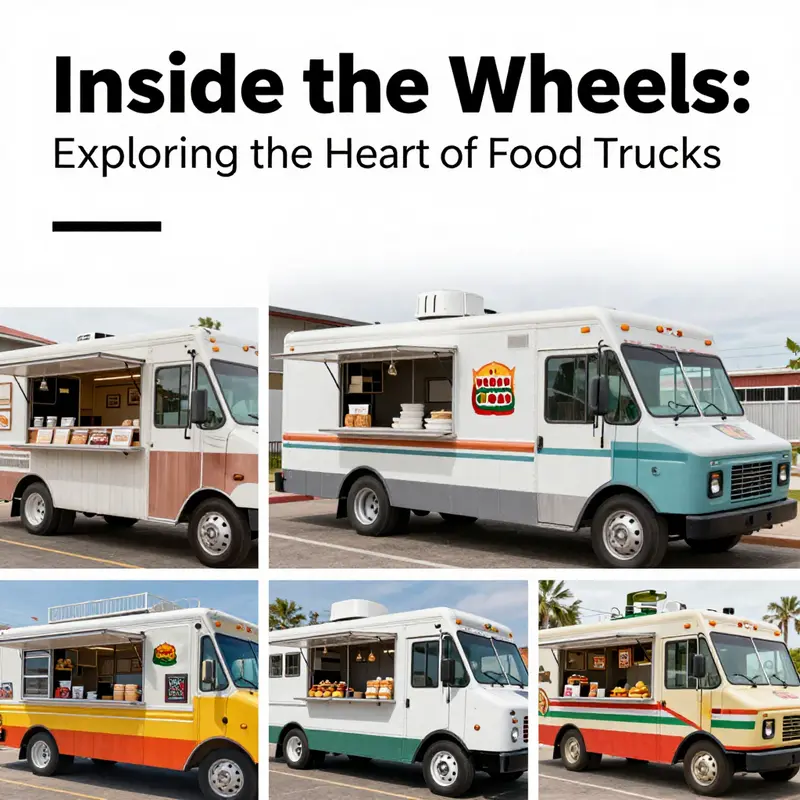
Peeking inside a food truck, you don’t just see metal and appliances; you glimpse the architecture of a menu in motion. The interior is a compact, highly intentional space where every countertop, cabinet, and window is calibrated for the specific cuisine, the service style, and the tempo of the workday. The defining feature is not a single standout gadget but the way a small footprint is reorganized to support a precise flow: ingredients enter from a rear door, they are prepped on a stainless surface, cooked on a station that suits the menu’s demands, and finally delivered to a customer at a front-facing window that doubles as a quick-serve pickup point. In this sense, the inside of a truck is a small-scale kitchen designed for mobility and high-volume service, but it is also a stage set for the flavor narrative the operator wants to tell. Space is precious, so the layout mirrors the cuisine, the service rhythm, and the brand promise in equal measure, and that harmony tells a story long before the first bite is taken.
The most visible variation arises from the type of operation. Full-service mobile businesses or event catering outfits envision the truck as a traveling kitchen capable of supporting a complex menu. In those cases, the interior expands in capability and scale. Large rectangular bodies become laboratories of workflow: multiple cooking stations, each with its own ventilation and water line, allow for simultaneous tasks—grilling, frying, baking, and finishing—in ways that keep pace with a crowd. A well-planned kitchen in this category often includes a combination of grills, fryers, ovens, and sometimes chillers and blast freezers to manage ingredients and finished products at high volumes. The plumbing and electrical infrastructure must support serial tasks that could otherwise overwhelm a smaller unit; dedicated sinks and prep zones are sized to meet health and safety standards, while refrigeration is zoned to accommodate raw, prepared, and finished goods. In such configurations, the service window remains the connective tissue between customer and kitchen, but the unseen work areas behind the window carry the weight of a full menu. The intersection of storage, sanitation, and cooking power becomes the backbone of reliability, and the interior is arranged to minimize motion and maximize throughput. That mindset—maximize workspace without sacrificing safety or sanitation—drives every cabinet depth, every shelf height, and every route through the kitchen. To glimpse these arrangements in practice is to see a menu translated into geometry, a map of how to move from inventory to plate with minimal friction and maximal consistency.
Toward a different cadence, towable food trailers emphasize fixed, though not permanent, configurations. In many regions, these units are designed to stand in markets or at events for extended periods, then be moved when a new location or event arises. The interior can be extensively tailored because mobility in itself is the constraint that must be removed once the trailer is parked. Special cuisines may dictate the installation of rotisserie ovens for Middle Eastern or Latin street-food specialties or large, continuous griddles for Mexican street fare; the interior is adapted so each piece of equipment supports the genre without constraining the operator’s flexibility. The benefit of this approach is the breadth of expression it enables—operators can push a menu in unexpected directions without needing a new vehicle. Yet because the trailer still needs to be towed, weight, balance, and fuel economy guide the choice of equipment and its arrangement. A fixed but flexible interior is a delicate balance: you want to tailor to a cuisine’s needs while preserving the ability to reconfigure for a new concept or a seasonal shift. The result is a kitchen that feels specialized, even if it is not permanently anchored to one site.
Specialty cuisines underscore how interior design becomes a narrative device. A BBQ-focused truck, for example, centers on durability and temperature control. Large smokers and temperature-controlled grills demand robust venting and heat management, with insulated holding cabinets to keep meats at precise temperatures while a line forms. Material choices are not incidental; metal finishes, reinforced shelves, and heavy-duty grease management systems are selected for their endurance in high-heat, high-traffic environments. The interior breathes with smoke vents and efficient smoke capture, while grease traps and drainage systems are designed to meet stringent hygiene and environmental standards. The aim is to sustain performance across long service days, even when the menu hinges on slow, low-and-slow techniques that demand patience as well as power. Similarly, other specialty cuisines—such as Southeast Asian noodles, Southern-style barbecue, or Caribbean jerk—call for dedicated zones that protect cross-contamination and preserve flavor integrity. In each case, the interior is not merely a workspace; it is a culinary dramaturgy that highlights the distinctive essence of the cuisine while ensuring the kitchen remains compliant, safe, and efficient.
Pop-up events and casual dining units introduce another layer of consideration. These trucks and trailers are engineered for portability and fast setup, with retractable canopies taking the place of permanent service windows in some designs. The interior remains compact, but the emphasis shifts toward speed of deployment, ease of cleaning, and rapid turnover. Even with a smaller footprint, essential components endure: refrigeration or at least cold-storage capability, a dependable prep surface, and a waste-disposal system that can be mobilized with the unit. The workflow is streamlined to support quick-service demands—think of a gourmet taco unit, a smoothie bar, or an ice cream stand where speed, consistency, and clean aesthetics matter as much as the flavor profile. In these setups, the interior is a nimble, modular stage that can be reassembled or reimagined at a moment’s notice, enabling a brand to pivot as markets dictate without losing the core promise of hospitality and quality.
All these configurations share certain non-negotiables, though not always in the same order. A customer-facing service window remains essential for clear communication and efficient pickup, yet its design must align with the interior’s flow. The prep area should be physically separated from the cooking zone enough to contain heat, steam, and splashes, while still allowing the team to move as a unit. Storage—pearl white cabinets with deep drawers, metal racks for dry goods, pull-out bins for utensils—must be accessible, visible, and organized to reduce search time and misplacement. The sink and sanitation stations are anchored to a water supply that can endure the constant demand of cleaning, with drainage that slopes toward compliant disposal. Electrical panels and gas lines are tucked away from crowds, yet clearly labeled for quick service and safety checks. Ventilation is not a luxury but a necessity that protects workers and customers, especially in an open or semi-open environment where aromas and heat travel quickly from the kitchen to the street. Fire suppression systems, too, are non-negotiable, ensuring the space can be used for extended service periods without interruption. These systems influence layout as much as any menu choice, because a kitchen that breathes well, cleans easily, and operates without interruptions becomes an amplifier for the cuisine’s quality.
Brand identity threads through every square foot of the interior. The finishes, colors, and hardware are chosen to reflect the story the operator wants to tell—the warmth of a wood-toned canopy for comfort-food concepts, the cool steel lines for a modernist urban menu, the bright, high-contrast contrast that catches the eye in busy markets. Even within the same broad category, two trucks can look different because their interiors encode different service styles and customer experiences. One may emphasize theatre and interaction, placing more emphasis on front-of-house engagement and a visible cook line that invites curiosity. Another might prioritize privacy and consistency, with a closed kitchen that emphasizes uniform output and a quiet service window where guests receive a pre-plated experience. The interior, then, becomes a living brochure—an honest reflection of what the menu stands for and how it intends to welcome people. This is why a truck’s design can be as telling as its food. A carefully arranged space invites trust, communicates competence, and signals that the business understands both the craft and the logistics of mobile food service.
As we consider the arc of this topic, it’s helpful to acknowledge the practical paths operators take as they move from concept to construction. Some gravitate toward a modular approach, selecting components and layouts that can be swapped as the business evolves. Others opt for a more bespoke route, commissioning elements tailored to very specific recipes, textures, and temperatures. In either case, the interior is less a static shell than a dynamic system, where the equipment, storage, and workflow are orchestrated around the menu’s demands, the location’s rhythms, and the brand’s promise. This orchestration is why interior design in a mobile kitchen is both engineering and storytelling: it is about making the right things easy to reach, keeping the work clean and safe, and, above all, ensuring that the customer’s experience aligns with the flavor and the moment the vendor wants to convey.
For readers curious about how these decisions translate into real-world choices, a closer look at design options and configurations can illuminate the path from concept to road-ready unit. In particular, consider how the spectrum of truck designs supports different culinary identities, and how a operator might weigh the tradeoffs between mobility, capacity, and specialization. The conversation isn’t merely about the appliances chosen; it is about how those choices map onto service speed, menu variety, and brand storytelling. The interior becomes the most intimate dialogue between the vendor and the crowd. And within that dialogue, the kitchen’s shape, the way surfaces resist heat and grime, and the way space is punctuated by clear lines of sight—all these factors converge to determine how a truck performs in a crowded market and how it feels to the customer who steps up to the window.
To glimpse how this translates into practice, it helps to examine how operators balance flexibility with focus when designing their interiors. Some prefer broad, multipurpose prep zones that can accommodate a rotating menu with adaptable stations. Others design with a fixed dream in mind, equipping the truck for a flagship dish or a signature service that defines the brand. Either approach can work if the interior supports a smooth, predictable workflow and a sanitary, safe environment. And while the road may alter the plan—traffic, weather, supply delays—the interior should remain resilient, not brittle. A well-considered layout can absorb the twists of day-to-day operation, maintain consistent output, and keep the team aligned with the service tempo. In this way, the inside of a food truck becomes more than a space; it becomes a disciplined instrument that translates culinary ambition into dependable performance.
For a broader frame on how these design choices are informed by material properties and standards, see Understanding Food Car Design. And for a practical sense of how interiors are chosen in contemporary small-business setups, you can explore industry perspectives such as Best Food Truck Models for Lakewood Startups. Best Food Truck Models for Lakewood Startups. For curious readers seeking deeper engineering context, a thorough external examination of how material properties and technical standards shape mobile kitchens is available at Understanding Food Car Design.
In the end, the inside of a food truck is a mirror of its menu and a compass for its service journey. It signals where the business is headed and how it intends to deliver its craft to the street. Whether the unit is built for the theater of a full-service event, the steadiness of a trailer stationed at a market, or the specialization of a BBQ pit on wheels, the interior architecture is the quiet engine that makes the experience possible. It is there, quietly and efficiently, whenever a customer places an order and receives a plate that embodies a chef’s labor, a brand’s story, and a moment of shared nourishment. As the cuisine adapts to markets and seasons, so too does the interior adapt—reconfigured, upgraded, or reimagined—so that the food truck remains not just a vessel for food, but a living platform for culinary identity on the move.
Final thoughts
The interior of a food truck is much more than just a compact kitchen; it’s a space that embodies efficiency, creativity, and community spirit. As we explored, from the design characteristics and essential equipment to workflow and safety measures, each element plays a significant role in crafting the perfect mobile dining experience. Whether you’re an aspiring food truck operator looking to dive into this rewarding field or a tourist visiting Lakewood, understanding what lies inside these culinary gems can deepen your appreciation for the unique flavors they bring to our streets. So next time you grab a bite, take a moment to appreciate the heart and soul—and the hard work—that goes into every delicious dish.