
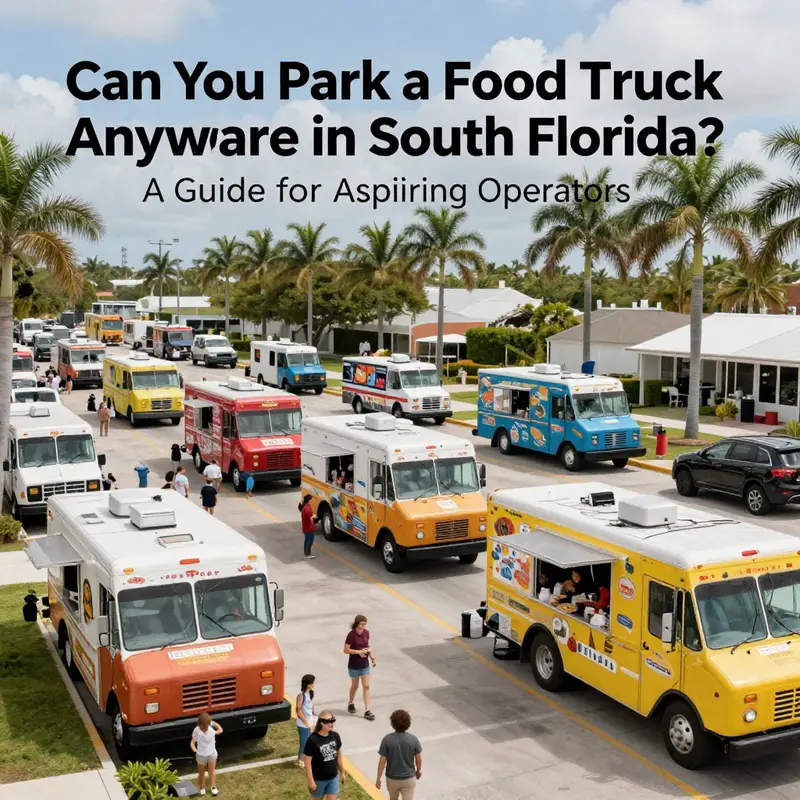
Operating a food truck in South Florida can be an exciting entrepreneurial adventure with vast opportunities to serve delicious food to the community. However, navigating the specific parking regulations and requirements can be tricky. In this guide, we’ll walk you through the regulations you must understand before parking your food truck anywhere in the Sunshine State. Each chapter delves into essential local zoning laws, the necessary permits, safety concerns that dictate where you can park, and how to thrive during community events. By the end, aspiring food truck operators and visitors will be equipped with the knowledge to navigate the vibrant food truck scene in South Florida.
Maps, Permits, and Permitted Lots: Navigating South Florida’s Food Truck Parking Rules
Parking a food truck in South Florida is less about finding a curb and more about reading a living map of local rules, zoning codes, and permitting processes that shift from city to county and even block to block. The idea that you can pull up anywhere and start serving is not the reality for most operators. The region’s vibrant street-food scene exists within a tightly regulated framework designed to manage traffic, protect pedestrians, and ensure fair competition with brick-and-mortar restaurants. The consequence is a landscape where success depends on strategic location selection, official clearance, and ongoing compliance rather than improvisation. In practice, this means understanding that South Florida is not a single jurisdiction with a single rulebook. It is a patchwork of municipalities, each with its own interpretation of where mobile vendors may operate and under what conditions. For someone planning to park a truck for a shift near a park, a beach, or a downtown corridor, this translates into a deliberate checklist rather than a spontaneous decision. You may hear accounts of a truck parking near a popular spot but those stories almost always come after a formal permit, a clear designation, and sometimes a pre-approved hosting arrangement with an event organizer or property owner. The path to compliance starts with knowing the key players: county health departments, municipal zoning offices, and the licensing bodies that oversee mobile food vendors. Without their sign-off, even a once-accepted location can become a violation, and violations can lead to fines, vehicle impoundment, or demands to relocate under pressure from enforcement teams. The challenge is not simply obtaining a permit; it is maintaining a moving target of location permissions as the calendar changes, neighborhoods evolve, and new development projects arise. The city you plan to operate in—whether it is a beachfront district, a business corridor, or a location near transit hubs—will each impose its own time windows, proximity restrictions, and safety standards. In some places, the permit is linked to a specific site, season, or event. In others, it travels with your business license, subject to quarterly or annual renewals and periodic inspections.
The central fact remains: you cannot park a food truck anywhere at any time in South Florida. You must locate zones that are designated for mobile vending or secure explicit permission from property owners, event organizers, or city authorities. The emphasis on designated zones exists for clear, measurable reasons. Parking near schools, near certain parks, or within certain distances of fixed-location restaurants that offer similar foods may be restricted or require additional approvals. In fact, the most cited rule across multiple jurisdictions is a distance-based limitation—often expressed as a proximity ban to brick-and-mortar eateries that serve the same type of cuisine. These rules are designed to reduce direct competition adverse to established businesses and to preserve safe, predictable flow for pedestrians and traffic. The practical upshot for operators is that a successful roll-out depends on early, careful research and a willingness to navigate multiple layers of regulation before a single customer is served. To illustrate, imagine planning a routine stop outside a busy arts district on a Saturday. A well-meaning plan can unravel if the local health department requires a separate inspection, the city requires a temporary use permit for that district, or a nearby restaurant’s owner objects to the proximity of a mobile rival. The layers of potential friction may seem daunting, but they are not arbitrary; they reflect a broader effort to balance energy and appetite with safety, accessibility, and fair market practice. A well-informed operator avoids the last-minute scramble by anchoring operations in zones that are pre-approved, or by building a working relationship with property managers and city staff who can shepherd the permit through the system. Scope matters here: a permit that covers a single event differs from a standing permit at a designated site, and both will influence your scheduling, marketing, and revenue strategy. The difference between a weekend pop-up and a daily curbside service is not just hours of operation; it is the architecture of permissions that keeps a truck legally on the move and customers coming back. In summary, the driver’s seat of a South Florida food truck operation is not the street but a framework of approvals, distance rules, and designated zones built to ensure a safe, fair, and vibrant street-food ecosystem. For those with the patience to work within this framework, the rewards can be substantial: steady access to busy footprints, the ability to plan around events, and the reputation that comes with reliable, compliant service. For operators who crave the freedom of unrestricted street parking, the reality is that such freedom does not exist here. The landscape rewards preparation, official clearance, and a disciplined approach to location strategy.
When you begin plotting a course through the regulatory maze, a practical entry point is to orient yourself to the different layers of authority and the general philosophy behind them. At the county level, health departments typically drive the licensing framework, ensuring food safety practices, proper refrigeration, sanitation, and permitted menu offerings. In Miami-Dade County, for instance, the mobile food ecosystem is governed by a Mobile Food Vendor Permit process administered by the Department of Health, alongside the need for a county-level business license. These requirements are the foundational pillars for any mobile operation and set the baseline for where you can serve and how you must operate. The distance constraints—such as maintaining a certain radius from existing restaurants offering similar fare—exist to minimize direct competition in the same micro-market and to prevent congestion around popular nodes. Proximity rules can be nuanced; some jurisdictions allow limited proximity if you obtain a special permit, while others require you to relocate if a dispute arises. Distilled to practice, this means an operator cannot blindly pull into a space near a fixed-location restaurant and start serving. A responsible approach is to verify the local rules first, then align your logistics: which streets or lots are actually designated for mobile vendors, and which require a formal permit or an event contract?
This is where the municipal layer becomes essential. Within a county, cities make their own interpretations of state policy, and even neighboring cities like Miami Beach and Coral Gables can enforce different standards. So a plan that works in one city may not be transferable to the neighboring jurisdiction without adjustments. The core advice is simple: talk to the right local official before you park. If you intend to stay within a particular city or district, reach out to the zoning office or the health department to confirm whether your vehicle and menu comply with local health codes and whether a temporary use permit is available for your intended hours. If your business is mobile across multiple jurisdictions, you’ll need to anticipate a patchwork of permits and renewals, each tied to a specific location or event.
To illustrate a practical step-by-step approach, consider the following path. First, identify the exact location or range of locations where you want to park. Second, check whether the site is in a designated zone for mobile vending or requires a special permit from the city or county. Third, obtain the essential licenses: a Mobile Food Vendor Permit from the county health department in the relevant jurisdiction and a business license where required. Fourth, confirm proximity restrictions: are you positioned at least the minimum distance from similar offerings, and is there room to operate safely without impeding traffic or pedestrians? Fifth, arrange any event-specific approvals if you plan to participate in festivals, farmers markets, or private gatherings where vendors are pre-approved. Sixth, ensure compliance with health and sanitation standards, including vehicle cleanliness, food storage, and proper handwashing facilities. Seventh, prepare for inspections and maintain documentation for easy verification by inspectors. Eighth, coordinate with property owners or event organizers to confirm the space agreement, hours of operation, permitted equipment, and waste disposal arrangements. Ninth, keep permits current. Finally, monitor changes in regulations and be ready to adjust your location strategy as rules evolve. The overarching message is that the path from curb to customer is paved with paperwork, site designations, and ongoing coordination with authorities. A well-planned approach that respects these structures is more durable than a last-minute dash to the nearest street.
For operators seeking a real-world example of how these ideas translate into practice, consider exploring content on related industry topics that discuss startup considerations for mobile dining in the Lakewood community. An illustrative resource is a guide focused on operational design for food trucks and the models that support startup growth. This resource provides a sense of how to approach equipment choices, space needs, and the planning required to operate legally in a designated zone or at-event setting. See Best-food-truck-models-for-lakewood-startups for a detailed exploration of vehicle options and layout considerations that complement a compliant, location-aware operation. By aligning vehicle design with the regulatory framework, operators can streamline inspections, reduce risk, and improve efficiency in the field.
No single South Florida city offers a one-size-fits-all permit. The most effective path is methodical research, early engagement with the right authorities, and a willingness to adapt to location-specific rules. In addition to the county-level guidelines, several municipalities publish their own requirements and permit processes on official portals, and navigating those pages before you park saves time and frustration. As you build your strategy, it helps to keep a running record of the zones and permits that apply to your planned operations, including contact details for the local health department, zoning office, and any event coordinators. A consistent, well-documented process not only reduces the risk of noncompliance but also signals reliability to potential hosts and customers who value predictability in where and when they can find your truck. With preparation, the complexities of South Florida’s regulatory environment become a map you can follow rather than an obstacle you must conquer.
External resource for authoritative guidance on licensing and permitted uses in the region is the Miami-Dade County Mobile Food Vendor Program. For up-to-date, official information, consult the county health department’s guidelines and the pertinent city or district authorities governing your intended operation location. Miami-Dade County Mobile Food Vendor Program
How Zoning Shapes Where Food Trucks Can Park in South Florida — The Monroe County Example
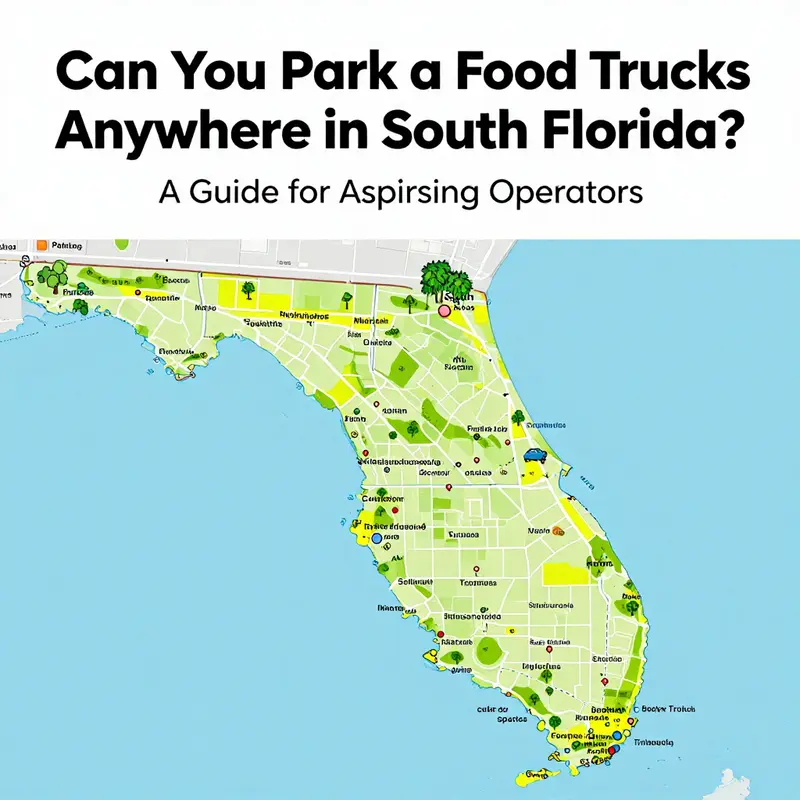
Zoning rules do more than draw invisible lines on a map; they shape the day-to-day reality of where a food truck can park, who it competes with, and how it reaches customers. In South Florida, and especially in places like Monroe County, those rules are often the deciding factor between a profitable shift and an unplanned ticket. This chapter explores the zoning realities that restrict food truck parking, explains the ripple effects on vendors and communities, and offers clarity on how operators can navigate these legal boundaries without losing momentum.
Zoning is a local tool used to control land use and guide development. It sorts the landscape into categories such as residential, commercial, industrial, parks, and mixed-use. For brick-and-mortar restaurants, zoning tells developers and proprietors where they may build and operate. For mobile vendors, zoning answers a different but related question: where is it permissible to park and serve food? In Monroe County, the answer is explicit: food trucks must operate on private property and only in zones that allow restaurants. That sounds simple, but the practical consequences are profound.
First, this private-property requirement removes many high-value, publicly accessible locations from consideration. Beaches, waterfront promenades, popular public parks, and downtown plazas attract foot traffic and create impulse purchases that drive the economics of most food trucks. When zoning prohibits vending in these public spaces, operators lose prime customer corridors. They must instead find private lots or partner with businesses that have the right zoning designation. This often means negotiating with property owners, sharing revenue, or paying rent for a location that may still see less foot traffic than a public plaza.
Second, restricting food trucks to areas already zoned for restaurants is a way local governments preserve the character of neighborhoods and protect brick-and-mortar establishments. Restaurants typically pay higher rent, employ more staff, and generate predictable taxes and inspections. By limiting competition from mobile vendors in those same zones, municipalities aim to protect established investments. The downside is that zoning policies can unintentionally stifle the very innovation and diversity that enhance a local food scene. Food trucks are nimble. They introduce new cuisines, test concepts with minimal overhead, and often serve as incubators for future restaurants. When zoning walls keep them confined to less visible areas, residents and tourists lose access to that culinary variety.
The economic impacts ripple beyond individual vendors. A food truck that can operate in a high-traffic public area contributes to informal placemaking. It increases the time people spend in a location, which benefits adjacent retailers and the local tax base. Conversely, when zoning confines vendors to private lots behind other buildings or in remote commercial stretches, the cross-pollination that enriches neighborhoods is diminished. Local officials often cite concerns about traffic, pedestrian safety, and blocked sight lines as reasons for strict regulations. Those concerns are valid. But a thoughtful zoning framework can offer permitted public vending zones, timed permits, and design guidelines that balance safety with economic opportunity.
The Monroe County approach also raises practical challenges for compliance. Food truck operators must verify property ownership, confirm zoning designations, and sometimes obtain written permission from landowners. Municipal planning offices and zoning maps are the starting points, but interpretation varies. A lot that appears “commercial” on a digital map may have overlay restrictions, historic district rules, or environmental protections that complicate permitting. For seasonal destinations within Monroe County, such as islands and tourist corridors, additional layers of regulation—environmental protections, hurricane evacuation routes, and special event permits—can further limit operational windows.
For vendors, time is money. The administrative burden of researching zoning, securing private sites, and aligning with property owners adds friction. It can force smaller operators to concentrate on a handful of reliable locations rather than pursue pop-up opportunities that build brand awareness. This is where partnerships and strategy matter. Collaborating with businesses that already hold restaurant-zoned properties—breweries, markets, event venues—enables food trucks to tap into existing permit envelopes. Forming alliances with local event organizers or private landowners who understand municipal codes can open access to otherwise restricted locations. These arrangements often require clear contracts, shared responsibility for utility access, and adherence to the property’s hours and safety rules.
Beyond immediate logistics, zoning rules influence long-term planning. Entrepreneurs who envision scaling from a single truck to multiple vehicles or into a permanent restaurant must factor zoning into their growth models. A market that restricts mobile vending to private, restaurant-zoned properties may make it harder to validate concepts quickly. Conversely, areas that provide designated vending corridors, temporary permits for public spaces, or streamlined processes for temporary events give mobile vendors runway to test ideas and expand. For planners and policymakers, the question becomes how to craft zoning that supports economic vitality without compromising public order.
Communities across South Florida are grappling with that balance. Some municipalities are exploring zoning amendments that create flexible vending zones around parks and transit hubs, or that allow temporary vending during peak seasons and city-hosted events. Others prefer a conservative stance, prioritizing established business districts and limiting vending to properties with existing commercial use. The debate often centers on perceived winners and losers: mobile vendors versus brick-and-mortar restaurants, convenience versus neighborhood character, and tourism activation versus traffic management.
Operational compliance in Monroe County requires vigilance. Vendors should develop a process for vetting sites: consult county zoning maps, confirm permitted uses for the parcel, secure written permission from the property owner, and verify any additional county or state permits. Insurance and health department approvals are separate but equally necessary steps. Building good relationships with county planning staff can also smooth the path; many jurisdictions offer pre-application meetings or guidance that clarify ambiguous zoning provisions.
From a practical perspective, food truck operators who accept the zoning constraints find creative workarounds that respect the rules while maximizing reach. Regularly scheduled roundups in private lots near popular districts, weekday partnerships with offices and retail centers, and presence at permitted festivals and farmers markets all help build customer bases. For vendors focused on growth, investing time in community engagement pays off: convincing a local property owner to host a weekly food truck night often requires demonstrating how a consistent vendor presence drives foot traffic and benefits other tenants.
The zoning story in Monroe County also highlights a broader planning opportunity: using zoning as a tool to catalyze rather than curtail micro-enterprise. Thoughtful zoning updates can designate specific public spaces for vetted mobile vending, create clear rules for temporary permits during events, and allow conditional use approvals where health and safety standards are met. These changes require political will, stakeholder engagement, and careful design, but they can unlock visible, safe, and economically vibrant spaces for food trucks without sacrificing planning goals.
For operators and community advocates navigating South Florida’s zoning landscape, the path forward is practical and strategic. Know the zoning map. Build relationships with property owners and planning staff. Leverage events and private partnerships. And participate in local zoning conversations—public meetings and planning workshops shape the rules that will determine where food trucks can be seen and enjoyed.
For detailed, local guidance on zoning rules that affect where food trucks can operate in Monroe County, consult the county’s official zoning resources. For ideas on events and rallies that create permitted vending opportunities across the region, consider checking resources like 2026s best food truck rallies, which highlight organized gatherings where vendors can legally park and serve customers: https://lakewoodfoodtrucks.com/2026s-best-food-truck-rallies-what-lakewood-has-in-store/.
More specific regulatory details for Monroe County zoning are available from the county’s official site: https://www.co.monroe.fl.us/.
Getting Legal: Permits and Where You Can Park a Food Truck in South Florida
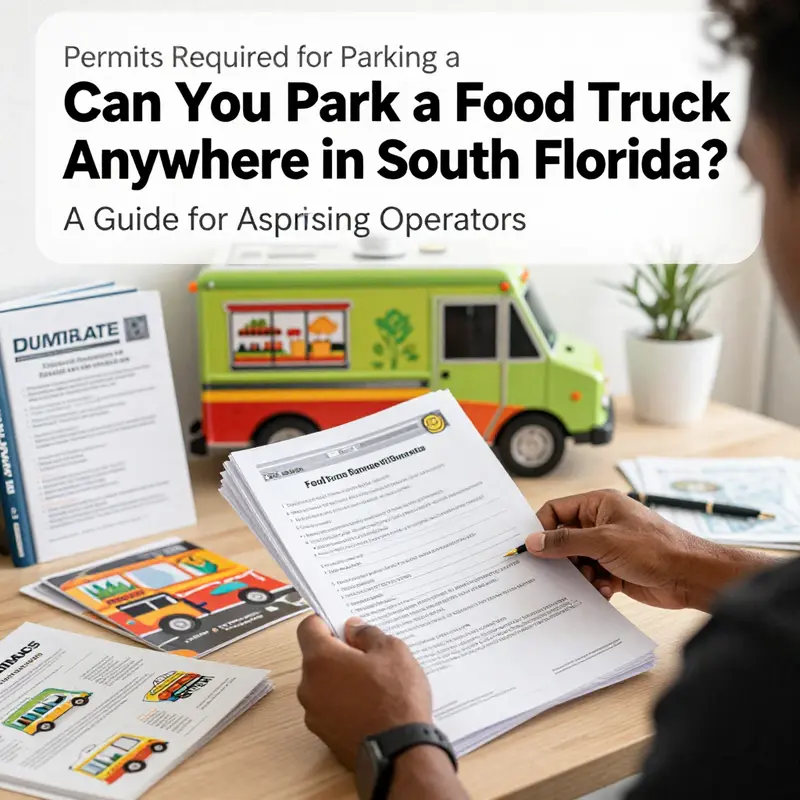
Navigating permits is the single most important step for any food truck operator who wants to park and sell anywhere in South Florida. The region has no single, blanket permit that allows unrestricted parking across county lines or municipal boundaries. Instead, a patchwork of county health permits, city vendor licenses, zoning rules, business tax receipts, and event approvals governs where a truck can set up. Understanding this patchwork will save time, avoid costly fines, and keep your truck operating smoothly.
Start with the health department. Every county in South Florida—Miami-Dade, Broward, and Palm Beach—requires a mobile food vendor permit issued by the county health authority. These permits are not simply paperwork; they represent a commitment to meet food safety standards. Inspections verify that cooking equipment, refrigeration, water supply, waste disposal, and food handling meet public health requirements. Failing an inspection can delay issuance and may require costly retrofits to your vehicle. Most counties also demand a plan for sanitation and refuse, which usually involves secure bins, grease disposal plans, and a way to keep runoff from entering storm drains.
Beyond health approval, local zoning and parking restrictions determine where a permit allows you to operate. Counties often designate specific “food truck zones” or approved sites where mobile vendors may park. These zones are chosen to reduce traffic conflicts, protect pedestrian safety, and balance the interests of nearby brick-and-mortar restaurants. In many municipalities, public streets are off-limits unless the city issues a special street vending permit or temporary event authorization. Parks, beaches, and public plazas may allow vending but typically require additional permission from a parks or recreation department. Even when a county health permit is in hand, you must check local zoning maps and municipal ordinances to find legal locations to park.
City-specific rules add another layer. Cities such as Fort Lauderdale, West Palm Beach, and Coral Gables often require a city business license or mobile vendor permit in addition to the county health permit. City rules commonly address hours of operation, noise limits, lighting, generator use, and trash removal. Some cities limit the number of food trucks allowed near a given business district or set minimum distances from restaurants. In practice, this means a food truck with a valid county permit may still be prohibited from parking in a downtown street without a local authorization. The common pattern is dual compliance: meet the county health standards and then meet the city’s operational rules.
If you plan to attend events, special permits apply. Festivals, farmer’s markets, and sporting events usually require event-specific approvals. Event organizers often provide a permit packet that includes a site map, vendor spacing requirements, and health inspection schedules. Some large events require a temporary food service license issued for the event dates and may require proof of liability insurance. For trucks that rely heavily on festivals and rallies, maintaining good relationships with event organizers and showing a clean compliance record can open repeat opportunities. To discover local events and rally opportunities, monitoring community calendars and industry listings is essential. For a sense of recurring food truck gatherings and festivals that serve as high-traffic opportunities, see a roundup of regional rallies and what they offer.
Insurance and business registration are part of the permit landscape. Counties and cities commonly ask for a business tax receipt or local business license. Liability insurance is often mandatory; event organizers and municipal permits frequently require specific coverage limits and an insurance certificate naming the city or organizer as additional insured. Proof of workers’ compensation may also be requested if you have employees. These documents must be kept current and may be inspected at vending sites or events.
Operational standards and signage rules appear in many municipal codes. Local ordinances can require specific signage formats, prohibit certain advertising displays, and limit menu board size or placement. Noise ordinances restrict generator use during certain hours. Wastewater and greywater rules prevent dumping on city streets. If your truck uses propane or other fuels, fire department inspections and permits may be required. In short, operating legally is as much about how you run the truck as where you park it.
Enforcement varies by jurisdiction. Some cities proactively patrol popular vending areas and issue citations for violations. Others rely on complaints from the public or nearby businesses. Fines can accumulate quickly and, in severe cases, can lead to permit suspension or vehicle impoundment. This reality makes proactive compliance the better strategy. Regularly check permit expiration dates, carry printed copies of licenses and inspection reports on the truck, and document any approvals for specific locations or events.
Inter-jurisdictional operations require careful planning. If you intend to work in multiple cities or across county lines, secure the necessary permits for each jurisdiction in advance. Some counties allow reciprocity for certain inspections or issue mobile permits that cover multiple municipalities within the county, but this is not universal. Always verify with each county health department and city clerk’s office whether your permits are sufficient for the locations you plan to service. When in doubt, call or email the permitting office and ask which documents you must show to avoid a surprise citation.
Applications and timelines are practical concerns. Permit processing times vary widely. Health inspections require scheduling, and city licenses often involve background checks, fingerprinting, or site plan review. Plan for lead times of several weeks to a few months, especially in high-demand coastal communities where permitting offices are busy. Budget for application fees, inspection fees, and any required modifications to the truck. Keep a checklist and a file for each jurisdiction that includes application dates, inspection results, fee receipts, and renewal deadlines.
Community relationships matter. Establishing good rapport with neighborhood associations, downtown business improvement districts, and event promoters can smooth permission negotiations. Some cities have formal application windows or require community meetings for new vending zones. Being transparent about your operations, offering clear trash management plans, and showing respect for adjacent businesses will help. In many places, operators who demonstrate professionalism and consistent compliance are more likely to receive steady locations and invitations to private events.
Finally, always use official sources for up-to-date requirements. County and city rules change, often in response to new development patterns or community concerns. For the latest on county health permit requirements in Miami-Dade, consult the county health department’s mobile food vendor page.
For practical reading on recurring events where food trucks commonly operate and to find rally opportunities that often include pre-approved vendor locations, see this roundup of regional food truck rallies: https://lakewoodfoodtrucks.com/2026s-best-food-truck-rallies-what-lakewood-has-in-store/.
External reference for county requirements: https://www.miamidade.gov/health/food-safety/mobile-food-vendors
Navigating Safety and Competitive Challenges: How South Florida Regulates Food Truck Parking
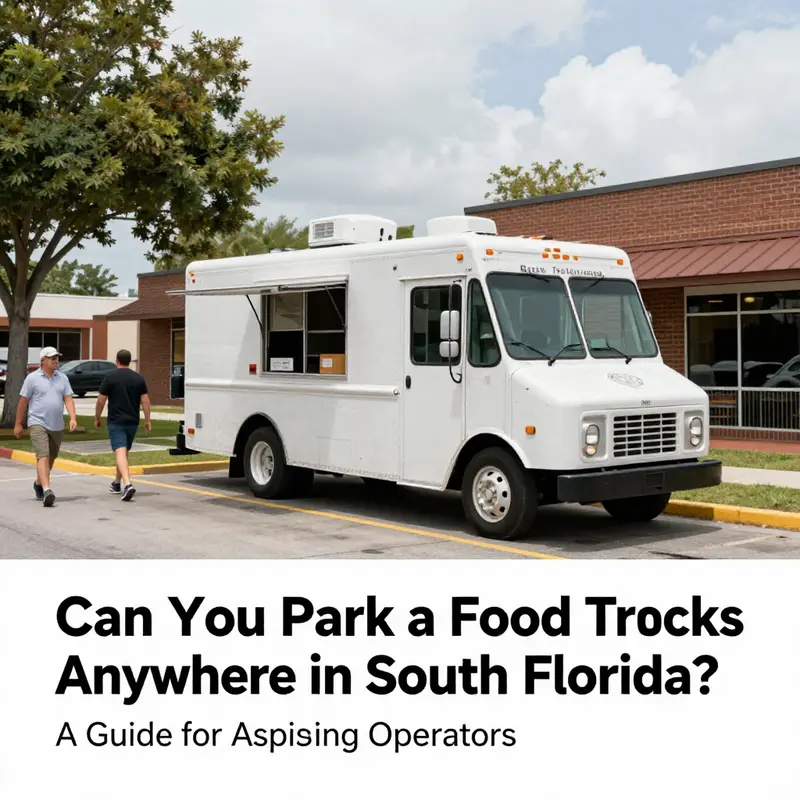
South Florida’s bustling food truck scene has become a vibrant feature of the local dining landscape, attracting tourists and residents with its culinary variety and entrepreneurial spirit. However, this expansion brings with it a complex web of concerns focused on safety and fair competition. Understanding how these concerns shape food truck parking regulations is essential for vendors and stakeholders alike, as it sheds light on why you cannot simply park a food truck anywhere in South Florida.
The surge of food trucks across cities like Miami, Fort Lauderdale, and West Palm Beach underscores the need for a balanced approach to public space usage. While these mobile culinary ventures offer new business opportunities and cultural enrichment, they also test the limits of urban infrastructure and regulatory frameworks. Chief among the concerns are traffic congestion, pedestrian safety, and the economic impact on permanent restaurant establishments. These factors collectively influence the locations where food trucks are permitted to operate.
Local government authorities face a delicate task: they must allow food trucks enough access to succeed without compromising public safety or unfairly disadvantaging brick-and-mortar restaurants. Public spaces such as sidewalks, public parking spots, and popular street corners are highly coveted zones that generate tension when occupied by mobile food vendors. Without clear guidelines, food trucks can inadvertently obstruct vehicular flow, block driveways, or crowd pedestrian pathways, creating hazards and community dissatisfaction.
The regulatory landscape in South Florida reflects this balancing act. Municipalities have enacted specific rules limiting food trucks to designated zones, often near parks, beaches, and special event venues. In many cases, these zones are established to channel foot traffic in ways that minimize disruptions and maintain smooth transportation flow. Furthermore, temporary permits might be granted for festivals and community gatherings, but typically through a more controlled approval process to ensure compliance with safety standards.
An important piece of the puzzle is Florida state law, which explicitly prohibits local governments from banning food trucks outright. This legislation emerged in response to attempts by some municipalities to restrict mobile vendors completely, viewed as a form of protectionism by traditional restaurants. Instead, the law guarantees food trucks a right to operate within city limits, while allowing local authorities to regulate where and how they park to mitigate potential negative impacts. This framework places the responsibility firmly on cities and counties to devise and enforce clear zoning codes and operational rules tailored to local needs.
The interplay between state law and municipal regulations means that food truck operators must navigate a nuanced legal environment. Securing the required permits involves demonstrating compliance with health codes, vehicle standards, and location-specific restrictions. For example, in Miami-Dade County, mobile food vendor permits dictate which streets and public areas may host food trucks, often focusing on locations that optimize safety and avoid congested traffic corridors.
Safety considerations extend beyond simple traffic flow; pedestrian accessibility and emergency vehicle maneuverability are paramount. Improperly parked trucks can block fire hydrants or impede emergency response routes, elevating risk in densely populated urban settings. Additionally, vendors must avoid obstructing handicapped access ramps or causing sidewalk overcrowding, which would discriminate against individuals with mobility challenges. These factors are thoroughly assessed by regulatory authorities when determining permissible parking areas.
The competition issue deepens this complexity. Brick-and-mortar restaurants often express concern that food trucks, with lower overhead costs and the ability to move locations, gain an unfair advantage. This dynamic has prompted some municipalities to place restrictions on how close food trucks can park to existing restaurants or business districts. The rationale is to prevent direct competition in concentrated commercial areas, preserving community character and protecting established businesses.
Such measures aim to foster a cooperative environment between mobile vendors and brick-and-mortar establishments, encouraging mutual coexistence rather than conflict. Food trucks often complement the local dining ecosystem by serving areas underserved by traditional restaurants, such as public parks or construction zones. Nonetheless, zoning regulations frequently incorporate buffer zones and time restrictions to balance interests.
The economic impact of these regulations is significant for food truck entrepreneurs. Location choices drive customer volume, and overly restrictive parking rules can limit business viability. Conversely, a well-regulated system that manages safety and competitive equity can enhance the overall quality and sustainability of the food truck industry. By clearly defining where food trucks are permitted, communities foster predictable business environments, reduce disputes, and create safe, engaging spaces for customers.
South Florida’s regulatory approaches illustrate this principle well. Cities employ permitting programs that require detailed applications, including proof of insurance, compliance with health inspections, and adherence to parking limits. These programs often utilize digital maps to clearly denote approved vending zones, providing transparency for operators and enforcement personnel alike.
Understanding these regulations is crucial for anyone considering operating a food truck in the region. Venturing to park arbitrarily in popular or unauthorized locations can result in fines, impoundment, or permit revocation. Therefore, vendors must proactively engage with local permitting offices and stay informed of changes to zoning maps and safety ordinances to avoid operational disruptions.
The broader public benefits from this regulatory rigor as well. Careful management of food truck locations helps maintain orderly traffic patterns, ensures public access, and protects the character of neighborhoods. Moreover, these policies contribute to a diverse and thriving culinary scene that can safely coexist alongside traditional dining establishments.
For food truck operators looking to understand how South Florida reconciles these concerns, resources such as the Miami-Dade County Mobile Food Vendor Program provide comprehensive guidance. This official program details permit requirements and outlines location restrictions designed to ensure safety and fair competition, embodying the principles discussed here.
In a region famed for its dynamic food culture, the success of food trucks depends on thoughtful, well-enforced parking regulations that respect public safety and foster balanced economic competition. The interplay of state protections and municipal controls creates a framework that, while complex, seeks to maximize opportunity while minimizing conflict.
To explore how these regulatory challenges reflect broader industry innovation and mobile food culture evolution, consider reading more about how food trucks adapt and thrive within structured environments through detailed entrepreneurial journeys and equipment innovations at Rockdog Adventures Food Truck Journey.
For a closer look at the legal context underpinning these policies and how they shape vendor rights and municipal responsibilities in South Florida, visit the authoritative source on Florida State Law Prohibits Banning Food Trucks.
Ultimately, parking a food truck in South Florida is a matter governed by a complex balance of safety, economic fairness, and legal mandates—not open freedom of location. Vendors and regulators alike must collaborate within these parameters to sustain a thriving and equitable street food ecosystem in this vibrant region.
Parking Rights and Regulatory Realities: Can a Food Truck Park Anywhere in South Florida?
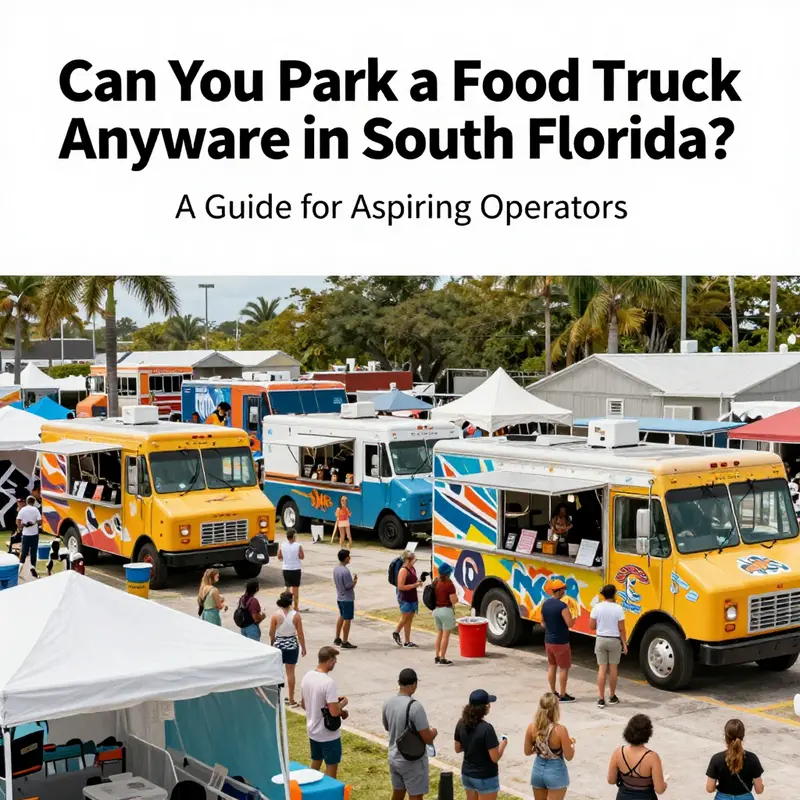
South Florida presents a vibrant, ever-moving culinary scene where food trucks are as much a part of the street fabric as the breeze off the Atlantic. Yet the freedom to pull up and serve a crowd on a public street is not a blank canvas. The region’s climate and its dense mix of neighborhoods, parks, beaches, and business districts amplify both the appeal and the risk of operating a mobile kitchen. The short version is simple but important: you cannot park anywhere you please. Across major cities—from Miami to Fort Lauderdale and West Palm Beach—permits, zoning rules, and location restrictions govern where a truck can stand, what it can cook, and how long it may stay in one spot. This regulatory framework is less about stifling entrepreneurship than about balancing safety, traffic flow, and the health of brick-and-mortar restaurants that share the culinary landscape with mobile vendors. For someone planning to launch or expand a mobile eatery in South Florida, the central question isn’t just “What can I cook?” but also “Where and when can I park legally, and what paperwork do I need to be in good standing with the city or county?”
The regulatory web in South Florida is, in practice, a patchwork of county and city rules. In Miami-Dade County, for example, the Department of Regulatory & Economic Resources regulates licensing and sets the baseline requirements that a mobile food vendor must satisfy to operate. The typical entry point is a mobile food vendor permit, paired with location-based restrictions. These restrictions often carve out permitted zones—designated areas where a truck may stand during business hours or at specific events. Commonly, those zones are found near parks, along bustling business corridors, near popular beaches, or at events where organizers have secured the necessary permissions. The logic behind these zones is straightforward: to manage traffic impacts, protect pedestrians, and reduce competition with nearby restaurants that have fixed lots and overhead. The practical upshot is that an enterprising operator cannot simply roll into a new neighborhood and place the cart, trailer, or van wherever a customer might appear; instead, a careful screening process is in place to determine whether the proposed location aligns with traffic management plans, fire safety requirements, and environmental health standards.
The path to legitimate parking starts with research and compliance. Operators must corroborate their plans with the local authority that has jurisdiction over both the vendor’s license and the proposed location. In many jurisdictions, this means confirming that the site is within a designated zone, or ensuring that the event organizer has pre-approved a location. For ongoing operations, this often involves a combination of a mobile food vendor permit, a business license, insurance coverage, and a location permit for each site. The process might look routine, but it is anything but trivial in a crowded metropolitan region where events and festivals arrive with regular frequency and shifting permits. If a truck is spotted operating without proper authorization, suspensions and fines can follow, along with the loss of access to lucrative peak hours. The aim is not to curb opportunity but to protect public safety, ensure fair competition, and keep streets navigable for residents, commuters, and visitors who expect orderly streetscapes in neighborhoods that already juggle heavy footfall.
The practical implications for daily operations are clear. A truck owner must factor permit cycles, renewal timelines, and location restrictions into the business calendar. The permit itself may be tied to ongoing compliance requirements—such as ensuring ventilation, maintaining clean and sanitary service areas, and demonstrating that food-handling practices meet health codes. Location restrictions often translate into a preference for pre-approved parking lots on event days or in districts that can absorb the additional vehicle and foot traffic without compromising nearby traffic flow. In the Miami-Dade corridor especially, where the density of events—festivals, farmers’ markets, and gala weekends—keeps vendors busy, the most successful operators are those who anticipate a full event calendar and align their permits with anticipated opportunities. When in doubt, the best practice is to consult the official Mobile Food Vendor Program or equivalent local authorities to verify current rules and to understand any changes that may come with seasonal adjustments or infrastructural projects in busy districts.
For operators, the difference between thriving and merely surviving in South Florida often hinges on the specifics of where a truck can legally park during a given shift. The hot climate is a double-edged sword: it invites demand for convenient, on-site dining but also intensifies the burden of maintaining safe temperatures and reliable equipment. High humidity and heat accelerate the need for robust refrigeration and cooling capabilities. Perishable ingredients—seafood, dairy, fresh produce—demand consistent temperature control to prevent bacterial growth and quality degradation. The equipment used in the truck, from reach-in coolers to blast chillers, must perform reliably in stifling heat, and operators frequently design their menus with this reality in mind. It is not unusual for operators to pre-portion ingredients, stage cold storage in advance of peak hours, and select menus that maximize turnover during the warmest parts of the day. The overarching goal is to protect both safety and flavor, ensuring customers have a positive experience even when the humidity feels almost tangible in the air.
Beyond safety and compliance, the choice of vehicle and layout remains central to success. In the realm of events and festivals, compact service vans that concentrate cooking appliances in a tight footprint can deliver speed and efficiency in crowded urban environments. For large-scale affairs, catering vans equipped with warming ovens and insulated storage for finished dishes may be preferred, especially when food must be transported and served off-site. Each configuration has its own logistics, maintenance considerations, and potential limitations related to space and traffic. A smart operator thinks through the entire customer journey—from the moment a passerby notices the truck to the moment a bite is savored and the line moves. The design of the service window, the placement of handwashing stations, the arrangement of cold storage, and the ease with which staff can maneuver around hot equipment all influence throughput and safety. In this sense, the choice of truck type and the interior workflow are as much a strategic decision as the selection of permitted parking locations.
Candidly, creating a successful calendar of events and street-park locations in South Florida also requires relationship-building with event organizers, venue managers, and neighborhood associations. The most reliable opportunities come from pre-approved placements and clear coordination: organizers who have a lane plan, a map of the surrounding vendors, and a predictable schedule for vendor arrivals. This reduces the friction of arrival and setup and helps ensure a smooth welcome for guests during peak hours. A thoughtful operator will monitor local event calendars and vendor networks to uncover opportunities and to build a pipeline of recurring engagements. Seasonal trends can then be leveraged to sustain interest throughout the year. For instance, in the summer, a menu that features refreshing beverages and bright, tropical-inspired flavors can draw lines even in the heat, while fall or winter events may favor comforting options and heartier items that perform well at corporate gatherings or weddings. This approach—merging regulatory savvy with culinary adaptability and strategic event planning—creates a resilient business model that can withstand the fluctuations of a dynamic mobile dining scene.
To illustrate the practical path through these realities, consider the balance between location and permits as a core operating discipline. A vendor who ignores the zoning map or permits risks losing prime hours, storage space, or even the ability to operate in a given district altogether. Conversely, a vendor who builds a routine around pre-approved zones and reliable event partnerships can achieve a predictable revenue stream while still enjoying the flexibility that defines the mobile restaurant sector. The experience of many operators in South Florida confirms that success hinges less on the ability to park anywhere than on the discipline to park legally, the readiness to adapt to the weather, and the willingness to collaborate with event organizers to place the truck where it can thrive without disrupting the community around it. For those who want to venture deeper into the practicalities of truck layout and the iterative process of selecting the right configuration, there is a wealth of guidance to draw from industry resources that discuss space optimization and operational efficiency. One practical starting point is to explore layouts that maximize flow and service speed in constrained spaces. See this resource that discusses different truck models and interior configurations suitable for startup operations: https://lakewoodfoodtrucks.com/best-food-truck-models-for-lakewood-startups/. While focused on a different market, the underlying principle of aligning vehicle design with anticipated site demands remains universal.
The street level reality, however, remains that permission to park is as important as the menu. This is why operators should not underestimate the value of maintaining organized documentation, staying current with permit requirements, and cultivating good relationships with permitting staff and event organizers. The endgame is not merely to secure a spot for the next sale but to embed the business in a network of compliant, safe, and aesthetically appealing operations. When a truck is well-regulated, well-equipped, and proactively aligned with event schedules, the experience for customers becomes more reliable, and the operator’s reputation grows alongside throughput and repeat business. In a region where outdoor dining is a staple and the local calendar is crowded with festivals, farmers’ markets, and gala fundraisers, the potential for a thriving season exists for those who pursue it with diligence and adaptability.
As this chapter threads together the realities of parking legality with the demands of climate, crowd, and commerce, the overarching message is affirming and practical: you cannot park a food truck anywhere in South Florida. You must navigate a legal framework that varies by jurisdiction, obtain the necessary mobile vendor permits, and operate within designated zones or approved locations. You must anticipate the weather’s effects on refrigeration and food safety, select a vehicle and interior layout that match the scale of your target events, and develop a workflow that keeps lines moving and customers satisfied. You must also engage with event organizers and local authorities to secure dependable placements during peak seasons while keeping a pulse on upcoming opportunities through trusted calendars and vendor networks. In doing so, you position the business not as a wandering kitchen with impromptu staging but as a rehearsed, compliant, and reliable entrant into South Florida’s bustling, diverse, and ever-evolving food landscape. The river of opportunities is real, but the bridge to crossing it successfully is built from permits, planning, and partnership as much as from appetite and ambition. For those who master these elements, the South Florida mobile dining scene offers both a platform for creativity and a channel for steady growth, even within the region’s strict parking realities.
External reference for up-to-date event opportunities: https://www.miaminewtimes.com/events/food-truck-events-in-miami-fl-12497657
Final thoughts
Navigating the world of food trucks in South Florida is not only about culinary creativity but also understanding the dynamics of local regulations. From zoning laws to essential permits, every aspiring food truck operator must be equipped with the right knowledge to thrive. It’s this intricacy that enriches the vibrant food culture of South Florida, providing both food truck operators and visitors with amazing experiences and flavors. Stay informed, plan accordingly, and enjoy being part of this flavorful community!