
Imagine serving freshly cooked snacks paired with a cold beer or a delightful glass of wine while you delight hungry festival-goers or cheerful tourists in Lakewood. Selling alcohol from your food truck can elevate your offerings from satisfying bites to a full-fledged mobile dining experience. However, this venture is filled with legal requirements, licenses, and regulations that need careful navigation. This guide will unpack essential legal considerations, licensing requirements, safety regulations, and current market trends to ensure your food truck journey into the world of alcohol sales is not only legally compliant but also a community favorite!
On the Road with Spirits: A Practical, Legal Map for Selling Alcohol from a Food Truck
The lure of selling alcohol from a food truck is powerful. A well-timed beer, a glass of wine alongside a hot taco, or a ready-to-drink option that pairs with your signature bites can lift a menu from tasty to memorable. But the ease of serving food does not translate to a green light for selling beverages. Alcohol laws sit in a dense lattice that shifts with geography, policy, and enforcement priorities. In practice, you cannot assume a food service license automatically covers every alcoholic product you want to offer. The vehicle itself may be a hit with hungry customers, yet without the right permissions, it’s a legal trap waiting to snap shut. The core truth is straightforward: the possibility exists, but the path to legality is uneven, highly location-specific, and demands careful planning from the outset.
Alcohol regulation in the United States rests largely at the state level, with many locales layering on additional rules. This means that two neighboring towns in the same state can have distinct requirements for hours of sale, where alcohol can be displayed, how it may be consumed, and which kinds of licenses are acceptable for mobile vendors. Because of this complexity, a starting assumption for any aspiring mobile alcohol seller should be that you will need more than a business license and a food permit. You will likely need a state-level liquor license or an alcohol beverage permit tailored to the kind of service you propose. Some regions distinguish between beer and wine versus spirits, and others require a single, comprehensive permit. The practical upshot is simple: do not proceed until you have identified the exact license category that applies to your business model and location, and you have a clear plan for securing it.
Beyond state authorization, local governments frequently impose additional layers of regulation. Even within a single state, counties or cities may restrict where alcohol can be sold from a mobile unit, dictate permissible hours, or require a designated alcohol-serving area. These rules can be enforced at festivals, markets, or pop-up events where your truck operates as a temporary vendor. The governance framework thus becomes a moving target—one that can shift with seasons, event calendars, and changing local priorities. In practice, this means that a food truck owner who plans to serve alcohol must stay engaged with a constellation of agencies, including the state alcohol control board or commission, the local health department, the zoning office, and the agency that handles mobile vending or special events. A misstep in any one jurisdiction can void your license, trigger penalties, or suspend operations while you resolve the issue.
Given this maze, the starting point is never the kitchen or the menu; it is a regulatory assessment. The basics you will typically need include a general business license, a food service permit to ensure safety and sanitation, and a liquor license or equivalent authorization specifically for alcohol sales. These pieces are not merely formalities; they are the foundation of trust with customers, city authorities, and event organizers. Availability and cost of a liquor license can be highly variable. In some places the liquor license is issued on a competitive basis, with background checks and public hearings, while in others the process is streamlined but still requires compliance with zoning and inventory controls. The competition for licenses can be stiff, and the timeline can stretch into months or even longer. As a result, serious planning involves building a realistic schedule into your business plan, accounting for permit processing times, potential delays, and the cash flow needs of keeping the truck running while you wait for approvals.
A practical concern that often gets overlooked is the way licenses interplay with staffing. If you intend to legally offer alcohol, you must ensure that your personnel are capable of handling it responsibly. This requires formal training in responsible service, guest screening, and ID verification. The core objective is not to create a barrier to customers but to minimize risks of underage access, overconsumption, and associated harms. In a mobile setting, staff need to be confident in checking IDs in crowded environments, managing line flow, and maintaining product integrity as the truck moves between locations. Training should emphasize consistent ID verification, refusal protocols, and safe product handling. The learning curve for staff is an investment in safety and compliance as much as in customer experience. The operational reality is that a trained team reduces the chance of a license suspension or fines that could derail your business just as you are gaining traction.
Transportation and storage of alcohol introduce another layer of specificity. Alcohol must be secured during transport, stored in approved, locked compartments when not in use, and kept separate from food products in a way that minimizes cross-contamination and temperature abuse. Regulations often require that alcohol not be accessible to customers while the vehicle is in motion or within certain proximity of the serving window unless additional safeguards are in place. The truck itself becomes a regulated space with checks for health and sanitation standards that apply to all food-related operations, plus extra controls for alcohol handling. This means your vehicle design should anticipate distinct zones for storage and service, tamper-evident packaging when necessary, and logging mechanisms that demonstrate proper stock rotation, incident reporting, and incident response if a problem arises.
If your ambition is to operate across multiple jurisdictions, the complexity only grows. Each location may have its own set of allowed beverages, hours of sale, and conditions for serving alcohol alongside food. Some places permit beer and wine with a simple permit, while others restrict spirits to specialty events or require a permanent, non-mobile license that cannot be transferred to a moving truck. You may discover that certain streets or districts are off-limits to alcohol sales entirely, or that you must only operate in designated zones. In practice, multi-jurisdictional compliance demands a formal playbook: a map of where you can operate, what licenses you hold or need to hold, and how your operations adapt when you cross into another legal area. Without this, attempting to scale can lead to costly blunders and a fragile reputation with regulators and customers alike.
Enforcement rules accompany the license landscape and must be anticipated in the business plan. Penalties for noncompliance range from fines to license suspension or revocation, and in the most extreme cases, criminal charges. Even minor administrative missteps—like failing to verify every customer’s age, neglecting to maintain proper logs, or not adhering to storage and labeling requirements—can trigger investigations that disrupt operations for days or weeks. In a regulated sector, the cost of noncompliance often dwarfs the upfront effort of obtaining the correct licenses. For a food truck owner, the lesson is to treat compliance as a core operational discipline, not a checklist to consult only after trouble arises. A robust compliance culture integrates regulatory awareness into daily practice—from payroll records and tax filings to inventory controls and incident reporting.
From a practical standpoint, the steps to move from concept to compliant operation begin with a comprehensive regulatory scoping. Start by confirming that your state allows alcohol sales from mobile vendors and identify the exact license category that fits your business model—whether it is beer and wine only or includes spirits. Next, assess local zoning and health code requirements to determine where your truck can legally operate and what physical modifications to the unit may be necessary to meet standards. Then, begin the license application process, gathering all required documentation, preparing for potential hearings, and arranging for background checks as required by the issuing authority. Simultaneously, plan for staff training, storage, and transport procedures that align with both health and alcohol regulations. You will also want to engage with event organizers and property owners to clearly communicate your compliance posture and to negotiate any location-specific requirements before you deploy.
As you build this foundation, don’t overlook the value of learning from others who have navigated the same path. Look for case studies and practical guides that frame the journey in terms of real-world constraints—volumes of paperwork, scheduling with inspectors, and the negotiation with event organizers. A useful lens is to treat licensing as a performance asset, not a hurdle. The more smoothly your licenses integrate with your operating plan, the more consistent your customer experience will be. You will be better prepared to answer questions from regulators, partners, and customers about how you protect patrons, manage risk, and ensure that every alcoholic sale aligns with the law. And while every city has its own idiosyncrasies, the underlying principles remain consistent: clarity of licensing, disciplined operations, and active, ongoing engagement with regulatory authorities.
To keep your focus on the right things, when you’re ready to explore equipment and layout considerations alongside licenses, you can turn to practical guides that tailor equipment choices to a mobile alcohol service model. For example, there are resources that examine how to align truck design with regulatory needs, including the placement of storage and service zones, temperature control, and cash-and-tidiness practices. Such guides help you think through the physical flow of a compliant operation and how to present a responsible, professional front to customers. For readers interested in a broader look at equipment and layout for Lakewood startups, there is a detailed overview you can consult: best food-truck models for Lakewood startups.
As you close the loop from licensing to daily practice, remember that the regulatory journey is ongoing. Laws evolve, enforcement priorities shift, and public expectations about safety and responsible service grow sharper over time. A well-structured plan embeds review points—annual license renewals, training refreshers, and routine audits of storage and records. It also builds a network of support, from a trusted attorney familiar with local alcohol law to a regulatory liaison at the health department who can provide guidance during audits or inspections. The goal is not to chase compliance as a one-time effort but to sustain it as a core capability of the business. In that sense, operating a food truck that sells alcohol becomes less a gamble and more a disciplined, regulated craft that complements the culinary story you offer customers on the street and at events.
For readers seeking authoritative, jurisdiction-specific guidance, it is essential to consult official resources from the appropriate regulatory authorities. In California, for example, the state agency responsible for alcohol licensing outlines the steps and requirements in detail, including license classifications, fees, and renewal processes. If you are pursuing this path in your own state, begin with your state’s alcohol control authority and confirm whether a mobile permit or a special event authorization would best align with your business model. The precise rules vary, but the framework—licensing, compliance, and ongoing management—remains a stable map that helps you move forward with confidence. To explore comparable state-level guidance, you can review visiting resources such as the California Department of Alcoholic Beverage Control website: DABC Liquor Licenses. This external reference offers a concrete starting point for understanding the kinds of documents, fees, and processes you will encounter as you pursue a mobile alcohol licensing strategy.
When I think about the road ahead for a food truck aiming to serve alcohol, a simple truth stands out: success rests on a disciplined approach to legality as much as culinary craft. The most sustainable business models are those that invite regulators, event organizers, and customers to see a responsible, well-run operation. The licenses you pursue, the controls you put in place, and the staff you train all communicate a commitment to safety, quality, and legality. The more transparent you are about your compliance program—from ID checks to secure storage and clean, verifiable record-keeping—the more resilient your brand becomes, even when the regulatory climate shifts. In the end, serving alcohol from a food truck is less about the drink menu and more about building a trustworthy system that respects the rules and protects the people who come to your window.
In the next chapter, we’ll turn from compliance to customer experience: how to design menus and service flows that leverage alcohol responsibly, how to pair beverages with foods in a mobile context, and how to build a regulatory-friendly events playbook that helps your truck flourish without surrendering safety or integrity. The road to successful mobile alcohol service is long and winding, but with a clear map, steady hands, and a commitment to responsible practice, it is also navigable and rewarding.
Licensing the Sip on Wheels: A Practical Guide to Selling Alcohol from a Food Truck
The dream of serving a nice beer or a carefully chosen wine from a food truck is compelling. The reality, however, sits on a foundation of licenses and regulations that vary from one jurisdiction to the next. This chapter moves through the licensing landscape with a steady, practical focus. It is not just about acquiring one permit; it is about integrating multiple approvals so a mobile operation can legally produce, market, and sell alcoholic beverages while continuing to meet health, safety, and community standards. The path is not a single ascent but a series of interlocking steps. A business that plans ahead can align its licensing milestones with its menu, staff, and route, reducing delays and the risk of compliance gaps that could shut a truck down at a busy event or a crowded street corner. The core idea is clear: alcohol licensing for a food truck is possible, but the license package must be designed for mobile service, food pairing, and the predictable rhythms of street business rather than those of a fixed-location bar. This distinction matters, because many rules hinge on the vehicle, the vendors’ training, and the settings in which the truck operates.
The journey begins with the simplest requirement: a solid basic business license. This license confirms that the truck operates as a legitimate business entity within the local jurisdiction. It is the foundation upon which every other permit rests. Without it, you cannot legally hire staff, open a bank account, or file taxes in a way that aligns with the regulatory system. The basic license ensures that your enterprise is recognized by the city, county, or township, and it signals to regulators and customers alike that you are serious about compliance, accountability, and proper record-keeping. But selling alcohol adds a second, more complex line to the permit ledger. The alcohol-specific authorization is not a mere add-on; it is a separate credential that explicitly governs the sale, distribution, and, in some cases, the preparation of alcoholic beverages.
In many states, the alcohol beverage permit is issued by a state-level regulatory body that oversees all liquor licenses. The form this takes can differ dramatically depending on local law and the type of establishment you are operating. Some states categorize licenses by the type of business—restaurant, hotel, bar, or mobile vendor—and mobile operations often require a distinct mobile or temporary permit designed for vehicles like food trucks. Some jurisdictions even restrict alcohol sales to certain areas or to hours when the vehicle is stationary or within designated zones. The key takeaway is that you must obtain the correct permit for the mobile nature of your operation. It is not enough to apply for a license that would cover a brick-and-mortar location; the state or regional agency often has a separate track for mobile services and sometimes a separate fee schedule. In practice, this means you may encounter a layered process: a general liquor license that covers your business model, plus a mobile device or temporary event permit if you plan to operate in markets, festivals, or pop-up venues.
To navigate this terrain, you will also likely encounter a need for a separate mobile vendor permit or a temporary event permit. These authorizations are designed to address the realities of street-level commerce. They often come with a defined scope: specific hours during which alcohol may be served, restricted zones, proof of liability insurance, and sometimes a background check for certain staff or leadership. The permitting framework recognizes that the mobile format presents different risks and opportunities than a fixed-location operation. For example, there may be concerns about the ability to age and control inventory, the risk of spill or breakage on the street, and the practicalities of ID verification in a fast-paced outdoor environment. It is essential to understand that these rules are not merely bureaucratic hurdles; they are safeguards intended to protect public safety, ensure responsible serving, and maintain community trust in mobile vendors.
Alongside licenses, most jurisdictions require staff to participate in responsible alcohol service training. The goal is not to complicate the operation but to standardize behavior, prevent underage consumption, and minimize over-serving. Training programs vary in name and format, but the core competencies are consistent: recognizing fake IDs, limiting service to customers who are of legal age, managing intoxication, and knowing when to intervene as a supervisor. Because training requirements are tied to state law, you must verify the exact expectations in your locale. While many programs fulfill the mandate, the essential principle remains: informed staff who understand safe service contribute to a safer, more compliant operation and a better customer experience.
The vehicle itself is part of the licensing equation. Health and sanitation standards apply not only to food preparation but also to how the truck handles beverage service. The interior and exterior design must support clean handling of glassware, proper storage of bottles, and a layout that minimizes cross-contamination. Regulators frequently expect that the alcohol service area is clearly separated from food preparation, with easy access to clean water for handwashing and utensil sanitation. The vehicle may need to pass inspections that assess refrigeration, waste management, and general cleanliness. In some jurisdictions, the inspection checklist mirrors the standards used for fixed-location restaurants, with additional notes that reflect the mobile environment. The practical effect is this: a well-planned truck layout reduces the risk of noncompliance during inspections and simplifies daily operations for the crew.
Location, timing, and events form another layer of complexity. Local regulations often require that alcohol be served only in certain areas or during specific hours. Some cities cap the number of hours per event or restrict service to designated zones within a festival or market. If a truck intends to operate at events, there is typically a separate permit that must be secured in advance, sometimes with proof of liability coverage and a documented plan for preventing over-service. For recurring street operations, zoning rules may dictate where the truck can park, how long it may remain, and whether alcohol sales are permitted at particular locations. The regulatory picture can seem opaque at first glance, but the core pattern is consistent: the operator must prove that the business can manage the sale of alcohol in a mobile context without compromising safety, order, or neighborhood peace.
Beyond the formal licenses, the practicalities of daily compliance require a disciplined approach to record-keeping and operational controls. You will need systems to track inventory, monitor sales to ensure you stay within permitted limits, and maintain clear separation between food and beverage operations where required. Some jurisdictions require you to keep records of alcohol purchases, stock levels, and daily sales so authorities can audit quickly if needed. In this sense, the licensing process dovetails with sound business practices: accurate bookkeeping, routine maintenance, and predictable staffing. A well-documented operation is less prone to last-minute license notices or unexpected health or safety concerns that could disrupt service.
Local bodies, particularly the state alcohol control board or its equivalent, are your primary contacts for clarifications and updates. Regulations are not static; they shift with policy changes, enforcement priorities, and evolving public health guidance. The most reliable way to stay current is to consult the official regulatory authority responsible for alcohol licensing in your state or county. They provide the definitive guidance on what licenses are required, what forms must be filed, what fees apply, and what documentation is necessary for mobile operations. In addition to state-level authority, many municipalities maintain their own health departments and business licensing offices. The interaction among these agencies shapes the exact path and timetable for obtaining the necessary permissions. It is prudent to contact them early in planning to map out a realistic schedule and identify potential roadblocks before you invest heavily in equipment or permits.
As you map the licensing landscape, incorporate a realistic timeline that accounts for application processing times, background checks, and staff training. Some jurisdictions allow phased approvals, where you can begin with food service operations and add the alcohol component later once the state permit is secured. Others require a more integrated submission, with multiple documents ready at once. In either case, a well-organized packet, including the basic business license, the alcohol permit, the mobile or event-specific permissions, evidence of liability insurance, and a plan for responsible service, can significantly smooth the process.
In practice, many operators find it helpful to frame the licensing journey as a partnership with regulators rather than a hurdle to overcome. Demonstrating a commitment to safety, a robust staff training program, and a clear operational plan can ease conversations with licensing staff. Ask questions about the specific conditions attached to the mobile permit, such as required signage, ID verification procedures, or limits on the sale of certain products. Clarify whether there are preferred locations for service or times when alcohol sales are discouraged, and confirm how changes to the truck’s route or menu might affect ongoing permissions. Keeping regulators informed about planned events, menu changes, or staffing updates helps maintain trust and continuity in the license.
For readers who want a quick anchor into how these dynamics play out in real-world settings, consider how the broader food-truck ecosystem approaches compliance during large gatherings. In many communities, mobile vendors participate in seasonal rallies and street fairs where rules are intentionally clear and enforced to maintain safety and order. Observing how other compliant operators manage the transition from food-only to alcohol-inclusive service in these contexts can provide practical lessons. For instance, in the Lakewood area, the mobile culinary scene hosts a cadre of events where vendors test regulatory boundaries under controlled conditions. While every jurisdiction is different, the underlying discipline—clear permitting, trained staff, responsible service, and consistent record-keeping—remains the common thread that separates compliant operators from those who face fines or license suspensions. To explore a snapshot of how mobile operators engage with events and compliance, you can read more about the local rally scene here: 2026’s best food-truck rallies in Lakewood.
The licensing journey culminates in a practical checklist that blends regulatory requirements with day-to-day operations. At a minimum, you should plan for: a valid basic business license and state alcohol permit, a mobile vendor or temporary event authorization if you plan to move between venues, a documented staff training program for responsible service, proof of relevant liability insurance, a sanitation-focused vehicle layout that supports safe beverage service, and a system for ongoing compliance monitoring. The checklist should also include a process for renewing licenses, updating permits when your route or menu changes, and maintaining clear documentation of all regulatory interactions. By keeping a steady cadence of reviews and renewals, you reduce the risk of lapses that could interrupt service or trigger regulatory action. A well-structured approach to licensing is not merely about obtaining permission; it is about sustaining a disciplined, customer-focused operation that aligns with public health and community expectations.
For readers seeking a broader regulatory frame, the federal layer of alcohol oversight adds another dimension. While state and local authorities handle licensing and enforcement for on-premise and mobile sales, the federal government governs certain production, labeling, and import/export aspects that can indirectly influence mobile vendors. If you want authoritative context on the federal scope of alcohol regulation as it pertains to production, distribution, and labeling, consult the Alcohol and Tobacco Tax and Trade Bureau. This external resource provides a complementary perspective to the state and local permits discussed here and can help you align your licensing strategy with national standards. See https://www.ttb.gov for more detail.
In sum, selling alcohol from a food truck is legally feasible, but it requires meticulous preparation and a long view of compliance. The combination of a solid basic business license, a state-level alcohol permit tailored to mobile service, a mobile-venue or event-specific permit when applicable, and a robust program of staff training and sanitation creates a coherent, defensible license package. Every jurisdiction has its own tempo and its own set of conditions, but the shared rhythm across the landscape is clear: plan early, document thoroughly, train rigorously, and operate with a transparent commitment to safety and responsibility. The result is not only a legal operation but a credible and trustworthy mobile business that customers can enjoy without hesitation. And as you expand, you will build a foundation that supports growth across venues, menus, and hours—without sacrificing the core standards that licensure embodies.
External resource note: For authoritative federal guidance on the broader regulatory framework, visit the federal regulator’s site at the link above.
Libations on Wheels: Navigating Safety, Licensing, and Compliance for Selling Alcohol from a Food Truck
Selling alcohol from a food truck is a compelling way to expand your business and draw in crowds that crave a complete street-food experience. Yet the dream hinges on a web of rules and standards designed to protect public health, ensure fair competition, and keep doors open for legitimate mobile vendors. This is not a case of simply adding a new line to a menu; it is a shift in operating philosophy. Your food truck is a rolling restaurant, and alcohol service transforms it into a regulated venue on wheels. The core message is clear: legal success comes not from a clever concept alone, but from disciplined compliance that covers licensing, location, hours, staff training, signage, and ongoing risk management. The landscape varies by state and city, but a few universal truths run through most regulatory frameworks. You must obtain the correct licenses, observe approved venues and times, invest in responsible service, configure your truck with compliant equipment, and establish procedures that minimize risk while protecting customers and your business. With these pillars in place, a food truck can become a flexible platform for seasonal cocktails, beer, or wine pairings that complement your food offerings rather than compete with them.
Licensing is the starting point, and it is rarely a single permit. Even if you already hold a solid food service permit, you will typically need a state-level liquor license or alcohol beverage permit specific to selling alcohol. In many regions, this license is issued by a state alcohol regulatory agency and may involve background checks, insurance requirements, and a formal review of your mobile operation plan. The path is not uniform. Some states require that alcohol sales originate only from fixed locations or designated event venues, while others permit sale at mobile units under strict conditions. The practical implication is that your business plan must include a map of where you can serve alcohol, when you can serve it, and how you will enforce those boundaries. In some places, selling alcohol from a food truck is permitted at farmers’ markets, fairs, or other controlled venues, but not on open streets. These constraints serve multiple purposes: they help regulators monitor operations, reduce latency in enforcement, and ensure that service occurs in settings where public safety resources are accessible if needed.
To navigate this, begin with a clear compliance map tailored to your jurisdiction. Contact the state or local alcohol regulatory agency and request guidance on mobile vendors. In many jurisdictions, you will need to file for a separate license or permit that accompanies your food-truck permit. The process often includes background checks for owners and key staff, proof of adequate liability insurance, and a plan that demonstrates how your truck will keep alcohol out of the hands of minors and away from unsupervised settings. In Texas, for example, licensing and regulation are managed by a state authority that outlines both licensing requirements and the boundaries within which mobile vendors must operate. While the specifics differ elsewhere, the overarching structure remains similar: you must demonstrate that you can sell alcohol in a controlled, auditable manner and that you have the administrative capacity to keep records and respond to inquiries.
With licensing in view, the operational scope of your alcohol sales becomes a second pillar of compliance. The idea of a roaming, open-air alcohol service is appealing, but many places restrict movement. In practice, this means your beer or wine service may be allowed only from an approved fixed location or within the confines of a designated event venue. The goal is to ensure that the sale occurs where supervision is straightforward and safety measures can be readily observed by inspectors or law enforcement. The fixed-location requirement also helps with inventory control, preventing diversion or theft, and makes it easier to set up a secure bar area within the truck. The layout matters: you will typically need a distinct, clearly defined beverage station, a physical separation between alcoholic and non-alcoholic items, and appropriate storage for bottles and kegs that prevents cross-contamination and minimizes tampering. The plan should describe how you will manage access to alcohol during service, how customers will order, and how you will verify ages and monitor consumption as the evening unfolds. A well-drawn layout, paired with dedicated refrigeration for alcoholic beverages, not only satisfies regulatory expectations but also enhances efficiency and safety in practice.
Responsible service sits at the heart of every compliant operation. It is not enough to have a license; you must also demonstrate that your personnel can recognize risk signals, enforce age verification, and prevent overconsumption. State regulators increasingly expect staff to complete an approved responsible beverage service training program. The exact curriculum may vary, but the core competencies are consistent: accurately verifying identification, distinguishing legitimate age limits, recognizing signs of intoxication, and implementing appropriate intervention strategies to prevent harm. Training elevates the standard of service and reduces the likelihood of disciplinary actions, license suspensions, or fines that can imperil your entire mobile business. Equally important is establishing internal SOPs that codify these expectations. Simple, repeatable steps—such as checking IDs at the point of sale, maintaining a visible end-of-service cut-off time, and documenting any refusal of service—create a culture of accountability. Such a culture not only satisfies regulator expectations but also builds trust with customers and partners who value responsible service.
Equipment and layout compliance is another non-negotiable element. The truck must be physically equipped to handle alcohol safely and legally. This typically includes dedicated refrigeration for alcoholic beverages, secure storage for bottles and cans, and clear separation between the beverage station and the food preparation zone. Signage plays a practical role beyond aesthetics; it informs customers and staff about policies, such as age restrictions and the separation of alcohol from non-alcoholic items. In tandem with signage, inventory controls are essential. A robust system tracks purchases, consumption, and stock levels, minimizing the risk of over-pouring, waste, or mislabeled products. If you plan to offer specialty cocktails, consider how to manage garnishes, syrups, and garnishes in a way that keeps the beverage station clean and compliant with sanitation standards. A well-thought-out equipment plan reduces the chance of regulatory missteps and supports smooth, confident service during busy shifts.
A practical operating mindset is essential for risk mitigation. The combination of licensing, location controls, and responsible service is designed to limit exposure to incidents that could compromise public safety or lead to regulatory action. Yet risk management goes beyond compliance checks. It includes robust insurance coverage, reliable recordkeeping, and a proactive approach to audits and inspections. Many regulators require proof of coverage, evidence of staff training, and readily accessible records of sales that can be audited if necessary. A disciplined approach to documentation—such as keeping daily logs of sales, staff on duty, hours of service, and any incidents—helps you respond quickly to regulator inquiries and demonstrates a professional, trustworthy operation. In practice, this means you build a culture where every team member understands not just how to sell alcohol, but also why the rules matter and how their actions affect the broader community’s safety and the business’s viability.
For the business owner, the licensing journey is as much about planning as it is about paperwork. Begin with a clear, realistic project plan that maps out the licenses you need, the steps to obtain them, and the timeline for renewals. Budget for application fees, insurance, training programs, and any required facility modifications. Set milestones for securing a designated service area, finalizing a compliant truck layout, and training staff. As you progress, keep your messaging consistent with your brand values and your legal obligations. Your marketing materials should reflect a responsible service ethos, reinforcing to customers that your operation prioritizes safety and compliance as a core value rather than a mere afterthought.
A concrete, practical approach is to frame the path as iterative and location-sensitive rather than a single leap. The regulatory environment can shift with changes in local ordinances, seasonal permit programs, or new enforcement priorities. Stay informed through regular check-ins with the appropriate regulatory bodies and through industry associations that monitor regional developments. In many cases, regulators publish updates on changes to hours, areas, or license requirements that affect mobile vendors. By treating compliance as an ongoing practice rather than a one-time hurdle, you reduce the risk of costly missteps and position your business to grow across different venues and events. This mindset also supports smoother partnerships with event organizers, market managers, and venue owners who want assurances that your alcohol service is well-regulated and reliable.
For readers itching to see how equipment choices translate into real-world readiness, consider how layout decisions intersect with customer experience. A compact, well-planned beverage station can turn a potential bottleneck into a model of efficiency. Use your truck’s length and power to achieve a clear flow: a defined entry point for ordering, a dedicated area for ID checks and age verification, a separate station for service, and an exit that minimizes crowding near food prep areas. The more you can design your space to reduce friction, the easier it becomes to enforce the rules without slowing down service. And remember that every design decision has regulatory implications. Storage, display, refrigeration, and access controls must all align with safety codes and local requirements. While you may be tempted to prioritize aesthetics or speed, regulatory alignment should be your compass. If you ever wonder whether a specific feature will pass muster, run the idea by a regulator or a lawyer with expertise in alcohol-licensing compliance before you invest.
A practical takeaway from the chapters on safety and compliance is that selling alcohol from a food truck is less about a breakthrough product and more about building a rock-solid platform that regulators, customers, and partners can trust. The license is the door, the rules are the hallway, and responsible service is the fine print you live by every shift. By anchoring your operation to a few core commitments—proper licensing, designated service areas, trained staff, compliant layout, and rigorous risk management—you not only avoid penalties but also create a credible brand narrative. Your truck becomes not only a roving kitchen but a dependable, well-governed venue on wheels that can participate in a broader ecosystem of events, markets, and partnerships. As you explore the practicalities, keep in mind that the journey is iterative. You will refine your license applications, adjust your site plans for different venues, and expand your team’s capabilities as you learn from each event. The end result is a scalable model that respects the boundaries of the law while offering customers a memorable beverage experience that complements the cuisine you proudly serve.
If you want to dive deeper into the configuration aspects that can influence compliance—and to see how other operators balance form, function, and legality—consider exploring practical insights on industry guides that discuss truck layouts and equipment considerations for startup food trucks. For a comprehensive look, see: Best Food Truck Models for Lakewood Startups. This resource can help you visualize how an efficient, compliant beverage station fits within a mobile food business and can inform your planning conversations with regulators and partners. Remember that every jurisdiction will have its nuances, so keep your plans adaptable and document-oriented.
External resource: For official guidelines and regulatory specifics, consult the state-level alcohol regulatory agency appropriate to your location. In the example of Texas, you would refer to the regulatory body’s published guidance and license information available at https://www.tabc.texas.gov.
Roaming Spirits and Regulated Roads: Reading the Market Trends Behind Selling Alcohol from a Food Truck
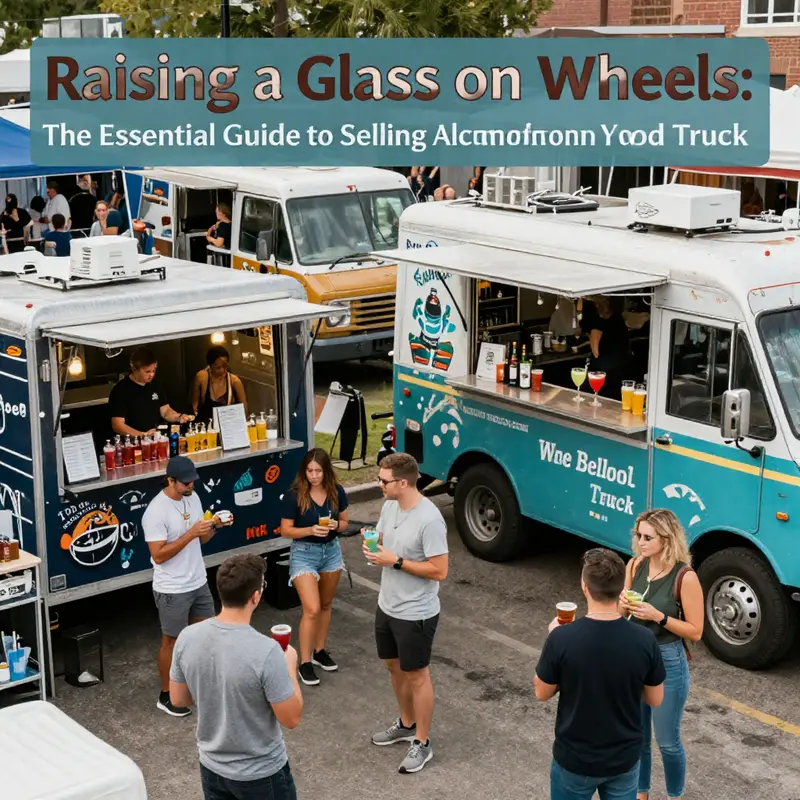
Selling alcohol from a food truck sits at a dynamic crossroads where hospitality, mobility, and regulation intersect. It is not simply a matter of stocking a cooler and rolling to the next curb; it is an orchestrated option that hinges on licenses, safety standards, and the ability to craft an experience that feels like a night out without the overhead of a brick-and-mortar bar. In this evolving landscape, market trends are less about the single truck and more about how a fleet of flexible, compliant venues can respond to shifting consumer preferences, city ordinances, and the rhythms of daily life in crowded urban cores and festival precincts alike. The overarching arc is one of convergence: premium, convenient drinking finds its home on four wheels, but it does so within a framework that demands discipline, artistry, and a keen read of local demand.
The rise of mobile cocktail and ready-to-drink concepts has been one of the most visible signals in recent years. Consumers have grown to expect bar-quality options that are portable, fast, and uniquely experiential. A food truck makes this possible by pairing a compact footprint with a curated beverage program that can rotate with the seasons. The emphasis is less on offering a thousand options and more on delivering a handful of high-quality, pre-mixed drinks, craft sodas, and inventive alcoholic beverages that showcase technique and personality. Seasonal flavors, limited-edition releases, and a strong story behind each pour create a sense of occasion that travels well from street corner to street corner. This aligns with broad consumer shifts toward convenience, variety, and premiumization. Younger adults, in particular, are drawn to experiences that feel exclusive yet accessible; they want a sense of discovery without complicating their evenings with long waits or formal dress codes. A well-designed mobile beverage concept can deliver just that—bar-level craftsmanship delivered at the edge of the curb.
That appeal plays especially well in urban, festival, and event markets. Mobile alcohol vendors thrive where movement and crowd density collide: food markets that spill into pedestrian zones, rooftop gatherings after work, outdoor music events, and corporate celebrations that seek a mobile centerpiece rather than a static catering setup. In 2026, several metropolitan hubs have seen a tangible uptick in licensed mobile bars at gatherings that blend socializing with entertainment. The agility of a food truck means operators can chase favorable weather windows, tap into new venues, and respond to emerging opportunities without committing to a long-term lease or build-out costs. The public often perceives these mobile experiences as more intimate and approachable than a traditional fixed bar, even as the quality of the beverage program advances. The net effect is a broader market for on-site hospitality that respects both the desire for immediacy and the need for responsible serving. A crucial takeaway for operators is that the locations, timing, and permitted hours of sale become as important as the drinks themselves. In this context, gaining familiarity with local licensing constraints and cultivating relationships with event organizers can be as valuable as crafting a signature cocktail.
Yet the expanding market also rests on a foundation of careful regulatory adaptation. Regulations vary by state, city, and even neighborhood, and they shape what is possible in practice. Some areas have introduced streamlined processes for mobile beverage carts or similar mobile alcohol permits at approved venues, acknowledging both the economic value and the cultural role of mobile hospitality. Others maintain a patchwork of rules that demand more precise planning: qualifying licenses, a valid food service permit, and sometimes a separate alcohol license, plus special permissions for mobile vendors or temporary events. In all cases, compliance is not optional. The vehicle must meet health and sanitation standards, and staff must be trained in responsible service—often through programs such as responsible alcohol service training. In practice, that means operators must budget for licensing, training, and ongoing compliance review, just as they do for food safety, incident response, and financial controls. For operators, the jacket of opportunity still comes with a carefully measured coat of responsibility.
Technology is an accelerant in this space, and the most successful mobile alcohol programs use it to strengthen the brand while enhancing compliance. Digital menus accessed via QR codes, mobile ordering through a proprietary app, and contactless payment methods reduce friction and speed service at high-traffic events. Loyalty programs built around repeat patrons on recurring routes or festival circuits promote retention and help stabilize revenue across changing calendars. Some operators push the envelope with interactive branding — augmented reality elements or engaging digital displays on the truck — creating a sense of immersion that elevates a street-side stop into a micro-experience. The fusion of tech and hospitality also aids safety and accountability, providing digital trails for inventory tracking, age verification where required, and incident logging in case of any concerns. The consumer benefits are clear: faster service, clearer menus, and an experience that feels tailor-made rather than generic.
Sustainability and health-conscious offerings have moved from a peripheral concern to a central strategic consideration. The consumer base for mobile alcohol is increasingly attentive to sugar content, calorie counts, and the ecological footprint of what they drink. Vendors are responding with a spectrum of options that address moderation and wellness without sacrificing flavor or sophistication. Low-sugar and low-alcohol beverages, organic ingredients, and non-alcoholic alternatives are finding a more prominent place on menus. In practice, this translates into more diverse lineups that honor different drinking occasions, from post-work refreshment to social snack pairing at open-air markets. These choices resonate with Gen Z and millennial consumers who value wellness and moderation alongside sociability and novelty. The trend toward lighter profiles is not a retreat from craft; rather, it is a strategic expansion of the context in which alcohol is enjoyed in mobile settings.
Collaborations and co-branding have become a practical pathway for risk management and growth. Rather than going it alone, many mobile operators are aligning with local food establishments, breweries, or event organizers to share resources, cross-promote, and leverage established audiences. These partnerships help introduce customers to new flavor concepts through trusted anchors while distributing operational risk. Local collaborations also reinforce the authenticity that many consumers seek in artisanal experiences. The partnerships often translate into shared spaces at events, seasonal collaborative menus, or exclusive collaboration nights that draw locals who are looking for something they can’t easily replicate in a fixed venue. In this ecosystem, the value lies not just in the drinks but in the relationships—the relationships with venues, with organizers, and with the audience that follows a particular operator from one event to the next.
Behind these trends, a practical thread runs through the considerations of any operator thinking about alcohol on wheels: the grind of operations. It is a common misconception that mobile alcohol is a lighter version of a fixed-bar model. In reality, the operational demands are substantial. Inventory management must be precise, given the perishability and regulatory constraints around alcohol handling. Storage space on a truck is finite, and cold storage requires careful planning to avoid waste and maintain product integrity. Staffing must balance expertise and compliance; team members should understand not only how to mix a drink but how to handle discrepancies, address intoxication responsibly, and navigate local crowd dynamics. This is where training becomes a competitive differentiator. A well-trained crew can deliver a high-quality beverage experience while maintaining rigorous safety standards, which in turn reduces liability and improves customer trust.
Another practical insight lies in the interplay between permits, hours, and venue selection. Even when a license is secured, operators often discover that hours of sale and location restrictions determine the viability of a given route. A truck may be permitted to serve at certain festivals or markets during specific windows, or within designated districts after dusk. Compliance planners must map out a master calendar that aligns legal permissions with expected demand. This is where intelligence about event calendars, climate patterns, and community expectations matters. The best operators think months ahead about routes that maximize visibility without breaching local rules. A strategic approach to licensing can unlock recurring opportunities, like weekly markets or seasonal street fairs, that provide predictable revenue streams in addition to the ad hoc festival spike.
The market signals driving these trends point toward a broader, longer-term confidence in mobile hospitality. The mobility thesis rests on the idea that people want social connection and curated experiences, even on a busy city street or at a sprawling outdoor venue. When paired with responsible service and smart partnerships, alcohol trucks offer a scalable path that becomes more than a novelty. They become part of the fabric of contemporary urban life — a flexible platform for storytelling, culinary synergy, and neighborhood identity. But the confidence is earned through a disciplined approach: attentiveness to licensing minutiae, relentless focus on safety, and a willingness to iterate based on what customers respond to in real time.
The market narrative also benefits from pointing to real-world anchors that reflect the evolving ecosystem. A regional roundup of mobile beverage events, for instance, illustrates how operators adapt to demand patterns, weather, and crowd behavior across different neighborhoods. These patterns are not uniform; what works in one city may require adjustment in another. Yet the underlying dynamics persist: a steady demand for portable, premium, and responsibly served alcohol experiences; a regulatory environment that is increasingly accommodating but never forgiving without due diligence; and a tech-enabled, sustainability-minded, partnership-rich business model that makes the mobile route not a workaround but a deliberate strategy. For aspiring operators, the takeaway is clear: start with a license map, build a flexible beverage program, and design a brand that travels with the truck, not just on it.
As you map out a future in this space, a practical touchstone is to connect with the venues and communities that will host your truck. Acknowledge that your success depends not only on the drinks but on the ecosystem of approvals, safety practices, and relationship-building that surrounds mobile alcohol. A single fleet can serve an assortment of occasions — from late-afternoon park gatherings to industry-facing night markets — so long as each engagement respects local rules and elevates the consumer experience. And because the landscape is shifting, maintain a rhythm of learning: track which events yield the strongest attendance, which menus spark the most conversation, and which partnerships unlock new channels for growth. The market rewards those who blend craft with compliance, who treat the truck as a rolling stage for hospitality, and who treat every permit as a safeguard for guests and neighbors alike.
For readers looking to dive deeper into the broader mobility and hospitality trends shaping this space, industry observers emphasize the importance of staying connected to regional narratives and event ecosystems. A helpful lens is to consider how cities are recalibrating their outdoor and nightlife infrastructure to accommodate mobile venues. This perspective, shared across European and North American discussions, highlights how regulatory bodies are balancing cultural vitality with public safety, and how operators can ride those changes rather than fight against them. As you plan, it is worth exploring a regional digest of rallies and pop-up nights in your area to gauge how mobile beverage concepts resonate with local audiences and how operators position themselves within the citys unique rhythm. For broader context, you can consult industry analyses from major regional voices that discuss mobility and food service trends in early 2026. For a deeper dive into wider mobility and hospitality trends, see the external resource linked below.
Internal link note: to see a contemporary take on how communities are embracing mobile food and beverage events, you can explore a regionally focused round-up of upcoming gatherings and best practices presented for Lakewood-area operators here: 2026’s Best Food Truck Rallies in Lakewood.
External link: For broader mobility and hospitality trend context, see the industry-wide overview of mobility and food service trends from a leading European source (March 2026): https://www.foodanddrinkeurope.com/
Final thoughts
Selling alcohol from a food truck is an exciting opportunity to expand your culinary horizons and offer more to your customers. By understanding the legal landscape, obtaining the right licenses, ensuring safety and compliance, and being aware of market trends, you can create a thriving mobile bar business that resonates with both locals and visitors in Lakewood. Approach this venture with thorough knowledge and a community-focused mindset, and you’ll find your food truck not only serves delicious food but also becomes a vibrant cornerstone in the local festival scene!