
There’s something magical about food trucks, particularly in lively places like Lakewood. They not only feed locals and visitors but also showcase the creativity of aspiring chefs. If you’re dreaming of rolling out a food truck, you’re not alone! From understanding legal permits to crafting an enticing menu, we’ve gathered essential steps to help you launch successfully. In this guide, we’ll explore the key components: the necessary licenses and permits, detailed business planning, the art of menu development, and how to find prime spots that attract hungry patrons. Each chapter will arm you with the insights needed to kickstart your food truck journey in this vibrant community.
Permits on Wheels: The Legal Authorizations You Need to Start a Food Truck Business
The road to launching a food truck starts long before the first order is taken. It begins with a map of permissions, licenses, and inspections that shape where you can operate, what standards you must meet, and how you prove you’re a responsible, trustworthy business. Permits aren’t mere hurdles; they are the framework that protects customers, staff, and your brand. When you treat compliance as an integral part of your concept, you turn what could be a labyrinth into a predictable path forward. The core idea is simple: know what authorities expect, prepare once, and keep everything current so your truck can roll without disruption.
In the United Kingdom, the regulatory landscape places emphasis on both street presence and kitchen hygiene. A Street Trading License is often the gateway to selling on public streets, and it can come with strict conditions about location, hours, and the kind of items you’re allowed to offer. Without it, even the best idea risks being removed from the road with fines that can climb quickly. On the hygiene side, a Food Hygiene and Safety license—or its local equivalent—ensures that your practices for handling, cooking, and storing food meet national or regional standards. This is where your menu and kitchen design intersect with policy: a concept that looks brilliant on a poster won’t be successful if it can’t be produced and served safely in a compliant kitchen.
Beyond these, there is the broader business framework. You typically need to register your business with the appropriate authority, whether you’re operating as a sole trader or a limited company. In addition, your vehicle must meet roadworthy standards, with insurance and a valid license plate, and you may need inspections that mirror those for any commercial kitchen on four wheels. From day one, these requirements aren’t just about ticking boxes; they guide how you source equipment, how you train staff, and how you structure your hours and routes so you stay within the rules while still delivering a compelling, consistent experience. It’s not unusual to discover that the cost of compliance becomes a material line item in your start-up plan, particularly if you are outfitting a full kitchen in a used vehicle or negotiating fleet insurance and maintenance packages.
Across the Atlantic, the regulatory picture becomes even more nuanced because it’s defined by city, county, and state or provincial jurisdictions. The core permits that typically surface in many U.S. cities include a business license to operate as a registered entity, a health department permit that accompanies a vehicle inspection and confirms sanitary practices, and a food handler’s permit that certifies staff understand safe food handling. A mobile vendor permit often sets the boundaries for where you can park and for how long, while a parking and operating permit ensures you’re compliant with local ordinances about vending locations. If your operation includes alcohol, you may need a seller’s permit tied to sales tax collection, and some places require a separate business tax registration with periodic renewals or fees. Finally, if you plan to participate in festivals or markets, a special events permit can be necessary. The common thread is that the burden shifts with geography, and the smart operator builds a playbook that maps your concept to the exact permissions you’ll need.
The reality is that no single checklist fits all. The specifics hinge on where you want to park, what you sell, and how your staff is trained. The good news is that many of these requirements share a familiar logic: you prove you meet basic safety standards, you demonstrate financial accountability, and you provide a transparent trail of compliance. With that in mind, you can build a practical timeline. Start with a broad scope—identify the main permits likely to apply in your city or county—and then drill down to the exact forms, fees, and renewal dates. Prepare the essential documents early: a clear business plan, proof of identity and address, vehicle information, a floor plan of your kitchen layout, and evidence of appropriate insurance. You’ll soon realize that some applications come as a bundle. For instance, a health permit often requires a kitchen inspection, which in turn verifies your equipment layout, wash facilities, and temperature controls. In summary, you are not just seeking permission to sell food; you are validating your operation against a consistent standard that protects lives and livelihoods, and the sooner you align with that standard, the smoother your path becomes.
Costs and timelines vary, and they can be surprisingly cumulative. In the UK, the street trading process may involve application fees and possible site assessment costs, while the health and safety license may require an inspection that carries its own fee schedule. You’ll likely encounter a mix of upfront payments and annual renewals for licenses, inspections, and insurance. The vehicle itself represents a significant portion of your capital, and its ongoing compliance—routine MOT tests or equivalent inspections, along with regular safety checks—will influence both cash flow and operational reliability. When you add the kitchen equipment, generator, and electrical systems to run a busy service, the picture sharpens: your start-up budget should incorporate a realistic cushion for regulatory steps, even before you begin to manufacture and serve.
To navigate this maze, think of permits as a design constraint rather than a nuisance. They shape where you set up shop, how you present your menu, and how you interact with customers. You will often hear that some locales require you to avoid certain zones during school hours or to refrain from certain types of street furniture or signage that encroach on public space. These constraints, while frustrating at first, can push you toward smarter, more sustainable locations and schedules. They can also encourage you to embrace a modular kitchen concept that can be reconfigured to fit different permits or events, rather than a fixed, single-location model. In practice, many operators design with compliance in mind from the outset: a kitchen layout that minimizes cross-contamination risk, storage that keeps perishable ingredients secure, and a service counter that allows quick sanitation between customers. This attention to compliance tends to produce a more efficient operation overall, even when the initial paperwork feels overwhelming.
A practical way to approach permits is to treat them as a product stage in your business plan. You map your concept to the likely regulatory requirements, then design a timeline that aligns procurement, fit-out, and staff training with anticipated licensing milestones. In this way, the legal aspect becomes an accelerator rather than a bottleneck. It also helps you manage expectations with investors or lenders. When you present a plan that clearly shows a path through licensing, inspections, and renewals, you communicate that you are serious about risk management and sustainability, not simply chasing a clever idea. It’s also wise to anticipate that some permits require ongoing compliance actions, such as periodic staff retraining, updated food safety plans, and annual inspections of your vehicle and kitchen equipment. The long view matters: a well-maintained compliance program can prevent costly delays at peak times and safeguard your reputation.
From a branding standpoint, your permit story can reinforce trust. Customers who see clear licenses, visible waste management, and a tidy, compliant kitchen feel more confident choosing your truck. You can translate compliance into a narrative about quality and accountability, which resonates in a competitive market where many concepts struggle to differentiate themselves on taste alone. The lesson here is not to hide permits behind a curtain of bureaucracy but to weave them into the DNA of your operation. You can communicate your commitment through a simple, consistent process: share what licenses you hold on your menu board or in your social media profile, reiterate your hygiene standards in your training materials, and show that your vehicle is regularly inspected and maintained. A transparent compliance story can turn regulatory steps into competitive advantages.
As you plan, remember to consult the most authoritative local sources—your city or county council, your health department, and your chamber of commerce. The exact list of required documents, the order of applications, and the typical wait times will differ. The important idea is that you actively seek this information early and document it. If you’re unsure about a particular permit, seek clarification before you make decisions about the truck’s layout or the menu’s scope. In some regions, you may find that multiple permits can be obtained in parallel, while in others one permit must be secured before another can be pursued. Building a dependency map—what needs to be in place first, what can run concurrently, and what requires renewal or ongoing compliance—will save you time and reduce the likelihood of costly backtracking.
As you move from concept to street, a few practical tips can keep you on track. First, maintain a dedicated regulatory file. Create a folder (digital or physical) that contains all licenses, renewal notices, inspection reports, insurance certificates, and any correspondence with authorities. Second, keep your staff training up to date. A single lapse in a food handler’s certification can trigger an inspection or a limitation on your operation. Third, schedule regular vehicle maintenance and sanitation checks with a calendar that aligns with your licensing renewal cycle. This approach turns compliance from a quarterly chore into a routine rhythm that supports steady service rather than disruption. Finally, embrace a proactive mindset: monitor any changes in local policy, such as new zoning restrictions or updated health standards, and adjust your practices before they become urgent problems.
The journey through permits and licenses is as much about foresight as it is about diligence. It demands a blend of strategic planning, meticulous record-keeping, and a willingness to adapt. When you design your truck, plan your routes, and train your team with these constraints in mind, you create a business where the legal and the culinary reinforce each other. And because regulations evolve, you should view compliance as an ongoing commitment rather than a one-time hurdle. If you keep this perspective, your permit landscape becomes a map you can read confidently, guiding you toward smoother operations, better relationships with authorities, and, ultimately, a more reliable, scalable food truck business.
For readers seeking a broader, location-specific overview beyond the UK framework, a comprehensive guide to starting a food truck in the United States outlines core permits that are widely encountered, along with practical tips for navigating them. This resource emphasizes consulting local health departments, chambers of commerce, and small business administrations to tailor the path to your city. It also highlights that requirements such as the health permit, mobile vendor authorization, and parking permissions often require inspections and staff certifications that must be renewed periodically. While the exact forms and fees vary, the underlying logic remains consistent: demonstrate capability, maintain safety, and stay current with regulations. If you’re curious about how these elements fit into the broader landscape of starting a food truck, the linked guide offers a structured, country-specific perspective that complements the UK-focused overview described here.
As you finalize your concept, consider how your permits will interact with the practicalities of your business. If you intend to operate at multiple sites or participate in events, you may encounter a mosaic of permissions, each with its own window of validity. Some operators find success by seeking spaces that offer integrated support, such as designated food truck parks with shared utilities and streamlined permitting processes. Others build flexibility into their model by designing a modular kitchen that can be adapted to different space and permitting constraints without compromising safety or quality. Either path requires a clear understanding of how you will obtain and maintain licenses, how you will verify compliance during daily service, and how you will communicate your regulatory readiness to customers and partners.
To support your decision-making, you can explore practical resources that address not only the technical details of permits but also the broader strategic planning for a mobile food business. For instance, one resource provides a focused examination of the most relevant models for your truck, helping you align your equipment choices with both performance and regulatory requirements. This kind of resource can be a useful companion as you map out your kitchen layout, equipment needs, and service flow in a way that is compliant, efficient, and scalable. In the end, the path to a successful food truck is not just about a creative concept or a mouth-watering menu; it’s about building a compliant, resilient operation that can evolve with your ambitions and the communities you serve.
External resource for broader context and country-specific licensing guidance: https://wise.com/us/blog/starting-a-food-truck-business/
Internal resource for practical equipment planning and startup considerations: Best food truck models for Lakewood startups
From Plan to Plate: Crafting the Roadmap and Finances for a Profitable Food Truck Venture
Every successful food truck starts not with a sizzling grill but with a solid plan that couples creativity with discipline. The dream of serving hot meals from a compact, nimble vehicle often masks the hard work of turning that passion into a sustainable business. This chapter invites you to walk the careful boundary between culinary ambition and financial reality, showing how a thorough plan and a realistic money map can transform a wish into a thriving mobile operation. Rather than treating a business plan as a binder you close after a pitch, imagine it as a living road map. It guides everything from concept and menu to location, branding, and hiring. A well-crafted plan clarifies your vision, defines who you serve, and identifies the path to profitability. It makes the difference between chasing trends and building a brand that endures, especially in a crowded UK market where street food competition is intense and local regulations are the gatekeepers of fair play and safety. As you design this road map, you’ll see that planning and money are not separate tasks; they are intertwined threads that hold the entire venture together. You can think of the plan as your compass, and the financial model as your engine, each feeding the other in a continuous loop of refinement and risk assessment.
A thoughtful plan begins with a clear concept tied to a defined audience. The concept is more than a theme or a single dish; it is the promise you make to customers about what they can expect from your truck, how you deliver it, and why it matters to them. Your audience, in turn, shapes the menu, the pricing, and even the hours you choose to operate. In practice, you’ll want to articulate a unique value proposition that answers a simple question: why should someone buy from you instead of a hundred other options on the street? Your answer should resonate with local tastes, dietary preferences, and the rhythms of the places you plan to serve. The process of articulating this value proposition teaches you to filter ideas, avoid clutter, and build a coherent identity that can grow with the business. If you’re weighing how to translate this into a tangible, scalable vehicle and logistics plan, you might explore the best food truck models for Lakewood startups, which can offer a frame for how choices about truck type, layout, and equipment influence efficiency and profitability. Best food truck models for Lakewood startups.
Beyond the core concept, a robust business plan lays out eight essential elements that keep you aligned during growth and adaptation. Start with the executive summary, a concise snapshot of the business, its mission, and what you intend to achieve in measurable terms. The company description follows, detailing ownership structure and the mission that sustains you through busy Saturdays and lean winter weeks. Market analysis comes next, grounding your strategy in real insights about consumer trends, competition, and the neighborhoods you’ll inhabit. Organization and management describe who runs the show, their roles, and how you’ll scale the team as demand grows. The service or product line section delves into what you will offer, how it will evolve, and how it fits with your brand promise. Marketing and sales strategies outline how you’ll attract customers, retain them, and drive repeat business, not merely how you’ll post pretty photos on social media. If you anticipate raising funds, a funding request can summarize your capital needs and how they will be deployed. Finally, financial projections anchor the plan in numbers: revenue forecasts, cost of goods sold, operating expenses, and a clear path to profitability. The exercise is as much about discipline as it is about persuasion. It compels you to test assumptions, quantify uncertainties, and set milestones that keep the plan actionable rather than aspirational.
The financial dimension of planning is where many promising ideas stumble if they are not anchored to reality. Start-up costs for a food truck venture are substantial, and the exact figures depend on your approach to the vehicle, equipment, and initial stock. In the UK, you’ll typically face costs for the truck itself—whether you buy, lease, or retrofit—plus kitchen equipment, generators and electrical setups, insurance, and registration or licensing. It’s common to see a broad range, and you should prepare for the possibility that unexpected expenses will arise. A realistic budget includes not only the obvious line items but also the more subtle needs: a cushion for the first few months of operation, marketing and branding, and working capital to cover payroll before revenue stabilizes. A disciplined approach to budgeting helps you avoid cash crunches that can derail momentum when sales fluctuate due to weather, location shifts, or seasonal events.
In practice, budgeting begins with the big-ticket items and then drills down into ongoing costs. The initial vehicle outlay is more than a sticker price; it includes customization, safety features, and regulatory compliance to meet hygiene and street-trading requirements. Kitchen equipment isn’t just about variety; it’s about efficiency, reliability, and maintenance costs that impact your net margins. Permits and licenses, while often predictable, vary by city and can affect cash flow if delays occur. Insurance sits as a non-negotiable shield against accidents and liabilities, but it also adds a steady monthly expense that you must anticipate in your monthly forecast. Then there is the inventory—your first wave of food and packaging materials—and the working capital required to weather the first slow weeks before steady traffic builds.
A practical approach to financial planning is to pair your budget with a revenue forecast that reflects plausible volumes and pricing. Start with baseline assumptions about sales per location, peak hours, and average spend. Then construct multiple scenarios—conservative, realistic, and optimistic—so you can see how the numbers flex under different conditions. Revenue projections are not a wish list; they rely on credible data from similar operators, event calendars, and foot traffic analyses. A common pitfall is overestimating demand in the early months while underestimating costs, which can lead to negative cash flow even when the menu is well received. The aim is to build a forecast that reveals when you’ll hit the break-even point, how long you’ll need a buffer, and what levers you can pull to accelerate profitability, such as menu items with higher margins, tighter waste control, or targeted promotions during slow periods.
Forecasting also hinges on cash flow management. A successful operator maintains visibility into every pound moving in and out of the business. It’s not enough to project monthly totals; you need to track daily or weekly cash inflows and outflows, align them with vendor terms and payment cycles, and ensure you have enough liquidity to cover payroll, fuel, and emergency repairs without breaking the business. A cash-flow-minded mindset helps you plan for seasonal dips and big event weeks alike. As you integrate this mindset, you’ll discover that the plan becomes a living instrument rather than a static document. You update forecasts as you gather real data from day-to-day operations, adjusting menus, negotiating better supplier terms, and refining your location strategy based on where you see demand actually materializing. If you’re seeking a concrete blueprint for the financial side, a reputable framework like Growexa’s guide on food truck financial planning offers practical steps for budgeting, revenue forecasting, and cost management tailored to operators like you.
Regulatory compliance sits at the intersection of planning and risk management. The moment you plan to operate on public streets, you accept a set of responsibilities that protect customers and the broader community. Local councils issue street trading licenses and regulate where you can park, how long you can stay, and what kinds of health checks are required. A strong plan anticipates these rules and builds in compliance from day one: acquiring the right licenses, ensuring your truck meets vehicle and health standards, and instituting procedures for safe handling and storage of food. This careful alignment with regulations helps prevent fines, service interruptions, or forced shutdowns that could erase months of work. It also supports smoother operations when you scale into new locations or join markets that have their own permitting processes. When possible, consult local sources early and consider engaging with small-business development centers or legal advisors who can illuminate location-specific nuances and minimize the chance of compliance surprises.
As your plan matures, you’ll also want to embed a mindset of resilience. The most durable food truck ventures begin with a robust risk assessment that identifies potential shocks—supply disruptions, equipment failures, or a sudden change in foot traffic—and maps concrete responses. You’ll specify contingency budgets, vendor alternatives, and quick-change tactics for the menu to preserve margins during lean periods. A resilient plan doesn’t only anticipate problems; it defines a continuous improvement loop. After each week or event, you review what worked, what didn’t, and how to adjust pricing, inventory, and staff scheduling. You’ll find that the fastest path from concept to profitability is paved with deliberate testing, honest feedback, and a willingness to adapt—without diluting the core brand you’ve built.
In this journey, the branding and customer experience weave through planning and finance as a coherent whole. A strong plan helps you articulate who you are, what you stand for, and how you will deliver value in every bite and every interaction. It clarifies your menu mix around items that are both appealing and financially sustainable, and it aligns your service model with the locations you target. Brand consistency—from the truck’s exterior to the way you present receipts and thank customers—amplifies the effect of every strategic choice. When you coordinate branding with location strategy and financial planning, you set up a virtuous cycle: a clear identity attracts your target customers, predictable demand strengthens cash flow, and a stable financial base supports ongoing investment in equipment, training, and expansion. This integrated approach makes the journey from plan to plate feel purposeful rather than rushed, and it gives you confidence when you’re negotiating leases, negotiating payments with suppliers, or evaluating a new market.
If you’re ready to bring the numbers to life, you’ll want a practical process for turning your plan into action. Start with a solid executive summary that captures your mission in one page, followed by a lean but complete forecast for the first 12 to 24 months. Use realistic assumptions and document the sources for your data so you can defend calculations if questions arise. Build a cash flow model that highlights the timing of major outlays and the cadence of revenue. Don’t neglect the softer side of planning—the people who will execute the system you design. A clear organizational plan helps you recruit and retain the right talent, aligns compensation with performance, and ensures customers receive consistent, high-quality service. In the end, your plan is not a rigid blueprint but a living engine. It evolves as you learn from real-world operation, just as a well-tuned truck runs more smoothly once you’ve aligned performance with the terrain. The more honest you are about risks, costs, and capabilities, the more durable your venture becomes, and the more capable you are of turning a bold culinary concept into a sustainable business over time.
To close, remember that a thorough plan and disciplined financial preparation do not stifle creativity. They empower you to invest in the right opportunities, weather inevitable bumps, and scale with confidence. The road from plan to plate is not a straight line; it’s a sequence of deliberate investments, measured risks, and timely pivots that keep your menu relevant and your books balanced. With a clear concept, a credible market view, and a financial framework that reflects reality as you learn, you’ll be better positioned to seize opportunities when they appear—whether you’re cruising city centers, coasting into markets, or lining up at a major festival. And when it comes to the vehicle that carries you on that journey, consider vehicle choice and layout as a strategic lever rather than a one-off purchase. The right setup can unlock efficiency, improve service speed, and protect margins in a way that amplifies your plan rather than constrains it. For further inspiration on how vehicle models translate into operating efficiency, you can explore one relevant guide: Best food truck models for Lakewood startups.
As you finalize this chapter of planning, keep a simple principle in mind: the better your foundation, the more room you have to innovate. Your business plan should challenge your assumptions while keeping you honest about cash needs, regulatory obligations, and the realities of your target customers. When you treat planning as an ongoing discipline rather than a box-ticking exercise, you create a durable framework that supports growth, quality, and profitability. That’s the essence of turning a promising idea into a sustainable, scalable food truck venture that can adapt to changing tastes, evolving markets, and the unpredictable rhythms of street life. The plan, once written, becomes your daily reference point—guiding decisions about hours, routes, menu adjustments, and staffing while ensuring you maintain financial health in every season. And as you move from the planning stage to execution, you’ll find that the numbers and the narrative reinforce each other, giving you the confidence to invest in what matters and to pivot when the data tells you to.
External resource for further reading: Growexa’s practical framework on budgeting, revenue forecasting, and cost management for food trucks. https://www.growexa.com/blog/food-truck-financial-plan
Menu on the Move: Crafting a Profitable Menu for a Mobile Food Venture
A food truck lives and dies by its menu. It must fit on a compact stage, move quickly, and still deliver memorable flavor. In the reach between a clever concept and a practical operation, the menu becomes a strategic tool. It directs the footprint of the kitchen, determines the equipment you need, steers the sourcing strategy, and shapes the voice of your brand. A strong menu does more than please a customer; it reduces waste, speeds service, and sustains cash flow. When you’re starting a food truck, you’re not just choosing a list of dishes. You’re designing a system that can be replicated at different locations, scaled for events, and refined through real-time feedback from a mobile window to the street. The menu, then, is a blueprint for a lean operation and a clear promise to customers about what they can expect from your truck on any given day.
To begin, think with a tight focus. The most effective mobile menus feature a limited, high-quality selection rather than a sprawling catalog. A concise menu accelerates service, lowers kitchen complexity, and makes it easier to maintain consistent quality across shifts and locations. Limit the core items to a handful of signatures that showcase your brand, then layer in a few rotating specials or regional influences to keep it fresh. In practice, a compact core might center on two to four protein-forward items, two supporting sides, and one or two desserts or beverages. Each item should be designed to share equipment, reduce cross-contamination risks at the prep table, and rely on common ingredients that can be sourced reliably. The goal is not to be everything to everyone, but to be unmistakably good at a few things that travel well and translate across venues. This approach also supports a faster turnover rate, a critical factor in street foods where stall time directly affects daily revenue.
The customer’s taste palette is a moving target, especially when you’re working in different neighborhoods or at varying events. A flexible but cohesive menu invites customization without sacrificing efficiency. One way to achieve this balance is to build a baseline dish family—say, a core protein with two adaptable toppings—so customers feel they’re getting a tailor-made experience while you still operate from a stable, predictable kitchen workflow. Catering work further expands this adaptability. When you design with events in mind, you can offer set packages that align with crowd sizes, logistics, and budget ranges. The catering angle should be a natural extension of your regular menu, not a separate, disjointed offering. In fact, by planning for events from the start, you can leverage bulk buying, pre-prep, and packaging strategies that maximize margins. If you want a practical example of how a menu can evolve with a business, you can explore how truck concepts align with up-to-date equipment choices in related guides like the best-food-truck-models-for-lakewood-startups. That resource can help you visualize how kitchen flow and menu design marry up on a real truck, ensuring your concept remains coherent as you scale. best-food-truck-models-for-lakewood-startups
From a cost perspective, the menu is a lever for margins. Start by calculating the cost of goods sold for each item, including protein, vegetables, dressing, sauces, and packaging. Small adjustments—like choosing a single versatile sauce that can pair with multiple items or selecting vegetables that are interchangeable across dishes—can yield meaningful savings over a week and a month. Portion control is another battleground worth wins. Well-designed pre-portioned ingredients simplify cooking and inventory control. The same logic applies to waste reduction: when the menu is narrow and the prep is standardized, you can forecast more accurately how much you’ll need for a given day, reducing leftovers and unsold stock. Pricing should reflect the operating realities of a mobile business, where labor, fuel, and intermittent footfall influence every sale. Consider tiered pricing for events, market days, and regular locations. A simple strategy is to price core items with a consistent margin, then add a modest premium for curated, chef-style add-ons that can be prepared quickly but feel premium. It’s not just price that matters; it’s the perceived value the menu communicates through flavors, textures, and the storytelling around each dish. If your branding emphasizes bold, streetwise flavors, your pricing can reflect this narrative with a value proposition that resonates with your chosen audience.
The menu’s flavor profiles deserve deliberate planning. Prioritize items that deliver bold, memorable experiences with straightforward preparation. Strong flavor often comes from a concise set of ingredients that work in harmony. This is where culinary efficiency meets sensory impact. For example, a signature spice blend can unify several menu items, giving you a consistent taste thread and reducing the number of separate components you must keep in stock. A clear flavor map also helps you train staff more effectively. When every team member understands the backbone of your dishes—the core aromatics, the heat level, the acidity balance—they can reproduce dishes quickly and consistently, even on busy shifts. A well-structured flavor strategy also supports your marketing efforts. Customers remember a few distinctive tastes and associate them with your brand, making it easier to promote your truck through social media, pop-ups, and collaborations. The process of crafting a menu is thus a cycle of testing, feedback, and refinement. You start with a concept, validate it through small runs, collect feedback from early customers, and refine the dish lineup to optimize speed, consistency, and appeal. The SBA’s guidance on menu planning emphasizes these iterative steps and highlights how pricing and inventory decisions intersect with overall business planning, a reference worth consulting as you finalize your plan: https://www.sba.gov/business-guide/plan-your-business/create-a-business-plan.
As you shape the menu, think about the logistics of your truck’s layout. The cooking methods you choose should align with the available space and safety considerations. A limited menu helps you select equipment that can be installed efficiently and maintained easily. It also allows you to design a workflow where one cook can operate the core line with minimal handoffs. You want a kitchen that supports rapid, repeated cycles of cooking, assembly, and service without bottlenecks. In practice, you’ll map movement from storage to prep to cooking to plating to service, ensuring that ingredients flow smoothly and that the most frequently used items are within easy reach. When you map this flow, you’ll often find that a few core pieces of equipment can support most of your dishes, which simplifies maintenance, reduces capital expenditure, and speeds up training for new staff. The precise configuration will depend on your chosen concept, but a tight, repeatable layout is a cornerstone of a menu that travels well and scales easily.
The sourcing strategy is inseparable from the menu’s design. A menu built around fresh, local ingredients can be both a competitive advantage and a risk, so it deserves careful management. Build supplier relationships that align with your menu’s peak items and seasonal opportunities. If you aim to feature a particular protein or vegetable, secure a reliable supplier who can deliver consistent quality and volume. Seasonal variation should be anticipated, not treated as an afterthought. Your planning calendar should mark harvest seasons, supplier holidays, and potential disruptions, with contingency options for each. Inventory management becomes a daily practice, not a quarterly concern. Track usage by dish, forecast demand for the upcoming week, and adjust orders to avoid spoilage while keeping enough stock for peak days. The beauty of a well-designed menu is that it becomes a practical framework for these logistics. You know which ingredients are central to your brand and which can be swapped in when a supplier misses a delivery or a market is unexpectedly busy. This resilience is a hallmark of a successful mobile operation.
Customer experience sits at the heart of menu development. A memorable menu is not just about taste; it’s about how the experience unfolds from the moment a customer approaches the window to the moment they bite into their food. Clear signage, concise descriptions, and consistent portions all contribute to a positive interaction. You should also consider dietary inclusivity without bloating the menu or complicating prep. A few thoughtfully gluten-free or plant-based items can broaden your audience, as long as the substitutions maintain the integrity of the dish and the efficiency of the kitchen. In a mobile setting, customization should feel like a feature rather than a burden. A well-structured set of optional add-ons lets customers tailor their meals while you maintain speed and control costs. Encouraging feedback through quick prompts or online surveys helps you understand evolving preferences in different neighborhoods. The ongoing dialogue with customers feeds back into your menu, letting you retire underperforming items and introduce new ideas in a way that keeps the operation lean and profitable.
Brand storytelling subtly shapes the menu too. Each dish is a narrative thread that contributes to the overall identity of the truck. The name, the visual presentation, the color palette on the plate, and even the packaging are part of a cohesive story that travels with you. Your menu should reflect this story without introducing complexity that slows service. A strong brand voice helps customers connect emotionally, increasing the likelihood of repeat visits and word-of-mouth referrals. When your menu aligns with your branding, it becomes a powerful marketing tool, turning everyday meals into ambassadors for your concept. The choice of menu items, their price points, and their story together influence social media content, event partnerships, and loyalty initiatives. Each post, photo, and customer interaction reinforces the vision you set out when you opened the truck window.
As you approach the launch, you’ll want to pilot your menu in familiar settings before expanding to new locations or bigger events. A staged rollout lets you observe real-world performance, capture sales data, and refine both the menu and the service model. You can run a soft launch at a single market or park, monitor ticket times, gather feedback, and adjust. The data you collect will inform which items deserve more prominence, which can benefit from tweaks to recipe or portion size, and how to price for weekend crowds versus weekday traffic. The ultimate objective is a menu that is lean enough to control costs, robust enough to handle demand, and flexible enough to adapt to an ever-changing street-food landscape. For those who want a practical framework beyond instinct, the SBA resource on menu planning offers structured guidance on pricing, inventory, and planning for mobile businesses, available at: https://www.sba.gov/business-guide/plan-your-business/create-a-business-plan.
In weaving together product, process, and brand, you create a menu that not only satisfies appetites but also anchors your business model. A well-conceived menu supports efficient service and predictable costs, reduces waste, and enables you to scale without losing the essence of what makes your truck distinct. It synchronizes with the vehicle’s design, the staff’s training, and the marketing narrative you tell across streets, markets, and events. The result is a portable dining experience that travels as gracefully as your concept does, with guests who return not just for a dish but for the familiar rhythm of the window, the consistent flavor profile, and the dependable quality that turns a quick bite into a repeat encounter. As you plan, test, and refine, keep the core objective in view: a limited, high-impact menu that can be prepared quickly, served consistently, and priced to sustain a vibrant, flexible business that thrives in the dynamic world of mobile food. This chapter has mapped the essentials, but the journey continues as you translate these ideas into your own kitchen on wheels and watch your brand come alive in every location you serve.
The Pulse of Profit: Strategically Locating Your Food Truck for Maximum Impact
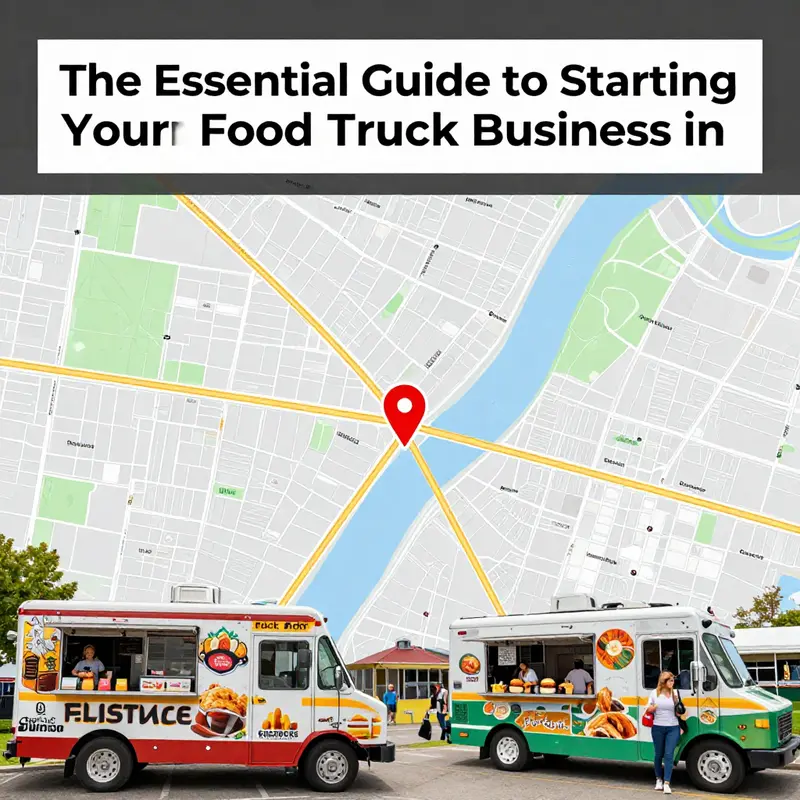
The success of a food truck rests as much on where you operate as on what you cook. The location becomes a living part of your business model, shaping who you reach, how much you sell, and how sustainable your operation feels after the first busy week. When you plan to start a food truck, you are not simply choosing a kitchen on wheels; you are plotting a route through the rhythms of a city, chasing a balance between visibility, accessibility, and practicality. In the early days, every decision about a spot—day by day, hour by hour—will ripple through your sales, your costs, and your sanity. The right spot can turn a good menu into a steady stream of customers, while a poor choice can transform even the best recipes into a quiet, inconsistent trickle of income. This is why finding ideal locations deserves the same careful attention as your menu, your branding, or your cash flow projections. It is one of the few areas where data, observation, and a little nerve come together to produce a tangible difference in the bottom line. You need more than a great dish; you need a great stage on which to serve it.
High pedestrian volume is the first compass you should trust. Busy downtown streets, bustling markets, and parks with families strolling through on weekends create a built-in audience that can sustain a new concept until it finds its footing. The density of people passing by translates into the number of potential customers who might pause for a quick bite, learn your brand, and become repeat visitors. The challenge is to translate that volume into consistent sales. A location with a constant stream of foot traffic can still fail if your line moves too slowly, if your queue becomes a drag, or if your brand lacks recognition. This is where a clear picture of your concept and a reliable process come into play. If you want to maximize the impact of foot traffic, think about how your truck fits into the daily flows of the area: where people are coming from, where they are going, and what kind of break they are likely to take. Your menu should be legible from a distance, and your queue should be manageable in a crowded lane. You want to reduce decisions for the customer: they should be able to spot you, recognize you, and know what they will get in a few steps.
Strategic timing is the second crucial dial you must tune. Office clusters create predictable lunch windows where professionals seek variety, speed, and value. University campuses and hospital complexes generate steady streams during class changes or shift rotations. Parks and entertainment venues spike with weekend leisure or after-work events. The trick is not simply to plant yourself where crowds gather, but to align your schedule with the rhythms of your target audience. If your concept leans toward quick, affordable meals, the lunch rush near office districts can become your bread and butter. If you offer indulgent treats or specialty street foods, aligning with evenings after events or weekend markets might be more profitable. Understanding the cadence of the local landscape means recognizing that a great location at 12:30 pm on a weekday could transform into a quiet stall by 2 pm unless you adapt. Flexibility becomes a feature of your location strategy: you may rotate between spots, extend hours during festival seasons, or pair with nearby venues for shared promotions. In practice, this means tracking the days when footfall spikes and planning your rotations accordingly, so you are not locked into a single place that looks promising on paper but underperforms in reality.
Regulatory realities shape where you can stand and for how long. Many cities designate specific food truck zones with infrastructure that makes life easier—electricity hookups, water access, waste disposal, and simpler permit processes. When you locate in these zones, you trade the risk of being moved or fined for a smoother operation. The alternative, parking in ad hoc spots without clear permission, can expose you to fines, enforcement sweeps, or the dreaded slow, steady erosion of customer trust as people learn you move around unpredictably. Your research should start with understanding the local rules: which areas allow standing at certain times, how long you can stay, and what licenses you must display. The friction of compliance is not a barrier; it is a map that tells you where to plant your stall with confidence. A well-chosen zone that has water, electricity, and real-time turnover support can be a game changer, particularly during peak seasons or large gatherings when other vendors struggle to meet demand.
Avoiding conflicts with established restaurants is a practical discipline as you map spots. The goal is not to chase every penny away from nearby venues but to find positions where you complement the local ecosystem rather than collide with it. Areas saturated with existing eateries can still be thriving if your niche solves a problem they don’t. Conversely, stepping into a dense cluster of restaurants with similar menus can squeeze your margins unless you differentiate through pricing, speed, or a memorable brand story. A thoughtful approach includes estimating your competitive landscape, observing nearby menus, and testing a few hours of operation to gauge appetite. You may discover a need in a nearby arts district, where your visual identity and creative menu can draw curious customers who might otherwise walk past a traditional storefront. In short, your location strategy must respect other businesses while carving out a unique space for your own concept.
Understanding your target market is the fourth axis of locational intelligence. Your product fit must marry with the vibe of the place. A gourmet taco concept might thrive near an arts district where culture and food intersect, while a student-friendly sandwich stall could find energy near campus coffee clusters and library hotspots. Seasonality matters too: a seaside town will behave differently in summer than in winter, and a park near a lakefront will surge during sunny weekends but slow in cold weekdays. Your awareness of who you are serving informs your location choices as much as the physical space itself. It is not merely about where people are, but when they are and what they crave at that moment. A flexible concept, which can pivot to meet shifting tastes and time slots, is often best positioned to ride the tides of a dynamic cityscape.
Data-driven insight should underpin every location decision. Social media engagement is a surprisingly accurate proxy for where your truck performs best. Followers who rally around posts about a particular spot or event offer a real-time signal about where demand exists. You can track comments on multiple posts, see where you are tagged, and note the patterns of shares and saves that correlate with your busiest days. Pair this with hands-on observation: spend time in potential locations at the same times you would operate, observe foot traffic flows, watch how long people linger, and identify where lines form. This ground-level intelligence is the counterbalance to the sometimes misleading impression created by a location’s surface appeal. A corner with a high traffic count may collapse if access is blocked, if sightlines into the truck are awkward, or if parking restrictions force you to move every hour. A practical approach blends digital signals with tactile inspection, requiring you to iterate quickly and adjust location choices as data accumulates.
As you move through the process, a clear, repeatable method for evaluating spots helps you stay disciplined. Begin with a broad map of potential sites that fit your concept and license requirements. Narrow to a handful of viable zones with established infrastructure or predictable turnover. Visit them at the times you plan to operate, noting how long you can stay, how your queue forms, and whether customers can easily access you from curbside or pedestrian walkways. Talk to local business owners and nearby stallholders to understand the unwritten rules that govern the space. If you are uncertain about the most suitable spots, consider partnering with a designated food truck park or market that aggregates multiple vendors and provides a built-in audience and shared facilities. These environments often reduce the friction of setup and allow you to concentrate on execution and customer experience.
The practical flow of choosing a location links to your broader start-up plan. Location cannot be treated as a sidebar; it should be an integrated element of your financial model, branding strategy, and menu development. Your leasing or permit costs, your expected daily sales, and your staffing plan all hinge on where you operate. The more precise you are about the expected volume of customers in a given zone and the time windows you can reliably cover, the more accurate your budget becomes. If you forecast higher revenue from a zone with efficient infrastructure and strong footfall, you can invest more confidently in a larger truck, better equipment, or a longer operating window. If the spot demands more flexibility or results in lower throughput, you adjust your plan to safeguard margins. This is not merely about choosing a spot; it is about aligning every layer of your business to the cadence of the place.
In practice, a thoughtful locational strategy looks like this: you identify several preferred zones, verify the permit and infrastructure requirements, and estimate the potential customer base for each. You will then test these locations in real operating conditions, starting with shorter or staggered shifts to minimize risk while you learn. You collect data on average ticket size, order velocity, and customer wait times. You observe what works in terms of visibility and accessibility, then you adjust your queue design, signage, and staff allocation accordingly. After a few cycles, you will see a pattern: the spots that consistently deliver reliable footfall, reasonable queues, and favorable exchange rates between effort and reward. When you reach that point, you know where your truck belongs—and you can plan your week around it with confidence.
For those who want pragmatic pointers that tie back to practical sourcing and operations, consider the reality that your truck’s form and layout can influence where you should go. If you are weighing truck configurations or comparing layouts for a Lakewood startup, exploring the guide on Best Food Truck Models for Lakewood Startups can provide helpful context about what kinds of trucks perform best in different environments and what constraints you should plan for in terms of water, power, and space. This is where the synergy between location strategy and vehicle design becomes clear: the right truck in the right place unlocks a smoother workflow, faster service, and better customer experiences. Best Food Truck Models for Lakewood Startups.
Ultimately, the journey to locating your food truck is a practice of observation, adaptation, and alignment. It requires you to translate the life of the city into a series of operational decisions that you can test, measure, and refine. The best spots are not found by chance but earned through prepared eyes, steady data, and close listening to customers and neighbors. You are building a routine that can weather changes in seasons, events, and economic cycles, because the essence of your business is not only what you cook but where you serve it. The map you create around your truck should feel alive—capable of shifting as the city shifts, yet anchored by a discipline that makes every shift purposeful. As you continue your journey, this locational intelligence will infuse your branding, your pricing, and your schedule with a clarity that helps you stand out without exhausting your resources. And when you finally lock in a handful of dependable spots, you will have laid a foundation that not only feeds people but also sustains your growth and reinforces the confidence you need to expand, explore, and iterate.
External resources can widen your perspective on market dynamics and location strategies. For deeper market insights and location strategies, many operators consult industry analyses that examine trends, seasonality, and consumer behavior across different regions. These insights can help you anticipate shifts in demand and identify emerging opportunities that align with your concept. External research can complement your first-hand observations and local knowledge, guiding you to smarter choices as you scale your operation. See an external resource for broader context: https://www.businessresearchinsights.com/industry-reports/food-truck-market-trends-location-strategies-2026.html
Final thoughts
Starting a food truck business is an exciting venture that combines your love for cooking with the joy of serving your community. By understanding the legal requirements, planning your finances, developing a mouthwatering menu, and choosing the right locations, you’re setting yourself up for success. Embrace the journey and let your food truck become a beloved part of Lakewood’s culinary landscape. Your adventure on wheels is just beginning!