
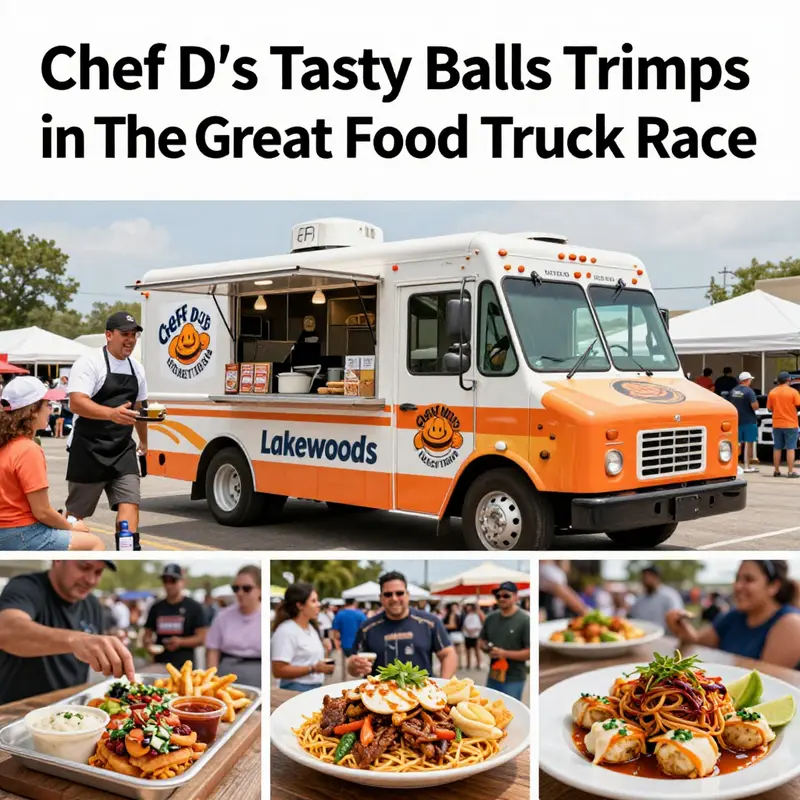
Chef D’s Tasty Balls not only made headlines but also won the hearts of many, clinching victory in the 2021 season of The Great Food Truck Race: Alaska. Led by the talented Chef D (D’Ambria Jacobs), this remarkable food truck emerged victorious through creativity, dedication, and a unique culinary concept. As we dive into this article, we’ll explore the achievement of Chef D’s Tasty Balls, uncover the creativity behind their winning food truck, and envision how this victory has set the stage for Chef D’s future endeavors that aspiring food truck operators and tourists in Lakewood won’t want to miss.
Finish Line Flavor: Quiet Mastery Behind Chef D’s Tasty Balls on The Great Food Truck Race
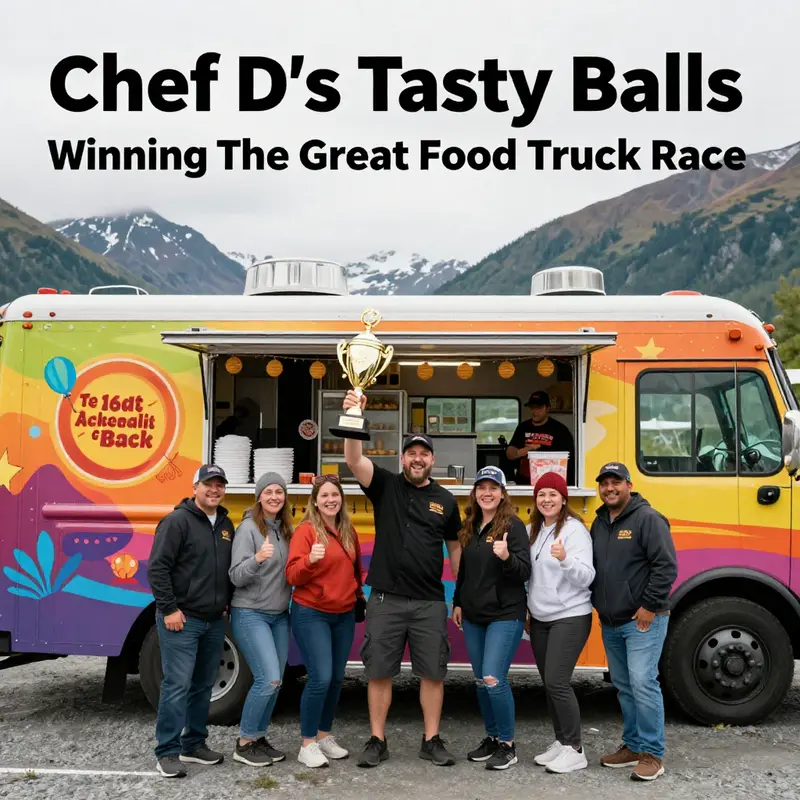
On The Great Food Truck Race, Alaska tested speed, scarcity, and the crew’s cohesion more than any recipe. Chef D’s Tasty Balls showed how a single signature idea can anchor a brand while adapting to harsh conditions, turning constraint into creativity and pressure into progress.
Ball-Driven Breakthrough: A Concept That Won The Great Food Truck Race in Alaska
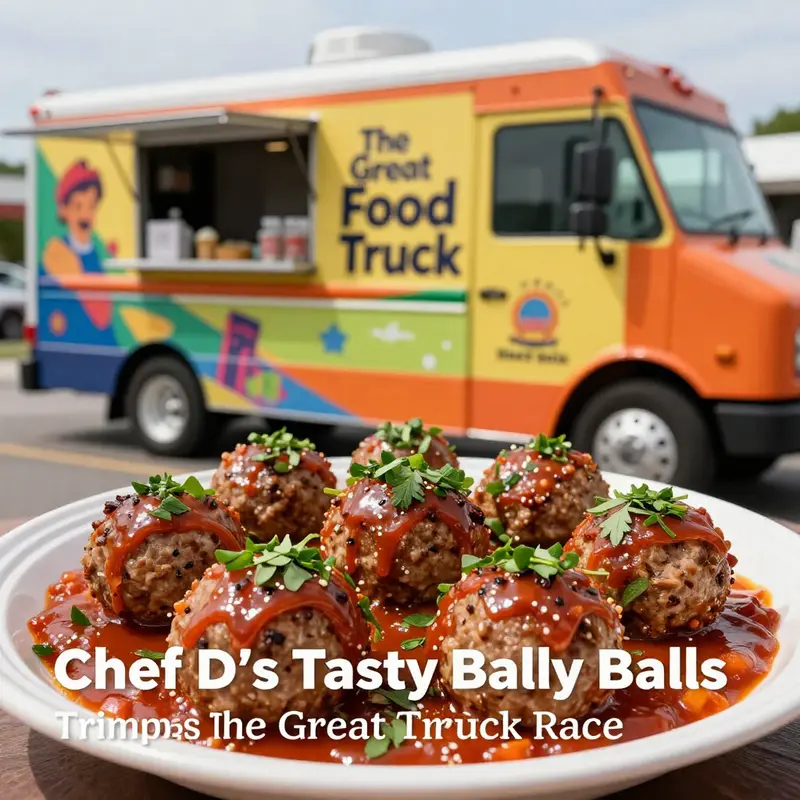
In the chill and remote vastness of Alaska, a story about speed, improvisation, and a single, audacious idea unfolds with the precision of a well-tuned engine. The Great Food Truck Race challenged teams to define not only what they cooked but how their truck spoke to the world in a matter of hours and miles. It asked for a concept that could survive a moving target: shifting crowds, changing weather, and the relentless clock. In this crucible, the team led by Chef D, a figure whose leadership fused quiet authority with ferocious taste, distilled a seemingly simple notion into a strategic powerhouse. What emerged was not merely a menu or a gimmick; it was a concept built around ball-sized bites that could be scaled, adapted, and presented with a narrative that traveled as smoothly as the truck itself. The result was a victory that felt earned not by a single dazzling plate but by the coherence of a concept that could bend to the beat of the competition while remaining unmistakably theirs.
The genesis of the concept came at the intersection of necessity and imagination. When Food Network challenged Chef D and her crew to craft a compelling truck concept within a few days, the crew did not retreat into an arena of expensive experiments. They anchored their approach to a core principle: simplicity that yields flexibility. The ball-centered idea—an approach that translated flavor, texture, and presentation into small, shareable portions—became a unifying thread through every decision. Small bites, big impact. The bite-sized format was not a novelty for novelty’s sake; it was a practical framework that matched the tempo of a race built on rapid iteration and on-the-fly problem solving. In a setting where every minute matters, a concept that could be assembled quickly, reconfigured with minimal waste, and executed with consistent quality offered a durable advantage. It also turned into a storytelling device—audiences could easily understand and remember a truck that offered a set of familiar, tactile experiences wrapped in a surprising delivery.
From the outset, the concept was designed to be navigable under pressure. Alaska’s terrain and the show’s demanding schedule forced a different calculus about kitchen workflows. The team built a compact, modular system: a small, versatile station that could produce several variations of the bite-sized format with shared mise en place, diverging sauces, and a handful of signature accompaniments. The structure allowed the crew to move with the rhythm of the day—prepare a base, dress it in one of several flavor profiles, and deliver. The result was both efficient and expressive. It enabled the truck to present a menu that felt cohesive yet offered enough variation to appeal to diverse tastes among judges and audiences alike. In a channel where spectators wanted drama and clarity, the concept provided a clear through-line: a flavorful, comforting core with enough twists to spark curiosity without losing the essence of what the truck stood for.
The sensory core of the concept—the ball bites—played to the strengths of a crew accustomed to teamwork under pressure. The bites were crafted to exploit contrast: a crisp exterior catching light on camera, a warm interior that released aromas as plates were passed, and a balance of textures that kept the palate engaged across rounds of tasting. The team approached flavor as a narrative arc—start with savory and smoky notes, lift with a bright tang, then settle into a comforting, familiar finish. The emphasis on texture proved crucial. In Alaska’s chilly climate, the crisp bite offered an irresistible counterpoint to the soft, yielding centers inside. The bite format also allowed the team to control portions so that judges could evaluate more than just taste. They could gauge technique, consistency, and the care that went into each piece, a set of metrics where a disciplined execution often trumps flashy improvisation.
Operationally, the ball concept reshaped how the crew managed lines, timing, and service flow. The kitchen, once a sprawling space of ambitions, was distilled into an efficient series of steps that could be replicated on any stage of the race. The base recipe, the core technique, and a handful of adaptable finishing touches created a kitchen choreography that minimized cross-contamination, reduced prep time, and ensured uniformity across every service window. The show’s pressures demanded that a concept not only be elegant in theory but resilient in practice. The team rose to that test by crystallizing the idea into a blueprint for execution. They built a rhythm, a cadence, a set of rituals—things like a quick daily stand-up, rapid tastings before departure, and a fixed sequence of plating that preserved the visual identity the judges would evaluate on camera. All these elements anchored the concept in a reality that could be trusted when fatigue and weather threatened consistency.
The narrative arc surrounding the concept was equally important. In the race, viewers latch onto stories that feel both human and universal. The ball bites became a storytelling device as well as a culinary one. The crew threaded the origin of each bite into the truck’s brand story, explaining how the concept emerged from a challenge and evolved through collaboration. The audience could see the team’s decisions as part of a larger journey—the way a small idea, nurtured by leadership and team chemistry, grew into a strategic force capable of competing with more established, resource-heavy concepts. This storytelling alignment mattered. Judges don’t judge a concept in isolation; they weigh how well the concept translates into consistent performance across stages, how it adapts to constraints, and how convincingly a team can defend and evolve it when the cameras are rolling. The Alaska season made that alignment visible and compelling. The concept did not just survive the weather, the miles, and the curveballs of the day; it converged with the reality of the race in a way that made the victory feel both earned and inevitable.
The creative core of the concept—its ball-centered, bite-sized approach—also carried a strategic weight beyond the show’s confines. In the broader world of food trucks, a concept is often a signal to customers and investors about what the truck stands for and how it innovates. A bite-sized, shareable concept carries the dual promise of accessibility and experimentation. It invites curiosity while remaining reassuringly familiar. The Alaska victory thus serves as a case study in how a well-chosen concept can anchor a brand, a crew, and a competition strategy in a way that grows more persuasive with each mile traveled and each service window opened. The concept’s flexibility meant that the team could calibrate quantities, adjust flavors, or lean into a particular ingredient based on crowd preferences or limited supplies—without losing the thread that tied every plate to the same story. That coherence mattered as much as the first breath of steam that rose from the serving station on a cold day, because in a show where perception can tilt the outcome, a strong concept provides a predictable, repeatable backbone that supports bold decisions.
To the casual observer, the victory might appear rooted in a single standout dish or an exceptional scoring round. In truth, it rested on the quiet strength of a concept that allowed a focused, disciplined team to translate a high-stakes idea into reliable performance. The concept’s success rested on three pillars: clarity, adaptability, and resonance. Clarity meant the team could communicate what they were doing and why it mattered—through the menu, the service model, and the on-camera storytelling that accompanied each episode. Adaptability meant the ability to retool flavor profiles, rearrange production steps, and adjust the flow of service without sacrificing speed or quality. Resonance meant that the concept connected with judges and viewers, turning curiosity into comfort and novelty into familiarity through repeatable experiences. These pillars did not emerge by accident; they were cultivated through careful experimentation, recalibration after missteps, and a leadership approach that emphasized accountability without punitive intensity. Chef D’s leadership style—calm, precise, and deeply collaborative—created an environment where creativity could flourish, and mistakes could be owned and corrected quickly.
The Alaska setting amplified both the risks and the rewards of such a concept. The audience’s appetite for novelty collided with the constraints of the race: remote kitchens, limited inventory, and the need to maintain service under the pressure of televised scrutiny. The ball concept offered a form of resilience in that context. It was a concept that could be prepped, par-cooked, and finished in moments. It could be plated for a crowd or plated for a single judge with equal care. It lent itself to efficient mise en place and a visible, approachable story that could be captured by the cameras without becoming gimmicky. In a show that trades on spectacle, the most enduring elements are often the ones that feel inevitable in retrospect—the simple choices that, when executed with discipline, yield outcomes that seem almost preordained. The ball bites were just such a choice, a decision that grew with the team’s understanding of their own strengths and the rhythm of the competition’s tempo.
The victory, then, was not a moment of luck but a culmination of a philosophy: a concept that could stand up to the rigors of Alaska’s race, support a team under stress, and travel outward as a story that people could follow with appetite and memory. This is why the story resonates beyond the episodes. It offers a template for future contestants who enter the arena with fresh ideas but limited means. It offers a reminder that a well-chosen concept—when paired with disciplined execution and a leadership approach that emphasizes trust and collaboration—can elevate a chef’s craft into a shared, scalable experience. The Alaska triumph is, in that sense, a case study in strategic cuisine, where the value of an idea lies as much in how it organizes work and communicates purpose as in how it tastes on the plate.
For readers who want to explore how similar strategic thinking translates into other culinary endeavors, there is a useful parallel to the ways startup teams in different regions consider structure and model selection for a mobile food business. The question of what truck form best serves a concept can be as consequential as the recipe itself. A practical exploration of this idea is found in discussions about startup-oriented truck models, which offer insights into how design choices influence scalability, speed to market, and margins. This broader lens helps illuminate why the Alaska season’s emphasis on a cohesive concept matters to anyone observing the evolving food truck landscape. In that spirit, the discussion of adaptable truck models for new ventures can provide a frame for thinking about how a ball-centered concept could be translated into other contexts, markets, or stages of growth. To dive deeper into that angle, consider the perspectives gathered in resources like the piece on Best food truck models for Lakewood startups.
Ultimately, the Alaska victory under Chef D’s leadership underscores a broader truth about culinary competition: success hinges not only on what’s on the plate but on the clarity of the idea behind the truck, the speed and reliability with which it can be delivered, and the emotional resonance it builds with people watching from near or far. The ball bites did more than fill a plate; they invited people to participate in a shared moment of tasting, story, and community. In the quiet hum of Alaska’s landscapes, that invitation proved irresistible, a reason to gather, sample, and remember. Chef D’s team did not merely cook in a contest; they choreographed a narrative about chance, craftsmanship, and character under pressure. And in doing so, they demonstrated how a well-conceived concept—executed with discipline and empathy—can rise above the noise of competition to secure not just a win, but a lasting memory of what a food truck can be when a team treats every bite as a vote for the idea it represents.
As the channel of televised cooking reveals more about technique and talent, the longer arc of a successful concept remains a guiding light for teams entering similar contests or simply pursuing growth in the vibrant world of mobile dining. The Alaska season adds to this conversation by showing that a concept’s strength is measured as much in its capacity to adapt to changing conditions as in its ability to delight audiences. The ball-centered approach embodies that ethic: it is a framework that travels well, communicates clearly, and, when paired with leadership that values collaboration and calm strategic thinking, can transform a bold idea into a championship performance. The chapter of this particular race closes not with a dramatic flourish, but with a quiet affirmation: when a team aligns its concept with the realities of the journey—when the idea is both flexible and focused—the miles traveled become a narrative of success that tastes as good as it looks, and the memory of that success lingers long after the final credits roll.
For readers who wish to explore related discussions on how startup-oriented trucks approach design choices, the linked resource below offers a broader lens on models that support scalable, repeatable concept execution. Best food truck models for Lakewood startups. Best food truck models for Lakewood startups. This connection helps place Chef D’s strategic approach within a wider ecosystem of mobile culinary entrepreneurship, underscoring that a strong concept travels well when it sits on a solid operational backbone.
External resource: https://www.linkedin.com/posts/chefdeedambriachef-ds-tasty-balls-wins-food-truck-race-alaska-activity-7283194657071720448-0vKZ
From Alaska’s Finish Line to a New Frontier: The Transformative Rise of Chef D’s Tasty Balls
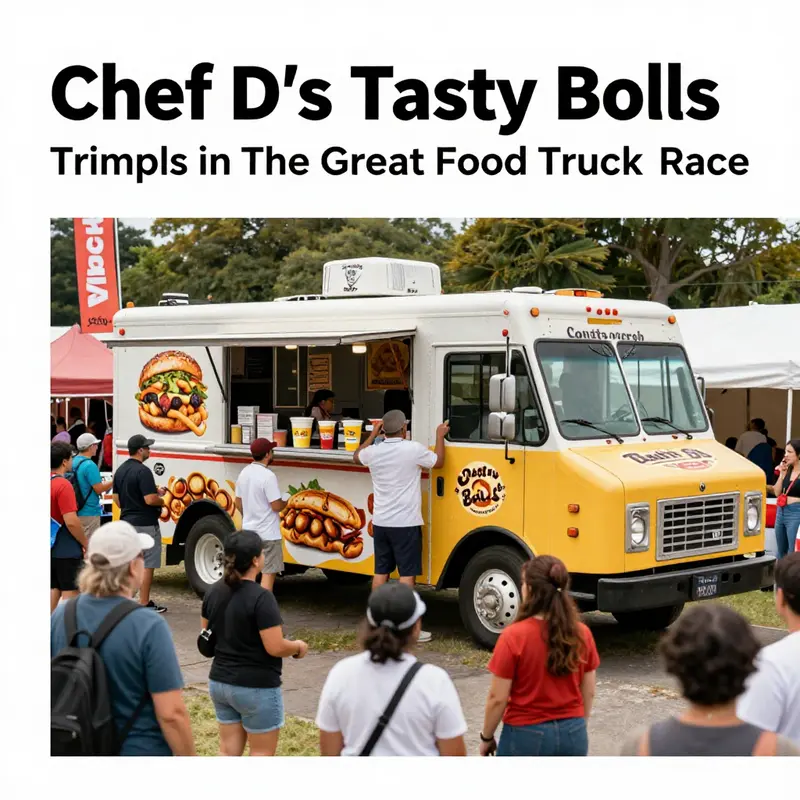
When the dust settled on The Great Food Truck Race: Alaska, the trophy did more than symbolize a season crowned with tension, heat, and creative risk. It signaled a pivot point for Chef D’s Tasty Balls, a mobile kitchen whose name had already begun to echo beyond its regional roots. The victory was not merely a validation of culinary skill under pressure; it was a loud declaration that a distinctive concept, delivered with grit and a clear team rhythm, could transcend the competitive stage and become a lasting brand story. The race in Alaska, with its starry skies and unpredictable weather, demanded a blend of artistry and operational discipline. Teams had to choreograph a simple idea into a mobile experience that could travel from one tight window of opportunity to the next. Chef D—better known as D’Ambria Jacobs to a wider audience—led her crew with a blend of calm focus and fierce adaptability. They showed up with a concept that felt intimate, almost confessional in its approach to comfort food, yet bold in its execution and presentation. The result was a narrative the judges could taste and the spectators could feel. In the weeks that followed, the victory didn’t dissipate into reruns and fan chatter. It amplified. It amplified in the way a well-timed signal amplifies a speaker’s voice in a crowded room, turning a niche idea into a visible, scalable opportunity. This amplification came not as a single flash of celebrity but as a sustained shift in perception. The public began to ask not just who won the race, but what the winning concept could become in the real world. The answer, increasingly, pointed toward expansion, collaboration, and a more purposeful integration of values into business strategy. This is not simply about a moment of triumph; it is about a trajectory that links a high-stakes television sprint to the longer road ahead where food trucks become more than groceries-on-wheels. They become platforms for storytelling, community, and sustainable growth. The win carried a message to aspiring cooks and entrepreneurs who watched: discipline and imagination can meet under pressure to craft something both delicious and enduring. It is telling that the team’s concept endured the most unpredictable variable of all—the audience’s appetite for novelty and reliability, blended with a desire for sentiment and connection. In their case, the recipe wasn’t just about the ingredients on the plate; it was about a philosophy of service, speed, and consistency that could be adapted to different neighborhoods, markets, and consumer moods. The secret, in many judges’ eyes, lay in how the truck communicated its story through food: the textures, the warmth, the pacing of service, and the way each bite could evoke a memory or spark a new one. The brand emerged as a person, then as a promise. The promise was fairly explicit: a mobile dining experience that could deliver comfort with a twist, even when the clock was ticking and the course was uphill. As with any brand that rises quickly on a national stage, the victory introduced a flood of attention from fans, peers, and potential partners. It’s one thing to be admired in a regional circuit where word of mouth travels by direct contact and the occasional feature in a local glossy. It’s another to be recognized by people who may never have set foot in your hometown yet feel a sense of connection to the story your truck embodies. This is where the win becomes a turning point rather than a mere line on a resume. The attention is not a balloon that can float endlessly; it is a current that demands alignment between public perception and internal capacity. Chef D’s team met that demand with a deliberate recalibration of operations and identity. They began to translate the race’s lessons into a communication strategy that could travel as fast as the truck itself. They highlighted the core strengths that helped them win under pressure: authentic cooking, disciplined teamwork, and the ability to improvise while remaining true to a clearly defined concept. These attributes resonated with audiences who sought authenticity and reliability in an era of rapid content consumption and brand saturation. The narrative around the truck evolved from “a remarkable performance on a challenging course” to “a reliable, scalable brand with a distinct voice.” That voice, crucially, is not a product pitch but a story about care and craft. It is the kind of voice that invites collaborations and invites customers to become part of the journey. The expansion prospects that followed the win were not theoretical. They began to show up in conversations with investors and potential partners who had watched the season and understood the pacing of the brand’s growth. The trajectory suggested a combination of franchise-like expansion and selective multi-unit growth that could preserve food quality and the customer experience while spreading the concept to new cities. It was not simply a matter of adding more locations; it was about maintaining the DNA that had won the race while reimagining the logistics of a larger operation. The team’s leadership faced a familiar tension: how to scale without sacrificing the intimate operational rhythm that made the concept work in the first place. The answer required a thoughtful architecture of processes, supplier relationships, and people development. The chef’s kitchen, once a single truck with a handful of staff, began to resemble a small enterprise that could be replicated with the same care that produced its signature flavors. Here, the race’s lessons about speed and consistency translated into a blueprint for growth. The team studied not only how to cook under pressure but how to train and empower crew members so that each subsequent location could deliver the same sensory experience—the same warmth in the hosting, the same crisp textures, the same balance of seasoning—that had earned praise on the Alaska course. This is where the win’s impact extends beyond financial metrics. It becomes a social and cultural signal that diverse voices can lead in the fast-paced food world when they bring specificity, sincerity, and a well-defined philosophy of service. The broader food truck ecosystem has long valued mobility, flexibility, and entrepreneurship. Yet the Alaska victory reframed mobility as a platform for meaningful work and community engagement. Chef D’s Tasty Balls soon found themselves invited into conversations about sustainable sourcing, community partnerships, and mentorship opportunities for aspiring mobile chefs. The brand’s narrative now positions itself as a conduit for broader storytelling—one that invites neighborhood partners to co-create experiences, from pop-up collaborations to charity events that align with community values. This shift did not happen in isolation. It was reinforced by channels that have become central to modern culinary brands: social media, live events, and strategic partnerships that extend the brand’s footprint while maintaining a consistent experience. The team recognized early that attention without a plan for execution can fray quickly. They mapped a path from the race’s podium to a sustainable growth curve that could withstand economic shifts and evolving consumer expectations. It helped that the concept itself had a natural rhythm for expansion: a menu built around a focused core offering, adaptable toppings and sauces, and a service model capable of quick turnover without sacrificing quality. The practical steps toward growth included refining the supply chain, investing in staff training programs, and building a scalable scheduling and logistics framework. These measures ensured that each new location could experience the same level of hospitality and culinary precision that won the hearts of Alaska’s judges. The win’s impact was not merely quantitative; it reshaped the brand’s qualitative dimensions as well. The team’s public persona grew more confident, not swaggering, but confident in their identity and capabilities. That confidence radiated in interviews, panel discussions, and in the collaborations that followed. People wanted to know the story behind the flavors—the personal arc of Chef D’s journey, the crew’s cohesion under stress, and the shared belief that food can be a powerful connector. The narrative began to echo in classrooms, culinary studios, and entrepreneurial meetups where aspiring food entrepreneurs learned that a compelling concept, delivered with discipline, could emerge from a regional kitchen and become a nationwide phenomenon. It’s not a cliché to say that brands thrive on conviction as much as on taste. In this case, conviction manifested as a commitment to equity and inclusion, a deliberate emphasis on sourcing with purpose, and a willingness to listen to community feedback. The Alaska win thus took on a civic dimension: it invited public conversations about the responsibilities that come with rapid growth in a mobile food sector. The conversations did not shut down once the cameras stopped rolling. If anything, they gained momentum as the brand’s visibility widened. The curiosity of potential customers who had learned about the truck through a televised race now translated into foot traffic, social engagement, and word-of-mouth referrals. The resulting upward cycle—positive perception feeding demand, demand enabling investment, investment supporting more locations—produced a credible model for how a niche concept could scale without losing its personality. And within this model there was room for experimentation. The team could try new iterations of their core concept, launch limited-time partnerships, and pilot community-focused initiatives that aligned with the brand’s values. The prospect of a branded product line began to emerge as a tangible extension of the winning concept. A well-curated line could capture fans who can’t reach the truck in every city yet still want to connect with the brand. A product line could serve as a physical reminder of the Alaska story and offer a way for new supporters to participate in the brand’s journey. These possibilities required careful consideration of production, distribution, and quality control. They also demanded clarity about a forward-facing mission that would guide decisions about where to place new locations and how to maintain the level of care that customers associate with the name. In parallel, the brand’s community outreach and sustainability efforts found fertile ground. The post-win momentum gave them permission to invest in initiatives that align with contemporary consumer values—supporting local farmers, reducing waste, and creating internship opportunities for young cooks from underrepresented backgrounds. The narrative that clients and community partners could anchor around became a form of social capital as meaningful as the menu itself. This integrated approach—balancing growth with purpose—helped dampen the typical volatility of television-led fame. It provided a steady sense of direction for staff who joined the team after the victory and for partners who want a reliable collaborator in a crowded market. The Alaska win thus anchored a broader industry conversation about what it means to succeed in the mobile food economy. It suggested that success is not purely measured by the number of trucks or the size of a brand but by the clarity of the story, the consistency of the experience, and the capacity to contribute to the communities that welcome the trucks into their streets. For aspiring operators, the tale offers a blueprint: start with a concept you genuinely believe in, cultivate a team that can execute under pressure, and then align growth with a concrete, values-driven purpose. The race’s finish line becomes a starting line for a future that is not guaranteed but thoughtfully planned, with safeguards to preserve quality and a commitment to keep listening to the people who keep the truck moving—customers, partners, and neighbors who become part of the ongoing story. As the brand advances, it will be essential to maintain a sense of storytelling that feels personal rather than performative. The best moments will still arise from ordinary interactions—the quick hello from a regular who has watched the truck grow, the nod of approval from a first-time taster who discovers a familiar flavor reimagined with a bold twist. The recipe for durable success remains simple in principle: keep the craft precise, the service warm, and the purpose clear. The Alaska victory is a reminder that when a team aligns skill, character, and a shared mission, a fleet can travel much farther than a single truck. It is a reminder, too, that food has the power to translate aspiration into action, turning a televised sprint into a years-long journey toward broader opportunities and shared nourishment. For readers following this chapter in the larger narrative of whether tasty balls won the Great Food Truck Race, the answer is yes in a way that transcends the competition’s finale. The victory established a new baseline for what a mobile kitchen can be when it approaches food as storytelling, service as hospitality, and expansion as a thoughtful, community-oriented venture. In the weeks and months after the season aired, the story continued to unfold, and the path ahead, shaped by the energy of that win, looked rich with possibility. The chapter of this journey remains open, inviting new chapters about how a single concept can evolve into a resilient enterprise while keeping the core flavors and the human warmth at the heart of its mission. The narrative is not a closing note but a forward cue: the future will test the brand’s ability to maintain integrity under growth, to sustain the magic that captured hearts on day one, and to invite more communities into the shared experience that began on a Alaska street corner and traveled outward through time, taste, and trust. For readers who want to explore the practical side of how growth parameters are considered in the food truck world, a useful point of reference can be found in discussions about scalable equipment and layout design that support multi-site operations without compromising the guest experience. In that spirit, industry conversations continue to emphasize that the most enduring brands do not chase novelty at the expense of consistency; they refine a core concept so that every new location is a confident extension of the original promise. The Alaska victory will be remembered not only for the dish that carried it forward but for the way it reframed possibility. It invited a broader audience to imagine themselves as co-authors of a mobile food story—one where a single truck can spark a network of opportunities, and where a shared appetite for good food and good work becomes a catalyst for ongoing growth and community connection. The chapter ends with a sense of momentum rather than conclusion, a feeling that the most compelling stories in food are those that insist on progression, not perfection. As Chef D’s Tasty Balls continues to roll forward, the memory of that season remains a compass: a reminder of what was achieved under pressure, and a beacon for what might be built next, one carefully crafted bite at a time. External resource: https://www.linkedin.com/feed/update/urn:li:activity:7346981234567890123/ [Note: external resource for further details on the official announcement of the win].
Final thoughts
Chef D’s Tasty Balls stands as a beacon of creativity and success, proving that a great concept, paired with passion and dedication, can truly shine in the culinary world. Winning The Great Food Truck Race not only elevates Chef D’s brand but also sets a powerful example for aspiring food truck operators and food enthusiasts alike. With the community’s support and a strengthened vision, Chef D is poised for an exciting future that promises to delight and inspire. Whether you’re in Lakewood or just visiting, keep an eye out for the incredible flavors that Chef D’s Tasty Balls will bring to the street food scene.