
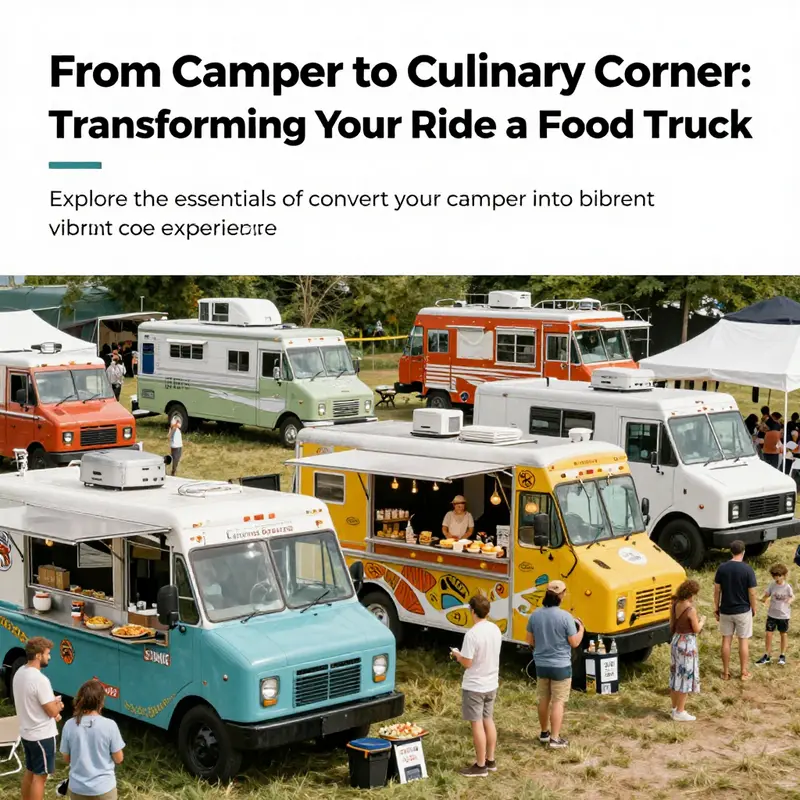
Are you craving the freedom of the open road combined with the joy of serving delicious food? Turning your camper into a food truck can be an exhilarating adventure, especially here in Lakewood. Imagine cruising through the scenic views while whipping up hot meals for happy customers. In this guide, we’ll explore the crucial steps to make this dream a reality, starting from kitchen setup to compliance requirements, safety features, and structural modifications. Each chapter will equip you with the knowledge to ensure your camper conversion is not only functional but also compliant with health and safety standards, helping you to serve your community with flair and confidence.
Designing the Kitchen: Practical Setup and Systems for Converting a Camper into a Food Truck
Designing the Kitchen: Practical Setup and Systems for Converting a Camper into a Food Truck
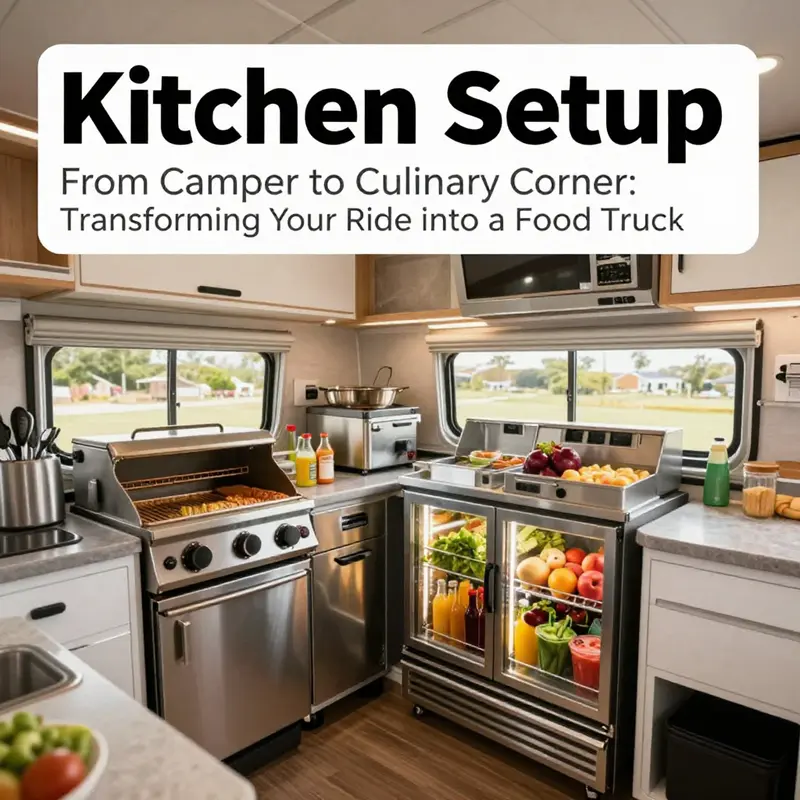
Converting a camper into a food truck makes the kitchen the project’s backbone. The way you choose, position, and support equipment shapes efficiency, safety, and the quality of service you deliver. Think of the kitchen as a compact, mobile restaurant: it must handle storage, prep, cooking, refrigeration, waste, and safety without wasting space or creating bottlenecks. Each decision affects permits, daily operations, and the customer experience.
Start with the basics. A functional cooking system requires a reliable heat source, a ventilation strategy, and grease control. For heat, many mobile kitchens use propane or natural gas burners because they heat quickly and are familiar to cooks. Electric options, including induction, work well when shore power or a robust onboard electrical system is available. Whichever you pick, install a commercial-grade cooking surface sized to your menu. Add a flattop or fryer if your concept needs it, and plan for the exhaust hood directly above. The hood must be rated for the type of cooking you do. It needs sufficient airflow to remove smoke, steam, and grease-laden vapors. Integrate a grease trap or collection system and plan access for regular hood and filter cleaning. These steps protect equipment and reduce fire risk.
Water and waste systems are non-negotiable for health compliance. Most jurisdictions require a dedicated handwashing sink, a three-compartment sink for washing and sanitizing utensils, and a potable water supply with a hot-water heater. Fit a fresh water tank sized for expected daily use and a greywater tank sized to meet disposal rules. Keep the greywater outlet accessible and plan routes to approved dump stations. Use backflow preventers and appropriate fittings. Hot water should reach at least the temperature required by your local health department for sanitizing. All water-bearing surfaces and plumbing must be food-safe and easy to service.
Refrigeration is critical to food safety. Select a refrigeration system that matches your menu volume and power profile. A single small fridge may suffice for a minimal menu. For larger operations, use separate units for perishables, frozen goods, and prep storage. Place refrigeration near prep stations to reduce door openings and temperature loss. Insulate cabinets and ensure seals close tightly. Add a thermometer and a simple temperature-logging routine to maintain the cold chain. If weight and power are concerns, consider high-efficiency compressors and well-insulated boxes to reduce runtime.
Materials matter. All food-contact surfaces should be stainless steel or other food-grade, non-porous materials that stand up to heavy cleaning and sanitizing. Counters, backsplashes, and shelving should have sealed joints and coved corners to avoid trapping debris. Flooring must be slip-resistant and sealed to accept regular washdowns. Avoid porous materials and open wood in prep areas. Storage areas for dry goods should be raised off the floor and protected from moisture and pests.
A tight, ergonomic layout keeps service moving. Design a logical flow from dry storage to refrigeration, then to prep, cooking, plating, and the service window. Keep the most-used items within arm’s reach of the cook line. Use vertical space with wall-mounted racks for pans, utensils, and small equipment. Install sliding or fold-down prep counters to expand workspace when parked. Place the service window so it provides a clear handoff while not drawing staff into cramped spaces. Consider counter height for comfortable standing work and safe transfer between cook and service windows.
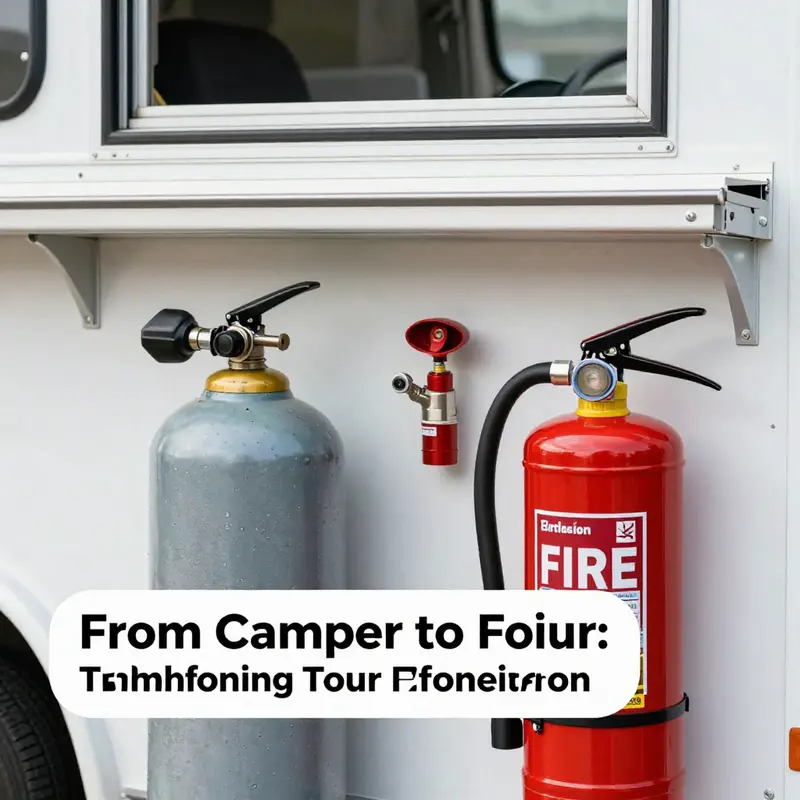
Safety systems must be integrated early. Install an approved fire suppression system in the hood if you run open flames or fryers. Provide multiple, accessible fire extinguishers and a CO detector. Gas cylinders should sit outside the main working cabin, secured and ventilated, and positioned according to local rules for distance from ignition sources. Use automatic shutoff valves and flame-failure protection on gas appliances. Plan clear escape routes and keep aisles free of obstructions.
Power planning ties everything together. Calculate the load for all appliances, lights, water heaters, and small devices. Decide whether you will use shore power, an onboard generator, battery bank with inverter, or a hybrid combination. Shore power is simplest for events with hookups. Generators provide independence but add noise and fuel concerns. High-capacity battery systems paired with efficient appliances and solar charging can reduce generator runtime and support quieter operations. Whichever path you choose, design separate circuits for critical systems, use proper breakers, and include GFCI protection in wet areas.
Structural considerations often determine feasibility. Campers are not always built to hold heavy restaurant equipment. Reinforce floors under heavy units like fryers and refrigeration. Secure appliances with brackets and straps to prevent shifting while driving. Check axle and chassis ratings and distribute weight evenly. You may need to relocate tanks or heavy items over the axles to maintain safe handling. Reinforcement also helps with long-term wear from vibration and daily use.
Grease and waste management must meet code and practical needs. Install an accessible grease container and ensure your hood and ducting route grease safely. Plan for regular grease trap pumping and filter cleaning. For food waste, use covered bins that are easy to clean. Keep waste storage separate from food storage. For wastewater, confirm where you will legally dispose of greywater and plan the plumbing so disconnection and dumping are quick and compliant.
Storage solutions maximize space without clutter. Use stackable, labeled containers for dry ingredients, and implement FIFO (first in, first out) shelving. Vertical dividers can keep trays and pans organized. Consider lockable cabinets for cleaning chemicals and a separate space for allergen-sensitive ingredients. Use clear labeling and simple inventory sheets to speed prep and avoid mistakes under pressure.
For campers with soft walls or pop-up elements, expect extra work. Canvas and soft-sided walls are not ideal for commercial kitchens. Reinforce or replace soft panels where cookware, heat, or grease may contact the surface. Add insulation and rigid backing for shelving mounts and equipment. Weatherproof seals around windows and doors prevent pests and moisture. If you convert a pop-up camper, plan to retrofit rigid surfaces around the cook line and service window to meet health regulations.
Routine maintenance protects your investment and keeps permits in good standing. Create daily, weekly, and monthly cleaning checklists. Clean and degrease the hood and filters frequently. Sanitize sinks and food surfaces between uses. Rotate and inventory stock weekly. Test detectors and extinguishers monthly. Keep maintenance logs in the van for health department inspections and for your own troubleshooting.
Compliance remains a running requirement, not an afterthought. Most local health departments require specific sinks, water temperatures, and safe storage practices. They will check ventilation, hot water capacity, and how waste is handled. Before finishing a conversion, consult your local regulations and schedule pre-inspection conversations. Small design changes early can save time and money later. Consider involving an inspector or consultant during the planning phase to ensure your layout meets rules for both food safety and vehicle modifications.
Finally, build with the future in mind. Choose modular systems that allow equipment swaps, and leave room for upgrades like added refrigeration or a second cooking station. A serviceable wiring raceway and accessible junction boxes make electrical changes simpler. Modular shelving and quick-disconnect gas fittings speed repairs. These choices reduce downtime and help the vehicle adapt to new menus or higher demand.
For practical inspiration, you can study visual walkthroughs of full conversions. One detailed example documents the full process of transforming a 24-foot camper into a food truck, covering demolition, layout, and installation. That walkthrough is a useful complement to these guidelines: https://www.tiktok.com/@foodtruckdiy/video/7481234567890123456
If you want to explore power and off-grid strategies for campers and conversion projects, the following internal resource offers useful perspectives on independent systems and camper conversions: https://lakewoodfoodtrucks.com/unleash-off-grid-adventures-meet-the-godzilla-truck-camper/
Combining a compact, durable layout with reliable utilities and compliance-minded details yields a kitchen that performs. When equipment, plumbing, ventilation, and electrical systems are planned together, the converted camper becomes a safe, efficient, and profitable food truck.
Compliance as Craft: Navigating Permits, Safety, and the Road Ahead When Turning a Camper into a Food Truck
Turning a camper into a food truck starts with a dream that sits just behind the wheel of every ambitious mobile vendor: hot, fresh food served from a compact kitchen that follows a very strict set of rules. The transformation is as much about compliance as it is about clever design. When you approach the project as a craft rather than a caprice, the legal framework becomes a scaffold for quality, safety, and sustainable business growth. The process unfolds as a careful conversation between ambition and obligation, where each inch of space in the vehicle must be planned with an eye toward sanitation, safety, and the rhythm of daily service. If you glimpse the end result—the sizzle of a grill, the gleam of cold storage, the orderly line of customers waiting for a meal—you also glimpse the invisible framework that makes it lawful and trustworthy. This is not a cautionary tale but a map. The map traces the path from first permit to fully compliant kitchen-on-wheels, and along the way it reveals how compliance can be the most practical component of a successful transformation.
The first mile is legal, and it begins with permits and licenses. Municipal vending rules shape where you can park, how long you can operate, and what you can offer. Each city or town often writes its own rules about footprint, signage, waste disposal, and even the types of foods that can be served from a mobile unit. Before you lift a wrench or choose a color scheme, you need to understand the landscape of local permissions. This local layer sits atop state health requirements, creating a two-tiered structure that governs the business in the real world. State-level sanitation certifications then complement this by ensuring that the people operating the kitchen have the knowledge to prevent cross-contamination, maintain proper temperatures, and manage food safely during service. A basic but essential part of this is a food handler certification or equivalent training for every member of the team who touches food. The chain of custody—from receiving ingredients to serving a customer—depends on consistent training, clear procedures, and documented checks.
Failing to respect these requirements isn’t a theoretical misstep. The consequences are real and can be costly, sometimes resulting in fines that reach five figures or more. The stakes aren’t only about money; they’re about the ability to stay open, to pay staff, and to protect customers. When a municipality or state issues a citation, it often reflects gaps in planning, documentation, or fail-safe practices. The remedy is almost always a concrete plan: obtain the necessary permits, complete required trainings, and implement the processes that inspectors expect to see during a follow-up review. The path to compliance becomes a path to credibility with customers and regulators alike, so the focus on permits is also a strategic investment in reputation.
Health and safety standards form the core of the daily routine once the truck is on the road. Food safety regulations demand proper refrigeration to keep perishable items at safe temperatures, reliable waste disposal to prevent odors and pests, and hygienic handwashing provisions for staff. A vehicle converting to a kitchen must incorporate a plumbing system that provides hot and cold running water for handwashing, dishwashing, and utensil cleaning. Wastewater must be managed in a way that complies with local codes, and often the requirements include separate drainage and a plan for cleaning and sanitizing tanks. Beyond water, the kitchen needs proper ventilation to remove heat, smoke, and odors, reducing the risk of grease buildup and improving air quality for the crew. Lighting matters too; a well-lit space helps workers see potential contamination and keeps the operation safe during late shifts. These health and safety standards aren’t optional luxuries; they are the backbone of how you prepare, store, and serve food.
On paper, the conversion may seem straightforward: install a kitchen, hook up water and power, and drive away. In practice, it’s a choreography of materials, systems, and structural choices designed to meet strict standards. Material choices are the first decision point. Surfaces that contact food must be food-grade and non-porous, which typically means stainless steel or sealed, easy-to-clean laminates. This isn’t merely about cleanliness; it’s about preventing harboring bacteria and making routine cleaning efficient. The design must anticipate how food travels from prep to cooking to serving, with surfaces that can withstand frequent cleaning and that won’t degrade under heat, moisture, or vigorous use. Ventilation is a parallel concern. A compliant system needs a hood or equivalent ventilation arrangement that handles cooking byproducts while remaining compact enough for a 24-foot or similar camper chassis. In the same breath, lighting must be ample and well distributed to help staff work quickly and accurately, especially during peak periods.
The conversion also hinges on reliable plumbing and electrical systems. In most jurisdictions, a sink with hot and cold water is not a luxury but a sanitation requirement. The sink must have adequate capacity for washing, rinsing, and sanitizing, with a drainage system that safely disposes of gray water in compliance with local ordinances. Electrical systems need to power all required appliances—cooking units, refrigeration, lighting, fans, and water pumps—while maintaining safe margins for heat, moisture, and movement. The goal is not just to install gear but to build a system that remains functional and safe on the road, with room for expansion as the business evolves.
Structural modifications are the gravity points of the project. The chassis may need reinforcement to support heavy equipment, and insulation becomes essential to keep the kitchen comfortable for workers and energy-efficient for the unit. Storage must be planned with the realities of a mobile kitchen in mind: ingredients and supplies must be organized, accessible, and secure against movement while driving. A well-designed workflow helps keep service smooth. The line between prep, cooking, and service should feel natural in the small footprint, reducing the risk of cross-contamination and bottlenecks in the rush of service. Even the placement of the gas system—its ignition, flame protection, and cylinder distance from the stove—comes with regulatory expectations. Safety features such as automatic ignition and flame failure devices aren’t optional add-ons; they’re requirements that protect staff and customers alike.
The debate between a pop-up camper and a hard-sided trailer often centers on durability, maintenance, and the complexity of setup. Pop-ups offer portability and a lower upfront cost, but their soft sides and potential for insulation gaps can complicate sanitation and temperature control. A hard-sided trailer presents a more straightforward path to meeting health standards, with rigid walls that simplify cleaning and system installation. Yet, neither option absolves the operator from doing the legwork: understanding the full scope of local health codes, mapping out a plan for deep cleaning, and ensuring that every interface—the drain, the electrical panel, the gas line—meets code requirements. A thoughtful approach doesn’t just aim for passing inspection; it looks ahead to long-run reliability, with plans for preventive maintenance, scheduled inspections, and updates as regulations evolve.
To anchor this work in practical guidance, many builders turn to established resources that lay out the step-by-step logic of the conversion. These guides emphasize the same principles: start with compliance as a design constraint, not an afterthought, and use the regulatory framework to shape a safer, more efficient kitchen on wheels. The real value comes from translating the rules into a tangible layout and a disciplined operational plan. For instance, a widely cited external resource offers a comprehensive, field-tested blueprint for converting a camper into a profitable mobile kitchen, detailing how to align equipment choices with sanitation requirements, how to document compliance steps for inspectors, and how to anticipate common pitfalls before they become costly delays. While the specifics of each jurisdiction will differ, the underlying discipline—document, verify, and validate—remains universal. You can think of the process as building a kitchen that not only serves food but also earns trust.
A practical touchstone for inspiration, when you want to see how pros translate these imperatives into a concrete project, is the broader conversation about off-grid camper setups. The discourse around off-grid designs often doubles as a pedagogy for mobile kitchens: how to balance power, water, waste, and ventilation in a tight space; how to preserve safety while pushing the envelope of capability; and how to craft a workflow that supports consistent service even when conditions change. If you’re curious about how other builders navigate the logistics of compact, mobile systems, you can explore one such project that highlights the off-grid ethos and the bold, iterative approach many entrepreneurs bring to the road. off-grid camper project.
Everything above feeds into a single, essential reality: compliance isn’t a barrier to speed; it’s a framework that helps you move faster with less risk. When you design with code in mind, you avoid costly backtracking, rework, or shutdowns. You gain predictability in inspections, which translates to steadier scheduling and more reliable customer service. The average successful camper-to-food-truck conversion treats regulatory steps as milestones rather than obstacles. Each permit secured, each sanitation certification earned, each safe-fatigue-tested layout becomes a credential that reassures customers and lenders alike. And for any entrepreneur who aspires to scale or franchise, the compliance architecture you build early becomes a durable foundation for growth, not a brittle shell that cracks under pressure.
The chapter that follows this one will build on the concept of design for operations. It will turn the compliance-forward mindset into a practical blueprint for selecting equipment, mapping workflows, and preparing a launch plan that honors both the letter of the law and the spirit of customer service. In the meantime, take the idea that safety and legitimacy are not burdens but enablers: they unlock the freedom to serve great food to people who are hungry and curious, wherever the road takes you.
External resource for further guidance: https://www.holden.com/food-truck-conversion-guide
Safety-First on the Move: Building a Fire-Ready, Regulation-Ready Mobile Kitchen
Safety-first thinking anchors every stage of a camper-to-food-truck transformation. Turning a living space into a kitchen on wheels changes handling, heat, and risk, so the build must prioritize people, vehicles, and compliance from day one. The goal is a compact kitchen that operates with the discipline of a brick-and-mortar facility while remaining adaptable to road constraints.
Fire safety is foundational. Install a Class K extinguisher near the cooking zone and, if possible, integrate a fire suppression system that can detect heat or flames and release a suppressant. Choose equipment rated for the expected grease load and design the layout to minimize grease traps and hot surfaces. Fire safety is an ongoing practice of inspection, maintenance, and training, with staff rehearsing emergency procedures and knowing how to isolate power and fuel during faults.
Electrical safety requires a licensed electrician to install dedicated circuits with proper grounding and overcurrent protection. Ground fault protection, clearly labeled wiring, and protected routing reduce shock hazards. The electrical plan should be coordinated with ventilation and cooking equipment so power peaks do not create unsafe conditions, and documentation should be kept up to date for inspections.
Ventilation is the airway of a mobile kitchen. A commercial range hood with an appropriate grease filter and a ducted exhaust removes cooking fumes to the outside. Ductwork must be sealed, cleaned regularly, and located to avoid recirculation into the service area. A well-designed system reduces heat and keeps staff comfortable.
Structural integrity and stability must be assessed as heavy equipment and propane shifts the vehicle’s balance. Reinforcement, load distribution, and suspension adjustments may be needed for safe transit and service. The plan should ensure stable handling, safe braking, and long-term durability.
Access and egress safety shape the workflow. Clear paths, secured storage, non-slip flooring, accessible emergency exits, and doors that operate smoothly reduce trips and panic. Keep hot zones away from entry points and avoid cords running through walkways. Thoughtful layout and anti-slip details improve safety during busy service.
Compliance threads safety with law and codes. Local health permits, inspections, and documentation for safety devices, maintenance, and certifications should be kept up to date. A well organized file speeds inspections and demonstrates readiness to regulators, insurers, and lenders.
In practice, safety is a design constraint that enables reliable operation. A well-planned camper kitchen manages heat, control of fumes, and safe movements, while staying adaptable to busy service tempos. Standards and checklists provide a framework that guides design choices, training, and ongoing maintenance. When safety anchors the build, creativity thrives within clear limits and measurable standards that inspectors recognize.
For further reference, consult general guides and standards applicable to mobile vendors. The key outcome is a space that feels safe to staff, regulatory bodies, and customers, and that can grow with the business without compromising safety or compliance.
Engineering a Kitchen on Wheels: The Core Structural Blueprint for Turning a Camper into a Food Truck
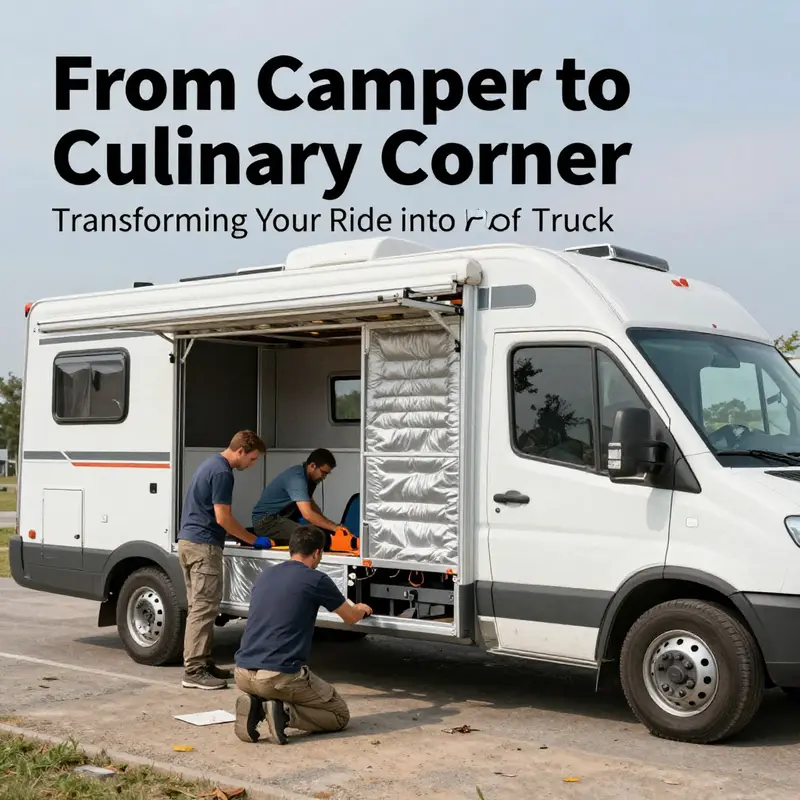
Turning a camper into a food truck is more than a cosmetic upgrade. It is a careful marriage of engineering, hygiene, and entrepreneurial ambition. The journey hinges on structural integrity, fluent kitchen workflow, and compliance with health and safety standards. The most successful transformations begin with a sober assessment of what the existing shell can bear and where it needs reinforcement. In practice, this means stepping beyond the lure of shiny appliances and focusing first on the bones of the vehicle. Without sturdy foundations, even the best menu ends up in the shop. The chassis and frame must be reinforced to carry the added mass of grills, fryers, refrigerated units, sinks, and the ventilation equipment that keeps a kitchen on the move livable. This is not simply about extra metal; it is about distributing weight so the vehicle remains stable during braking, turning, and highway speeds. A trailer or motorized camper may have surprising flex where it carries a heavy cooking line, and a careful engineer will map load paths, strengthen high-stress joints, and plan for safe road handling. The goal is not to overbuild, but to create a chassis that can responsibly sustain the demands of daily service and the rigors of travel to events, markets, and pop-up days.
Inside, the interior must be redesigned with a focus on food-safe materials and efficient process flow. Food safety begins with non-porous, easy-to-clean surfaces. Stainless steel remains the gold standard for countertops, walls, and shelving, because it resists moisture, heat, and chemical cleaners. In a camper turn, every seam matters. Seams must be sealed against moisture intrusion, which can breed mold and compromise sanitation. The layout should guide the cook from ingredient storage to prep to cooking to service with minimal wasted motion. A well-planned line reduces cross-contamination risk and supports a quick, consistent service. Even furniture and fixtures wear the same hat as the Food Safety and Inspection Service would demand in a fixed kitchen: they must be washable, durable, and chemically inert enough to prevent food-safe residues from lingering on surfaces.
Electrical infrastructure in a transformed camper becomes a backbone rather than a backdrop. The electrical system must handle high-power, intermittent loads from commercial-grade cooking equipment, refrigeration, and water pumping. This often means a larger generator or a bigger battery bank, along with dedicated circuits for major appliances. Circuit protection, proper gauge wiring, and clean separation between high-demand equipment and lighting circuits are essential. If a linear upgrade is not enough, professional evaluation ensures there is headroom for peak service without tripping breakers or overheating cables. It is not unusual to install a dedicated electrical panel with clearly labeled circuits, gush of cool air from ventilation, and foolproof grounding to protect staff and customers alike. Plumbers and electricians often work in tandem to ensure the truck complies with local health codes while staying within practical power budgets.
Plumbing is another pillar of the conversion. A mobile kitchen needs reliable, clean water with a dependable waste management system. The water system typically includes a potable water tank, a handwashing station, a separate wash water sink, and proper drainage that empties into approved gray and black water tanks. Local regulations almost always require professional installation for the plumbing network to ensure there are no leaks, cross-connections, or siphoning issues that could contaminate food. A well-plumbed unit supports hygiene routines, enabling workers to wash hands, sanitize prep surfaces, and rinse dishes safely. The drainage design must consider the gravity, trap placement, and venting to prevent odors from entering the working area. Beyond compliance, clean, simple plumbing helps the crew operate with confidence, especially during back-to-back service days.
Ventilation rises to the top of the list after safety and cleanliness. A kitchen on wheels generates heat, smoke, and a residue that clings to surfaces. An exhaust hood, appropriately sized for the cooking load, draws air through filters and vents it outside the vehicle. Effective ventilation protects staff, preserves equipment life, and keeps customers comfortable near the window. A grease management system, integrated with the hood, prevents buildup that could lead to malodors or fire hazards. The system should be designed to capture and direct grease into an appropriate reservoir for disposal according to local codes. Fire protection follows closely here. An automatic ignition system with flame-failure protection for gas appliances and a compact, code-compliant fire suppression setup are prudent investments. Proper gas cylinder placement and secure mounting remain essential to avoid accidents during transit, especially on bumpy roads.
Windows and doors are not just entry points; they are operational chokepoints. In a mobile kitchen, service windows must open wide enough for safe exchange of orders and finished dishes, while doors should be secure and weatherproof. Where climate control is a concern, replacing or reinforcing windows with insulated, shatter-resistant panels can improve energy efficiency and safety. Doors demand reinforcement against wind shear and intrusion. The goal is to maintain a stable internal environment for both equipment and staff, while preserving quick access to service windows during busy shifts. Thoughtful door and window planning also supports future expansion, such as adding a second window for dual-service operations on crowded days.
Weight distribution is the invisible thread holding the entire operation together. The chassis and interior design must balance weight to avoid excessive front or rear loading. A poorly balanced rig can understeer or oversteer, making the vehicle less predictable on the road. As you install heavy equipment, keep track of gross vehicle weight rating and axle limits. This is a point where the line between creative design and mechanical reality becomes stark. Engineers often use a weight distribution map to position refrigeration units, ovens, and heavy sinks in relation to the axles. Proper weight placement also improves fuel efficiency and reduces tire wear, a practical concern for mobile vendors traveling to multiple sites.
Storage, of course, becomes a critical backbone of daily operations. Kitchens in campers must maximize space without sacrificing accessibility. A mobile kitchen needs dry storage for ingredients, containers, and disposables; cold storage for perishables; and dedicated, labeled zones for different types of food to maintain a clean workflow. Vertical storage and modular shelving help make the most of limited cubic footage. A clean pantry with easy-to-clean containers reduces the chance of cross-contamination and simplifies stock management during busy days. The design should also consider waste streams, with clearly separated bins for recycling, compost, and trash that are easily accessible but do not obstruct prep work. Clean, organized spaces support faster service and keep the crew focused on making good food rather than hunting for tools.
Beyond the physical changes, the transformation demands a careful alignment with health and safety expectations. Local health departments will typically require validated plans for water supply, waste disposal, and food storage, plus inspections once the vehicle is prepared for operation. This is not a bureaucratic hurdle so much as a framework for consistent, safe service. Because mobile vendors operate in flexible spaces, it is crucial to map how a vehicle will be cleaned, how equipment will be sanitized, and how the crew will maintain personal hygiene during service. A well-documented plan helps during inspections and gives the business owner a reliable baseline for training staff and maintaining compliance as the operation scales.
The practical journey from camper to compliant mobile kitchen also touches on scheduling and the realities of street logistics. Portable kitchens move from one event to another, and every site has its own electrical, water, and waste constraints. This means the design must be adaptable. A modular approach to equipment—where components can be swapped or relocated without reworking the entire system—helps a small business respond to seasonal demand, weather, and changing permits. In addition, a camper conversion benefits from references and case studies that show what is possible when individuals push beyond the original recreational use. Visual inspiration on platforms where hobbyists document their builds can be surprisingly instructive. A recent project, for instance, documents turning a sizable 24-foot camper into a fully functional food truck with step-by-step renovation tips and design ideas. Seeing how different people approach compartments, workflow, and safety features can spark ideas that fit your own space and budget. And those who share their builds remind us that resilience matters: a successful mobile kitchen blends practicality with personality, turning a vehicle into a living, breathing business tool.
As you integrate design choices, you gain access to a broader ecosystem of mobile food ventures. The path from camper shell to working kitchen is rarely linear. It involves evaluating site rules, health codes, and environmental conditions at events. It also means weighing the balance between portability and durability. A pop-up camper can become a sturdy, service-ready trailer, provided the frame is reinforced, the interior surfaces are sealed, and the power, water, and waste systems are properly engineered. The journey from theoretical blueprint to a functioning kitchen is not about chasing every latest gadget; it is about building a reliable, repeatable system that keeps staff safe, guests fed, and the business solvent.
For those who want a taste of real-world experimentation, visual documentation and stories from other creators offer a playful but practical lens. A well-known series on social platforms traces the incremental steps of converting a camper into a mobile kitchen, highlighting design ideas, storage solutions, and the realities of compliance. This kind of content can be a useful companion to formal guidelines, helping planners anticipate issues such as heat management, grease handling, and the flow of traffic around a service window. It remains essential, however, to anchor choices in local regulations and professional assessments. The aim is to translate inspiration into a concrete, safe, and legally compliant mobile food operation.
As you weigh the practicalities, consider consulting the broader literature on mobile vending. For a deeper dive into how other operators balance off-grid ambitions with reliable service, explore the Godzilla truck camper project, which showcases off-grid adaptability and robust design thinking. Unleash off-grid adventures: meet the Godzilla truck camper. This kind of case study can illuminate how to plan for autonomy without compromising safety or efficiency. While every build is unique, the core principles—structural soundness, sanitary interiors, dependable utilities, and compliant service—remain universal.
Ultimately, the transformation from camper to food truck is a disciplined engineering challenge, not a weekend makeover. It requires a clear blueprint, a realistic budget, and a willingness to collaborate with professionals for critical systems. The vehicle you choose sets the stage, but the choices you make inside determine whether the operation becomes a sustainable business or a clever dream that never moves beyond the driveway. With measured planning and a steady focus on compliance and workflow, a camper can become a dependable, compliant, and market-ready mobile kitchen that thrives in the field rather than merely existing in imagination. The chapter you write in metal, insulation, and stainless steel is the blueprint others will study as they navigate their own path toward entrepreneurial mobility.
External reference for professional guidelines and safety practices: https://www.fsis.usda.gov/food-safety/safe-food-handling-and-preparation-guides/mobile-food-vending
Final thoughts
Converting your camper into a food truck not only opens doors to a new business opportunity but also allows you to share your culinary passion with the Lakewood community. By thoughtfully considering the kitchen setup, compliance regulations, safety features, and necessary structural modifications, you can create a reliable and fun mobile dining experience. Embrace the journey, enjoy each transformation step, and start serving delicious meals on your terms!