
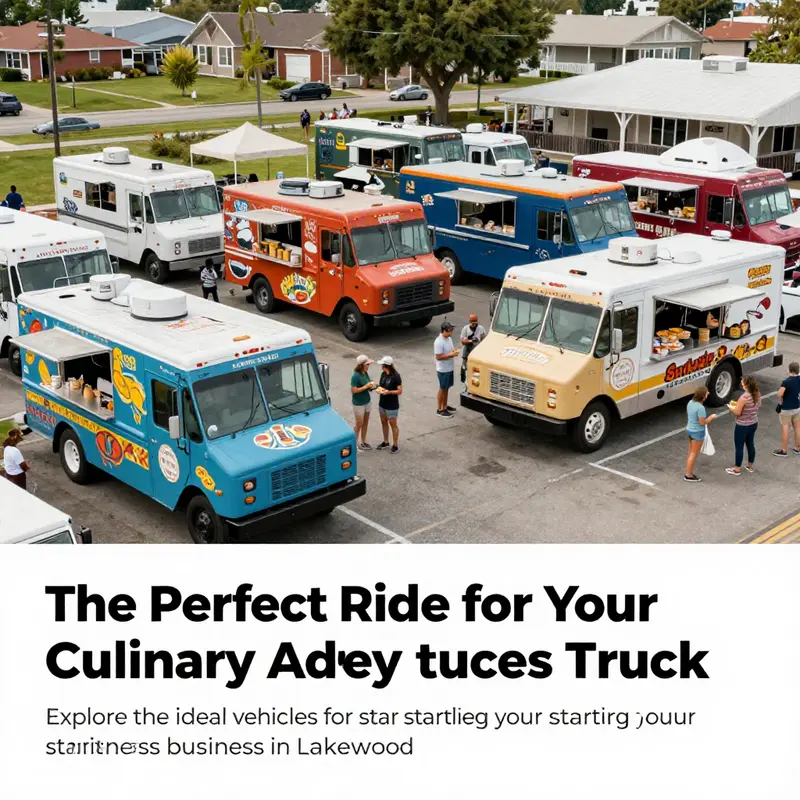
If you’re dreaming of serving delicious food on the streets of Lakewood, choosing the right type of food truck is crucial. With the growing popularity of food trucks among locals and tourists alike, having the perfect mobile kitchen can set you apart in the vibrant culinary scene. In this guide, we’ll delve into two primary types of food trucks: dedicated food trucks and food trailers. Each option has its own benefits and considerations for aspiring operators looking to make their mark. Let’s embark on this journey together, exploring what makes each vehicle special, so you can decide which is right for your tasty venture.
On Wheels and In Flavor: Selecting the Right Truck Type for a Successful Food Truck Operation
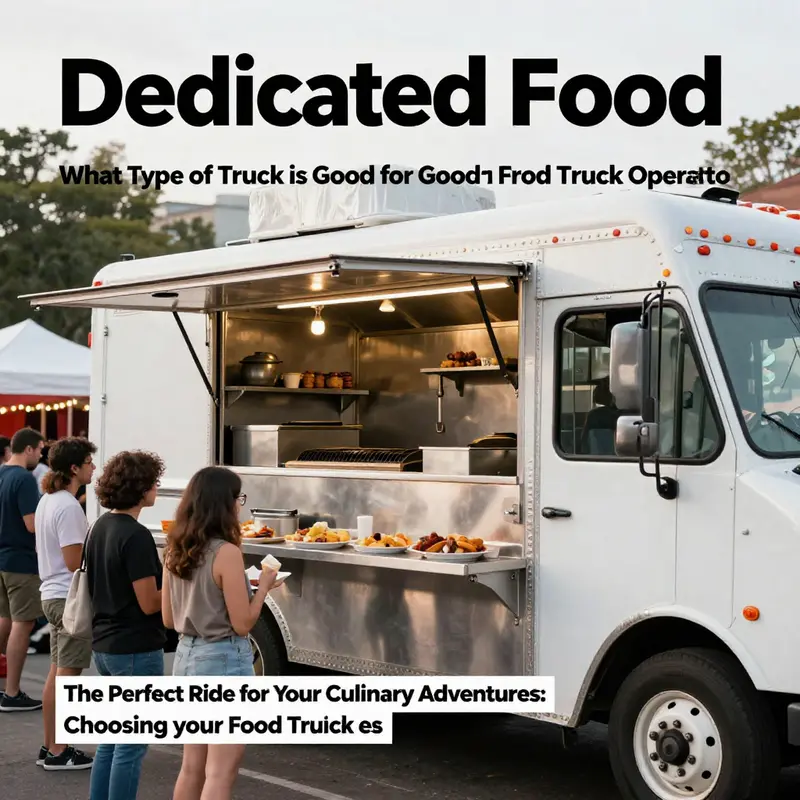
Choosing the right vehicle for a mobile food business is less about chasing the latest gadget and more about aligning a truck’s form with a brand’s flavor, a menu’s demands, and a schedule that scales. The road to a reliable, compliant, and profitable mobile kitchen begins with a fundamental decision: should you buy a dedicated food truck that drives itself, or tow a well equipped trailer that piggybacks on an existing vehicle? This choice ripples through every other operational decision, from how many people you can cook for in a given shift to how easily you can adapt your setup to different events and locations. The guiding principle is straightforward: the truck type you choose should harmonize with your menu, your planned service style, and your target market, while staying within budget and regulatory requirements. The best trucks, in other words, do more than transport a kitchen; they embody your business model and your brand promise on the street, at a festival, or in a busy urban neighborhood.
A dedicated food truck, the self-propelled option, is the human-in-vehicle version of a fully integrated kitchen. It comes with a stainless steel work zone, cooking lines, refrigeration, sinks, a water system, exhaust ventilation, and a window for sales and service. The entire cooking process moves with you, so every shift begins with a familiar layout and a familiar set of safety practices. The upside is obvious: you arrive ready to operate, you can pivot quickly from one location to another, and you have complete control over how the kitchen is laid out, how it flows, and how you manage sanitation throughout the day. This independence matters, particularly for concepts that depend on precise timing, high volumes, or a specific cooking sequence that customers recognize as part of the brand. For vendors who want consistent quality and the ability to staff up for peak events, the dedicated truck provides a reliable backbone for scaling.
A food trailer, by contrast, is a towable unit that shares the same core kitchen components but relies on a separate vehicle to move. Trailers are typically built on sturdy chassis and wheels, with their own kitchen, refrigeration, sinks, and a sales window, yet they depend on a tow vehicle for transport. The tradeoffs here are practical and often financial. Trailers are frequently less expensive upfront than a fully integrated truck, which can make them attractive to new ventures or operators testing a new concept before committing to a larger capital outlay. They also offer storage and flexibility: a trailer can be kept in a garage or yard when not in use and detached when you want to run a different brand or concept at a street fair. For many operators, a trailer is not just a cheaper option but a flexible platform that can be paired with different towing rigs as business grows. The 63.1 percent figure cited in industry analyses underscores how popular and pragmatic trailers can be for early stage and fast-growing microbusinesses, especially when the goal is to minimize fixed costs while maintaining a professional kitchen on wheels.
Yet the market reality is not a simple binary choice. Within each route—dedicated truck or trailer—there are specialized configurations that shape how effectively a given vehicle supports a concept. The detailed landscape reveals several archetypes that, while not mutually exclusive, tend to dominate practice because they solve common operational challenges and fit widely different menus and service styles. One fundamental dimension is the extent to which a concept relies on smoke and heat, as opposed to cold fabrication, or to cold chain transport. Charcoal smoker trucks belong to the former camp. They are purpose built for slow-smoked meats, and their viability hinges on robust ventilation and precise heat management. The exhaust system is not a mere comfort feature; it is a health and safety necessity because charcoal cooking generates smoke, particulates, and heat that must be controlled to protect staff and customers. In this setup, the truck becomes a specialized kitchen with a focus on the unique demands of barbecue cooking. The decision to commit to a charcoal smoker truck should come with a plan for fire suppression, grease management, and routine ventilation maintenance, alongside a menu that leverages the flavor profile and texture that only slow smoking can deliver. A concept built around ribs, brisket, or pulled pork will, in practice, demand that the layout supports a steady workflow for trimming, seasoning, smoking, slicing, and saucing, all while keeping pace with a hungry crowd.
On the other end of the spectrum, large rectangular food trucks emphasize interior space and modularity. These rigs are the workhorses for high-volume, full-service capabilities on wheels. They accommodate multiple cooking stations and generous counter space, allowing operators to execute complex menus and to pivot quickly between dish categories. The interior geometry of a large rectangular truck is not just about cramming more equipment inside; it is about optimizing the culinary workflow, minimizing cross-contamination, and enabling a smooth service rhythm from window to grill to pass-through refrigeration. For catering operations, festivals, or busy downtown locations where you need to sustain a wider range of offerings, the expansive footprint translates into greater throughput and flexibility. The trade-off, of course, is that such trucks require more capital, more maintenance, and, often, more space for storage and operation when they are parked.
Cold food trucks occupy a distinct niche. They are designed to assemble and serve chilled or room-temperature items without cooking onboard. This approach can dramatically simplify health and safety compliance since there is less on-board cooking heat, grease, and ventilation load. Cold trucks excel for grab-and-go concepts, pre-made entrees, salads, yogurt bowls, poke, sushi-grade offerings, or any model where freshness, color, and texture are preserved through careful cold-chain management. The advantage here is energy efficiency and potentially lower regulatory hurdles, provided the facility and the staff can manage the cold chain and prevent time-temperature abuse. For operators whose brand hinges on clean, vibrant, ready-to-assemble dishes—think wellness bowls or hotel lobby menus with quick-service cold components—a cold truck can offer a leaner operating model while maintaining food safety through reliable refrigeration and proper handwashing and sanitizing stations.
Delivery-focused refrigeration vans represent the other functional end of the spectrum. These vehicles are engineered to move perishable goods with real-time temperature control. They typically feature single or multi-zone cooling and monitoring systems to ensure that meats, dairy, seafood, and produce remain within safe ranges during transit and after delivery. While not always used for direct consumer service, refrigeration vans are essential for urban delivery fleets, rotating concepts that shuttle ingredients from centralized commissaries to street units, or for vendors who assemble meals offsite and then transport finished dishes to markets. The core value here is not flavor development in the kitchen on wheels but the confidence that the cold chain remains intact from supplier to customer. It makes possible business models built around on-demand or scheduled delivery, rotating menus that rely on fresh, seasonal ingredients, and partnerships with event organizers who expect reliable, temperature-controlled service from dawn to dusk.
Mobile customized food trucks sit at the intersection of branding and adaptability. They are designed to be versatile canvases for street food vendors, gourmet concepts, or pop-up restaurant brands experimenting with location-based menus. These vehicles lean toward branding flexibility and layout customization. They can be configured to emphasize a signature cooking style, a particular design aesthetic, or a branding story that resonates with a target audience in a given neighborhood or event. Because the core layout of a mobile customized truck is adjustable, operators can experiment with different service windows, workstation configurations, display areas for ingredients, or tasting menus. The benefit is clear: the vehicle itself becomes a dynamic marketing asset that can be rebranded as the concept evolves or expands. The challenge is to manage the complexity that comes with customization. A highly personalized floor plan may require more specialized maintenance, more frequent inspections, and tighter coordination with service partners such as grease haulers, fire suppression technicians, and equipment technicians. The key to success with a customized vehicle is balancing the temptation to push branding and novelty with the operational realities of kitchen flow, sanitation, and safety.
In practice, the best truck type for a given venture is rarely a single, fixed answer. Instead, it is a thoughtful alignment of the menu, the event and location mix, and the scale of operations with a vehicle that can grow with the brand. A weekend market vendor who serves compact, portable bites may favor a compact, mobile-friendly truck or a well-tuned trailer that minimizes setup and teardown time. A full-service catering operation that aims to feed many guests at a single event might invest in a larger, multi-station truck with the capacity to keep multiple items hot, cold, and ready for service with a single, well- organized kitchen flow. A concept emphasizing healthful, ready-to-go meals could deploy a cold food truck or a refrigerated van to maximize shelf life and food safety while maintaining a leaner footprint and favorable regulatory posture. The shared thread across these scenarios is not the specific type of vehicle per se, but the deliberate fit between the vehicle’s capabilities and the business model’s requirements. The right choice becomes a foundation that supports consistent quality, reliable service, and scalable growth, rather than a mere asset that moves your kitchen from one curb to the next.
To make this concrete, consider the decision trajectory a prospective operator faces. Start with your menu and service style. If your cuisine centers on live-fire cooking, smoke, and a dramatic grill workflow, a dedicated charcoal smoker setup might appear attractive, but only if you can sustain the necessary ventilation, fire suppression, and grease management, and if your space demands that the cooking be the headline act at events. If your concept is built around a wide range of dishes that require multiple cooking stations and uninterrupted workflow, a large rectangular truck may be the best platform because it supports several lines operating in parallel and can accommodate robust exhaust and electrical infrastructure. If your emphasis is on freshness, color, and easy assembly, a cold truck could deliver the brand promise with less operational risk, especially in markets that favor healthy grab-and-go offerings. And if your plan includes frequent urban gigs with rotating menus and high-brand visibility, a mobile customized truck offers the flexibility to experiment with branding while keeping the core kitchen inside a familiar space. Finally, if you see a path toward sophisticated delivery operations or rotating pop-up partnerships, a refrigerated van might become central to your logistics, ensuring that ingredients and finished dishes arrive in prime condition.
Budget, existing assets, and regulatory alignment also guide the choice. A dedicated truck often demands higher upfront investment, but it grants maximal control over the kitchen environment, sanitation practices, and service tempo. A trailer, while typically cheaper to acquire, can reduce ongoing costs by leveraging an existing tow vehicle and by enabling modular branding changes without a total vehicle replacement. The regulatory landscape adds another layer of complexity. Health and safety codes enforce specific standards on ventilation, grease management, fire suppression, water supply, handwashing stations, and waste disposal. A smoker setup, for instance, almost invariably triggers stricter ventilation and exhaust requirements than a cold food operation. A trailer that relies heavily on cold storage must still meet temperature control regulations, monitoring capabilities, and emergency power provisions. The bottom line is: you must map your regulatory loadout to your cooking method, then ensure the vehicle you select not only meets those standards but also remains practical for daily use, maintenance, and reliability.
With these considerations in mind, the path to a smart investment often begins with practical research and a plan for growth. If you are exploring concrete vehicle options, you may want to consult resources that specifically discuss startup models and configurations. For example, a guide that surveys the best food truck models for startups in Lakewood offers accessible comparisons of space, equipment layouts, and practical tradeoffs for different menu concepts. You can review such a resource at the linked guide that focuses on the Lakewood startup landscape. This kind of targeted research helps you translate general principles into a concrete purchase strategy, including who to consult for fit-out work, what permits are commonly required in your jurisdiction, and how to budget for ongoing maintenance and compliance. When you are ready to expand beyond regional examples, you can then broaden your search to national or international benchmarks that describe how the market classifies dedicated trucks, trailers, and other mobile kitchen configurations, ensuring you have a framework that extends beyond a single city.
In the end, the best truck type for a food business is the one that aligns your menu reality with operational discipline, brand storytelling, and a feasible path to growth. A weekend market vendor who can rely on a lean setup may succeed with a compact trailer or a small, self-contained truck that minimizes teardown time. A brand aiming for steady catering work, repeat events, and a scalable fleet may invest in a larger, multi-station vehicle that supports consistent throughput and service quality across locations. And a concept built around seasonal menus, pop-ups, or city-limited experiences may find the most value in a mobile customized truck that can be rebranded as the concept evolves. The story you tell through your kitchen on wheels starts with the vehicle you choose, and that choice then informs everything from staffing and training to supplier relationships and maintenance schedules. The road ahead is as much about precision in planning as it is about appetite for experimentation, and the right truck type can translate a flavorful concept into a reliable, compliant, and enduring mobile operation. For readers who want to dive deeper into model options and startup considerations, the guide on the best food truck models for Lakewood startups can be a useful starting point. Best food truck models for Lakewood startups.
For a broader view of how the industry classifies and supports different mobile kitchen configurations, industry standards and classifications are available from external trade resources that outline dedicated trucks, trailers, and other mobile concepts. These standards help frame decisions about equipment lists, safety systems, and long-term maintenance planning, ensuring that a chosen truck type is not only a good fit today but also adaptable to changing menus, event calendars, and customer expectations. As you plan, keep in mind that the most valuable vehicle is the one that makes your daily work easier, more predictable, and more scalable, while preserving the culinary intent that drew you into the world of food on wheels. The right truck type becomes a living partner in your brand’s arc, helping you deliver great flavors where your customers gather, one street corner, festival, or campus quad at a time.
External resource for broader standards and classifications: https://www.foodtrucks.com/types-of-food-trucks-for-sale
Cruising for Culinary Success: Why a Food Trailer Becomes the Best Vehicle for a Mobile Kitchen Business
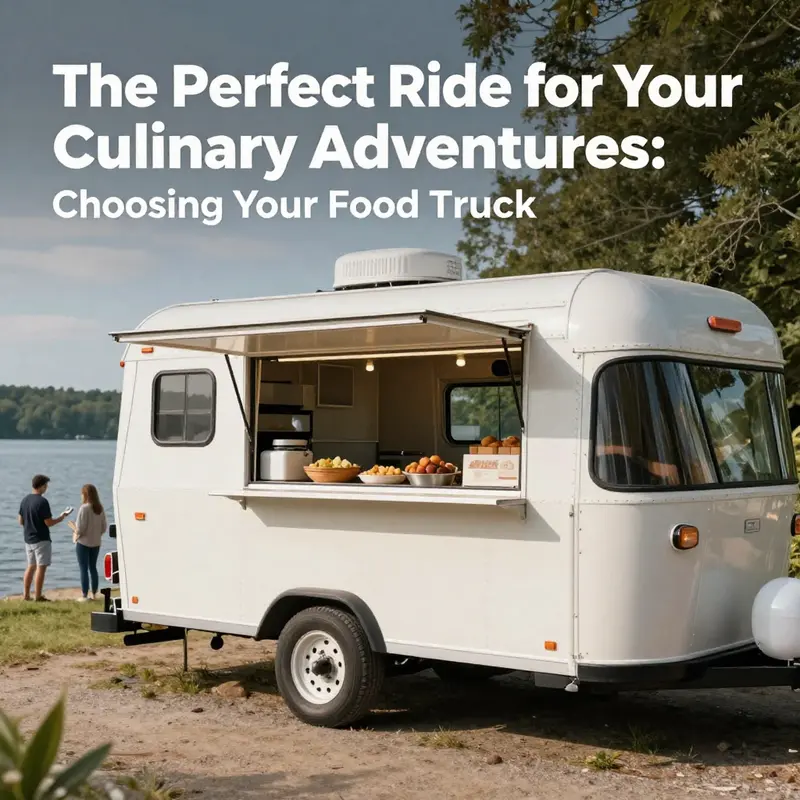
Choosing the right vehicle for a food truck business is less about the vehicle itself and more about how it supports the kitchen on wheels. Among the options, a well-equipped food trailer often sits at the sweet spot where budgets, flexibility, and regulatory demands converge. A food trailer is a towable unit that brings the full kitchen into a compact, portable footprint. It shares the core backbone of a mobile kitchen—sturdy stainless steel work surfaces, a reliable cold chain, proper handwashing facilities, and a safe, efficient cooking layout—while allowing the owner to work with a standard tow vehicle already in their driveway or garage. This arrangement carries practical advantages that resonate with many new entrepreneurs. It lowers upfront costs compared with a self-contained truck and opens the door to using a familiar vehicle for towing, storage, and maintenance. The trailer’s wheels and brakes, paired with a solid chassis, provide the structural foundation for a kitchen that can travel from a neighborhood market to a waterfront festival without losing its professional edge. The story of a food trailer is not simply one of savings; it is a narrative about workflow, hygiene, and the ability to respond quickly to events and weather. In a landscape where a single weekend shift can determine a season’s success, the trailer offers a resilient balance between mobility and steadiness. The market is clear on this point: food trailers constitute the largest product segment in many regions, underscoring their practicality and appeal. A trailer can be tailored to a wide range of menus, from plant-based, health-forward offerings to slow-smoked barbecue favorites, and it can do so with a layout that feels custom even when it’s built on a common chassis. To understand why this approach works, it helps to think of the trailer not as a static object but as a compact, fully equipped kitchen on the move. It is designed to be driven to high-traffic districts, set up quickly, and cleaned and packed away with the same discipline that governs a brick-and-m mortar operation. This seamless blend of mobility and hygiene is what makes the trailer a compelling choice for many first-time operators and seasoned vendors alike. Thematic to the research, the choice between a dedicated food truck and a food trailer should rest on budget, available towing assets, and the intended scale of operation. For some, the dream of a self-contained, all-in-one culinary machine is irresistible; for others, the trailer delivers a practical path to market without exhausting the bank. The best approach is to study how the trailer’s design supports your specific menu and service style. A plant-based bakery lineup, for instance, benefits from compact, highly customizable units that can house commercial mixers, ovens, and refrigeration in a way that keeps traffic flow intuitive and safe. On the other hand, a slow-smoked barbecue concept requires ample space for large smokers, robust ventilation, and careful zoning for heat and smoke control. In that sense, the trailer is not a one-size-fits-all solution, but a flexible platform that can be tuned to the texture of your menu and the rhythm of your day. The discussion about the trailer’s interior begins with the basics—how the kitchen is laid out, how water and waste are handled, and how power is supplied and managed. A well-planned trailer uses a single, coherent workflow. Raw ingredients move from cold storage to prep surfaces, then to cook zones, and finally to service counters or a window where customers place orders. This sequence reduces cross-contamination risks and speeds service. Ventilation plays a central role in maintaining air quality, especially when fryers or heavy heat sources are in use. The exhaust hood, electrical system, and water supply must be sized to support the menu and the anticipated daily throughput. A trailer that fails to address these systems will struggle with reliability, and reliability is non-negotiable in a business that depends on consistent service. The health and safety framework surrounding mobile kitchens adds a layer of complexity to the trailer choice. Local health codes require a cleanable interior, appropriate handwashing sinks, hot water, adequate drainage, and fire suppression as needed for certain equipment loads. A trailer that anticipates these requirements from day one makes compliance straightforward and reduces the friction of opening day. When you zoom out to the market perspective, the trailer’s popularity is not an accident. Its appeal lies in a combination of lower upfront capital, better storage discipline, and the ability to adapt as the business grows. The global market reality supports this: the trailer is the largest segment, with a clear mandate for practicality and scalability. It is easy to imagine a scenario where a mobile caterer begins at a weekend market in a dense urban area, tests a few items, and gradually expands the menu and service footprint. A trailer’s modular approach makes this possible without forcing a long-term commitment to a single, oversized rig. The choice of trailer versus other mobile formats hinges on several factors that every owner should weigh with care. Budget is the most obvious constraint. A trailer typically costs less upfront than a self-propelled truck because you are not paying for an integrated propulsion system or a separate drive train. Yet the savings must be balanced against ongoing costs: towing insurance, maintenance of the hitch and trailer brakes, and fuel consumption during long hauls. These costs scale with the distance traveled and the predictability of your schedule. For operators who anticipate frequent relocations or long routes between events, a trailer remains cost-effective, especially if the owner already has a tow vehicle that can handle the load. For others, a dedicated food truck might offer some intangible benefits—the indulgence of a turnkey unit, a self-contained power and water system, and a sense of brand identity. Those advantages come with higher upfront costs and a longer lead time for customization. The decision becomes a question of how you value independence versus initial expense. The operational environment strongly informs the plan. Urban and high-traffic areas reward fuel efficiency and nimble parking. In these contexts, a lighter trailer with a compact footprint is easier to maneuver and set up in tight spaces. A heavy trailer, by contrast, can still work if the route is anchored around larger venues or permanent markets. Some operators prefer a trailer because it can be parked in a conventional lot and moved by a standard vehicle. That flexibility matters when you want to test new neighborhoods or attend pop-up events without committing to a fixed location. For those venturing into rugged or long-distance travel, the trailer design can incorporate more storage and power options to support a more demanding schedule. The menu also plays a decisive role in shaping the trailer’s interior and equipment. A plant-forward menu might require a compact yet efficient baking and pastry zone, with space for a stand mixer, pastry tools, and a reliable refrigeration layout. A vegan donut concept, for instance, benefits from a compact, highly adaptable unit that can be swapped in and out with minimal downtime between events. The ability to reconfigure interior zones—from prep to service—ensures the trailer remains responsive to changing customer tastes and seasonal shifts. Another thread in the decision fabric concerns the entry point for new entrepreneurs. Those testing the market or working weekends often choose an affordable trailer or a van-based model that can be expanded later. A modular approach is particularly attractive here; the interior can be upgraded piece by piece as sales grow and the business model matures. In markets with a strong culture of mobile dining, such as coastal towns or festival corridors, the trailer offers a proven blueprint for rapid deployment. It can be deployed at multiple venues in a single weekend, enabling a vendor to capture peak demand periods and then reallocate resources as needed. The capacity to move quickly is a competitive advantage, and the trailer’s design is well suited to the tempo of street-level commerce. A note on specialization helps illuminate why trailers shine for diverse culinary ideas. If your concept centers on slow-smoked barbecue, you will need a robust, properly ventilated smoke area and space to accommodate large smokers, which a trailer can be designed to house without impinging on service flow. If your focus is plant-based, the emphasis shifts toward efficient heat sources, a compact oven or convection equipment, and a layout that minimizes steps between cold storage and the prep zone. Either way, the interior design must account for the realities of a mobile kitchen: shipping and installation methods, weight distribution, safety clearances, and the rhythm of the operating day. It is also worth noting how a trailer interacts with your broader business model. The trailer can ferry your brand to events, markets, and private catering engagements, then be stored at a typical business or home yard when not in use. A self-contained truck may seem more cinematic, offering autonomy and a potentially more dramatic brand presence, but it ties you to a fixed driving and maintenance regime that can slow the pace of experimentation and expansion. For many operators, the trailer represents the most pragmatic path to market. It harmonizes cost, mobility, and compliance, while enabling a broad spectrum of menus and service styles. If you are curious about real-world model options within this space, consider exploring curated discussions about trailer models and their fit for startups, such as the article focused on the best options for lakefront and urban markets. This resource highlights how different layouts translate into throughput, ease of use, and travel readiness, guiding a new owner toward a practical starting point. As you reflect on your own plan, keep in mind a repeating theme: your equipment is the backbone, but your system is the heartbeat. A well-built trailer can carry a kitchen with the soul of a restaurant and the agility of a street cart. The interior should embody a clean, logical workflow that supports your specific menu, while maintaining the flexibility to pivot as customer preferences shift. It should also be resilient enough to withstand the daily rigors of market life—setting up in a rainstorm, transporting across winding roads, and surviving the occasional rough parking lot. The narrative here is not about chasing the latest gadget but about building a reliable, hygienic workspace that travels well and communicates your concept with clarity. The trailer’s economics are equally nuanced. Cost considerations extend beyond purchase price to include licensing, insurance, maintenance, and eventual replacement or upgrade cycles. A trailer designed with robust components and durable materials will deliver long-term cost efficiency, reducing downtime and repair bills. In the end, the optimal vehicle for a mobile kitchen should feel like a natural extension of the concept. For some operators, that means a trailer that can be wheeled into a festival alley and disassembled in minutes. For others, a self-contained truck may be worth the extra investment for the added autonomy. The market insight underlines a broader truth: the food trailer’s combination of affordability, adaptability, and regulatory compatibility makes it a durable choice for a wide range of operators. If you are contemplating the next steps, and you want a concrete starting point, you might explore community insights on model variety and cost-conscious options, such as the resource that delves into best food truck models for startups. Best Food Truck Models for Lakewood Startups. This kind of guidance helps anchor your planning in practical, real-world considerations while you finalize your menu and location strategy. As you move toward a decision, your guiding questions should be pragmatic: What is my starting budget, and what is my expected weekly mileage? How much space do I need for the core kitchen and the service window? What regulatory steps will I need to complete before serving my first customer? What is the plan for maintenance, spare parts, and downtime? Answering these questions through a careful design process will help you choose a trailer that is not just functional, but durable and scalable. The conversation around the right mobile kitchen cannot ignore the broader ecosystem in which it operates. A trailer exists within a network of events, permits, neighborhood dynamics, and customer expectations. It can be a force multiplier when paired with a strong service model, consistent quality, and a coherent brand experience. The trailer is more than a vehicle; it is a platform for creative expression within the constraints of outdoor service. It allows you to choreograph your day—storm or shine—and to respond with speed to the currents of demand. As the industry continues to evolve, the trailer remains a resilient option for vendors seeking a balanced blend of cost, mobility, and compliance. For readers who want a deeper dive into interior design considerations and best practices for choosing a mobile kitchen, the research points to further reading such as a detailed guide on how to select the best truck for a food truck. For a broader, externally sourced perspective on interior design and vehicle selection, you can consult the Car Interior guide linked here: https://www.carinterior.com/how-to-choose-the-best-truck-for-a-food-truck. The landscape is dynamic, but the core decisions stay aligned with a simple premise: design the kitchen to travel with you, keep it clean and safe, and choose a platform that grows with your business. In this light, the food trailer is not merely a piece of equipment; it is the instrument through which a culinary idea becomes a mobile enterprise that can flourish in markets and communities across a region. To close the loop in practical terms, consider taking a closer look at existing, community-oriented discussions about trailer configurations and cost-effective entry points. By evaluating layouts, flow, and safety considerations in real environments, you build a mental map of what works for your menu and your region. The path to a successful mobile kitchen is iterative and grounded in real-world constraints. It is less about chasing the perfect blueprint and more about shaping a dependable, adaptable system that can carry your cuisine forward, plate by plate, mile after mile. For those who want to keep exploring practical references, the internal link provided offers a doorway to discussion about model options for new lakewood startups, a resource that aligns with the experiences of many would-be operators who start small and grow with feedback from customers and markets. The journey from concept to curbside service is not a straight line, but a well-lit road that rewards careful planning, disciplined operation, and a willingness to pivot when the market calls for it. In other words, the trailer’s value lies not just in its ability to move, but in its capacity to adapt—becoming a reliable kitchen that travels where it matters and returns with a story of a day well served.
From Streets to Kitchens on Wheels: Deciding Between a Food Truck and a Food Trailer for Your Mobile Eatery
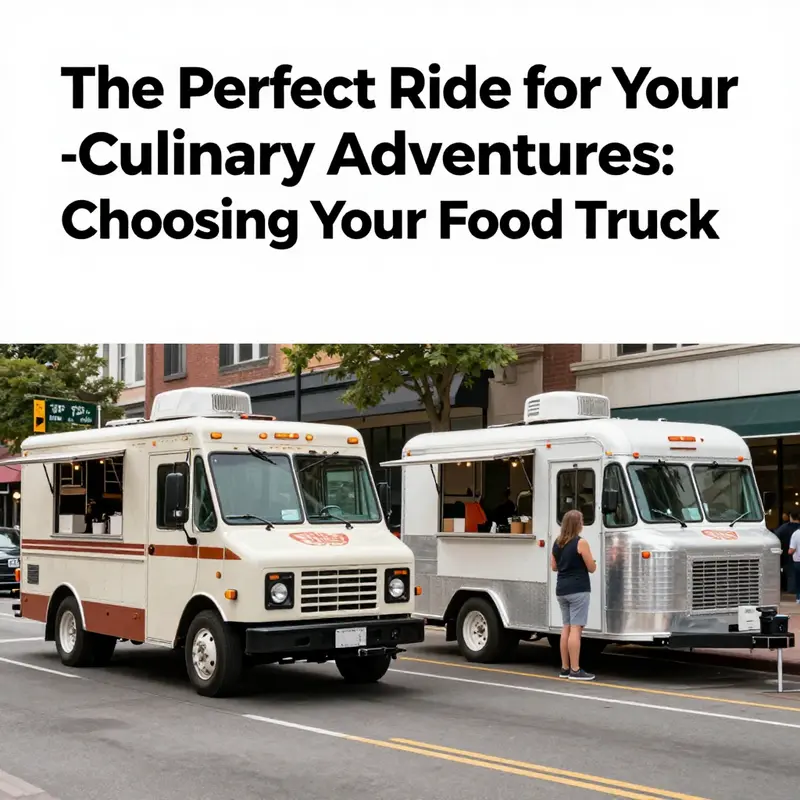
Choosing the right vehicle for a mobile kitchen is more than a matter of size or glamour. It is a strategic decision that frames your brand, your workflow, and how far you can grow before your business hits a ceiling. The two most common paths—a dedicated food truck and a well-equipped food trailer—offer distinct advantages, and the path you pick should align with your culinary concept, your budget, and your long-term ambitions. In practice, the choice is less about which option is universally better and more about which setup unlocks the greatest consistency, control, and opportunity for the kind of guest experience you want to deliver. A food truck, designed as a self-propelled kitchen on wheels, grants you true autonomy. You roll up to a festival, a busy downtown plaza, or a neighborhood block party and your entire operation arrives ready to serve. A trailer, by contrast, arrives as a highly capable kitchen unit that you tow with a separate vehicle. It can be more affordable upfront, easier to store, and remarkably flexible for testing concepts, seasonal peaks, or limited-footprint markets. Both paths demand attention to the same core elements: a compliant, hygienic kitchen, a clear workflow that matches your menu’s complexity, an efficient sales process, and a strategy for building a brand that travels as well as it serves. The decision, then, rests on how you balance mobility with cost, independence with scalability, and the appetite for growth with the realities of daily operation.
When you imagine a food truck in your neighborhood or at a bustling festival, you likely picture a full-service culinary show on wheels. A purpose-built food truck is not merely a vehicle with a stove; it is a compact, all-in-one kitchen, engineered to withstand the demands of continuous service. The layout is meticulously planned to support a smooth flow from food prep to cooking to plating to service. There is a dedicated sanitation sink, a robust refrigeration system, an exhaust ventilation hood, and power and water systems that optimize efficiency without compromising safety. The vehicle is insulated and climate-controlled, designed to preserve ingredients and ensure staff can work comfortably over long shifts. Because it is a self-contained unit, the truck affords maximum independence: you drive to your location, deploy your service window, and begin generating revenue without coordinating with another vehicle. This independence is valuable for established concepts with ambitious expansion plans, for gourmet concepts that rely on a strong brand presence, and for operators who want to own the entire customer experience—from the moment a guest peers through the window to the moment they savor the last bite.
Yet, the all-in-one appeal of a food truck comes with a price tag that can be daunting. The upfront investment tends to be higher than a trailer, reflecting not only the kitchen’s integrated design but also the long-term depreciation, insurance, maintenance, and fuel costs that accompany a self-propelled asset. In markets where urban real estate is expensive and permits are strict, the added value of a truck—its ability to reach events, move between neighborhoods, and participate in a wider set of venues—can justify the cost. The key is to quantify the return: how many events, how much revenue per shift, and how reliably the vehicle can meet peak demand while maintaining quality and compliance. For some operators, the truck is a long-term capital asset that pays off through branding and continuous mobility; for others, the annualized cost of ownership can feel heavy enough to justify a more budget-conscious approach.
Food trailers, meanwhile, present a different proposition. A trailer is a portable kitchen that you tow with a pickup, SUV, or van. It carries the same core kitchen components you’d expect in a truck—industrial-grade cooking equipment, a cooling and dry-storage footprint, a sink, a countertop, and a sales window—but without the embedded propulsion, the unit relies on an external vehicle for relocation. The trailer’s cost is often lower than a fully built-out food truck, which makes it a practical entry point for many startup ventures. The savings can be meaningful, not only in upfront price but in ongoing expenses: you may enjoy better fuel economy, simpler maintenance, and a more adaptable parking footprint. A trailer is also easier to store when not in use and can be repurposed or repositioned with relative ease as your concept tests new markets. It is a classic choice for entrepreneurs who want a lower-risk entry to the mobile food space, for seasonal operators who can surge during peak periods, or for niche concepts with focused menus that don’t demand a constant, high-throughput pace.
The two paths are described in market research as the dominant segments for mobile food, with trailers often accounting for a majority share in many regions due to lower barriers to entry and flexibility. The practical implication for you is clear: if your goal is full, ongoing brand presence in a wide array of locations and events, and you’re prepared for a higher initial outlay, a food truck can be the right fit. If your aim is to test a concept, minimize risk, and operate with more modest fixed costs, a well-designed food trailer could be the smarter starting point. This isn’t about a one-size-fits-all template; it’s about aligning your business model with the form that best supports your menu, your customer journey, and your long horizon for growth.
To navigate this decision with confidence, it is helpful to reflect on how your culinary concept translates into workflow, branding, and location strategy. A truck’s built-in kitchen invites a high degree of customization. You can tailor the prep line to accommodate a broad, complex menu or a tight, streamlined range that emphasizes speed and consistency. You can design a working space that supports cooks who work at a fast cadence and who rely on a consistent utility supply, an ample water source, and an efficient ventilation system. This environment also invites strong branding: the vehicle itself becomes a storefront, a rolling billboard that travels across neighborhoods, college campuses, and major event sites. The investment, therefore, also buys you control over the guest experience: the aroma of sizzling steak or caramelizing onions, the rhythm of a smooth service window, and the memory of a uniquely designed interior that aligns with your story.
A trailer, by contrast, offers a different kind of leverage. It can be the lean, nimble platform that lets you enter a market with a clear test-and-scale strategy. Because you’re not funding the propulsion and the full interior at once, you can potentially allocate more capital toward high-impact kitchen equipment or targeted branding within the trailer’s footprint. A trailer is excellent for startup stories—the concept you’re still validating, the weekend market you’re checking off your list, the pop-up that bikes through a district per season. The trade-off is that your mobility depends on the towing vehicle and the roadworthiness of the trailer’s own chassis. Yet the upside is practical: you can adjust your scale quickly, you can reposition with ease, and you can optimize your menu to a simpler, faster service model that still delivers a compelling guest experience.
As your concept evolves, the decision may also hinge on regulatory and logistical realities. Local health codes, fire codes, and vehicle standards shape what you can install and how you can operate. Both trucks and trailers must meet sanitation and safety requirements, including proper ventilation, hot and cold water supply, handwashing provisions, waste management, and cleanability of surfaces. In many jurisdictions, the choice between a truck and a trailer also implies different permit processes, inspection schedules, and insurance considerations. Designers and builders of mobile kitchens can help you translate your menu and service approach into a layout that maintains compliance while optimizing speed and ergonomics. When you’re planning, it’s wise to speak with a local authority early in the process, so you understand what approvals are required and what documentation must travel with you when you move from one site to another.
In practical terms, your selection will rest on a few core questions. How often will you be at peak demand, and how many events do you expect to service in a typical month? Do you plan to own and operate in your own home market, or do you anticipate regularly traveling to other cities or regions? What is your budget, both upfront and in ongoing costs, and what is your tolerance for risk during the early months of operation? Do you want to own a single, highly branded mobile kitchen, or would you prefer to test different locations with a lighter footprint and fewer fixed commitments? The answers to these questions will guide whether the best choice is a self-contained food truck or a towable trailer that you can deploy, test, and scale with greater cadence.
The narrative of these options also resonates with how many operators consider branding and guest experience. A food truck offers a level of cinematic presence that can anchor a concept as it moves through a city. The vehicle becomes a platform for storytelling, a stage on which your menu, your staff’s personality, and your culinary identity all perform in concert. The kitchen layout can be crafted to optimize a busy service window, allowing for a rhythm that aligns with the tempo of crowds at a festival, street fair, or busy business district. The aesthetic and functional design become inseparable: the vehicle is as much a teller of your story as the food you serve. A trailer, while still capable of strong branding, often plays a more modular role in a multi-market strategy. It can be moved between neighborhoods, markets, and events with relative ease, scaled up or down to match demand, and paired with a flexible staffing plan. The branding can be preserved—but the focus tends to shift toward a leaner, repeatable service model and a lighter logistical footprint.
Another layer to consider is the long arc of growth. If your plan includes expanding into multiple markets, maintaining a fleet of weather-tolerant, easy-to-service units might incline you toward a trailer-first approach, with the potential to upgrade to a truck later as your concept gains traction and revenue supports a larger investment. Conversely, if your vision is to establish a flagship kitchen that travels as a permanent brand ambassador, the upfront commitment to a food truck can be justified by the brand density, the control over guest experience, and the ability to capture the most attention at major events. The decision is not only mechanical but strategic: it’s about laying a scalable foundation that aligns with your concept, your customers, and the tempo of your business life on the road.
For readers who want to explore model specifics in a concrete way, there is value in examining how neighboring markets evaluate and compare options. A practical direction is to study current offerings and recommendations for mobile kitchen configurations, including how operators balance kitchen workflow, electrical needs, water usage, and waste management in the two formats. This look often reveals a common thread: regardless of whether you choose a truck or a trailer, the success of a mobile food concept hinges on a few nonnegotiables. First, the kitchen must be designed for hygienic operation, with easy-to-clean surfaces, smooth workflow, and an effective ventilation system that keeps staff comfortable and safety to the fore. Second, the service window should be ergonomic and customer-facing, so guests feel welcomed rather than rushed. Third, the vehicle must be dependable enough to keep a schedule, with a maintenance plan that mitigates downtime and protects investor confidence. Fourth, the business model must align with the chosen platform—whether the goal is rapid scale through events and pop-ups or deeper roots in a single, beloved route that keeps a regular customer base engaged.
To connect these ideas with practical reading, consider how a focused, modular approach to vehicle selection can support a brand’s growth trajectory. If you want to examine how different operators optimize their layouts, menus, and daily routines within a trailer or a truck, a broader discussion of kitchen workflow, event strategy, and branding can be illuminating. For readers who are curious about specific options in the market without compromising on general principles, a recent guide highlights the practical realities and trade-offs of top configurations and how they fit varying business plans. For a deeper dive into model considerations in a real-world context, you can explore this resource: Best food truck models for Lakewood startups. This guide walks through how different layouts support a broad or focused menu, how the footprint affects line speed, and how branding choices integrate with the customer experience. It is a useful companion in thinking through whether mobility with a truck or agility with a trailer best serves your culinary concept.
As you weigh these considerations, remember that your capacity to serve delicious food is only one piece of a larger equation. The operational tempo—how quickly you can turn around meals, how you manage peak hours, and how you keep staff safe and engaged—depends on the space you have, the equipment you deploy, and the way you structure your work. A dedicated food truck can offer a compact but highly optimized environment that supports complex menus and extended service hours. It enables you to establish a recognizable identity that travels with you, building a following as you move from one event to the next. A trailer provides a flexible, cost-conscious platform that can be dialed in to test new concepts or sustain a lean operation in multiple venues. It can be the backbone of a strategic plan that prioritizes market validation, seasonal demand, and careful capital deployment. In either case, the aim is to deliver consistent quality, a safe dining environment, and a guest experience that makes your customers come back.
As you chart a path forward, consider not only the immediate fit and costs but the long view: how your choice will shape supplier relationships, staffing models, insurance considerations, and financing options. A truck’s integrated systems may simplify coordination with municipal inspectors and health authorities, but it also demands a robust maintenance program and certain risk management measures that accompany a self-propelled asset. A trailer’s lighter footprint can reduce some of these pressures but may require more attention to towing logistics, breakage risks during transport, and the need to secure and preserve equipment across multiple venues. The conversation about which approach is best for you is not a binary yes-or-no choice; it is a careful calibration of capabilities, capital, and the cadence of your business life on the road.
If you are leaning toward a blended strategy—operating a small number of events with a trailer while reserving select high-attendance days for a truck—the last piece is to ensure your business systems can support both models without fragmenting your brand or your operations. The right process for inventory, scheduling, staff training, and quality control will be adaptable enough to span both formats. You may discover that a trailer-first approach gives you the runway to test the market, refine your menu, and establish a reliable cash flow before committing to a larger, more permanent mobility solution. Or you may realize that your concept, audience, and competitive landscape reward the immediacy and theater of a fully integrated truck. Either path demands disciplined planning, a clear understanding of the costs involved, and a willingness to adjust as you grow.
Your decision should ultimately reinforce the value you promise to your guests: fresh, flavorful food served quickly, in a manner that feels intimate and compelling, even as you move between neighborhoods, events, and city blocks. The vehicle you choose will be a physical articulation of that promise, a rolling stage that carries your food, your brand, and your story to every street corner it touches. With thoughtful design, careful budgeting, and a clear growth plan, either a dedicated food truck or a well-constructed food trailer can become the foundation of a thriving mobile business—and a memorable dining experience that keeps customers returning, season after season.
For ongoing guidance and a deeper look at model options in the market, you may want to explore additional perspectives on vehicle configurations, including practical considerations for layout, electrical and plumbing needs, and the role of branding in a mobile business. And as you refine your approach, remember that the ultimate goal is simplicity of operation in service of culinary excellence. A well-chosen vehicle is not just a means of moving your kitchen; it is the first line of your customer’s impression, the anchor of your daily workflow, and a strategic lever for scalable growth. When the decision is grounded in the realities of your menu, your market, and your capital, you’ll be better positioned to build a mobile food business that is not only sustainable but genuinely vibrant and enduring.
External resources can provide additional context on safety and regulatory guidelines that apply to mobile food operations. For broader regulatory guidelines on mobile kitchens, see https://www.fda.gov/food-safety.
Final thoughts
Selecting the right type of food truck is more than just picking a vehicle; it’s about aligning with your business goals, budget, and vision for your culinary creations. Whether you opt for a dedicated food truck that offers convenience and a streamlined experience, or a food trailer that allows flexibility and cost savings, your choice will play a pivotal role in your food business’s success. Whichever route you take, the vibrant Lakewood community is ready to embrace your unique flavors. So gear up and get ready to serve up delicious experiences!