
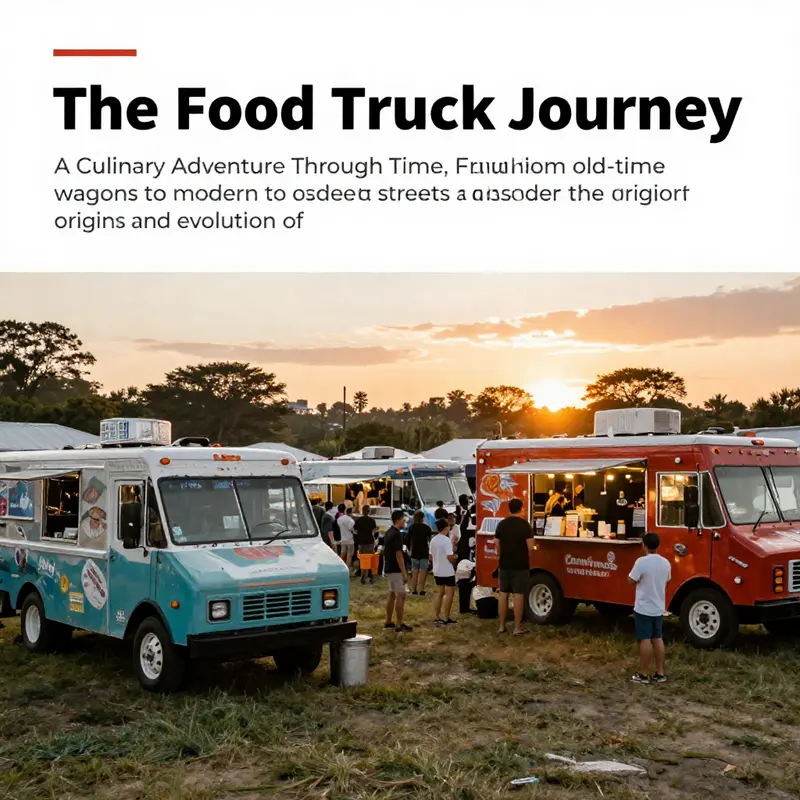
Food trucks have long since transformed from mere lunch wagons to a dynamic fusion of culinary creativity. But when did this journey truly begin? In our exploration, we will delve into the historical backdrop that gave birth to the modern food truck, chart the evolution that has reshaped the industry, examine the cultural contributions of these mobile kitchens, and assess their economic impacts within the culinary market. Each chapter will illuminate how food trucks have carved out a unique space in both the community and the culinary world, providing aspiring operators and curious tourists a rich context to understand their significance today.
Wheels on the Frontier and Beyond: A Century-Long History of Food Trucks
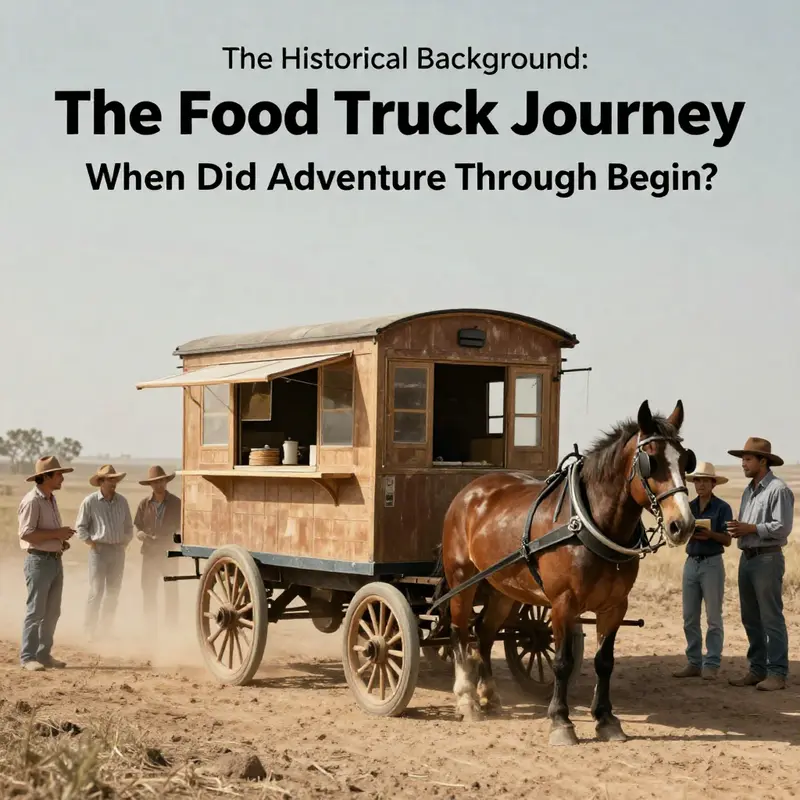
Mobility and appetite have walked together across the American landscape long before the neon signs of modern food trucks lit up city blocks. The thread that binds this chapter is not a single invention but a continuous line of service on wheels. Starting in the nineteenth century, itinerant cooks and mobile kitchens moved with labor and cattle drives, turning long days into manageable meals. Those early kitchens were less about spectacle and more about survival and efficiency: a compact, rugged workspace that could keep pace with the harsh rhythms of work on the range. As cities grew and industries sprawled, the demand for ready meals away from brick-and-mortar racks of groceries and restaurants helped seed a culture of on-site nourishment that would mature over generations. The arc from frontier chuckwagons to today’s street-level culinary scenes is a study in adaptation, technology, and taste.
The nineteenth century provides the sunrise of this story. Horse-drawn chuckwagons and, in some cases, lunch wagons, served cowboys, railroad workers, and labor crews who needed hot food far from central markets. These wagons were more than portable kitchens; they were mobile social hubs, gathering places where folks could warm themselves, share a story, and exchange news as a bowl of steamy stew or a hot coffee circulated between shifts. The design of these early mobile eateries emphasized practicality: sturdy frames, a small stove, a pot of coffee on the boil, and a goal of feeding people efficiently so work could resume with minimal disruption. The West, with its long miles between towns and its relentless demands, shaped a particular kind of appetite—one that required dependable provisioning at a moment’s notice. Within this context, food carried not just calories but morale, signaling care and cohesion among laborers who lived by the clock and compass.
As the century turned toward the twentieth, a new technology began to redefine the relationship between food and mobility. Motorized trucks and vans gradually replaced horse-drawn wagons, a shift that did more than swap horsepower for horsepower. These road-tested vessels carried not only meals but a new sense of scale. The modern roach coach—often a blunt term used by workers and supervisors—emerged as a recognizable fixture at construction sites, military bases, and factories. In these environments, food service moved closer to the action, offering fresher options and the promise of speed. Cooks learned to optimize truck layouts for grilling, frying, or steaming while maintaining safety and sanitation on a moving platform. This era marks the transition from a frontier necessity to a disciplined mobile operation, where the engine and the kitchen shared equal importance.
The midcentury shift also reflected broader economic and social changes. Urbanization accelerated, and city blocks began to feel like vast, pulsing marketplaces where a meal could be procured in minutes rather than hours. The roach coach, though often colloquially stamped as a rough-and-ready term, represented a sustainable answer to labor shortages and shifting work patterns. On industrial sites and military compounds, these mobile canteens fed workers who labored in shifting schedules, providing nourishment that matched the tempo of production lines and training drills. The fleet of mobile kitchens expanded beyond the original model; their interiors adapted to contain not just heat and steam but a growing array of equipment—ice wells, refrigeration, and ever more efficient fuel systems—enabling menus to grow more varied and reliable. The food truck, as a concept, began to embody a philosophy: bring the kitchen to the work, wherever the work happens to be.
In the decades that followed, the on-site meal began to resemble a service that could travel anywhere, and with that mobility came a cultural shift. The idea that a meal had to be consumed within a single dining room gave way to a flexible, on-demand ethic. Street vendors and mobile kitchens learned to time arrivals with shift changes, sporting events, and transportation hubs, turning parking lots into provisional marketplaces. The yellow light of a sunset shift could signal a new wave of hungry customers, and those who operated mobile kitchens learned to read the urban map as a living menu. The kitchen on wheels became not merely a convenience but a platform for entrepreneurship, enabling individuals to combine culinary curiosity with business acumen. This evolution prepared the ground for a broader cultural shift: food on wheels as a livelihood and as a possible career path, a trend that would intensify with the next generation of cities and economies.
The dawn of the twenty-first century brought a dramatic acceleration. A confluence of factors—economic restructuring, urban regeneration, and a growing appetite for experiences that felt personal and local—pushed food trucks from a niche option to a cultural mainstay. The rise of the so-called pop-up restaurant, along with a diffuse set of social and digital tools, allowed cooks to test ideas quickly, scale gradually, and cultivate a following without the fixed costs of a brick-and-mortar restaurant. This era rewarded adaptability: menus could change with the markets, vendors could seek out crowds at events and in neighborhoods open to experimentation, and branding could be built in the space between a phone tap and a street corner. In this sense, the modern food truck is as much a social technology as a culinary one, enabling a dialogue between cook, street, and consumer that is instantaneous and evolving.
Cross-cultural exchange also accelerated as fleets traveled and settled in new places. The mobility of these kitchens created a portable fusion laboratory, where flavors and techniques from different regions could cross paths. A single truck might quietly blend regional barbecue traditions with flavors drawn from distant culinary grammars, producing dishes that felt both familiar and novel. The result was not merely a menu of novelty items but a continuous experiment in what food can be when commerce, travel, and taste converge. The capacity to adapt to local palates and seasonal ingredients became part of the work’s craft, and the vehicles themselves became a moving advertisement for culinary invention. In this sense, the transformation from a simple provisioning service to a dynamic culinary force mirrored larger shifts in what people expect from urban dining: speed, diversity, and a personal connection to the maker of the meal.
Today, food trucks are a global phenomenon, present in cities across the United States, the United Kingdom, France, and well beyond. The modern fleets are more than just mobile kitchens; they are repositories of craft, brand-building tools, and flexible livelihoods. The regulatory landscapes that govern these businesses—permits, health codes, and route planning—have evolved in tandem with demand, creating a complex but navigable ecosystem for would-be operators. The intersection of policy, artistry, and logistics makes the current era uniquely capable of sustaining a broad spectrum of culinary voices. And while the appetites of urban residents have always demanded variety, the current infrastructure makes it easier to test new ideas, pivot quickly in response to feedback, and reach diverse communities with a few taps and a turn of the wheel.
Looking forward, the story of food trucks remains inseparable from the realities of work, technology, and culture. The vehicles themselves are not merely conveyances but ambassadors of a mobile way of cooking and serving that has persisted for over a century. The continuity is striking: the drive to feed people where they are, paired with an appetite for innovation that transcends borders and generations. In that sense, the question of when food trucks began is not a single moment but a continuum—a historical thread that stretches from the frontiers of the American West into the bustling, diverse urban landscapes of today. The best way to imagine this continuum is to see the present as a hinge point where heritage and experimentation meet, creating a future in which the street remains a primary stage for culinary exploration.
For readers seeking a practical route into today’s on-ramp to mobile culinary entrepreneurship, it helps to look at contemporary models that balance heritage with efficiency. The conversation around best food truck models for Lakewood startups offers a useful perspective on how operators select equipment, configure workflow, and craft a brand that travels with them across neighborhoods and events. This practical angle complements the historical arc, reminding us that the legacy of food on wheels is not only about where it began but also about how it continues to innovate in real time. The same spirit that fed cowboys and workers on the move now feeds a new generation of cooks who see the road as a canvas for flavor and enterprise. For more information, visit https://lakewoodfoodtrucks.com/best-food-truck-models-for-lakewood-startups/.
For further context on the origins and evolution of food trucks, a comprehensive external overview can be found in Britannica, which traces the technology, culture, and significance of this mobile culinary phenomenon. See https://www.britannica.com/technology/food-truck.
From Chuckwagons to Streetfront Cuisines: Tracing When Food Trucks Began to Change
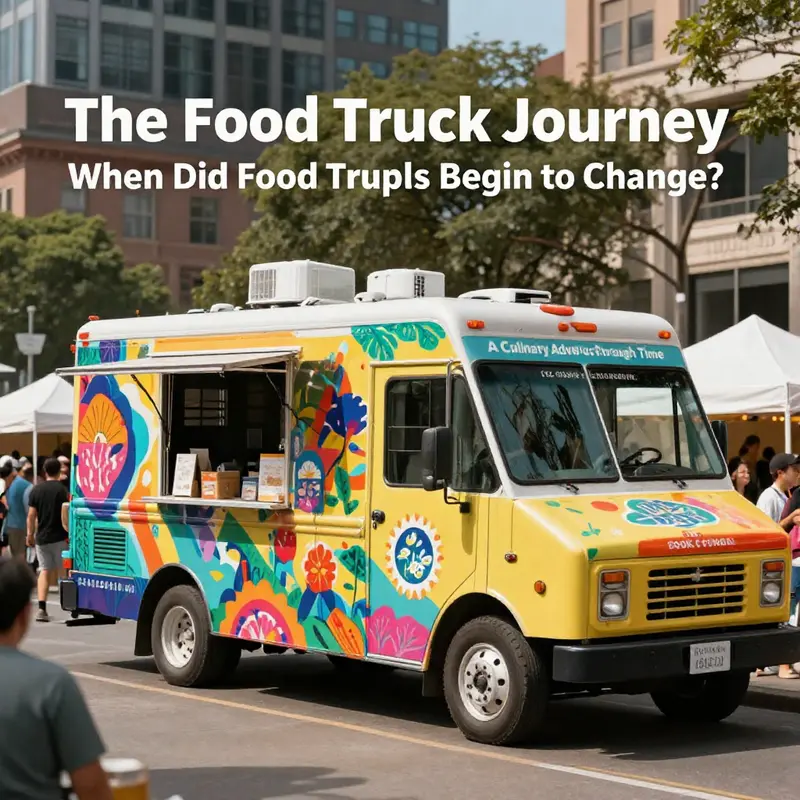
From Chuckwagons to Streetfront Cuisines: Tracing When Food Trucks Began to Change
To understand the moment when food trucks began to change, it helps to walk back through a long line of mobile meals. In the 19th century, rugged roads and remote ranch lands created a demand for quick nourishment as people moved across vast spaces. Horse-drawn chuckwagons and lunch wagons rolled into these narratives, serving cattle crews, railroad workers, and laborers who had little time and many miles to cover. These meal wagons were not the first street kitchens, but they were early templates of a concept that would keep pace with changing technology and urban life. They showed that food could travel with people, turning a mobile unit into a temporary dining room wherever labor was active and supply routes converged.
As the 20th century advanced, the transformation picked up speed. The spread of mechanized transport, better roads, and the growth of industrial campuses created new settings where a portable kitchen could operate with efficiency. The modern incarnation of the food truck began to coalesce as trucks and vans served as mobile canteens. These were not boutique eateries; they were practical responses to labor needs, delivering hot meals to workers at worksites or to soldiers craving something warm after a long day. In this period, the focus was on practicality, reliability, and speed. Yet even as the menus favored staples that could be cooked quickly, the idea of mobility built in a sense of accessibility and convenience that would later attract a broader audience.
Mid-century, you can sense a shift. Military bases and remote installations popularized the concept of a centralized kitchen on wheels, but the civilian world began to borrow more from that model. Small businesses looked at the efficiency of a truck that could move beyond a fixed storefront, offering a rotating set of dishes in different neighborhoods or at temporary events. The trucks were not just vehicles; they were itinerant kitchens that carried a shared belief: quality meals can travel, and people will seek them out if the price is right and the experience is reliable. During this era, the line between nomadic snack stand and legitimate culinary enterprise began to blur. Chefs started to sketch menus that could be served with speed, and customers learned to recognize the seasonality and diversity that mobility could offer.
The term modern food truck movement often points to a more defined moment, a confluence of cultural, economic, and technological forces. Some observers place the turning point in the late 20th century, when urban neighborhoods started to host weekend gatherings and street fairs that highlighted portable meals with character. These moments opened the door to a broader acceptance of mobile food as something more than a temporary fix. Yet to say the moment is singular would misrepresent the deeper arc. The evolution was incremental, with different cities contributing different threads to the overarching tapestry. In many places, these mobile outfits remained small, family-run operations that relied on word of mouth and the rhythms of a neighborhood to survive. They were the prototypes of what would later become a more formalized industry with standardized practices, branding, and a culture around street food as a culinary destination.
The most decisive acceleration, however, came with the economic shocks of the early 21st century. The 2008 recession tightened budgets across households and hammered the viability of many brick-and-mortar restaurants. Rents climbed, and unemployment rose, creating a market where aspiring chefs could test ideas with far lower overhead. The mobile kitchen offered a scalable model: start with a single vehicle, refine a menu, and grow as demand allowed. In this moment, the idea of mobile gourmet took hold. It was not only about serving cheaper meals on wheels; it was about turning street food into a platform for experimentation and artistry. The trucks began to feature more intricate techniques, bolder flavor profiles, and menus that could be changed quickly in response to crowd energy or seasonal ingredients. The image of street food as simply cheap and fast began to shift toward something more artisanal and intentional.
Alongside this shift, digital platforms reframed how people found and followed these mobile kitchens. Operators could post near-real-time locations, daily menus, and event appearances on social media and dedicated apps. The locus of discovery moved from fixed hours to ongoing dialogue with potential customers. This was a fundamental change: the vehicle no longer needed a brick-and-mortar anchor to build a following. A single bright concept, a reliable schedule, and a clever social media presence could create a devoted audience within a city’s diverse landscape. Cities such as Los Angeles, San Francisco, and Austin emerged as hubs for innovation, not only because of their weather and energy but because their urban layouts encouraged outdoor dining, food parks, and cross-pollination among vendors. In these spaces, the food truck became a platform for experimentation, with operators testing flavors from many cultural traditions and blending techniques to craft handhelds and small plates that could be consumed on the move or in a park.
What followed was a democratization of dining: the street ceased to be merely a line for passing by; it became a curated dining corridor where chefs could present ideas quickly, then iterate based on what resonated with changing crowds. This period saw the emergence of dedicated “food truck parks” and microclusters of vendors that drew people as a community or a festival might. The business model matured as operators refined procurement, scheduling, and branding. It was less about offering a cheap bite and more about presenting a coherent culinary identity that could travel. The public began to perceive these mobile kitchens as legitimate competitors to traditional eateries, offering unique textures, comparable quality, and a sense of immediacy that urban life often demanded. The aura of culinary adventure that these trucks carried made it possible for a neighborhood to become a temporary restaurant, a street corner to become a tasting room, and the act of standing in line to become part of the social event of mealtime.
This era also highlighted how mobility allowed for experimentation with global cuisines. The same street corner could host a handful of vendors offering a spectrum of tastes: from bright, citrusy profiles to smoky, complex ones that reflected long, slow techniques. The beauty of the model lay in its flexibility: menus could be reimagined with the changing seasons, and a single truck could pivot from one neighborhood to another, matching supply with demand in a way a fixed restaurant could not. It was this agility that helped the scene to travel beyond urban cores and into suburban corridors, fairs, college campuses, and corporate campuses that sought fresh, vibrant options without the commitment of a full-scale restaurant.
In the long arc of mobility and food, an important narrative is how these enterprises evolved from transient attractions into lasting businesses. Some operators expanded beyond the single-vehicle format to multi-truck fleets or converted into storefronts, capping the arc of a microbusiness into a more traditional scale while retaining the heart of the mobile concept. Others remained lean, embracing the authenticity of the road-worn, hand-crafted aesthetic that had originally defined the genre. The industry’s maturation did not erase its sense of play or discovery; it deepened it. The trucks carried not only meals but stories—about the neighborhoods they visited, the supply chains that fed them, and the ways in which a shared meal could knit a community together across streets and sidewalks. The social dimension, once a postscript, had become a property of the enterprise itself.
Within this evolving landscape, a single movement captured the public imagination: the blending of diverse cuisines and the willingness to experiment with form. It was not just about what was cooked but how it was presented. A handheld, thoughtfully composed plate that could be eaten on the go stood as a symbol of a new urban appetite. A plate could be balanced with microgreens, a sauce that married unusual notes, and a crust that offered the satisfying crunch that people wanted after a day of walking through busy streets. The flavor profiles invited curiosity, and curiosity, more than nostalgia or convenience, kept people returning to the truck’s window or the shaded patch where vendors clustered in the late afternoon light. The resulting conversations in these spaces built a shared culture around mobility and taste, a culture that grew more vibrant as more operators joined the scene.
To see how a particular mobile kitchen narrative unfolds, one can follow real-life journeys that illustrate the day-to-day life of a food truck operator. The path is not simply about cooking; it is a choreography of sourcing, cooking, parking, and engaging with a crowd that moves from place to place. It is about building relationships with customers who may meet the truck one week in a park, the next at a festival, and later near a university campus. It is about learning the rhythms of a city and the seasonal rhythms of ingredients, and then translating those rhythms into a menu that can adapt while staying true to a core concept. In this sense, the story of the food truck is as much about entrepreneurship and urban culture as it is about cuisine.
For those who want a more narrative look into the journey of a mobile kitchen, consider the story of RockDog Adventures and their food truck journey. It offers a concrete example of how a single vehicle can evolve with its operator’s ambitions, how branding and location choices shape a following, and how the truck can serve as a traveling stage for a chef’s ideas. RockDog Adventures: Food Truck Journey. You can explore that example here.
As the movement matured, a broader industry ecosystem formed around it. Parks and event organizers began to cultivate spaces designed for mobile dining, while municipal policies gradually adapted to the presence of these kitchens on the street. The legal and logistical landscape—permits, health codes, power sources, waste management, and queue management—became a set of operational challenges that operators learned to navigate with resourcefulness and a sense of professional identity. The trucks required electrical hookups or generators, storage and waste plans, water supply, and robust, compact kitchen setups that could be cleaned and sanitized under tight constraints. While these concerns might seem technical, they are the backbone of reliable street dining. They also underscore why the food truck is a modern invention with deep historical roots: mobility can be exciting, but it also demands discipline and organization if it is to sustain a vibrant, continuing business.
The transformation of the food truck from a niche novelty into a recognized dining format did not happen overnight. It was the product of a sequence of shifts—economic, cultural, technological—that reinforced each other. The post-recession years, in particular, proved that street-level culinary innovation could attract large crowds, generate press attention, and seed new opportunities for emerging chefs. The resulting ecosystem is resilient, constantly renewing itself through new voices, new techniques, and new ways of pairing food with places. The chapter you are reading emphasizes the layered, incremental history that culminates in a present where a city’s sidewalks become open-air dining rooms and a single vehicle can anchor a much larger culinary conversation. While the food truck movement has matured in different ways around the world, its core remains recognizable: mobility as a platform for culinary experimentation and social connection.
If the story feels like a mosaic, it is precisely because it is one. The seeds were planted long before motorized vehicles took center stage, and the modern pivot happened not in a single year but through a cascade of decisions by cooks, entrepreneurs, urban planners, and communities. The question of when food trucks began to change then invites a nuanced answer: change starts with early forms of mobile food service in the countryside and on the frontier and accelerates with the industrial age’s growth and the city’s appetite for novelty. It accelerates again when economic pressures encourage leaner business models, and it finishes in the late 2010s as mobile dining becomes a mainstream feature of the urban gastronomic landscape. The entire arc is a reminder that food, mobility, and culture have long co-evolved. What we now experience as the modern food truck is the culmination of centuries of improvisation, risk-taking, and shared appetite for place and flavor.
External resource: For a broader historical perspective, see this external overview of the history of food trucks: https://www.foodandwine.com/food-trucks-history-evolution.
From Chuckwagons to Cultural Icons: How Food Trucks Began Reshaping Society
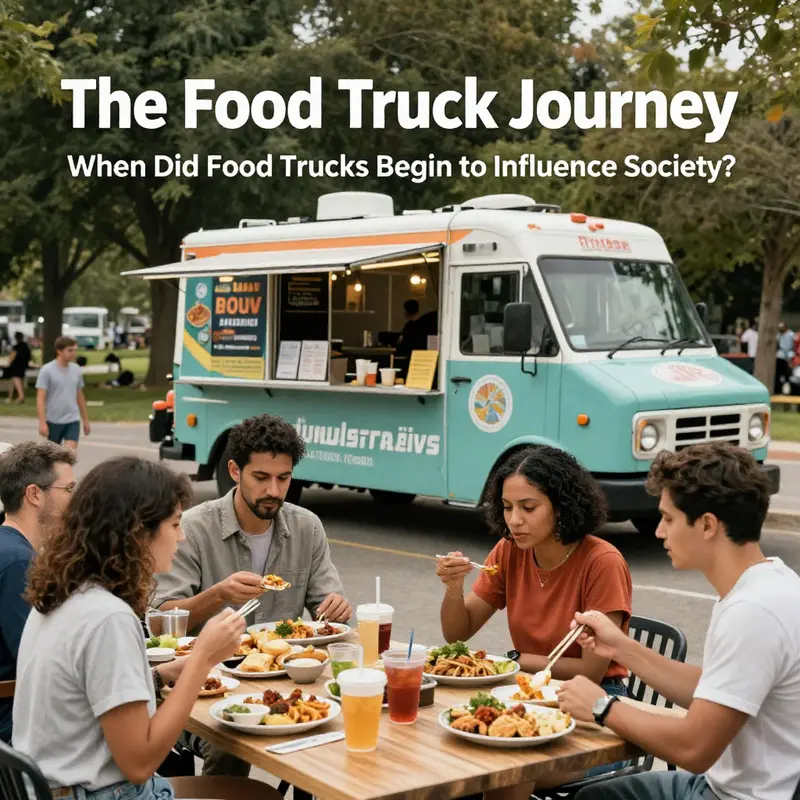
Food trucks began to shift from convenience to culture in the early 2000s, and their influence gained force after 2008. What started as practical mobile nourishment for workers evolved into a vehicle for culinary creativity, local commerce, and public life. The change did not happen overnight. It built on long-standing traditions: horse-drawn chuckwagons fed cowboys on the range, and lunch wagons served factory floors and street corners. Those early models delivered food where people worked and gathered. The modern phenomenon, however, fused mobility with innovation, and that fusion altered how cities eat, gather, and think about food.
The economic shock of 2008 accelerated a shift already underway. Many experienced chefs and culinary entrepreneurs faced barriers to opening brick-and-mortar restaurants. Food trucks offered a lower-cost path to market. Lower overhead and flexible schedules let chefs test menus without heavy capital. This practicality met a consumer appetite for new flavors, authenticity, and social experiences. The result was a surge in gourmet food trucks offering dishes once reserved for restaurants. These mobile kitchens made high-quality meals accessible, and they rewrote expectations about where fine food could be found.
The cultural impact took several interlinked forms. First, food trucks democratized gourmet dining. High-end techniques and premium ingredients spread beyond formal dining rooms. A chef could refine a concept on wheels, then pivot based on real-time feedback. This direct relationship with customers changed how culinary ideas developed. Second, trucks amplified cultural fusion. Cooks combined traditions and ingredients in portable formats. The pulled pork burrito is a vivid example: Southern barbecue techniques met Southwestern presentation, creating something new and approachable. These hybrid dishes reflected broader cultural mixing and made fusion cuisine part of everyday eating.
Public spaces changed as well. Food trucks transformed sidewalks, parks, and parking lots into temporary marketplaces. Where human and vehicular traffic once flowed without pause, gathering points emerged around food. Trucks anchored impromptu plazas where neighbors met and visitors lingered. Cities began to see mobile vendors as tools for revitalization. Underused lots and quiet blocks gained life when regular food-truck gatherings were scheduled. These events brought foot traffic, supported nearby businesses, and created social rituals. The presence of trucks turned movement into moments; people paused, talked, and lingered.
Social media amplified this effect. Platforms that allow instant sharing and geotagging made food trucks visible in ways previous mobile vendors could not have imagined. Customers posted photos, tagged locations, and built followings around particular trucks and dishes. For vendors, social media solved a logistics problem: rather than advertise through static media, they could announce locations and special menus in real time. This constant connection built digital communities around physical gatherings. Followers coordinated meetups, recommended favorites, and shaped demand through direct feedback. In many cities, a truck’s online popularity could drive long lines and press coverage, making social channels integral to a truck’s success.
Economic resilience became another theme. Food trucks lowered the barrier to entry for entrepreneurs, especially for those from underrepresented communities. Lower startup costs and mobile operations allowed small business owners to scale carefully. Some used trucks as pilots for eventual restaurants. Others sustained livelihoods without ever taking on a permanent lease. The model proved adaptable during downturns and emergencies. In hard times, a nimble truck could reach new neighborhoods or pivot its menu. That adaptability contributed to local job creation, supplier relationships, and a vibrant microeconomy around food production, service, and events.
Regulation and policy responded, sometimes slowly. Cities that initially resisted mobile vending for zoning or health concerns later adapted. New permitting systems, designated vending zones, and curated truck markets emerged. In many places, policy reforms recognized the trucks’ potential to stimulate streetscapes and tax bases. However, regulation also reflected tensions. Brick-and-mortar restaurants sometimes saw trucks as competition, and debates over fair access, sanitation standards, and neighborhood impacts persisted. These tensions forced food truck culture into civic conversation, making it part of how communities negotiated public space and small-business opportunity.
Food trucks also intersected with sustainability concerns. Mobile operations encouraged local sourcing and reduced food waste through smaller batch production. Some vendors prioritized compostable packaging and energy-efficient equipment. The scale of trucks allowed experimentation with greener practices before wider adoption by larger restaurants. While the environmental footprint of any single truck varied, collectively the movement highlighted new possibilities for sustainable urban food systems.
Culturally, the trucks became storytellers. Menus carried histories and migration narratives. A single menu could trace a chef’s family recipes, a region’s spices, and contemporary twists. Eating from a truck became an act of cultural exchange. Customers sampled flavors from distant homelands or reimagined comfort foods. This exchange expanded palates and fostered curiosity. It also foregrounded the role of immigrant entrepreneurs in shaping food culture. Many celebrated vendors brought culinary traditions to public spaces in ways that invited dialogue and understanding.
Events and festivals codified the truck culture. Regular gatherings created predictable rhythms for communities. Weekly markets, lunchtime pods, and evening rallies turned food trucks into fixtures. These events served as incubators for collaborations between vendors and local artists, musicians, and craftspeople. The synergy enhanced neighborhood identity and provided accessible cultural programming. For cities, curated truck events became placemaking tools that encouraged people to explore neighborhoods they otherwise might not visit.
The influence extended to brick-and-mortar restaurants. Traditional restaurants learned from the trucks’ agility. Some adopted street-food formats into their menus. Others experimented with takeout and delivery models shaped by the mobile sector. In turn, trucks borrowed hospitality elements from established restaurants, sharpening service and culinary techniques. This cross-pollination diversified dining options across urban landscapes.
Beyond food, trucks influenced how we conceive entrepreneurship. They offered a model centered on direct customer interaction, iterative design, and low-cost testing. Many owners honed business skills in public: menu engineering, crowd management, and social marketing. Those lessons transferred to other small enterprises and inspired similar pop-up ventures in retail, art, and services.
Digital communities formed around truck culture. Enthusiasts tracked routes, reviewed dishes, and shared tips. These networks shaped taste and spread trends quickly. The same networks could mobilize support for a struggling vendor or help a new truck find a loyal clientele. In many ways, the relationship between trucks and their audiences resembled modern participatory culture. Customers were not passive; they influenced menus, locations, and reputations.
The legacy of this period is visible in urban life today. Food trucks helped democratize access to diverse, high-quality food. They animated public spaces and created new economic pathways. They amplified immigrant and local voices and proved a practical testbed for culinary innovation. The movement also forced cities to rethink regulation, sustainability, and placemaking.
While the story continues to evolve, the cultural imprint of food trucks is clear. They moved from serving workers to shaping public life. They fused tradition with innovation and individual ambition with community building. For anyone exploring when food trucks began to influence society, the early twenty-first century—and especially the years following 2008—marks a turning point. That era saw a practical solution to economic pressures blossom into a wider cultural force that redefined how people gather, eat, and connect.
For those interested in how gatherings and events continue to shape truck culture, regional guides and festival roundups offer up-to-date perspectives, such as this look at Lakewood’s 2026 rallies: Lakewood’s 2026 food truck rallies.
Further analysis of how food trucks changed the restaurant industry provides additional context and research on their broader social and economic impacts: https://www.linkedin.com/pulse/how-food-trucks-changed-restaurant-industry-john-doe/
Economic Currents on Wheels: How Food Trucks Reshaped Urban Markets
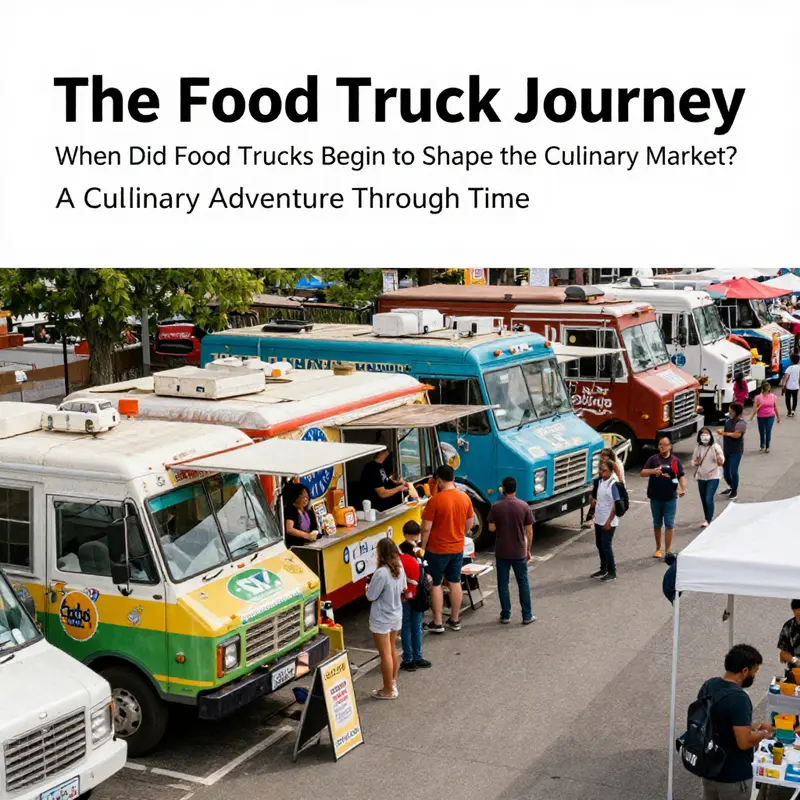
A mobile food economy has shifted urban markets by turning meals into scalable microbusinesses. Food trucks reduce entry barriers, offering lower capital requirements, flexible locations, and rapid iteration that align with today’s fast paced urban life. They test concepts with limited risk, build brands through social media, and connect diverse cuisines with local communities. The economics hinge on low fixed costs, high throughput, and adaptable supply chains. Commissaries and shared kitchens provide scale without the overhead of a brick and mortar restaurant, while partnerships with events, campuses, and employers expand demand. Delivery platforms and digital payments extend a truck’s reach beyond its physical footprint, creating extendable revenue streams. The phenomenon has reshaped labor markets by creating entrepreneurial pathways for cooks, students, and aspiring operators, while pressuring established restaurants to rethink pricing, menus, and service models. Globally, the model adapts to regional tastes and regulatory environments, illustrating how mobility can democratize access to culinary innovation while driving local economic development. The 2010s stand out as a turning point when the street became a core node in the culinary economy, linking consumer appetite, technology, and urban policy in a dynamic, fast moving ecosystem.
Final thoughts
In retracing the roots and evolution of food trucks, it’s evident that these mobile eateries are more than just a dining option—they’re a tapestry of history, culture, and creativity. As we wrap up, it’s wonderful to see how food trucks have become an integral part of the culinary landscape, inviting food lovers, tourists, and aspiring operators to be a part of their vibrant community. Whether you’re sampling mouthwatering dishes at a local festival or dreaming of starting your own mobile kitchen, the world of food trucks offers boundless opportunities for enjoyment and creativity.