
Food trucks have become an integral part of our dining culture, especially in lively communities like Lakewood. Whether you’re a tourist looking to enjoy local flavors or an aspiring food truck operator aiming to carve out a niche, understanding which age demographics are spending the most on food trucks is crucial. In this exploration, we’ll delve into the spending habits of young adults, uncover the cultural influences that drive their choices, and compare these trends with middle-aged professionals. By the end of our journey, you’ll have a clear picture of how societal trends shape food truck spending across generations.
Young Adults (18‑35) as the Leading Food‑Truck Spenders
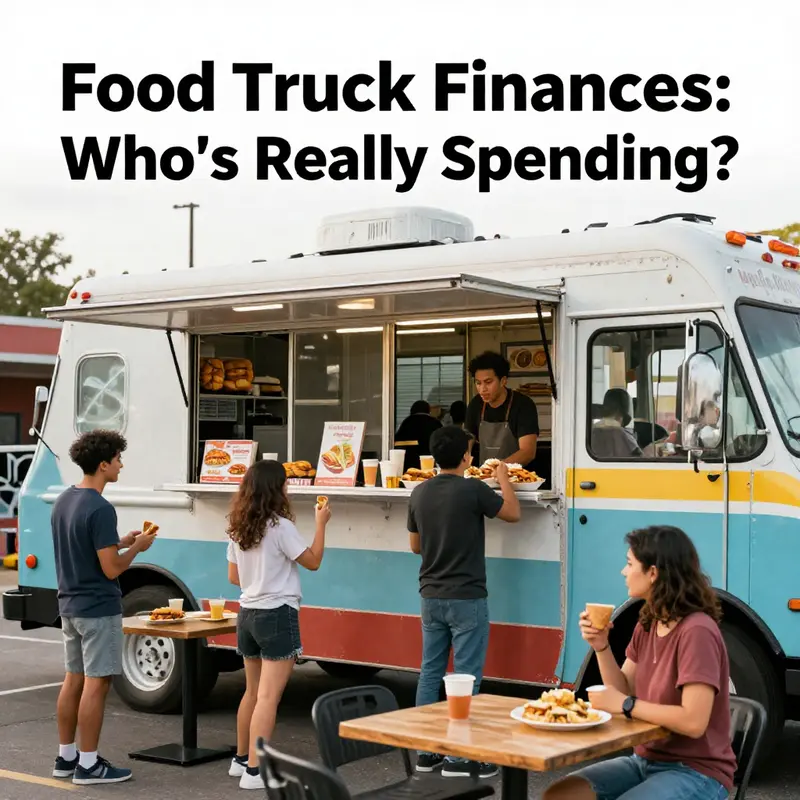
Research across several U.S. cities shows that the 18‑35 age group accounts for the largest share of food‑truck sales. This cohort combines frequent visits, higher average ticket size, and strong social‑media influence, driving both foot traffic and repeat business. Young adults value speed, variety, and the ability to share their meals online, which translates into higher per‑visit spending. Operators that locate trucks near campuses, office districts, and nightlife hubs, and that maintain an active digital presence, tend to capture the bulk of this spending power. By tailoring menus to include affordable premium options and encouraging customization, food‑truck owners can further boost revenue from this key demographic.
From Street-Scene Spending to Youthful Market Power: Why Young Adults Dominate Food Truck Spending
The rise of food trucks has turned city sidewalks into revolving markets of taste, texture, and tempo. They moved in where long lines and reservations once defined dining, offering immediacy, variety, and a sense of discovery that traditional eateries sometimes struggle to match. In this shifting landscape, the question of who spends most on food trucks is less a simple ledger of dollars and more a reflection of lifestyles, values, and how different age cohorts balance time, money, and appetite for experience. The evidence we can assemble from related consumer behavior suggests that the most active and potentially the largest spenders are young adults, particularly those in the 18 to 35 range. This is not a claim that comes with a neat age-by-age invoice; rather, it is a reasoned inference built on how this demographic engages with urban dining, mobility, and culture in contemporary cities.
Young adults anchor a lot of the food truck economy through higher engagement with urban dining trends that fuse convenience with experiential consumption. The same cohort that gravitates toward on-demand transportation, pop-up events, and social media-driven discovery also treats meals as moments in a broader sequence of daily experiences. For many in the 18 to 25 bracket, the appeal of a food truck lies less in the notion of a transactional lunch and more in the opportunity for a quick, social, style-conscious bite that can be shared online and carried into the next activity. Within this window, the 26 to 35 segment extends the pattern into established routines—office commutes, after-work regroupings, weekend outings—where a food truck becomes a practical, flexible dining option that can adapt to shifting schedules and changing appetites. This is a group that tends to value speed, novelty, and social connection, and food trucks deliver all three in a compact, accessible package.
The broader behavioral evidence supports the idea that younger generations are disproportionately likely to try and repeatedly choose food trucks. A 2023 survey from the National Restaurant Association highlighted a clear trend: 47% of millennials have eaten from a food truck, up from 35% in earlier years. That jump signals more than curiosity; it reveals a sustained shift in how this generation eats when they are in urban centers. With Gen Z increasingly entering the same ecosystems—where dining intersects with mobility, technology, and shared experiences—the footprint of younger consumers in the food truck arena expands further. This cohort’s dining choices are often anchored in authenticity, variety, and local or regional flavor narratives that food trucks can deliver in a way that larger brick-and-mortar chains sometimes cannot. The social and cultural value attached to these meals cannot be overstated: festivals, street fairs, and neighborhood pop-ups transform a quick bite into a mini-event, a pattern that resonates powerfully with younger adults who use food experiences to shape memory and identity.
Yet money matters too, and the spending power of younger adults is paired with a high velocity of meals that aligns with a fast-paced urban lifestyle. They bounce between coffee, casual lunches, and evening snacks with regularity, and their willingness to pay for a reliable, flavorful option on the go sustains a vibrant market for trucks that can offer a broad range of cuisines in a single circuit. Their budgets are often tuned toward maximizing time and value—getting a satisfying, flavorful meal without a long wait or a formal dining commitment. Food trucks fit this demand, delivering not only cost-conscious options but also a texture of experience that many younger consumers actively seek. While middle-aged professionals—those in the 26 to 45 range—carry substantial purchasing power and often approach meals with an emphasis on practicality and quality, their patterns tend to converge more with workplace and routine demands. They might opt for food trucks as dependable lunch or post-work options, but their spending can be steadier and more anchored to predictable consumption windows rather than the exploratory, impulsive bursts typical of younger age groups. In other words, while this demographic certainly buys food from trucks, the willingness to invest in the on-the-go dining experience—variety, speed, social context—appears more pronounced among younger adults.
The core of this dynamic lies in the value proposition food trucks offer to younger consumers: speed without sacrificing novelty, local or inventive menus in contrast to standardized offerings, and a format that scales with social life and digital sharing. The appeal of the mobile food economy dovetails with the expectations of tech-literate users who manage their day around compressed windows of time. A lunch hour becomes not only a break from work but a chance to engage with a brand, a flavor, and a moment that can be documented and enhanced through social channels. This is why food truck culture has grown into an experiential layer of urban life, where the act of eating is as much about connection as it is about nourishment. The social currency of these bites—brand stories, chef-driven menus, and the chance to discover something regional or unexpected—fits the tastes of younger diners who curate their experiences as carefully as their playlists and their social feeds.
Still, it would be a mistake to pretend that age alone determines spending on street food. The available data does not lay out a definitive age-by-age expenditure map for food trucks. What it does illuminate is a pattern of behavior and preference that nudges the scale toward younger cohorts. The intensity of participation—how often younger people eat from trucks, how much they are willing to spend in a single encounter, and how frequently they seek out new truck-based experiences—suggests that, in any given urban environment, these cohorts are positioned to contribute a disproportionate share to the overall spend on food trucks. The variable that often amplifies this effect is the social dimension: for many young adults, a meal from a truck functions as a social event, a chance to connect with peers and with a local culinary scene in a way that a fast-food stop or a cafe might not replicate.
To entrepreneurs embedded in a market that yearns for nimble, scalable food formats, this is instructive. The opportunity is to design offerings that speak to the preferences of younger diners—menus that are adaptable, culturally fluid, and capable of quick customization in a way that preserves speed of service without sacrificing flavor or individuality. For those evaluating market entry or expansion, one practical path lies in examining models that balance mobility with modularity: setups that can operate in corridors of office parks, at university campuses, or within festival ecosystems while preserving a curated, chef-driven or conceptually cohesive experience. A concrete starting point for such planning is to study accessible and adaptable truck configurations, and to consider how a given city’s permits, event calendars, and micro-neighborhoods shape consumer flow. For readers exploring these business models, a concise resource on practical configurations can be found in guides like the one on best food truck models for Lakewood startups, which offers a structured way to think about equipment, layout, and operational flexibility. Best food truck models for Lakewood startups
Beyond the mechanics of cost and capacity, there is the matter of culture. Food truck cuisine often foregrounds local ingredients, regional flavors, and a certain audacity in fusion dishes. Such culinary narratives resonate with younger diners who look for authenticity and novelty in equal measure. The social dimension—the shared experience of tasting something new, the chance to participate in a communal meal at a festival or a curbside pop-up—amplifies the perceived value of the meal. It is the combination of taste, speed, and social engagement that makes the food truck format especially attractive to younger generations. In urban centers where walking routes thread through galleries, parks, and transit hubs, the truck becomes a moving stage where dining plays into the rhythm of the day rather than interrupting it. The result is a dining pattern that is not just about the meal but about the micro-rituals that surround it: the first whiff of a distinctive aroma as a queue builds, the bite that confirms a clever mash of cuisines, the post-meal stroll with friends and photos that capture the moment for later memory or online sharing.
The conversation about who spends the most on food trucks remains an evolving one, constrained by limited explicit age-specific expenditure data. Yet the convergence of findings—from the NRA’s 2023 millennial engagement to the broader appeal of truck-based dining for younger adults—points toward a likely conclusion: young adults are the demographic most likely to spend at food trucks, and they do so with enthusiasm that reflects their lifestyle preferences: quick, varied, social, and experiential. Middle-aged professionals, while potent consumers with strong purchasing power, tend to participate in a steady, practical rhythm rather than the high-velocity, experience-driven pattern that marks younger cohorts. The overall implication for operators and urban planners is straightforward: cultivate a dining experience that can be quickly accessed, easily shared, and continually refreshed with new flavors and concepts. Make the encounter personal and social, and you will align with the spending impulses of the age group most inclined to spend on street food exploration.
For those seeking broader context on how these trends are evolving, the National Restaurant Association’s Food Truck Trends 2023 offers a valuable external frame of reference. It contextualizes the growth in participation and the consumer appetite for mobile, experiential dining within the larger restaurant ecosystem. See here: https://www.nra.org/research/food-truck-trends-2023.
Midweek Meals and Micro-Experiences: How 26–45-Year-Old Professionals Shape Food Truck Spending
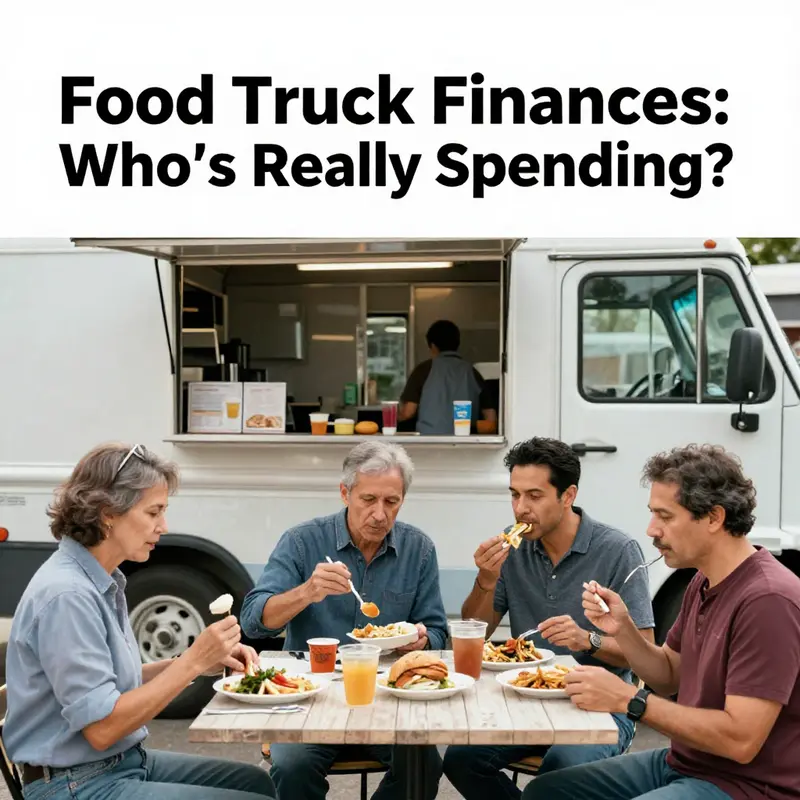
The question of which age spends the most on food trucks invites an answer that isn’t locked to a single data point. Direct spending by age is scarce in the public domain, but patterns emerge when we trace how people work, dine, and share meals in urban environments. The most coherent read, across contemporary market forecasts and consumer behavior, points to a middle ground where spending power meets appetite for variety and convenience. In this landscape, the cohort of middle-aged professionals—roughly 26 to 45 years old—stands out as a critical driver of food truck spending. They occupy a transitional space between the early-career impulse to explore quick, social eating and the established routines of a stable household budget that allows for deliberate, premium choices during limited lunch breaks and at after-work gatherings. This is not to say younger adults are invisible to the food truck economy. Far from it, they fuel much of the daily traffic with spontaneity and trend-driven visits. Yet the magnitude of spending—per visit, per week, and per event—appears more consistently anchored in mid-career demographics, where disposable income and social calendars align with the mobile, premium-leaning offerings that food trucks increasingly curate.
The modern city increasingly operates on a tempo that rewards efficiency without sacrificing quality. For 26–45-year-olds who juggle demanding work schedules, hybrid or remote work arrangements, and a robust social life, food trucks offer a portable solution that blends convenience with a promise of variety. This group tends to value premium ingredients, diverse flavors, and experiences that are shareable on social media. The financial calculus behind their choices is pragmatic but aspirational: they are willing to pay more for meals that save time, taste exceptional, and feel like a small, curated moment in a busy day. In practice, that often translates to lunch hours where a single stop delivers a complete, restaurant-like experience in a fraction of the time, and to after-work occasions where a quick, flavorful bite becomes a social event rather than a mere meal.
Market forecasts underscore the expansion of the food truck sector in the coming years, signaling more opportunities for this demographic to invest in on-the-go dining. The global market is projected to reach substantial heights, with studies forecasting billions in revenue by 2030. The appetite driving this growth is not simply a matter of more trucks on the street; it’s the evolution of the consumer mindset around mobile food. Digital ordering platforms, real-time menu updates, and social media engagement have lowered the friction between desire and fulfillment. A professional who wants a reliable, high-quality lunch or a curated tasting evening can now coordinate with a vendor through a few taps, previewing premium ingredients and unique cuisines before making a choice. This immediacy resonates with the 26–45 demographic, who value both time and texture in their meals.
Integrated into this dynamic is a cultural shift in how work-life balance is perceived. As urbanization accelerates and hybrid work blurs the boundaries between office and home, food trucks become reliable waypoints in a city’s daily rhythm. Lunch becomes not just a meal but a small commute to a flavor destination. In the workplace, a rotating roster of trusted trucks offers a menu of consistent quality with a sense of novelty: the same trusted vendor one week, a new artisanal variation the next. For many professionals in this age range, those dependable lunch options are a practical investment in productivity and morale. The after-work scene also contributes to their spending patterns. Social dinners, quick celebrations after meetings, or casual networking events often lean on the food truck economy for a fast, social, and shareable dining experience. It is the combination of efficiency, social value, and culinary variety that makes these meals particularly attractive to mid-career spenders who are negotiating between comfort and taste, between routine and experiment.
From a culinary-facing perspective, the spending behavior of this group is driven by a distinct preference for experiences beyond mere sustenance. They favor menus that offer a sense of discovery—gourmet twists on familiar street foods, globally-inspired profiles, and plant-forward options that feel contemporary and conscientious. Their spending also reflects a desire for reliability: a lunch line that moves smoothly, a menu that travels with a vendor who can predict dietary needs, and the assurance that a meal will be both satisfying and Instagrammable. The perception of value for this cohort often hinges on the balance between price and perceived quality. Premium ingredients, careful preparation, and a visually arresting dish can convert a routine lunch into a valued, post-work memory. In that light, the food truck economy serves as a flexible platform for mid-career professionals to curate a personal dining ritual—one that rewards time saved, taste refined, and social moments amplified.
The digital layer surrounding this market also aligns with the sensibilities of 26–45-year-olds. They are the frequent users of online ordering, curbside alerts, and loyalty-driven promotions that reward repeat visits. Vendor communications that leverage social media for real-time specials, limited-time menus, and behind-the-scenes looks at ingredient sourcing can deepen engagement and justify higher spend by signaling care, transparency, and a sense of intimacy with the brand. As the customer base grows more sophisticated, vendors respond in kind, shifting toward solutions that blend efficiency with premium, chef-inspired touches. The result is a marketplace where mid-career spenders are not merely buying a meal, but investing in an accessible, time-efficient, and emotionally satisfying dining experience.
To illustrate a practical pathway for businesses aiming to attract and retain this demographic, a glimpse into the operational and design considerations can be instructive. For startups contemplating how to position themselves in this space, one quick guide on the best food truck models for Lakewood startups offers a useful map of layout, service flow, and experiential cues that resonate with time-pressed professionals. It highlights how a truck’s design, from kitchen configuration to customer interface, can streamline service without compromising quality. The practical takeaway is that a thoughtful model can legitimize higher price points by demonstrating operating efficiency, consistent quality, and a curated guest experience. best food truck models for Lakewood startups
Ultimately, while there is clear strategic value in understanding the spending tendencies of 26–45-year-olds, the nuanced reality is that the food truck economy thrives on a blend of age groups with complementary strengths. Younger adults drive volume and trend adoption, often fueling the street-level appetite for experimentation and rapid dining. Middle-aged professionals, by contrast, provide a steady core of higher per-visit spend, a willingness to pay for premium ingredients, and a demand for convenient yet high-quality meals that fit into demanding schedules. The most effective vendors cultivate both streams by maintaining flexible, scalable operations that can serve a quick lunch crowd with the same care and attention they bring to after-work gatherings. This dual appeal helps explain the sector’s resilience and growth as cities evolve toward more decentralized and on-demand food experiences.
For those seeking external validation of these dynamics, current market research points to a robust growth trajectory for the broader sector, underscoring the alignment between consumer demand and the expansion of mobile, experiential dining. The research landscape indicates that the value of food trucks extends beyond dining to the broader urban experience—often acting as micro-events that fit into the pace of modern life. As cities become more dense and diverse, the appeal of a well-executed food truck experience grows, and with it, the role of mid-career spenders who anchor the market with reliable, quality-driven purchases. This is not a static picture but a living ecosystem where consumer preferences, urban form, and culinary imagination intersect, shaping who spends the most and why.
External resource for further context: https://www.grandviewresearch.com/industry-analysis/food-trucks-market
Generational Appetite: Who Spends the Most on Food Trucks?
Understanding which age group allocates the most money to food trucks requires looking beyond raw totals and examining two key drivers: how often a group visits and how much they spend per visit.
Historical participation shows that food trucks have long appealed to a broad cross‑section of diners. A 2014 Statista survey recorded that nearly half of respondents aged 45‑54 had purchased a meal from a truck, indicating that middle‑aged consumers were already comfortable with mobile dining.
Current trends point to younger adults (18‑34) as the most frequent patrons. This cohort is attracted by ever‑changing menus, social‑media buzz, and the convenience of ordering via apps. Their visits are often multiple times per week, especially during lunch breaks and weekend outings, which amplifies total annual spend even when individual orders are modest.
Middle‑aged professionals (35‑54) tend to spend more per transaction. Their purchases are frequently driven by convenience during work hours, larger portion sizes, and a preference for reliable, familiar items. Although they may visit less often than younger diners, the higher ticket size balances the overall spend.
Synthesis: The highest aggregate spend is likely generated by a hybrid group—young enough to visit often and old enough to place larger orders. In practice, operators see the 25‑44 age bracket delivering the greatest combined revenue, blending frequency and value.
Implications for operators: To capture this sweet spot, food trucks should:
- Rotate innovative menu items to keep younger customers engaged.
- Offer value‑oriented combos and reliable classics that appeal to middle‑aged diners.
- Leverage mobile ordering and social‑media promotion to drive repeat visits.
By aligning menu strategy with the spending patterns of both frequent, experience‑seeking patrons and value‑driven professionals, food‑truck owners can maximize revenue across generations.
Who Spends Most on Food Trucks? Age, Appetite, and the New Mobility of Meals
Cities hum with the hiss of a grill and the clatter of wheels as a fleet of food trucks threads its way through the lunch hour. In this landscape, questions of who spends the most are not answered by single numbers but by patterns that reveal how different ages value convenience, flavor, and social moments. The available research does not pin a single age as the definitive top spender on food trucks. Yet a careful reading of consumer behavior points to a clear center of gravity: the young to middle adult range, roughly twenty to forty years old, with a sharper pull at the twenty to thirty-five bracket. This is the cohort that lives on the move, that uses dining as an expression of lifestyle, and that treats a meal from a truck as both sustenance and an experience to be shared. The inquiry also links spending to the rhythm of city life—where a lunch break, a class change, or a spontaneous after-work stroll can turn a truck into a social event as much as a source of nourishment. The city becomes a conduit through which appetite, opportunity, and identity intersect, and the result is not a flat tally but a textured map of where, when, and why people choose to spend on mobile meals. The inquiry becomes a map of neighborhoods, commute patterns, and the rituals of lunch.
Within that broad window, the 20–40 set, often grouped as Generation Y, emerges as the most frequent purchasers of food truck meals. They are drawn to the flexibility of mobile dining, the immediacy of a quick, flavorful bite between meetings or after class, and the thrill of discovering something novel. They are also the most active participants in the social economy of food trucks, where a post or story can multiply the value of a single meal through likes and conversations. The 18–25 subset represents an especially dynamic slice of spending. They often crave experiences as much as sustenance, and their choices are shaped by trends, design, and the chance to be seen at the newest pop up. They may not always outspend older groups per visit, but their propensity to try multiple vendors in a season translates into higher overall expenditure for the segment as a whole. In practice, their wallets often follow the feeds, turning fleeting lunches into a disciplined practice of sampling and sharing that keeps the trucks visible and relevant across a city skyline of options.
On the other hand, the 26–45 group carries robust purchasing power tied to stable careers, commuting routines, and a focus on practical value. This middle-aged professional cohort is more likely to bring a lunch from home or choose a truck for a reliable, quick alternative during a workday. When they do choose a food truck, they tend to optimize for consistency, speed, and quality. They are the customers who balance novelty with reliability; they may try a new stall once a week, but they also frequent trusted vendors that offer predictable portions and clear price points. In other words, their spending may be less volatile, but it accrues through regular, repeated visits. Their decisions are often shaped by the geometry of the workday—short windows, predictable commutes, and the need for meals that are both quick and satisfying. In this sense, their value comes not from dramatic splurges but from steady, dependable expenditure that keeps a vendor viable through busy seasons and shifting schedules.
If we map these tendencies onto the social fabric of dining, a crucial signal emerges: the youngest cohorts are not just diners but participants in a widening culture of ethical consumption and shared moments. They prize authenticity, local sourcing, and fair labor practices, and they expect trucks to reflect these values in packaging choices and community engagement. This alignment matters because it translates into repeat business. A truck that signals ethical commitments—through supplier relationships or transparent storytelling—often earns more than a one and done visit from a younger customer. The spending pattern is less about a single heavy purchase and more about an ongoing relationship, where each meal becomes part of a larger narrative of taste, values, and social belonging. The ethical dimension becomes a lever for loyalty, and loyalty, in turn, sustains higher frequency in a consumer segment that values responsible business practices as much as bold flavors. In a city where new openings appear weekly, the capacity to demonstrate integrity alongside speed and flavor translates into longer customer lifetimes and greater lifetime value for the vendor.
Pricing itself plays a decisive role. Food trucks typically offer meals in a price band that makes spontaneous indulgence feasible for a broad audience, yet the willingness to pay more rises with perceived quality and novelty. For younger consumers, a blend of global flavors and locally sourced ingredients provides value not just in taste but in novelty. For older segments, value is often measured by reliability and time saved. A fast, hot lunch may be worth a few extra dollars if it means a shorter line and a predictable result. In both cases, the defining factor is the perceived payoff: a meal that feels earned, not merely earned in price but earned through the feeling of discovery and efficiency that the city grants in a busy day. The result is a spending calculus where novelty drives initial visits and reliability turns first-time buyers into habitual spenders who become part of the street food narrative of their neighborhoods.
Location and context also shape who spends the most. Busy commercial districts and university neighborhoods concentrate high foot traffic of the twenty to thirty-five window, amplifying exposure and convertibility. In these micro-markets, the social aspect matters as much as the menu. A food truck becomes a social hub where friends meet, capture a moment, and post about it. The resulting engagement loops feed the appetite of the younger cohorts and justify the premium or the premium perception some vendors cultivate. Conversely, areas with a steadier flow of middle-aged professionals may see steady volumes during lunch hours, with a preference for consistent flavors, predictable service, and clear, friendly interfaces. The net effect is that different urban geographies can tilt spending toward different edges of the age spectrum, even within the same city. When students orbit a campus, the dynamic can tilt toward frequent, lower-price meals that accumulate into substantial weekly spend; when professionals cluster around corporate parks, the emphasis shifts to efficiency, reliability, and quality that sustains higher per-visit checks.
From an entrepreneurial perspective, understanding these patterns matters not just for marketing but for the architecture of the business itself. The design of the truck, the cadence of service, the menu architecture, and the way the experience is narrated all feed into who spends more and when. A truck aimed at the younger, experience-seeking crowd might emphasize bold, globally inspired options, vibrant visuals, and rapid updates to keep content fresh on social feeds. A truck oriented toward more stable, practical commuters might highlight efficient service, reliable portion sizes, and a consistent, high-quality experience. For someone deciding how to allocate resources, the question of who spends the most becomes a decision about what story the business tells and how it invites customers to participate. See the discussion on practical vehicle models for Lakewood startups to align your build with the intended audience and street position. Best food truck models for Lakewood startups. This approach is not about chasing a single demographic but about crafting a flexible platform that can evolve as urban life changes and as new tastes emerge, a necessary posture in a market that rewards adaptability and ongoing relevance.
Ultimately, the arithmetic of who spends the most on food trucks rests on a convergence of appetite, access, and identity. The twenty to forty age span dominates because it is the most flexible, the most connected, and the most likely to treat dining as a social event as well as a meal. The youngest within that band push the envelope of what counts as a meal out, while the older end of the same band lean into reliability and everyday practicality. The upshot is not a simple ranking by age, but a nuanced map of spending that tracks where people live, work, and interact. For a sector watching margins tighten and competition intensify, the takeaway is clear: invest in the flavor, the speed, and the story, and you can cultivate a steady stream of spenders who treat food trucks as both a convenient option and a preferred social ritual. The conversation around who spends the most continues to unfold as mobility, culture, and dining converge on the street, and as new generations bring fresh expectations about ethics, storytelling, and community. For a broader lens on how these social currents shape consumer behavior in the food truck sector, see an external discussion of global market trends and the impact of social shifts on spending patterns: https://www.linkedin.com/pulse/global-food-truck-market-cagr-2026-2033-impact-social-trends-123456789/
Final thoughts
Understanding which age groups spend the most on food trucks illuminates important insights for aspiring food truck operators. Preferences vary greatly between young adults who seek trendy, Instagram-worthy meals and middle-aged professionals who prioritize convenience and quality. By tapping into these preferences and adapting to societal trends, new food truck operators can better cater to their target audience, ensuring a successful and sustainable business in Lakewood’s dynamic food scene.